
Reviewed · JEWISH GHETTO TOURS
Rome: Jewish Ghetto Walking Tour
Rome’s Jewish Ghetto is one of the city’s most rewarding neighborhoods for anyone who wants more than the usual ancient monuments. In about two and a half hours, you move from Trajan’s Column to the Theater of Marcellus, the Jewish quarter, and Tiber Island, following layers of Roman and Jewish history that are easy to miss on your own.
I like the way the tour connects famous sights to personal stories, especially at the Turtle Fountain and the former ghetto wall. I also like the included kosher gelato or coffee, a small treat that breaks up the walking. The main consideration is that this is an outdoor walking tour, and it does not include entry inside the Great Synagogue.
The guides are the heart of the experience. James, Angela, Tom, Daniel, Maria, and others have received praise for clear storytelling, patience, and strong command of both Roman history and Jewish history. Groups can be small, and on some dates the scheduled small-group walk has become a private tour.
Key points to know before booking
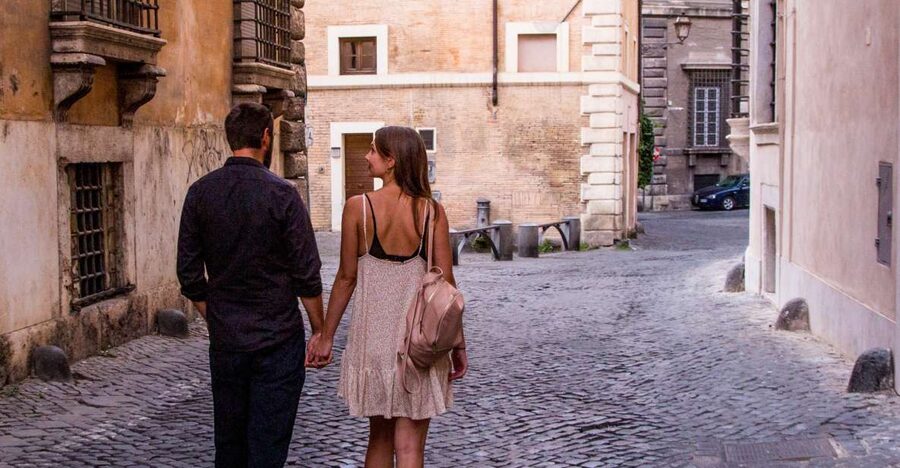
- Two thousand years in one walk: Begin among imperial monuments, continue through the former Jewish Ghetto, and finish on Tiber Island.
- The Theater of Marcellus: See an ancient performance venue older than the Colosseum, with later buildings incorporated into its upper levels.
- Kosher gelato stop: A gelateria visit with kosher gelato or coffee is included in the price.
- Story-led guiding: James, Angela, Tom, Daniel, and Maria have all been praised for making complex history easy to follow.
- Outdoor-only synagogue visit: You pass the Great Synagogue, but admission inside is not part of this tour.
- A serious subject handled with care: The walk covers confinement, persecution, wartime rescue, and the endurance of Rome’s Jewish community.
Why this Rome walk feels different

Many Rome tours give you a quick look at ancient stones, then move on. This one asks you to notice how the city keeps changing around those stones. A Roman theater became part of a medieval and Renaissance neighborhood. A former restricted quarter became a lived-in district. A temple connected to the god Asclepius became a church.
That layering gives the walk its appeal. You are not simply ticking off the Jewish Ghetto, a fountain, and an island. You are following the way Rome reused buildings, shifted boundaries, and carried old stories into modern life.
The subject also has real weight. Rome’s Jewish community has lived through centuries of restrictions and hardship, including the forced confinement of Jews in the ghetto and the persecution of Roman Jews during World War II. A good guide needs to explain those events plainly without turning the tour into a dry lecture. The strongest guides on this walk seem to do exactly that.
James is often praised for telling history as a story and adding useful side details. Angela is known for enthusiasm, humor, and clear explanations. Tom brings broad Roman context, while Daniel has been especially good at adjusting the pace and answering questions. The guide on your date may be someone else, but the experience depends heavily on this personal approach.
More Jewish Ghetto tours:
- Rome: Trastevere or Jewish Quarter Street Food Tour
★ 4.8 · 3,839 reviews - Jewish Ghetto and Trastevere Tour Rome
★ 4.5 · 1,729 reviews - Jewish Ghetto and Synagogues with Jewish Roman Guide 3 Hours
★ 5.0 · 907 reviews
Starting at Trajan’s Column
The meeting point is at Foro Traiano, 84, near Trajan’s Column in the center of Rome. Look for the orange Roman Vacations sign. Arrive early. The tour cannot wait for late arrivals, and missed departures are not refunded.
Starting here is a smart choice. Trajan’s Column gives you an immediate sense of Rome as an imperial capital before the walk turns toward the Jewish quarter. Your guide can place the neighborhood in a much wider story, from ancient Rome through later centuries.
The opening section helps if you know little about Roman history. It also works if you already recognize the major monuments, since the guide can connect them to the streets and buildings you will see later.
The route is on foot, with no vehicle transfers. Wear shoes that can handle uneven pavement and several hours outside. Bring water, sunscreen, a sun hat, and clothing suited to the forecast. An umbrella is sensible because the tour runs in all weather.
The Theater of Marcellus and Rome’s reused ruins
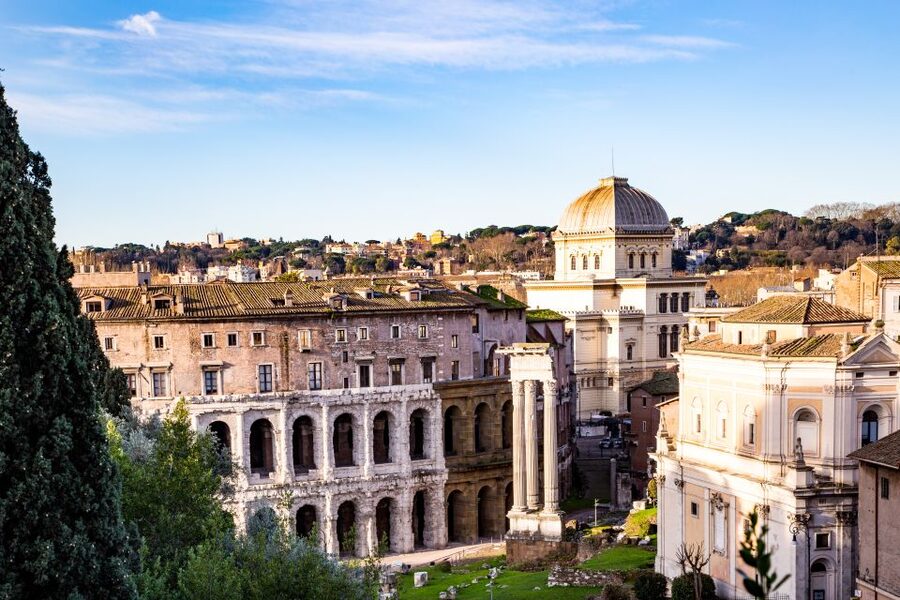
The first substantial stop is the Theater of Marcellus, with about 20 minutes for guided explanation. The theater is older than the Colosseum, a useful fact that changes how you see Rome’s ancient monuments. It is not always the first ruin on a visitor’s list, which makes it a strong opening stop.
The most interesting part is not only the age of the theater. It is the evidence of later use. The structure has been incorporated into the surrounding city, showing how Romans repeatedly adapted old buildings rather than treating them as untouchable museum pieces.
Your guide will help you read the site as both an ancient venue and a building that continued to matter long after imperial Rome. That context is valuable because the ruins of Rome can blur together when you visit too many in a single day.
This stop is mainly about looking and listening from outside. If you want a long archaeological visit with extensive time inside a monument, this tour is not designed for that. The reward is the broader story and the connection to the next stops.
Kosher gelato and a useful pause
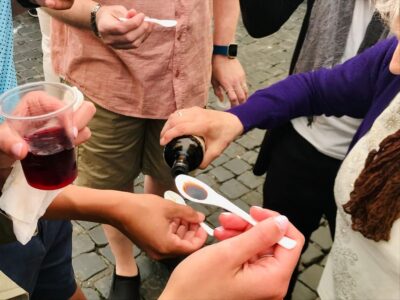
A kosher gelato or coffee stop is included. The exact choice may depend on the day, but you can expect a break at a gelateria rather than a full meal. Extra food and drinks are not included.
I like this detail because it gives the tour a human rhythm. The walk covers difficult material, and a short pause lets you ask questions or simply take in the neighborhood without standing in one place for the entire time.
The stop also introduces an element of contemporary Jewish life in Rome. It is a small point, but an important one. The Jewish Ghetto is not only a place of confinement and memorials. It is also a present-day neighborhood with food, businesses, worship, and daily routines.
The included treat adds some value to the $65 price, though it should not be the reason you book. The real value comes from the guide’s explanations and the way the sites are linked together.
More walking tours in Rome:
- Rome: Trastevere & Campo de Fiori Street Food Walking Tour
★ 4.9 · 2,768 reviews - Rome: Paranormal Night Walking Tour & Secret Backstreets
★ 4.9 · 1,921 reviews - Rome by Night Walking Tour – Legends & Criminal Stories
★ 4.5 · 1,003 reviews - Rome: Guided City Center Evening Sightseeing Walking Tour
★ 4.4 · 953 reviews
Piazza Mattei and the Turtle Fountain
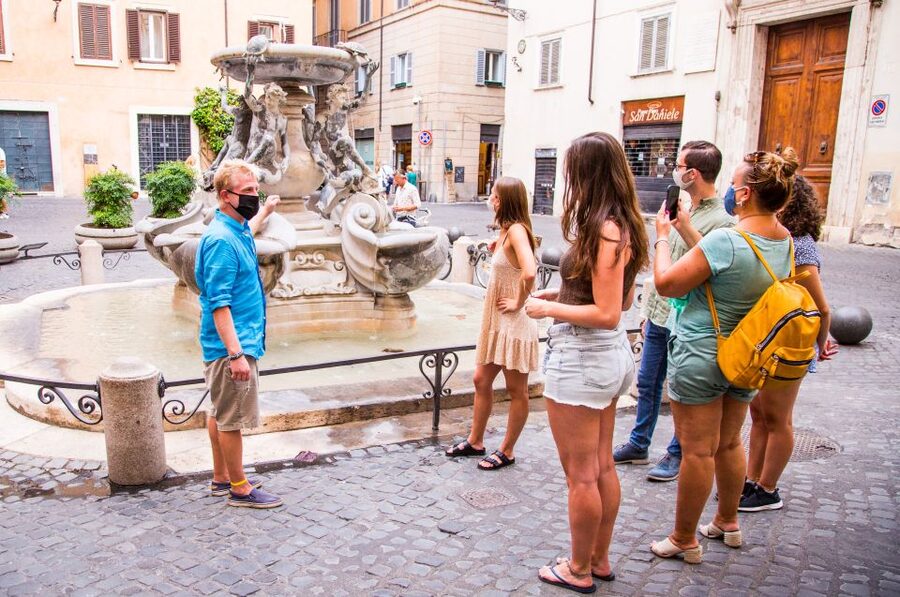
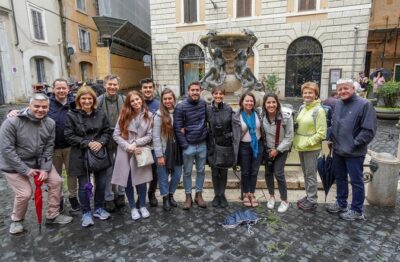
At Piazza Mattei, the guide spends about 20 minutes with the famous Turtle Fountain. This is one of the prettiest stops on the route, but the story behind it gives the fountain more bite than a quick photograph would suggest.
You will hear the tale of unrequited love associated with the fountain. The details help turn a decorative monument into a story about people, status, desire, and disappointment. This is typical of the tour’s approach: the guide uses a small object to open a wider window onto Rome.
Piazza Mattei is also a good place to pause and look closely. Rome often rewards a slower pace, and this square is easy to rush through if you are walking alone toward larger monuments.
Do not expect a long free period here. The guide has several stops to cover, so the fountain visit is part of a moving route rather than a relaxed café break. If photography is important to you, keep your camera ready but stay with the group.
Entering the Jewish Ghetto
The walk then turns toward the former Jewish Ghetto, where the tone becomes more serious. You will learn how Rome’s Jewish community was confined to this area for centuries and how the restrictions shaped everyday life.
The remaining piece of the old wall helps make that past more physical. It is one thing to hear about boundaries. It is another to see a surviving section of the structure that controlled where people could live and move.
This is where a strong guide matters most. The history is complicated, and a quick list of dates would not tell you much about daily life. Guides such as Angela, Tom, James, and Daniel have been praised for explaining the past in plain language while also answering questions about Italy and Rome more broadly.
You do not need to be Jewish to find this part meaningful. Several people who took the tour specifically valued the wider lessons about discrimination, memory, survival, and the way a community remains visible in the city.
The tour deals with painful subjects, including persecution and the fate of Jews during World War II. It is not a light sightseeing stroll from start to finish. That is a reason to book it, but you should know the emotional tone before you arrive.
Portico d’Ottavia and the living neighborhood
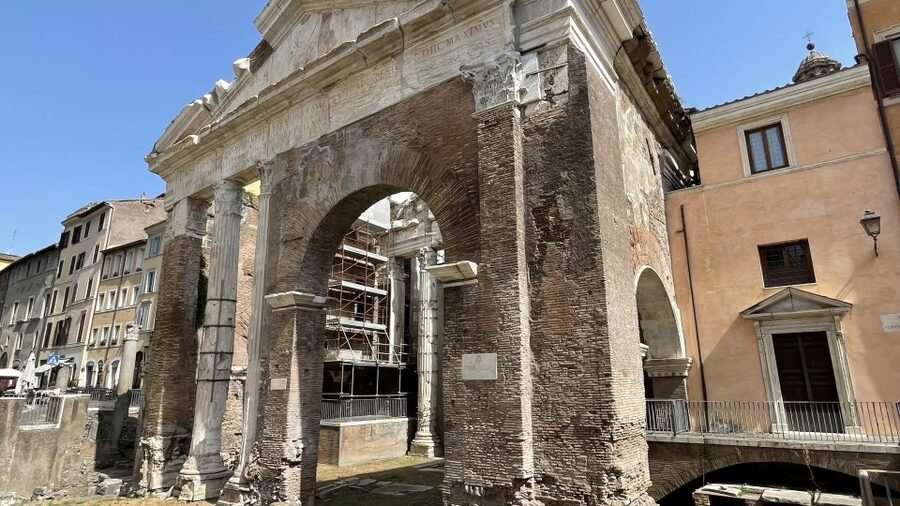
The Portico d’Ottavia receives roughly 15 minutes of guided attention. This ancient structure sits within the Jewish quarter and shows how closely Roman and Jewish stories are tied together in this part of the city.
The portico is another good example of Rome’s layered buildings. Ancient remains, later streets, religious sites, restaurants, and homes occupy the same compact area. Your guide will help you understand how the neighborhood developed instead of leaving you to guess which period belongs to which stone.
This stop also gives you a chance to notice the scale of the area. The former ghetto is not a giant district that requires a bus. It is compact enough to walk, but full enough of history that you can pass important details without realizing it.
The route does not promise entry into every major building. In particular, the Great Synagogue is viewed from outside rather than visited inside. If going into the synagogue is essential to you, check other tour options before booking or plan a separate visit. Several people specifically wished interior access had been included.
The Great Synagogue and Rome’s Jewish community
The Great Synagogue of Rome is one of the key landmarks on the walk. The guide explains its place in the community and the difficult story that surrounds the neighborhood.
The exterior stop is still worthwhile because the guide supplies the context that a photograph cannot. You can learn how the synagogue fits into the modern Jewish community and how the surrounding streets preserve the memory of earlier generations.
At the same time, the lack of interior access is the clearest limitation of this experience. The tour includes a pass by the synagogue, not a synagogue visit. Opening rules and access may vary, but the supplied tour details do not include admission, so do not assume you will go inside.
Bring a cover for bare shoulders if you plan to enter any church during your Rome sightseeing. That advice is useful beyond this tour, since the final stop involves a church on Tiber Island.
Crossing to Tiber Island
The walk ends by crossing the oldest functioning bridge in Rome to Tiber Island. The final section includes about 15 minutes of guided explanation, but the island gives the tour a strong ending because it links medicine, religion, war, and rescue.
You will hear the story of the hospital that helped save people during World War II. You will also hear about Asclepius, the ancient Greek god associated with healing, and the temple connected to him that is now a church.
This is a fitting final stop. The tour begins with imperial power and moves through confinement and persecution, then finishes with a place associated with care and survival. The contrast is not forced, but it gives the walk a clear shape.
The island is also a pleasant place to end because it feels distinct from the larger streets around it. You are still in central Rome, yet the river creates a natural pause. The guide concludes the storytelling here rather than rushing you back to the starting point.
How much walking and time should you allow?
The advertised duration is 2.5 hours. One past participant described the walk as about two hours, so the exact timing may vary with group size, questions, pace, and the guide. I would reserve the full two and a half hours, then allow extra time if you have a fixed dinner or museum booking afterward.
This is a walking tour, not a strenuous hike, but you will be on your feet across city streets and historic pavement. One guide adjusted the pace for a person with walking difficulties, and several people valued the calm pace of small groups. Still, you should be comfortable walking outdoors for most of the session.
Summer sun can be strong, and there is no promise of indoor shelter at every stop. Use sunscreen, carry water, and wear a hat. Since the tour runs in all weather, bring an umbrella or rain layer when conditions call for it.
Friday afternoon may require extra thought. One Jewish participant advised against scheduling the tour just before the Sabbath begins. The practical point is simple: check the timing if observing the Sabbath or if you want to see the neighborhood at a time that fits your religious plans.
Is $65 a fair price?
At $65 per person, this is not the cheapest way to walk around the Jewish Ghetto. You can visit the streets, fountains, and exterior landmarks without paying for a guide.
The price makes more sense if you want the history explained as you go. You are paying for an English-speaking guide, a planned route, the gelato or coffee stop, and the ability to ask questions. The tour also saves you from piecing together Roman, Jewish, and wartime history from separate guidebooks.
Small groups improve the value. Several bookings have produced groups of only two to four people, and some dates have turned into private tours when no one else booked. That is not guaranteed, but it means you may receive a more personal experience than the standard group format suggests.
The value is weaker if you prefer to linger at each site, enter the Great Synagogue, or explore independently. You will see several landmarks from the outside and spend most of the time listening while walking. For a guided introduction, the price is reasonable. For a self-directed visit, it is an avoidable cost.
Who should book this tour?
I would recommend it to first-time visitors who want a neighborhood tour with serious historical content. It also suits repeat visitors who have already seen the Colosseum and Vatican and want a smaller part of Rome explained properly.
You do not need a Jewish background. The tour is designed to explain the community’s story to a general audience, and the Roman context makes it useful for anyone interested in Italy’s past.
It is a good match for families with older children and teenagers if they respond well to stories. One guide kept teenagers engaged by presenting the past as a narrative rather than a string of facts. It can also work for older adults if you are comfortable walking and tell the guide when you need a slower pace.
I would be less likely to choose it for very young children, anyone seeking a food tour, or anyone who wants extensive interior visits. The gelato is a pleasant extra, not the main event. The focus is history, architecture, memory, and the changing life of the neighborhood.
Should you book the Jewish Ghetto walk?
Book it if you want Rome to make more sense as a living city rather than a collection of grand ruins. The route covers the Theater of Marcellus, Turtle Fountain, former ghetto wall, Portico d’Ottavia, Great Synagogue, and Tiber Island, but the guide’s storytelling is what joins those places together.
I especially recommend it if you can get a small group and if you enjoy asking questions. Guides such as James, Angela, Tom, Daniel, and Maria have been praised for turning a difficult subject into a clear, human story.
Skip it if entry inside the Great Synagogue is essential, or if you want a short photo stop with little explanation. For most visitors who have half a day to spare and want a thoughtful look at Rome beyond the headline monuments, this is a worthwhile use of your time and money.
FAQ
Where does the Rome Jewish Ghetto Walking Tour begin?
It begins at Foro Traiano, 84, near Trajan’s Column in central Rome. Look for the orange Roman Vacations sign.
How long does the walking tour last?
The listed duration is 2.5 hours. The exact length can vary depending on the group, questions, and walking pace.
What language is the tour offered in?
The live tour guide speaks English.
Is kosher gelato included?
Yes. The tour includes kosher gelato or coffee at a gelateria. Additional food and drinks are not included.
Does the tour go inside the Great Synagogue of Rome?
No interior visit is listed. The route passes the Great Synagogue and explains its importance from the outside.
What should I bring?
Bring comfortable shoes, a sun hat, sunscreen, a reusable water bottle, weather-appropriate clothing, and an umbrella. Bring a cover for bare shoulders if you plan to enter a church.
Can I join if I arrive late?
No. The tour cannot be delayed for late arrivals, and missed tours are not refunded.
Can I cancel the booking?
You can cancel up to 24 hours in advance for a full refund. You can also reserve now and pay later, which keeps your plans flexible.
Newest Rome tours we have reviewed
- Private TikTok Video Making in Rome★ 5.0 · 7 reviews
- Assisi, Orvieto and Civita di Bagnoregio Full Day Tour from Rome★ 4.5 · 45 reviews
- Assisi & Saint Francis Path Tour from Rome★ 5.0 · 45 reviews
- Assisi and Cascia Private Day Tour from Rome with Lunch★ 5.0 · 10 reviews
- Art Class in the center of Rome!★ 4.0 · 4 reviews
- Art & Craft: Beer Tour with Street Art in Rome★ 4.5 · 6 reviews
- Arrival in Rome: Airport Transfer & Exclusive City Introduction★ 5.0 · 3 reviews
- From Rome: Private Day-Tour of Tuscany★ 5.0 · 16 reviews
Jewish Ghetto Tours, compared.

Trastevere or Jewish Quarter Street Food Tour
Read our review →
Jewish Ghetto and Synagogues with Jewish Roman Guide 3 Hours
Read our review →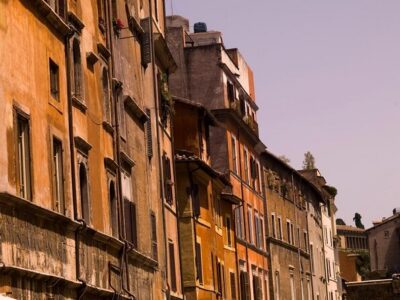
Jewish Ghetto & Piazza Navona: Food, Wine & Sightseeing Rome Tour
Read our review →
Jewish Ghetto & Campo de Fiori by Night Food Wine Tour
Read our review →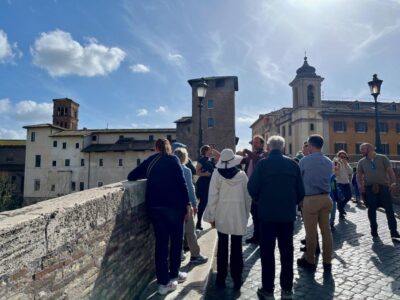

Jewish Quarter and Campo de’ Fiori Street Food Tour
Read our review →Browse the lists this tour appears in