
Reviewed · ROME
Rome: Jewish Museum and Tempio Maggiore Entry with Audio
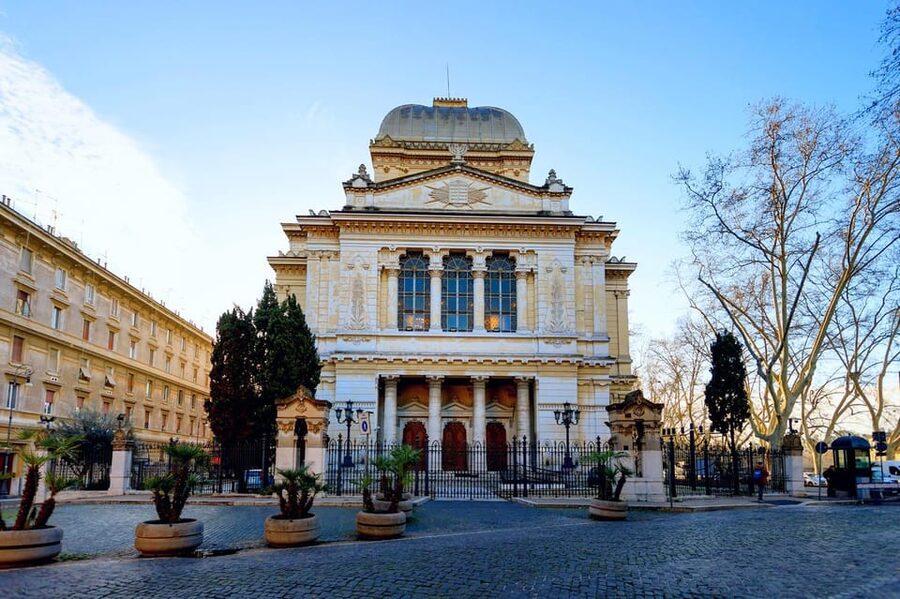
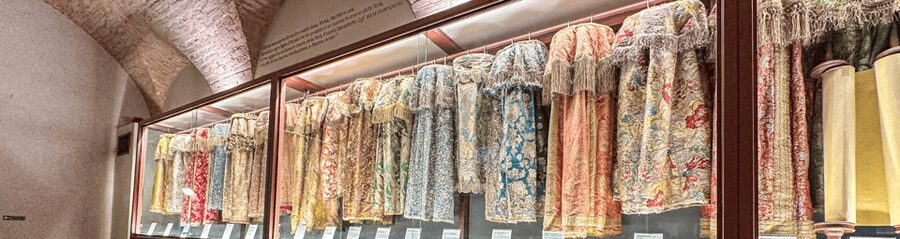
Rome’s Jewish Museum tells the story of a community that has lived in the city continuously for 2,200 years, while the nearby Tempio Maggiore gives that story a physical home. Inside seven rooms, you’ll see ceremonial objects, manuscripts, documents, books, and marble work from the former Ghetto synagogues. I like the direct link between the museum collection and the place where Rome’s Jewish community worships today.
I also like the practical setup: reserved entry with express security and a mobile audio guide in several languages. The main caution is the synagogue visit. Although the booking includes a guided visit to the Tempio Maggiore, some people have received only a short English audio explanation accessed by QR code, rather than a live guide or French-language tour.
Key points to know before you book
- A 2,200-year-old community: The museum follows Jewish life in Rome from ancient times through the Ghetto period and into the present.
- Seven themed rooms: The 700-square-meter museum uses objects and documents to explain both religious life and daily life in Rome.
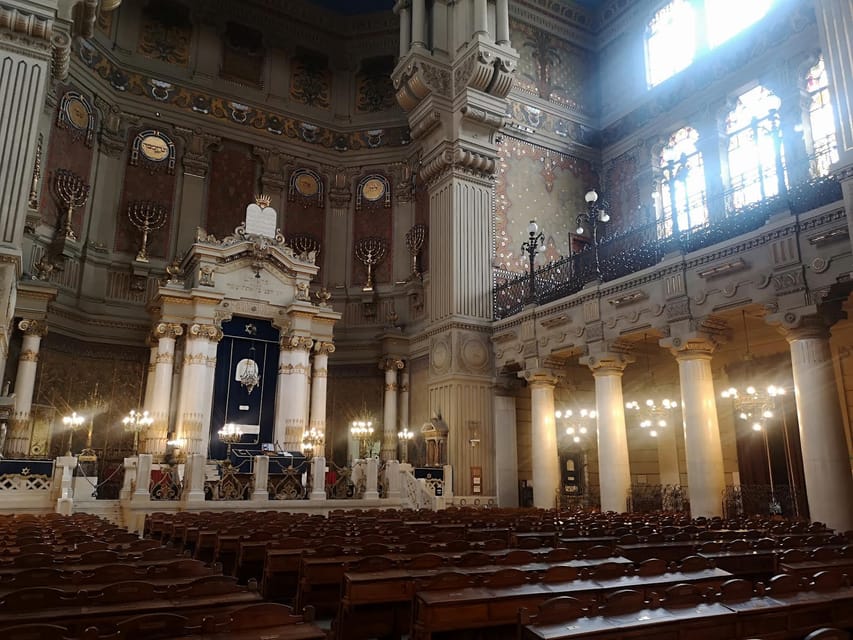
- Two synagogue spaces: The route includes the Tempio Maggiore and the Spanish Synagogue, located within the museum itinerary.
- Mobile audio, not a traditional guided tour: You’ll need the Vatican&Rome App, and your experience depends on downloading and using it successfully.
- Small-group access: The group is limited to 10 participants, with a host or greeter available in Italian, English, Spanish, French, Portuguese, or German.
- Check the synagogue details: The included synagogue visit may be conducted in English and may use a short QR-linked recording rather than a live multilingual guide.
Why Rome’s Jewish Museum deserves your time
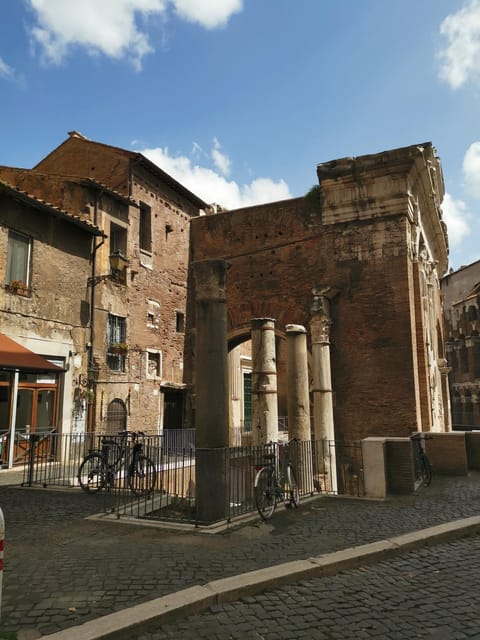
Rome is often presented through ancient ruins, Renaissance churches, and Baroque fountains. This museum gives you another way to read the city. It shows how a Jewish community maintained its religious and cultural identity while taking part in Rome’s social and economic life.
That long continuity is the key to the visit. You are not looking at a community that appeared for a short period and then disappeared. You are following Jewish life in Rome across many centuries, with the museum’s main objects coming from the period of the Ghetto, from 1555 to 1870.
I find that time frame especially useful because the collection is not only about abstract history. The objects came from the Palazzo delle Cinque Scole, the building that housed five synagogues in the former Ghetto. Their original setting is gone, but the museum keeps the religious and communal world of those synagogues visible.
The museum covers about 700 square meters and is divided into seven rooms. That is large enough to offer real substance, but compact enough to visit without giving up half a day. You can move through the rooms at your own pace with the audio guide, stopping longer when an object or subject catches your attention.
More self-guided and audio tours in Rome:
- Rome: Colosseum & Forum with Audio Guide App -Optional Arena
★ 4.2 · 24,770 reviews - Rome: St. Peter’s Basilica & Dome Entry Ticket & Audio Tour
★ 4.2 · 7,537 reviews - Vatican & Sistine Chapel Ticket with Optional Audio Guide
★ 4.1 · 5,405 reviews
The seven rooms and what they explain
The museum’s rooms are arranged by theme rather than simply by date. That matters because you are not just walking past old objects. The layout connects religious practice, community life, documents, and the changing place of Jewish Romans within the city.
You’ll see liturgical furnishings, which help explain how worship was organized and what objects mattered during religious services. Manuscripts and incunabula add another layer, showing the importance of written tradition and the preservation of religious knowledge.
The collection also includes historical documents and registers. These can feel less immediately dramatic than silver objects or marble work, but they help establish the ordinary structure of community life. Registers record people and institutions, while documents show how the Jewish population dealt with the wider city.
The marble works are another distinctive part of the collection. They connect the museum to Rome’s long tradition of stone carving and building, while also showing how Jewish religious spaces used local artistic materials.
The audio guide is useful here because the objects may not explain themselves. A ceremonial item, manuscript, or register can look beautiful without telling you why it mattered. The commentary gives you the background needed to read the collection as part of a living community rather than as a group of isolated antiques.
The audio guide is downloaded to your mobile device. The information states that the museum audio is available in English, Hebrew, Spanish, German, Russian, and French. The general activity information also lists Italian and Portuguese among the available languages, so check the current options in the app before you arrive.
From the former Ghetto to the present day
The main collection dates from the Ghetto period, which began in 1555 and ended in 1870. The museum uses this material to show how Jewish residents lived within Rome while preserving their faith, customs, and communal identity.
That balance is one of the most worthwhile parts of the visit. The story is not presented only as persecution or only as religious tradition. You also see how people worked within Rome’s wider social and economic structure.
The museum’s collection was once displayed in a single room beginning in 1960. A larger exhibition area and a new layout opened in 2005, allowing the museum to give the objects more room and arrange them by subject.
That change affects how comfortably you can take in the visit. Instead of one crowded display, you get a clearer route through seven rooms. If you use the audio guide carefully, you can spend time with the subjects that interest you most without being tied to a group leader’s pace.
The museum works best for you if you enjoy context. It is not simply an attraction built around one famous object. Its value comes from seeing many kinds of evidence together: religious furnishings, books, documents, registers, and stonework.
Seeing the Tempio Maggiore
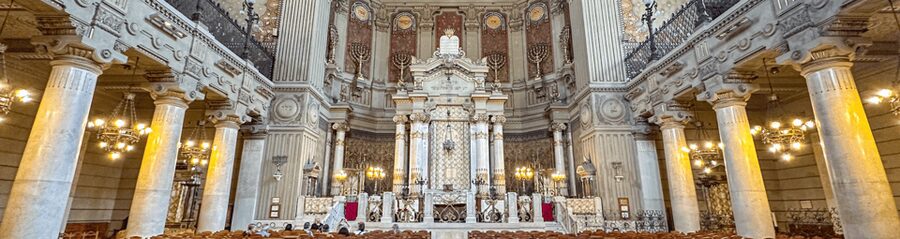
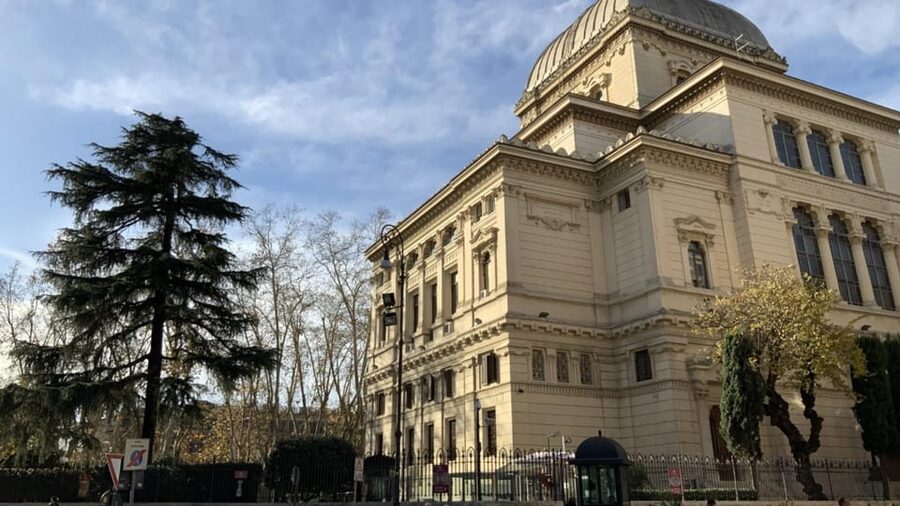
The Tempio Maggiore, or Great Synagogue, is an essential part of this experience because it links the museum’s collection with a functioning place of worship. The museum itinerary includes entry to the synagogue, and the visit is described as a guided portion of the experience.
You should keep your expectations precise. This is not necessarily a long, live, multilingual tour led by a named specialist. One account describes the synagogue explanation as an English audio guide accessed through a single QR code, lasting about three minutes. Another booking expected a French-speaking guide but did not find one.
That does not make the synagogue visit worthless. It does mean you should book this activity mainly for the museum and access to the Tempio Maggiore, not because you are certain to receive an extended personal tour inside the synagogue.
The short audio explanation may give you a quick introduction, but it will not provide the same depth as a longer guided visit. If the synagogue is your main reason for booking, ask the host or greeter at the entrance exactly how that part will be handled.
The experience may also include the Spanish Synagogue, which is located within the museum rooms. The information describes both synagogues as part of the museum itinerary, but the practical details of the Spanish Synagogue visit are not spelled out. Expect it to be part of the museum route rather than a separate walking excursion.
More museums and galleries in Rome:
- Vatican Museums & Sistine Chapel Tour with Optional Basilica
★ 4.3 · 67,413 reviews - Vatican Museums, Sistine Chapel & St Peter’s Basilica Guided Tour
★ 4.5 · 39,149 reviews - Rome: Vatican Museums, Sistine Chapel & Basilica Tour
★ 4.3 · 13,872 reviews - Vatican Museums & Sistine Chapel Skip-the-Line Entry Ticket
★ 4.4 · 13,838 reviews
The Jewish Quarter audio route
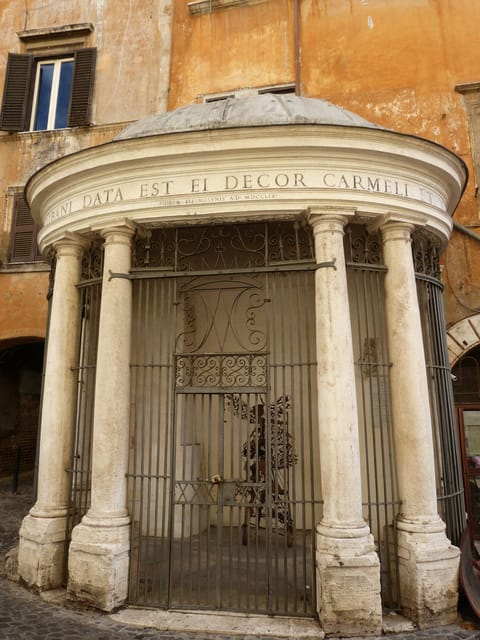
A separate Jewish Quarter audio guide is included through the Vatican&Rome App. It is available in Italian, English, French, German, Spanish, and Portuguese.
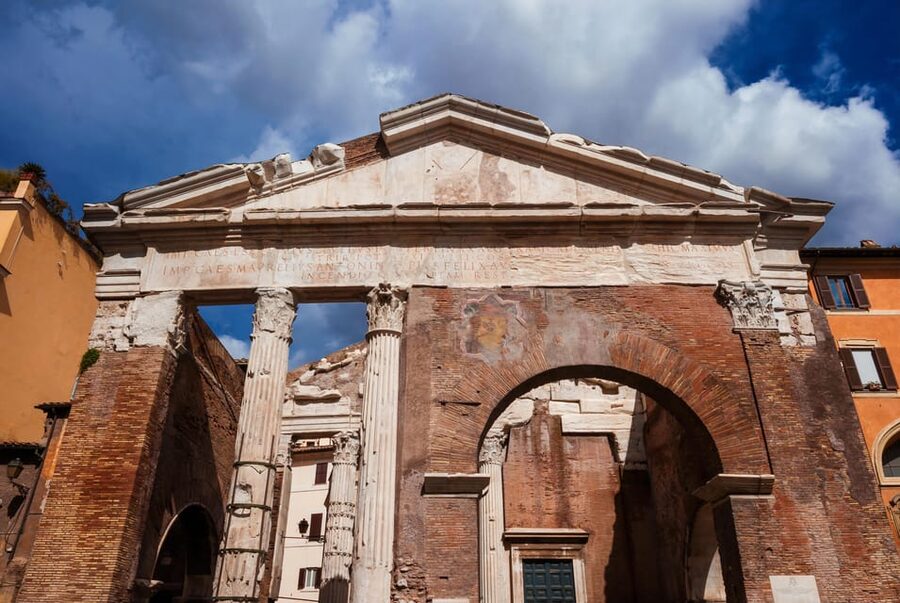
This is helpful because the museum gives you objects and indoor context, while the quarter audio gives you a way to connect that story with Rome itself. The activity does not include a live guided walk of the Jewish Quarter, so you will need to follow the audio independently.
That distinction is important when comparing this experience with a walking tour. You are getting a self-guided audio route, not a guide who leads you from street to street, answers questions, or adjusts the pace for the group.
I like the flexibility of an audio route, especially if you want to spend extra time in the museum before walking outside. You can also listen at your own speed. The drawback is that you are responsible for the app, your phone, and making sure the audio works.
Download the Vatican&Rome App before you go, using the App Store or Google Play. Do not wait until you are standing at the entrance. You will need your phone to access both the museum and Jewish Quarter commentary.
What the $20 price really buys
At $20 per person, this is a reasonably priced way to combine museum entry, Tempio Maggiore access, and audio material. The value is strongest if you want a structured introduction to Rome’s Jewish history without paying for a long private guide.
You are paying for more than a basic museum ticket. The reservation provides guaranteed access, express security, a mobile museum guide, the synagogue visit, and audio for the Jewish Quarter. A small group limited to 10 people and a multilingual host or greeter add some practical support.
Still, compare the price carefully. One person paid €18 and found that the same activity cost €12 on site. That does not prove the current in-person price, since prices can change, but it is a useful warning to check the museum’s direct rate before booking.
The online booking makes more sense if you value advance planning and want a reserved place. It also offers free cancellation up to 24 hours before the activity and a reserve-now, pay-later option. If your schedule is firm and the on-site price is lower, buying directly may be better value.
The experience is valid for one day, with starting times shown according to availability. It does not include transfers or a live guided tour of the Jewish Quarter.
Languages, access, and the small-group format
The host or greeter languages are Italian, English, Spanish, French, Portuguese, and German. The audio information lists several of those languages, with Hebrew and Russian also mentioned for the museum guide.
Because the material comes through an app, confirm the language you need before you book. The French-speaking guide issue is a good reminder that a listed language does not always mean a live guide will be present for every part of the experience.
The group size is limited to 10 participants. That is a useful middle ground. You are not joining a large crowd, but you also should not expect the personal attention of a private tour.
The activity is wheelchair accessible. You begin at the main entrance of the Jewish Museum after the security check and finish at the same meeting point. Transfers are not included, so you must arrange your own way to the museum.
Security comes before entry. The express security check can save time, but you still need to go directly to the main entrance and allow enough time to get through the check before starting the museum visit.
Who will enjoy this most
I would recommend this experience to you if you want a focused cultural visit that adds an important chapter to a first or repeat trip to Rome. It suits people who enjoy museums, religious history, architecture, and the story of how a community maintained its identity over many centuries.
It is also a good fit if you prefer to control your own pace. The audio guide lets you linger in the rooms that interest you and move more quickly through material that does not. The Jewish Quarter recording gives you extra context without locking you into a set walking group.
Families with older children may find the mix of objects, documents, and synagogue spaces more engaging than a long lecture. The seven-room layout also makes the museum easier to manage than a huge collection.
I would be more cautious if you want a fully guided experience. There is no included live guided tour of the Jewish Quarter, and the synagogue explanation may be only a short English recording. You should also reconsider if you dislike downloading apps or listening to commentary on your own phone.
Practical tips for a smoother visit
Download the Vatican&Rome App before leaving your hotel. Check that the audio files and language settings work, and bring a charged phone.
Read the inclusions carefully. Museum audio, Jewish Quarter audio, and synagogue access are included, but transfers and a live Jewish Quarter tour are not.
If you need French, Portuguese, or another language for the synagogue portion, confirm what will be available on the day. The general host language list is not the same as a promise of a live guide inside the synagogue.
Allow time for the museum itself rather than treating it as a quick ticket pickup. Seven rooms cover a long period, and the documents and religious objects need a little attention. The Tempio Maggiore visit may be brief, but the museum is where most of the historical substance lies.
Finally, compare the $20 price with the current direct admission cost. The reserved entry and app may be worth the difference, especially during a busy period, but you should know what convenience is costing you.
Should you book this Rome Jewish Museum experience?
Book it if you want a compact, well-organized introduction to Rome’s Jewish community, especially if reserved entry and multilingual audio appeal to you. The museum’s seven rooms, objects from the former Ghetto synagogues, and access to the Tempio Maggiore make this more meaningful than a standard museum visit.
Do not book it expecting a long live tour led in your chosen language. The synagogue portion may be short, and the Jewish Quarter route is self-guided. If you understand those limits, the $20 price can be fair for the museum, synagogue access, express security, and audio material. If the museum offers a much cheaper direct ticket on your date, buy there instead.
FAQ
How long is the activity valid?
The activity is valid for one day. Starting times depend on availability.
Where does the visit begin?
Go directly to the main entrance of the Jewish Museum after the security check.
Where does the activity end?
The activity ends back at the meeting point.
Is the Tempio Maggiore included?
Yes. Entrance to the Tempio Maggiore, or Great Synagogue, is included.
Is a live guided tour of the Jewish Quarter included?
No. The activity includes an audio guide for the Jewish Quarter, but not a guided walking tour.
Which languages are available for the audio guides?
The listed audio languages include Italian, English, French, German, Spanish, and Portuguese. The museum audio information also lists Hebrew and Russian.
Do I need an app?
Yes. You need to download the Vatican&Rome App from the App Store or Google Play to use the audio guides.
Is the activity wheelchair accessible?
Yes, the activity is wheelchair accessible.
How large is the group?
The experience is offered in a small group limited to 10 participants.
Can I cancel for a refund?
Yes. You can cancel up to 24 hours in advance for a full refund. You can also reserve now and pay later.
Newest Rome tours we have reviewed
- Private TikTok Video Making in Rome★ 5.0 · 7 reviews
- Assisi, Orvieto and Civita di Bagnoregio Full Day Tour from Rome★ 4.5 · 45 reviews
- Assisi & Saint Francis Path Tour from Rome★ 5.0 · 45 reviews
- Assisi and Cascia Private Day Tour from Rome with Lunch★ 5.0 · 10 reviews
- Art Class in the center of Rome!★ 4.0 · 4 reviews
- Art & Craft: Beer Tour with Street Art in Rome★ 4.5 · 6 reviews
- Arrival in Rome: Airport Transfer & Exclusive City Introduction★ 5.0 · 3 reviews
- From Rome: Private Day-Tour of Tuscany★ 5.0 · 16 reviews