
Reviewed · ROME KIDS AND FAMILY TOURS
Rome: Moonlight Walking Tour – Free for Kids
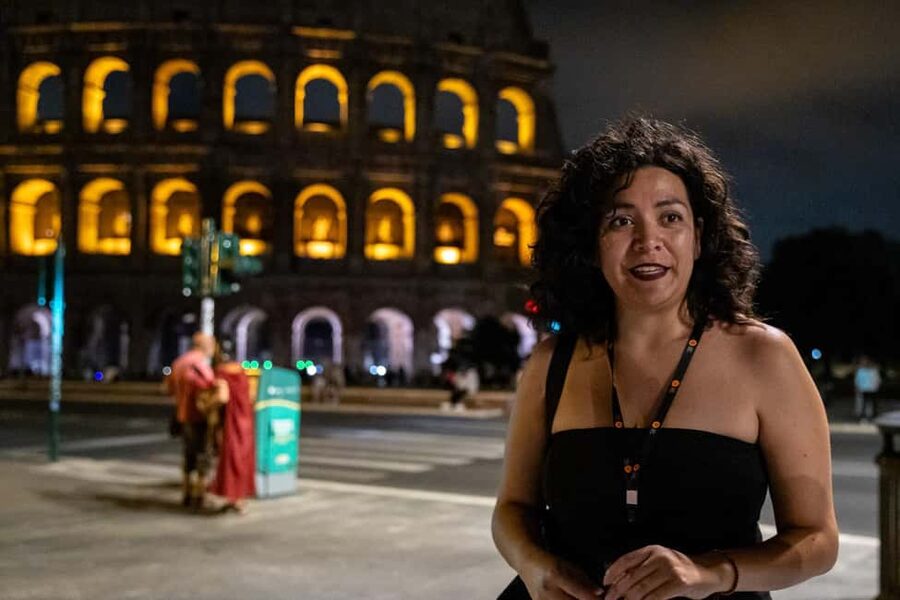
Rome is at its most atmospheric after dark, when the fountains glow, the stone streets cool down, and the Colosseum appears like a stage set at the end of the evening. This moonlight walking tour links major sights with lesser-known corners, including Sant’Ignazio’s remarkable painted ceiling and a final viewpoint over the illuminated Colosseum.
I like the route’s strong first-night value. In one walk, you get your bearings around Piazza Navona, the Pantheon, Trevi Fountain, Piazza Venezia, and the Imperial Forums. I also like the guides’ personal style. Aline, Sila, Anna, Sharon, Dan, Mary, and others are praised for clear explanations, humor, and making room for questions.
The main thing to consider is the walking. The tour is advertised at 2 to 2.5 hours, but some outings have run closer to three hours. That can feel long after a full day on Rome’s hard pavements, so wear sensible shoes and treat the stop for a drink or gelato as part of the plan, not a luxury.
Key points to know before you book
- Rome after dark: Cooler streets, illuminated monuments, and fewer daytime crowds give familiar sights a different mood.
- A useful first-night route: The walk covers several central landmarks, helping you decide what deserves a closer visit later.
- Sant’Ignazio is a highlight: Its painted fake dome ceiling gives the tour an unexpected art stop between the big-name sights.
- The guides make the difference: Aline, Sila, Anna, Sharon, Dan, Mary, Diletta, and Csenge have all been praised for warmth, stories, and clear English.
- A long but worthwhile walk: Allow 2 to 2.5 hours, with the possibility of a longer evening and a short refreshment break.
- Flexible booking: You can cancel up to 24 hours ahead for a full refund and reserve now while paying later.
Why Rome works so well at night
Rome’s famous center is easier to enjoy once the heat and daytime crush begin to fade. The fountains are lit, the old stone takes on a softer color, and the streets around the historic center feel more suited to wandering than rushing from one sight to the next.
I like this timing because the tour is not simply a daytime sightseeing route moved into the evening. The darkness changes what you notice. Illuminated statues at the Imperial Forums look theatrical. The Trevi Fountain feels more romantic. The Colosseum, seen from above at the end, gives the walk a clear finish.
You should still expect an active outing. This is a walking tour on cobbled and paved streets, with long periods spent standing while the guide talks. Comfortable clothes and shoes are specifically recommended, and that advice matters here.
The tour is offered in English and Spanish, with a live guide rather than an audio recording. Private groups are available, though the standard experience may place you with other people. One small group of six to eight was especially appreciated for feeling manageable, but group size can depend on the option you book.
More family-friendly days in Rome:
- Colosseum and Roman Forum Tour for Kids and Families
★ 5.0 · 446 reviews - Colosseum and Ancient Rome Family Tour for Kids
★ 4.8 · 316 reviews - Rome: Family-Friendly Pasta and Tiramisu Cooking Class
★ 4.9 · 234 reviews
Starting in Piazza Navona and the old city center
The route has two possible starting points, Piazza di Pasquino or Piazza d’Aracoeli. Check the exact option you reserve, since the meeting point may change.
The walk then reaches Piazza Navona, one of Rome’s grandest public spaces. The square follows the shape of an ancient stadium, and its long open form makes a good introduction to Rome’s habit of building the new directly over the old.
Here, your guide focuses on the Fountain of the Four Rivers. Its sculptures and water give the square much of its drama, especially at night when the details are picked out by lighting. This is also a practical place to begin because the open piazza gives you room to find the guide and settle into the group.
The Piazza Navona stop is listed at about 20 minutes. That is enough time for an explanation, a few photographs, and a first sense of how the evening will work. You are not expected to explore every side street before moving on.
The Pantheon and Sant’Ignazio’s painted dome
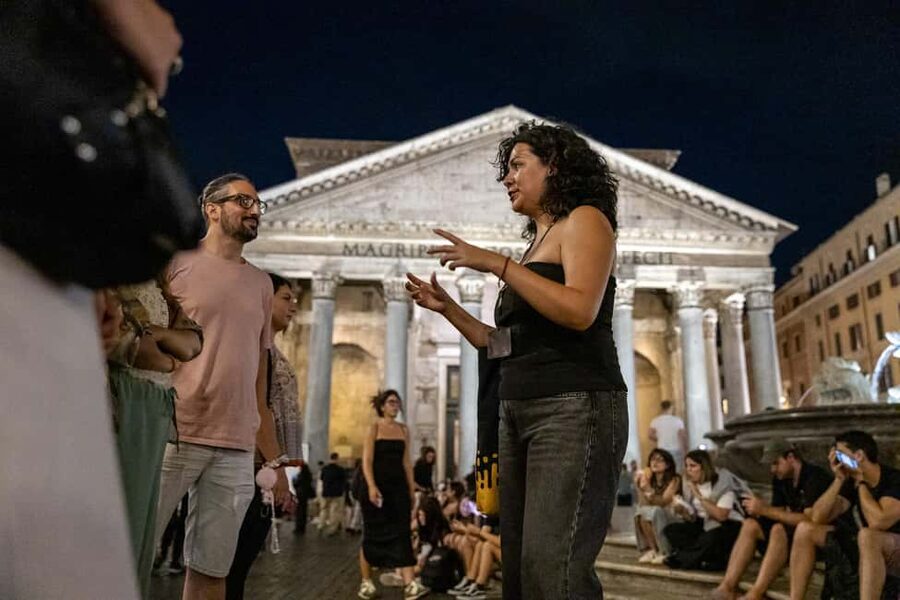
From Piazza Navona, the route passes the Pantheon. You do not enter as part of this walk, so you should not book the tour expecting an interior visit. The value here is the guide’s explanation of one of the best-preserved ancient Roman buildings and the mystery surrounding its construction and survival.
The Pantheon is most striking from outside at night. Its massive columns and plain stone walls contrast with the lively streets around it. Your guide can place the building in the wider story of Ancient Rome, then point out details you might otherwise walk past.
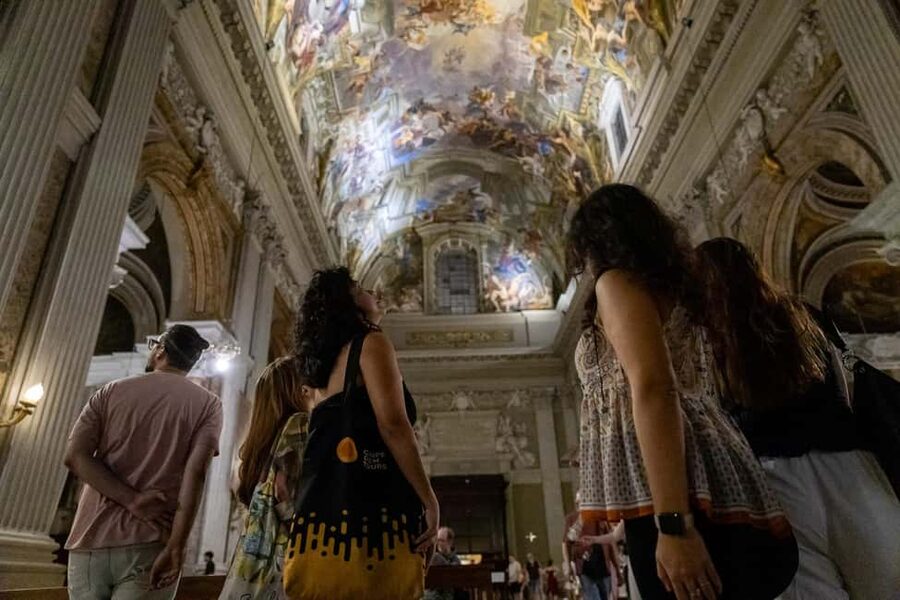
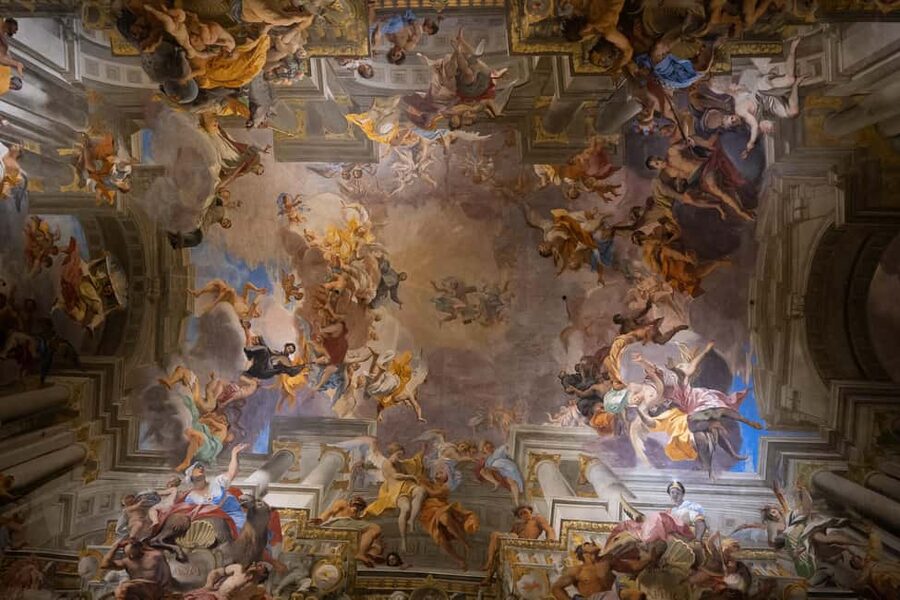
The next stop, the Church of Sant’Ignazio di Loyola, is one of the route’s best surprises. The church is known for an illusion in its ceiling: a painted perspective creates the appearance of a dome where there is no real dome. You may know to look up in Rome’s churches, but it is still easy to miss how carefully the image is designed.
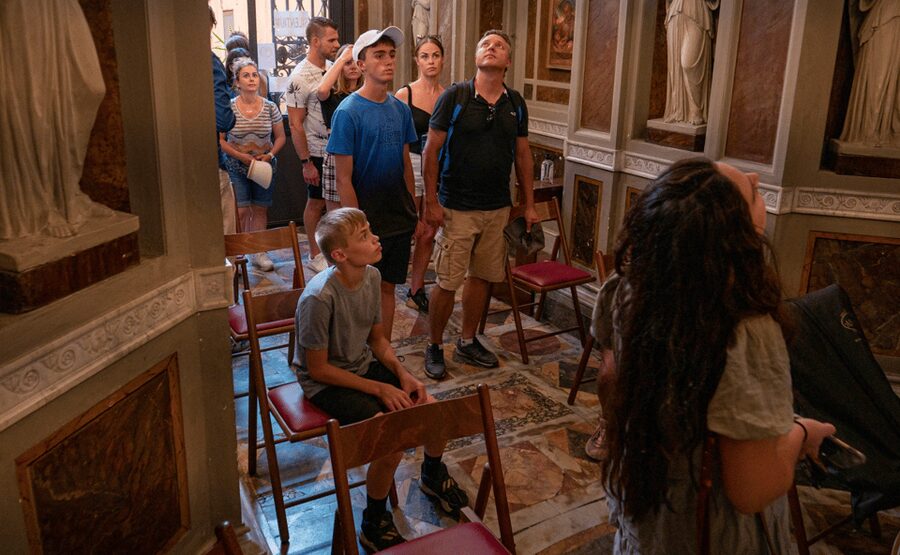
This stop lasts about 30 minutes, making it one of the more substantial visits on the route. It also gives the evening a useful change of pace. Instead of standing beside another ancient monument, you get an interior art experience and a chance to see how Rome’s religious buildings use painting, architecture, and illusion together.
One family specifically found the fake dome a highlight, and I can see why. It is the sort of detail that gives a walking tour personality. You may have visited the Pantheon and Trevi Fountain on your own, but a stop like this helps the route feel less like a checklist.
Galleria Sciarra and Rome’s quieter details
The walk continues to Galleria Sciarra, an ornate covered courtyard near the center. The stop is scheduled for about 20 minutes, enough time to look closely at its decorative details and hear why this less-famous location matters.
This is where a local guide can add real value. Large monuments explain themselves through scale, but a courtyard can be easy to overlook. The guide’s job is to draw your attention to the building’s decoration and connect it to Rome’s broader artistic character.
The tour does not treat every stop as a major ticketed attraction. Instead, it mixes famous landmarks with places you might not put on your own list. That keeps the walk varied and gives you more than the standard sequence of Pantheon, Trevi Fountain, and Colosseum.
If you are using the tour to get oriented, pay attention to the links between stops. The walk through central streets helps you understand how close many of Rome’s major sights are on foot, while also showing how quickly the mood changes from grand piazza to narrow lane.
More walking tours in Rome:
- Rome: Trastevere & Campo de Fiori Street Food Walking Tour
★ 4.9 · 2,768 reviews - Rome: Paranormal Night Walking Tour & Secret Backstreets
★ 4.9 · 1,921 reviews - Rome by Night Walking Tour – Legends & Criminal Stories
★ 4.5 · 1,003 reviews - Rome: Guided City Center Evening Sightseeing Walking Tour
★ 4.4 · 953 reviews
Trevi Fountain after the crowds thin
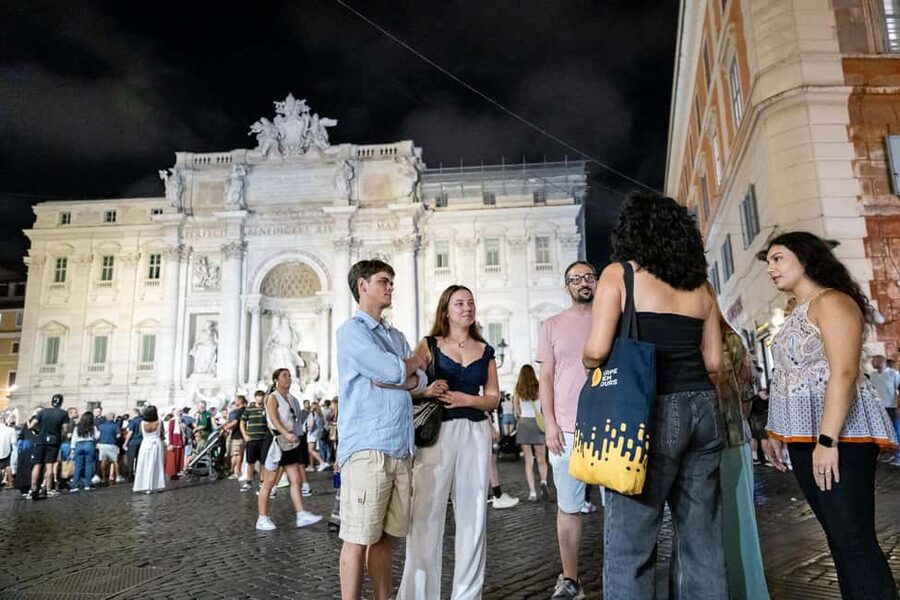
Trevi Fountain is the route’s most obvious crowd magnet. At night, it remains popular, but the lighting gives the fountain a more intimate feel than it has under the hard midday sun.
The guide explains the fountain’s history and the coin-toss legend. You will have time for photographs, and the route includes a short break for pictures or a refreshment. Some outings have included a well-earned gelato stop, though food and drinks are not included in the tour price.
That distinction matters. You should budget separately if you want gelato, coffee, or another drink. The pause is useful after roughly two hours of walking, especially in warmer weather, but it is not a formal meal stop.
Trevi Fountain can be noisy, and one practical point came up repeatedly in the experience: guides may be harder to hear beside fountains or in crowded areas. Stay close enough to the guide, and do not hesitate to move toward the quieter edge of the group when an explanation begins.
The tour is not designed to give you a long, unstructured period at Trevi. It gives you context, photographs, and a chance to enjoy the setting before continuing. If you want an extended visit or a close study of every sculptural detail, return another time.
Piazza Venezia and the monument to Italy
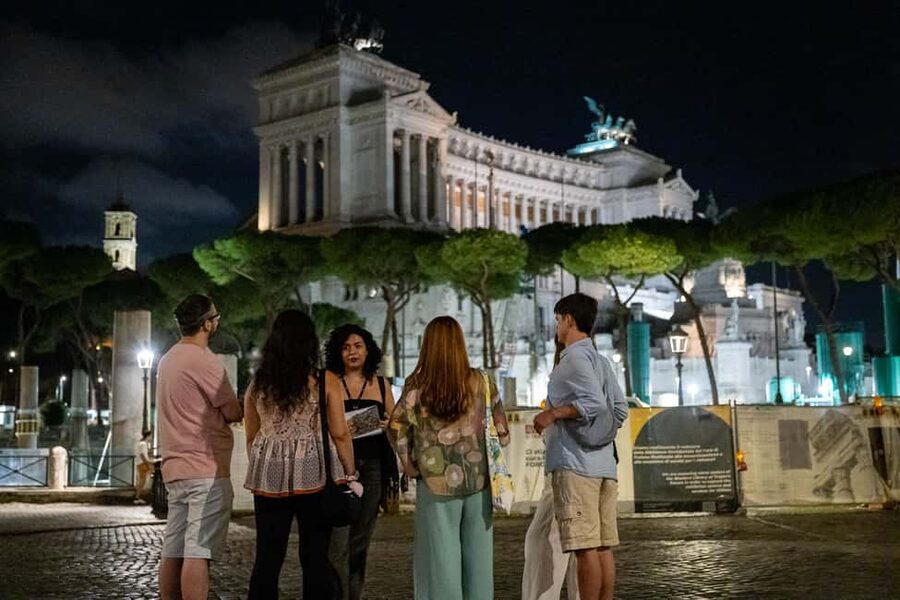
From Trevi, the route heads toward Piazza Venezia. The square is dominated by the enormous white monument built to honor Vittorio Emanuele II, the first king of unified Italy. It is one of the biggest buildings in central Rome, and its bright stone makes it hard to miss.
The guide uses this area to explain the building’s national importance and its place in modern Italian history. This is a helpful counterpoint to the ancient Roman sites earlier in the walk. Rome is not only an ancient city. Its streets also carry the story of Italy’s later unification.
The stop is listed at about 20 minutes. You will likely view the monument from the square rather than spend time inside it. At night, the lighting emphasizes its broad stairways and columns, making it a good place for photographs.
Piazza Venezia can also be one of the busier and louder parts of the route. The guide’s voice may compete with traffic and city noise, so this is another moment when staying near the group helps.
Trajan’s Column and the Imperial Forums
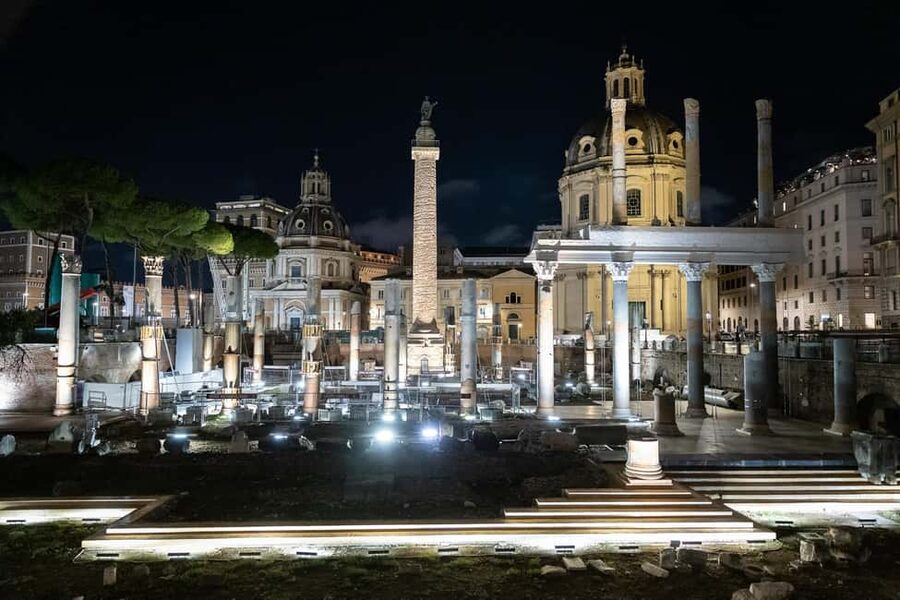
The next section brings you to Trajan’s Column and the road of the Imperial Forums. Trajan’s Column is covered with a spiral relief showing scenes from the emperor’s military campaigns. Even from ground level, the carved band is a reminder of how Rome used monuments to celebrate power and victory.
The guide spends about 20 minutes around the column, then the route passes along Via dei Fori Imperiali. You are not entering the archaeological areas as part of this experience, so think of this as an illuminated outdoor view rather than an archaeological-site tour.
That is not a weakness if you understand the format. The Imperial Forums are difficult to absorb in a quick visit during the day, and a night walk gives you a broad visual introduction. Lit statues, columns, temples, arches, and winding roads create a powerful scene, while the guide explains how the forums fitted into the ancient city.
I like this part because it shows the scale of Rome. Earlier stops focus on individual fountains, churches, and buildings. Here, you see the remains as part of a large civic center. The road also provides some of the evening’s strongest views, though you should expect more standing and walking rather than a slow museum-style visit.
The final viewpoint over the Colosseum
The tour saves its most dramatic photograph for the end. It finishes at a secret picture-perfect viewpoint overlooking the illuminated Colosseum.
The exact viewpoint is not described in detail, which is part of its appeal. You should expect a scenic stop rather than entry into the Colosseum. This is a chance to look back at one of Rome’s most recognizable buildings after seeing the monuments that help explain its place in the city.
The route can finish at the Colosseum or return toward Piazza Navona, depending on the option booked. Confirm the end point before you set plans for dinner or transport.
For solo visitors, the evening format can be reassuring because you are walking with a guide and group rather than trying to navigate the center alone. One guide even helped a solo participant arrange a taxi at the end. That kind of practical care is not guaranteed, but it reflects the personal tone this tour can have.
The guides and the storytelling style
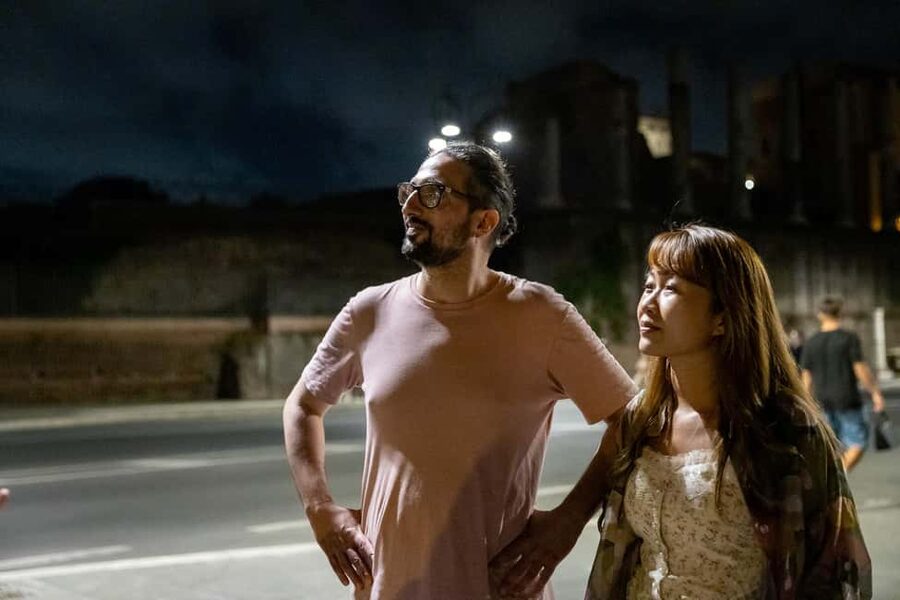
The guide is the main variable in any walking tour, and the named guides associated with this experience have different strengths. Aline was praised for her passion and for keeping the 2.5-hour walk moving. Sila was appreciated for mixing historical facts with fun stories and for making the tour memorable.
Anna is described as highly prepared, ready with side anecdotes, and happy to answer questions. Sharon is praised for maintaining a strong level of information throughout the walk. Dan is noted for his enthusiasm and passion for the city, though his tours sometimes ran long.
Other guides, including Diletta, Mary, Csenge, Anastasia, Paulina, and Dogus, are described as friendly, engaging, and good with questions. Mary in particular is associated with a lively love of Rome, while Csenge brought humor and charm to the evening.
You cannot usually choose a specific guide unless the private option allows it, so book for the route and format rather than one particular person. Still, these comments give you a useful picture: the best part of the experience is not a scripted list of dates. It is the way the guide brings side streets, church decoration, legends, and ancient monuments together.
Price, timing, and practical value
The listed price is $28 per person. For a 2 to 2.5-hour guided walk through central Rome, that can be good value, especially if this is your first evening in the city. You cover a long route and see several places that could take effort to connect on your own.
The value is strongest if you want orientation, stories, and nighttime views. It is less compelling if you prefer to spend a long time inside each monument or dislike group walking.
The title indicates that children can join free, but the supplied details do not state the age limit or the exact child-booking rules. Check the reservation terms carefully before counting on that saving.
You can cancel up to 24 hours before the activity for a full refund, and the reserve-now, pay-later option keeps your plans flexible. The tour is available with English or Spanish narration.
Plan for:
- Comfortable walking shoes
- Comfortable clothes suited to the evening temperature
- A phone or camera for the illuminated monuments
- Extra money for food or drinks
- A little patience if the tour runs longer than the advertised time
I would not schedule a late dinner immediately afterward unless the restaurant is close to the end point. The route can last three hours, and tired feet are a real possibility after a busy day.
Who should book this Rome night walk?
I would recommend it to first-time visitors who want a clear introduction to central Rome without spending the evening inside a museum. It also suits families with older children and teenagers, since the route mixes legends, visual surprises, famous monuments, and short photo stops.
It works well for solo visitors who want company at night, and for couples looking for Rome’s fountains and monuments under evening lighting. The private-group option may suit families or friends who want more control over the pace and questions.
I would be more cautious if you have limited mobility, need frequent seating, or want a short, relaxed stroll. The route covers a lot of ground, includes cobbled streets, and may run beyond 2.5 hours. It also is not the right choice if your main goal is entering the Pantheon or Colosseum, since those are viewed from outside during this experience.
Should you book it?
Book this tour if you want to see Rome’s major central sights in one evening and hear the stories that connect them. The best reasons are the cooler timing, the illuminated Imperial Forums, Sant’Ignazio’s painted dome, and the final view of the Colosseum.
Skip it if you prefer to explore at your own speed or already have detailed visits planned for each landmark. For everyone else, especially on the first night, $28 buys a useful route, a local guide, and a strong introduction to Rome after dark.
FAQ
How long does the moonlight walking tour last?
The stated duration is 2 to 2.5 hours, though some outings have lasted about three hours.
What language is the tour offered in?
Live guiding is available in English and Spanish.
Where does the tour begin?
The starting point can be Piazza di Pasquino or Piazza d’Aracoeli, depending on the option you book. Check your confirmed meeting point.
Where does the tour finish?
The described options finish at Piazza Navona or the Colosseum. The exact end point depends on the option booked.
Is food included?
No. Food and drinks are not included, though the walk includes a short break when you can get a refreshment. Some outings have included a gelato stop.
Can I cancel the booking?
Yes. You can cancel up to 24 hours in advance for a full refund, and you can reserve now and pay later.
Newest Rome tours we have reviewed
- Private TikTok Video Making in Rome★ 5.0 · 7 reviews
- Assisi, Orvieto and Civita di Bagnoregio Full Day Tour from Rome★ 4.5 · 45 reviews
- Assisi & Saint Francis Path Tour from Rome★ 5.0 · 45 reviews
- Assisi and Cascia Private Day Tour from Rome with Lunch★ 5.0 · 10 reviews
- Art Class in the center of Rome!★ 4.0 · 4 reviews
- Art & Craft: Beer Tour with Street Art in Rome★ 4.5 · 6 reviews
- Arrival in Rome: Airport Transfer & Exclusive City Introduction★ 5.0 · 3 reviews
- From Rome: Private Day-Tour of Tuscany★ 5.0 · 16 reviews
Rome Kids and Family Tours, compared.
Colosseum and Roman Forum Tour for Kids and Families
Read our review →
Colosseum and Ancient Rome Family Tour for Kids
Read our review →
Family-Friendly Pasta and Tiramisu Cooking Class
Read our review →
Private Colosseum & Ancient Rome Family Tour for Kids
Read our review →
Browse the lists this tour appears in