
Reviewed · ROME
Rome: Paths of the Vatican Guided Tour
Castel Sant’Angelo is the star of this walk, not just a grand lump of stone beside the Tiber. It began as Emperor Hadrian’s mausoleum, then became a papal fortress linked to the Vatican by the Passetto di Borgo, a raised escape route. I like that this tour connects the castle and Vatican instead of treating them as separate sights.
I also like the route through Borgo Pio and Via della Conciliazione, which gives you a clear sense of how Rome leads into St. Peter’s Square. The drawback is important: entrance tickets to Castel Sant’Angelo, the Passetto, and St. Peter’s Basilica are not included, so this is mainly a guided outdoor walk unless you arrange admission separately.
Key points to know before booking
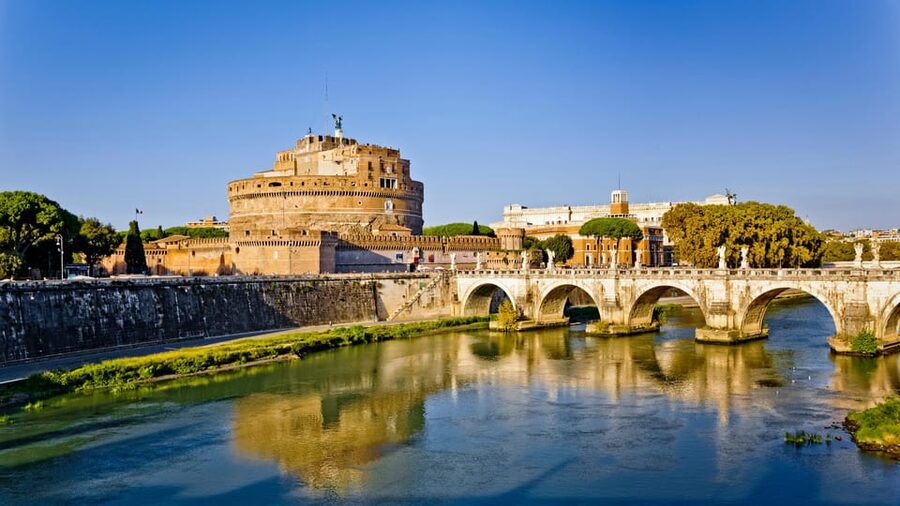
- Castel Sant’Angelo begins the story: You’ll learn how an imperial tomb became a papal stronghold.
- The Passetto di Borgo links castle and Vatican: Your guide explains its role as a protected escape route.
- The route takes about two hours: Each main stop receives roughly 15 to 30 minutes.
- St. Peter’s Square is the grand finale: The guide explains the space before finishing there.
- Tickets cost extra: Admission to the castle, passageway, and basilica is not included.
- The walk suits mobile visitors: It is not recommended for people with back problems, mobility impairments, or motion sickness.
Why this Vatican-area walk is different
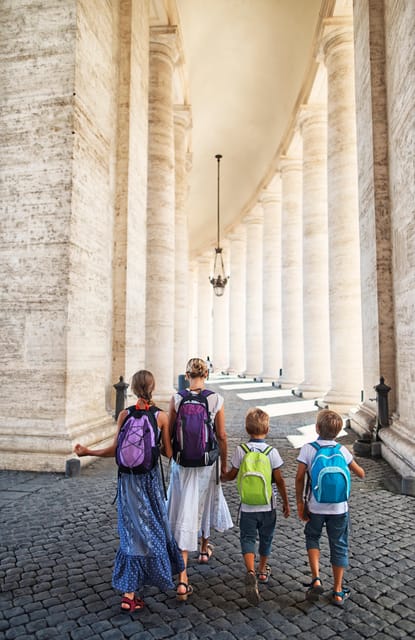
Many Vatican visits begin inside the museums or at St. Peter’s Basilica. This one begins outside the usual focus, at Castel Sant’Angelo, then follows the old connection between the fortress and the papal center.
That gives you a useful piece of context before you reach the square. The Vatican was not only a religious center. It was also a place that needed protection, escape routes, fortified buildings, and carefully controlled approaches. The castle and Passetto make those concerns easy to picture.
The tour lasts two hours and costs $44.41 per person. That is fair value if you want a guide to explain the route and its political history without committing to a longer museum visit. It is less attractive if you expect a full Vatican interior tour, since the listed price does not cover admission.
I would think of this as a Vatican orientation walk. It helps you understand what you are seeing, gives you a route through the neighborhood, and leaves you in St. Peter’s Square. It is not a substitute for touring the Vatican Museums or spending time inside the basilica.
More guided tours in Rome:
- Vatican Museums, Sistine Chapel & St Peter’s Basilica Guided Tour
★ 4.5 · 39,149 reviews - Rome: Colosseum, Palatine Hill and Roman Forum Guided Tour
★ 4.8 · 32,814 reviews - Rome: Guided Tour of Colosseum, Roman Forum & Palatine Hill
★ 4.7 · 27,897 reviews
Starting at Castel Sant’Angelo
Meet your guide directly in front of the main entrance to Castel Sant’Angelo. This is a practical meeting point, but give yourself enough time to find the correct side of the building. The tour does not provide hotel pickup or transport, so you make your own way there.
The castle’s shape and location immediately tell you that Rome has reused this building many times. It was first built as the mausoleum of Emperor Hadrian, then changed into a papal fortress. That shift from imperial tomb to defensive stronghold gives the guide a useful way to explain Rome’s changing centers of power.
The guided portion at Castel Sant’Angelo lasts about 30 minutes. You should expect an overview of the building, its connection to the Vatican, and the layers of purpose added over the centuries.
Because entry to Castel Sant’Angelo is not included, do not assume that the guide’s 30-minute presentation includes access to the interior. The information provided lists the castle as a stop and separately excludes admission. If you want to go inside, check the ticket arrangement before booking or plan to buy entry on your own.
That distinction affects the value. An exterior explanation can still make the building far more interesting, but you will not get the same experience as exploring its rooms, ramps, or upper views.
Following the Passetto di Borgo
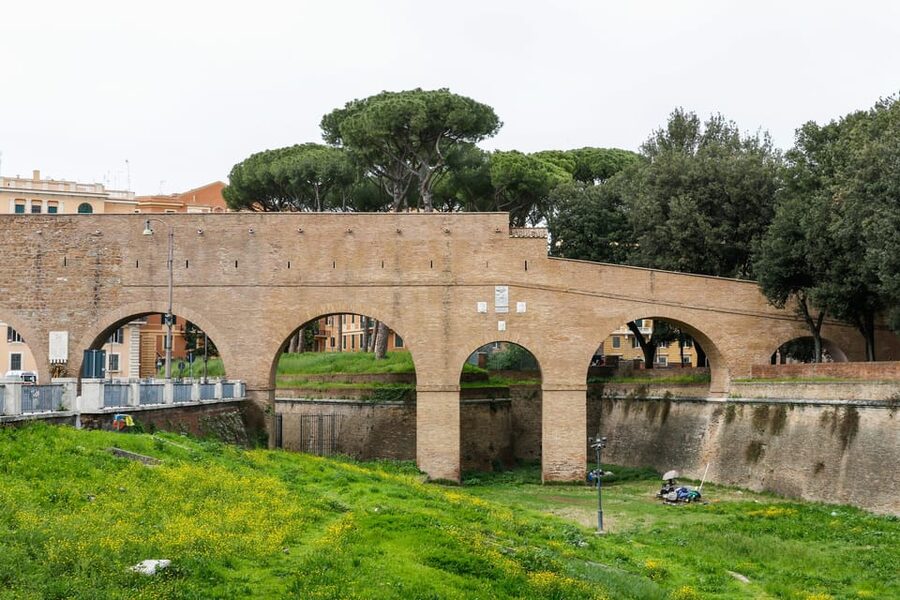
From the castle, the route moves to the Passetto di Borgo, the raised passage that connected Castel Sant’Angelo with the Vatican. The walk and guide talk here take about 15 minutes.
This is one of the most memorable ideas in the tour. A passageway linking a fortress to the Vatican sounds almost like a story from a political thriller, but its purpose was practical: it gave the pope a protected route toward the castle during danger.
You may be able to see the passage from the route, but admission to the Passetto is not included. Treat this part as an explanation of the structure and its role, not as a guaranteed interior visit.
I like this stop because it turns a piece of infrastructure into a readable part of Rome. Instead of seeing a wall or elevated corridor and walking past, you learn why it mattered and who might have needed it.
The stop is short, so listen closely. Fifteen minutes is enough for the main story, but not for a long architectural study. If the group includes both English- and Italian-speaking participants, the guide may give the tour in two languages, which can affect the time available for each explanation.
Walking through Borgo Pio
The route continues through Borgo Pio for about 15 minutes. This neighborhood helps bridge the gap between the fortress and the grand Vatican approach.
The supplied details do not promise a food stop, shopping time, or a restaurant visit here. You should think of Borgo Pio as a walking section with commentary, not as a separate neighborhood tour.
That short passage still matters. Rome can change character within a few streets, and this part of the route gives you time to move from the defensive world of the castle toward the ceremonial space of St. Peter’s Square.
The walk also means you should wear practical shoes. The experience is not described as physically demanding in a technical sense, but it includes steady walking for two hours. The operator specifically says it is not suitable for people with back problems or mobility impairments. It is also not recommended for people with motion sickness, though no transport is involved.
Same city, a completely different half-day:
- Vatican Museums & Sistine Chapel Tour with Optional Basilica
★ 4.3 · 67,413 reviews - Rome: Colosseum & Forum with Audio Guide App -Optional Arena
★ 4.2 · 24,770 reviews - Rome: Colosseum, Roman Forum and Palatine Hill Guided Tour
★ 4.5 · 23,903 reviews - Rome: City Sightseeing Hop-on Hop-off Bus with Audioguide
★ 4.0 · 16,045 reviews
Via della Conciliazione and the approach to the square
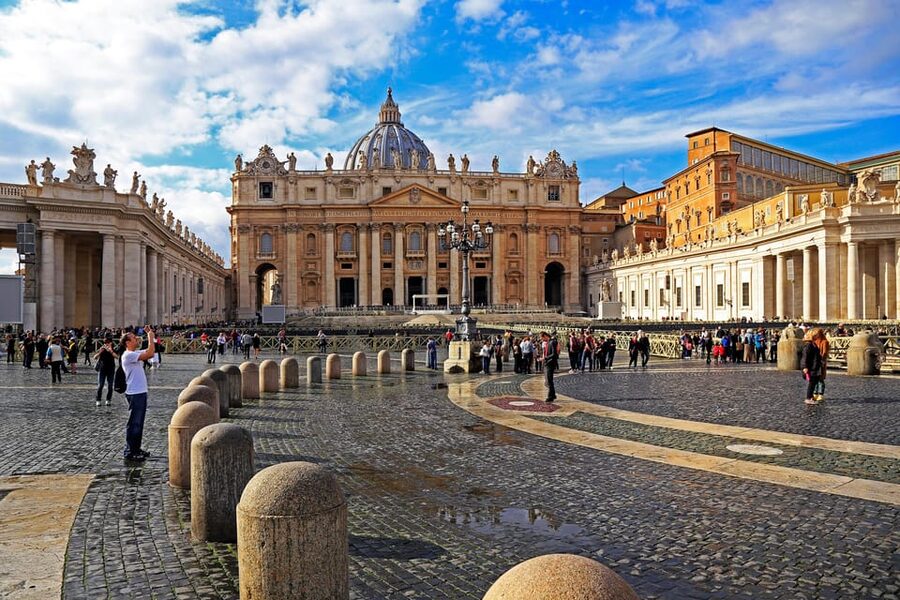
From Borgo Pio, the route follows Via della Conciliazione toward St. Peter’s Square. This is one of the most recognizable approaches to the Vatican, and the broad street gives the final destination a strong sense of arrival.
The guide can help you read this approach as more than a route from one attraction to another. You are moving from Castel Sant’Angelo, through the former protected connection, across the Borgo area, and toward the heart of Vatican City.
This is also where the tour’s design works best. The castle gives you military and imperial context. The Passetto adds the papal escape story. The street then leads you toward the ceremonial and religious center.
You are not simply collecting buildings. You are following a line between power, protection, ceremony, and faith.
Understanding St. Peter’s Square
The tour spends about 30 minutes in St. Peter’s Square. This is the largest and most open portion of the itinerary, and it gives the guide time to explain the square’s historical importance and grand design.
You can expect commentary about the square as the approach to St. Peter’s Basilica and as one of the Vatican’s central public spaces. The details provided do not name a specific guide, and the guide may be monolingual or bilingual depending on the group.
Admission to St. Peter’s Basilica is not included. That means you should not book this activity expecting a guaranteed interior visit. The itinerary lists the basilica as a 30-minute guided stop, but the exclusion of the entrance fee makes it important to confirm exactly what access is provided on your chosen date.
If interior entry is not part of your booking, the square still gives you a strong view of the basilica’s exterior and a clear explanation of its place in Vatican life. For many people, that is enough for a first orientation. For others, it will feel incomplete, especially if they want to see the art and architecture inside.
The St. Peter’s Basilica stop
The final guided stop is St. Peter’s Basilica, also listed for about 30 minutes. The supplied description presents the basilica as a masterpiece of architecture and art with a history stretching across roughly a thousand years.
That is a broad subject for half an hour, so expect a focused introduction rather than a detailed study of every chapel, monument, and artwork. I would use this time to ask the guide the questions that matter most to you, especially if you plan to return for a separate interior visit.
The biggest practical issue is the ticket policy. Entrance to the basilica is not included in the tour price. The description says you will admire and discover the basilica, but it does not clearly promise that the paid interior admission is part of the experience.
Before booking, ask whether the 30-minute basilica segment takes place inside or outside. This is the single detail most likely to affect your satisfaction. If you want a guaranteed interior tour, look for a booking that specifically includes basilica admission.
The activity finishes back at St. Peter’s Square. That is convenient for continuing your own sightseeing, but there is no included transfer to another part of Rome.
What about the Arch of Constantine?
The experience description also mentions the Arch of Constantine, an ancient Roman monument connected with imperial victories. It is an appealing addition because it would bring ancient Rome into a walk that already covers imperial, papal, and modern Vatican history.
However, the listed stop-by-stop route does not include the arch. The scheduled path begins at Castel Sant’Angelo and ends at St. Peter’s Square, with no separate Arch of Constantine stop shown.
I would not book this activity solely to see the arch. If it is an important part of your plan, ask the provider whether the guide points it out or whether that reference belongs to a broader description of nearby Roman sights.
Guide language and group experience
The tour is offered in English and Italian. Depending on the group, your guide may speak to everyone in one language or conduct a bilingual tour.
A bilingual format can be useful if you want to hear both languages, but it may also make each stop feel shorter. The schedule gives 30 minutes to the castle, square, and basilica, and 15 minutes to the Passetto and Borgo Pio. If explanations are repeated, the guide has less time for questions.
The only specific guide feedback supplied describes the guide as very well prepared and better than expected. That is a strong sign for the main thing you are paying for: clear interpretation. Still, no guide name or group size is provided, so I would avoid assuming a private or small-group experience.
Is $44.41 a fair price?
At $44.41 per person, the price is reasonable for a two-hour guided walk through one of Rome’s most important historic zones. The value comes from the route and the explanations, not from included admissions.
You are paying for:
- An expert guide
- Two hours of guided walking
- Stops at Castel Sant’Angelo, the Passetto di Borgo, Borgo Pio, St. Peter’s Square, and St. Peter’s Basilica
- Commentary in English or Italian
You are not paying for:
- Entry to Castel Sant’Angelo
- Entry to the Passetto di Borgo
- Entry to St. Peter’s Basilica
- Transport
- Food
I like the price for someone who wants orientation without a full-day commitment. It is especially useful early in a Rome visit, when you want the major Vatican-area sights to make sense before returning on your own.
The value drops if you want indoor access to all three major sites. Adding separate tickets could make the day more expensive, and the two-hour format will not allow enough time for detailed exploration of the castle or basilica.
Practical advice for a smooth visit
Meet in front of the main entrance to Castel Sant’Angelo. Since there is no transfer, plan your route to the meeting point before the start time.
Wear shoes suitable for continuous walking. The route covers several areas, and there is no suggestion of seating or long rest periods. If you have back or mobility concerns, this is not the right activity according to the operator’s restrictions.
Check the starting time before booking because several departure times may be available. The tour lasts two hours, but the exact schedule depends on the date you select.
You can cancel up to 24 hours in advance for a full refund. The reserve-now, pay-later option also helps if your Rome plans are still changing.
Who should book this experience?
I would recommend it to you if you enjoy history, want a guide to connect major sites, and prefer a short walking tour to a long museum visit. It is a good fit for a first look at the Vatican area, especially if Castel Sant’Angelo and the Passetto interest you as much as St. Peter’s Square.
It also suits visitors who like to understand the city’s political and architectural connections. The route shows how a Roman emperor’s tomb became a papal fortress, how that fortress linked to the Vatican, and how the approach continues into the square.
I would choose another experience if your main goal is the Vatican Museums, the Sistine Chapel, or a guaranteed interior tour of St. Peter’s Basilica. Those interests require a different ticket and more time.
Should you book the Paths of the Vatican tour?
Book it if you want a focused two-hour walk with a strong guide-led explanation of Castel Sant’Angelo, the Passetto, and the route to St. Peter’s Square. The reported guide quality is encouraging, and the price is fair for a guided introduction.
Skip it if you dislike walking, need step-free access, or expect admission to the main buildings to be included. Before paying, confirm whether the St. Peter’s Basilica portion is inside or outside. For the right visitor, this is a useful way to see the Vatican area as a connected story rather than a list of separate monuments.
FAQ
How long does the Paths of the Vatican tour last?
The activity lasts two hours. Starting times vary, so check availability for your chosen date.
Where does the tour begin?
Meet your guide at Castel Sant’Angelo, directly in front of the main entrance.
Where does the tour end?
The activity ends back at St. Peter’s Square.
Is admission to Castel Sant’Angelo included?
No. Entrance to Castel Sant’Angelo is not included in the price.
Is admission to the Passetto di Borgo included?
No. Entrance to the Passetto di Borgo is not included.
Is entrance to St. Peter’s Basilica included?
No. Entrance to St. Peter’s Basilica is not included.
What languages are available?
The tour is offered in English and Italian. The guide may conduct the tour in one language or in both, depending on the participants.
Can I cancel the booking?
Yes. You can cancel up to 24 hours in advance for a full refund.
Newest Rome tours we have reviewed
- Private TikTok Video Making in Rome★ 5.0 · 7 reviews
- Assisi, Orvieto and Civita di Bagnoregio Full Day Tour from Rome★ 4.5 · 45 reviews
- Assisi & Saint Francis Path Tour from Rome★ 5.0 · 45 reviews
- Assisi and Cascia Private Day Tour from Rome with Lunch★ 5.0 · 10 reviews
- Art Class in the center of Rome!★ 4.0 · 4 reviews
- Art & Craft: Beer Tour with Street Art in Rome★ 4.5 · 6 reviews
- Arrival in Rome: Airport Transfer & Exclusive City Introduction★ 5.0 · 3 reviews
- From Rome: Private Day-Tour of Tuscany★ 5.0 · 16 reviews