
Reviewed · TRASTEVERE TOURS
Rome: Private Food Tour in Trastevere and Campo de Fiori
The best part of this tour is the way food gives you a reason to notice Rome’s smaller details. You begin at Campo de’ Fiori, pass beneath Giordano Bruno’s statue, cross Ponte Sisto, and follow Trastevere’s narrow lanes toward traditional food stops.
I like the private format, which lets your guide adjust the pace and explain Roman cooking without a large group slowing you down. I also like the mix of four tastings, including Roman pizza, supplì, and wine, with stories about local customs and the city’s past.
The main consideration is the price: $198.25 per person is a serious spend for a three-hour walk and four tastings. You are paying for a private guide and a personal introduction to two central neighborhoods, not for a full restaurant meal.
Key points at a glance
- Giordano Bruno starts the story: Meet at the statue of the philosopher in Campo de’ Fiori, a square known for its unusual lack of a church.
- Ponte Sisto adds a scenic pause: The historic bridge gives you a fine view between central Rome and Trastevere.
- Four Roman tastings are included: Expect local products such as Roman pizza, supplì, and a glass of wine.
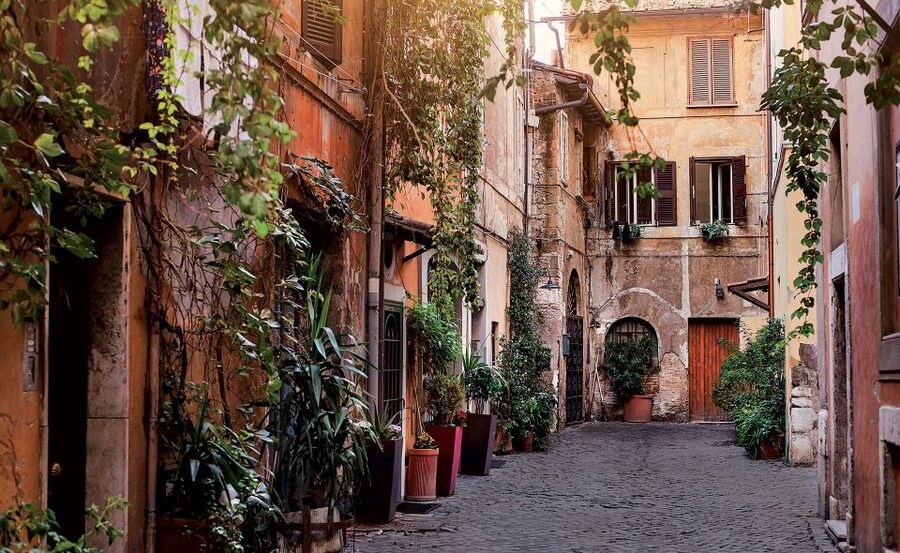
- Trastevere remains the heart of the walk: You’ll pass colorful lanes, artisans, small shops, and traditional trattorias.
- You get a private guide: Mitia and Dimitri are among the guides associated with the experience, with tours offered in English, Italian, and Spanish.
- Come ready to walk: The tour lasts three hours and hotel pickup is not included, so comfortable shoes matter.
Starting beneath Giordano Bruno in Campo de’ Fiori
Your meeting point is easy to identify: the statue of Giordano Bruno in the middle of Campo de’ Fiori. This is not just a convenient place to gather. It gives the guide a useful opening story about Rome’s religious and political past.
Bruno was burned here in 1600 after being declared a heretic. His dark statue now faces the square, giving Campo de’ Fiori a more serious mood than its market stalls and outdoor tables might suggest. I like this contrast. You begin with a piece of Rome’s difficult past, then move into the everyday food culture that keeps the square alive.
Campo de’ Fiori is also unusual because it is the only monumental square in Rome’s city center without a church. That small fact helps you read the city more clearly. Rome’s grand spaces often revolve around religious buildings, but this one has a different identity, shaped by markets, food, vendors, and public life.
Your guide leads you into the food side of the square and surrounding streets. A market visit is included, though the exact stalls and products can vary. You should expect an introduction to local ingredients and Roman eating habits rather than a long shopping session.
More food market tours in Rome:
- Rome: Trastevere & Campo de Fiori Street Food Walking Tour
★ 4.9 · 2,768 reviews - Rome: Colosseum, Roman Forum & Trajan’s Market Exterior Tour
★ 4.3 · 2,038 reviews - Roman Food Tour with Visit to the Trionfale Food Market
★ 5.0 · 471 reviews
Roman food in small, useful bites
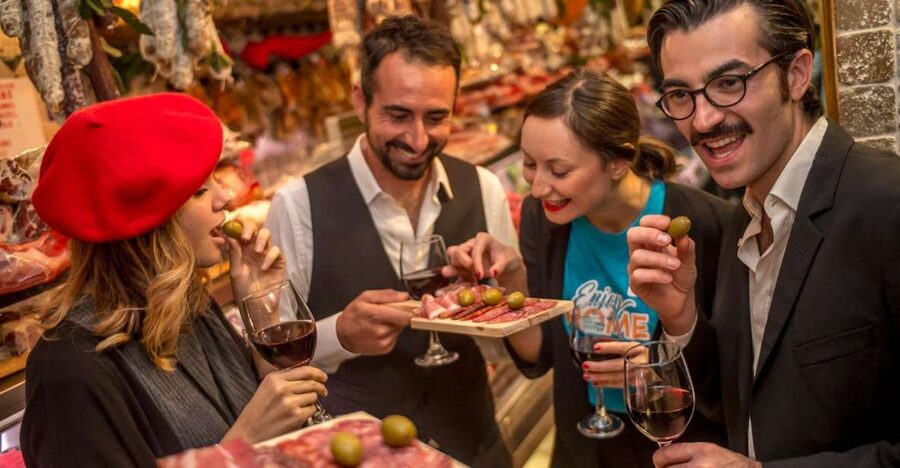
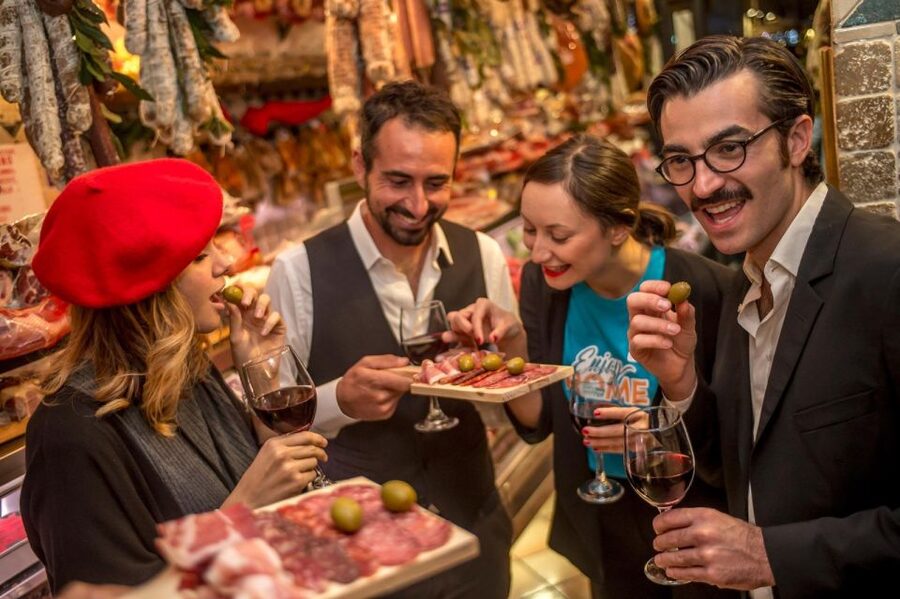
The tour includes four tastings of typical products. The information provided specifically names classic Roman pizza, supplì, and a glass of wine, along with Italian food products.
Roman pizza is usually served in a casual, quick-to-eat style, making it a natural food for a walking tour. Supplì is a rice ball filled with tomato sauce, then cooked until the outside is crisp. It is one of the most recognizable Roman snacks, and it gives you a quick taste of the city’s fondness for simple food with a satisfying texture.
I appreciate that the tasting list is not built around expensive ingredients or formal dining. You get the sort of food that fits Rome’s streets and neighborhood eateries. The food is part of the lesson: Roman cooking often depends on a few familiar ingredients handled with care.
Still, four tastings over three hours should not be mistaken for a full lunch or dinner. If you arrive hungry, the food may help, but you may want another meal later. The value comes from combining the bites with a guide, a walk, and local context.
Crossing Ponte Sisto into Trastevere
The route continues across Ponte Sisto, a historic bridge built to provide a direct connection between Trastevere, the Vatican area, and the rest of the city. The crossing is one of the tour’s best transitions. On one side, you have the monumental center. On the other, Trastevere’s lanes begin to feel more neighborhood-based.
The bridge also gives you a chance to pause for a view. This is a good place to take a photo and let your guide explain how the districts connect. Since the walk is private, you can ask questions here instead of simply following a flag through a crowd.
The route is on foot, and there is no hotel pickup or drop-off. That makes the starting point important. You need to reach Campo de’ Fiori on your own, then return there when the tour ends. Plan extra time to find the statue, especially if you are unfamiliar with central Rome.
Trastevere’s narrow lanes and local character
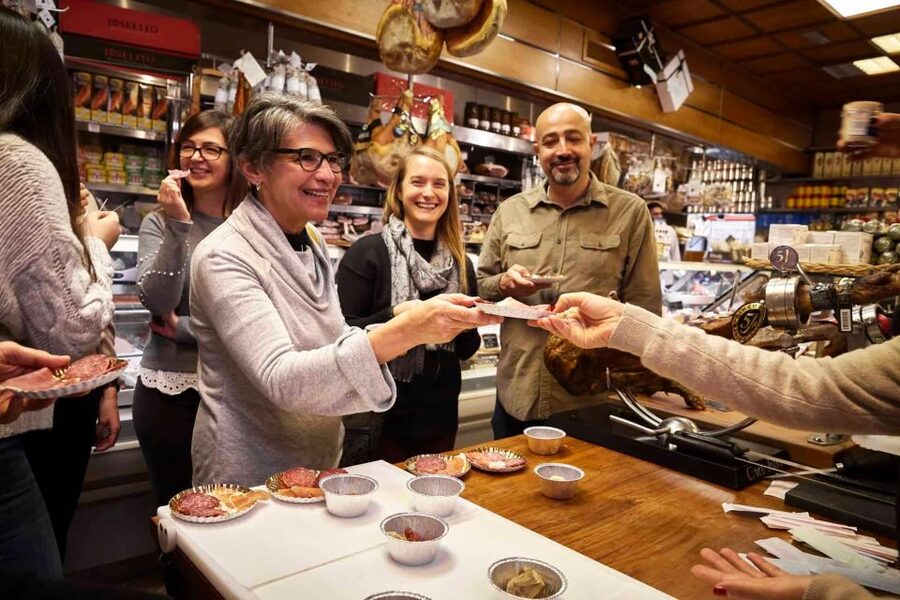
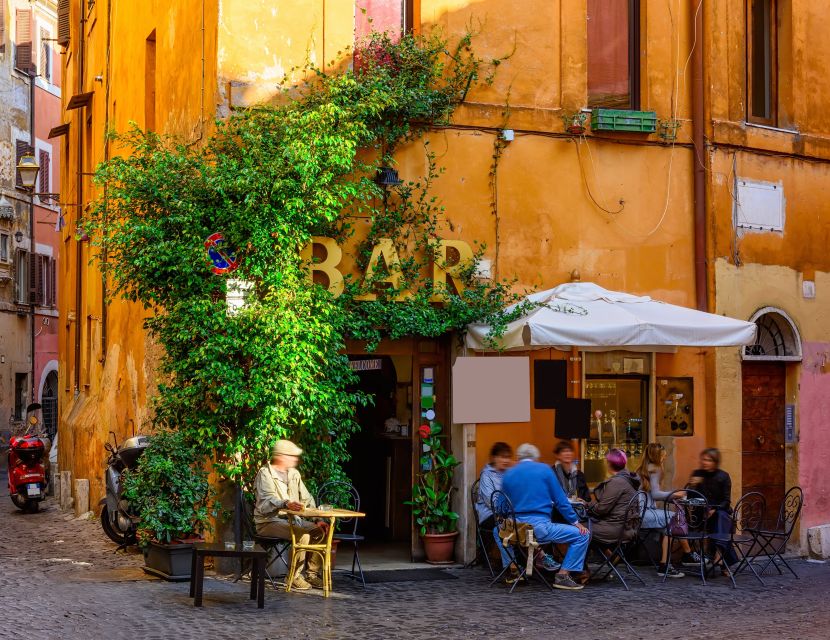
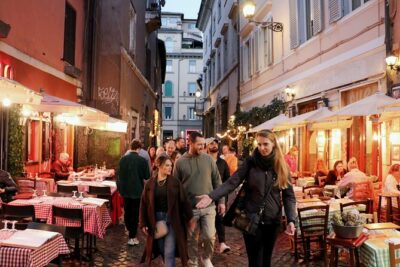
Trastevere is where the tour becomes less about major monuments and more about street-level Rome. You walk through narrow, colorful lanes where the local Roman accent, small shops, artisans, and traditional trattorias help shape the mood.
I like this part of the tour because it gives you a break from Rome’s famous sights. You are not only looking at ancient stones or grand fountains. You are seeing the kind of neighborhood where people shop, eat, work, and meet friends.
The tour includes a guided visit and food tasting in Trastevere, with about an hour listed for this portion. The guide can connect what you are eating with Roman traditions and the history of the district. The supplied feedback highlights guides named Mitia and Dimitri. Mitia is described as warm and welcoming, while Dimitri is noted for his humor, charm, history knowledge, and ability to make the walk fun.
Those details matter on a private food tour. Food is easy to find in Rome, but it is harder to know which places and products fit local habits. A good guide helps you understand what you are tasting and why it belongs in the city’s food culture.
More food tours in Rome:
- Winner 2025 Rome Twilight Trastevere Food Tour by Eating Europe
★ 5.0 · 5,157 reviews - Rome: Trastevere or Jewish Quarter Street Food Tour
★ 4.8 · 3,839 reviews - Rome Food Tour: Unlimited Tastings with Fine Wine & Barolo
★ 5.0 · 3,365 reviews - Rome: Trastevere Food tour with Free-Flowing Fine Wine
★ 5.0 · 2,853 reviews
Returning to Campo de’ Fiori
The route brings you back to the Giordano Bruno statue, where the experience ends. The return to the starting point is practical. You do not need to arrange transport from a different neighborhood, and you finish in an area with plenty of places to continue your evening.
The itinerary gives roughly an hour to Trastevere and an hour to Campo de’ Fiori, with the remaining time used for walking, transitions, and explanations. That is a comfortable pace for a food tour. You have time to eat, listen, and look around instead of rushing from one stop to the next.
Because this is a private group, your guide may be able to spend more time on subjects that interest you. You might ask about Roman food customs, the history of the neighborhoods, or the meaning of a dish. The experience is more useful if you come with a few questions ready.
What the $198.25 price really buys
At $198.25 per person, this is not a budget food crawl. The four tastings alone would not justify the price for every visitor. You are paying for a private three-hour service, a guide, neighborhood history, market visits, and the convenience of having the route organized for you.
For a couple or family that wants a private introduction to Rome, the cost may make sense. You can move at your own pace and avoid being folded into a large group. The guide’s personality also matters more in a private setting. The warm approach associated with Mitia and the humorous, engaging style associated with Dimitri are the kinds of qualities that can make the experience feel personal.
For a solo visitor or a couple focused mainly on eating as much as possible, the price may feel high. You receive four tastings, not a meal with many courses. I would book this for the guidance and neighborhood access first, and for the food second.
The tour offers free cancellation up to 24 hours before the start time, and you can reserve now and pay later. Those policies give you some flexibility while building a Rome schedule, though the practical details of the starting time depend on availability.
Who will enjoy this private food walk
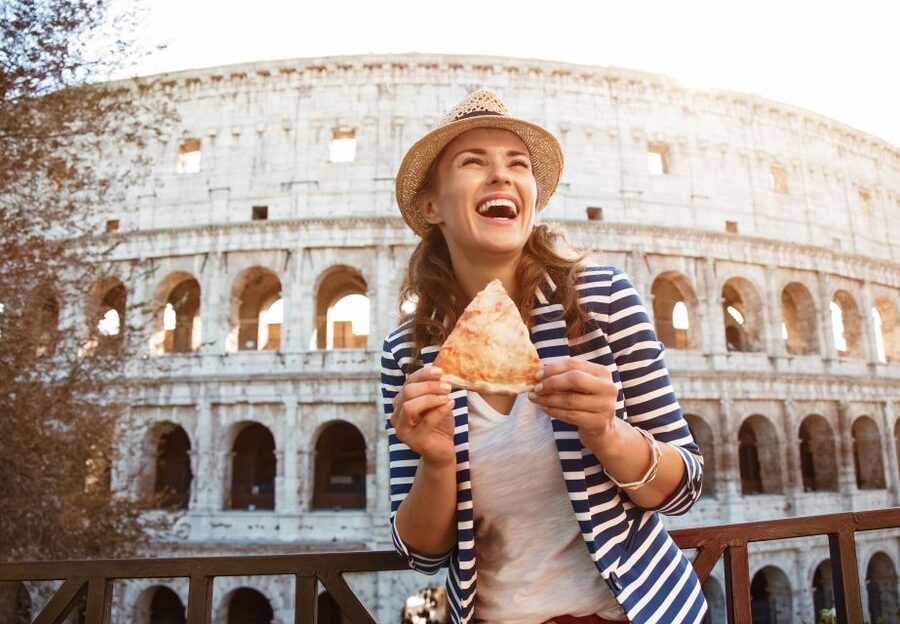
I would recommend this experience to you if you want a gentle introduction to Roman food and prefer conversation over a fixed lecture. It fits first-time visitors who want to see Campo de’ Fiori and Trastevere in the same outing, especially if you enjoy walking through local streets rather than spending the whole day inside major sights.
It also suits families or small private groups that value a guide who can adapt explanations and pace. The private format is useful if some people in your group care more about food while others want history.
You may want to choose another experience if you expect a large meal, a cooking class, or a long list of tastings. Those are not promised here. This is a walking tour with four food samples and a local guide.
The tour requires comfortable shoes. The route passes through city streets, a bridge, market areas, and narrow lanes, so sturdy footwear is a sensible choice. Since the tour lasts three hours, avoid treating it as a quick stop between major attractions.
The guide makes the difference
A food tour succeeds or fails partly on the guide’s ability to make ordinary places interesting. Here, that personal element is central. Mitia is associated with a friendly, welcoming manner that helps put a group at ease. Dimitri is associated with humor, charm, and clear explanations of Roman history and food.
You should check the available language when booking. Tours are offered in English, Italian, and Spanish. The experience is designed for a private group, so the guide is not speaking to a large crowd or moving through a rigid public-tour script.
I would also keep your expectations sensible. A guide can point out traditional trattorias and explain local food, but the available information does not promise a particular restaurant, market vendor, or exact tasting menu. The four products are typical, but the specific stops may depend on the day.
Practical planning for your Rome schedule
The meeting point is Campo de’ Fiori, directly in front of the Giordano Bruno statue. The tour ends at the same place. That makes it easy to pair with other central Rome plans, but you should avoid scheduling a major timed attraction immediately afterward. Walking and food stops can take longer than expected, and you will want a little breathing room.
Starting times vary, so check availability before setting your day. Hotel pickup is not included. You handle your own way to the square, and the guide meets you there.
I would book this early in your Rome stay if you want to use the guide’s advice for later meals. You can ask about Roman dishes and neighborhood eating habits, then make better choices during the rest of your visit. If your schedule is tight, the three-hour length is long enough to feel substantial without consuming an entire afternoon.
Should you book the Campo de’ Fiori and Trastevere tour?
Book it if you want a private, easygoing introduction to Roman food, local streets, and neighborhood history. The combination of Giordano Bruno’s statue, Ponte Sisto, Trastevere’s lanes, market visits, and four tastings gives you more than a list of snacks.
Skip it if your main goal is the lowest possible food cost or a full meal. At $198.25 per person, the price is justified mainly by the private guide and personal pace. For visitors who value conversation, context, and a friendly guide such as Mitia or Dimitri, it can be a useful way to get oriented in Rome.
FAQ
Where does the tour start?
The tour starts in Campo de’ Fiori, in front of the statue of Giordano Bruno in Rome.
Where does the tour end?
The activity ends back at the Giordano Bruno statue, the same place where it begins.
How long does the tour last?
The tour lasts three hours. Starting times depend on availability.
What food is included?
The tour includes four tastings of typical products. The named examples include Roman pizza, supplì, and a glass of wine.
Is the tour private?
Yes. The activity is arranged for a private group.
Which languages are available?
The live guide can conduct the tour in English, Italian, or Spanish.
Is hotel pickup included?
No. Hotel pickup and drop-off are not included, so you need to reach Campo de’ Fiori on your own.
More Trastevere tours
- Rome: Award Winning Trastevere Group Food Tour with Wine
★ 5.0 · 2,273 reviews - Rome: Guided Food Tour in Trastevere
★ 4.8 · 2,266 reviews - Jewish Ghetto and Trastevere Tour Rome
★ 4.5 · 1,729 reviews - Rome Food Tour: Hidden Gems of Trastevere with Dinner & Wine
★ 5.0 · 1,166 reviews
Newest Rome tours we have reviewed
- Private TikTok Video Making in Rome★ 5.0 · 7 reviews
- Assisi & Saint Francis Path Tour from Rome★ 5.0 · 45 reviews
- Assisi, Orvieto and Civita di Bagnoregio Full Day Tour from Rome★ 4.5 · 45 reviews
- Assisi and Cascia Private Day Tour from Rome with Lunch★ 5.0 · 10 reviews
- Art Class in the center of Rome!★ 4.0 · 4 reviews
- Art & Craft: Beer Tour with Street Art in Rome★ 4.5 · 6 reviews
- Arrival in Rome: Airport Transfer & Exclusive City Introduction★ 5.0 · 3 reviews
- From Rome: Private Day-Tour of Tuscany★ 5.0 · 16 reviews
Trastevere Tours, compared.
Winner 2025 Rome Twilight Trastevere Food Tour by Eating Europe
Read our review →
Trastevere or Jewish Quarter Street Food Tour
Read our review →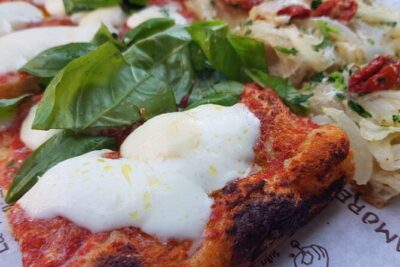
Trastevere Food tour with Free-Flowing Fine Wine
Read our review →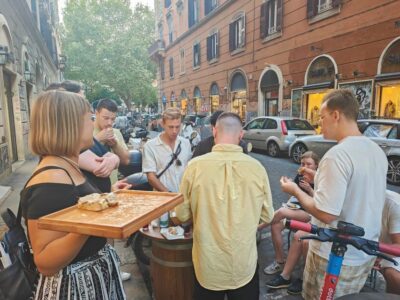
Trastevere & Campo de Fiori Street Food Walking Tour
Read our review →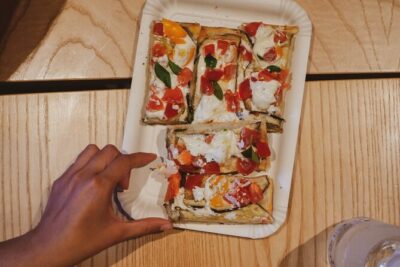
Award Winning Trastevere Group Food Tour with Wine
Read our review →

Rome Food Tour: Hidden Gems of Trastevere with Dinner & Wine
Read our review →Browse the lists this tour appears in