
Reviewed · ROME
Rome: Relics from the Passion of the Christ Walking Tour
Rome’s most powerful Christian pilgrimage sites are spread across a compact stretch of the city, and this tour links them into one clear story: the Passion of Christ. You’ll see relics traditionally connected with Jesus’ death, including the scourging pillar, fragments of the Cross, thorns, a nail, and the sign said to have hung above him.
I like the small group of up to 10, which gives the guide room to explain the churches and answer questions. I also like the way the route mixes major basilicas with quieter stops, especially Santa Prassede’s ninth-century mosaics and the Holy Cross relic chapel. The main drawback is that three hours is a tight schedule, and one stop may receive less time than you’d want.
- See relics linked to the Passion: View the scourging pillar, Holy Steps, Cross fragments, thorns, a nail, and the Titulus Crucis.
- Begin at Santa Maria Maggiore: See wood traditionally connected with Jesus’ manger and the tomb of Gian Lorenzo Bernini.
- Visit five major churches: The route includes Santa Maria Maggiore, Santa Prassede, Scala Sancta, Saint John Lateran, and Holy Cross in Jerusalem.
- Walk through central Rome: Transport is not included, so you move between the sites on foot.
- Learn from a religious guide: Past departures have featured guides named Paul, Daniel, Tom, and Tim, all praised for clear explanations and strong knowledge of Roman and Catholic history.
- Dress for church entry: Knees and shoulders must be covered, and comfortable shoes are essential.
A Three-Hour Walk Through Rome’s Passion Relics
This is not a general Rome sightseeing walk with a few religious stops added on. The entire route is built around objects and places connected, by Christian tradition, with the torture, judgment, crucifixion, and burial of Jesus.
That focus makes the experience especially useful for a Christian pilgrim, but you do not need to be Catholic to appreciate it. The tour also brings together Roman history, early Christian tradition, church art, and the long story of how sacred objects moved from Jerusalem to Rome.
Many of the relics on this route are said to have been brought to Rome by Saint Helena, the mother of Emperor Constantine, in the fourth century. Your guide’s job is not just to point at a display case. You’ll need help understanding how these objects became part of Roman worship, why their locations matter, and how the churches around them changed over the centuries.
The tour is conducted in English and lasts about three hours. It is a walking experience, not a bus or van tour, so plan for time outdoors between churches. The route begins and ends at the fountain in the piazza in front of Santa Maria Maggiore.
Santa Maria Maggiore and the Manger Wood
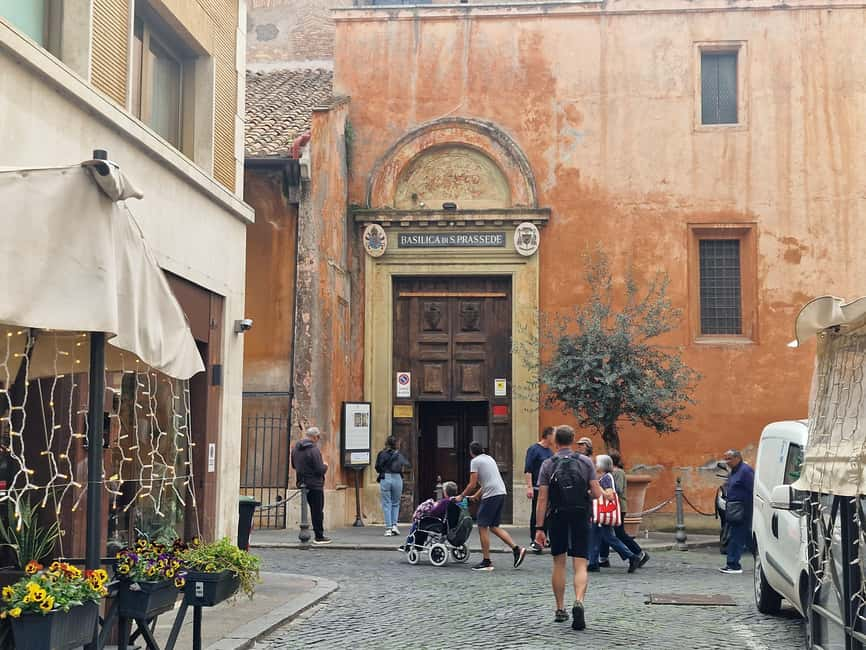
The meeting point is easy to identify: look for the fountain in front of the Basilica of Santa Maria Maggiore and a guide holding an orange sign with a lion’s head. Arrive 15 minutes early. The tour leaves promptly, and late arrivals are not refunded.
Santa Maria Maggiore is one of Rome’s oldest churches dedicated to Mary, known here by the Greek title Theotokos, meaning Mother of God. That title matters because it reflects the church’s place in early Christian debates about Mary and the identity of Jesus.
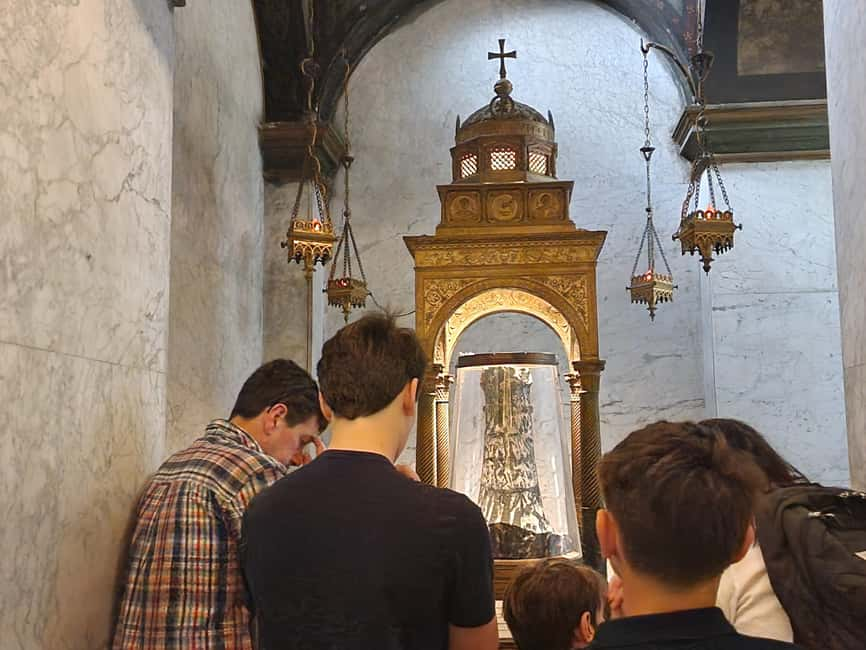
The first religious object is wood traditionally associated with the manger where the infant Jesus lay. It is kept beneath the main altar, giving the site a direct connection with the Nativity as well as the Passion.
The basilica itself is part of the attraction. Its decoration reflects several periods of Italian art, so you are not simply entering a plain relic shrine. Look around as your guide explains how different eras added their own vision to the building.
Santa Maria Maggiore also contains the tomb of Gian Lorenzo Bernini, one of the major artists of the Italian Baroque. That is a useful reminder that this tour is about more than isolated objects. The churches are living places of worship, galleries of art, and records of changing Christian practice.
More walking tours in Rome:
- Rome: Trastevere & Campo de Fiori Street Food Walking Tour
★ 4.9 · 2,768 reviews - Rome: Paranormal Night Walking Tour & Secret Backstreets
★ 4.9 · 1,921 reviews - Rome by Night Walking Tour – Legends & Criminal Stories
★ 4.5 · 1,003 reviews
Santa Prassede and the Scourging Pillar
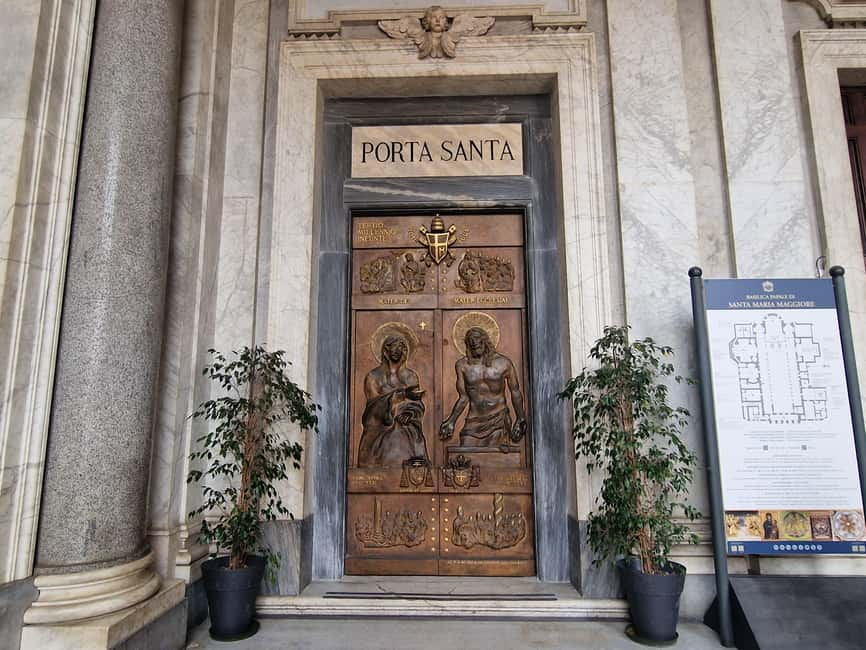
From Santa Maria Maggiore, you walk to Santa Prassede. This smaller basilica is particularly rewarding for its ninth-century mosaics, which can feel more intimate than the grand decoration of Rome’s largest churches.
The key object here is a stone pillar traditionally identified as the one used to scourge Jesus. According to the church’s tradition, it was brought from the Praetorium in Jerusalem to Rome in the thirteenth century.
This stop gives the tour an important change of scale. Santa Maria Maggiore is a major basilica with layers of art and ceremony. Santa Prassede feels more focused, with its mosaics and relic tradition working together in a quieter setting.
The guide’s explanation matters here because the pillar alone does not explain its significance. You’ll hear how the object fits into the Passion story and how relics were received and displayed in Rome. The tour presents these objects through the Catholic tradition, so you should approach them as devotional items whose importance comes from faith, tradition, and centuries of prayer.
Scala Sancta and the Holy Steps
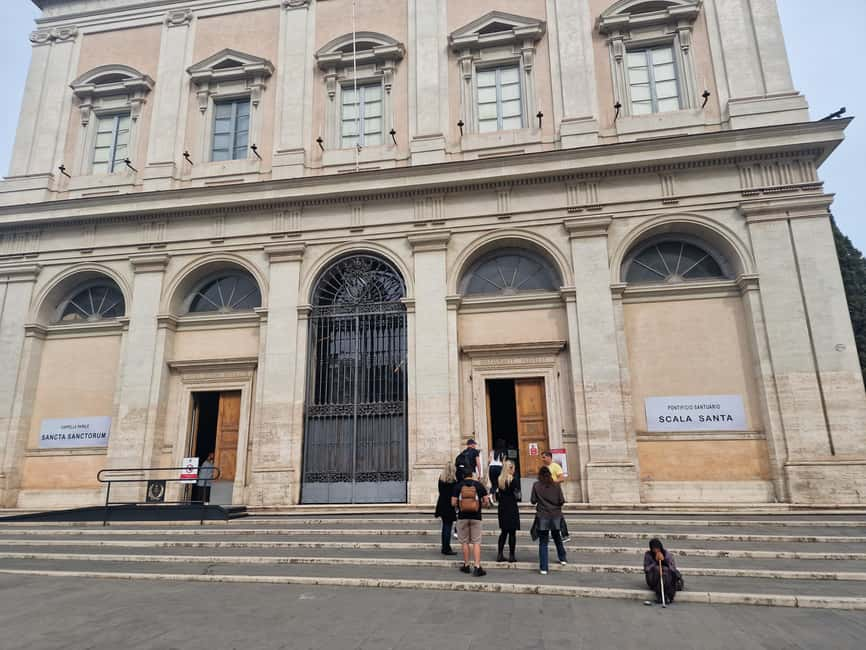
Next comes the Scala Sancta, or Holy Steps. Christian tradition identifies these steps as the staircase Jesus climbed when he was judged by Pontius Pilate. Saint Helena is said to have transported them to Rome in the fourth century.
Pilgrims traditionally climb the steps on their knees. This tour does not allow enough time for that full practice, so you will view the staircase and continue to the upper chapel. That limitation is worth knowing before you book. The stop is meaningful, but it is not a long personal pilgrimage session.
At the top, you can look toward the Holy of Holies, which contains an icon traditionally attributed to Saint Luke. The visit is brief, yet it adds an important link between the Passion and early Christian devotion.
The Scala Sancta can be one of the most emotionally charged parts of the route for pilgrims. At the same time, the schedule means you should not expect extended private prayer at every site. If you need substantial quiet time, you may want to return independently after the tour.
Saint John Lateran, Rome’s Cathedral
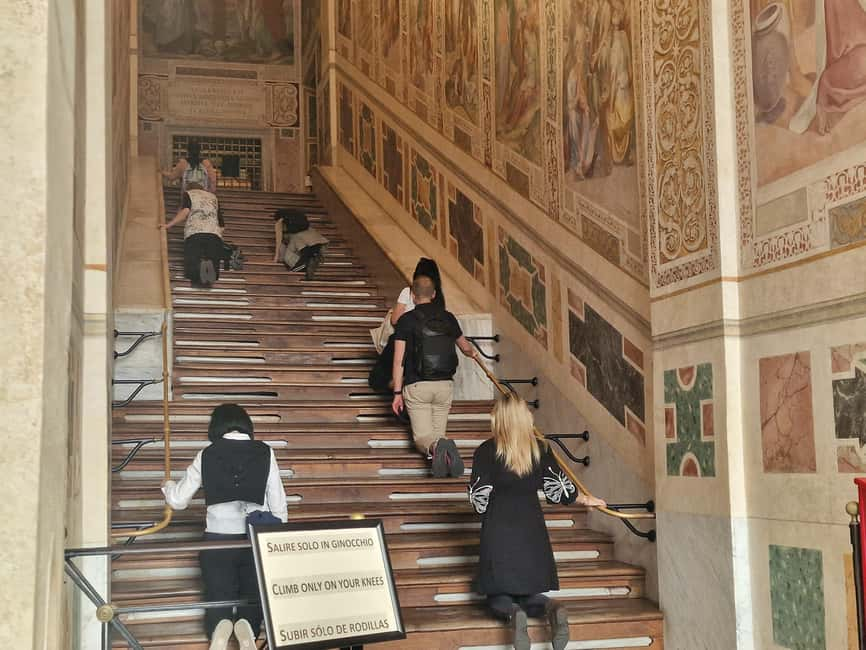
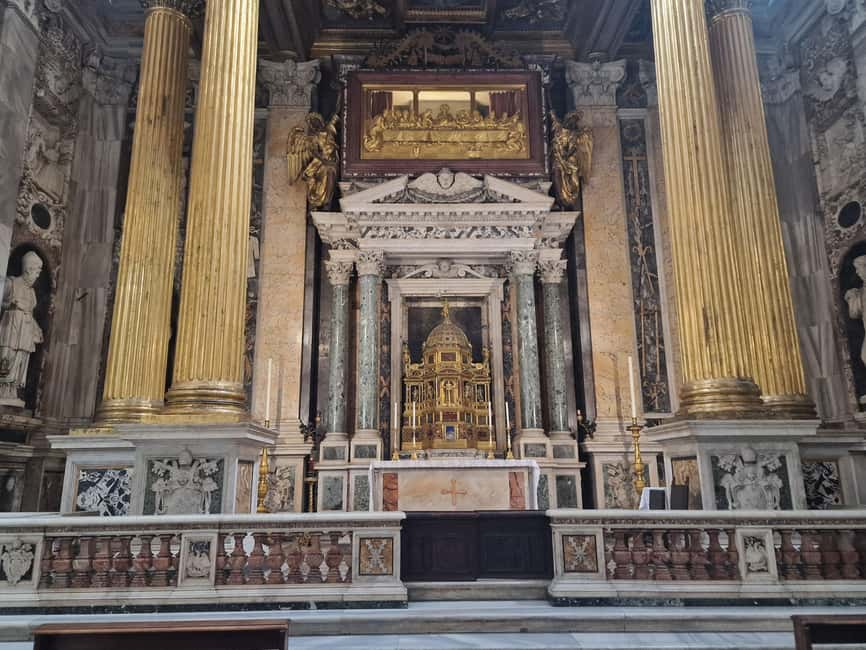
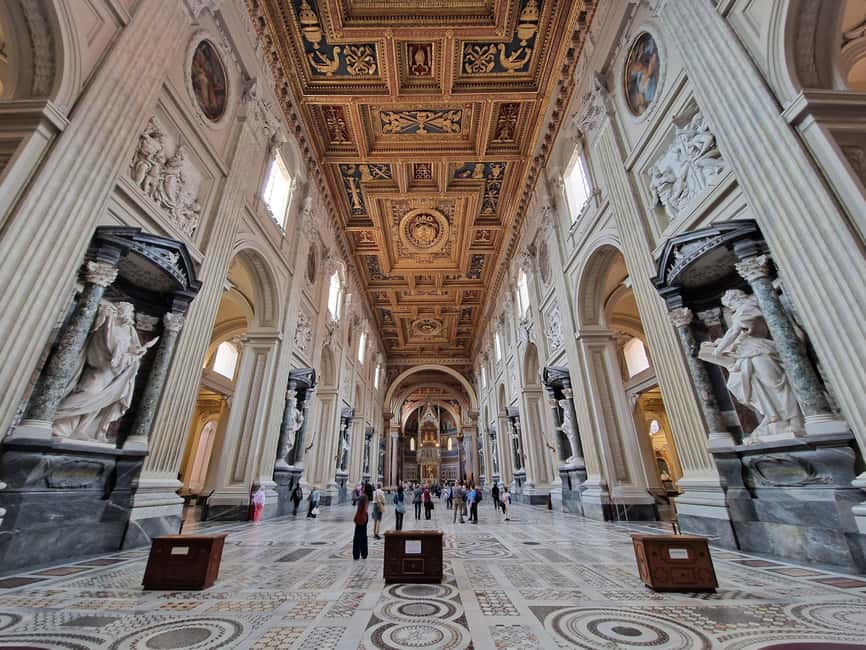
The route continues to the Basilica of Saint John Lateran, or San Giovanni in Laterano. This is Rome’s cathedral, and that status gives the stop a different importance from the relic chapels visited earlier.
The basilica is known for its architecture, including work associated with Borromini, and for the symbolism in its mosaics. Your guide will help you read those details instead of treating the interior as another grand church to pass through quickly.
The tour also points out the location above the high altar where the skulls of Saints Peter and Paul are traditionally kept. For Christian pilgrims, this connects the Passion route with the earliest leaders of the Church. For visitors interested in Roman history, it shows how the city became a center of Christian memory after the empire adopted the faith it had once persecuted.
Saint John Lateran is also a useful point in the tour because it widens the story. The experience is not limited to objects associated with Jesus. It places those relics within the institutional and artistic world of Rome’s oldest major churches.
Same city, a completely different half-day:
- Vatican Museums & Sistine Chapel Tour with Optional Basilica
★ 4.3 · 67,413 reviews - Vatican Museums, Sistine Chapel & St Peter’s Basilica Guided Tour
★ 4.5 · 39,149 reviews - Rome: Colosseum, Palatine Hill and Roman Forum Guided Tour
★ 4.8 · 32,814 reviews - Rome: Guided Tour of Colosseum, Roman Forum & Palatine Hill
★ 4.7 · 27,897 reviews
Holy Cross in Jerusalem and the Main Relic Collection
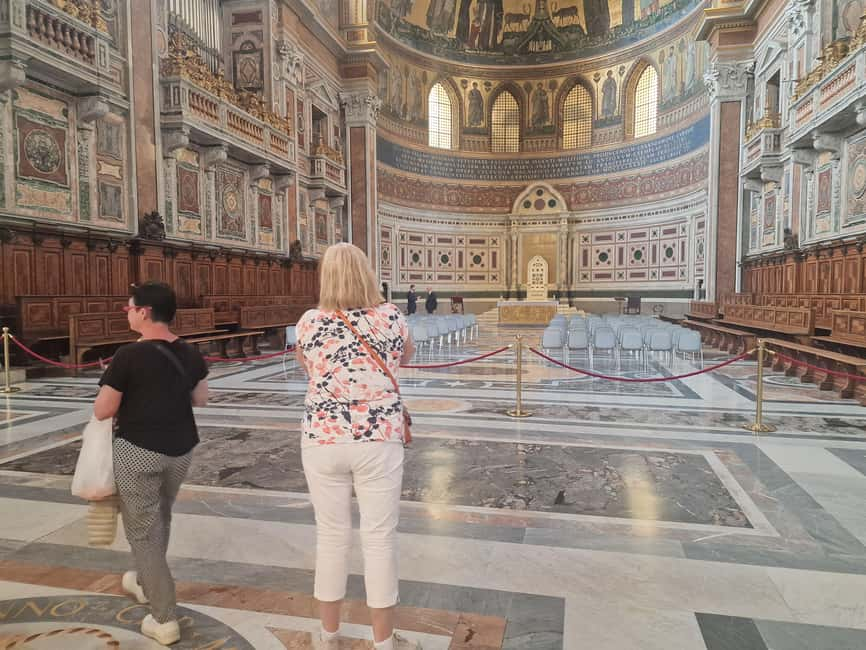
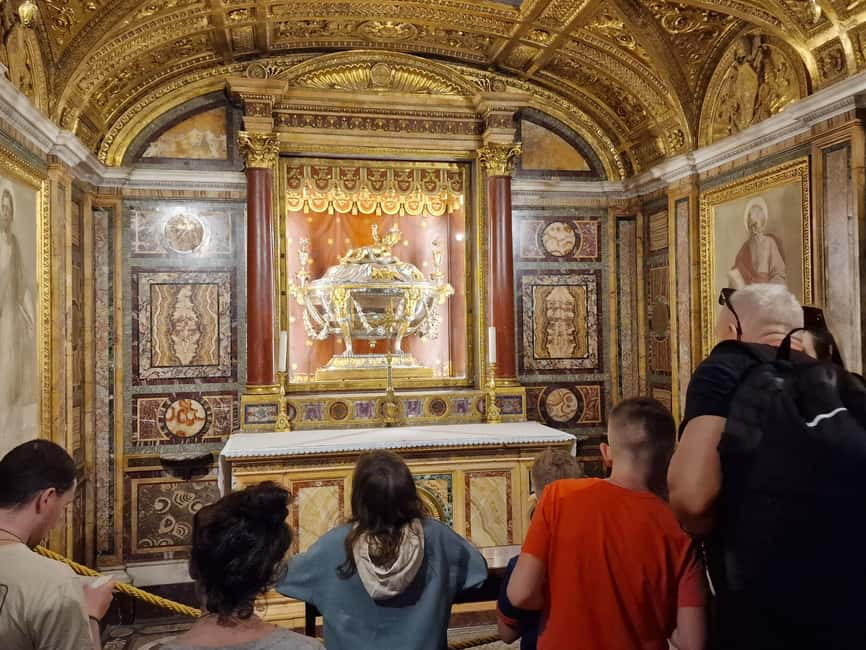
The final stop is the Basilica of the Holy Cross in Jerusalem, known in Italian as Santa Croce in Gerusalemme. The church is traditionally built on earth brought from Calvary in the fourth century, giving the building itself a physical connection with the place of the crucifixion.
This is the climax of the tour. Inside, you’ll see a collection of objects associated with Jesus’ Passion and early Christian sacred places, including:
- A nail traditionally connected with the Crucifixion
- Two thorns associated with the Crown of Thorns
- A small walnut board bearing the words Jesus the Nazarene, King of the Jews
- Wood from the Cross
- Fragments associated with the Holy Sepulcher
- Material connected with the Cave of Bethlehem
The display is not a substitute for visiting the Holy Land, but it gives Rome unusual importance for Christian pilgrims who cannot travel to Jerusalem. The objects bring together the beginning and end of Jesus’ earthly life, from Bethlehem to Calvary.
You are given time to reflect and pray here. That matters because the earlier stops can feel full of explanation and movement. At Santa Croce, the tour slows down for the central devotional purpose of the visit.
One practical warning is important. The schedule can be tight, and the relic collection at Santa Croce may receive less time than you expect if earlier visits run long or church access changes. If this final stop is your main reason for booking, ask the guide early in the tour how much time is planned for it.
What the Guides Add to the Experience
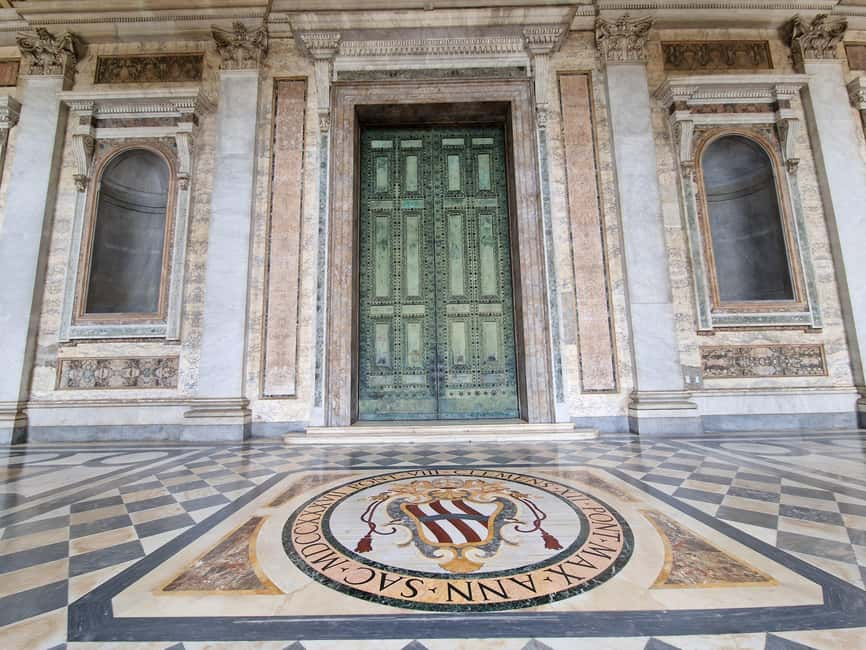
The guide makes a major difference on this tour. You are visiting churches that can be confusing without context, and several relics are presented through tradition rather than through evidence that can be tested in a modern laboratory.
Guides named Paul, Daniel, Tom, and Tim have led different departures. Paul has been praised for connecting world, Italian, Roman, and Catholic history. Daniel is noted for clear answers and for painting a strong picture of the events being discussed. Tom has been described as especially engaging across a broad range of subjects, while Tim’s warm, parish-priest-like manner worked well for families with teenagers.
Those details point to the kind of guide you need here: someone who can explain both devotion and uncertainty without flattening either one. The best commentary will tell you what the Church traditionally holds, how the relic came to Rome, and why the surrounding church matters.
The small group helps. With no more than 10 people, you should have a better chance to hear explanations inside busy churches and ask a question without losing the group. A private tour would offer even more flexibility, but this format provides a useful middle ground.
Is the $96.29 Price Good Value?
At $96.29 per person, this is not a bargain-priced church walk. The value depends on how much help you want with the religious and historical meaning of the sites.
Entry to each included church is covered, and you receive an English-speaking local guide for three hours. You also avoid having to research the locations, plan the walking route, and work out how the relics relate to one another.
The price makes more sense for a pilgrim who wants interpretation, structure, and access to several important churches in one morning or afternoon. It is less compelling for someone who simply wants to enter the basilicas independently, sit quietly, and take as much time as desired.
Because the tour ends where it begins, you can continue sightseeing from Santa Maria Maggiore afterward. You will need to pay for your own transport to the meeting point and buy your own food and drinks. Temporary exhibitions and special events may not be included.
Church Etiquette and Walking Practicalities
Dress carefully. Shorts, short skirts, and sleeveless shirts are not allowed, and your knees and shoulders must be covered to enter the churches. In warm weather, bring a light cover for bare shoulders. In colder weather, dress warmly because the walk continues outdoors.
Wear shoes suited to a city walk. The route is not suitable for anyone who needs frequent transport between stops. A golf cart option is available for people with limited mobility, so choose that format instead of assuming this walking tour will be comfortable.
The tour runs in all weather unless authorities close a site for safety. Carry water, sunscreen, a hat, and an umbrella as needed. Church closures, religious events, or other unexpected changes can alter the order of the visit.
You should also bring valid photo identification for each person in your group, since proof of identity may be requested. The tour follows the current Italian government regulations in force at the time of the visit.
Who Should Book This Tour?
I would recommend this experience to Christian pilgrims, visitors interested in Catholic tradition, and anyone who wants a guided look at Rome’s major sacred relics. It also suits repeat visitors who have already seen the Colosseum and Vatican Museums and want a different side of the city.
Families can enjoy it if children or teenagers are willing to listen inside churches. One departure included two teenagers, ages 16 and 18, who remained engaged, but the subject is serious and the pace is built around explanation rather than games.
You should think twice if you dislike religious interpretation, need long periods at each site, or have difficulty walking between churches. The tour is also not ideal for visitors who want a broad introduction to Rome, since nearly every minute is devoted to Christian relics and basilicas.
Should You Book the Relics from the Passion Tour?
Book it if you want a focused Catholic pilgrimage with a small group, a strong English-speaking guide, and access to several relic collections that are easy to miss on your own. The final visit to Santa Croce in Gerusalemme, with its Cross wood, nail, thorns, and Titulus Crucis, is the main reason to choose it.
Go in with the right expectations. The objects are presented through religious tradition, the walking pace is steady, and three hours leaves limited time for extended prayer. If those points suit you, this tour offers a thoughtful way to connect Rome’s churches with the story of the Passion.
FAQ
Where does the tour begin?
The tour begins at the fountain in the piazza in front of the entrance to the Basilica of Santa Maria Maggiore. The guide will hold an orange sign with a lion’s head.
Where does the tour end?
The activity ends back at the meeting point near Santa Maria Maggiore.
How long does the tour last?
The tour lasts three hours. Starting times vary, so you need to check availability when booking.
Is the tour conducted in English?
Yes. The tour has a live English-speaking guide.
How large is the group?
The group is limited to 10 participants.
Is transportation included?
No. Transport to and from the tour is not included, and the experience itself is a walking tour between the churches.
What should I wear?
Wear comfortable clothes and walking shoes. Knees and shoulders must be covered, and shorts, short skirts, and sleeveless shirts are not allowed inside the churches.
Is the tour wheelchair accessible?
The listed walking tour is wheelchair accessible, but anyone with limited mobility is advised to book the golf cart option because the experience involves walking between sites.
Newest Rome tours we have reviewed
- Private TikTok Video Making in Rome★ 5.0 · 7 reviews
- Assisi, Orvieto and Civita di Bagnoregio Full Day Tour from Rome★ 4.5 · 45 reviews
- Assisi & Saint Francis Path Tour from Rome★ 5.0 · 45 reviews
- Assisi and Cascia Private Day Tour from Rome with Lunch★ 5.0 · 10 reviews
- Art Class in the center of Rome!★ 4.0 · 4 reviews
- Art & Craft: Beer Tour with Street Art in Rome★ 4.5 · 6 reviews
- Arrival in Rome: Airport Transfer & Exclusive City Introduction★ 5.0 · 3 reviews
- From Rome: Private Day-Tour of Tuscany★ 5.0 · 16 reviews