
Reviewed · ROME FOOD TOURS
Rome: Roman Restaurant Dining Experience with Food and Wine
Rome’s best feature here is simple: you sit down to a proper meal near the Vatican without paying a grand-restaurant price. At Il Segreto, the menu centers on Roman favorites such as rigatoni carbonara, paccheri amatriciana, and tonnarelli cacio e pepe, served in a traditional, unpretentious setting.
I like the choice between a two-course and three-course meal, and I like that a drink is included. The multilingual staff also make this a comfortable pick for solo diners, couples, and families. One point to keep in mind: the open kitchen may be across the room rather than directly in front of your table.
Key points to know
- Il Segreto is in Prati, close to the Vatican, making this a useful meal stop after sightseeing in that part of Rome.
- The bronze menu includes one main course and dessert, while the gold menu adds a first course, second course, and dessert.
- Roman pasta is the heart of the meal, with carbonara, cacio e pepe, and amatriciana among the choices.
- Your included drink varies by menu, with options such as wine, prosecco, soft drinks, coffee, or tea.
- The meal lasts about 75 minutes, so it fits neatly into an evening plan.
- Service is a major strength, with staff able to assist in many languages and accommodate solo diners with care.
A Roman meal in Prati, close to the Vatican
Your meal takes place at Il Segreto, in Prati, a food-focused neighborhood near the Vatican. That location matters. After spending hours at St. Peter’s Basilica or the Vatican Museums, you can sit down for a meal without crossing the city again.
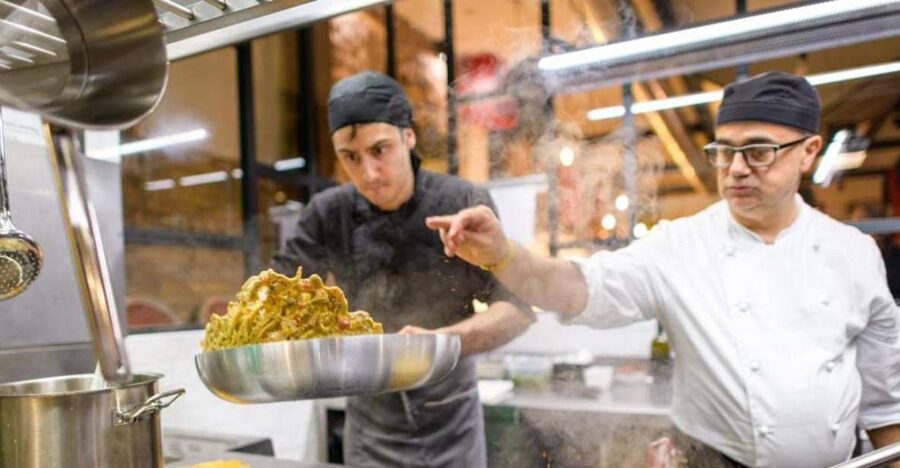
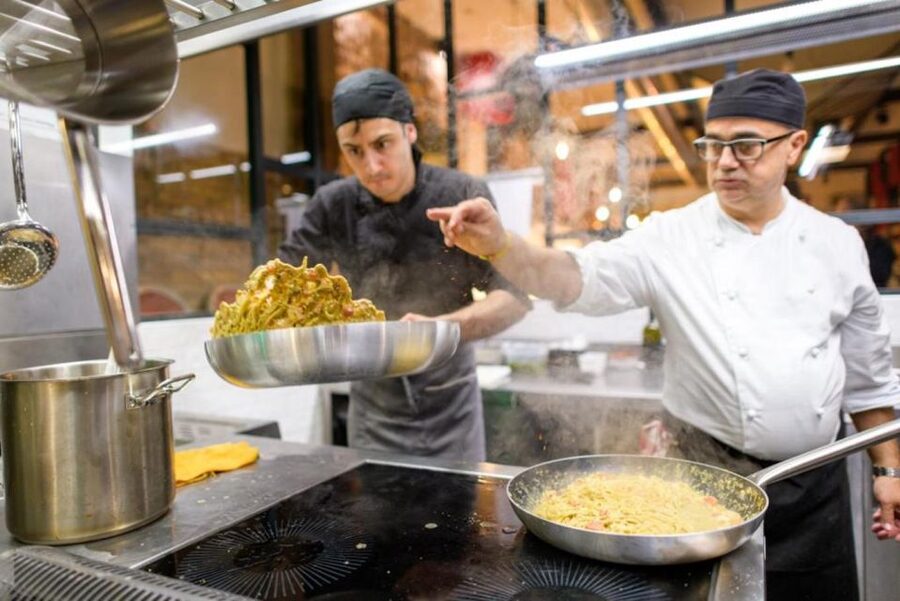
The restaurant is described as traditional but not fussy. You should expect a setting that feels more relaxed than formal, with the kitchen open to view. That gives the meal some theater. You can watch the cooks prepare dishes rather than sitting in a completely closed dining room.
The open kitchen is one of the more interesting details here, but keep your expectations sensible. Your table may face the cooking area, or it may be on the opposite side of the room. You get the atmosphere of an open kitchen, not a guaranteed front-row seat.
This is a useful experience for your first night in Rome because the meal is structured and easy to understand. You do not need to study a long menu or guess which Roman dishes to order. Pick your menu level, choose from the listed dishes, and settle in.
More food tours in Rome:
- Winner 2025 Rome Twilight Trastevere Food Tour by Eating Europe
★ 5.0 · 5,157 reviews - Rome: Trastevere or Jewish Quarter Street Food Tour
★ 4.8 · 3,839 reviews - Rome Food Tour: Unlimited Tastings with Fine Wine & Barolo
★ 5.0 · 3,365 reviews
Choosing between the bronze and gold menus
The bronze option is the shorter and less expensive choice. It includes a main course and dessert, along with a drink. You choose one of three pasta dishes:
- Paccheri amatriciana
- Tonnarelli cacio e pepe
- Rigatoni carbonara
You then finish with cheesecake or chocolate cake. This is a sensible order for lunch, an early dinner, or anyone who wants a taste of Roman cooking without committing to a large meal.
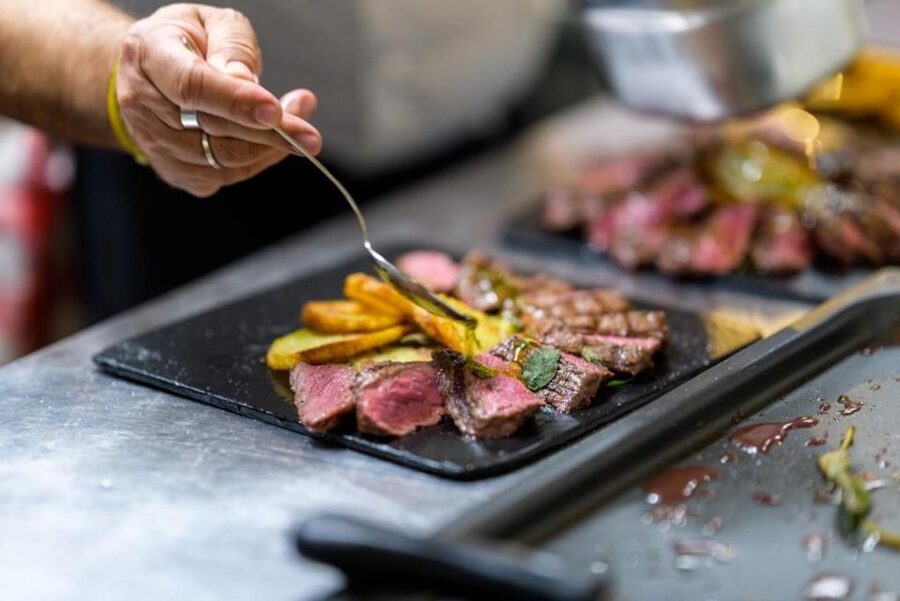
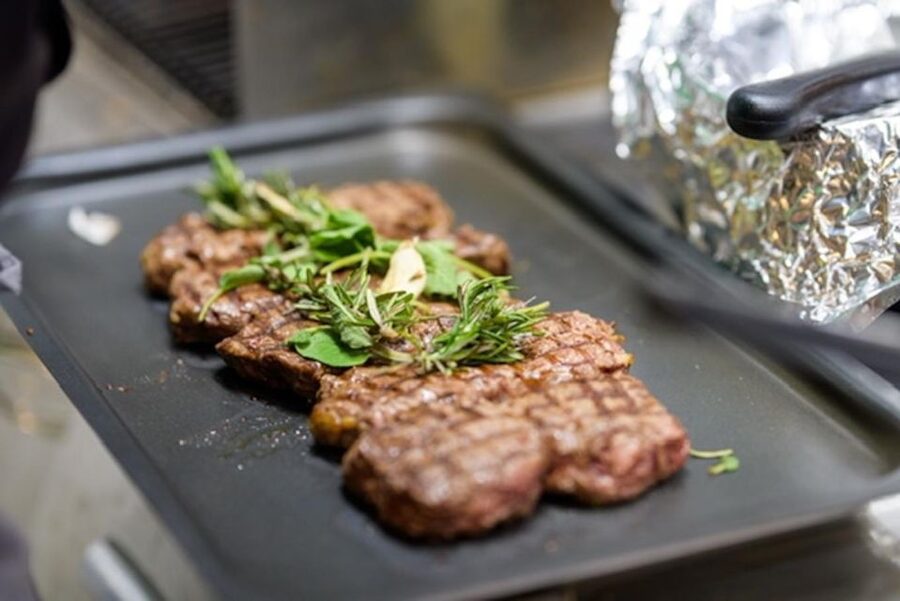
The gold option gives you three courses. For the first course, you choose meatballs, paccheri amatriciana, tonnarelli cacio e pepe, or carbonara. For the second course, you choose steak, roasted octopus, or roasted cod. Dessert completes the meal.
The gold menu is the better fit if you want a full Italian dinner rather than a pasta stop. It is also the choice to make if you enjoy trying more than one type of dish. You should arrive hungry, though. The portions are not reduced simply because the meal has several courses.
That is a useful warning. A three-course meal here can feel like a full-sized dinner, not a sequence of small samples. If you are a light eater, the bronze menu may offer better value and a more comfortable pace.
The Roman pasta choices explained
The pasta selection gives you a quick lesson in Rome’s classic cooking.
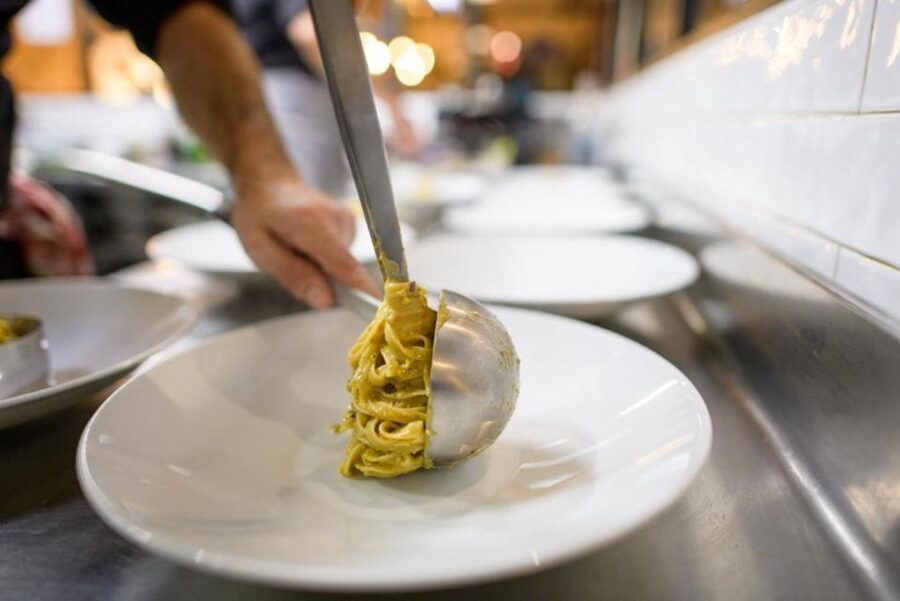
Carbonara is made with a rich egg and cheese sauce, traditionally paired with cured pork. It is one of Rome’s most famous dishes, and the rigatoni shape gives the sauce plenty of surface to cling to.
Cacio e pepe is the most stripped-back choice. Cheese and black pepper create the sauce, so the dish depends on good seasoning and careful preparation. Tonnarelli, a thick, square-cut pasta, suits this style well.
Amatriciana brings a tomato-based sauce with a salty, savory edge. Paccheri are large tubes that hold plenty of sauce, making this a hearty choice.
You do not need to order the dish that sounds most familiar. If you want a classic Roman flavor with tomato, choose amatriciana. If you like creamy pasta, carbonara is the obvious pick. If you prefer a simpler dish where pepper and cheese do the work, try cacio e pepe.
The gold menu adds meatballs to the first-course choices. That gives you a break from pasta while keeping the meal in the comfort-food tradition. For your second course, steak, roasted octopus, and roasted cod offer more variety.
What the three-course meal feels like
The gold menu is best understood as a complete restaurant meal rather than a quick tasting. You begin with a pasta, meatball, or other first course. Then comes a main dish of steak, octopus, or cod, followed by dessert.
That amount of food can be a plus after a long day of sightseeing. It can also be more than you expect from a prepaid dining experience. Plan around it. You may not want to schedule another major activity immediately afterward.
The bronze menu has a simpler rhythm. You sit down, choose your pasta, and finish with cheesecake or chocolate cake. It gives you the core Roman food experience without the extra main course.
Dessert is homemade, according to the experience details, and the listed choices are cheesecake or chocolate cake. That is a pleasant finish for anyone who wants a familiar sweet rather than a complicated dessert presentation.
The meal includes one drink. On the bronze menu, you can choose prosecco, a soft drink, coffee, or tea. On the gold menu, the choices include a soft drink, coffee, tea, or a glass of wine. Check the exact drink options when booking, since the choices differ by menu.
More wine tastings in Rome:
- Rome: Tuscany & Montepulciano Day Trip with Lunch & Wine Tasting
★ 4.5 · 5,232 reviews - Pasta Making & Wine Tasting with Dinner in Frascati from Rome
★ 5.0 · 1,326 reviews - Rome by Night – Ebike Small Group Tour – Food and Wine (Option)
★ 5.0 · 1,275 reviews - Rome: E-Bike Night Tour with Food and Wine Tasting
★ 4.9 · 1,131 reviews
Service that works for solo diners
The service is one of the strongest reasons to choose this experience. Staff speak a wide range of languages, including English, French, Spanish, Italian, Chinese, German, Hebrew, Indonesian, Japanese, Korean, Persian, Portuguese, Turkish, Traditional Chinese, Arabic, and Thai.
That does not mean every staff member speaks every language, but help is available across a broad range of languages. You can ask questions about the menu without feeling rushed or lost.
The attentive service also makes this a good option if you are dining alone. One solo diner described feeling well cared for throughout the meal. That matters in Rome, where eating alone can sometimes leave you feeling like an afterthought in a busy dining room.
Couples will find the meal easy to share as part of a sightseeing day, while families can use the menu choices to avoid arguing over a long list of unfamiliar dishes. The gold menu may be too much for younger children, but the bronze option offers a simpler meal structure.
The experience is also listed as wheelchair accessible. If accessibility is important for your booking, confirm the arrangements directly when reserving, but the activity is designed to accommodate wheelchair users.
How the 75-minute timing affects your evening

The experience lasts about 75 minutes. That is long enough for a proper meal, but shorter than a slow Roman dinner that stretches late into the night.
For planning, allow extra time beyond the stated duration if you do not want to hurry afterward. The meal itself includes several courses on the gold menu, and the dining pace may vary. A 75-minute estimate works well for a planned stop, but you should not book a tightly timed museum entry immediately after it.
The location near the Vatican makes the timing especially useful. You could arrange the meal after a Vatican visit, then continue with an evening walk through Rome. The restaurant is not presented as a sightseeing stop itself, so the point is the food, service, and atmosphere rather than a view or historic dining room.
This also makes the experience a practical alternative to spending time searching for a restaurant after a long day. Your reservation gives you a clear destination and a set menu, which can be welcome when you are tired.
Is $28 a good value?
At $28 per person, the bronze menu offers a reasonable way to try a Roman pasta, dessert, and drink in a sit-down restaurant near the Vatican. The gold menu gives you more food and should offer stronger value if you want a full dinner.
The price is not just paying for ingredients. You are also paying for a reserved dining experience, multilingual assistance, table service, and the convenience of a meal arranged in advance. Near a major sight such as the Vatican, that convenience has real value.
Still, this is not necessarily the cheapest way to eat in Rome. You can find simple pasta or pizza for less, especially away from major sights. The value improves if you care about a comfortable setting, dependable service, and a meal with several classic choices.
The included drink helps. Depending on the menu, it can be wine, prosecco, a soft drink, coffee, or tea. You should check exactly what is available with your selected option so you know what the $28 covers.
I would choose bronze for a modest meal and gold for a celebration, a first-night dinner, or a traveler who wants to sample several dishes. The gold menu is especially good value if you would otherwise order a full first and second course separately.
What the high rating means in practical terms

The experience has a 4.8 rating from 61 reviews. The praise is consistent in a few useful areas: food quality, attentive staff, a pleasant setting, and a warm welcome.
That service can matter more than you might expect. One group arrived late and exhausted after a delayed flight and missing luggage. They were still welcomed warmly, which turned a rough arrival day into a manageable first evening in Rome.
The food also receives strong marks, with particular enthusiasm for the overall quality and generous portions. The large serving size is worth noting again. If you order gold, do not arrive after a large lunch and expect a light meal.
The atmosphere is described as festive and charming without sounding formal. That balance suits Rome well. You get a proper dinner, but you do not need special clothing or a special occasion to enjoy it.
The one recurring caution is the open-kitchen wording. You can see the kitchen, but your table is not guaranteed to be near it. If watching the chefs is your main reason for booking, treat it as a possible bonus rather than a promise.
Who should book this experience
I would recommend this experience to you if you want a straightforward introduction to Roman food near the Vatican. It is especially useful on your first evening, when a planned meal can take pressure off your schedule.
It suits solo diners because the service is attentive and welcoming. It works for couples who want a complete dinner without spending a great deal, and for families who prefer a fixed set of familiar choices.
Choose the bronze menu if you want a shorter, simpler meal. Choose gold if you are hungry, enjoy several courses, and want to try both pasta and a main dish.
You may want to skip it if your main goal is a long, highly local food crawl through small neighborhood eateries. This is a single restaurant meal, not a walking food tour, market visit, or cooking class. It gives you classic dishes and a comfortable dining setting, but not a broad survey of Roman food.
Booking details worth knowing
The experience offers free cancellation up to 24 hours before the scheduled time for a full refund. You can also reserve now and pay later, which helps if your Rome plans are still shifting.
The activity includes the two-course or three-course meal selected at booking and one drink. It is listed as skip-the-ticket-line, though this is a dining reservation rather than an attraction requiring a standard museum ticket.
Starting times vary, so check availability for the date you want. The experience provider is The Roman Food Tour, and the restaurant is Il Segreto in the Prati area.
Should you book Il Segreto for a Roman dinner?
Book it if you want classic Roman pasta, generous portions, attentive service, and an easy location near the Vatican. At $28, the experience offers solid value, especially if you choose the gold menu and would normally order several courses.
I would pick bronze for a quick and satisfying meal, and gold when you want dinner to be the main event. Just remember that the open kitchen is not the same as a guaranteed chef-side table. With that small reservation, this is a practical, friendly way to put carbonara, cacio e pepe, or amatriciana on your Rome itinerary.
FAQ
Where does the dining experience take place?
It takes place at Il Segreto in Prati, close to the Vatican in Rome.
How long does the experience last?
The dining experience lasts approximately 75 minutes.
How much does the experience cost?
The listed price is $28 per person.
What is included in the experience?
Your selected two-course or three-course meal and one drink are included.
What is on the bronze menu?
The bronze menu includes a choice of paccheri amatriciana, tonnarelli cacio e pepe, or rigatoni carbonara, followed by cheesecake or chocolate cake.
What is on the gold menu?
The gold menu includes a first-course choice of meatballs, paccheri amatriciana, tonnarelli cacio e pepe, or carbonara. The second course is a choice of steak, roasted octopus, or roasted cod, followed by dessert.
What drinks are available?
Depending on the selected menu, drink choices include wine, prosecco, soft drinks, coffee, or tea.
Is the restaurant wheelchair accessible?
Yes, the activity is listed as wheelchair accessible.
What languages are available for the host or greeter?
Support is available in English, French, Spanish, Italian, Chinese, German, Hebrew, Indonesian, Japanese, Korean, Persian, Portuguese, Turkish, Traditional Chinese, Arabic, and Thai.
Can I cancel the booking?
Yes. You can cancel up to 24 hours in advance for a full refund.
More dinners out in Rome
- Rome Food Tour: Hidden Gems of Trastevere with Dinner & Wine
★ 5.0 · 1,166 reviews - Rome: Pasta Making with Wine Tasting and Dinner in Frascati
★ 4.9 · 979 reviews - Night Tour of Rome with Local Pizza Dinner and Gelato Experience
★ 4.5 · 780 reviews - Rome: Small Group Trastevere Food Tour with Dinner
★ 4.8 · 719 reviews
Newest Rome tours we have reviewed
- Private TikTok Video Making in Rome★ 5.0 · 7 reviews
- Assisi, Orvieto and Civita di Bagnoregio Full Day Tour from Rome★ 4.5 · 45 reviews
- Assisi & Saint Francis Path Tour from Rome★ 5.0 · 45 reviews
- Assisi and Cascia Private Day Tour from Rome with Lunch★ 5.0 · 10 reviews
- Art Class in the center of Rome!★ 4.0 · 4 reviews
- Art & Craft: Beer Tour with Street Art in Rome★ 4.5 · 6 reviews
- Arrival in Rome: Airport Transfer & Exclusive City Introduction★ 5.0 · 3 reviews
- From Rome: Private Day-Tour of Tuscany★ 5.0 · 16 reviews
Rome Food Tours, compared.
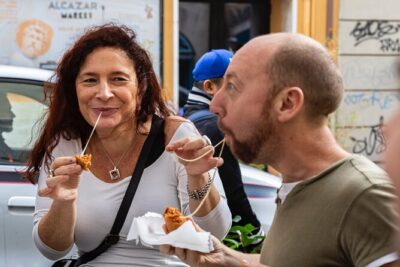
Winner 2025 Rome Twilight Trastevere Food Tour by Eating Europe
Read our review →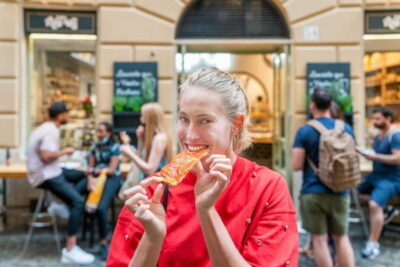
Trastevere or Jewish Quarter Street Food Tour
Read our review →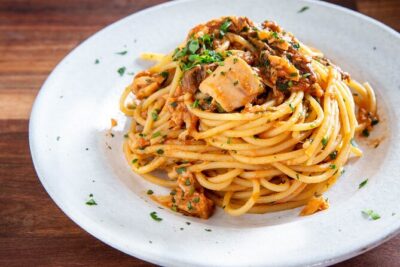
Rome Food Tour: Unlimited Tastings with Fine Wine & Barolo
Read our review →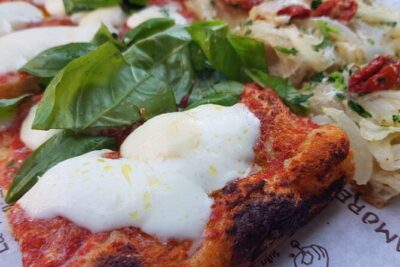
Trastevere Food tour with Free-Flowing Fine Wine
Read our review →
Award Winning Trastevere Group Food Tour with Wine
Read our review →
Food Tour with Unlimited Food and Barolo Wine
Read our review →Browse the lists this tour appears in