
Reviewed · ROME CHURCHES AND BASILICAS TOURS
Rome: San Clemente Underground and Basilica Guided Tour
San Clemente is one of Rome’s best history lessons because you walk downward through time. Start in the 12th-century basilica, pass into a 4th-century church, then reach Roman homes and a 1st-century Mithraic temple below. The site makes Rome’s habit of building over its past easy to see.
I especially like the small-group feel, which gives you room to ask questions, and the way guides such as Luca, Gina, Eddy, and Ricardo turn a complicated site into a clear story. The gold mosaics are a fine opening act, but the ancient spring and Mithraic altar are the real surprises.
The main drawback is practical: you must manage stairs and uneven surfaces without help. The meeting point can also be confusing, and two visitors had trouble hearing when headsets were not supplied. Bring patience, comfortable shoes, and layers.
Key points to know before you book
- Three underground levels: See a 12th-century basilica, a 4th-century church, Roman homes, and a Mithraic temple in one compact visit.
- The spring that revealed the past: Underground water helped cause the problem that led to the site’s discovery in 1860.
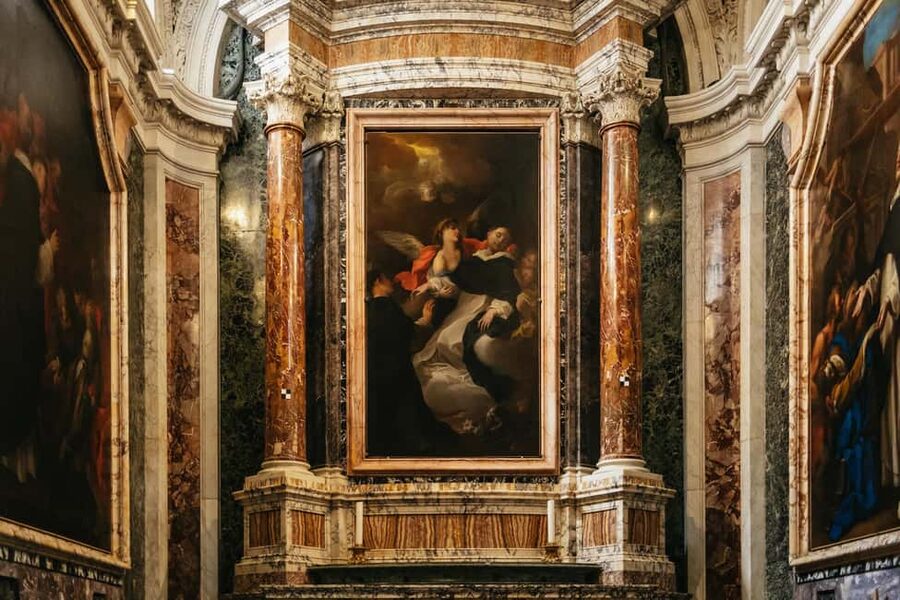
- Gold mosaics above ground: San Clemente’s upper church gives you an important medieval art stop before the stairs begin.
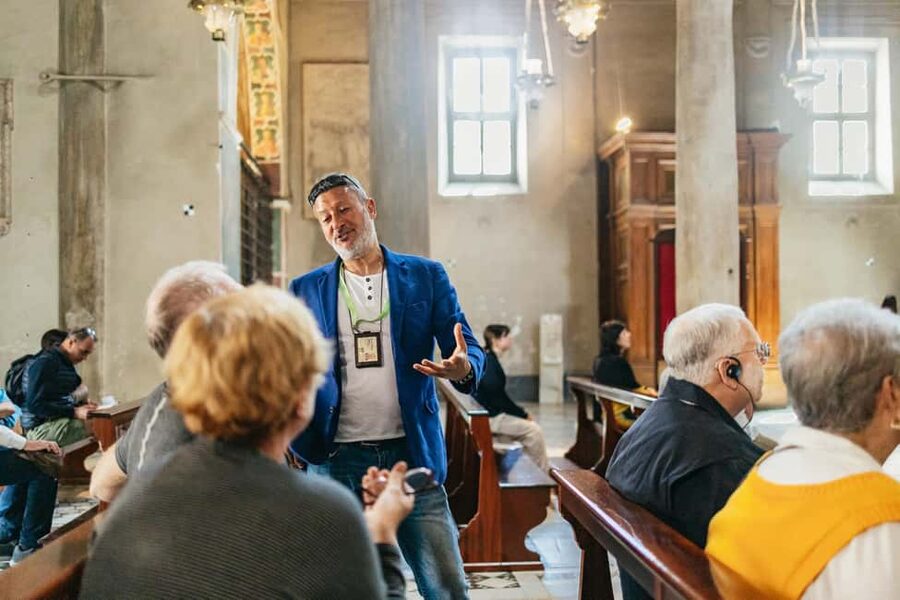
- Guides make the difference: Luca, Gina, Eddy, Ricardo, Anna, and others have been praised for clear explanations, humor, and enthusiasm.
- A physical visit: Expect stairs, cooler air underground, uneven surfaces, and no access for wheelchair users.
- Good value at $70: The fee includes admission and a live English guide, useful at a site where the layers can be hard to read alone.
Why San Clemente feels like Rome in one building
Rome can sometimes feel like a city where every street corner competes for your attention. San Clemente offers a quieter lesson. Instead of looking at one ruin in isolation, you see how centuries of worship, housing, construction, flooding, and excavation overlap in the same place.
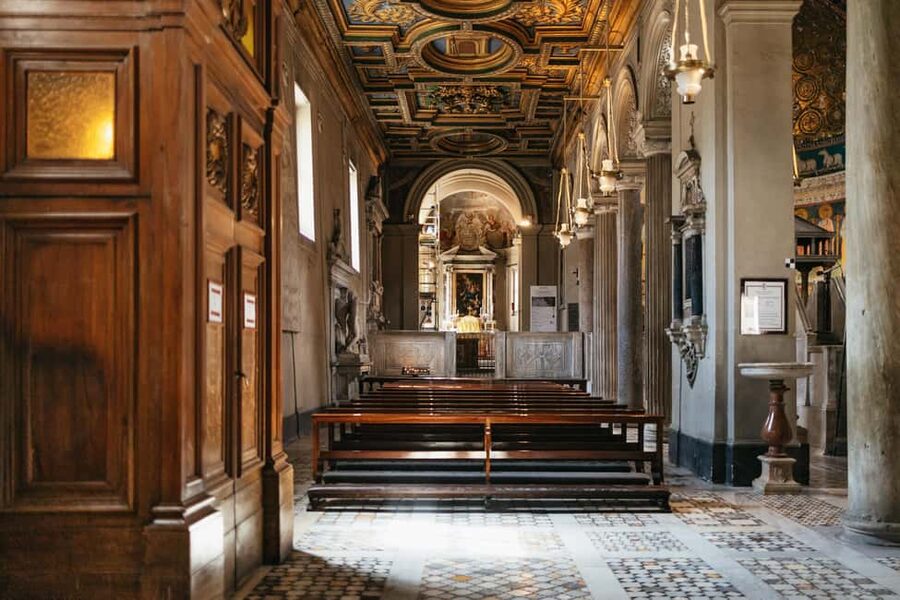
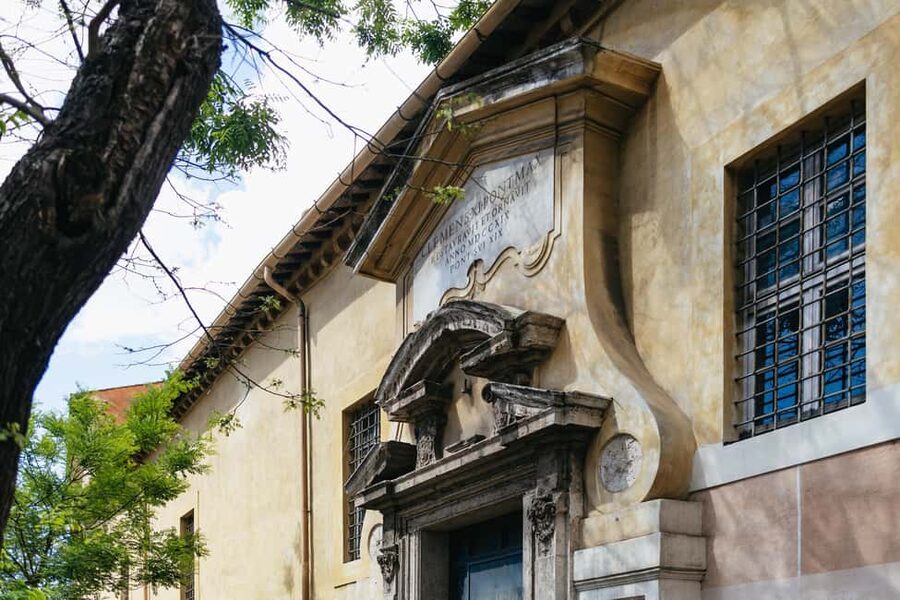
The visit begins at the Basilica of San Clemente al Laterano, near the Colosseum and the Line B Colosseo metro stop. From the outside, it may look like one more historic church in a city full of them. Inside, the building quickly becomes a map of Roman time.
Your guide first gives you the story of the 12th-century basilica. Then the route descends. Each lower level is not simply older, but different in purpose and atmosphere. The experience works because you physically move from one period to another rather than trying to picture the change from a museum label.
This is also why a guide matters here. The remains are fascinating, but walls, channels, foundations, and fragments can blur together when you see them without context. A good guide points out what you are looking at, explains how the spaces relate, and connects the religious buildings to the wider story of Rome.
More churches and basilicas in Rome:
- Vatican Museums, Sistine Chapel & 4 Papal Basilicas Full Day Tour
★ 4.5 · 1,068 reviews - Vatican: Pope Francis Tomb and Papal Basilicas Tour
★ 4.7 · 340 reviews - Rome: Santa Maria Maggiore Upper Areas Skip-the-Line Ticket
★ 3.8 · 223 reviews
The 12th-century basilica and its gold mosaics
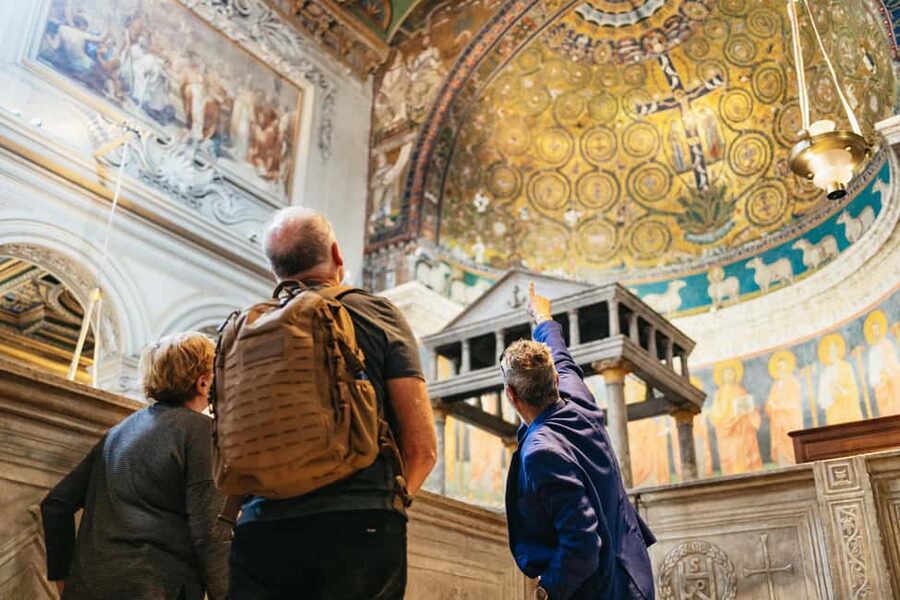
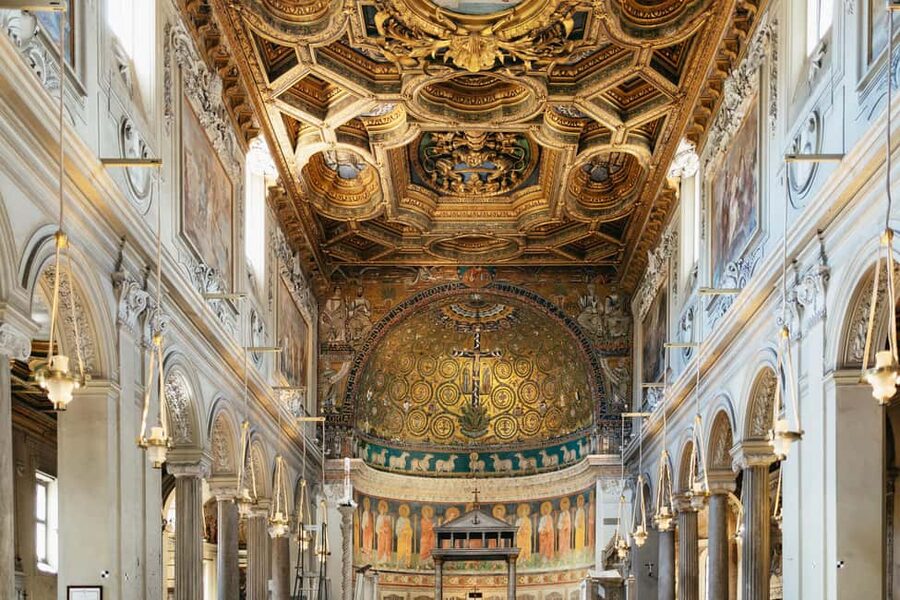
The upper church is your first stop, and it deserves more than a quick glance before the underground portion. San Clemente’s gold mosaics are the visual highlight of this level. The shining surfaces give the church a very different mood from the dark stone and brick below.
Take time to look at how the mosaics fill the apse and draw your eye toward the center of the church. Your guide can help explain the religious images, symbols, and artistic choices. Several guides have been praised for making medieval art easier to understand, especially for people who do not normally feel at home in churches or art museums.
This part of the tour also gives you a useful visual reset. Above ground, San Clemente is a functioning church with medieval decoration. Below ground, the setting becomes more archaeological and industrial. That contrast helps you understand the building as a working place of worship built over earlier structures, not simply as a pretty church with ruins underneath.
Photography inside is not allowed, and cameras are specifically listed among the items not permitted. That may disappoint you if you like to document every stop, but it also means you should plan to look carefully rather than through a screen. You can use the 30-minute portion listed for the basilica and photo stop to notice details before heading down.
Dress modestly inside the church. Your shoulders and knees must be covered, so this is a good place to wear clothing that works for both a church and a cooler underground site.
The forgotten 4th-century church below
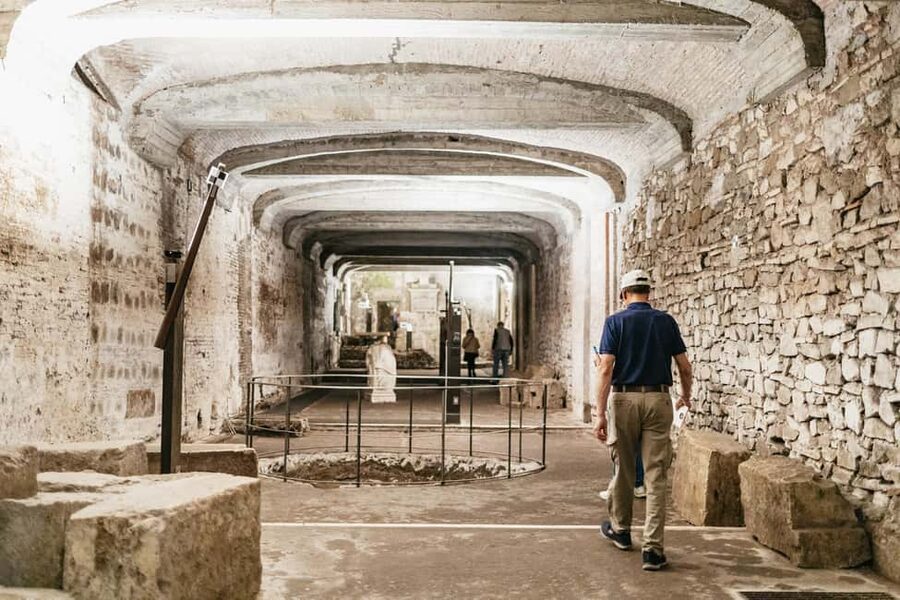
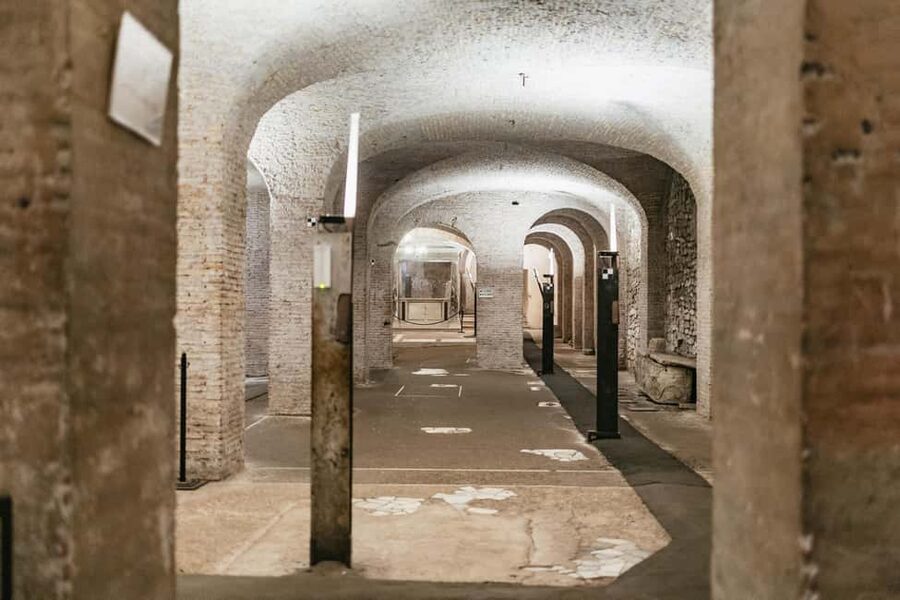
The first underground level reveals a 4th-century basilica that was forgotten after the construction of the church above. Here, the guide’s storytelling becomes especially useful. You are not just seeing old walls. You are seeing a former church that survived because later building changed the level of the ground around it.
This is the point where Rome’s layered character becomes physical. The 12th-century basilica sits above the earlier church, which in turn rests above still older Roman structures. You walk down through those layers, and the stairs act almost like a timeline.
The 4th-century remains are also a reminder that Rome’s Christian buildings did not appear in an empty city. They occupied spaces that had earlier uses, owners, and communities. A guide can explain those changes in a way that makes the archaeology feel connected rather than scattered.
The space is underground, so expect a cooler temperature than outside. Wear layers, particularly if you are visiting Rome during a hot spell and arrive in light summer clothing. The route is only 90 minutes, but the temperature change is noticeable enough to affect your comfort.
Roman homes, water, and the story of discovery
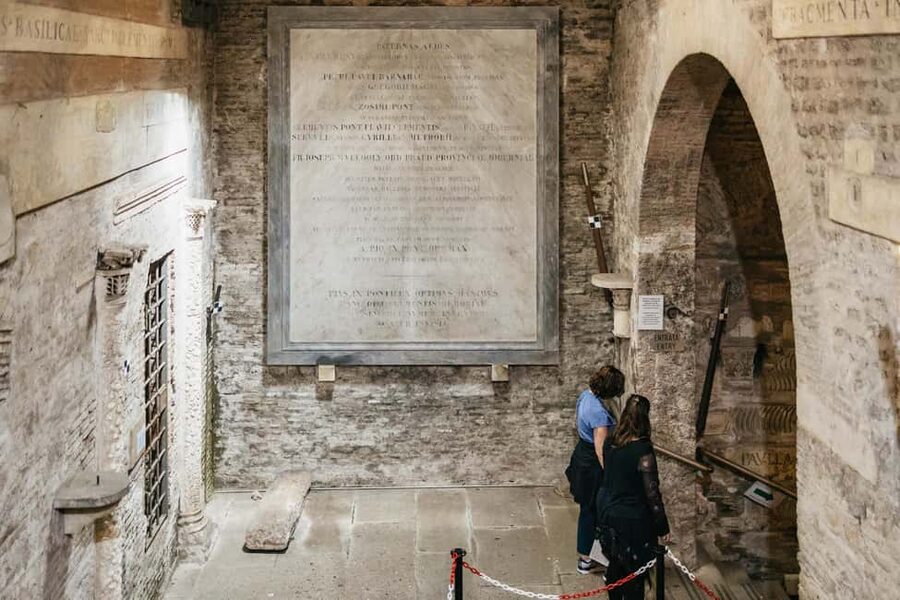
As you go lower, you encounter remains of ancient Roman homes. The excavated spaces are described as carefully preserved, and the water below helps explain both the site’s condition and its modern discovery.
In 1860, a flood led an Irish Dominican priest and archaeologist to investigate what lay below San Clemente. The underground spring had caused trouble, but that trouble opened the way to the older levels. It is a memorable reminder that archaeological discoveries do not always begin with a grand plan. Sometimes a practical problem reveals a buried city.
The spring is still part of the story at the lowest level. You can see the underground water source that helped cause the chaos and led to the investigation. This detail gives the site a natural force as well as a human one. Buildings were changed by people, but water also shaped what survived.
The Roman homes help you picture everyday life beneath the later churches. You may find it easier to imagine these rooms than a large public monument because the remains relate to domestic space. Your guide can point out how the structures were used and how later construction affected them.
This is also where the route can feel tight and busy. San Clemente is popular, and several small groups may be moving through the same underground areas. One visitor found it hard to hear without proper radio equipment, while another felt that overlapping groups made it difficult to pause and look around. Stay close to your guide and speak up if you cannot hear.
More underground Rome tours:
- Colosseum: Underground and Ancient Rome Tour
★ 4.7 · 12,691 reviews - Rome: Crypts and Catacombs Underground Tour with Transfers
★ 4.6 · 5,341 reviews - Expert Guided Tour of Colosseum Arena OR Underground, and Forum
★ 4.5 · 5,041 reviews - Rome: Colosseum Underground Small Group Guided Tour
★ 4.7 · 4,844 reviews
The Mithraic temple is the dramatic final stop
At the deepest level, you reach an ancient pagan Mithraic temple, or Mithraeum, complete with an altar. For many people, this is the most memorable part of the visit. The room is more enclosed and atmospheric than the church above, and the change from Christian basilica to pagan sanctuary gives the tour a strong final turn.
The Mithraic temple matters because it shows that religious life in ancient Rome was not limited to the traditions most familiar today. Your guide explains the setting and its purpose, helping you read the altar and the shape of the room. You do not need prior knowledge of Mithras to follow the story, but you will get more from the stop if you listen closely.
One useful benefit of taking this tour early in your Rome visit is that Mithraic imagery may become easier to recognize at other ancient sites. A guide can give you a basic framework, so later Roman ruins feel less like a collection of disconnected symbols.
The lowest level is also where the physical demands are most important. You must climb and descend stairs independently, and the tour is not suitable for wheelchair users or people with mobility impairments. If stairs are difficult for you, this is not a minor inconvenience. The entire point of the visit is moving through the underground levels.
What the 90-minute itinerary feels like
The advertised duration is 1.5 hours. About an hour is devoted to the guided visit, with roughly 30 minutes for the basilica and photo stop. In practice, the time is compact, so you should expect a focused introduction rather than a slow archaeological study.
The route begins and ends near Via di S. Giovanni in Laterano, 126. The meeting point is outdoors, not at an office. Look for the location near the corner by San Clemente Basilica, and allow time to orient yourself. The nearest metro stop is Colosseo on Line B, though the final walk and exact meeting spot still require attention.
The itinerary is simple:
- Meet near the basilica.
- Visit the 12th-century church and its mosaics.
- Descend to the 4th-century basilica.
- Continue through Roman homes and the underground spring.
- Reach the Mithraic temple and altar.
- Return to the basilica area.
There is no bus ride or long transfer between stops. That makes the tour easy to fit before or after the Colosseum area, though you should not plan a rushed connection immediately afterward. Small delays can happen when groups pause, stairs are crowded, or the guide needs to explain a complicated feature.
How much value do you get for $70?
At $70 per person, this is not Rome’s cheapest church visit. You are paying for more than entry, though. The price includes admission to the San Clemente complex and a live English-speaking guide who helps you understand spaces that can be difficult to interpret on your own.
I think the fee is reasonable if you care about Roman archaeology, medieval art, or the way the modern city grew over older structures. The tour gathers several very different periods into 90 minutes, and a clear explanation can save you from walking through the underground rooms without knowing what you are seeing.
The value is less certain if you prefer to move slowly, take photographs, or read every detail by yourself. Cameras, video recording, photography inside, luggage, and large bags are not allowed. You also have less control over the pace when multiple groups share the site.
The strongest part of the value comes from the guide. Luca is repeatedly singled out for clear explanations, friendliness, and an easy pace. Gina has been praised for making complicated history, architecture, and frescoes understandable. Eddy is known for energy and a lively presentation, while Ricardo has been described as especially effective at guiding people through the progression from the 12th-century church to the 1st-century level.
Guide assignments can change, so you cannot book a particular person from the information provided. Still, the range of positive comments about Luca, Gina, Eddy, Anna, Patricia, Priscilla, Ursus, and others suggests that the live explanation is a central part of the experience.
Who should take this tour?
I would choose this for a first or second visit to Rome if you want more than the major monuments. It gives you a practical way to understand how the city grew, and it can make later visits to Roman ruins more readable.
History fans will find plenty to hold their attention, especially at the Mithraic temple and the lower Roman homes. The tour also suits people who enjoy religious art because the upper church and its mosaics balance the archaeological material below.
Families with older children may like the physical movement and changing settings, but the stairs and quiet explanations require attention. Young children who dislike enclosed spaces or cannot walk independently may struggle.
This is not a good choice if you use a wheelchair, cannot climb and descend stairs alone, or need a fully accessible route. It is also a poor fit if your priority is photography. The no-camera rule is firm inside the church and underground areas.
Bring comfortable shoes. The route includes uneven surfaces, and even fit walkers should not treat it as a polished-floor church visit. Wear layers, cover your shoulders and knees, and leave large bags elsewhere.
Small practical details that can shape the visit
The meeting location deserves extra care. It is outside near the basilica, not inside a booking office, and one visitor found the instructions confusing because the stated business location was closed. Check the corner near Via di S. Giovanni in Laterano, 126 and arrive early enough to look around without panic.
The skip-the-line feature is useful, but it does not mean you will have the underground rooms to yourself. Other small groups may be present, and the tight areas can make it harder to hear. If your guide is speaking through a headset, stay within range. If you cannot hear, say so immediately rather than losing the explanation.
The tour is offered in English. The guide may use humor, stories, and questions to keep the group involved, but the quality of the visit still depends on your attention. This is one of those places where a little preparation helps. Knowing that you will see a medieval basilica, an earlier Christian church, Roman homes, a spring, and a Mithraic temple gives you a useful outline before arrival.
Free cancellation up to 24 hours before the start and reserve-now, pay-later booking add flexibility. Those terms are helpful if your Rome schedule is still shifting, but the main booking decision should rest on your comfort with stairs and your interest in the subject.
Should you book San Clemente?
Book it if you want a compact, well-explained look at Rome’s many layers and do not mind stairs. The combination of gold mosaics, an abandoned 4th-century church, Roman homes, underground water, and a Mithraic altar gives you more variety than the 90-minute length suggests.
Skip it if you need step-free access, want a relaxed photography stop, or prefer to explore without a guide. For everyone else, this is a smart addition to a Colosseum-area day, especially when you want a quieter site with real archaeological substance. The guide is the key reason to pay the $70, so stay close, ask questions, and give yourself time to look carefully.
FAQ
Where does the San Clemente tour meet?
Meet outdoors near San Clemente Basilica, at the corner by Via di S. Giovanni in Laterano, 126. It is not an office. The nearest metro stop is Colosseo on Line B.
How long does the tour last?
The tour lasts 1.5 hours. The guided basilica visit takes about one hour, followed by about 30 minutes for a visit and photo stop.
What language is the tour offered in?
The live guided tour is offered in English.
What does the price include?
The $70 price includes admission to San Clemente Basilica and the services of a tour guide.
Can I cancel the booking?
You can cancel up to 24 hours before the activity for a full refund.
Can I reserve now and pay later?
Yes. The activity allows you to reserve your place and pay later.
Can I take photographs inside?
No. Cameras and photography inside are not allowed. Video recording is also prohibited.
Are large bags or luggage allowed?
No. Luggage and large bags are not allowed.
Is the site accessible to wheelchair users?
No. The tour is not suitable for wheelchair users or people with mobility impairments.
What should I wear and bring?
Wear comfortable shoes for stairs and uneven surfaces. Bring layers because the underground levels may be cooler, and cover your shoulders and knees inside the church.
Newest Rome tours we have reviewed
- Private TikTok Video Making in Rome★ 5.0 · 7 reviews
- Assisi, Orvieto and Civita di Bagnoregio Full Day Tour from Rome★ 4.5 · 45 reviews
- Assisi & Saint Francis Path Tour from Rome★ 5.0 · 45 reviews
- Assisi and Cascia Private Day Tour from Rome with Lunch★ 5.0 · 10 reviews
- Art Class in the center of Rome!★ 4.0 · 4 reviews
- Art & Craft: Beer Tour with Street Art in Rome★ 4.5 · 6 reviews
- Arrival in Rome: Airport Transfer & Exclusive City Introduction★ 5.0 · 3 reviews
- From Rome: Private Day-Tour of Tuscany★ 5.0 · 16 reviews
Rome Churches and Basilicas Tours, compared.
Vatican Museums, Sistine Chapel & 4 Papal Basilicas Full Day Tour
Read our review →
Santa Maria Maggiore Upper Areas Skip-the-Line Ticket
Read our review →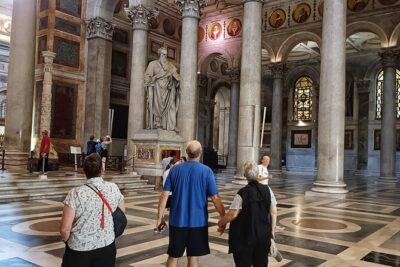
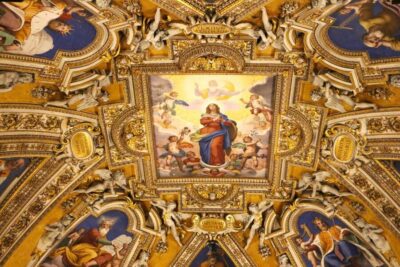
Santa Maria Maggiore and Panoramic Dome Guided Tour
Read our review →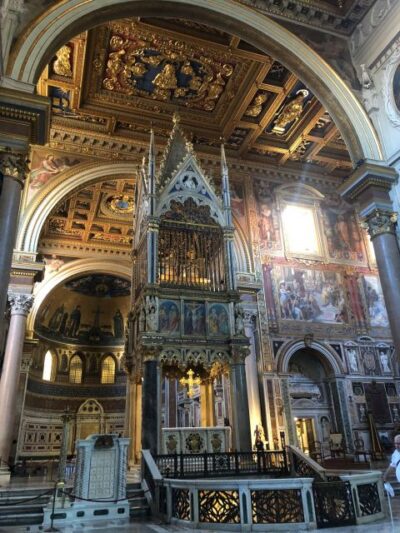
Basilica of St John Lateran & Holy Steps 1-Hour Tour
Read our review →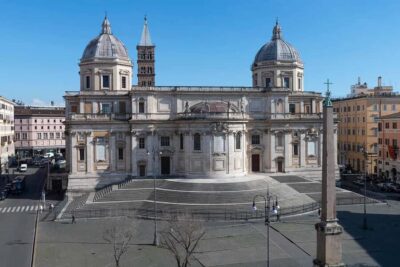
Basilica of St. Mary Major Priority Entrance Ticket
Read our review →
Jubilee Year Papal Basilicas Tour by Private Car
Read our review →Browse the lists this tour appears in