
Reviewed · ROME FOOD MARKET TOURS
Rome Street Food: Delights at Campo dei Fiori & Ghetto Area
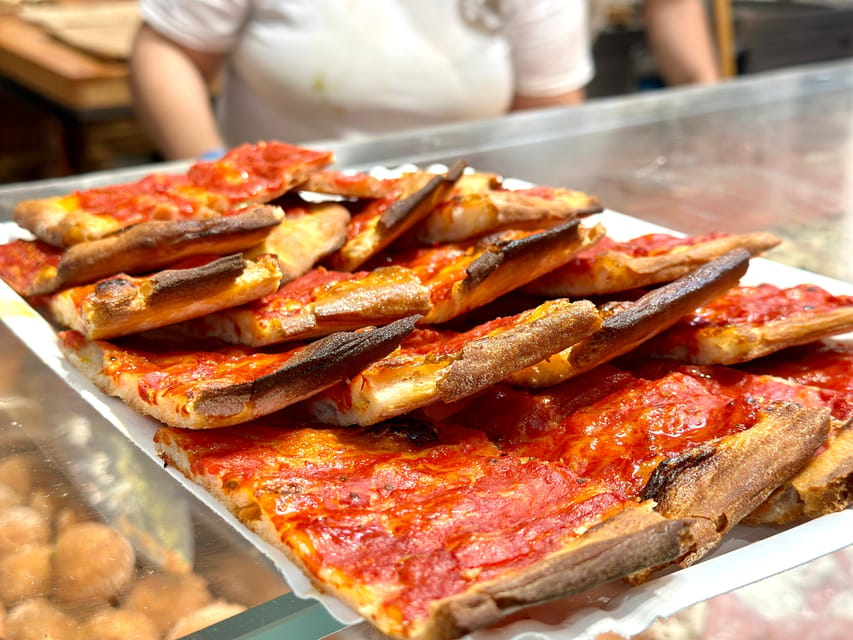
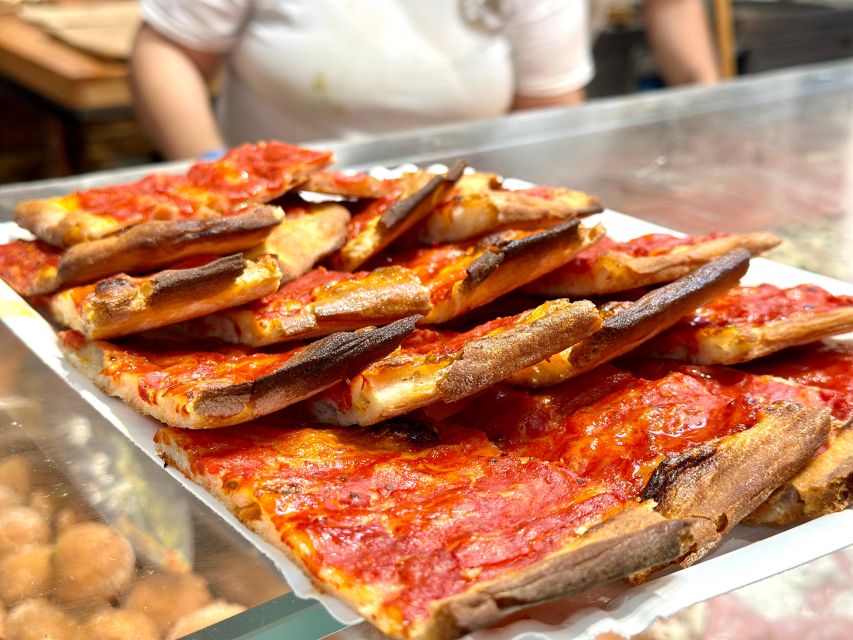
Rome puts its story on the plate. This 2.5-hour food walk links Campo de’ Fiori with the Jewish Ghetto, serving Roman pizza, cured meat, supplì, fried artichoke and gelato as you move through some of the city center’s most atmospheric streets. The food is not an afterthought. Each stop helps explain how Romans eat.
I especially like the mix of five food stops and sightseeing, plus the practical advice from guides such as Francesca, Ramona, Barbara and Mattia. I also like the price: at $41, the tastings can cover much of a light lunch, and several people found the portions generous enough to keep them going until dinner. The main catch is dietary choice. Vegetarian food requires advance notice, while vegan, gluten-free and dairy-free options are not available.
Key points at a glance
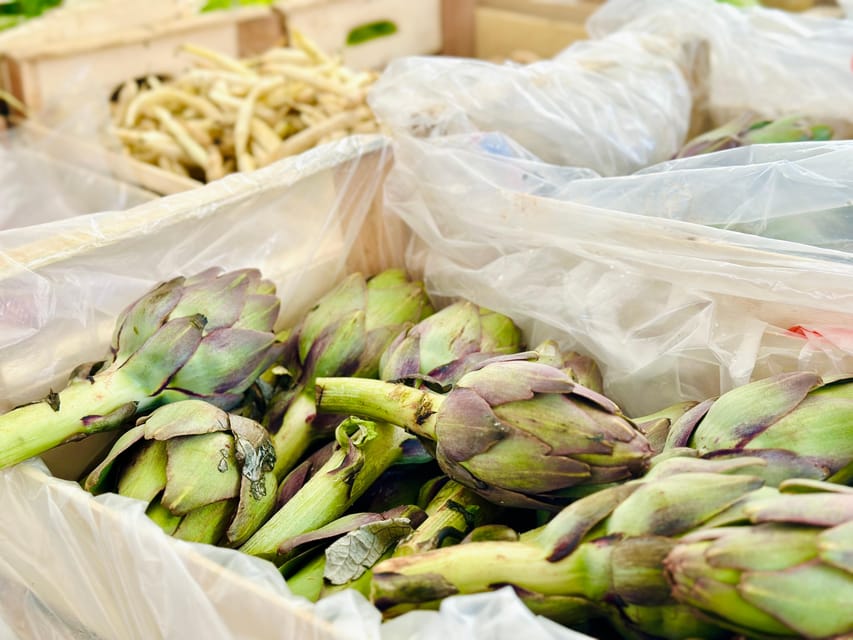
- Roman staples in one short walk: Try pizza from an old bakery, cured meat from a shop dating to 1890, supplì, fried artichoke and gelato.
- Two very different neighborhoods: Campo de’ Fiori brings market life and family-run food shops, while the Jewish Ghetto offers a distinct Roman Jewish food tradition.
- A useful lunch replacement: The tastings, wine sample and beer sample can amount to a filling midday meal for many people.
- A guide-led history lesson: Your English-speaking guide connects food with Roman customs, neighborhood stories and memorable sights.
- Morning and afternoon differ: Morning departures may include olive oil, truffles and balsamic vinegar at the market. Afternoon tours may miss the market activity.
- Flat but cobbled: The route does not involve steep climbs, but uneven paving, standing and walking make it unsuitable for wheelchair users or anyone with limited mobility.
Why this Roman food walk works
Rome has no shortage of food tours, but this one keeps its scope sensible. You are not sent across the city chasing isolated tastings. Instead, the route stays in the historic center and joins several central districts in a compact loop from Campo de’ Fiori to Largo Argentina.
That matters because the city’s food culture makes more sense when you see the streets where it developed. A slice of Roman pizza tastes different when you have just walked through a market square. A fried artichoke has more meaning after your guide explains the Jewish Roman tradition behind it. You get food, but you also get a map of the neighborhood.
The pace is part of the appeal. The 2.5 hours include five food stops, short walks and several sightseeing pauses. You should expect to stand while eating rather than settle into a long restaurant meal. This is street food, not a sit-down tasting menu.
The food is also substantial. Pizza, cured meat, supplì, artichoke and gelato can easily replace lunch, especially with the small servings of wine and beer. One practical advantage is that you can finish the tour without needing to find a restaurant immediately afterward. If you prefer a full Roman lunch with several courses and table service, this is not that experience.
More food market tours in Rome:
- Rome: Trastevere & Campo de Fiori Street Food Walking Tour
★ 4.9 · 2,768 reviews - Rome: Colosseum, Roman Forum & Trajan’s Market Exterior Tour
★ 4.3 · 2,038 reviews - Roman Food Tour with Visit to the Trionfale Food Market
★ 5.0 · 471 reviews
Meeting Giordano Bruno in Campo de’ Fiori
The tour begins beneath the statue of Giordano Bruno in the middle of Campo de’ Fiori. This is an easy landmark to identify, but the square can be busy, so arrive with enough time to locate the statue rather than rushing in at the start.
Campo de’ Fiori is one of the liveliest parts of the route. In the morning, the square is associated with its food market, where you may encounter produce and local goods. Morning departures can include samples of olive oil, truffles and balsamic vinegar at the market, giving you a broader taste of Italian pantry staples.
Timing changes the feel of the first stop. On an afternoon tour, the market activity may be finished. The square can be cleaned and reset surprisingly quickly, so you might find fewer stalls than expected. That does not ruin the walk, but you should choose a morning start if the market is a major reason for booking.
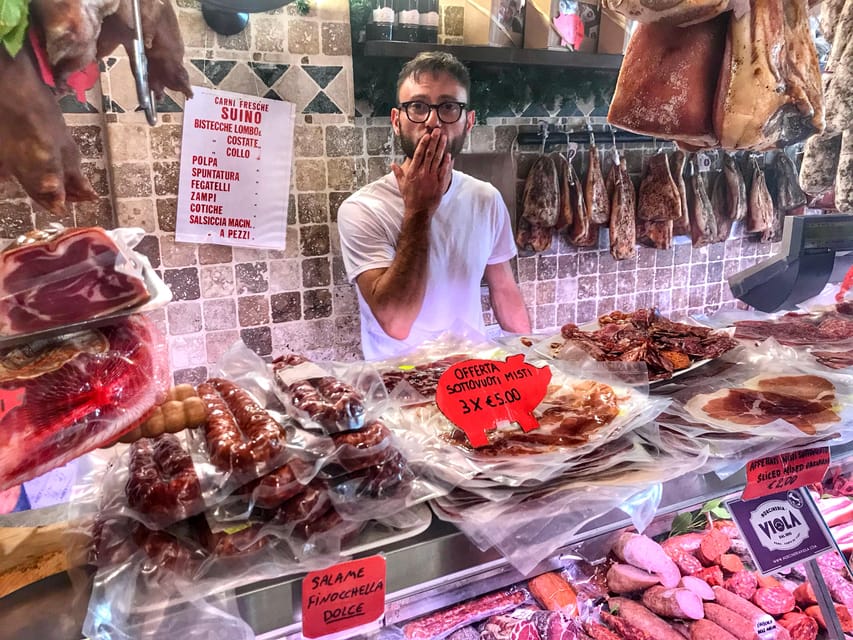
The first food tastings focus on familiar Italian pleasures. You can expect freshly baked Roman pizza from an old bakery and a selection of cured meats from a local shop that has operated since 1890. Those details give the stop a sense of continuity without turning it into a museum visit. You are tasting food from businesses tied to the daily life of the area.
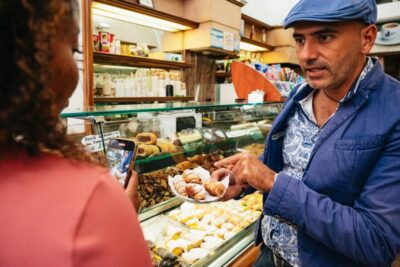
Your guide also uses this opening section to explain Italian eating habits and the role of small food shops. Guides including Francesca, Mattia and Barbara have been praised for explaining not only what is being served, but why it matters. That distinction is important. You leave with a better idea of what to order later in Rome, not just a full stomach.
Via del Biscione and an old passageway
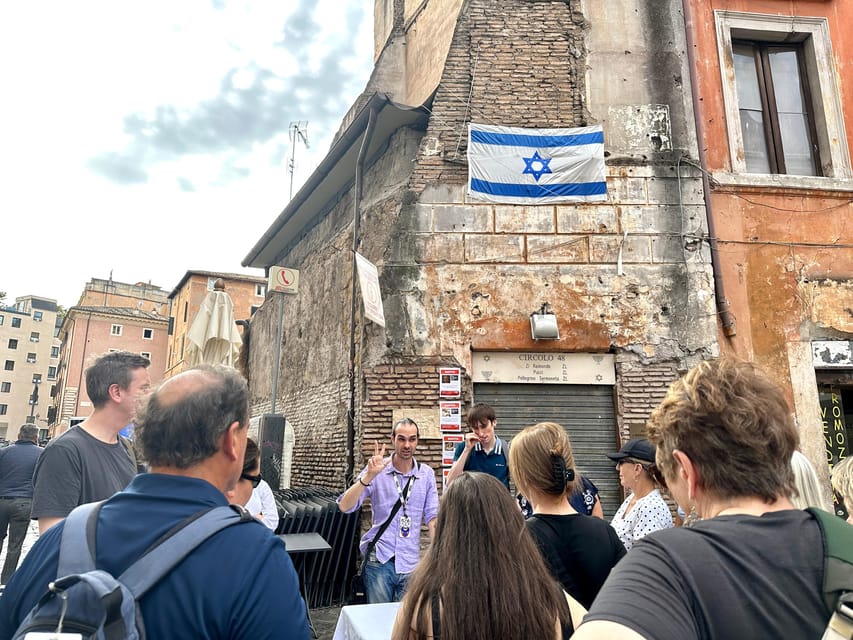
From Campo de’ Fiori, the route moves along Via del Biscione. This is a short walking section, about 10 minutes, and it gives your guide room to point out details you could easily miss while walking alone.
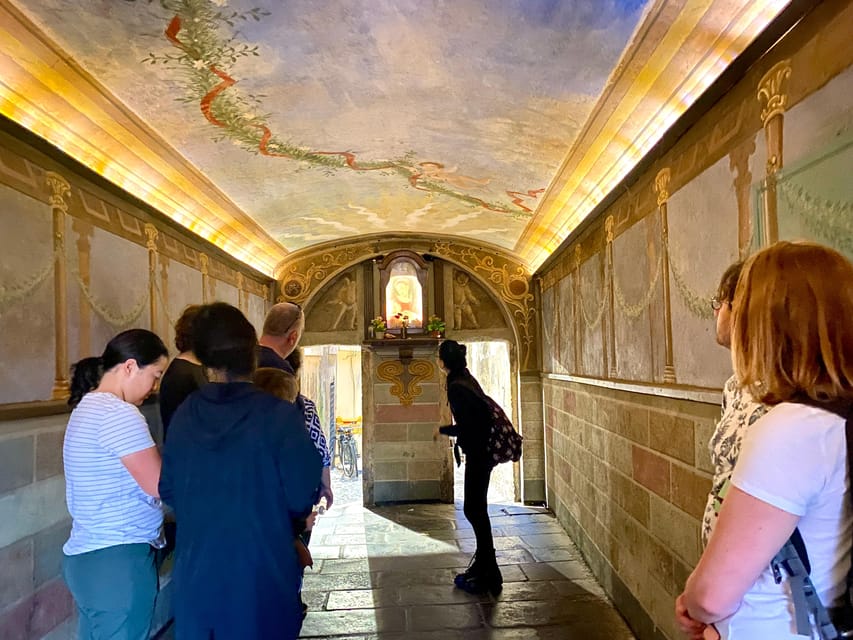
The route includes an ancient passageway with frescoes and a shrine. It is a small stop, not a grand monument, but that is precisely why it works well on a neighborhood walk. Rome often rewards you for looking above eye level or through an unmarked opening. Here, the food pauses are balanced by small pieces of local character.
This part also helps break up the tasting schedule. You are not eating continuously. You walk, listen, look around, then stop again. The arrangement keeps the experience from feeling like a series of counter visits.
The paving is generally flat, which makes the route less tiring than a hillier Rome walk. Still, the cobbles can be uneven. Wear shoes with secure soles, and expect to stand during most tastings. One person described the route as manageable for different ability levels while also warning about the cobbles. That is a fair reading, but anyone with limited walking or standing capacity should choose another activity.
Via dei Chiavari and the Roman snack table
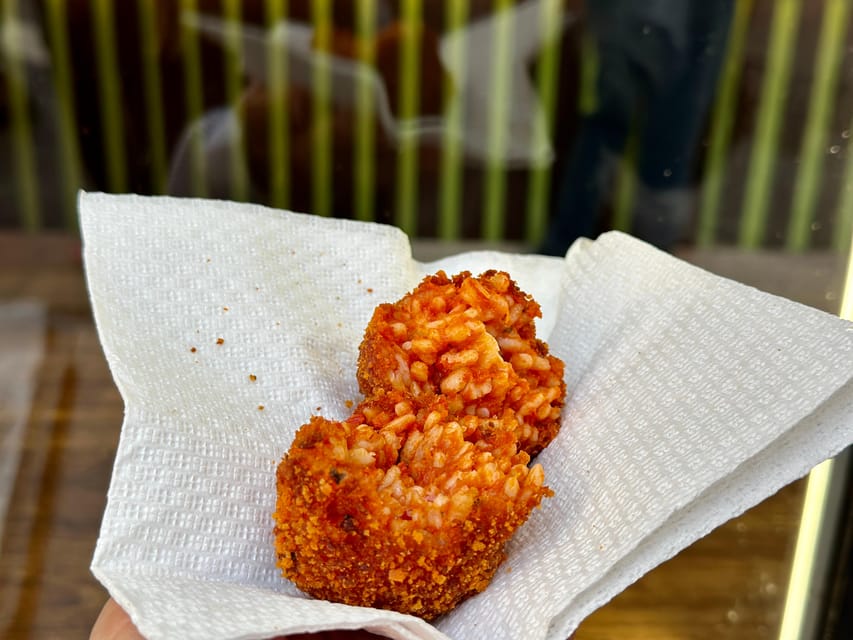
The next food section takes place around Via dei Chiavari and lasts about 30 minutes. This is where the tour leans into casual Roman eating, with pizza, cured meat and the city’s famous supplì.
Supplì is a deep-fried rice ball, usually associated with a crisp outside and a warm, savory center. It is an ideal street food for this tour because it is portable, filling and unmistakably Roman. Your guide explains the dish as you eat it, turning a quick snack into a small lesson in local food culture.
The pizza stop is another strong point. Roman pizza is not presented as a generic Italian slice. The focus is on a traditional local bakery and the kind of quick food you can eat while walking through the center. Several guides have connected the tastings with personal stories and useful advice about Italian food, which helps you understand how these items fit into ordinary meals.
The cured meat tasting adds a different texture and flavor. It also gives you a chance to compare the salty, savory profile of the meats with the lighter, crispier snacks. With wine and a small beer sample included, this section can feel more like a generous lunch than a quick nibble.
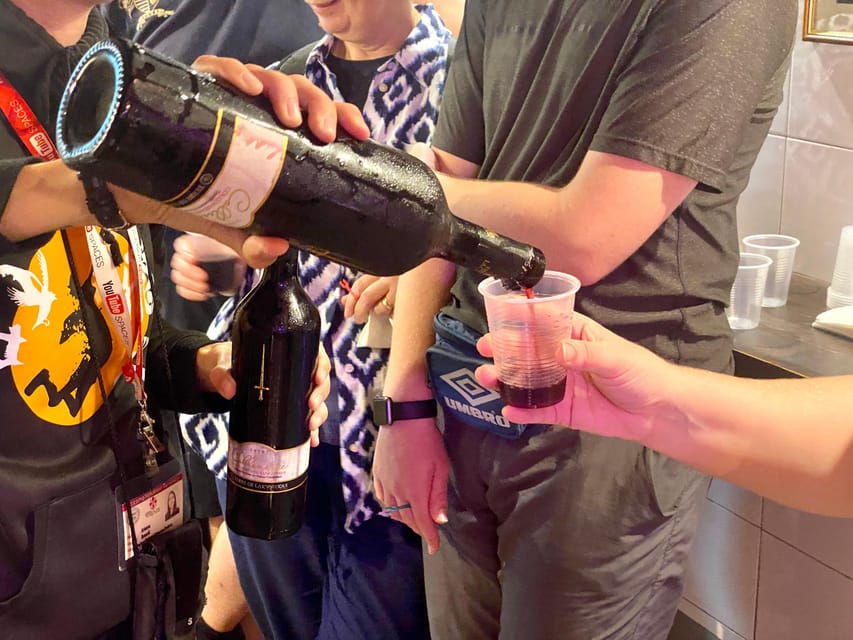
Drinks require a clear expectation. The tour includes one sample of wine and one sample of beer, but drinks are not included generally. You should not assume unlimited pours or a full beverage pairing. The small samples complement the food rather than turn the walk into a bar crawl.
More street food tours in Rome:
- Rome: Trastevere or Jewish Quarter Street Food Tour
★ 4.8 · 3,839 reviews - Rome Street Food Tour with Local Guide
★ 5.0 · 2,361 reviews - Trastevere & Campo de’ Fiori Street Food Tour, Eat Like a Local
★ 5.0 · 207 reviews - Hidden Rome: Small Group E-Bike Tour with Street Food Stops
★ 4.9 · 144 reviews
Entering Rome’s Jewish Ghetto
The route then heads into Rome’s Jewish Ghetto, one of the oldest Jewish districts in the western world. This is the cultural center of the tour, because the food here reflects a specific Roman Jewish tradition rather than a broad idea of Italian cuisine.
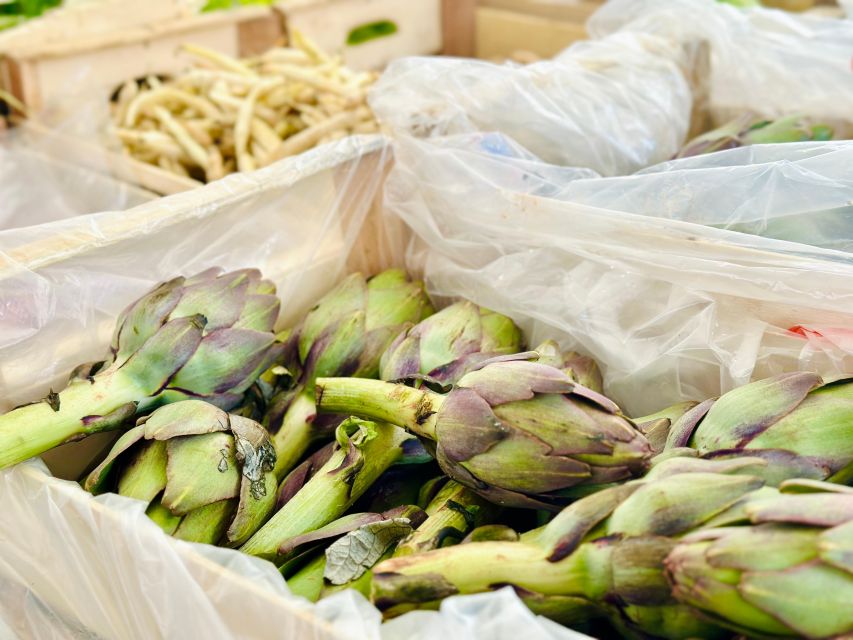
The best-known tasting is the fried artichoke. It is crisp, rich and distinctive, and it gives you something very different from pizza or supplì. The guide explains the dish’s place in the local community and the way Jewish Roman cooking has shaped what people eat across the city.
The Jewish Ghetto section lasts about 45 minutes and combines walking, sightseeing and food. You should not expect a long string of tastings here. The route includes the fried artichoke and sightseeing through the district, but the food focus is narrower than the opening section around Campo de’ Fiori.
That point is worth noting because the tour description may sound as if the Jewish Ghetto contains several separate food stops. In practice, you may have more time to walk and hear about the district than to taste additional dishes. If your priority is a full food tour devoted to Jewish Roman cooking, you may find this section too brief. If you want one strong local dish paired with neighborhood context, it works well.
The guides are an important part of this section. Ramona has been praised for combining food and area history in a clear, friendly way, while other guides have kept children and adults involved with questions. A good guide helps you see the Ghetto as a lived-in part of Rome, not simply a backdrop for a fried snack.
Finishing beside Largo Argentina with gelato
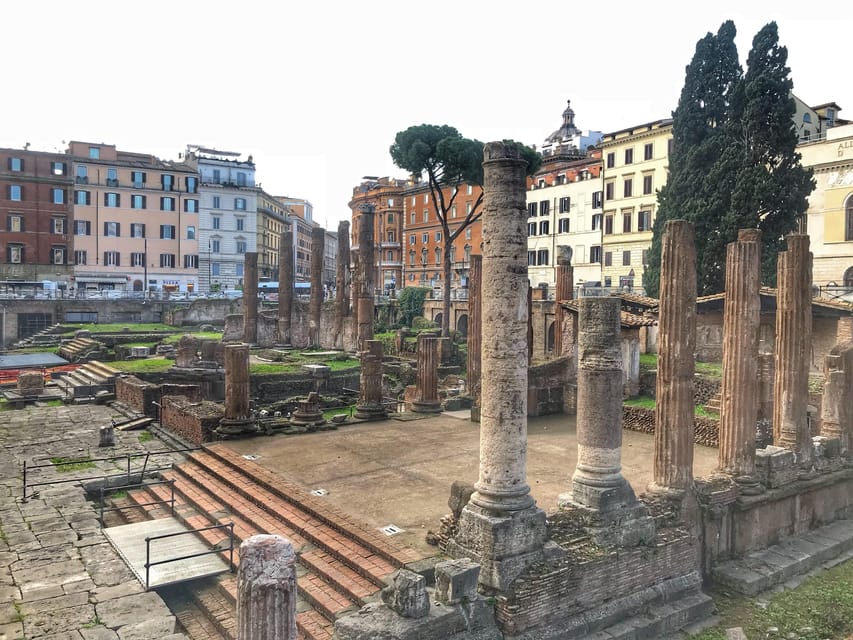
The final section brings you to Largo di Torre Argentina, also known as Area Sacra di Largo Argentina. Ancient ruins fill this archaeological site, and the tour ends nearby with gelato.
The contrast is pleasing. After savory foods and the strong flavor of the fried artichoke, gelato gives you a cool, sweet finish. It is a simple ending, but it suits the format. You can enjoy dessert while taking in one of central Rome’s most striking archaeological settings.
The stop lasts about 20 minutes. It is not a full archaeological visit, and you should not book the food tour expecting an in-depth lesson on the ruins. The site works as a final sightseeing point and a clear finish to the walk.
The endpoint also gives you a useful position in the city. The tour starts at Campo de’ Fiori and ends at Largo Argentina, so you finish close to other historic center sights. You can continue sightseeing, find a restaurant or head elsewhere without returning to the starting square.
What $41 buys you
At $41 per person, the value depends on how much you eat and how much you value a guide. Five food stops, a wine sample, a beer sample and 2.5 hours of local interpretation make the price reasonable, especially in central Rome.
I would treat the tour as a paid lunch with sightseeing attached. The portions are reported as generous, and the combination of pizza, cured meat, supplì, artichoke and gelato should keep many people satisfied until evening. That saves you from buying a separate midday meal, though you may still want a proper dinner later.
The price is also attractive compared with more expensive Rome food tours. One participant specifically compared it favorably with tours costing twice as much. You are not paying for a long restaurant meal or premium wine. You are paying for variety, location and a guide who can explain what you are eating.
Value falls if you have strict dietary needs. Vegans, people avoiding gluten or dairy, and anyone with a nut allergy should think carefully before booking. A vegetarian option can be arranged only when requested in advance. Vegan, gluten-free and dairy-free alternatives are not available, and cross-contamination with nuts is possible.
The guides make the difference
The experience depends heavily on the person leading it. The guide names associated with particularly strong outings include Francesca, Ramona, Barbara, Mattia and Arianna. Their shared strengths are clear explanations, friendly conversation and the ability to connect food with local stories.
Francesca has helped late-arriving groups and adjusted the route for hot weather, using shade where possible. Ramona has been praised for clear storytelling and careful attention to the group. Barbara is known for a cheerful manner and strong knowledge of the area, while Mattia has explained both the food and the city’s past with care. Arianna has kept the tone entertaining even in summer heat.
You should still remember that guides vary from day to day. The food and route remain the same, but the balance between history, anecdotes and practical dining advice can change. That is normal for a small walking tour and one reason to ask questions as you go.
The language is English. The guides do more than name each dish. They discuss Italian customs, dining habits, neighborhood stories and the background of the food. Families can take part too, as the route has been handled in a way that includes both children and adults.
Practical details before you book
Plan on walking and standing for the full 2.5 hours. Seats are not guaranteed, so this is not a good choice if you need regular breaks or table service.
The route is mostly flat, but Rome’s cobblestones can be awkward. It is not suitable for wheelchair users or people with limited walking capacity. Pets are not allowed.
If the market matters to you, choose a morning departure if available. That is when olive oil, truffles and balsamic vinegar may be part of the tasting, and when Campo de’ Fiori is most closely connected to its market identity. Afternoon departures can still provide the pizza, cured meat and other food stops, but the square may be cleared of stalls.
The tour offers free cancellation up to 24 hours before departure, and you can reserve now and pay later. Availability and start times vary, so check the schedule before building the rest of your day around it.
Who should book this tour?
I would book this for someone visiting Rome for the first time who wants a quick orientation to the historic center through food. It is also a good fit if you want lunch handled in advance, prefer small tastings to a long restaurant meal and enjoy hearing local stories while walking.
Families can do well here, provided everyone is comfortable with cobbles and standing. Food-focused visitors should appreciate the range of Roman staples, while history-minded people will like the route through the Jewish Ghetto and the stop at Largo Argentina.
I would skip it if you need a wheelchair-accessible route, strict vegan or gluten-free food, or guaranteed seating. I would also choose a different experience if your main goal is a long, detailed exploration of Jewish Roman cuisine. For a reasonably priced introduction to Roman street food with history along the way, though, this is a strong choice.
FAQ
Where does the Rome street food tour start?
Meet your English-speaking guide under the statue of Giordano Bruno in the middle of Campo de’ Fiori.
Where does the tour finish?
The tour ends at Area Sacra di Largo Argentina, also called Largo di Torre Argentina.
How long does the tour last?
The walking and tasting experience lasts 2.5 hours.
What food is included?
The route includes five food stops with Roman pizza, cured meat, supplì, fried artichoke and gelato. Morning tours may also include olive oil, truffles and balsamic vinegar at the market.
Are drinks included?
One sample of wine and one sample of beer are included. Other drinks are not included.
Can vegetarian or special dietary options be provided?
A vegetarian option is available only when requested in advance. Vegan, gluten-free and dairy-free options are not available, and people with nut allergies should be aware of possible cross-contamination.
More food tours in Rome
- Winner 2025 Rome Twilight Trastevere Food Tour by Eating Europe
★ 5.0 · 5,157 reviews - Rome Food Tour: Unlimited Tastings with Fine Wine & Barolo
★ 5.0 · 3,365 reviews - Rome: Trastevere Food tour with Free-Flowing Fine Wine
★ 5.0 · 2,853 reviews - Rome: Award Winning Trastevere Group Food Tour with Wine
★ 5.0 · 2,273 reviews
Newest Rome tours we have reviewed
- Private TikTok Video Making in Rome★ 5.0 · 7 reviews
- Assisi, Orvieto and Civita di Bagnoregio Full Day Tour from Rome★ 4.5 · 45 reviews
- Assisi & Saint Francis Path Tour from Rome★ 5.0 · 45 reviews
- Assisi and Cascia Private Day Tour from Rome with Lunch★ 5.0 · 10 reviews
- Art Class in the center of Rome!★ 4.0 · 4 reviews
- Art & Craft: Beer Tour with Street Art in Rome★ 4.5 · 6 reviews
- Arrival in Rome: Airport Transfer & Exclusive City Introduction★ 5.0 · 3 reviews
- From Rome: Private Day-Tour of Tuscany★ 5.0 · 16 reviews
Rome Food Market Tours, compared.
Trastevere & Campo de Fiori Street Food Walking Tour
Read our review →
Colosseum, Roman Forum & Trajan’s Market Exterior Tour
Read our review →
Roman Food Tour with Visit to the Trionfale Food Market
Read our review →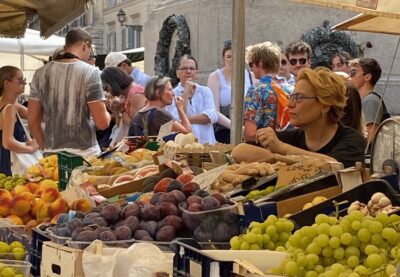
Food & Wine Tour of Campo de Fiori, Ghetto, Trastevere
Read our review →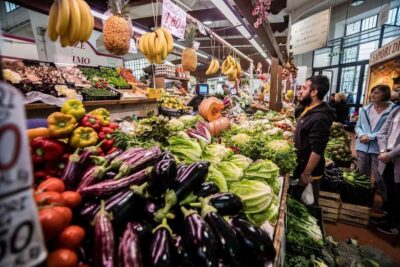
Pasta Cooking Class with Market Visit and Wine
Read our review →
Jewish Ghetto & Campo de Fiori by Night Food Wine Tour
Read our review →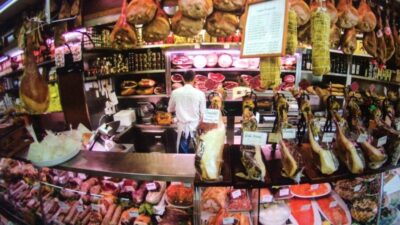
Browse the lists this tour appears in