
Reviewed · ROME
Rome: Trajan Markets Experience with Multimedia Video
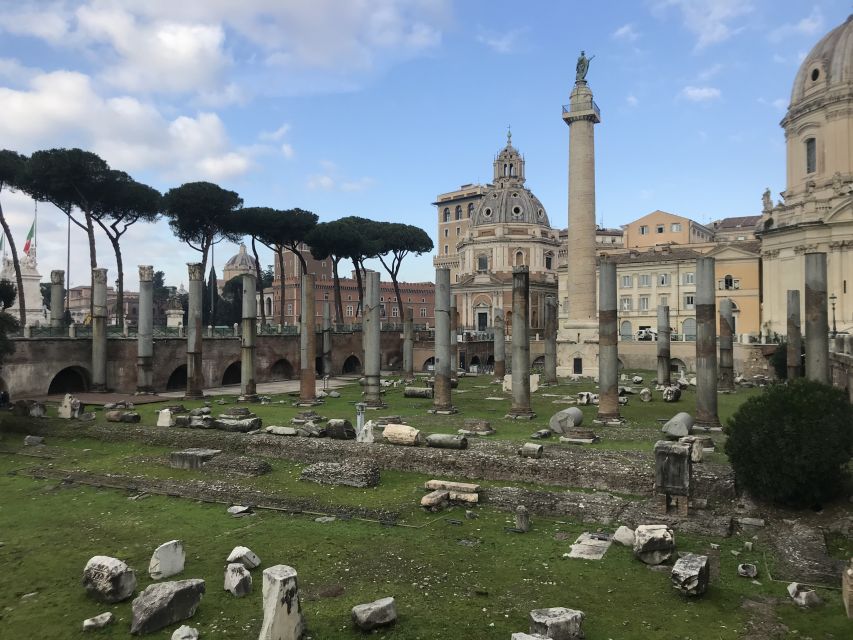
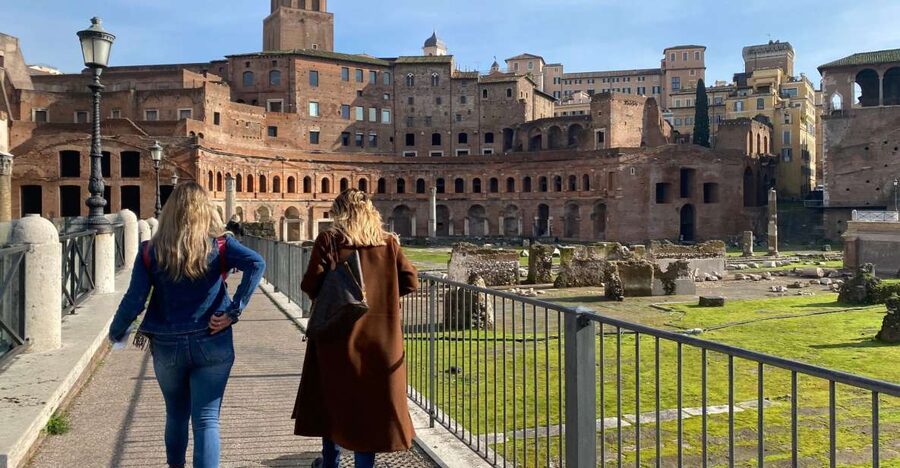
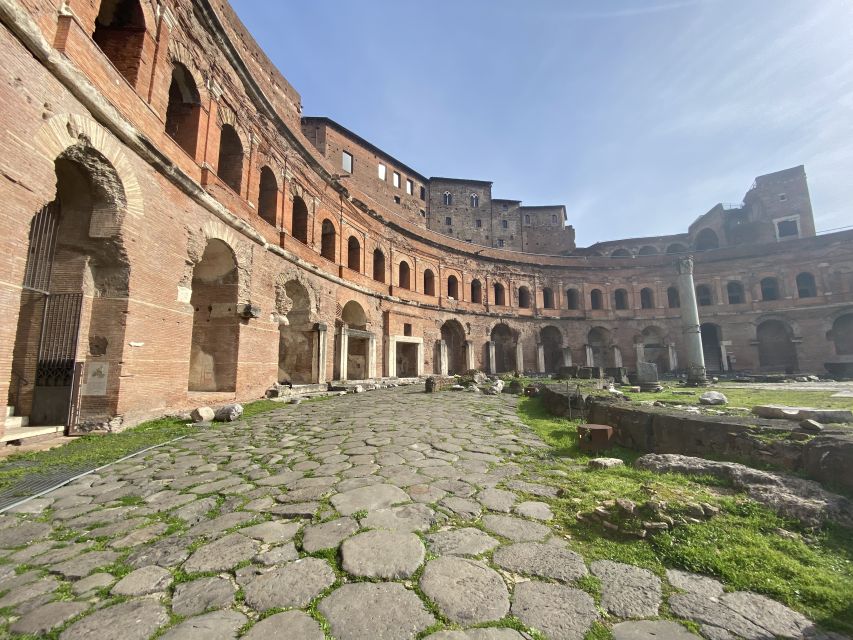
Trajan Markets gives you one of Rome’s best places to picture daily business in the Imperial Age. This curved brick complex was more than a grand ruin: it was a working commercial center, linked to the forums where people traded, met, and handled civic affairs. The semicircular architecture is the visual star.
I like the clear 25-minute multimedia presentation, which helps you see how the scattered ruins once fit together. I also like the Fori Imperiali Museum, where amphorae and artifacts add human scale to the stones. The main drawback is that some of the complex can be seen from the street, and the ticket pickup may take patience.
Key points
- A 25-minute Ancient Rome video shows reconstructed monuments before you enter the archaeological area.
- Trajan Markets reveals the commercial side of imperial Rome, not just temples and triumphal monuments.
- Five major forum areas connect the site with Caesar, Augustus, Nerva, and the Templum Pacis.
- A smartphone app with more than 170 points of interest lets you continue learning around the city.
- The Fori Imperiali Museum displays ancient artifacts and amphorae inside the complex.
- Piazza d’Aracoeli 16 is the meeting point, near Piazza Venezia and marked by orange Touristation flags.
Starting near Piazza Venezia
Your visit begins at the Touristation Aracoeli office at Piazza d’Aracoeli 16. This is near Piazza Venezia, one of central Rome’s busiest and easiest-to-recognize areas. Look for the orange Touristation flags and the fountain in front of the office entrance.
Allow a little extra time for the ticket exchange. One visitor had to wait about 15 minutes while tickets were printed, and the process seemed confusing at the desk. Another visitor had a smooth experience exchanging a voucher in the morning for an afternoon visit. The practical lesson is simple: arrive early, keep your booking details ready, and do not plan a tight connection immediately afterward.
The office provides assistance at the meeting point, but this is not a guided walking tour. You receive admission, the video presentation, and access to the city app. After that, you explore at your own pace.
Other Rome tours people pair with this one:
- Vatican Museums & Sistine Chapel Tour with Optional Basilica
★ 4.3 · 67,413 reviews - Vatican Museums, Sistine Chapel & St Peter’s Basilica Guided Tour
★ 4.5 · 39,149 reviews - Rome: Colosseum, Palatine Hill and Roman Forum Guided Tour
★ 4.8 · 32,814 reviews
Seeing Ancient Rome before entering the ruins
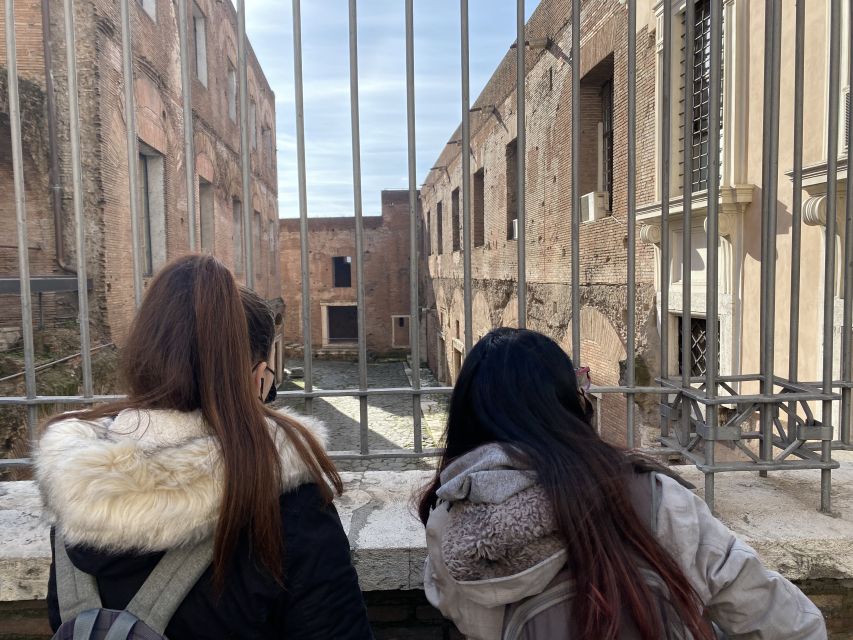
The 25-minute multimedia video is a useful first step because Rome’s forums can be hard to read at ground level. Today, you see fragments, columns, walls, and uneven foundations. The presentation shows reconstructions of the city’s major monuments, giving you a picture of how the Imperial Age might have looked before centuries of change.
I would pay close attention to the layout rather than trying to memorize every date. The video is most useful as a map in your head. Once you reach the archaeological complex, you can connect the brick structures and open spaces with their former roles.
This format works well if you are new to Roman archaeology or visiting with someone who finds ruins difficult to interpret. It also saves you from walking into the site with no idea what you are looking at. The tradeoff is that the presentation takes up part of your day, so visitors who only want a quick look at the ruins may find it more than they need.
Trajan Markets and the business of empire
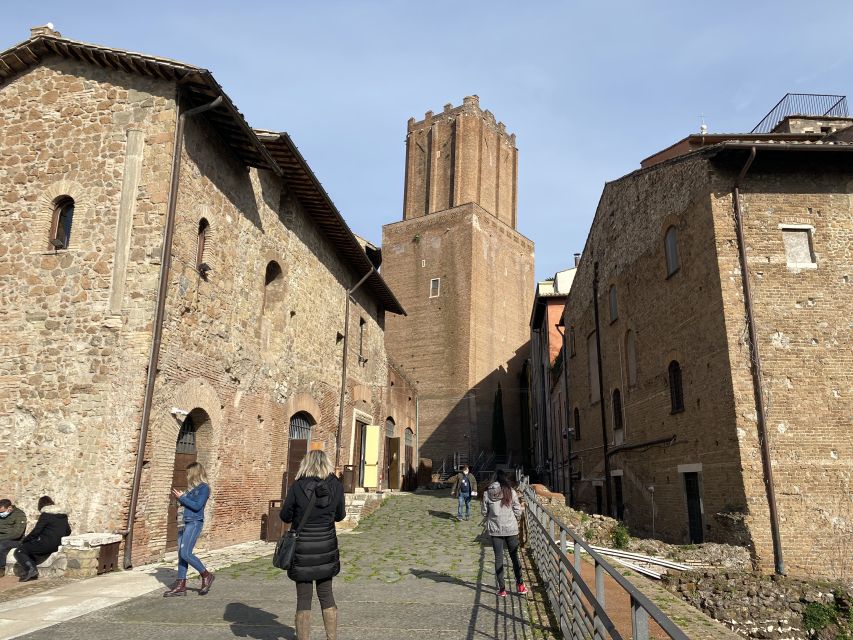
The Trajan Markets are the heart of the experience. Calling them an ancient shopping mall is a handy comparison, though the complex was not a modern retail center in the exact sense. It was a large commercial and administrative area tied to the Imperial Forums.
The site helps shift your attention away from emperors and battles. Here, the focus is commerce, trade, storage, movement, and the daily business that kept Rome functioning. You can look at the arrangement of the buildings and ask practical questions: where were goods handled, where did people meet, and how did this busy center connect with the public forums nearby?
The semicircular shape is especially striking. It gives the complex a strong visual identity and helps you understand how the architecture worked with the slope behind it. The curved form is not just decorative. It organizes the site and gives you a sense of how much construction was packed into this part of ancient Rome.
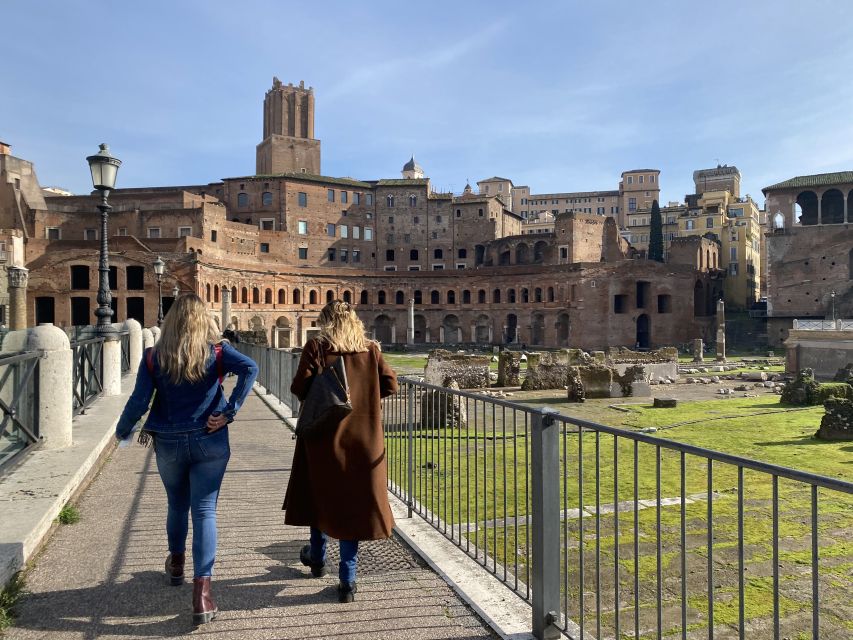
Expect to walk through an archaeological complex rather than a polished museum. Surfaces may be uneven, and the visit calls for comfortable shoes. The site is not suitable for wheelchair users, so anyone with mobility concerns should take that limitation seriously before booking.
Connecting the Imperial Forums
The experience includes several forum areas that once served as trading and meeting points. Each name points to a different stage in Rome’s growth.
Caesar’s Forum introduces the ambitious public building projects associated with Julius Caesar. Augustus’ Forum reflects the next phase of imperial power and public display. Nerva’s Forum shows how later rulers continued to shape the center of Rome. The Templum Pacis adds another layer, linking the area with the imperial public spaces created over time.
You do not simply move from one isolated ruin to another. The value comes from seeing how the forums formed a connected zone. Rome’s center was repeatedly rebuilt, expanded, and given new functions. The site makes that process visible, even when only parts of the original structures remain.
The app can help here. It is downloadable to your smartphone and includes more than 170 points of interest around the city. That is a large amount of material, so you may want to use it selectively. Focus first on the points connected with the forums and Trajan Markets. If you still have time and energy, continue using it elsewhere in Rome.
Bring your own headphones. They are listed as necessary, and using them will make the audio easier to follow in an open archaeological setting. Bring a fully charged smartphone too. Without power or headphones, the self-guided part of the experience loses much of its value.
Same city, a completely different half-day:
- Rome: Guided Tour of Colosseum, Roman Forum & Palatine Hill
★ 4.7 · 27,897 reviews - Rome: Colosseum & Forum with Audio Guide App -Optional Arena
★ 4.2 · 24,770 reviews - Rome: Colosseum, Roman Forum and Palatine Hill Guided Tour
★ 4.5 · 23,903 reviews - Rome: City Sightseeing Hop-on Hop-off Bus with Audioguide
★ 4.0 · 16,045 reviews
The seventeenth-century cistern
One of the more interesting details is a cistern from the seventeenth century. It shows that the area did not stop mattering when the Roman Empire disappeared. The site continued to serve different purposes across the centuries.
That cistern is easy to overlook if you are focused only on ancient Rome. I like it because it breaks the habit of treating the complex as a single frozen moment. The ruins carry several periods at once: Imperial Rome, later changes, and the modern effort to preserve and explain what remains.
This is also where the self-guided format can work in your favor. You can pause at details that catch your eye instead of keeping pace with a group. If the cistern interests you, you have time to consider why it was built and what its presence says about the changing needs of the area.
Inside the Fori Imperiali Museum
After the outdoor ruins, the Fori Imperiali Museum gives you a closer look at objects from ancient cultures. The collection includes artifacts and amphorae, which help connect the monumental architecture with ordinary goods and long-distance trade.
Amphorae are particularly useful objects in a commercial site. They were containers for products transported and stored across the ancient world. Seeing them here reinforces the main lesson of the visit: Rome’s power depended not only on temples and political ceremonies but also on goods moving through an organized system.
The museum is not a replacement for the archaeological complex. It works as a companion. Outside, you see the buildings and urban plan. Inside, you see objects that help explain what such a place handled. Together, they give you a better sense of Rome as a working city.
The museum section also received especially warm praise for its artifacts. If you have limited time, do not rush through it just because the outdoor ruins seem more dramatic. The smaller objects may tell you more about commerce and everyday activity than the large walls do.
How much time should you allow?
The activity is valid for one day, with starting times based on availability. The supplied details do not give a precise total visit length beyond the 25-minute video, so plan around your own pace rather than expecting a tightly timed guided itinerary.
A quick visit could focus on the video, Trajan Markets, and the museum. A slower visit would give you time to use the app, study the forums, and pause at the cistern and artifacts. If you already plan to spend time near Piazza Venezia, this fits neatly into a day of central Rome sightseeing.
The app’s 170-plus points of interest can tempt you into trying to cover too much. I would resist that. Use it to understand this area first, then treat the remaining points as optional material. A short, focused visit is better than staring at your phone while walking past Rome.
Is $37 a fair price?
At $37 per person, the value depends on how much structure you want. You are paying for the Ancient Rome video, entry to Trajan Markets, entry to the Fori Imperiali Museum, the city audio app, and assistance at the meeting point.
That is a reasonable package for someone who wants context without paying for a private guide. The video helps you get oriented, and the app gives you additional material beyond the site itself. If you use both, the price is easier to justify.
The value is weaker if you only want to walk past the complex. A good portion of the site can be viewed from the street, and one dissatisfied visitor felt the added package was unnecessary. If you already understand the Imperial Forums and prefer independent sightseeing, you might see the ticket as more than you need.
There is no food, drink, hotel transfer, or live guided tour included. Those omissions are not a problem if you are already moving around central Rome on foot. They matter more if you expected door-to-door transport or a guide explaining every stop in person.
Who will enjoy this experience most?
I would recommend it to you if you like archaeology but want help making sense of ruins. The video and app provide structure, while the self-guided format lets you stop when something interests you.
It also suits visitors curious about the practical side of Roman life. Many Rome tours focus on emperors, temples, and famous spectacles. This visit adds trade, storage, meeting places, and the objects that supported the city’s economy.
Families and mixed-interest groups may find the video useful because it gives everyone a common starting point. People who prefer a live guide, lively conversation, or a tightly organized walking route may be less satisfied. This is a self-guided archaeological visit with support at the beginning, not a personal tour.
It is also a better fit for visitors traveling light. Large bags and luggage are not allowed, and neither are pets, drones, weapons, sharp objects, sprays, aerosols, glass objects, alcohol, or drugs. Bring only what you need for the visit.
Smart ways to prepare
Wear comfortable shoes. You will be exploring an archaeological complex, and the experience is built around walking and standing rather than sitting through a full guided presentation.
Charge your phone before arriving and bring headphones. The app is a major part of the experience, so a low battery can leave you without the audio material you paid for.
Carry a passport or ID card. Identification is listed among the required items, so do not assume your booking confirmation alone is enough.
Keep your schedule flexible around the meeting point. Ticket printing has taken about 15 minutes for at least one booking, while another exchange was handled without a long wait. Arriving early gives you room for either situation.
You can cancel up to 24 hours in advance for a full refund, and the reserve-now, pay-later option lets you hold a place without paying immediately. Check the available starting times before you commit your day.
Should you book the Trajan Markets experience?
Book it if you want a well-priced, self-guided introduction to the Imperial Forums and prefer visual explanations over a live guide. The strongest reasons are the curved Trajan Markets, the 25-minute reconstruction video, and the museum’s artifacts and amphorae.
Skip it if you only want a quick exterior view, dislike using your phone for audio, or expect a personal guide. The ticket pickup may be slow, and the experience can feel packaged if you do not plan to use the video and app.
For most visitors with an interest in Roman urban life, I would book it and allow enough time to explore without rushing. Start with the video, study the markets and forums, then give the museum its proper share of attention. That order turns a pile of ancient walls into a clearer picture of how Rome traded, met, and changed over many centuries.
FAQ
Where is the meeting point?
Meet at the Touristation Aracoeli Office at Piazza d’Aracoeli 16, near Piazza Venezia. Look for the orange Touristation flags and the fountain in front of the entrance.
What does the ticket include?
It includes the 25-minute Ancient Rome video presentation, entry to Trajan Markets, entry to the Fori Imperiali Museum, the city app audio guide, and assistance at the meeting point.
Is this a guided tour?
No. A live guided tour is not included. You receive the video presentation and a downloadable smartphone app with more than 170 points of interest.
What should I bring?
Bring a passport or ID card, comfortable shoes, headphones, and a charged smartphone.
Are large bags allowed?
No. Luggage and large bags are not allowed. Pets, weapons, sharp objects, drones, alcohol, drugs, sprays, aerosols, and glass objects are also prohibited.
Is the experience wheelchair accessible?
No. The activity is not suitable for wheelchair users.
Can I cancel my booking?
Yes. You can cancel up to 24 hours in advance for a full refund. The reserve-now, pay-later option is also available.
Newest Rome tours we have reviewed
- Private TikTok Video Making in Rome★ 5.0 · 7 reviews
- Assisi, Orvieto and Civita di Bagnoregio Full Day Tour from Rome★ 4.5 · 45 reviews
- Assisi & Saint Francis Path Tour from Rome★ 5.0 · 45 reviews
- Assisi and Cascia Private Day Tour from Rome with Lunch★ 5.0 · 10 reviews
- Art Class in the center of Rome!★ 4.0 · 4 reviews
- Art & Craft: Beer Tour with Street Art in Rome★ 4.5 · 6 reviews
- Arrival in Rome: Airport Transfer & Exclusive City Introduction★ 5.0 · 3 reviews
- From Rome: Private Day-Tour of Tuscany★ 5.0 · 16 reviews