
Reviewed · ROME
Rome: Under the Moonlight Evening Walking Tour
Rome is at its most atmospheric after sunset, when the Colosseum glows under the night sky and fountains echo across nearly empty squares. This tour links the city’s best-known sights with lesser-noticed streets, churches, and architectural details in one long evening walk.
I like the route’s range: you get the Pantheon and Trevi Fountain, but also Sant’Ignazio, Galleria Sciarra, Trajan’s Column, and the Imperial fora. I also like the guides’ personal style. Names such as Vlad, Sila, Dan, Csenge, Sharon, and Domenica appear often in the feedback, with praise for humor, clear explanations, and useful advice. The main drawback is simple: this is a serious walk, and two-plus hours on Rome’s paving stones can feel athletic late in the day.
Key points to know before booking
- Rome after sunset: See the Colosseum, fountains, piazzas, and ancient ruins under artificial light rather than the harsh midday sun.
- A broad central-Rome route: The walk connects Piazza Navona, the Pantheon, Trevi Fountain, Piazza Venezia, Trajan’s Column, the Roman Forum, and the Colosseum.
- More than famous monuments: Sant’Ignazio di Loyola and Galleria Sciarra add art, architecture, and quieter details to the usual Rome circuit.
- Strong guide element: English and Spanish tours are available, and guides including Vlad, Sila, Dan, and Csenge are praised for storytelling, humor, and practical tips.
- Good first-night orientation: The route gives you a useful map of central Rome and ideas for places to return to during the day.
- Pack for walking: Comfortable shoes and clothes matter more here than a dressy evening outfit.
Why Rome works so well after dark
Rome changes character when the sun goes down. The stone facades catch warm light, the fountains become easier to appreciate, and the city’s monumental scale feels less overwhelming. You still encounter people around the major sights, especially Trevi Fountain, but the pace is generally calmer than during the day.
The route is not a nighttime entry tour. You pass by or stop outside the major monuments rather than going inside the Pantheon, Colosseum, or Roman Forum. That distinction matters. If you want interior access, arena views, or archaeological explanations from inside the sites, book a daytime admission tour separately.
What you get instead is a connected view of Rome. Your guide explains how the monuments relate to one another, points out details you might miss alone, and keeps the walk moving through the historic center. It is especially useful early in your stay, when you want to understand the city’s layout before choosing which places deserve a longer visit.
The experience is available with a live guide in English or Spanish. A private-group option is also available, though the exact group arrangement depends on the booking you choose. Starting points can vary between Piazza d’Aracoeli and Piazza di Pasquino, so check the confirmation carefully rather than assuming every departure begins in the same square.
More evening tours in Rome:
- Rome: City Highlights Open-Top Bus Night Tour
★ 4.1 · 2,038 reviews - Rome: Paranormal Night Walking Tour & Secret Backstreets
★ 4.9 · 1,921 reviews - Vespa Sidecar Tour By Night with Pickup
★ 5.0 · 1,803 reviews
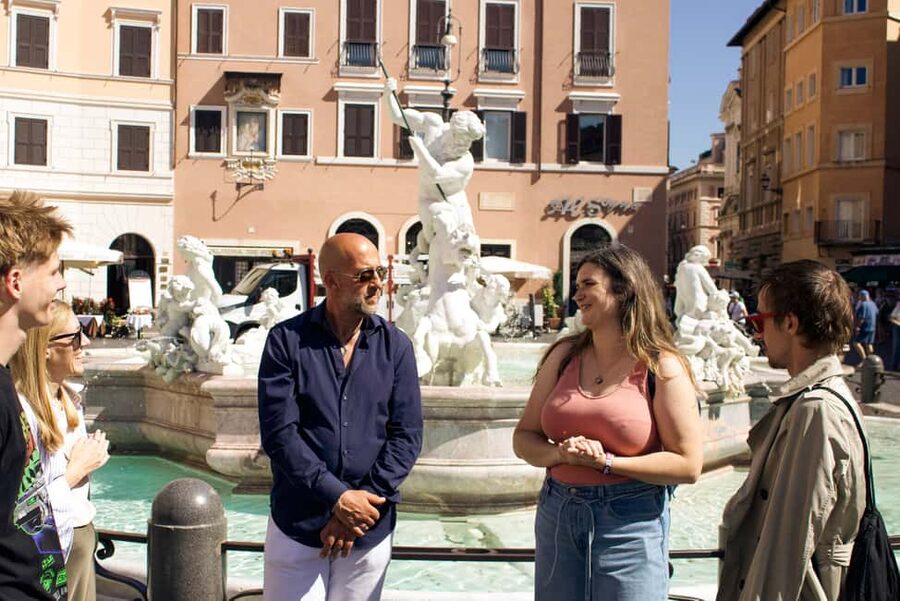
Piazza Navona starts the evening
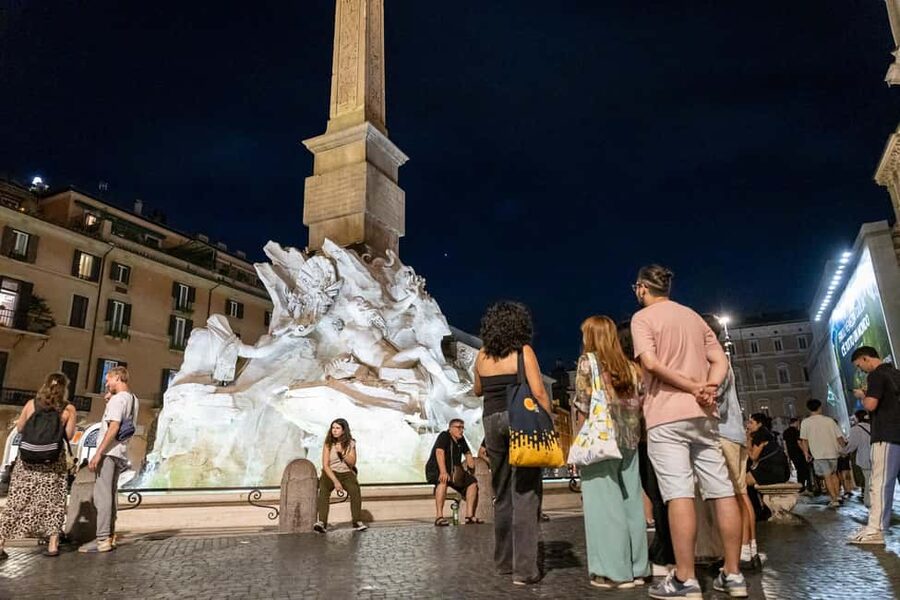
Piazza Navona is the stated meeting area for the main route, and it is a fitting place to begin. The long, open square follows the shape of an ancient Roman stadium, although this tour focuses on the piazza’s atmosphere and architecture rather than a formal archaeological visit.
The Fontana dei Quattro Fiumi sits at the center, with flowing water and sculptural figures providing an immediate introduction to Baroque Rome. Your guide uses the square to set the tone, then leads you through the surrounding streets.
This is a good opening stop because it gives you room to gather while still offering plenty to look at. It can also be busy, and the square may have more people than the quieter lanes later in the walk. Keep your meeting instructions handy, since the listed starting options can vary.
Sant’Ignazio reveals a quieter side of Rome
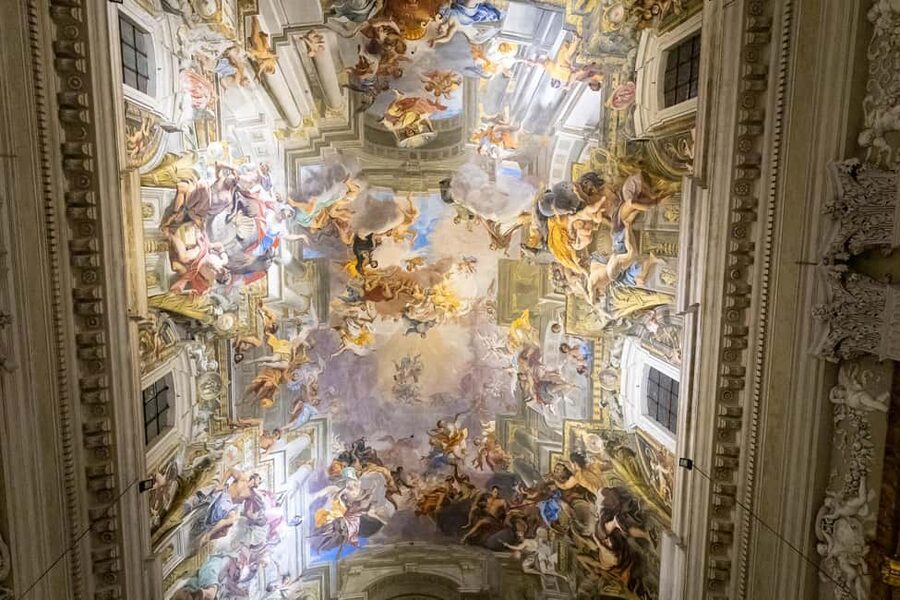
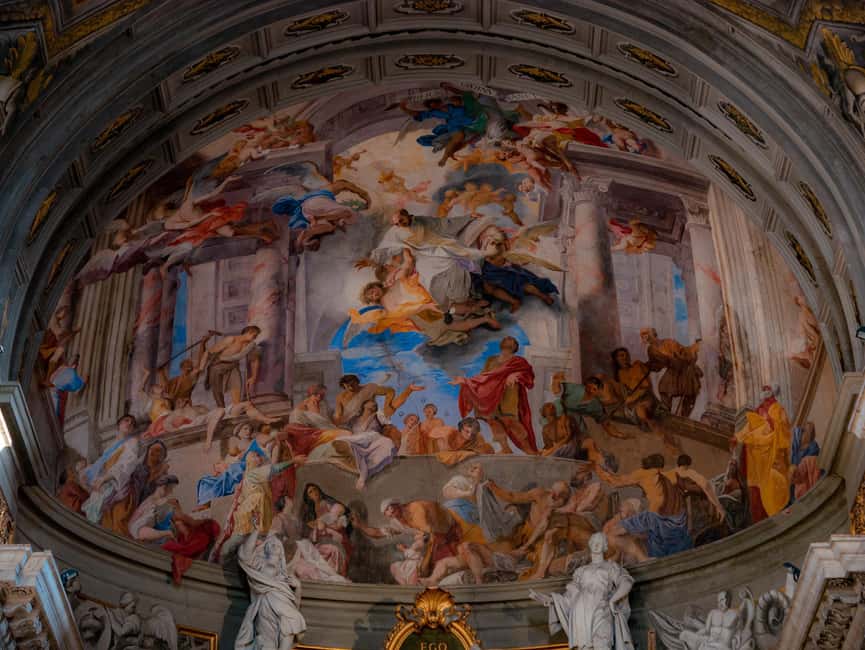
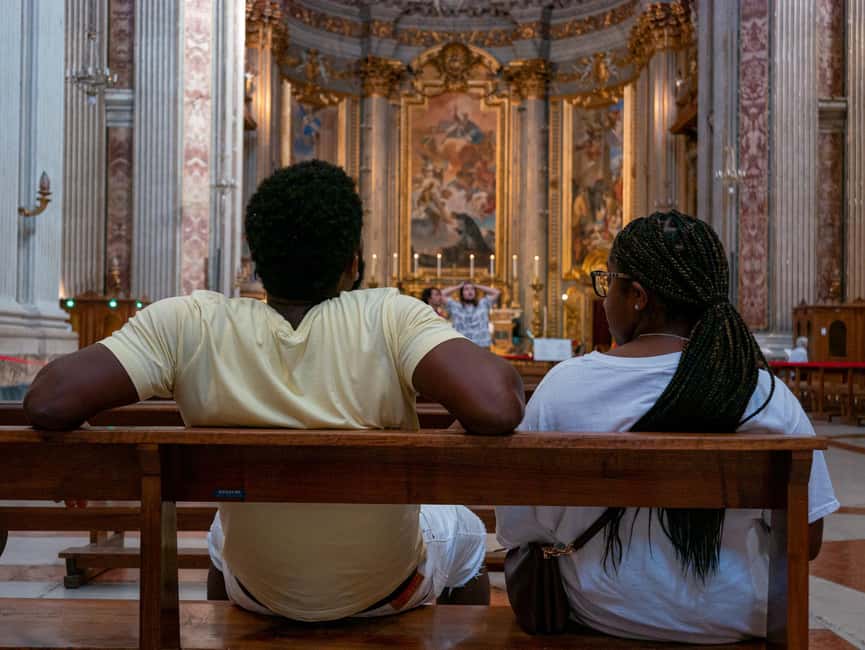
The route continues to the Church of Sant’Ignazio di Loyola, where the guided portion lasts about 30 minutes. This is one of the most useful additions to the walk because it shifts your attention away from the obvious postcard sights.
The church is included as an interior visit in the itinerary, giving you time to look at its decoration and hear the guide explain what you are seeing. Sila is especially praised for drawing attention to details that many people walk past, including religious images, street shrines, and the meanings tucked into Rome’s architecture.
A stop like this gives the evening a better rhythm. You are not simply marching from one famous fountain to the next. You pause in a place where the guide can explain how Rome’s public streets and churches carry layers of art and belief.
Galleria Sciarra rewards careful looking
Galleria Sciarra is another less obvious stop, with about 20 minutes of guided attention. This covered architectural passage is valued for its decorative details and Art Nouveau character, a useful contrast to the ancient stones and Baroque churches elsewhere on the route.
It is the kind of place you might miss if you were walking alone toward Trevi Fountain. That makes it a good test of the tour’s value. The guide is not only pointing out the monuments already printed in every guidebook, but also directing your eyes toward a passage with its own visual appeal.
The stop is brief, so do not expect an extended art lecture. You should expect a chance to photograph the decoration and learn why this corner fits into Rome’s broader architectural story.
More walking tours in Rome:
- Rome: Trastevere & Campo de Fiori Street Food Walking Tour
★ 4.9 · 2,768 reviews - Rome by Night Walking Tour – Legends & Criminal Stories
★ 4.5 · 1,003 reviews - Rome: Guided City Center Evening Sightseeing Walking Tour
★ 4.4 · 953 reviews - Best of Rome Walking Tour including Trevi Fountain
★ 4.5 · 923 reviews
The Pantheon gives the route its ancient anchor
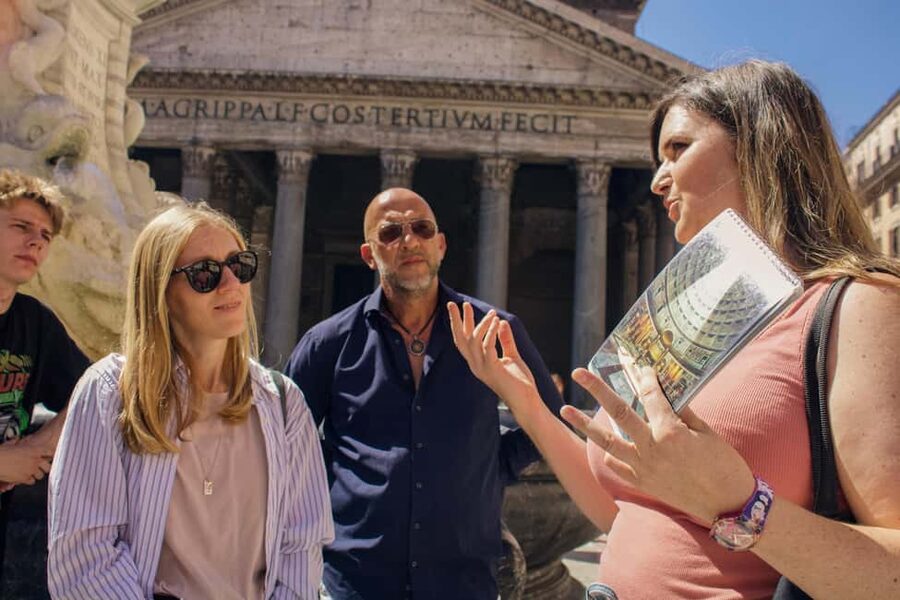
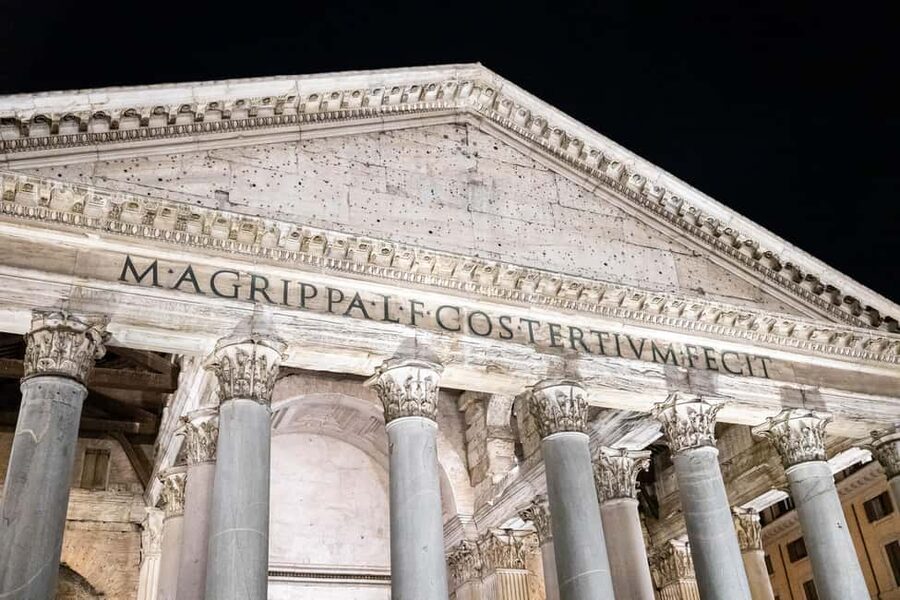
The Pantheon is listed as a pass-by stop for about 20 minutes. Built by Emperor Hadrian as a temple to the gods, it is one of the best-preserved monuments from ancient Rome. At night, its massive facade and columns can feel more imposing than they do in the middle of a crowded afternoon.
Because this is a pass-by rather than a dedicated interior visit, the guide’s explanation takes place outside. You can admire the columns, doorway, and proportions, but entry is not included in the tour description.
That is both a strength and a limitation. The group can keep a steady pace, and you avoid spending much of the evening in a single location. At the same time, if the Pantheon is high on your list, plan a separate visit for the inside.
Trevi Fountain is beautiful, crowded, and worth patience
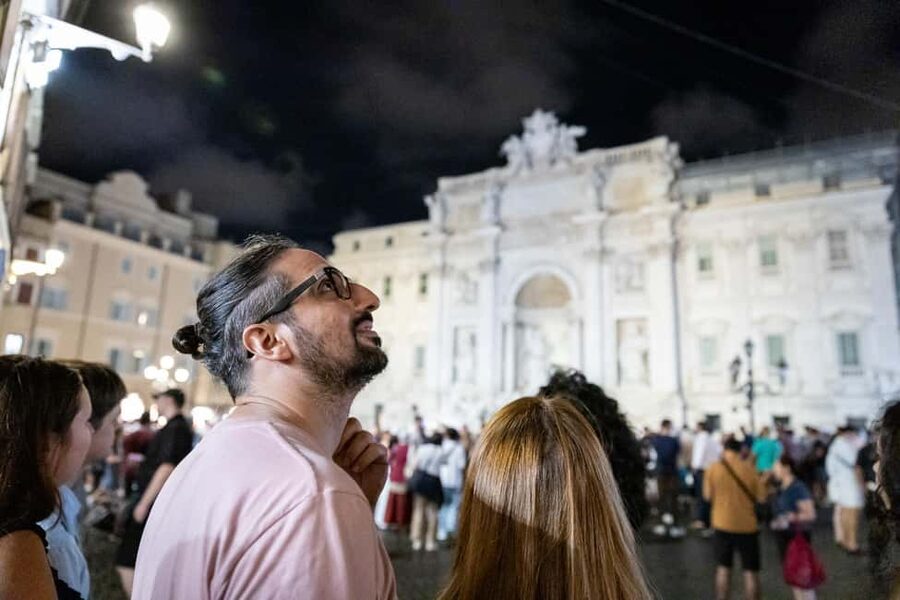
The stop at Trevi Fountain lasts about 30 minutes. This is enough time to hear the story of the fountain, take photographs, and toss in a coin if you want to follow the familiar Rome tradition of wishing to return.
Trevi is usually the busiest part of a central-Rome evening route, so do not expect complete peace and quiet. The advantage of visiting after sunset is that the lighting gives the water and marble a different look, while the cooler air can make the stop more pleasant than a daytime visit.
Your guide can help you take in the fountain without treating it as a quick photo stop. Still, keep your belongings secure and be ready for a crowd around the basin. The group may need to pause at the edge rather than move freely through the entire area.
Piazza Venezia and Trajan’s Column connect old and new Rome
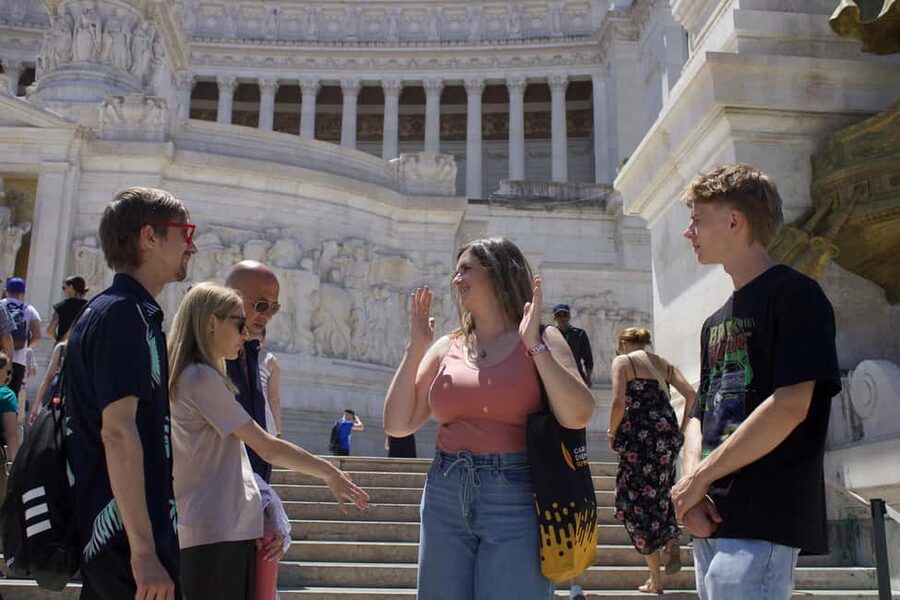
From Trevi Fountain, the walk continues toward Piazza Venezia, with about 20 minutes of guided time. This broad square is dominated by the Vittoriano monument and the traffic of modern Rome, creating a sharp contrast with the narrow lanes and ancient remains nearby.
The route then reaches Trajan’s Column, another 20-minute stop. The carved column records scenes from Trajan’s military campaigns, and it gives your guide a chance to explain how Roman monuments used architecture and sculpture to present political power.
This section is valuable because it connects individual ruins to the larger Roman city. You are not only seeing isolated columns and stones. You are following the line of ancient public spaces and considering how later Rome built streets and squares around them.
The Imperial fora lead toward the Colosseum
The walk passes the Imperial fora and continues toward the Roman Forum. The forum stop is listed at about 20 minutes, enough for an outdoor explanation of the ruins and their role in Roman public life.
At night, the columns and broken walls can appear almost theatrical under the lights. The darkness also hides some of the visual clutter that competes for your attention during the day. On the other hand, low light can make small details harder to see, so this is not the best setting for close study of inscriptions or architectural fragments.
The tour gives you an overview rather than a full archaeological examination. You will hear what the major areas were used for and see how the forum fits between the central streets and the Colosseum. If you want a detailed study of Roman political, religious, and commercial buildings, schedule a daytime visit with more time.
The Colosseum closes the walk with a strong final view
The Colosseum is the emotional finish. Its exterior is illuminated after dark, and the curved walls take on a softer, more dramatic appearance than they do beneath the bright daytime sun.
The route allows you to walk around the site and admire the ancient architecture from outside. It does not include entry, underground areas, the arena floor, or the upper levels. Think of this as a well-timed introduction to the monument, not a substitute for a Colosseum ticket.
Ending here makes sense. After seeing fountains, churches, columns, and forum ruins, you arrive at the monument most closely linked with Rome in the popular imagination. It also gives you a practical chance to decide if you want to return for an interior visit.
The listed ending options include Piazza Navona, Piazza del Colosseo, Piazza Navona again in the schedule, and the Colosseum. Since the information gives several possible drop-off points, check the specific option attached to your booking and ask the guide if you need to reach a particular neighborhood afterward.
The guides shape the quality of the walk
This is a guide-led experience, so the person holding the group together matters. The strongest feedback centers on guides who combine facts with humor and conversation.
Vlad is repeatedly praised for energy, jokes, and an easy way with questions. Sila is noted for explaining Roman history clearly and pointing out details such as the Madonnelle, the difference between authentic and imitation obelisks, and Rome’s public drinking water. Dan receives praise for making the evening feel personal and bringing the illuminated sights to life.
Csenge is described as organized, sociable, and good at explaining the history behind each stop. Amanda, Alina, Sharon, Domenica, Sarah, Max, Rheb, and Mary are also singled out for warmth, clear explanations, practical recommendations, or an ability to keep the group involved.
You cannot choose every guide by name from the information provided, so treat these names as examples of the style you may encounter rather than a guarantee. The common thread is an interactive approach, with room for questions and stories rather than a dry list of dates.
Is $28 a fair price?
At $28 per person, the tour offers a reasonable way to see many central landmarks in one evening. The value comes from the route and the guide, not from admissions, meals, or special access. No food or drink is included, and the major monuments are viewed from outside.
For a first evening in Rome, that can be a good trade. You cover a wide area without arranging your own route, and you get context that is hard to build from a map alone. The guide can also point out places to revisit, restaurants or sights to consider, and details you might otherwise overlook.
The value is weaker if you already know central Rome well or dislike group walking tours. You may prefer to wander at your own speed, stop for dinner, or spend an hour at one fountain or church. You should also remember that the route lasts two to two and a half hours, so it is not a short after-dinner stroll.
Practical advice for a more comfortable evening
Wear comfortable shoes. Rome’s streets can be tiring, and the feedback makes clear that the walk feels energetic by the final section.
Choose comfortable clothes rather than dressing for a formal night out. Bring only what you need, keep your hands free for photographs, and carry water even though drinks are not included.
Arrive at the correct meeting point. The start may be Piazza d’Aracoeli or Piazza di Pasquino, while the wider route centers on Piazza Navona. Check the booked option so you are not searching the wrong square at departure time.
Use the tour as an orientation. Mark the Pantheon, Trevi Fountain, Sant’Ignazio, and the Colosseum for later return visits if you want more time inside. The walk gives you the broad picture, while separate daytime visits provide the close study.
The tour allows cancellation up to 24 hours before departure for a full refund, and you can reserve now and pay later. Those terms are useful if your Rome schedule is still shifting, but confirm the exact conditions at booking.
Who should book the Rome Under the Moonlight walk?
I would choose this tour for a first visit, especially if you want a broad introduction without spending the whole day inside museums. It suits solo visitors, couples, and families with older children who can manage a long walk. The evening setting also works well if daytime sightseeing is already filled with Vatican or museum plans.
It is a strong choice for anyone who likes stories, city views, and smaller architectural discoveries as much as major monuments. The combination of Sant’Ignazio, Galleria Sciarra, Trajan’s Column, and the fountains keeps the route from feeling like a simple checklist.
I would skip it if you need step-free access, dislike walking for more than two hours, or want interior admission to the Pantheon and Colosseum. In that case, book focused daytime visits instead.
For most visitors, $28 is a sensible price for a well-planned introduction to Rome after dark. Book it near the start of your stay, wear good shoes, and let the guide help you decide what deserves a closer look later.
FAQ
How long does the Rome Under the Moonlight Evening Walking Tour last?
The tour lasts about 2 to 2.5 hours. Starting times vary, so check availability for the date you want.
What sights are included on the route?
The route includes Piazza Navona, the Pantheon, Sant’Ignazio di Loyola, Galleria Sciarra, Trevi Fountain, Piazza Venezia, Trajan’s Column, the Roman Forum, and the Colosseum.
Does the tour enter the Pantheon or Colosseum?
The Pantheon is listed as a pass-by stop, and the Colosseum is viewed from outside. Entry tickets are not included in the activity details.
What languages are available?
Live guiding is available in English and Spanish.
Where does the tour begin?
The meeting point may vary by booking option. The listed starting choices are Piazza d’Aracoeli and Piazza di Pasquino, while Piazza Navona is the main meeting area described for the route.
Where does the tour finish?
The activity ends back at the meeting point or at one of the listed drop-off choices. These include Piazza Navona, Piazza del Colosseo, and the Colosseum, so check your selected option.
What should I bring?
Bring comfortable shoes and comfortable clothes. Food and drinks are not included.
Newest Rome tours we have reviewed
- Private TikTok Video Making in Rome★ 5.0 · 7 reviews
- Assisi, Orvieto and Civita di Bagnoregio Full Day Tour from Rome★ 4.5 · 45 reviews
- Assisi & Saint Francis Path Tour from Rome★ 5.0 · 45 reviews
- Assisi and Cascia Private Day Tour from Rome with Lunch★ 5.0 · 10 reviews
- Art Class in the center of Rome!★ 4.0 · 4 reviews
- Art & Craft: Beer Tour with Street Art in Rome★ 4.5 · 6 reviews
- Arrival in Rome: Airport Transfer & Exclusive City Introduction★ 5.0 · 3 reviews
- From Rome: Private Day-Tour of Tuscany★ 5.0 · 16 reviews