
Reviewed · ROME
Rome: Villa Farnesina Renaissance Tour
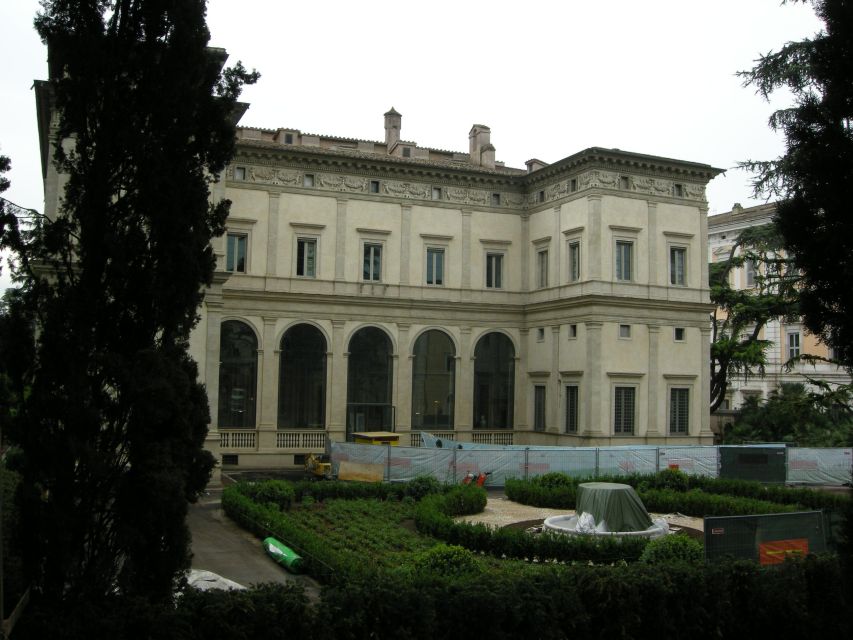
Villa Farnesina gives you a rare look at Renaissance Rome without the crowds and monumental scale of the Vatican Museums. Inside this elegant villa, Raphael’s Galatea shares the stage with rooms covered in mythological scenes, painted architecture, flowers, fruit, and clever illusions. It is art you can study at close range, in a setting built for private life and lavish parties.
I like the private guide, because the frescoes are full of stories that are easy to miss on your own. I also like the two-hour length and central Trastevere location, which make this a smart choice when you want a focused art visit rather than another all-day museum march. The main consideration is the price: at $87.23 per person, it makes the most sense for art lovers or small groups who will use the guide well.
Key points
- Raphael’s Galatea: See Raphael’s graceful sea nymph in the Loggia di Galatea, part of a larger fresco program linked to Agostino Chigi’s horoscope.
- A private Renaissance residence: Walk through halls once designed for entertaining, weddings, feasts, and the intimate life of Rome’s wealthy elite.
- Four major rooms: The tour covers the Loggia di Galatea, Loggia of Cupid and Psyche, Hall of Perspectives, and Wedding Hall.
- Two hours with a private guide: English and Italian tours are available, with the guide’s attention reserved for your private group.
- Skip-the-line entry: A separate entrance saves time, though the tour still includes steps and staircases.
- Easy to pair with central Rome: The villa is in Trastevere and described as a short walk from the Vatican area, though transport to and from the meeting point is not included.
Why Villa Farnesina feels different from Rome’s big museums
Rome can make you work for its art. The Vatican Museums, Borghese Gallery, and Capitoline Museums all deliver major masterpieces, but they also bring crowds, long corridors, and a lot of visual noise. Villa Farnesina offers a smaller, quieter visit with a clear focus: how a wealthy Roman lived with art around him.
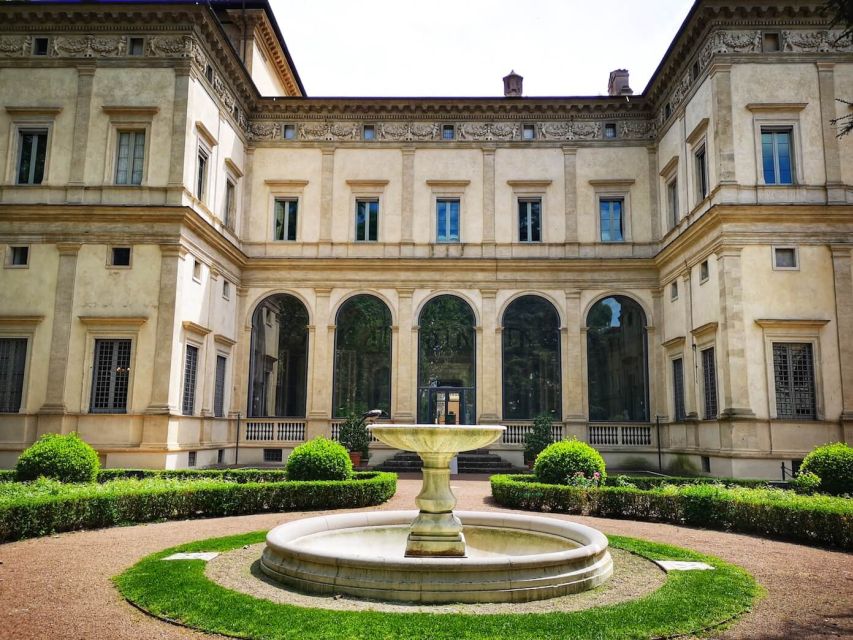
The villa was built for Agostino Chigi, a powerful banker and patron of the arts. That background matters. You are not simply looking at frescoes hung in a gallery. You are walking through rooms where painted ceilings, walls, and architectural tricks were designed to impress friends, business partners, and important guests.
I find this setting especially useful if you want to understand Renaissance art as part of daily life. The pictures were not isolated objects. They shaped the rooms themselves. Mythology, astrology, family celebration, and social ambition all meet under one roof.
The visit takes place in a central part of Rome, yet the villa often feels removed from the city’s noise. The garden and spacious interiors give the experience some breathing room. You still need to manage the practical realities of an old building, including stairs and uneven movement between rooms, but the scale is easy to handle within two hours.
Other Rome tours people pair with this one:
- Vatican Museums & Sistine Chapel Tour with Optional Basilica
★ 4.3 · 67,413 reviews - Vatican Museums, Sistine Chapel & St Peter’s Basilica Guided Tour
★ 4.5 · 39,149 reviews - Rome: Colosseum, Palatine Hill and Roman Forum Guided Tour
★ 4.8 · 32,814 reviews
Meeting your guide at Villa Farnesina

You meet your guide directly in front of the entrance to Villa Farnesina. Look for a Through Eternity sign or flag. Since transportation is not included, plan your route before the appointed time and allow a little extra time for getting through Trastevere.
The activity begins and ends at the villa. That simple arrangement works well if you are already touring central Rome, but it also means you are responsible for reaching the entrance. You do not get a hotel pickup or a ride between sights.
Your guide leads a private group and speaks English or Italian. A private format can make a real difference here. The rooms are packed with visual details, and you can ask why a figure appears in a scene, how an illusion works, or what a particular marriage story meant to the original owner.
The guide’s role is not just to name Raphael and move on. The best use of this tour is to ask for connections between the rooms. Chigi’s wealth, his taste for spectacle, and the villa’s role as a place for banquets and weddings all help explain why the decoration is so elaborate.
Raphael’s Galatea in the Loggia di Galatea
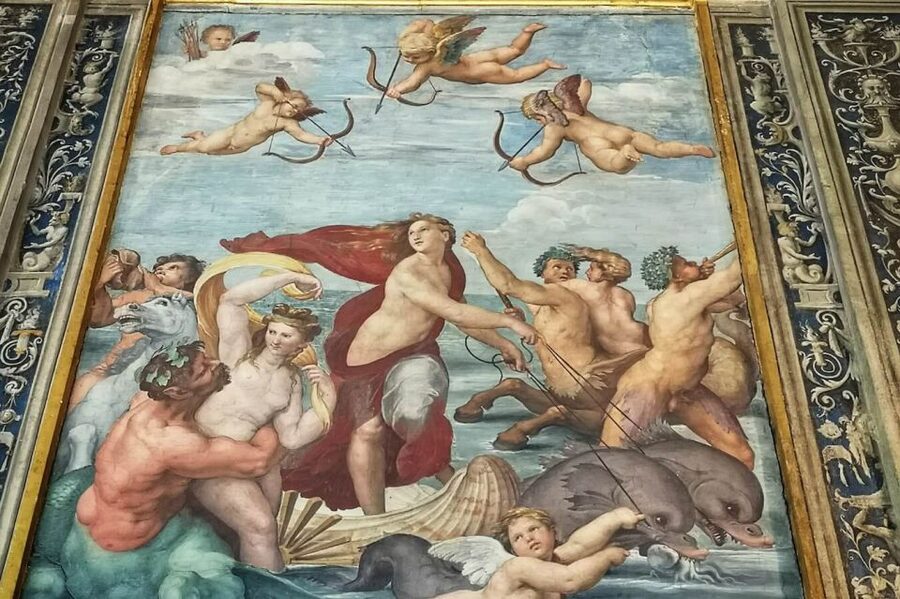
The first major stop is the Loggia di Galatea, where you see Raphael’s famous Galatea. The fresco shows the nymph supported by a shell as she moves across the water in a festive procession of mythological figures.
Raphael gives the scene a light, graceful quality. Galatea is beautiful, but she does not feel stiff or formal. The movement of the figures and the flowing water create a sense of celebration. Your guide can help you separate Raphael’s contribution from the other paintings around the room and explain how the decorative program works as a whole.
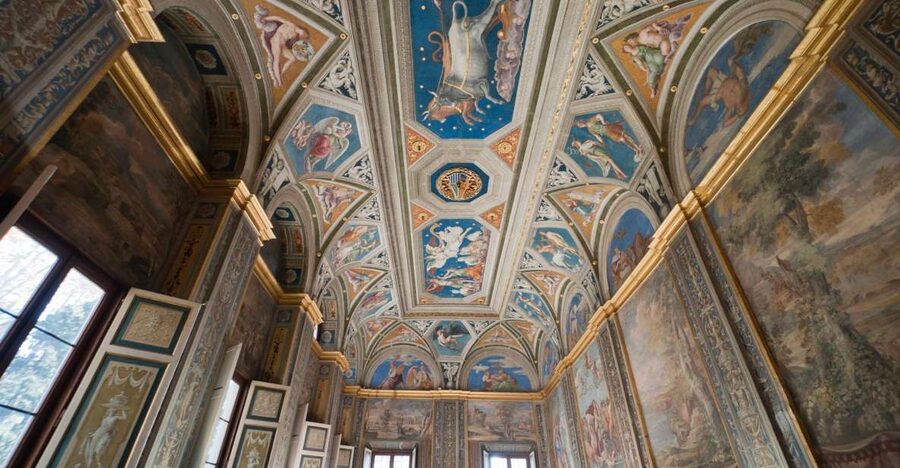
This loggia also carries an astrological connection. The ceiling frescoes relate to Agostino Chigi’s horoscope, a reminder that the villa’s decoration was personal as well as fashionable. Chigi was using art to say something about his identity, fortune, and place in the world.
I like this room because it gives you a good first lesson in how the tour works. You see a celebrated artist, a mythological story, a personal reference, and a wealthy patron’s desire for display. None of those elements sits alone.
Do not expect a long, leisurely session with one painting. The tour covers several rooms in two hours. If Galatea is the main reason you booked, tell your guide early so you can spend enough time looking closely rather than racing through the whole villa.
Cupid and Psyche across the great ceiling
The Loggia of Cupid and Psyche changes the mood. Here, the story unfolds across a large ceiling filled with scenes from the difficult romance of Psyche and the divine Cupid.
The decoration is not confined to small framed pictures. Gigantic garlands of flowers and fruit link the scenes, creating a festive canopy overhead. The central image shows the wedding banquet of Cupid and Psyche, attended by the gods of Olympus and surrounded by flowers and perfume.
You will want to look up, but do it carefully. The room rewards slow observation, and the painted details can blur together if you only take a quick glance. A guide is useful here because the story has many episodes, and the placement of each scene matters.
This is also where the villa’s taste for spectacle becomes clearest. The ceiling turns a room into a mythological celebration. Instead of simply displaying a picture of a feast, the decoration places you beneath one.
For me, this is one of the strongest parts of the visit, especially if you enjoy the combination of painting and architecture. The room is not merely a container for art. The ceiling, garlands, and story work together to create an effect that would have impressed anyone entering the villa.
Same city, a completely different half-day:
- Rome: Guided Tour of Colosseum, Roman Forum & Palatine Hill
★ 4.7 · 27,897 reviews - Rome: Colosseum & Forum with Audio Guide App -Optional Arena
★ 4.2 · 24,770 reviews - Rome: Colosseum, Roman Forum and Palatine Hill Guided Tour
★ 4.5 · 23,903 reviews - Rome: City Sightseeing Hop-on Hop-off Bus with Audioguide
★ 4.0 · 16,045 reviews
The Hall of Perspectives and a banquet for 1519
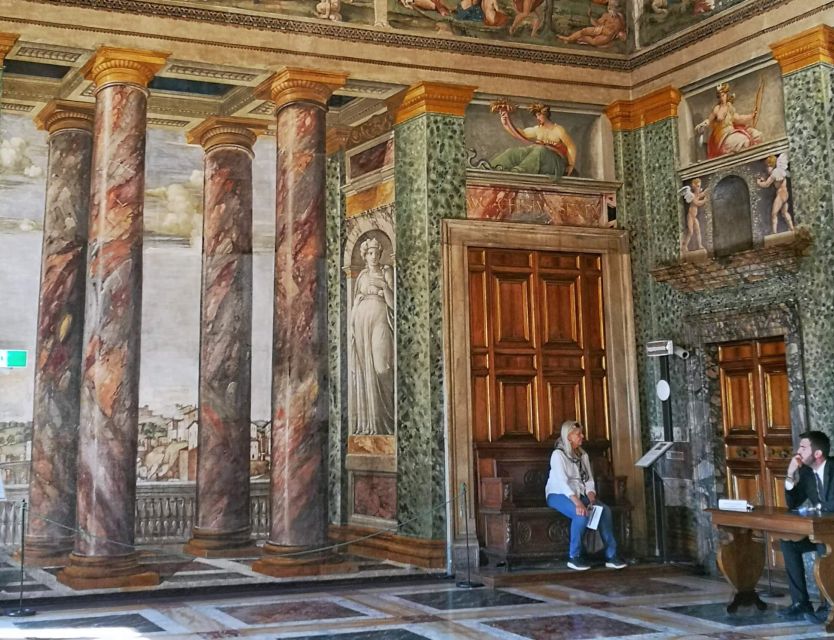
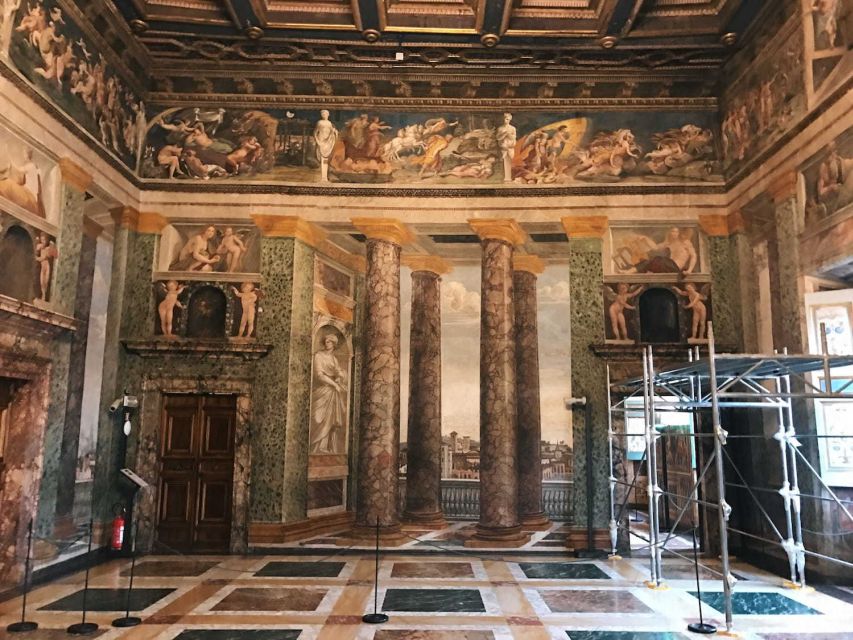
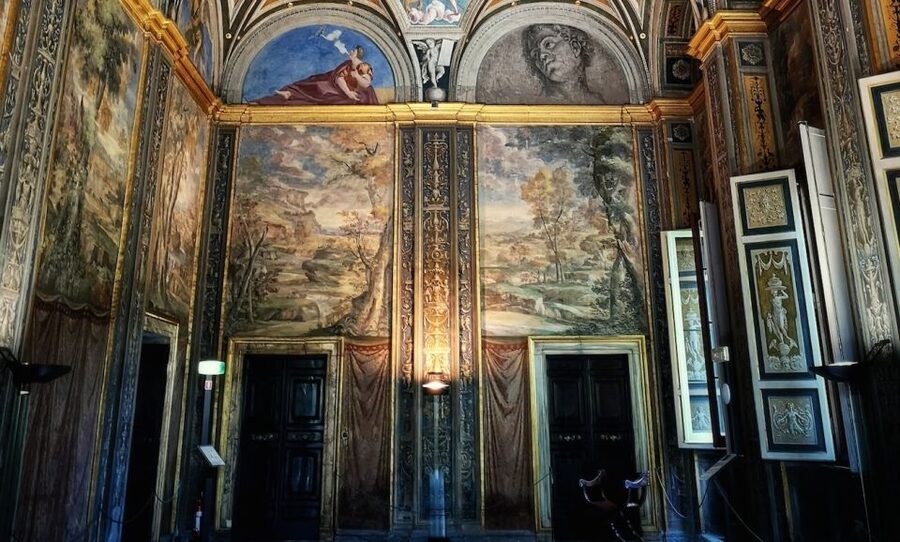
The Hall of Perspectives uses painted rural and urban views to create the illusion of an immense portico. The trick gives the room more apparent depth and makes the walls seem to open toward the outside.
This kind of painted architecture is easy to appreciate once you know what to look for. Your guide can point out how the illusion is built and why the effect suited a room used for grand entertaining. Without that explanation, you might notice attractive scenes but miss the room’s visual game.
Agostino Chigi held an extravagant wedding banquet here in 1519. That detail changes how you read the space. The room was not just decorated for private enjoyment. It was a stage for social display, with architecture, painting, food, and ceremony working together.
I would pay attention to the contrast between the painted openness and the actual enclosed room. Renaissance artists were very good at making walls behave badly. A painted portico can suggest space that the building does not really have, while the surrounding decoration tells you that the illusion itself was part of the entertainment.
The Hall of Perspectives may appeal most to visitors who like architecture and visual tricks. If you mainly want famous names, Galatea and the Cupid and Psyche loggia will likely make the strongest impression. If you want to understand how Renaissance rooms functioned, this hall is essential.
The Wedding Hall and the story of Alexander and Roxana
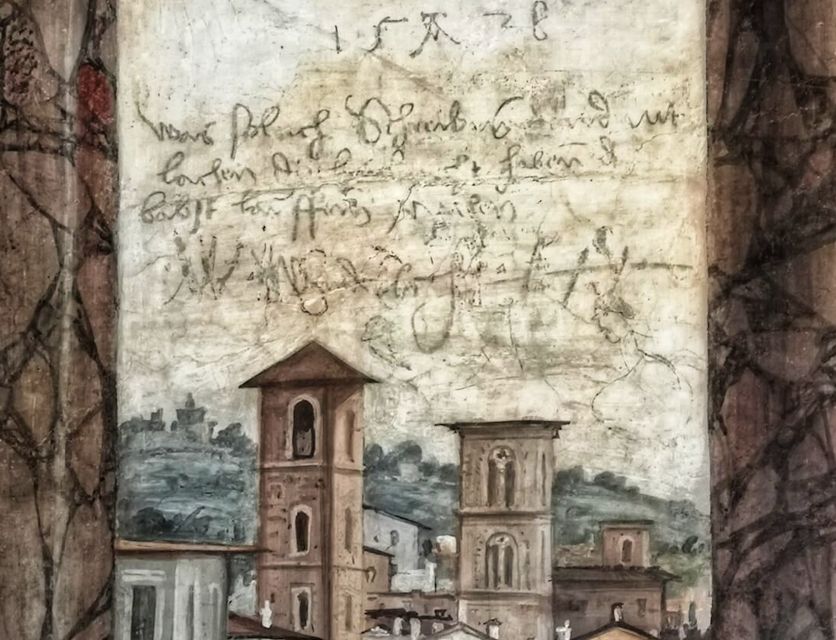
The Wedding Hall brings the villa’s private and public roles together. Its sixteenth-century panelled ceiling adds a different texture from the heavily painted loggias, while frescoes show the wedding of Alexander the Great and Roxana.
The marriage story creates a clear parallel with Agostino Chigi’s own wedding. Mythology becomes a flattering comparison, placing the banker and his bride in the company of famous royal figures.
That connection is worth hearing from a guide because it explains the room’s purpose. The decoration was not random ornament. It helped shape the meaning of the event taking place there.
The Wedding Hall also gives you a useful break from the crowded ceiling scenes of the Cupid and Psyche loggia. You can compare the panelled ceiling, painted walls, and subject matter across rooms. Each space has its own mood, but all of them serve the same larger message: wealth, taste, learning, and social power belong together.
If you are visiting with a partner, this room may be a particularly enjoyable stop. The wedding theme is easy to follow, and the comparison between Alexander and Roxana and Chigi’s own marriage gives the frescoes a human connection.
What the two-hour format delivers

Two hours is enough for a serious introduction to the villa without turning the visit into an endurance test. You have time to see the main rooms, hear their stories, and ask questions. You do not have time to inspect every painted figure at museum-study length.
That limit is a benefit for many people. Rome offers too many sights to give every one half a day. Villa Farnesina works well as a compact art visit between other plans.
The private format makes the time more useful than a standard walk-through. You can ask your guide to slow down in a favorite room or explain a detail that catches your eye. The guide was praised specifically as trained and professional, which is important here because the villa depends on explanation as much as spectacle.
Headsets are supplied for groups of six or more. Smaller private groups should be able to remain close to the guide, but the information provided only confirms headsets for larger groups.
Wear comfortable shoes. The tour is a walking visit through a historic building with steps and staircases, and a bottle of water is sensible. The villa is wheelchair accessible, but you should advise the operator in advance about mobility concerns so the visit can be adjusted as well as possible.
Is $87.23 per person a fair price?
At $87.23 per person, this is not a bargain museum admission. The price includes all fees, skip-the-line tickets, and a private English or Italian-speaking guide. Food, drinks, and transportation are extra.
The value depends on how much you want interpretation. If you are content to read a few labels and move at your own pace, the cost may feel high. If Raphael, Renaissance decoration, and the social world behind the art are central to your Rome plans, the private guide gives the visit a clearer purpose.
The tour also saves time. Skip-the-line access through a separate entrance means less waiting, although the villa’s smaller scale already makes it less demanding than Rome’s largest museums. The biggest value is not simply avoiding a queue. It is having someone connect the ceiling paintings, patron, wedding imagery, and architecture while you are standing in the rooms.
I would recommend it most for a couple, family, or small group with a strong interest in art. A larger private group can still benefit, especially with headsets, but the per-person price deserves closer thought.
Who should book this Renaissance tour?
Book this tour if you want to see Raphael in an intimate setting, prefer a private guide, and like the idea of visiting a Roman villa rather than another giant museum. It is also a good fit if you have already seen the main Vatican sights and want something more focused.
The tour suits visitors who enjoy stories behind paintings. You will get more from it if you care about why Cupid and Psyche appear on a ceiling, why Alexander and Roxana appear in the Wedding Hall, and how painted architecture changes a room.
It may not suit you if you dislike guided visits, have only a passing interest in Renaissance art, or want a completely step-free experience without advance planning. The two-hour schedule is manageable, but the building does include steps and staircases.
Free cancellation up to 24 hours before the tour and reserve-now, pay-later booking add useful flexibility. Because some monuments may be under restoration during the Jubilee, check messages before your visit for possible changes.
Should you book Villa Farnesina?
I would book it if Raphael and Renaissance interiors rank high on your Rome list. Villa Farnesina offers art in its original social setting, not just on a gallery wall, and the private guide helps turn a beautiful collection of rooms into a connected story.
Choose it over another major museum when you want quiet, focused viewing and a two-hour visit. Skip it if the $87.23 price stretches your budget or if you mainly want Rome’s famous outdoor monuments. For the right visitor, this is a polished, intimate look at how wealth and art shared the same rooms in Renaissance Rome.
FAQ
Where does the Villa Farnesina tour start?
You meet your guide in front of the entrance to Villa Farnesina. Look for a Through Eternity sign or flag.
Where does the tour end?
The tour ends back at Villa Farnesina, at the same meeting point.
How long does the tour last?
The guided visit lasts two hours. Starting times vary, so check availability when booking.
What languages are available?
The live guide speaks English or Italian.
Is this a private tour?
Yes. The activity is offered as a private group experience.
Does the tour include skip-the-line entry?
Yes. Skip-the-line tickets are included, with entry through a separate entrance.
What rooms are included?
The tour covers the Loggia di Galatea, Loggia of Cupid and Psyche, Hall of Perspectives, and Wedding Hall.
Is Villa Farnesina wheelchair accessible?
The activity is listed as wheelchair accessible. Since the visit includes steps and staircases, advise the operator about mobility concerns in advance.
What should I bring?
Bring comfortable shoes and water. Transportation, food, and beverages are not included.
Newest Rome tours we have reviewed
- Private TikTok Video Making in Rome★ 5.0 · 7 reviews
- Assisi, Orvieto and Civita di Bagnoregio Full Day Tour from Rome★ 4.5 · 45 reviews
- Assisi & Saint Francis Path Tour from Rome★ 5.0 · 45 reviews
- Assisi and Cascia Private Day Tour from Rome with Lunch★ 5.0 · 10 reviews
- Art Class in the center of Rome!★ 4.0 · 4 reviews
- Art & Craft: Beer Tour with Street Art in Rome★ 4.5 · 6 reviews
- Arrival in Rome: Airport Transfer & Exclusive City Introduction★ 5.0 · 3 reviews
- From Rome: Private Day-Tour of Tuscany★ 5.0 · 16 reviews