
Reviewed · ANCIENT ROME TOURS
Rome: Wonders of Ancient Rome at Dusk
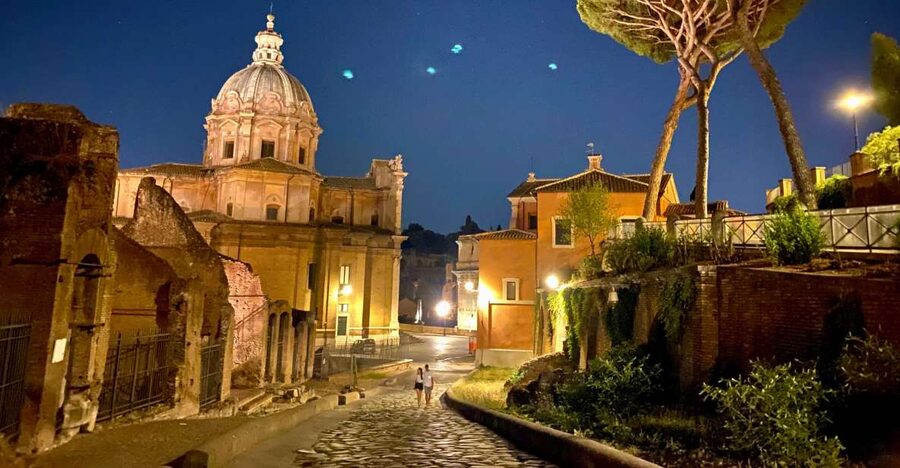
Rome is at its most dramatic when the light softens and the stone begins to glow. This two-hour dusk walk takes you from the Colosseum to Capitoline Hill, with stories of emperors, gladiators, temples, and Roman politics along the way.
I like the small maximum of 10 people, which should make it easier to hear the guide and ask questions. I also like the route itself: the Colosseum, Arch of Constantine, Roman Forum, Trajan’s Forum, and Capitoline Hill give you a strong overview without spending a full day on your feet.
The important catch is simple: you do not go inside the Colosseum, Roman Forum, or Trajan’s Forum. One guest, Marie Odile, booked expecting Colosseum entry and was disappointed, so read the inclusions carefully before paying $81.
Key points to know before booking
- Dusk timing: You see Ancient Rome after the harshest daytime heat and crowds have eased.
- Outside only: The guide explains the monuments from public viewpoints, but no entrance tickets are included.
- Small groups: The shared option is limited to 10 people, with private tours also available.
- Strong route: The walk links the Colosseum, Arch of Constantine, Roman Forum, Trajan’s Forum, and Capitoline Hill.
- Guide languages: Tours are offered in English, Italian, Spanish, Portuguese, French, and German.
- Useful flexibility: You can cancel up to 24 hours before the tour for a full refund, or reserve now and pay later.
Why dusk is the right time for Ancient Rome
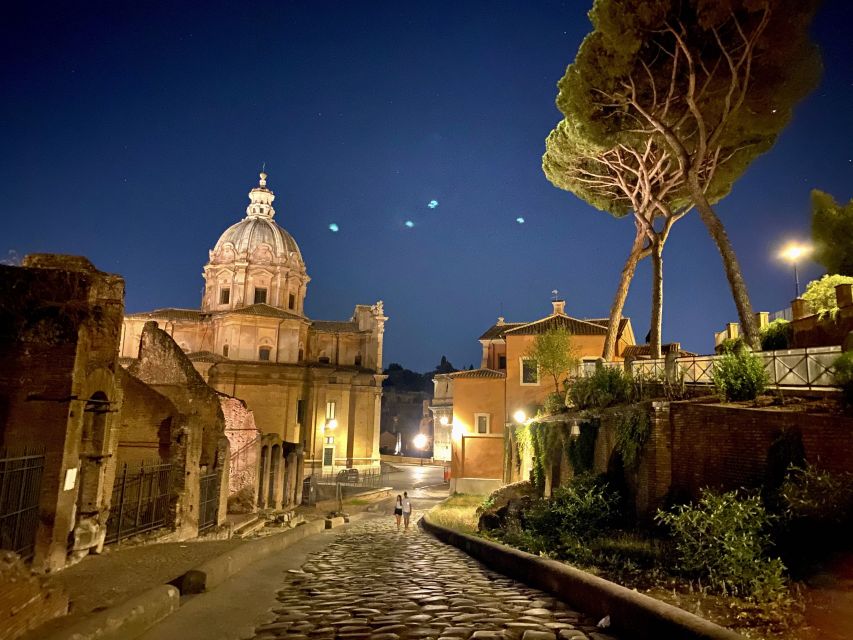
The best feature here is the timing. Rome’s ancient center can feel tiring in the middle of the day, especially when the sun is high and tour groups gather around every major monument. At dusk, you get a calmer setting and softer light for photographs.
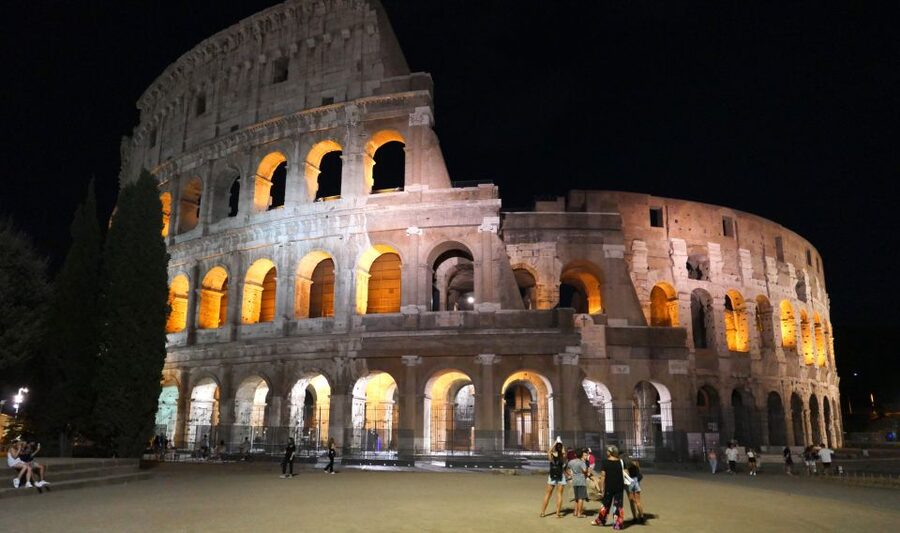
This is not a late-night ghost walk or a theatrical show. It is a guided history walk that uses the evening atmosphere to make familiar places feel different. You still see the Colosseum and Forum from outside, but the changing light adds a little drama to the broken arches, columns, and massive stone walls.
The route is also well chosen for a first look at Ancient Rome. You begin beside the city’s most famous arena, follow the old political center, continue to Trajan’s monuments, and finish high above the streets at Piazza del Campidoglio. In two hours, you cover a lot of ground without trying to force every ancient site into one exhausting day.
More ancient Rome tours:
- Colosseum: Underground and Ancient Rome Tour
★ 4.7 · 12,691 reviews - Colosseum & Ancient Rome with Arena Floor Option I Max 6 People
★ 5.0 · 3,306 reviews - Rome: Colosseum, Ancient Rome Tour or Self AudioGuided Tour
★ 4.4 · 2,866 reviews
Starting beside the Colosseum
Meet at the green kiosk at street level just outside the Colosseo metro station on Line B, the blue line. Look for a staff member holding a yellow Touriks sign. The station has an upper-floor exit, so make sure you come downstairs to street level.
You are asked to arrive 30 minutes before departure. That may sound early for a walking tour, but the Colosseum area has several exits, roads, ticket sellers, and tour groups. Give yourself time to find the right spot rather than arriving at the last minute and starting the evening in a panic.
The guide begins outside the Colosseum, where you get a broad introduction to the building and its role in Roman life. You hear how it was built, why it mattered, and what happened during the gladiator games.
This outside view works best if you want the big picture. You can understand the Colosseum’s scale and place in the city, but you will not see the seating levels, underground areas, interior corridors, or arena floor. If entering the Colosseum is one of your main Rome goals, book a separate ticket or an inside visit as well.
The Colosseum and its violent public spectacles
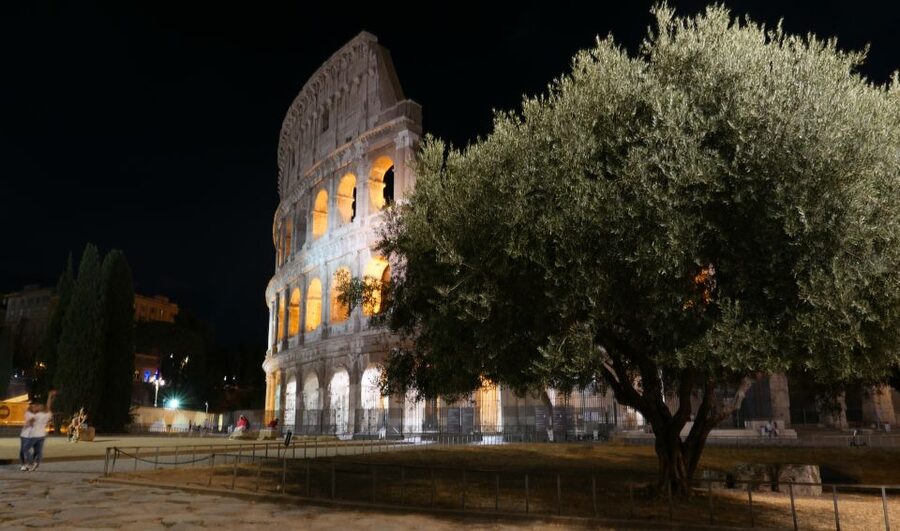
The Colosseum is more than a famous photo stop. It was a purpose-built public venue where the Roman government displayed power, wealth, and control. The stories here focus on construction, emperors, gladiators, and the bloody contests that drew huge crowds.
A good guide can make the exterior useful by helping you picture how the arena functioned. You learn why such a huge structure was built and how public entertainment fit into the political life of Ancient Rome.
The supplied feedback points to guides who make the history easy to follow. German guest Gerold described a very informative two-hour visit that passed quickly. Spanish guest Lydia had guide José, who used photographs while explaining Roman history. That detail matters because many ancient sites are easier to understand when you can compare the ruins with images of how they may once have looked.
The guide changes across departures, so José will not necessarily lead your tour. You can choose English, Italian, Spanish, Portuguese, French, or German when booking. Some guides may use pictures or other visual aids, but that is not guaranteed for every departure.
The Arch of Constantine adds a political lesson
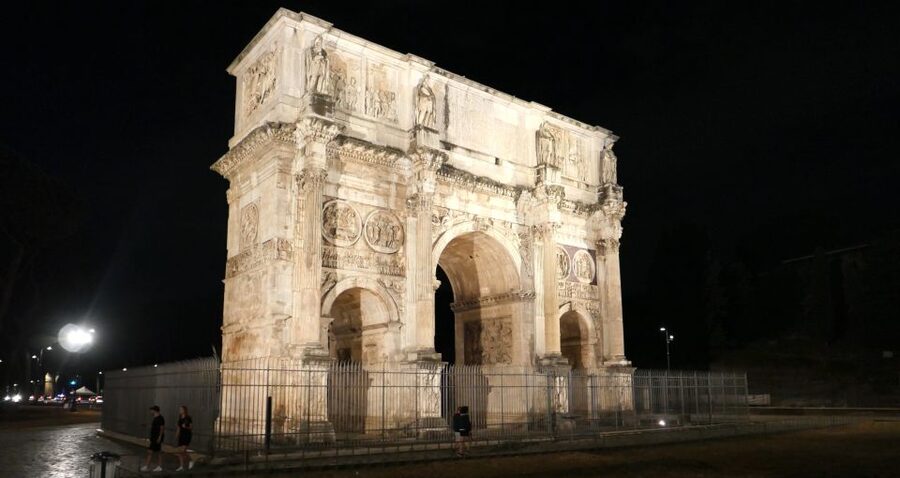
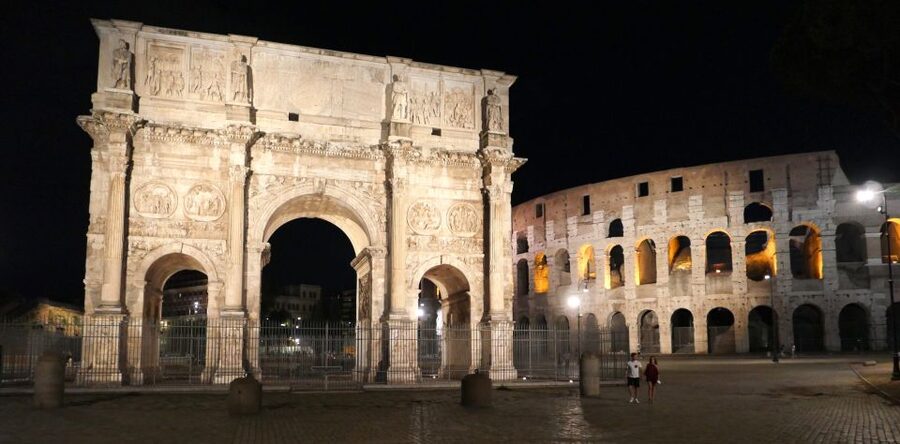
The next stop is the Arch of Constantine, with about 10 minutes of guided explanation. It sits close to the Colosseum and gives the tour a useful connection between architecture and imperial power.
The arch commemorates Emperor Constantine and helps place the Colosseum area in a later phase of Roman history. Here, the guide can connect the monuments to the emperors who used grand buildings, ceremonies, and public messages to shape how people saw their rule.
This is a short stop, so do not expect a long architectural study. Its value comes from the way it links the first part of the walk to the wider story of Rome. You are not simply moving from one famous photo spot to the next. You are following how Roman rulers used public spaces to communicate authority.
Same city, a completely different half-day:
- Vatican Museums & Sistine Chapel Tour with Optional Basilica
★ 4.3 · 67,413 reviews - Vatican Museums, Sistine Chapel & St Peter’s Basilica Guided Tour
★ 4.5 · 39,149 reviews - Rome: Colosseum, Palatine Hill and Roman Forum Guided Tour
★ 4.8 · 32,814 reviews - Rome: Guided Tour of Colosseum, Roman Forum & Palatine Hill
★ 4.7 · 27,897 reviews
Walking through the Roman Forum from outside
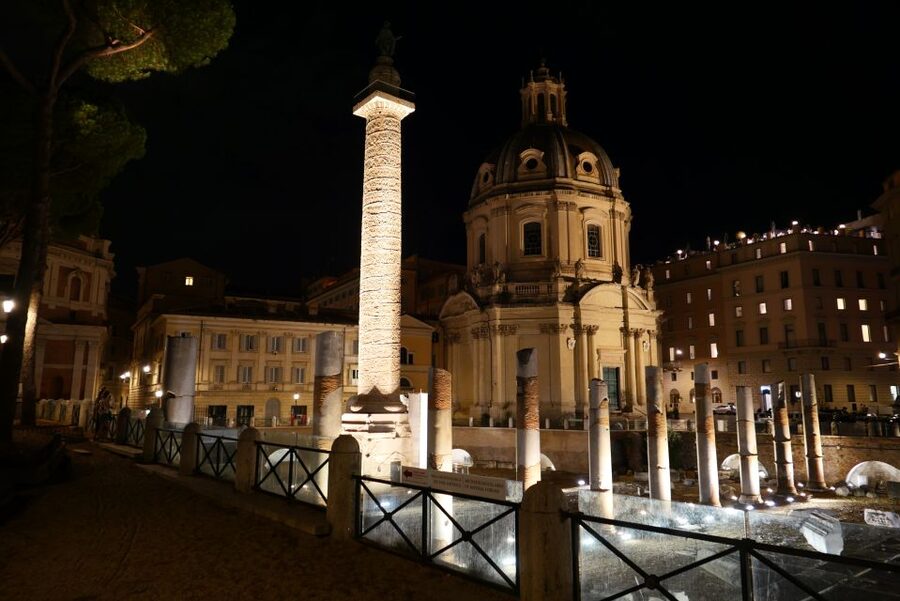
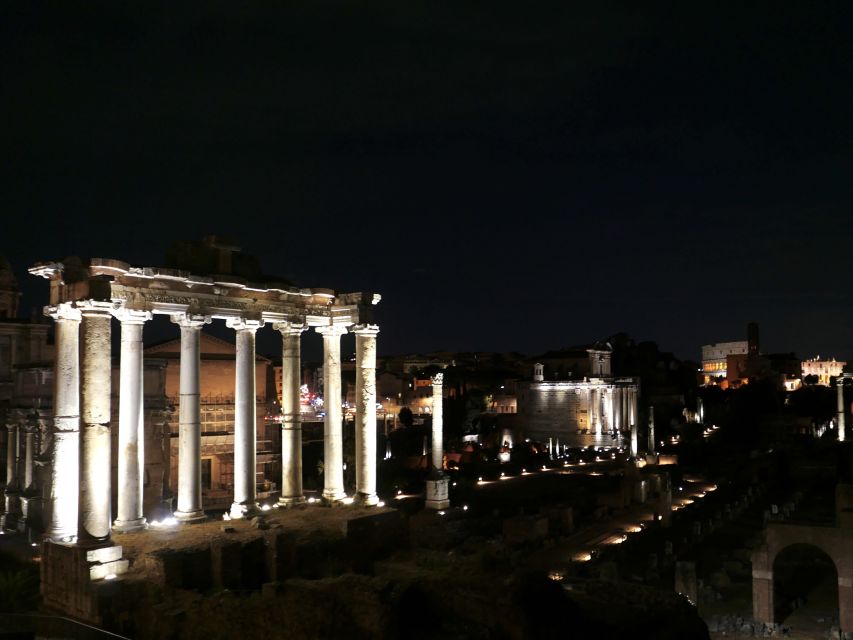
The Roman Forum receives about 40 minutes of guided attention, making it the longest part of the route after the Colosseum. From outside viewpoints, you look toward the ruins and hear about the center of Roman government, religion, and public life.
The Forum can be hard to read on your own. There are columns, arches, foundations, and fragments spread across a broad area, and the original purpose of each building is not always obvious. The guide helps you identify sites such as the Temple of Castor and Pollux, the Arch of Titus, and the Senate House.
The stories also shift from gladiators to politics. You hear about notorious emperors and what daily life was like under Roman rule. That change is important. The Colosseum explains public spectacle, while the Forum gives you a sense of how laws, ceremonies, religion, and political decisions shaped the empire.
Because you do not enter the Forum, your view depends on the public route and the guide’s explanation. You will not walk among the ruins or see every structure from close range. Still, an outside presentation can be a good choice if you want context before deciding if a longer archaeological visit deserves space in your schedule.
Trajan’s Forum and the Column of Trajan
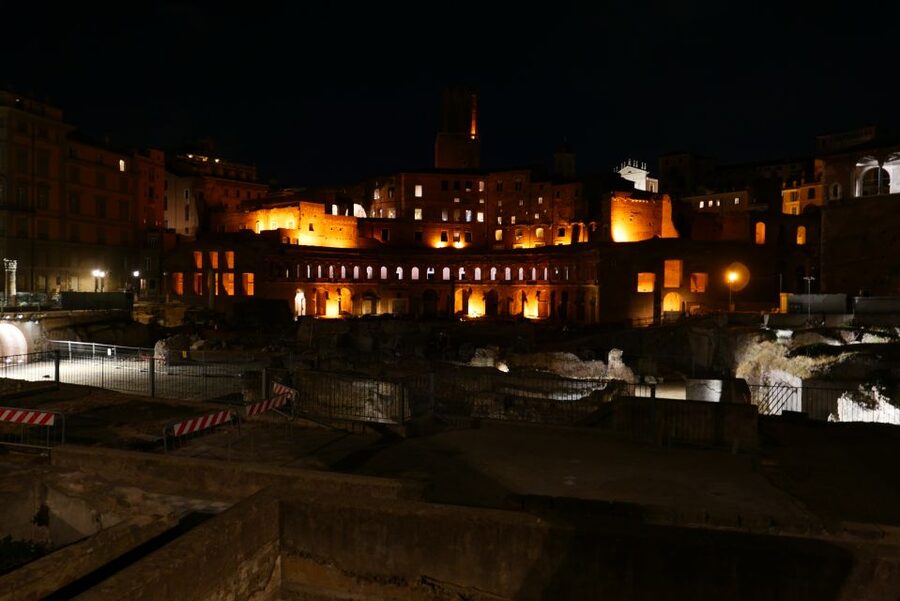
The walk continues to Trajan’s Forum for about 15 minutes. This section brings you closer to the monumental side of imperial Rome, with a focus on the famous Column of Trajan.
The column is especially useful for understanding how Rome recorded military victories. Its carved scenes spiral upward around the shaft, telling a long visual story about Emperor Trajan’s campaigns. From the outside, you can take photographs and hear why the monument mattered.
Again, this is an exterior visit. The tour does not include entry into Trajan’s Forum, so you should think of this stop as an introduction rather than a detailed archaeological examination.
I like this part of the route because it gives the evening a change of pace. You move from the arena, to the political center, to an imperial monument built to celebrate conquest. In a short walk, you see several different ways Rome presented power to the public.
Ending on Capitoline Hill
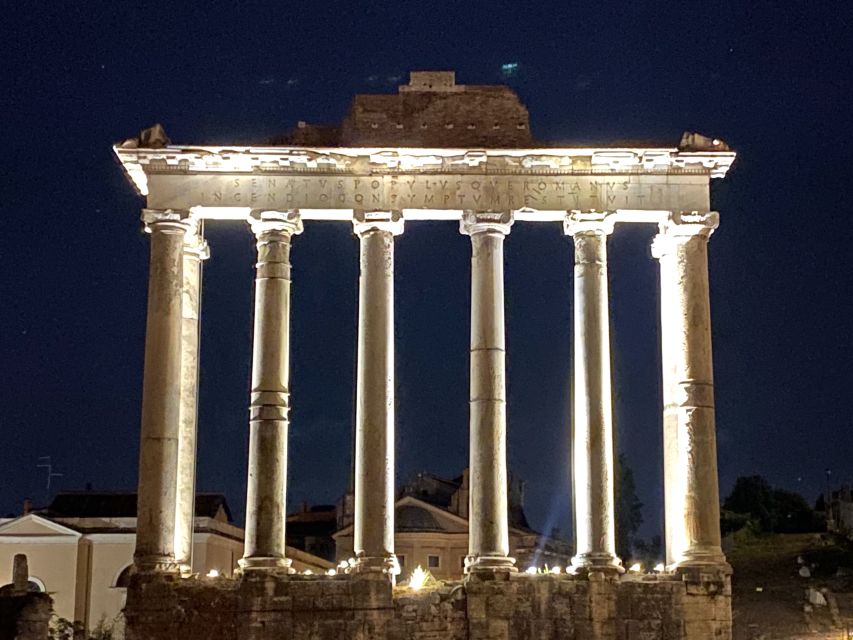
The final stop is Piazza del Campidoglio, reached by climbing Capitoline Hill. The guided visit here lasts about 15 minutes, and the climb gives the tour a satisfying finish.
Capitoline Hill is one of Rome’s historic heights, and from this area you get a broad view over the ancient center. After hearing about emperors, battles, ceremonies, and public games, you can look back across the city and connect the separate ruins into one setting.
The hill is also a practical place to end. The tour finishes in Piazza del Campidoglio rather than returning you to the Colosseum. Plan your evening from there, and check your route before the walk begins. The listing gives the finish as Piazza del Campidoglio, 00186 Roma RM.
The climb is not described as difficult, but you should wear comfortable shoes. This is a walking tour on city streets and includes a hill, so thin sandals or stiff new shoes are poor choices.
What $81 gets you
At $81 per person, this is not a cheap way to see the ancient center. The price pays for a professional guide, sterilized headsets, on-site assistance, and taxes. It does not include food, drinks, hotel pickup, or entrance tickets.
The real value depends on what you want. If you need a guide to explain the monuments, keep the route moving, and provide historical links between the sites, the price can make sense. A small group of no more than 10 people is also more personal than a large city walk, and a private option gives you more control over the experience.
If you mainly want to enter the Colosseum and walk through the Forum, this tour is poor value on its own. You would still need to buy separate admission and arrange another visit. The exterior focus must be clear before booking.
I see this as a context tour, not a complete archaeological visit. It works well on a first evening in Rome, when you want an organized introduction without committing half a day to museum-style sightseeing. It is less suitable if your main goal is to study the ruins from inside.
Small group or private tour?
The small-group tour has a maximum of 10 participants. That is a useful limit for a walking route around the Colosseum, where noise and crowds can make a guide difficult to hear. Headsets are provided, which should help you follow the commentary near busy roads and open public spaces.
A private tour is the better choice if you want to move at your own pace or ask many questions. The supplied information does not state the private group size or whether the route changes, so confirm those details when booking.
The language choice is broad: English, Italian, Spanish, Portuguese, French, and German are available. Several positive comments focused on the guides making the two hours pass quickly, including Spanish guide José and Italian guide Matilde. Guide assignments can vary, but you can choose your preferred language.
Practical limits you should consider
The tour runs rain or shine except in very unsuitable weather. If conditions force a cancellation, you are offered another date or a full refund. Bring comfortable shoes and be prepared for an outdoor walk.
The start requires careful navigation. Meet at the green kiosk outside the Colosseo metro station, not at the upper exit. Arriving 30 minutes early is sensible, especially if you are unfamiliar with Rome’s metro exits.
There is no hotel pickup or drop-off, so you handle transportation to the meeting point and onward from Capitoline Hill. There is also no food or drink included. Two hours is short enough that most people can manage without a meal break, but plan a drink before or after if needed.
The tour is listed as wheelchair accessible. Since the route includes a climb up Capitoline Hill, confirm the exact route and accessibility arrangements at booking if you use a wheelchair or have limited mobility.
Who should book this dusk walk?
I would recommend it to a first-time Rome visitor who wants a clear introduction to Ancient Rome and prefers a guide to explain what the ruins mean. It also suits people who have already toured the interiors and want a shorter evening walk around the monuments.
Families may appreciate the focused length, especially if children lose interest during longer museum visits. The stories of gladiators and emperors can hold attention, while the changing views keep the walk from feeling like a lecture.
History fans who want detailed access to the Colosseum and Forum should choose an inside tour instead, or add one separately. The same goes for anyone disappointed by exterior-only sightseeing.
The strongest reason to book is the combination of dusk atmosphere, a compact route, and a small group. The strongest reason to skip it is the $81 price for a tour that does not include admission.
Should you book it?
Book this tour if you want an organized, two-hour introduction to Rome’s ancient center after the daytime rush. You will see the Colosseum, Arch of Constantine, Roman Forum, Trajan’s Forum, Column of Trajan, and Capitoline Hill, with a guide tying the sites together through stories of emperors, gladiators, and Roman public life.
Skip it if entering the monuments is essential to your Rome plan. For everyone else, the dusk timing and small group make this a practical way to get your bearings, take in the major exteriors, and finish with a broad view from Capitoline Hill.
FAQ
Does this tour go inside the Colosseum?
No. The tour does not include entry into the Colosseum, Roman Forum, or Trajan’s Forum. The guide explains the sites from outside viewpoints.
How long does the tour last?
The tour lasts two hours.
Where does the tour start?
Meet at the green kiosk at street level outside the Colosseo metro station on Line B, the blue line. Do not use the upper-floor exit. Look for staff holding a yellow Touriks sign.
Where does the tour finish?
The tour finishes at Piazza del Campidoglio in Rome.
How early should I arrive?
You should arrive 30 minutes before the scheduled starting time.
What languages are available?
You can choose an English, Italian, Spanish, Portuguese, French, or German-speaking guide.
What is included in the price?
The price includes a professional guide, sterilized headsets, full on-site assistance, and all fees and taxes. Food, drinks, hotel transportation, and entrance tickets are not included.
Newest Rome tours we have reviewed
- Private TikTok Video Making in Rome★ 5.0 · 7 reviews
- Assisi, Orvieto and Civita di Bagnoregio Full Day Tour from Rome★ 4.5 · 45 reviews
- Assisi & Saint Francis Path Tour from Rome★ 5.0 · 45 reviews
- Assisi and Cascia Private Day Tour from Rome with Lunch★ 5.0 · 10 reviews
- Art Class in the center of Rome!★ 4.0 · 4 reviews
- Art & Craft: Beer Tour with Street Art in Rome★ 4.5 · 6 reviews
- Arrival in Rome: Airport Transfer & Exclusive City Introduction★ 5.0 · 3 reviews
- From Rome: Private Day-Tour of Tuscany★ 5.0 · 16 reviews
Ancient Rome Tours, compared.
Colosseum: Underground and Ancient Rome Tour
Read our review →
Colosseum & Ancient Rome with Arena Floor Option I Max 6 People
Read our review →
Colosseum, Ancient Rome Tour or Self AudioGuided Tour
Read our review →
Colosseum Underground & Ancient Rome Guided Tour
Read our review →
Ancient Rome: Colosseum Underground Group Tour
Read our review →
Colosseum Express Guided Tour and Ancient Rome Admission Included
Read our review →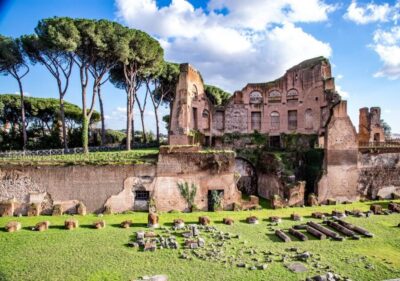
Colosseum Arena Access and Ancient Rome Guided Tour
Read our review →
Ancient Rome Discovery: Colosseum, Forum, Palatine Guided Tour
Read our review →Browse the lists this tour appears in