
Reviewed · ROMAN FORUM AND PALATINE HILL TOURS
Rome:Palatine Hill Roman Forum Experience & Multimedia Video
The smartest part of this Rome experience comes before you reach the ruins: a 30-minute multimedia video shows ancient buildings over the remains you are about to see. That old-and-new comparison gives you a useful sense of scale, geography, and purpose instead of leaving you to puzzle over piles of stone.
I like the freedom to explore the Roman Forum and Palatine Hill at my own pace, and I like the access to the SUPER sites, including the House of Augustus, Santa Maria Antiqua, and the Palatine Museums. The main catch is simple: this is not a guided tour of the Forum, and finding the meeting office and entrance can take attention. The $32 price also includes several services beyond the €18 admission ticket, so it suits you best if you plan to use the video and city walk.
- A 30-minute video first: See reconstructions of ancient Rome before walking among the ruins.
- Independent Forum visit: Explore the political, social, and religious center without being tied to a guide’s pace.
- Palatine Hill views: Look across Rome and toward the Colosseum from the traditional birthplace of the city.
- Extra SUPER access: Visit imperial homes, exhibition rooms, Santa Maria Antiqua, and other special areas.
- English city walk included: Join the 10:00 a.m. route through Navona Square, the Pantheon, and Trevi Fountain.
- Allow at least three hours: The site is large, sunny, and easy to underestimate.
Start at Aracoeli, not at the Roman Forum
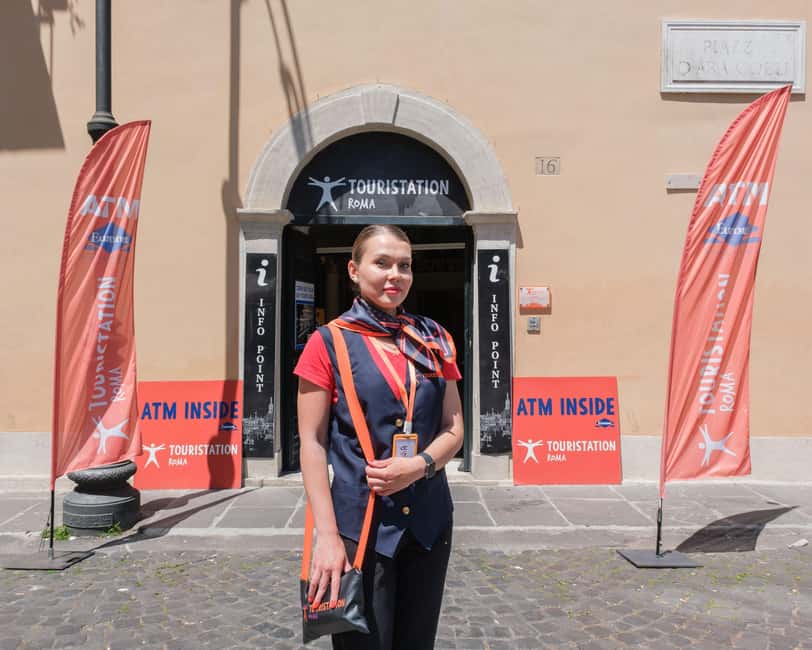
Your selected time is the time to report to the Touristation Aracoeli office at Piazza d’Aracoeli 16. Do not go straight to the Roman Forum entrance. Look for the fountain under restoration and the orange flags outside the office.
This detail matters. The office is the place to exchange your voucher, receive assistance, and begin the experience. Directions have not always been easy to follow, so give yourself extra time and use the exact meeting point rather than relying on a map that only shows the general area.
Bring a valid passport or identity card for every person in your party, including children. The names on your booking must match the documents, or entry to the Roman Forum and Palatine Hill may be refused. Large bags, luggage, glass objects, alcohol, drugs, and pets are not allowed.
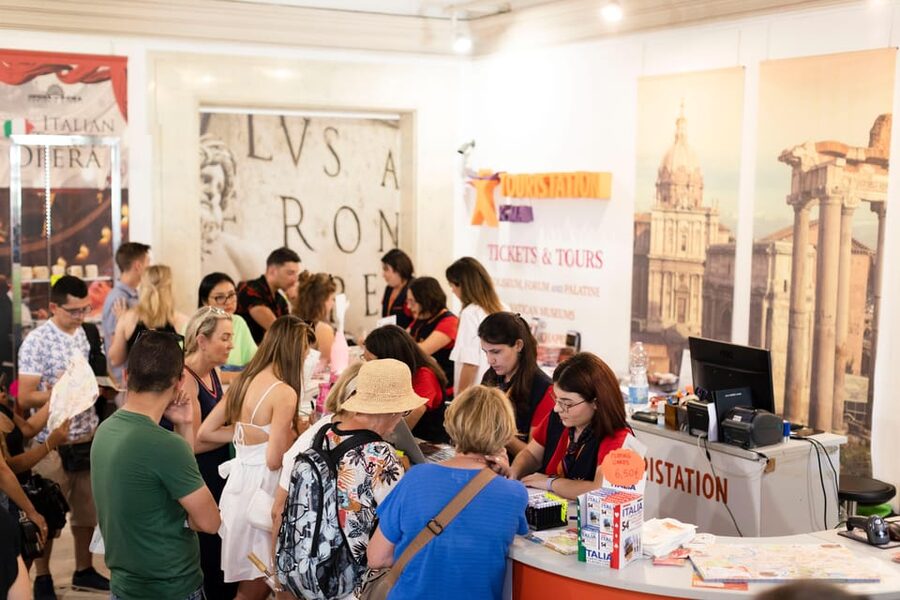
After check-in, you watch the ancient Rome multimedia presentation. Staff then accompany you toward the entrance of the archaeological area. Once inside, you are free to explore independently.
Why the multimedia video earns its place
Ancient Rome can be hard to read at first. You see columns without roofs, walls without rooms, and fragments scattered across a wide valley. The video helps by showing how the Forum and Palatine Hill may have looked when temples, basilicas, homes, and government buildings were still complete.
The most useful feature is the overlay of old and modern views. You can connect the surviving ruins to the streets and buildings around you, then recognize why each part of the Forum mattered. This is especially helpful if this is your first visit or if Roman archaeology usually feels like a guessing game.
At 30 minutes, the presentation is long enough to provide a foundation but short enough not to consume your day. I would not skip it unless your schedule is extremely tight. The video is one of the clearest reasons to choose this package over a bare entry ticket.
It is also worth knowing what it is not. It does not replace a live guide who can answer questions as you walk. Instead, it gives you a visual briefing, then leaves you to build the rest of the visit at your own speed.
More Roman Forum and Palatine Hill tours:
- Rome: Colosseum, Palatine Hill and Roman Forum Guided Tour
★ 4.8 · 32,814 reviews - Rome: Guided Tour of Colosseum, Roman Forum & Palatine Hill
★ 4.7 · 27,897 reviews - Rome: Colosseum, Roman Forum and Palatine Hill Guided Tour
★ 4.5 · 23,903 reviews
Walking through the Roman Forum
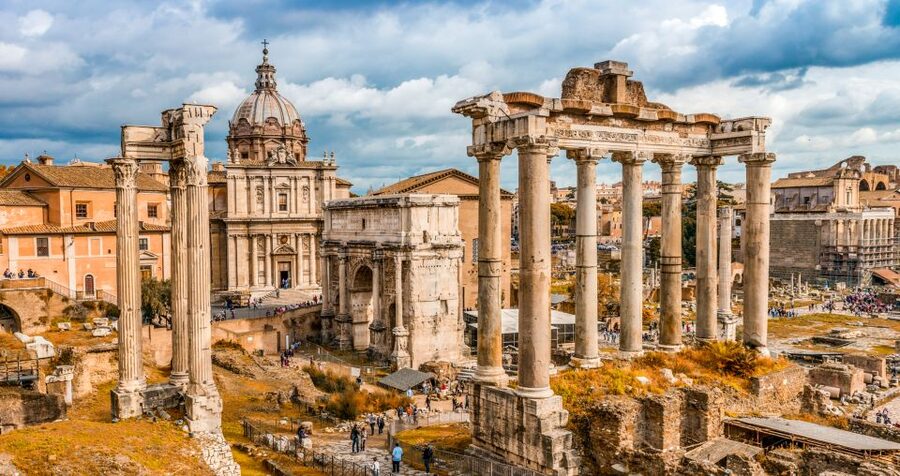
The Roman Forum was the center of public life in ancient Rome. Political business, religious ceremonies, legal matters, and ordinary daily activity all met here. Today, you walk through a broad field of ruins, with paths leading past temples, arches, basilicas, and government buildings.
The setting becomes more meaningful after the video. You can picture the Forum as a working civic center rather than a quiet archaeological site. Take your time with the views across the central valley, then look closely at the surviving stonework and scattered columns.
One of the most important stops is the tomb or commemorative site connected with Julius Caesar. The location is a small but powerful reminder that major Roman figures were honored in the same public center where political decisions were made.
This part of the visit is self-guided. That is a strength if you dislike being hurried or want time for photographs. It is less suitable if you want a historian beside you explaining every structure. You can use posted information and your own guidebook or audio guide to add detail, but neither a Forum guide nor transportation is included.
The Forum takes more time than its appearance suggests. It spreads across uneven ground, and the ruins are viewed from many angles. Plan on walking steadily and carrying water. There are very few fountains in the archaeological area, so do not assume you can refill easily once inside.
Palatine Hill and the first Rome
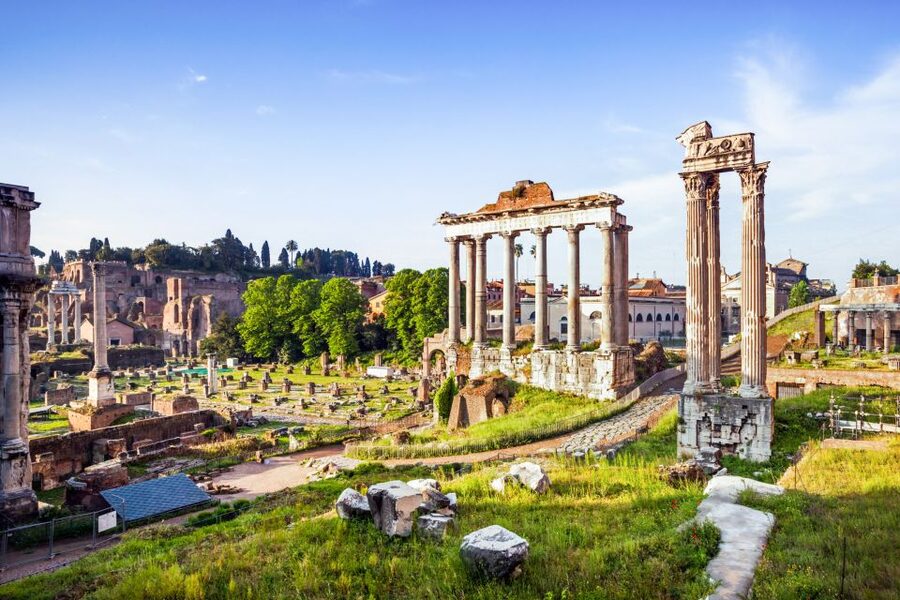
Palatine Hill rises beside the Forum and the Circus Maximus. It is traditionally linked with the foundation of Rome and later became the preferred address of emperors and kings. The hill gives the visit a different feel from the Forum: you move among imperial residences, gardens, exhibition spaces, and broad views over the city.
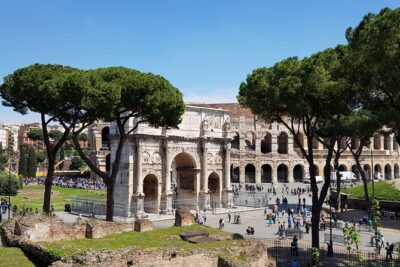
The panorama is a major reward. You can see the Colosseum and much of central Rome from above, while the Forum spreads below. I like this viewpoint because it makes the relationship between Rome’s major ancient sites easier to understand. The city stops feeling like a set of separate monuments.
Give the hill plenty of time. It is tempting to treat it as a quick add-on after the Forum, but the imperial homes and special areas are part of the ticket. A short visit risks missing the very places that give the hill its character.
The route involves walking and some uneven archaeological surfaces. The activity is listed as wheelchair accessible, but the site is still a large ancient complex. People with disabilities have the right to free entry, so booking this package is specifically not recommended for them.
The SUPER sites included with your ticket
The extra access is where this package can offer more than a standard basic admission. The exact opening schedule matters, so check the listed days before setting your expectations.
The Palatine Museums help put smaller finds and fragments into context. After seeing the ruins outdoors, museum displays can make the domestic and imperial parts of the hill easier to understand.
The House of Augustus is one of the most appealing additions. It is connected with Rome’s first emperor and gives you a closer look at the private side of imperial power. It is closed on Mondays, so do not count on visiting it that day.
The House of Livia adds another domestic setting linked with the imperial family. It helps balance the grand public spaces of the Forum with the homes where Rome’s ruling class lived.
The Domus Tiberiana exhibition rooms and the Neronian cryptoporticus offer a look at the palatial complex and its covered passageways. These areas are valuable because they show how the Palatine was not simply a hill with a good view. It was a large residential and ceremonial zone.
The Aula Isiaca and Loggia Mattei add further special areas to the hill visit. You may want to slow down here rather than race through them after the main Forum.
The complex also includes Santa Maria Antiqua, the Ramp of Domitian, and the Oratory of the Forty Martyrs. Santa Maria Antiqua is especially useful for seeing how the site changed over centuries, as ancient Roman spaces were reused and reshaped.
The Curia Julia, the Senate house, opens only on Mondays, Saturdays, and Sundays. That unusual schedule can work in your favor if your visit falls on one of those days. If you are visiting midweek, plan around the fact that this particular area may be closed.
Because opening arrangements can change, treat these sites as valuable extras rather than guarantees for every date. The ticket includes access to them, but individual locations may not all be open on the day you visit.
Same city, a completely different half-day:
- Vatican Museums & Sistine Chapel Tour with Optional Basilica
★ 4.3 · 67,413 reviews - Vatican Museums, Sistine Chapel & St Peter’s Basilica Guided Tour
★ 4.5 · 39,149 reviews - Rome: Colosseum & Forum with Audio Guide App -Optional Arena
★ 4.2 · 24,770 reviews - Rome: City Sightseeing Hop-on Hop-off Bus with Audioguide
★ 4.0 · 16,045 reviews
The English walk through Rome’s famous squares
The package includes an English city walking tour at 10:00 a.m. every day. The route covers Navona Square, the Pantheon, and Trevi Fountain.
This walk is not a replacement for the ancient-site visit. It is a short introduction to Rome’s central sights and a useful way to connect the Forum visit with the later city. Navona gives you a lively urban square, the Pantheon offers one of Rome’s most striking ancient interiors, and Trevi Fountain supplies the grand finale.
The walk is included in English only, so keep that in mind when comparing options. The activity information does not present it as private or customized. You should choose it for a broad introduction, not for a detailed archaeological lecture.
Timing is the main practical issue. Your booking time refers to the Touristation office, while the city walk runs at 10:00 a.m. If you want both parts, check that your selected office time fits your day. The Forum and Palatine Hill are valid for one day, so you have room to organize the ruins around the rest of your plans, but the walking tour has its fixed morning time.
What $32 gets you
The entry ticket itself is listed at €18, including reservation and ancillary services. The rest of the price covers the multimedia presentation, assistance at the office, accompaniment to the entrance, the city walking tour, and access to the listed SUPER areas.
That makes the package good value for a certain type of visitor. If you want a simple way to secure entry, appreciate a visual introduction, and plan to spend several hours exploring, the extra cost is reasonable. The alternate entry process and office assistance can also be useful when you want to avoid handling the site on your own.
If all you need is admission and you already have a good guidebook or audio guide, you may find the package less compelling. The Forum portion is independent, and the video and city walk are the main services beyond the ticket.
The experience is non-refundable, so check your schedule carefully before booking. There is no Colosseum access included, and transportation is not provided. You will need to arrange your own way to Piazza d’Aracoeli and between the city walk and archaeological site.
How long should you plan?
Give yourself at least three hours for the Forum, Palatine Hill, museums, and special areas. You can spend less time if you only want the main viewpoints, but that defeats much of the package’s value.
A full day is also reasonable if you enjoy ancient sites and want to move slowly. The area is large, and the combination of Forum ruins, hilltop views, imperial homes, museums, and churches can easily fill an afternoon.
Wear comfortable shoes and bring water. You will be outside for much of the visit, with limited shade and few fountains. Leave large bags at your accommodation because they are not permitted.
The video gives you the best start, but do not let the presentation make you think the rest will be a guided route. Once you enter, you decide where to go and how long to stop. That independence is excellent for photographers, history fans, and families with different interests. It is less useful for anyone hoping to follow a clear story from one expert-led stop to the next.
Who should book this experience?
I would choose this for a first visit to ancient Rome if I wanted structure at the beginning and freedom afterward. The video supplies the missing visual context, while the self-guided visit lets you linger at Julius Caesar’s memorial, climb Palatine Hill, or skip ahead when your energy fades.
It also works well for independent visitors who do not want a large guided group. The strongest elements are the multimedia introduction, the broad site access, and the ability to spend as much of the day as the ticket allows.
Families should note the walking, heat, and document requirement for children. History fans should make room for the SUPER sites rather than treating them as optional decorations. Visitors who need a detailed explanation at every ruin should look for a true guided Forum tour instead.
Should you book it?
Book this experience if you want independent access with a useful visual introduction, plus the bonus of an English walk through Navona, the Pantheon, and Trevi Fountain. It is a practical middle ground between a bare ticket and a fully guided archaeological tour.
Skip it if you only want Colosseum entry, need transportation, or prefer an expert guide beside you throughout the Forum. For most independent visitors who can spare several hours, the video and SUPER access make the $32 price a fair choice, provided you arrive at the Aracoeli office with matching identification and realistic expectations about the walking.
FAQ
Where do I start the experience?
Exchange your voucher at the Touristation Aracoeli office at Piazza d’Aracoeli 16. Do not report directly to the Roman Forum entrance. Look for the fountain under restoration and the orange flags outside.
Does the ticket include the Colosseum?
No. Access to the Colosseum is not included.
Is the Roman Forum visit guided?
No. After the video and accompaniment to the entrance, you visit the Roman Forum and Palatine Hill independently.
What does the city walking tour include?
The English walking tour runs every day at 10:00 a.m. and covers Navona Square, the Pantheon, and Trevi Fountain.
Is the House of Augustus always open?
No. The House of Augustus is closed on Mondays. The Curia Julia has a different schedule and is open only on Mondays, Saturdays, and Sundays.
What identification do I need?
Every participant, including each child, must bring a valid passport or identity card. The names on the booking must match the documents.
Newest Rome tours we have reviewed
- Private TikTok Video Making in Rome★ 5.0 · 7 reviews
- Assisi, Orvieto and Civita di Bagnoregio Full Day Tour from Rome★ 4.5 · 45 reviews
- Assisi & Saint Francis Path Tour from Rome★ 5.0 · 45 reviews
- Assisi and Cascia Private Day Tour from Rome with Lunch★ 5.0 · 10 reviews
- Art Class in the center of Rome!★ 4.0 · 4 reviews
- Art & Craft: Beer Tour with Street Art in Rome★ 4.5 · 6 reviews
- Arrival in Rome: Airport Transfer & Exclusive City Introduction★ 5.0 · 3 reviews
- From Rome: Private Day-Tour of Tuscany★ 5.0 · 16 reviews
Roman Forum and Palatine Hill Tours, compared.
Colosseum, Palatine Hill and Roman Forum Guided Tour
Read our review →
Guided Tour of Colosseum, Roman Forum & Palatine Hill
Read our review →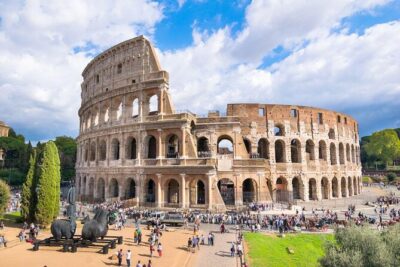
Colosseum, Roman Forum and Palatine Hill Guided Tour
Read our review →
Colosseum, Forum & Palatine Hill Tour & Optional Arena
Read our review →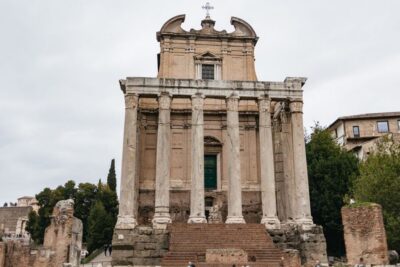
Colosseum, Palatine Hill & Roman Forum Guided Tour
Read our review →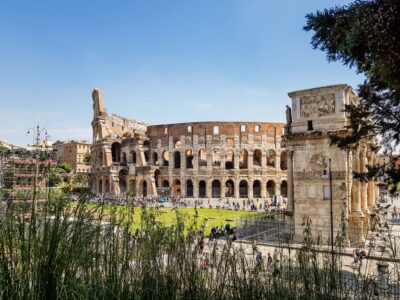
Colosseum Arena, Palatine Hill & Forum Guided Tour
Read our review →
Colosseum, Roman Forum & Palatine Hill Guided Tour
Read our review →Colosseum, Roman Forum And Palatine Hill Guided Tour
Read our review →Browse the lists this tour appears in