
Reviewed · ROME
Tiber Island and Ghetto
The most compelling part of this walk is the way it links two small areas with very different stories: Tiber Island, once tied to Roman healing, and the Jewish Ghetto, shaped by centuries of Jewish life in Rome. Guide Paula has led especially warm, detailed walks, turning streets and old stones into a clear story rather than a parade of dates.
I like the focus on places many first-time Rome itineraries skip, especially Portico d’Ottavia and the island’s Basilica of Saint Bartholomew. I also like that the tour brings food and daily culture into the picture through kosher cuisine. The main consideration is scope: the tour lasts three hours, but the description does not promise extended interior visits or food tastings at every stop, so check the exact inclusions before booking.
Key points at a glance
- Tiber Island begins the story: See an ancient river island, the Basilica of Saint Bartholomew, and Ponte Fabricio.
- The Jewish Ghetto comes alive through personal explanation: Learn about Jewish life in Rome from its early days to the present.
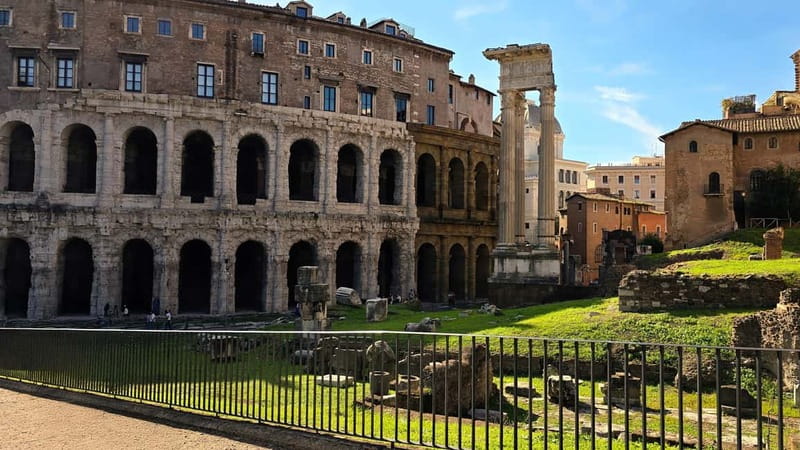
- Portico d’Ottavia adds Roman scale: Ancient ruins sit beside the streets and buildings of the old neighborhood.
- Paula has earned especially warm praise: Her approach is detailed, entertaining, and easy to follow.
- Headsets help with the city noise: You receive headsets, useful when the group is moving through busy streets.
- The format is practical: This is a three-hour, English-language walking tour that begins and ends on Tiber Island.
Why Tiber Island and the Jewish Ghetto belong together
Rome can feel like a city of disconnected monuments. One corner gives you imperial ruins, the next a church, then a lane that seems ordinary until a guide explains what happened there. This tour makes those connections for you.
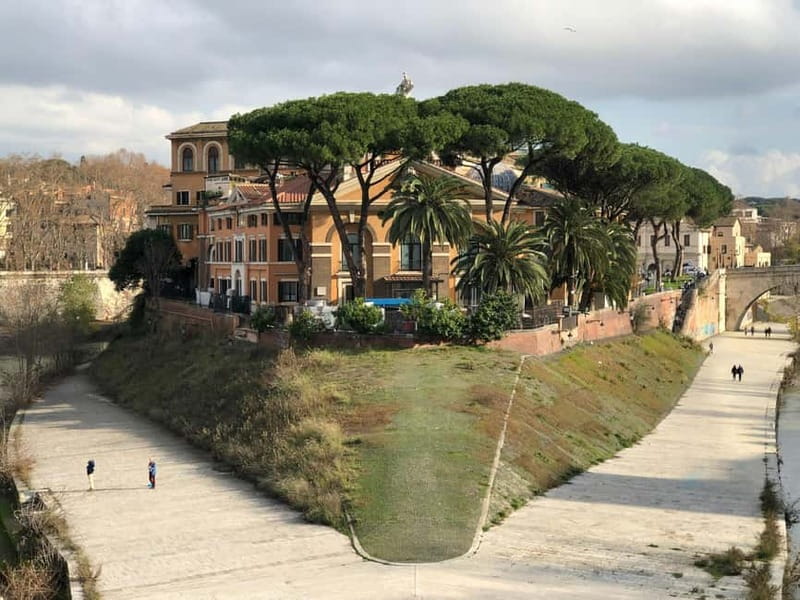
Tiber Island is a natural starting point. It sits in the Tiber River at the center of Rome, yet it feels separate from the traffic and monument-heavy streets around it. Its story reaches back to Roman times, when the island was associated with healing temples and hospitals. That gives the first part of the walk a useful theme: care, illness, faith, and the practical life of an ancient city.
From there, you cross into the Jewish Ghetto. The shift is not just geographic. You move from a small island shaped by Roman and Christian traditions into a neighborhood where Jewish customs, memory, food, worship, and survival have shaped the streets for centuries.
I like this pairing because neither place needs a full day on its own. Together, they make a worthwhile three-hour route. You get ancient Roman remains, religious buildings, neighborhood history, and food culture without committing to another large museum or major archaeological site.
Other Rome tours people pair with this one:
- Vatican Museums & Sistine Chapel Tour with Optional Basilica
★ 4.3 · 67,413 reviews - Vatican Museums, Sistine Chapel & St Peter’s Basilica Guided Tour
★ 4.5 · 39,149 reviews - Rome: Colosseum, Palatine Hill and Roman Forum Guided Tour
★ 4.8 · 32,814 reviews
Starting at Piazza San Bartolomeo all’Isola
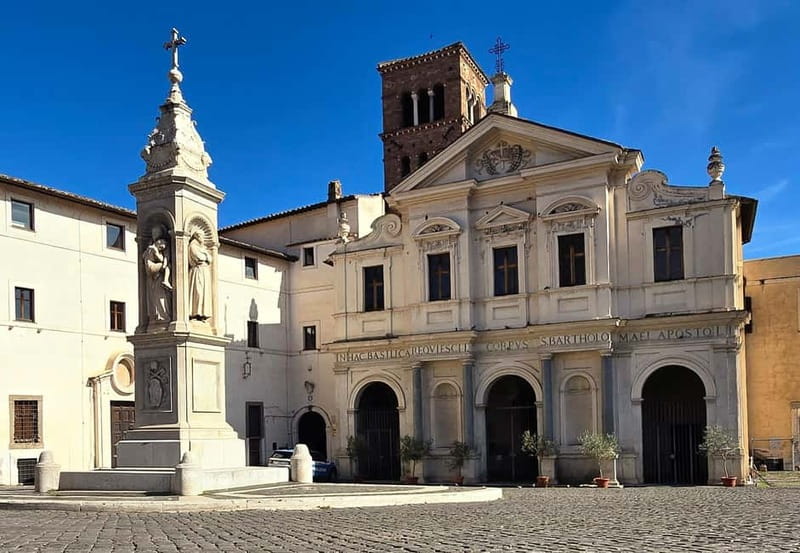
The meeting point is Piazza San Bartolomeo All’Isola, 22, on Tiber Island. More specifically, you meet in front of the church near the obelisk. The guide carries a sign, which matters in a city where several churches and piazzas can look similar at first glance.
Give yourself enough time to locate the island and the church without rushing. The tour ends back at the same meeting point, a useful arrangement if you have dinner plans nearby or need to continue toward another part of central Rome.
The tour is listed as wheelchair accessible. Still, this is a walking route through historic streets and a neighborhood with cobblestones, so you should confirm any personal mobility needs when booking. The supplied information does not specify the exact route conditions or the size of the group.
English is the tour language. A live guide leads the walk, and headsets are included. An English audio guide is also listed. The headsets should make it easier to follow the commentary while standing near traffic, churches, and open streets.
Tiber Island, Rome’s small river sanctuary
The island is the first major stop, and it gives the tour a strong opening. Tiber Island is not a large site, so the value comes from explanation. Without context, you might cross it in a few minutes and see only a church, an obelisk, bridges, and water. With a guide, those pieces become part of a much older story.
The island’s Roman connection to healing is one of its most interesting features. Ancient Rome used the island as a place linked with medical care and healing temples. That past helps explain why the island has long carried a religious and charitable character.
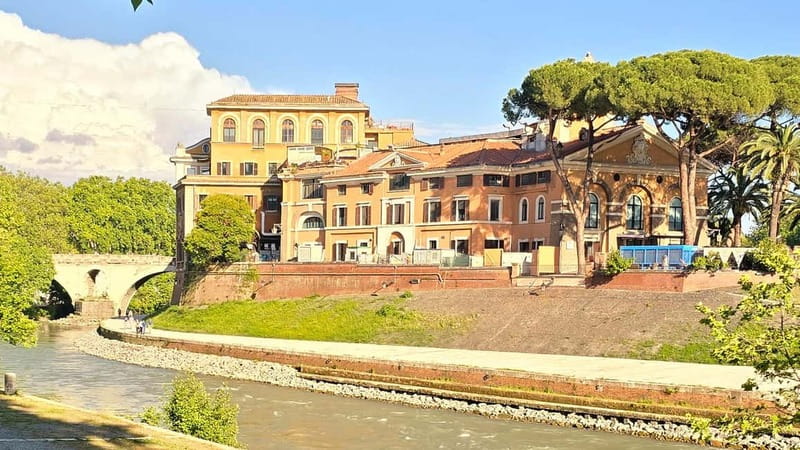
The Basilica of Saint Bartholomew is the key church here. Its position on the island gives you a distinctive view of how Roman religious buildings fit into the city’s waterways and bridges. The tour calls attention to the basilica’s architecture rather than treating it as a quick photo stop.
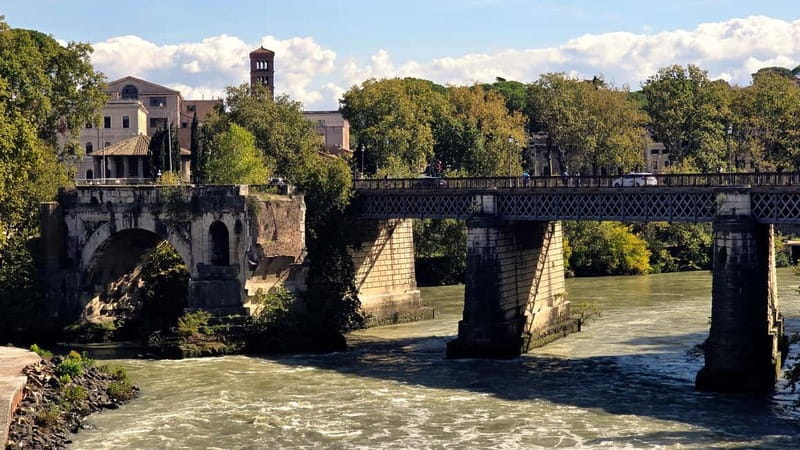
You also learn about Ponte Fabricio, often called the Bridge of the Four Heads. It is one of the island’s important connections to the rest of Rome, and its name gives the guide a natural opening to explain the city’s bridges and river crossings.
The island section should suit you if you prefer a guide to point out meaning in a small place. It is less suitable if you want a long, independent visit inside a church or a formal archaeology lecture. The experience is built around walking, listening, and connecting the details.
Crossing into the Jewish Ghetto
The move from Tiber Island into the Jewish Ghetto is the heart of the experience. Rome’s Jewish community is among the oldest Jewish communities in the world, and the tour focuses on how that community developed, endured, and continues today.
The Ghetto is best understood through its street pattern and human story. Narrow lanes and cobblestones can look picturesque, but they also reflect a neighborhood shaped by restrictions and confinement. A good guide helps you avoid seeing the area as merely old Rome with attractive restaurants.
Paula is the guide name that appears in the strongest personal feedback about this experience. Her approach is described as detailed, entertaining, and personal. One especially useful sign is that she handled a very small group of two people with the same care as a larger tour, giving them plenty of historical explanation.
That sort of attention can make a big difference in the Ghetto. The subject includes religion, discrimination, community life, and cultural survival. You want a guide who can explain difficult subjects clearly without turning the walk into a string of dramatic claims. The available feedback points to Paula as a strong choice when she is leading the tour.
The description also emphasizes the community’s cultural contributions and present-day life. That keeps the neighborhood from being presented only as a place of past hardship. You hear about its development from a confined district into a cultural center with shops, art, restaurants, and continuing Jewish traditions.
Same city, a completely different half-day:
- Rome: Guided Tour of Colosseum, Roman Forum & Palatine Hill
★ 4.7 · 27,897 reviews - Rome: Colosseum & Forum with Audio Guide App -Optional Arena
★ 4.2 · 24,770 reviews - Rome: Colosseum, Roman Forum and Palatine Hill Guided Tour
★ 4.5 · 23,903 reviews - Rome: City Sightseeing Hop-on Hop-off Bus with Audioguide
★ 4.0 · 16,045 reviews
Portico d’Ottavia and the layers of Rome
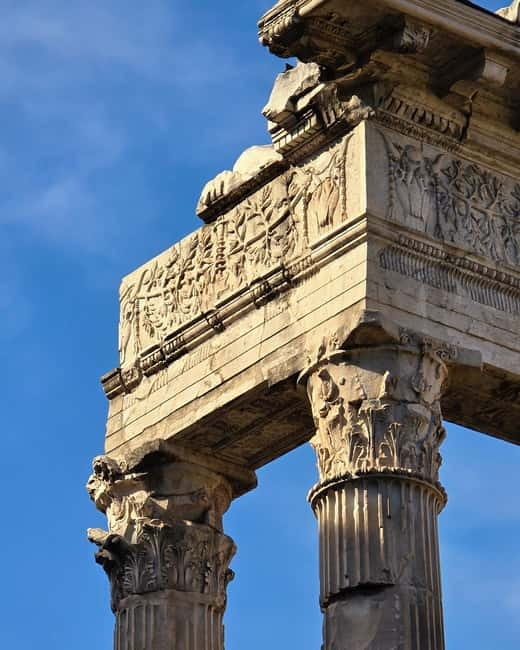
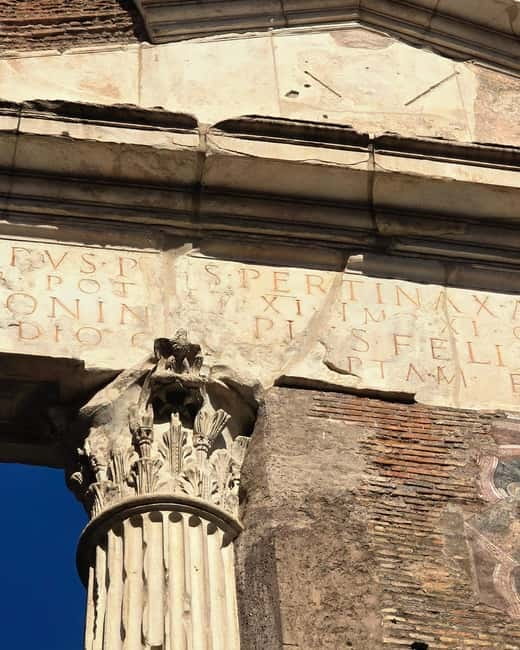
Portico d’Ottavia is one of the tour’s most important stops. This ancient Roman structure sits directly beside the Jewish Ghetto, making Rome’s habit of building one era over another especially clear.
You can look at the remains as Roman architecture, but the better approach is to see them as part of the neighborhood’s later life. The portico has witnessed the area’s changing use and gives the guide a concrete place to explain how ancient ruins, religious buildings, homes, restaurants, and modern businesses share the same few streets.
This is where the route earns its place among Rome’s smaller tours. The Colosseum and Roman Forum show Rome at monumental scale. Portico d’Ottavia shows how the ancient city remains part of an ordinary neighborhood. You are not only looking at a ruin. You are seeing a ruin beside streets still used for worship, shopping, eating, and living.
The stop also helps explain the Ghetto’s transformation. The area was once confined and heavily restricted. Today, it functions as a place of cultural interest, Jewish life, food, art, and local business. The tour does not ask you to forget the difficult past, but it does show the neighborhood as more than a memorial.
The Great Synagogue and Jewish Museum
The tour includes the Great Synagogue of Rome and the Jewish Museum in its description. These are central to understanding the community’s religious and cultural identity.
The Great Synagogue is presented as an important architectural work that reflects the diversity of Roman Jewish life. Its scale and design offer a useful contrast to the smaller streets around it. The synagogue is not simply another historic building. It represents an active religious tradition with a long connection to the city.
The Jewish Museum adds objects to the story. Its collection includes artifacts, manuscripts, and artwork connected with Jewish life in Rome over the centuries. These items can make the subject more concrete than street commentary alone. A manuscript or ritual object gives you something specific to remember after the walk.
One point to check before booking is exactly how much interior time is included. The tour description says to visit the synagogue and explore the museum, but the listed route names Tiber Island, Portico d’Ottavia, and the Jewish Ghetto as its formal stops. Admission details are not stated. If these interiors are your main reason for booking, confirm whether entry tickets and a full museum visit are included in the available departure you choose.
Even with limited interior time, the guide’s explanation can help you understand what you later see. That is often the real advantage of joining a focused neighborhood walk instead of visiting each site without context.
Kosher food and Roman Jewish traditions
Food gives the tour a welcome everyday angle. The route includes a stop at a traditional kosher bakery or restaurant, where you may sample dishes connected with Roman Jewish cooking.
The wording suggests a culinary stop, but it does not state that a tasting or meal is guaranteed in every booking. Check the exact details before you count on lunch. If food is included, treat it as a small cultural encounter rather than a full food tour.
Roman Jewish cuisine is valuable here because it shows how a community’s identity survives through ordinary habits. Recipes passed through generations can tell you about local ingredients, religious practice, family life, and adaptation. You may remember a food detail more easily than a date from a lecture.
I also like that this part keeps the tour grounded. The Ghetto is not only about monuments and persecution. It is also about bakeries, restaurants, religious customs, and the continuing life of the neighborhood.
What three hours feels like
Three hours is long enough for a serious introduction and short enough to fit around a larger Rome plan. You can see Tiber Island, cross to the Ghetto, stop at Portico d’Ottavia, and hear the main story of Jewish life in Rome without giving up an entire day.
The route is guided throughout, so you should expect a steady mix of walking and standing. This is not a hop-on, hop-off outing, and there is no transportation between the stops. Wear shoes that handle cobblestones and plan for the pace of a walking tour.
The exact starting time varies. Check availability before you plan other reservations, especially if you hope to eat at the Ghetto afterward. Since the tour ends at the starting point, you can also use the final location as a convenient base for your next activity.
Headsets are included. That small detail matters in an open urban setting. You can follow the guide without needing to stand shoulder to shoulder or miss information when the group pauses near a road.
Is $67.97 a fair price?
At $67.97 per person, this is not the cheapest way to see the area. The value depends on how much help you want with context.
You are paying for three hours with a live English-speaking guide, a focused route, headsets, and an organized explanation of places that are easy to pass without understanding. If you care about Jewish history, religious traditions, Roman urban history, or food culture, the price is easier to justify.
It is less attractive if you only want to walk across Tiber Island, photograph the bridges, and glance at Portico d’Ottavia. Those activities can be done independently. The tour earns its fee through the stories, connections, and access to a guide’s interpretation.
The reserve-now-and-pay-later option also gives you some flexibility. Free cancellation is available up to 24 hours before the activity for a full refund. Those policies are useful when your Rome schedule is still shifting, but they do not replace checking the actual departure time before you commit.
Who should book this walk?
I would recommend it to first-time Rome visitors who want more than the usual ancient monuments. It is especially suited to you if you enjoy neighborhood history, religious culture, architecture, and food traditions in one compact walk.
It also works well for returning visitors. You may have already seen the Colosseum and Trevi Fountain, but Tiber Island and the Ghetto offer a different side of Rome. The route is focused and does not try to cover half the city.
History-minded families and couples should find the subject engaging, though the three-hour length may be a lot for young children who do not enjoy walking and listening. The tour is also a good choice for solo visitors who prefer a live guide rather than piecing the area together from a guidebook.
You should think twice if your priority is a long museum visit, a guaranteed meal, or a fully private tour. The provided details do not confirm private group size, extended museum entry, or a substantial food tasting.
Should you book the Tiber Island and Ghetto tour?
Book this walk if you want Rome explained at street level. The strongest parts are the clear connection between Tiber Island and the Jewish Ghetto, the stop at Portico d’Ottavia, and the chance to hear about Jewish life from a guide such as Paula, whose style is both detailed and personable.
The tour is a good value for visitors who would otherwise miss the meaning behind these sites. It is not a bargain sightseeing loop, and you should confirm the exact synagogue, museum, and food inclusions if those are essential to your plans. For a focused three-hour look at two of central Rome’s most layered neighborhoods, it is a smart addition to a first or second visit.
FAQ
Where does the Tiber Island and Ghetto tour start?
The meeting point is at Piazza San Bartolomeo All’Isola, 22, on Tiber Island. Meet in front of the church near the obelisk, where the guide will have a sign.
Where does the tour end?
The tour ends back at the same meeting point on Tiber Island.
How long does the tour last?
The walking tour lasts three hours. Starting times vary, so check availability for the date you want.
What language is the tour conducted in?
The live tour guide speaks English. An English audio guide is also listed.
Are headsets provided?
Yes. Headsets are included.
Is the tour wheelchair accessible?
Yes, the activity is listed as wheelchair accessible.
Does the tour visit Tiber Island?
Yes. The route includes a guided visit to Tiber Island, including the Basilica of Saint Bartholomew and Ponte Fabricio, also called the Bridge of the Four Heads.
Does the tour include the Jewish Ghetto and Portico d’Ottavia?
Yes. Both the Jewish Ghetto and Portico d’Ottavia are listed as guided stops.
Can I cancel the booking?
You can cancel up to 24 hours in advance for a full refund. The activity also offers reserve now and pay later booking.
Newest Rome tours we have reviewed
- Private TikTok Video Making in Rome★ 5.0 · 7 reviews
- Assisi, Orvieto and Civita di Bagnoregio Full Day Tour from Rome★ 4.5 · 45 reviews
- Assisi & Saint Francis Path Tour from Rome★ 5.0 · 45 reviews
- Art & Craft: Beer Tour with Street Art in Rome★ 4.5 · 6 reviews
- Assisi and Cascia Private Day Tour from Rome with Lunch★ 5.0 · 10 reviews
- Art Class in the center of Rome!★ 4.0 · 4 reviews
- Arrival in Rome: Airport Transfer & Exclusive City Introduction★ 5.0 · 3 reviews
- From Rome: Private Day-Tour of Tuscany★ 5.0 · 16 reviews