
Reviewed · ROME
Welcome To Rome Experience
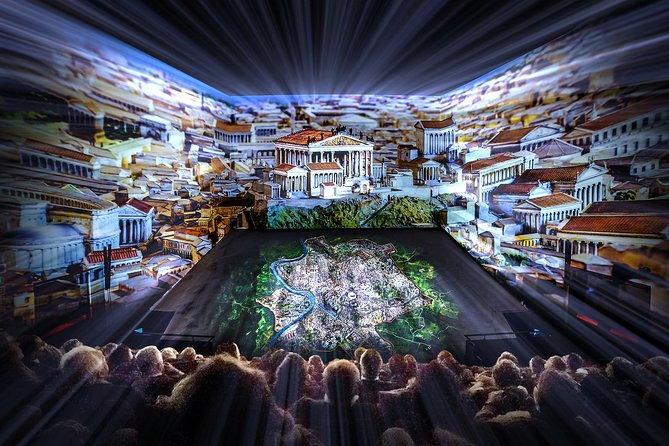
Rome’s past is hard to picture when you first face a pile of weathered stones. Welcome to Rome tackles that problem with 3-D reconstructions and projections that show how famous buildings and public spaces may have looked in earlier centuries. In about an hour, you get a useful map in your head before visiting the Forum, Palatine Hill, or Colosseum.
I like the quick overview of Rome’s changing eras, from volcanic origins to Classical, Medieval, Renaissance, and Baroque Rome. I also like the family-friendly mix of audio, models, film, and interactive displays. The main caution is that much of the first portion is standing, and some children or adults may find the presentation too detailed or slow.
Key points at a glance
- Four small audiovisual rooms use models, projections, and audio to show Rome’s past.
- A roughly 30-minute film provides the longest seated part of the experience.
- Ancient buildings are reconstructed visually, making ruins easier to understand later.
- The presentation covers several eras, not only Imperial Rome.
- The central location on Corso Vittorio Emanuele II makes it easy to fit into a sightseeing day.
- Multiple daily showings and pre-purchased admission make this a simple first-day activity.
Why start Rome with a one-hour history lesson?
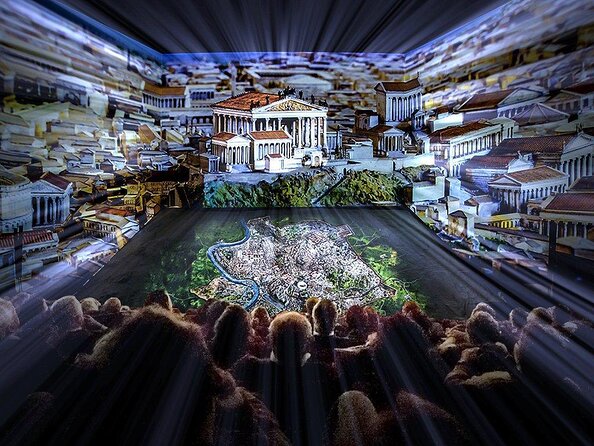
Welcome to Rome is best understood as a primer, not a major archaeological attraction. It gives you the broad shape of the city before you begin sorting out emperors, popes, ruins, churches, fountains, and palaces on your own.
The experience begins with a short explanation of Rome’s early geological setting. That may sound like a strange place to start, but it helps explain why the city developed where it did. From there, the presentation moves through the major periods that shaped Rome.
You will not leave with every date or name. That is not the point. You will leave with a clearer sense of how ancient Rome became medieval Rome, and how later Renaissance and Baroque builders worked around, reused, or replaced what came before.
I find this especially useful before the Roman Forum. At the Forum, the remains can seem scattered and confusing. Seeing reconstructions of buildings and public spaces gives you a better chance of imagining the original city rather than seeing only broken columns and walls.
Other Rome tours people pair with this one:
- Vatican Museums & Sistine Chapel Tour with Optional Basilica
★ 4.3 · 67,413 reviews - Vatican Museums, Sistine Chapel & St Peter’s Basilica Guided Tour
★ 4.5 · 39,149 reviews - Rome: Colosseum, Palatine Hill and Roman Forum Guided Tour
★ 4.8 · 32,814 reviews
The four-room opening sequence
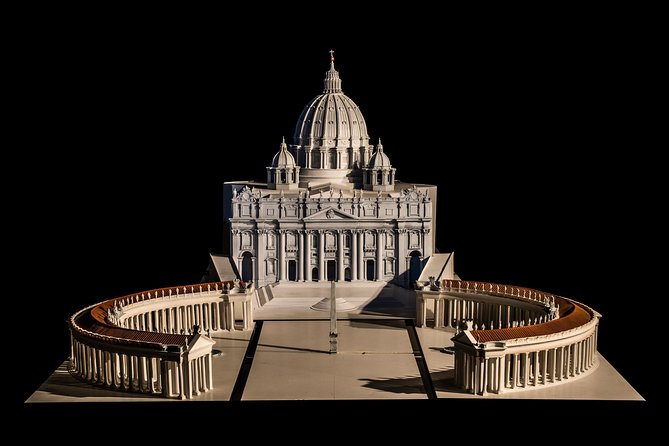
The first part takes place in four small rooms or stations. You move from one presentation to the next, listening through an audio device while watching models, images, projections, and other visual effects.
The exact balance between the stations matters. This is not a conventional guided walk with a person leading you from site to site. You follow an audiovisual program at your own pace within the scheduled experience.
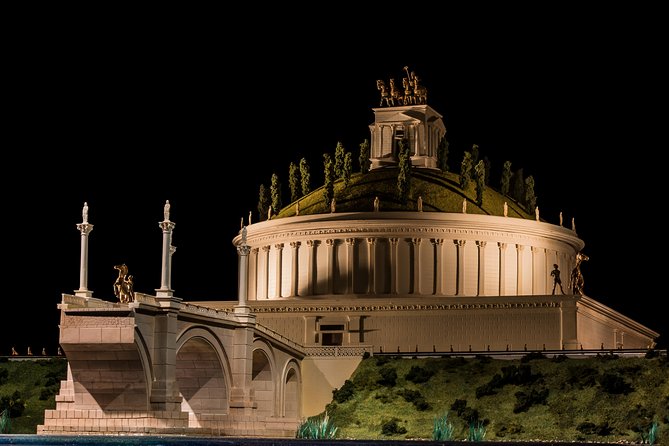
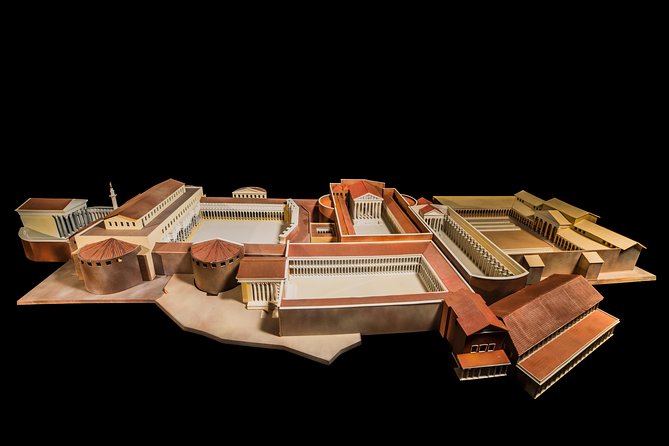
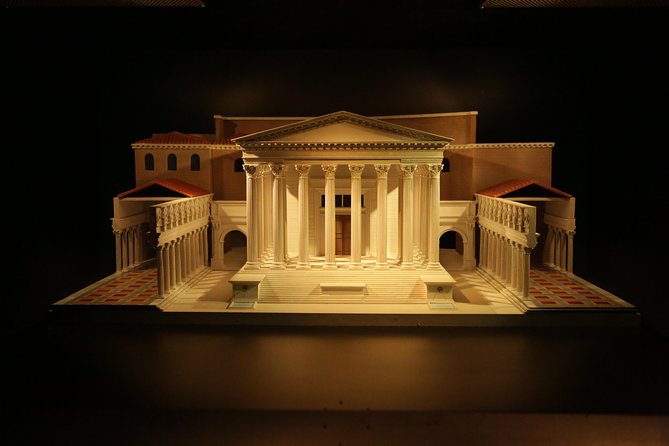
The models are among the most useful elements. They show buildings and parts of Rome in a form that is easier to read than a paragraph in a guidebook. The presentation also places old and modern views together, helping you see how a monument may have changed over time.
The three-dimensional effects can be striking, especially when a ruined structure is shown as a complete building. You get a visual reminder that the Forum, Palatine Hill, and other ancient sites were once working parts of a large city, not isolated ruins in a park.
The downside is practical. You spend much of these stations standing, and there is not much indication of seating in the display rooms. If your feet are already tired from a morning of sightseeing, this short section may feel longer than expected.
Audio equipment is supplied in your chosen language, and the advertised presentation is in English. An occasional audio device may need replacing, so tell a staff member promptly if yours is not working properly.
The film explains Rome from above and across time
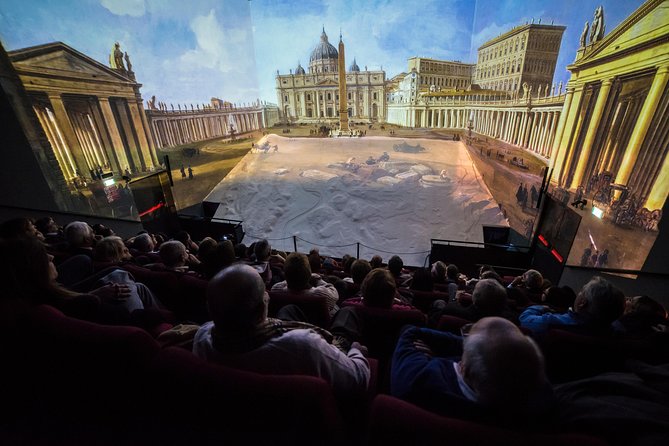
After the smaller displays, you enter an auditorium for a film of about 30 minutes. This is the part where you can sit, and it provides the clearest single narrative of the city.
The film uses graphics and visual effects to show how Rome developed. It also presents reconstructions of monuments before they became ruins. That visual contrast is valuable because many of Rome’s famous sites are difficult to interpret from their surviving fragments alone.
The film is also where the experience feels most like a lesson. Some people will appreciate the steady explanation and clear timeline. Others may find the information too basic, too detailed, or not lively enough.
You should expect a high-level account rather than a specialist treatment of ancient Rome. The presentation covers a great deal in a short time, so it cannot give equal attention to every emperor, building, battle, church, or artistic movement.
For families, the film offers a useful change of pace after the standing displays. Young children can enjoy the pictures and reconstructions, but children under about eight may struggle to stay focused through the full presentation. Older children and teenagers who like visual storytelling may get more from it.
What you will understand before visiting the ruins
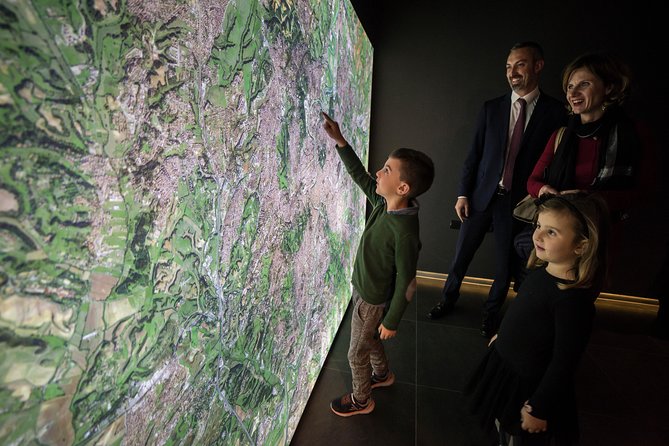
The clearest value comes later, when you walk through Rome on your own. The experience gives you reference points for several places that otherwise require a lot of imagination.
At the Colosseum, you can better picture the building as a complete arena rather than a damaged shell. At the Roman Forum, you have a rough idea of how the public center was arranged and why its surviving remains matter.
The Palatine Hill also becomes easier to read. Its ruins are spread across a large area, and the visual reconstructions help you connect walls, foundations, and fragments with the grand residences and public buildings that once occupied the hill.
You may also recognize the difference between Classical, Medieval, Renaissance, and Baroque Rome. That is one of the more useful features of the program. Rome is not only an ancient city, and this presentation helps you notice later layers when visiting churches, museums, and palaces.
I would not use this experience as a substitute for an archaeological guide at the Colosseum or Forum. Instead, use it as preparation. It gives you a framework, then your later visits supply the detail.
Same city, a completely different half-day:
- Rome: Guided Tour of Colosseum, Roman Forum & Palatine Hill
★ 4.7 · 27,897 reviews - Rome: Colosseum & Forum with Audio Guide App -Optional Arena
★ 4.2 · 24,770 reviews - Rome: Colosseum, Roman Forum and Palatine Hill Guided Tour
★ 4.5 · 23,903 reviews - Rome: City Sightseeing Hop-on Hop-off Bus with Audioguide
★ 4.0 · 16,045 reviews
A sensible location for your first day
The venue is at Corso Vittorio Emanuele II, 203, in central Rome. It is near public transportation, which makes it practical to combine with other plans in the historic center.
The convenient location matters because this is a short activity. You do not need to devote half a day to it. With multiple showings each day, you can place it before a longer sightseeing visit, during a break, or near the start of your trip.
I would schedule it early in your Rome stay. The information is most useful when you can apply it immediately at the Forum, Colosseum, Palatine Hill, or Circus Maximus.
It can also work well on arrival day if jet lag limits your energy. A one-hour indoor presentation requires less physical effort than a full walking tour, though the opening stations still require standing.
The last entry is one hour before closing, so check the day’s timing before setting out. The ticket is mobile, and confirmation is provided when you book.
Is $21.77 a fair price?
At $21.77 per person, this is not the cheapest way to spend an hour in Rome. You are paying for a purpose-built presentation with audiovisual equipment, models, a film, and a central location.
The value depends on how you like to travel. If you are already comfortable with Roman history, you may find the material too general. If this is your first visit, or if ancient ruins usually leave you puzzled, the visual explanations can save time and improve the rest of your sightseeing.
I consider it better value for a family or a first-time visitor than for someone who has already taken several history tours. The experience is concise, and that limits the risk of giving up a large part of your day to something that may not suit you.
There is also a small convenience benefit in buying ahead. Pre-purchased admission means you have a planned place in a scheduled showing, rather than treating the activity as a last-minute gamble.
Still, keep expectations in line with the price. This is a compact multimedia orientation, not a museum packed with original artifacts and not a guided tour through ancient monuments.
Where the experience can disappoint
The presentation has clear strengths, but the format will not suit everyone. You move between small rooms, listen to an audio presentation, and then watch a film. If you prefer active sightseeing, this can feel passive.
Some people may also find the first section too dense. The program tries to cover Rome’s origins, major periods, architecture, and famous monuments in a short span. That broad reach can make the material feel rushed or overly detailed, depending on your interest.
The ancient Roman section may seem too brief if that is your main reason for booking. The experience also gives time to medieval, Renaissance, and Baroque Rome, so it is not focused only on emperors, gladiators, and the Forum.
Conditions inside may vary. Reports include an empty or cold feel, worn auditorium seats, and poorly maintained restrooms. These problems are not part of the intended content, but they are worth keeping in mind if you expect a polished museum setting.
The displays do not appear to offer much seating. If you have mobility concerns or simply want to rest after a long day, ask staff for help and plan your timing carefully. Service animals are allowed, and most people can participate.
Who will get the most from Welcome to Rome?
I would recommend it most strongly to:
- First-time visitors who want a quick orientation
- Families with school-age children who respond to models and film
- People planning to visit the Colosseum, Forum, Palatine Hill, or Circus Maximus
- Anyone who enjoys learning the basic timeline before seeing historic sites
- Visitors with limited time who want a central, one-hour activity
- People who find ruins difficult to visualize
I would be more cautious if you have already studied Rome extensively or want a deep focus on ancient history. You may prefer to put the money toward a longer archaeological tour or a museum ticket.
For children, age and patience matter. The graphics can hold attention, but the audio explanations and historical sequence may be tiring for very young children. Older children often benefit from seeing how the city changed instead of hearing only dates.
My practical plan for using it well
Book Welcome to Rome near the beginning of your trip, ideally before your first major visit to the ancient center. Follow it with the Colosseum and Roman Forum while the visual references are still fresh.
Use the program as a question generator. When you later see a ruined arch, temple, or basilica, ask what period it belongs to and how it fits into the city’s growth. That approach makes the one-hour presentation more useful than simply watching it and moving on.
Arrive ready for a mixture of standing and sitting. The auditorium provides the main seated portion, while the smaller displays require movement between stations.
Bring patience for a broad overview. The program cannot explain every building in depth, but it can give you the basic structure needed to make sense of a city that spans several thousand years.
Should you book Welcome to Rome?
Book it if you want a short, visual introduction before tackling Rome’s major ruins. The strongest reasons are the reconstructed buildings, clear timeline, central location, and useful connection to the Forum, Palatine Hill, and Colosseum.
Skip it if you already know Rome well, dislike auditorium-style presentations, or want a detailed ancient-history lesson. At $21.77, it is a reasonable orientation for a first visit, but it is not essential sightseeing.
For most first-time visitors, I would place it on the first or second day, when the city still feels confusing and the context can do the most good.
FAQ
How long does Welcome to Rome take?
The experience lasts approximately one hour.
What does the ticket include?
The ticket includes admission to the Welcome to Rome multimedia show, including the audiovisual displays and film.
Where is Welcome to Rome located?
It is located at Corso Vittorio Emanuele II, 203, 00186 Rome, Italy.
Is the experience offered in English?
Yes. The experience is offered in English, and the audiovisual presentation uses an audio device.
What does the experience cover?
It covers the history and development of Rome, beginning with a geological explanation of the city’s early setting and continuing through Classical, Medieval, Renaissance, and Baroque periods.
Is there a film?
Yes. The experience includes a film in an auditorium. The film lasts approximately 30 minutes.
Are there 3-D displays or reconstructions?
Yes. The experience uses 3-D visual displays, models, projections, and reconstructions of buildings and monuments.
Is Welcome to Rome suitable for children?
Most travelers can participate, and children can enjoy the visual and interactive elements. Very young children may have difficulty staying engaged with the historical presentation.
Are service animals allowed?
Yes. Service animals are allowed.
Can I cancel for a refund?
You can cancel for a full refund if you cancel at least 24 hours before the experience start time. Cancellations or changes made less than 24 hours before the start time are not accepted for a refund.
Newest Rome tours we have reviewed
- Private TikTok Video Making in Rome★ 5.0 · 7 reviews
- Assisi, Orvieto and Civita di Bagnoregio Full Day Tour from Rome★ 4.5 · 45 reviews
- Assisi & Saint Francis Path Tour from Rome★ 5.0 · 45 reviews
- Assisi and Cascia Private Day Tour from Rome with Lunch★ 5.0 · 10 reviews
- Art Class in the center of Rome!★ 4.0 · 4 reviews
- Art & Craft: Beer Tour with Street Art in Rome★ 4.5 · 6 reviews
- Arrival in Rome: Airport Transfer & Exclusive City Introduction★ 5.0 · 3 reviews
- From Rome: Private Day-Tour of Tuscany★ 5.0 · 16 reviews