
Reviewed · ROME CITY HIGHLIGHTS TOURS
Rome: Best of Rome Three Days Private Chauffeured Tour
Rome’s ancient center is spread across a wide area, and this three-day private tour solves one big problem: getting between major sights without wasting your holiday on confusing buses, taxis, and long ticket lines. You move from Baroque piazzas to papal galleries, then from underground catacombs to the Colosseum and imperial bath ruins.
I especially like the combination of private guiding and chauffeured transfers, plus the less routine stops at the Appian Way and Baths of Caracalla. The main tradeoff is pace. Three full days packed with major monuments can feel demanding, and lunch is not included, so you will need to plan breaks carefully.
Key points to know before booking
- The Vatican visit includes the Gallery of Maps, Tapestry Gallery, and Sistine Chapel, with skip-the-ticket-line entry.
- The Colosseum, Palatine Hill, and Roman Forum receive a private guided visit after a panoramic transfer.
- The Appian Way catacombs offer a quieter side of Rome, though the underground tour itself lasts about 45 minutes.
- Castel Sant’Angelo gives you one of the best high views in the program, including its rooftop terrace.
- The Baths of Caracalla add a strong archaeological stop that many first-time Rome itineraries leave out.
- Drivers and guides are assigned privately, with staff names including Stefano and Giorgio appearing in recent booking feedback.
What this three-day Rome tour does well
This is not a single long walking tour. It is a private sightseeing program built around a car and several specialist guides. That matters in Rome, where the Vatican, Colosseum, Appian Way, Castel Sant’Angelo, and Baths of Caracalla are not all close together.
Your driver collects you at your hotel, then helps you move between parts of the city that would otherwise take time and planning. The program also uses separate guides for several major sites, so you are not left trying to make sense of immense museums and archaeological ruins with a map and a few labels.
The strongest point is the mix of famous and less predictable sights. The Vatican and Colosseum are essential for a first visit, but the catacombs and Baths of Caracalla give you a better sense of Rome beyond its busiest monuments. Castel Sant’Angelo adds another layer, showing how one building changed from imperial tomb to papal refuge, prison, fortress, and museum.
The schedule is full. Day one includes central Rome and the Vatican. Day two combines the catacombs with the Colosseum and Forum. Day three focuses on Castel Sant’Angelo and the Baths of Caracalla. You will spend substantial time walking and standing, even though the car handles the longer transfers.
The exact starting times are not given in advance here. You are told to check your email and phone a few days before the tour for the final itinerary. That flexibility can help when opening times or local conditions shift, but it means you should not build tightly timed evening plans around the preliminary schedule.
More city highlights tours in Rome:
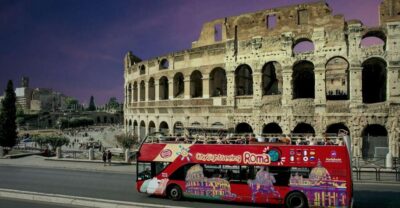
- Rome: Big Bus Hop-on, Hop-off Open-Top Sightseeing Tour
★ 3.5 · 2,580 reviews - Rome in a Day Group Tour with Vatican Museums and Colosseum
★ 4.5 · 2,450 reviews - Rome Highlights by Golf Cart Private Tour
★ 5.0 · 2,379 reviews
Day one: Baroque Rome before the Vatican Museums
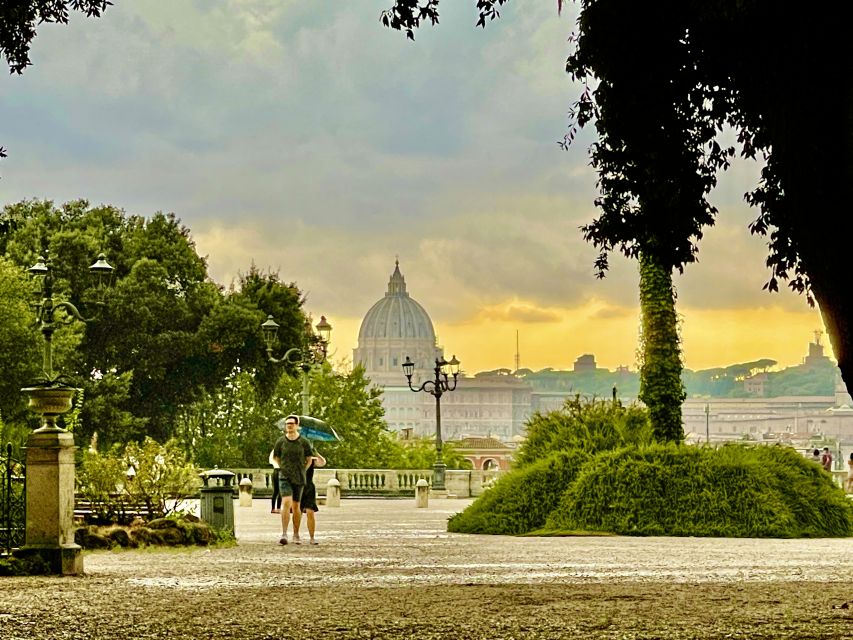
The first day begins with hotel pickup and a drive through some of central Rome’s best-known places. The route includes the Spanish Steps, Piazza Navona, Piazza di Santa Maria della Pace, the Trevi Fountain, the Tiber River, the Pantheon, Hadrian’s Mausoleum, and Ponte Sant’Angelo.
This opening section works as a broad orientation to Rome. You see how ancient buildings, papal monuments, Baroque fountains, and ordinary city streets sit beside one another. The stop at the Pantheon is especially useful because it connects Roman engineering with the later Christian and Baroque city around it.
The Spanish Steps and Trevi Fountain are famous, but they are also places where crowds can make a short visit feel rushed. Having a private driver helps you cover them without organizing separate transport, though you should still expect busy public spaces and limited time at each stop.
Piazza Navona gives you a different view of Rome’s grand public spaces. The square follows the shape of an ancient stadium, while its fountains and church create the Baroque setting people associate with central Rome. Piazza di Santa Maria della Pace is a smaller and quieter counterpoint.
At the Tiber, you get a sense of how the river shaped Rome’s growth. The route then leads toward Hadrian’s Mausoleum, now known as Castel Sant’Angelo, and across Ponte Sant’Angelo. The bridge provides one of the most attractive approaches to the fortress, with sculptural details and a strong view toward the building.
A one-hour lunch break follows. Lunch is not included, so you pay for your own meal. I would treat this as a useful pause rather than trying to squeeze in another attraction. The day already has plenty of visual information before the Vatican visit begins.
The Vatican Museums and Sistine Chapel
The afternoon focuses on the Vatican Museums, with skip-the-ticket-line access and private guiding. The route includes the Gallery of Maps, Tapestry Gallery, Vatican Gardens views, and Sistine Chapel.
The Vatican is not a small museum visit. It is a huge collection assembled by generations of popes, and the main value of a private guide is helping you understand what deserves your attention. Instead of drifting from room to room, you can ask questions and get a clearer thread through the art and architecture.
The Gallery of Maps is one of the most memorable sections named in the program. Its long corridor is lined with detailed maps of Italy, and it gives you a striking change of scale after the smaller rooms and artworks. The Tapestry Gallery adds another set of large works with different textures and visual effects.
The Sistine Chapel is the emotional peak for many people. Michelangelo’s ceiling and Last Judgment are the main draw, but the setting also carries religious importance. You must follow the chapel’s rules, and the experience can be affected by crowds and official closures.
The Basilica may sometimes close without notice, and religious ceremonies, papal audiences, beatifications, or masses can prevent a visit. The supplied program specifically warns that the Basilica and Sistine Chapel can be affected by such events. Do not book this tour on the assumption that every listed interior will be guaranteed under every condition.
Dress carefully. Shorts, short skirts, and sleeveless shirts are not allowed. You also need a valid passport or ID card at the museum and archaeological areas. Comfortable shoes are more important than fashionable ones, since this day combines city walking with long museum corridors.
Day two: Catacombs and the Appian Way
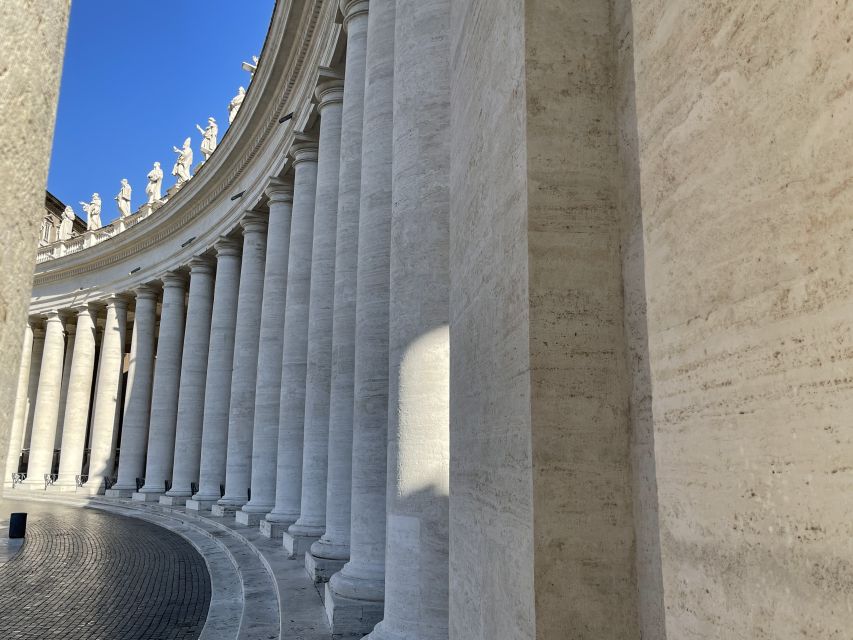
The second day begins with a visit to the catacombs along the historic Appian Way. These underground burial tunnels were used by early Christians during periods of Roman persecution. The wider network is described as extending for about 93 miles, or 150 kilometers, though your guided underground visit lasts around 45 minutes.
This stop changes the mood of the tour. The Vatican and Colosseum are grand public monuments. The catacombs are more enclosed, subdued, and personal. You are seeing burial spaces rather than temples, arenas, or palace remains.
The visit is relatively short, so you should not expect to spend half a day underground. Its value comes from contrast and context. It shows how early Christian communities handled death and worship outside the monumental center of imperial Rome.
After the catacombs, a short panoramic drive takes you toward the Colosseum. This is one of the places where private transport earns its keep. You do not have to work out a connection between a suburban archaeological site and the center of ancient Rome while carrying the day’s gear.
The Appian Way portion is described as semi-private, while the other major visits are private. That distinction may matter if you want complete exclusivity at every stop. The main sightseeing sections, however, are presented as private guided visits.
More three-day trips from Rome:
- 3 Days in Sorrento, Capri & Pompeii: la Dolce Vita
★ 4.0 · 595 reviews - Amalfi & Pompeii: 3-Day Adventure from Rome
★ 3.5 · 30 reviews - From Rome: 3-Day Tour to Pompeii, Sorrento & Capri
★ 4.1 · 17 reviews
Entering the Colosseum and Roman Forum
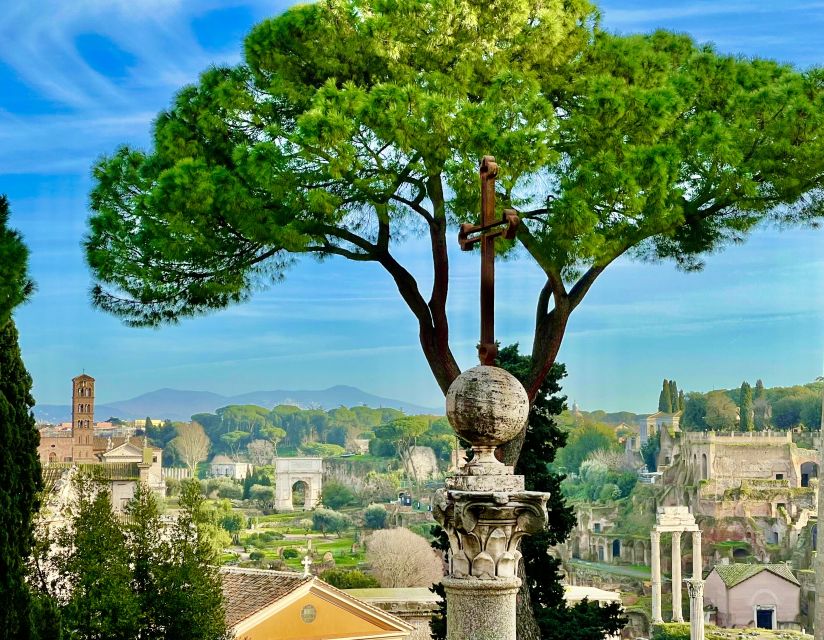
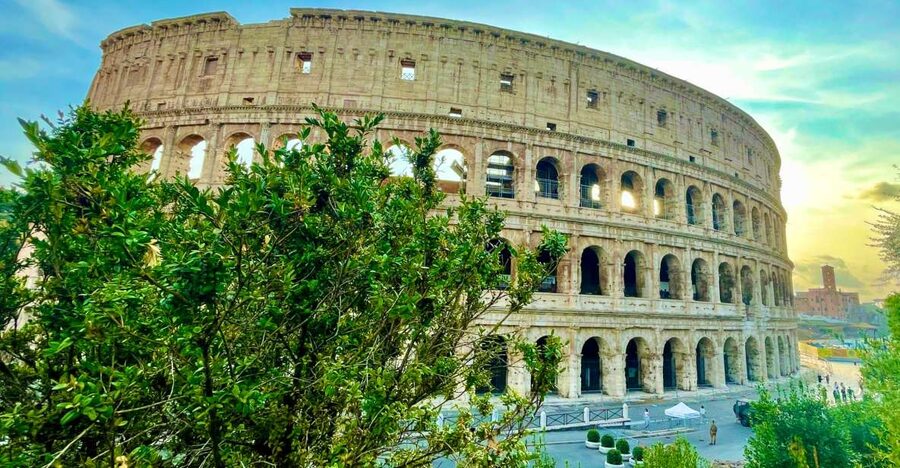
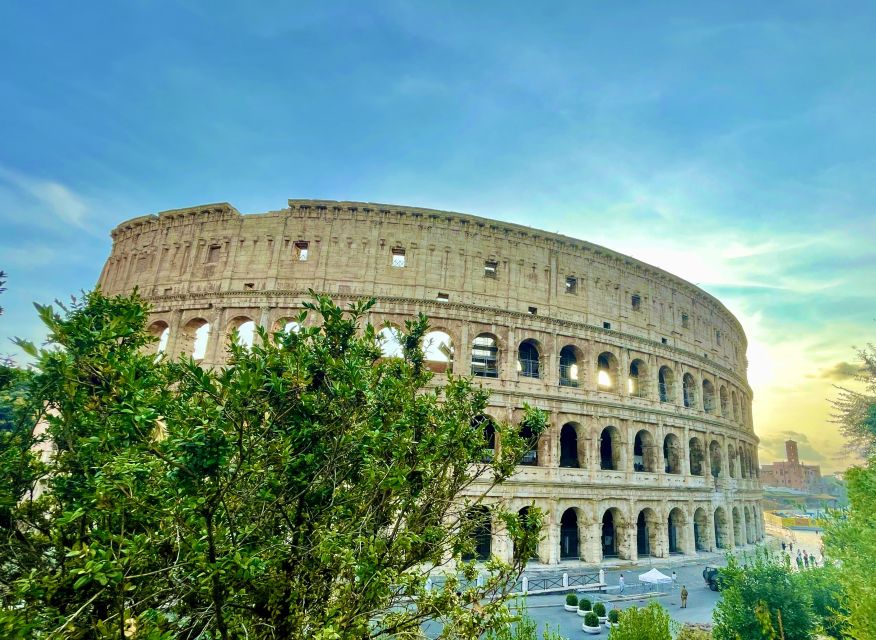
After a lunch break of about one and a half hours, you visit the Colosseum with skip-the-line entry and a private guide. Lunch is again your responsibility, and the longer break gives you time to eat before the most physically demanding archaeological section of the day.
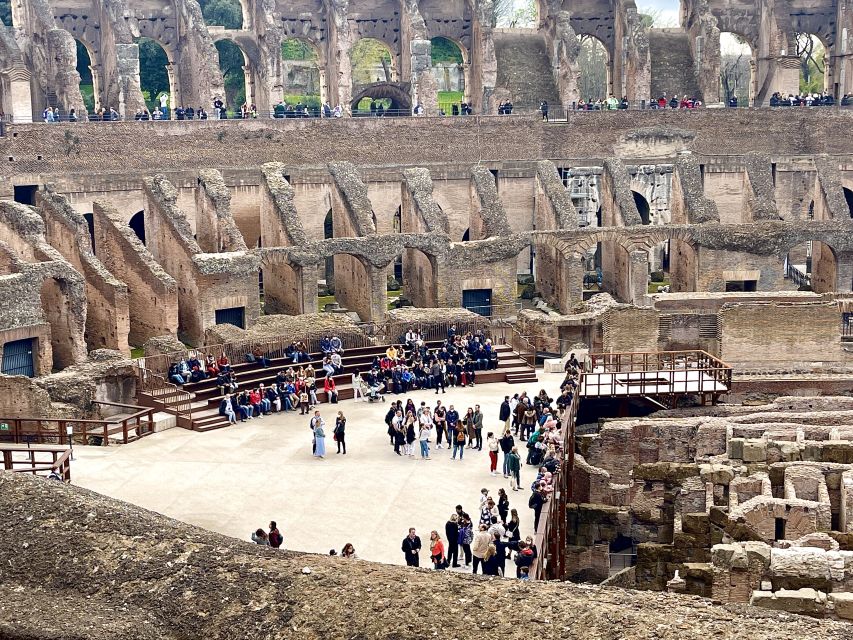
The Colosseum is often reduced to gladiators and dramatic stories, but the tour also covers Roman construction methods. That is a worthwhile focus. The building’s scale becomes easier to appreciate when you understand how its structure, entrances, seating, and crowd movement worked.
You will hear about gladiator training and the use of exotic animals in public spectacles. These details explain how the arena functioned as entertainment, political messaging, and crowd control. The building was not simply a place for fights. It was a carefully organized machine for managing a huge audience.
From the Colosseum, the program continues to Palatine Hill and the Roman Forum. Palatine Hill was associated with Roman emperors, and its height helps explain why this area became such a powerful seat of authority.
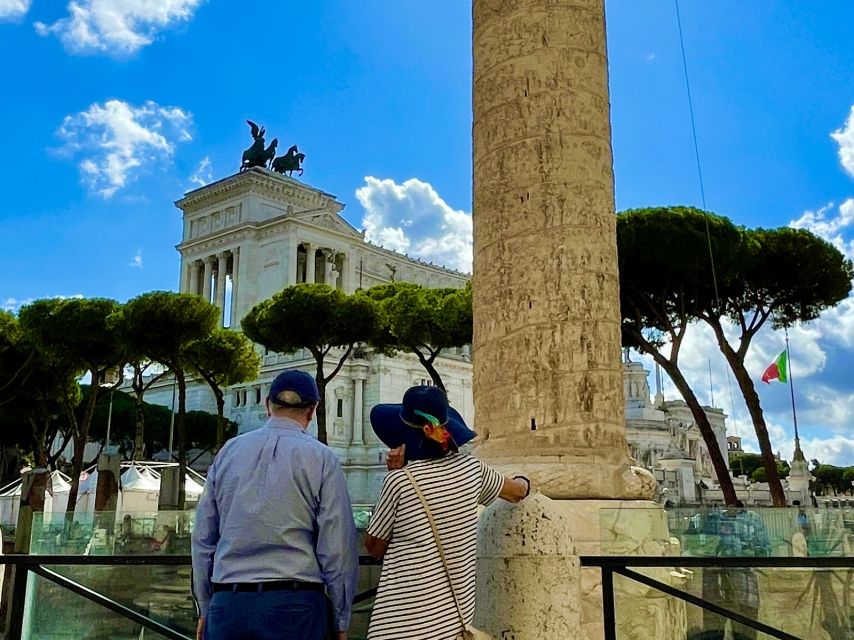
The Forum can be difficult to read without guidance. Broken columns and scattered stones do not always reveal whether you are looking at a senate building, temple, basilica, or triumphal monument. The guide points out the old Senate House, Temple of Vesta, and the arches of Constantine, Titus, and Septimius Severus.
Expect uneven ground, exposed areas, and a lot of walking. You should wear sturdy, comfortable shoes and bring water. Large bags and luggage are not allowed, so arrive with only what you need for the visit.
This is a demanding but rewarding afternoon. The Colosseum gives you one complete monument, while the Forum and Palatine Hill require more imagination. The private guide is most useful here, since the ruins make more sense when someone explains how the political, religious, and commercial center once fitted together.
Day three: Castel Sant’Angelo and its rooftop view
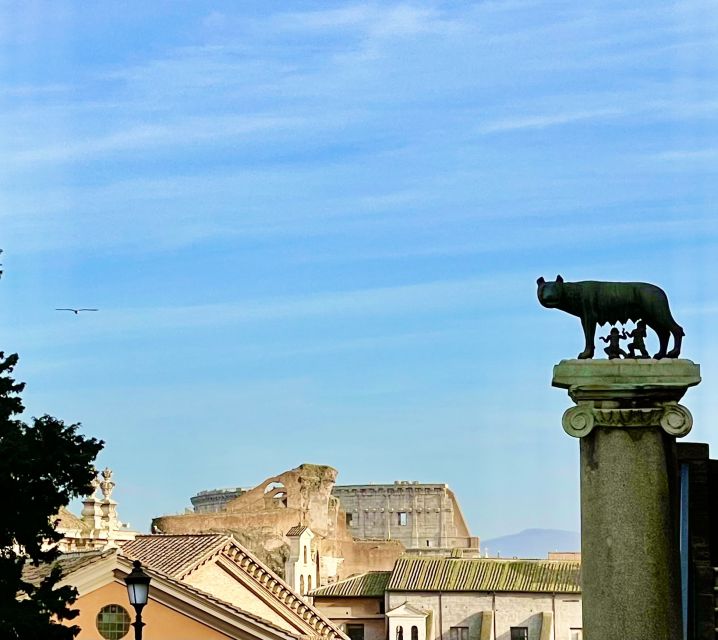
The third day begins with a two-hour private tour of Castel Sant’Angelo. The building began as Emperor Hadrian’s mausoleum, then changed roles over time as a papal residence, fortress, prison, execution site, and museum.
That long sequence of uses makes Castel Sant’Angelo one of Rome’s most layered sights. You are not just visiting a single period. You are following how later rulers adapted an existing imperial structure for protection, ceremony, imprisonment, and religious power.
The private guide helps connect the architecture to those changing roles. You can expect to see interior spaces and artworks, then climb toward the rooftop terrace for wide views across Rome. The terrace is a major reason to include this stop. It provides a different perspective from street level and creates one of the best photo opportunities in the three-day program.
The building’s position beside the Tiber and near Ponte Sant’Angelo also ties back to day one. Seeing the fortress from the bridge and then exploring it from inside gives the area more meaning than a quick exterior photograph.
A two-hour visit may feel long if you are mainly interested in the view. If you enjoy military buildings, papal Rome, and changing layers of architecture, the time is better justified. The tour is private, so you have more room to ask about the sections that interest you most.
Baths of Caracalla: Rome’s grand public bathing complex
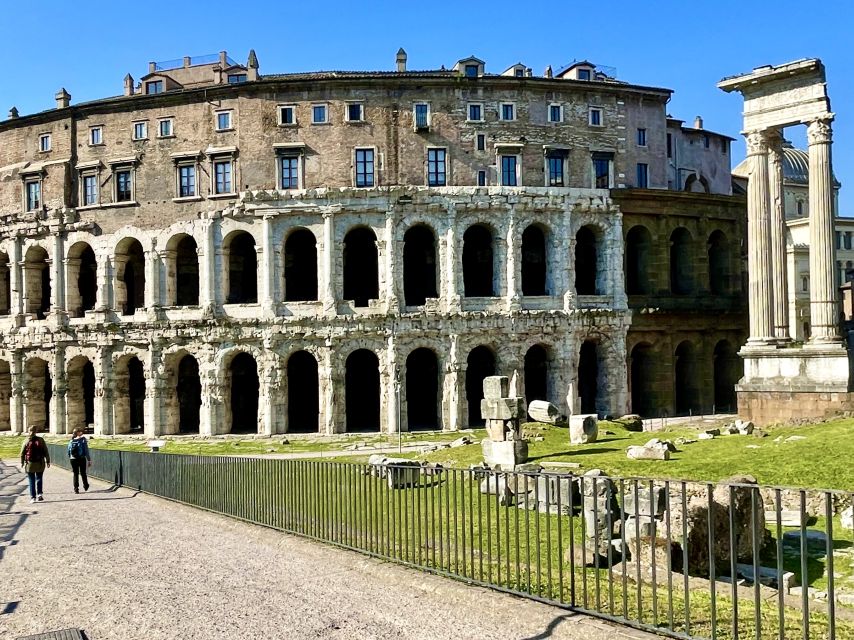
After a lunch break of about one and a half hours, the driver takes you to the Baths of Caracalla. A private guide leads a two-hour visit through the second-largest public baths of ancient Rome.
The baths show a side of Roman life that the Colosseum does not. This was a major public complex built for washing, exercise, socializing, and leisure. The remains are impressive because the rooms were built on such a large scale, with huge vaulted spaces, porticoes, and broad interior halls.
You will see sections of the ancient heating system and fragments of mosaic floors. Those details help you understand that the baths were not just open courtyards with pools. They relied on complex engineering, decorated surfaces, and carefully planned rooms.
The Baths of Caracalla are also a sensible final stop because they are less immediately familiar than the Colosseum. You can spend time looking at architecture rather than moving through the most famous photo points in the city. The two-hour private visit gives the guide room to explain how the complex operated.
As with the Forum and Palatine Hill, much of the site is open and exposed. Weather can affect the schedule. The operator warns that rain, ice, or high temperatures may lead to changes, along with other events outside its control.
Private transport and the value of time
The private chauffeur is the practical backbone of this program. Rome’s major sights are not arranged in a simple line, and the Appian Way adds a further distance from the usual historic-center circuit.
A driver also reduces the mental load of a busy sightseeing plan. You do not need to arrange a taxi from the catacombs to the Colosseum or work out how to reach the Baths of Caracalla after lunch. That convenience is especially useful for families, older visitors, and anyone with only a short stay.
The tradeoff is that private transport does not make the days easy. You still walk through the Vatican, archaeological areas, Castel Sant’Angelo, and baths. The car saves transfer time, not physical effort.
The people named in connection with the service include Stefano as a professional driver and Giorgio as a guide. The tour does not promise that either person will be assigned to your booking, but their names give you an idea of the personal service the company aims to provide. Guide languages include English, German, French, Spanish, Russian, Italian, and Portuguese.
Who should book this tour
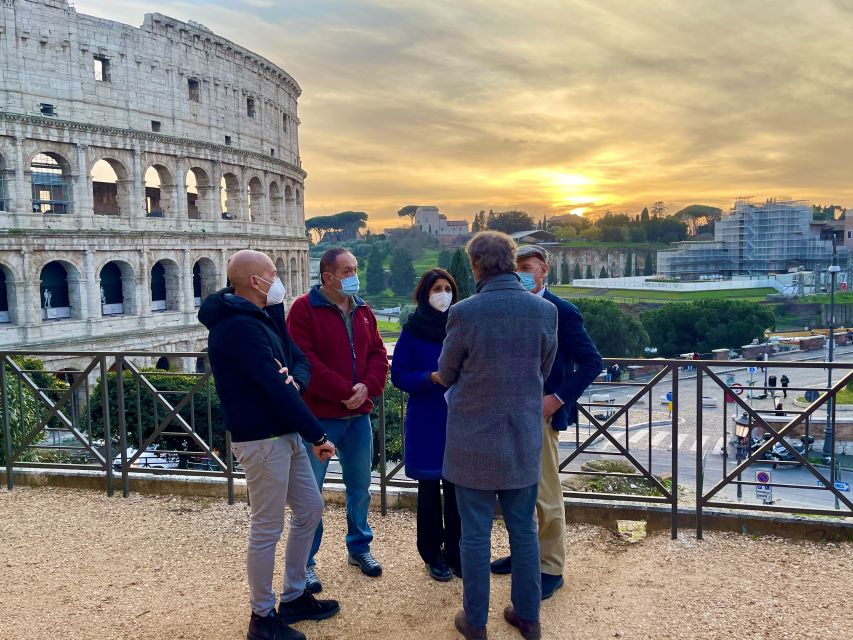
I would recommend this experience to a first-time Rome visitor who wants the major sights handled in one organized plan. It also suits anyone who values time and personal explanation more than the lowest possible price.
It is a strong fit if you want:
- A private group rather than a large coach tour
- Hotel pickup and city transfers by chauffeur
- Guides at the Vatican, Colosseum, Castel Sant’Angelo, and Baths of Caracalla
- A mix of famous landmarks and quieter archaeological sites
- Help with ticket lines and complicated sightseeing logistics
I would think twice if you prefer slow mornings, long restaurant stops, or the freedom to change plans every few hours. The schedule is set around several major visits, and the final itinerary may change because of weather, ceremonies, queues, or other local conditions.
No price is provided here, so I cannot judge the exact deal without seeing the current rate and group size. The value comes from combining transport, skip-the-line access, and several private guides. Compare the total against buying separate tickets, guides, and taxis, rather than comparing it only with a basic Rome sightseeing pass.
Practical advice for a smoother three days
Wear comfortable shoes each day. The itinerary includes museum corridors, bridges, uneven archaeological ground, stairs, and open-air ruins.
Carry a valid passport or ID card. Identification is required at the museum and archaeological areas, and the tour specifically asks you to bring one.
Pack light. Large bags and luggage are not allowed, and you do not want to spend a full day managing unnecessary belongings.
Bring a change of clothes, as requested in the tour information. You should also dress modestly for the Vatican, avoiding shorts, short skirts, and sleeveless shirts.
Check your email and phone a few days before departure. The final itinerary and starting information are sent close to the tour date, and local conditions may lead to changes.
The cancellation terms allow cancellation up to four days in advance for a 50 percent refund. That is not especially generous, so keep your Rome schedule stable before committing.
Should you book the Best of Rome Three Days tour?
Book it if you want Rome’s major sights explained properly and connected by private transport. The best feature is not one single monument. It is the way the program links the Vatican, ancient Rome, underground Christian burial sites, a former imperial tomb, and a vast public bath complex.
The main caution is energy. You will cover a lot in three days, and the experience is better for someone who wants substance and efficiency than for someone seeking a relaxed city break. If that sounds like your style, this is a well-planned way to get beyond Rome’s postcard views while still seeing the essentials.
FAQ
How long does the experience last?
The tour lasts three days. Starting times are confirmed through the final itinerary sent a few days before the tour date.
Is this a private tour?
Yes. The group type is private, although the Appian Way and catacombs portion is described as semi-private.
Which languages are available?
Guiding is available in English, German, French, Spanish, Russian, Italian, and Portuguese.
Does the tour include skip-the-line entry?
Yes. Skip-the-ticket-line entry is included for the Vatican Museums and Sistine Chapel, as well as the Colosseum and Roman Forum private tour. Castel Sant’Angelo also includes queue bypassing.
Is lunch included?
No. The itinerary includes a one-hour lunch break on day one and approximately one and a half hours on days two and three, but meals are not included.
Can I visit St. Peter’s Basilica?
The Basilica may be included when open, but it can close without notice for religious holidays, papal audiences, beatifications, masses, or other ceremonies. The Basilica and Sistine Chapel are not guaranteed to be accessible in every circumstance.
What should I bring and wear?
Bring a valid passport or ID card, comfortable shoes, and a change of clothes. Shorts, short skirts, sleeveless shirts, luggage, and large bags are not allowed.
Newest Rome tours we have reviewed
- Private TikTok Video Making in Rome★ 5.0 · 7 reviews
- Assisi, Orvieto and Civita di Bagnoregio Full Day Tour from Rome★ 4.5 · 45 reviews
- Assisi & Saint Francis Path Tour from Rome★ 5.0 · 45 reviews
- Assisi and Cascia Private Day Tour from Rome with Lunch★ 5.0 · 10 reviews
- Art Class in the center of Rome!★ 4.0 · 4 reviews
- Art & Craft: Beer Tour with Street Art in Rome★ 4.5 · 6 reviews
- Arrival in Rome: Airport Transfer & Exclusive City Introduction★ 5.0 · 3 reviews
- From Rome: Private Day-Tour of Tuscany★ 5.0 · 16 reviews
Rome City Highlights Tours, compared.
Big Bus Hop-on, Hop-off Open-Top Sightseeing Tour
Read our review →
Rome in a Day Group Tour with Vatican Museums and Colosseum
Read our review →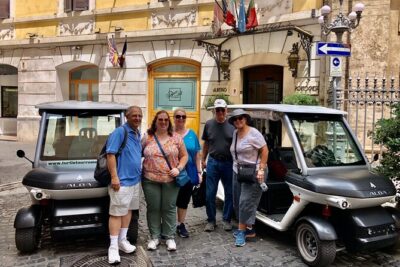
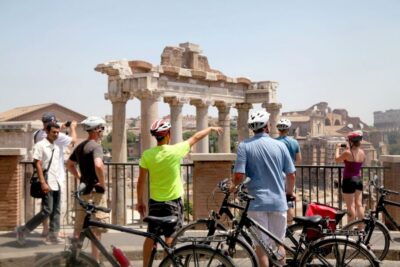
Top Highlights & Hidden Gems Tour by Cannondale E-Bike
Read our review →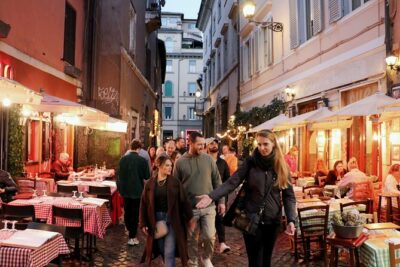
Rome Food Tour: Hidden Gems of Trastevere with Dinner & Wine
Read our review →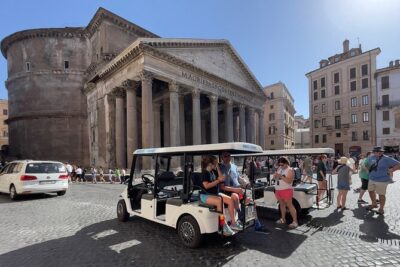
Rome Highlights City Tour by Golf Cart with Gelato
Read our review →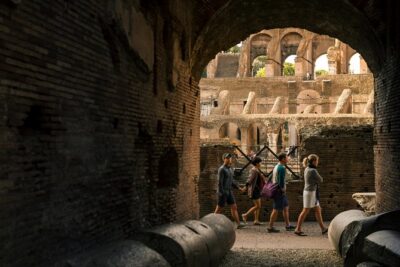
Rome in a Day Tour with Vatican, Colosseum and Historic Center
Read our review →Browse the lists this tour appears in