
Reviewed · APPIAN WAY AND AQUEDUCTS TOURS
Rome: E-Bike Tour of Appia Antica, Aqueducts, and Caffarella
Rome’s best escape from the city center may be an old Roman road. This four-hour e-bike ride moves from Circus Maximus past the Baths of Caracalla and the Aurelian Walls, then out along the Appian Way, through aqueduct country, and into the rural-looking Caffarella Valley.
I like two things here: the e-bike makes the rough ancient road and gentle hills manageable, and the route gives you Rome’s archaeology without trapping you in another museum queue. I also like the small groups, limited to eight, and the guides who have earned praise for both their Roman history and their care around traffic.
The main consideration is physical. You must already know how to ride a bicycle, and part of the route runs over uneven Appian Way stones. This is not a sightseeing bus with a few photo stops. You will pedal for much of the four hours, in rain or shine.
Key points to know before you book
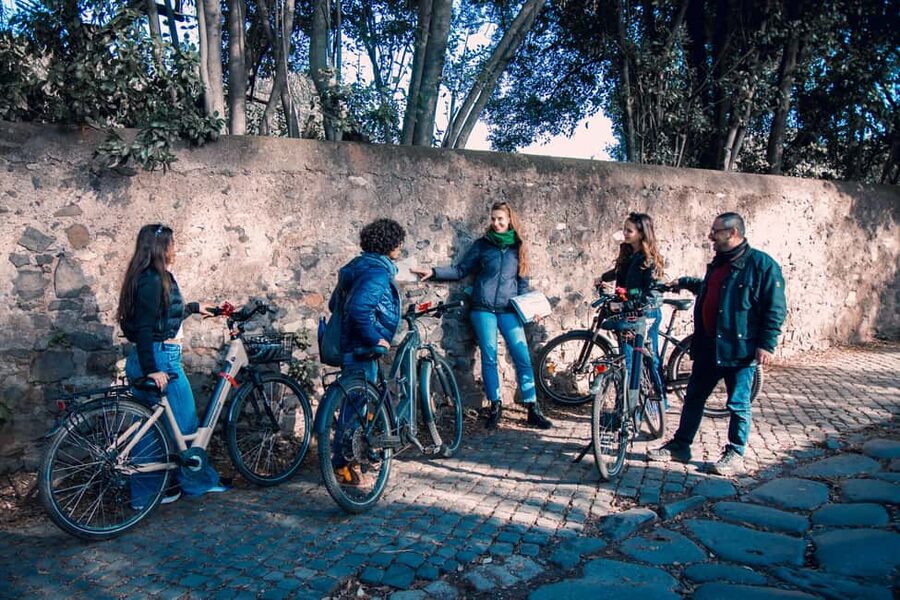
- Ancient roads under your own wheels: Ride sections of the Appian Way, begun in 312 BC, where original stones and archaeological remains give the route a real sense of place.
- A rare mix of ruins and countryside: The Aqueducts Park and Caffarella Valley bring open fields, old water channels, and farm animals within easy reach of central Rome.
- Helpful electric assistance: The bikes are well maintained, fully charged, and useful on hills, rough paving, and a long half-day route.
- Guides who add real context: Monica, Adriana, Frederick, Martin, and other guides have been praised for clear English, Roman history, and steady attention to safety.
- A short café pause: A 20-minute stop at a local bar breaks up the ride and gives you time for coffee or a snack.
- Small group, modest price: At $88 per person, the tour offers four hours of guiding, bike use, and access to sites that are awkward to cover on foot.
Why the Appian Way makes such a good bike route
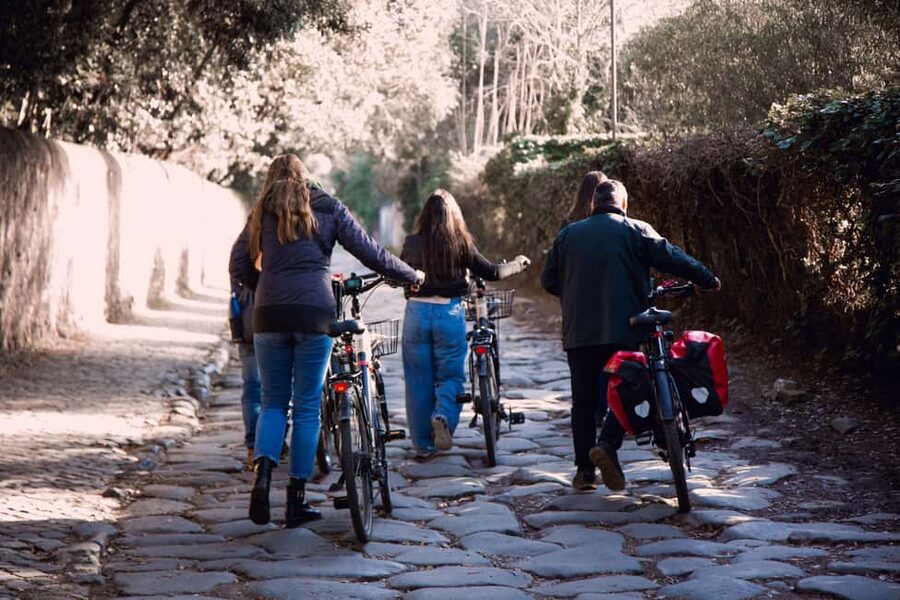
The Via Appia was Rome’s great southern road. Construction began in 312 BC under the censor Appius Claudius Caecus, and the road eventually connected Rome with Brindisi. It was built for military movement and trade, but today its appeal is slower and more personal: you pass tombs, churches, walls, fields, and fragments of the ancient world at bicycle speed.
That matters because this part of Rome is spread out. On foot, you would spend too much energy and time moving between sites. By bus, you would miss the quiet stretches and the feel of the old road. An e-bike gives you enough range to cover the route without turning the day into an endurance test.
The preservation of this area was not automatic. During Italy’s postwar building boom, expanding housing threatened the countryside around Rome. Archaeologist, urban planner, journalist, and politician Antonio Cederna fought to protect the Appian Way and its surrounding archaeological land. The route you ride exists in part because that fight succeeded.
You do not need to be a history specialist to enjoy the ride. The appeal is physical as much as academic. Ancient stones sit under your tires, umbrella pines and fields replace city traffic, and the ruins appear in a setting that still feels connected to open country.
More Appian Way and aqueduct tours:
- Rome EBike Tour: Appian Way, Catacombs & Roman Aqueducts
★ 5.0 · 1,766 reviews - Rome: Appian Way, Catacombs, & Roman Aqueducts E-bike Tour
★ 4.9 · 1,421 reviews - Rome:Appian Way E-bike Tour with Catacombs, Aqueducts & Food
★ 4.9 · 1,210 reviews
Starting at Circus Maximus and the Baths of Caracalla
The meeting point is the Rome in a Day Tours office near Circus Maximus. Arrive 15 minutes early to get familiar with the bike and complete the paperwork. That early arrival is worth taking seriously, since the ride begins with equipment checks and a short introduction to handling the e-bike.
Circus Maximus provides a grand opening. The ancient stadium once held as many as 300,000 spectators for chariot races. Today, the broad open site is easier to understand from the outside than as a surviving building, but it gives your guide a useful way to explain the scale of imperial Rome.
The next major stop is the Baths of Caracalla, where you have about 20 minutes for a photo stop. These enormous public baths also help introduce the Roman water system, which becomes a central subject later at the aqueducts. You get an early sense of how engineering, public life, and imperial display were tied together.
The opening section is not entirely free of traffic. That is important if you are bringing teenagers or anyone uneasy on city streets. Several people have praised guides such as Adriana and Monica for choosing quieter roads where possible, using crossings, and handling busy sections carefully. Still, you should expect ordinary urban cycling at the start.
Porta San Sebastiano and the road out of Rome
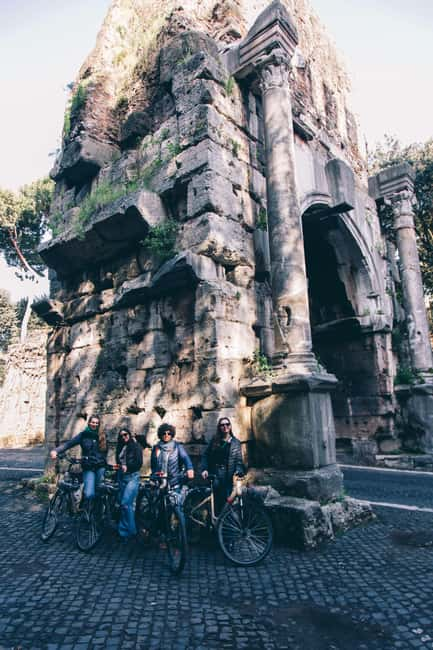
At Porta San Sebastiano, the route reaches the Aurelian Walls, Rome’s later defensive ring. The gate and fortifications help explain how the city protected itself as it grew more vulnerable to attack. This is a short stop, but it gives you a clear sense of transition: you are leaving the dense historic center and heading toward the archaeological park.
The Church of Domine Quo Vadis is scheduled for a 20-minute visit. Its name refers to the Christian story of Saint Peter meeting Christ on the road as he tried to leave Rome. The church adds a religious layer to a route already crowded with military, engineering, and funerary monuments.
You then pass the Catacombs of Saint Callistus and other catacomb areas. The catacombs are not the main focus of this ride, and the schedule indicates a pass-by rather than a full underground visit. If exploring the burial tunnels is a priority, you should plan a separate visit rather than expect an extended catacomb tour here.
That distinction is useful. This experience covers many sites from the outside, with explanations and photo pauses, but it does not offer a long interior visit at every monument. The reward is breadth and scenery rather than a detailed archaeological excavation at one location.
Villa of Maxentius, Cecilia Metella, and ancient roadside tombs
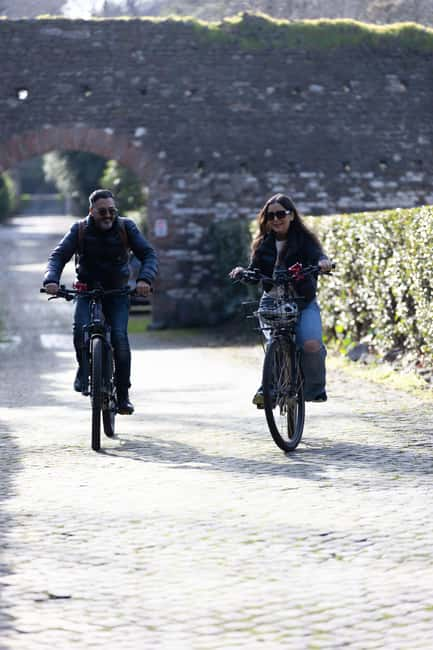
The Villa of Maxentius is another photo stop. The complex belonged to the emperor Maxentius and forms part of the remarkable concentration of remains along the first miles of the Appian Way. You will see how imperial villas and public roads occupied the same broad countryside.
The Tomb of Cecilia Metella is one of the route’s most recognizable monuments. Its large cylindrical form rises beside the ancient road and shows how wealthy Romans marked important family burials. It is also one of the clearest reminders that the Appian Way was lined not only with traffic but with memorials meant to be seen.
The route also passes the Tumulus of the Curiazi and Villa dei Quintili, both part of the same archaeological corridor. Your guide explains the sites as you go, so the ride keeps moving rather than becoming a series of long lectures. Guides named Monica, Adriana, Frederick, and Martin have been singled out for making the history clear and answering questions without rushing the group.
Expect rough going here. The old paving stones can be uneven, and even with motor assistance you need to watch your line and keep control. That is part of the attraction, but it also explains the requirements for closed-toe shoes, comfortable clothing, and clothes that can get dirty.
More e-bike tours in Rome:
- Rome: Top Highlights & Hidden Gems Tour by Cannondale E-Bike
★ 4.9 · 1,760 reviews - Rome City Small Group Bike Tour with quality Cannondale EBike
★ 5.0 · 1,380 reviews - Rome by Night – Ebike Small Group Tour – Food and Wine (Option)
★ 5.0 · 1,275 reviews - Rome: E-Bike Night Tour with Food and Wine Tasting
★ 4.9 · 1,131 reviews
The 20-minute bar stop
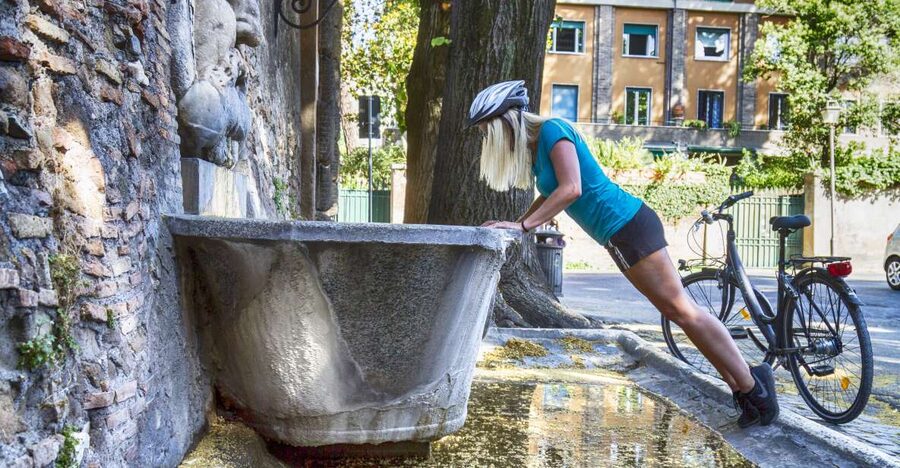
A local bar break comes about halfway through the route and lasts roughly 20 minutes. It is a practical pause, not a formal food experience. You can use it for coffee, a snack, water, and a reset before the longer ride through the parks.
This small detail improves the rhythm of the day. Four hours on a bicycle can feel long if every minute is spent moving. The break also gives you a chance to check your comfort, adjust your clothing, and ask the guide about the next section.
Bring what you need for changing weather. The tour runs rain or shine, and the route includes exposed stretches. The supplied information does not promise a rain cancellation, so dress for the forecast and accept that the conditions may affect your enjoyment.
Aqueducts Park and Rome’s great water system
Parco degli Acquedotti is the visual high point for many people. Here, the remains of ancient aqueducts cross open ground in long, striking lines. These structures carried water into Rome from distant sources, supporting baths, fountains, homes, and public buildings.
The scheduled visit lasts about 30 minutes, enough for a proper look and explanation without stopping the ride for too long. This is where the earlier introduction at the Baths of Caracalla pays off. You can connect the baths, the city’s public life, and the immense water network that made them possible.
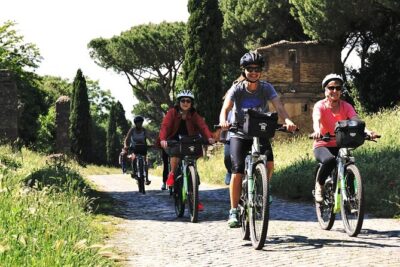
An e-bike works especially well in this park. You cover more ground than you could on foot, yet you remain close to the grass, ruins, and sky. The route feels less like ticking off attractions and more like moving through a large archaeological area.
The open setting also offers a welcome change from Rome’s dense center. You may encounter uneven paths and dirt, so this is not a polished cycle lane from start to finish. That is why the combination of a sturdy bike and a guide matters. Several riders specifically praised the bikes as premium quality, fully charged, and well maintained.
Caffarella Valley and the Nymphaeum of Egeria
From the aqueducts, the ride follows the Almone River toward Caffarella Valley. This section is a strong reason to choose the tour instead of a standard city sightseeing circuit. The valley can feel surprisingly rural, with horses, sheep, goats, and pigs close to Rome’s urban core.
You will visit Caffarella Park for about 30 minutes. The change in pace is noticeable. After the monuments and road engineering of the Appian Way, the park offers fields, water, animals, and a quieter setting. It gives you a better sense of the countryside that once surrounded Rome and still survives inside the modern city.
The Nymphaeum of Egeria is another highlight. It is generally associated with the villa of Herodes Atticus and adds a graceful, water-related feature to the park section. Your guide can place it within the broader Roman habit of building villas, gardens, and scenic water spaces outside the city center.
This is also where the ride can feel most like cross-country cycling. If you are comfortable on a bicycle but rarely ride on unpaved or uneven paths, you should expect a little effort. The e-bike helps, but it does not steer or balance for you.
The guides and the small-group advantage
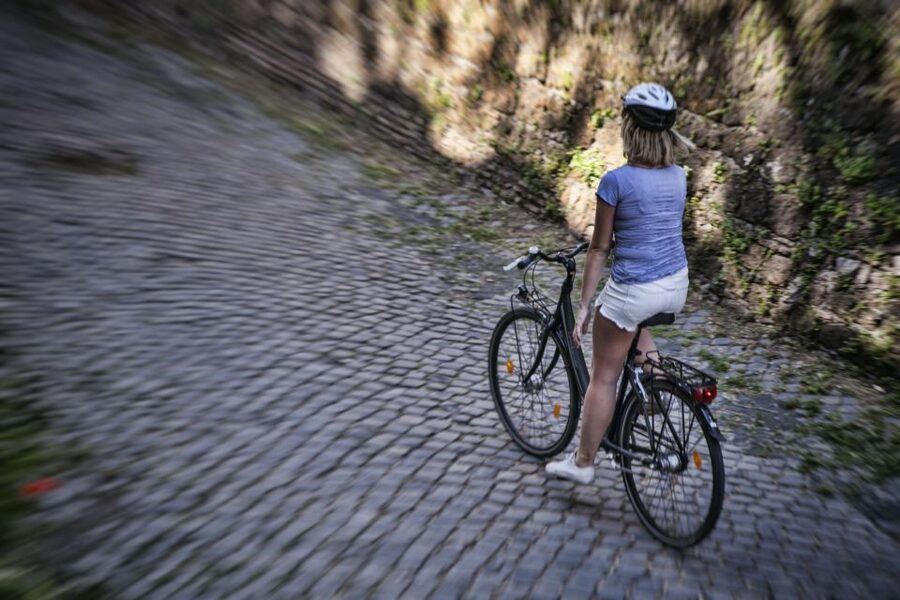
The experience is limited to eight people, with live guiding in English or Dutch. A small group matters on a route with traffic crossings, rough surfaces, and many places to stop. It is easier for the guide to keep everyone together and respond when someone needs a slower pace or a bike adjustment.
The strongest praise has gone to the guides’ subject knowledge and personal manner. Monica is described as especially strong on Roman history and safety, while Adriana has been praised for extending the route when a family group moved quickly. Frederick, Martin, and Alannah have also been noted for clear explanations and a friendly approach.
Guide quality can vary from one departure to another, so you should not book solely on the hope of getting a particular person. Still, the repeated pattern is encouraging: the guides explain a large number of monuments, keep an eye on road conditions, and make time for questions.
The starting point helps too. You do not begin in one of Rome’s most intimidating traffic zones. The route still includes city roads, but the ride gradually moves toward quieter stretches. That makes this a more comfortable choice for competent cyclists who are not used to heavy Roman traffic.
Is $88 a fair price?
At $88 per person, this is not the cheapest way to see the Appian Way. You are paying for a quality e-bike, a four-hour guided route, small-group attention, and a carefully connected trip through several areas that are difficult to combine independently.
The value improves if you want explanation rather than simply a rental. Renting a bicycle would give you freedom, but you would need to plan the route, understand the archaeological sites, deal with city traffic, and find your way between the Appian Way, aqueducts, and Caffarella Valley. Here, those pieces are joined into one half-day outing.
It is also a good use of time if you have already spent days in central Rome. The route gives your feet a break from cobbled streets and queues while still delivering major ancient sights. I would consider it especially worthwhile for repeat visitors, active families with older children, and anyone who wants Roman archaeology in an outdoor setting.
Children under 12 cannot join, and pregnant people, those with mobility impairments, and anyone unable to ride a bicycle should choose another activity. Riders aged 12 and older need the confidence to handle a bike, including on bumpy surfaces and near traffic.
Should you book the Appian Way e-bike tour?
Book it if you want ancient Rome with open space, enjoy cycling, and like having a guide connect the monuments into one story. It is particularly useful after several days of indoor sights and crowded central streets.
Skip it if you want long interior visits, a completely flat and traffic-free ride, or a relaxed vehicle tour. The old paving can be bumpy, the weather is not a reason for automatic cancellation, and you need basic cycling skill.
For the right rider, this is one of the better ways to see the outer Roman world. You get the Appian Way, the aqueducts, and Caffarella Valley in a single morning or afternoon, with enough assistance to make the distance realistic and enough rough road to keep the experience genuine.
FAQ
How long does the e-bike tour last?
The tour lasts four hours, including sightseeing stops and a break at a local bar.
Where does the tour begin?
It begins at Rome in a Day Tours, Electric Bike and Vespa Excursions, located near Circus Maximus.
How early should I arrive?
Arrive 15 minutes before the scheduled start so you can learn about the bike and complete the required paperwork.
What languages are available?
The live tour guide is available in English or Dutch.
How many people are in each group?
The tour is limited to eight participants.
Do I need to know how to ride a bicycle?
Yes. You need to know how to ride a bicycle to join the e-bike tour. The route includes city streets and uneven sections of the ancient Appian Way.
What should I wear and bring?
Wear comfortable clothes and closed-toe shoes. Choose clothing that can get dirty, since parts of the ride pass over rough or unpaved surfaces. The tour operates rain or shine.
Newest Rome tours we have reviewed
- Private TikTok Video Making in Rome★ 5.0 · 7 reviews
- Assisi, Orvieto and Civita di Bagnoregio Full Day Tour from Rome★ 4.5 · 45 reviews
- Assisi & Saint Francis Path Tour from Rome★ 5.0 · 45 reviews
- Assisi and Cascia Private Day Tour from Rome with Lunch★ 5.0 · 10 reviews
- Art Class in the center of Rome!★ 4.0 · 4 reviews
- Art & Craft: Beer Tour with Street Art in Rome★ 4.5 · 6 reviews
- Arrival in Rome: Airport Transfer & Exclusive City Introduction★ 5.0 · 3 reviews
- From Rome: Private Day-Tour of Tuscany★ 5.0 · 16 reviews
Appian Way and Aqueducts Tours, compared.
Rome EBike Tour: Appian Way, Catacombs & Roman Aqueducts
Read our review →
Appian Way, Catacombs, & Roman Aqueducts E-bike Tour
Read our review →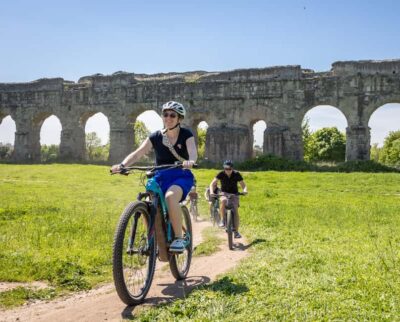
Appian Way E-bike Tour with Catacombs, Aqueducts & Food
Read our review →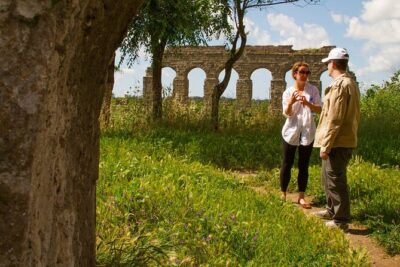
Rome Underground: Catacombs Tour, Aqueducts and Appian Way
Read our review →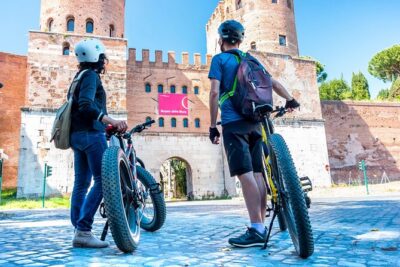
Appian Way Aqueducts Bike Tour (Catacombs & Lunch Option)
Read our review →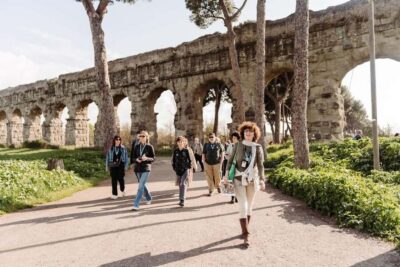
Appian Way, Catacombs and Aqueducts Park Tour with Top E-Bike
Read our review →
Appian Way E-Bike Tour Catacombs, Aqueducts & Picnic
Read our review →Browse the lists this tour appears in