
Reviewed · ROME
Rome: Fresh Pasta-Making Class with Italian Chef and Wine
Fresh pasta is the star here, and you do not just watch a chef roll dough while you sip a drink. You make several kinds yourself, then sit down to eat them with sauces prepared from quality ingredients. Chef Riccardo, Leo, William, and other members of the team lead the class, depending on the day.
I especially like the hands-on range of pasta shapes, from ravioli and fettuccine to tortellini and spaghetti alla chitarra. I also like the relaxed meal afterward, with wine, practical sauce tips, and recipes you can use at home. The main consideration is that a mixed-language group may affect how much conversation and storytelling you follow, even though the class is offered in English and Italian.
Key points to know
- Three pasta styles in one class: You may make ravioli, fettuccine, spaghetti, tortellini, cappelletti, or other fresh shapes.
- Roman sauces are part of the lesson: Carbonara, cacio e pepe, and other traditional sauces receive attention, not just the dough.
- Small groups keep the class active: The maximum group size is 10, so you should have room to work at the table.
- Wine and a meal are included: The class ends with a three-course meal made during the session and selected wine.
- The setting can vary: Meet at the Cooking Lab on Circonvallazione Gianicolense or, depending on the arrangement, at Riccardo’s grandmother’s home.
- Tell the team about food needs early: Vegetarian options are available, while private classes can accommodate more special requests.
Three hours of pasta, sauce, and Roman know-how
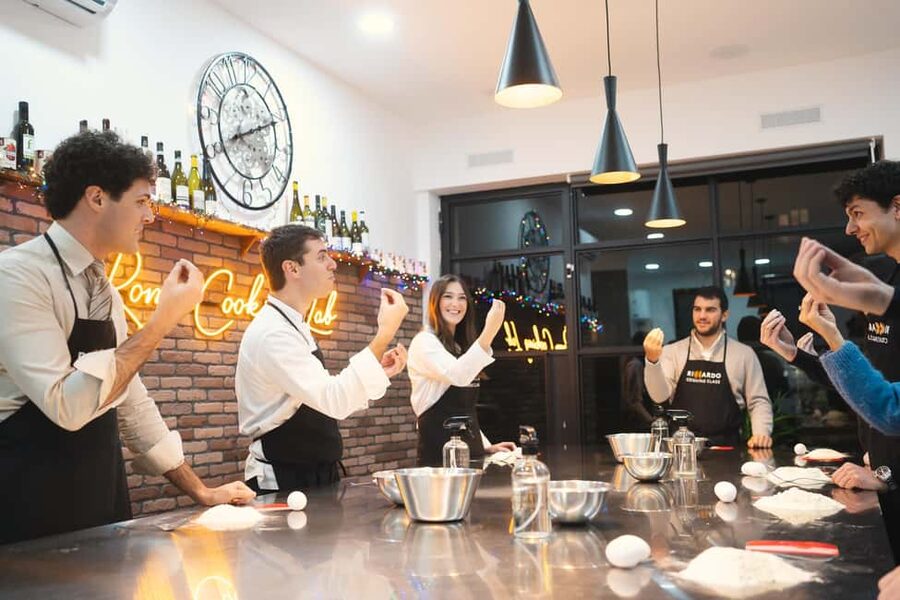
This is a cooking class first and a meal second, which is the right order if you want to learn something useful. You spend the opening part getting acquainted with the chefs and the ingredients, then move into pasta production before cooking and eating the finished dishes.
The class is designed for a small group of no more than 10 people. That matters because pasta-making works best when you can see the demonstration clearly and get help with your own dough. The chefs give step-by-step instructions, make corrections, and explain why a technique works rather than simply telling you to copy their movements.
The teaching team can include Riccardo, Leo, William, Mattia, Marco, or Bruno. Names and roles vary by session, but the pattern is consistent: a chef demonstrates, the group works together, and the instructors circulate to offer advice. Leo has been praised for his humor and clear explanations, while William has been described as patient and encouraging.
You should expect a social class, not a quiet culinary lecture. There is conversation, wine, cooking, and plenty of food on the table. If you are traveling alone, this format gives you an easy way to meet people. If you are with family or friends, you can share the work without needing advanced cooking skills.
More pasta and pizza making classes in Rome:
- Rome: Pasta & Tiramisu Class with Fine Wine by the Vatican
★ 4.9 · 4,852 reviews - Rome: Pasta Making Class with Wine, Limoncello, and Dessert
★ 4.9 · 3,177 reviews - Rome: Fettuccine Pasta Cooking Class in Rome’s City Center
★ 4.8 · 2,414 reviews
Arriving at the Cooking Lab in Gianicolense
The Cooking Lab is at Circonvallazione Gianicolense 418, 00152 Rome, on a street near a cafe. The location is outside the core cluster of ancient sights, so allow time to reach it from central Rome. The class information notes that public transportation makes the studio easy to reach from the city center, but you should still check the exact route and starting time before setting out.
The meeting point may also be Riccardo’s grandmother’s house. That choice gives the experience a more personal family setting, while the Cooking Lab offers a dedicated space for demonstrations and group work. Since the exact venue can vary, confirm the meeting details when you book.
This is a useful activity to schedule early in your Rome visit. The chefs have offered restaurant, pizza, gelato, and wine suggestions, and those tips can help shape the rest of your meals. You also avoid putting a cooking class after a full day of sightseeing when you may be tired and hungry enough to eat the ingredients before they reach the table.
Making dough from scratch, not just watching it
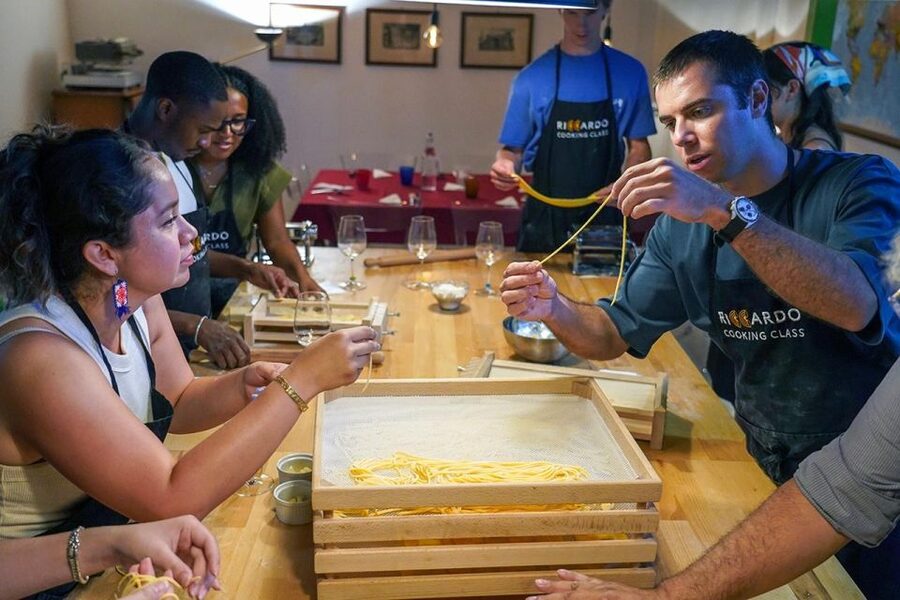
The heart of the class is fresh pasta. You work with top-quality organic ingredients and learn how dough is mixed, shaped, and turned into different pasta forms. The precise menu can change, but the class has included three types in a single session, such as ravioli, fettuccine, and spaghetti.
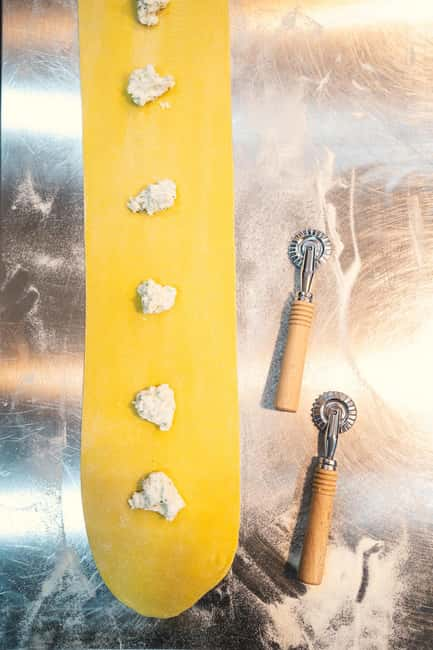
Long pasta gives you practice rolling and cutting dough into even strands. Stuffed pasta adds another task: placing filling, sealing the edges, and avoiding air pockets that can split during cooking. Tortellini and cappelletti bring their own folding methods, while spaghetti alla chitarra offers a different way to cut the dough.
The value here is repetition. You are not merely shown one shape and sent home with a recipe. You may handle several styles, which helps you understand how dough behaves across different formats. That makes the lesson more useful if you want to recreate it in your own kitchen.
The chefs also explain small but important choices, including what ingredients to look for when shopping at home and how to get more from them. The best cooking lessons send you home with judgment, not just instructions. This one aims to do that through direct practice.
Aprons are provided during the session. You can keep one for an extra cost, though that fee is not included in the $97 price.
Roman sauces: carbonara, cacio e pepe, and more
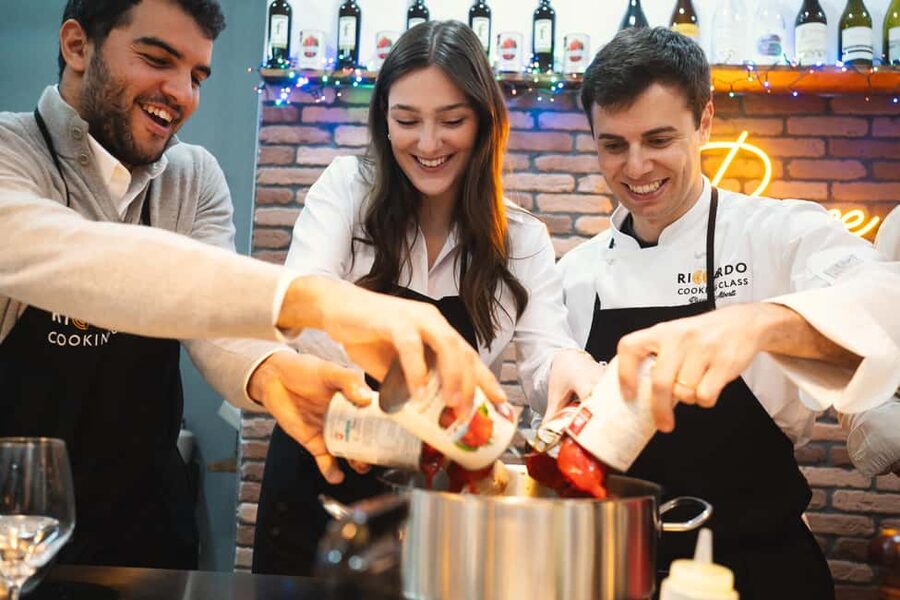
Pasta dough is only half the Roman lesson. The team also prepares traditional sauces, including carbonara and cacio e pepe, and shows how the sauce should meet the pasta.
Carbonara is especially worthwhile because the Roman version differs from many versions served outside Italy. One class included guanciale, whose savory flavor added a strong finish to the dish. The important lesson is not simply the ingredient list. It is how the sauce is brought together with the pasta so it turns creamy without becoming heavy or scrambled.
Cacio e pepe is another useful Roman study. Its short ingredient list leaves little room to hide mistakes, so technique matters. The class focuses on how to use the pasta and its cooking water to help form the sauce.
Other sessions have included arrabbiata sauce, paired with fettuccine. Vegetarian participants can receive a special menu, but you should give the team advance notice of allergies, intolerances, or dietary restrictions. A private class offers more flexibility for requests such as gluten-free, dairy-free, vegan dishes, gnocchi, risotto, or tiramisu.
Do not assume every special request is available in the regular shared class. The information specifically connects the broader menu options to private bookings, so ask before paying if a particular dish or diet is central to your plans.
More wine tastings in Rome:
- Rome: Tuscany & Montepulciano Day Trip with Lunch & Wine Tasting
★ 4.5 · 5,232 reviews - Rome Food Tour: Unlimited Tastings with Fine Wine & Barolo
★ 5.0 · 3,365 reviews - Rome: Trastevere Food tour with Free-Flowing Fine Wine
★ 5.0 · 2,853 reviews - Learn to Make Pasta & Tiramisu with Wine and Limoncello Included
★ 5.0 · 2,345 reviews
Sitting down to eat what you made
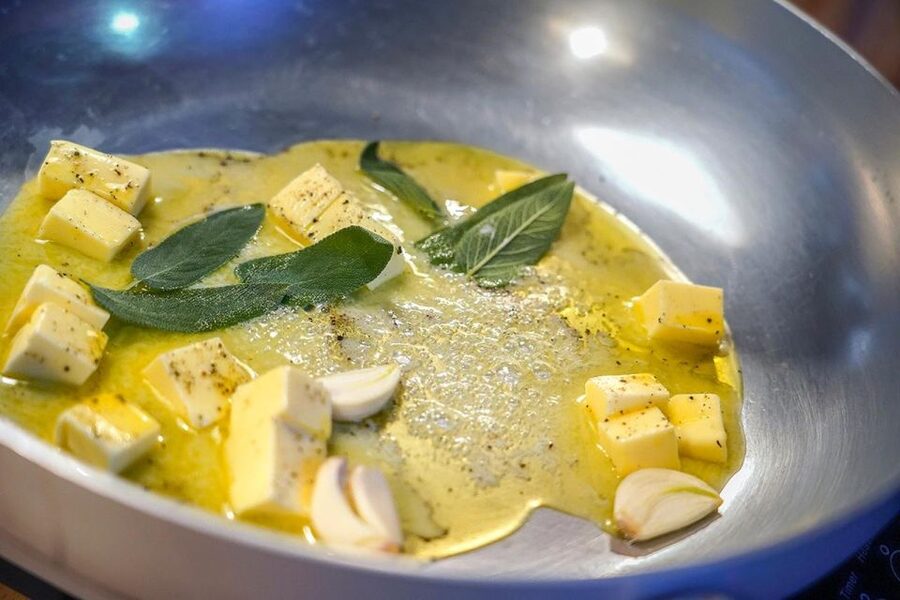
After the work comes the reward: a genuine Italian meal served with wine. The package includes a three-course meal and selected wine, with some sessions featuring prosecco throughout the class as well as wine with the food.
The meal is substantial. One recent group made two types of pasta plus ravioli and had enough left over to take some home. That is useful to know if you are planning another major meal immediately afterward. You will likely leave well fed rather than ready for a second dinner.
The wine adds to the social mood, but it also means you should pace yourself. This is a three-hour food experience, not a quick tasting. If you do not drink alcohol, ask what alternatives are available before booking, since the listed inclusion is selected wine.
The strongest part of the meal is that you understand the food because you helped make it. A bowl of carbonara tastes different when you have just learned how the sauce comes together. You can also ask questions while the process is fresh, then use the recipes at home.
The teaching style and language question
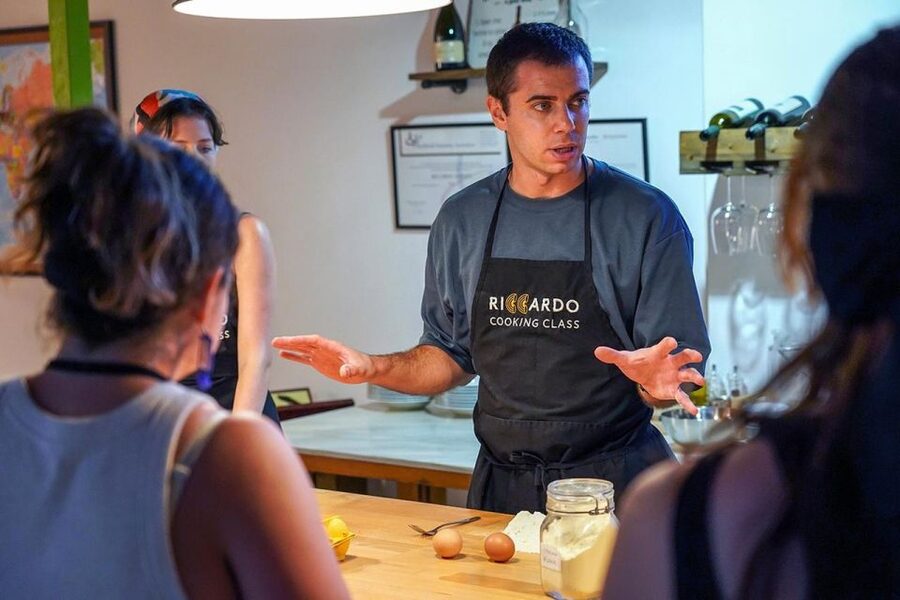
Riccardo and his team make the class lively. Their instruction includes demonstrations, kitchen tips, bits of food history, and guidance on ingredients. The teaching is practical rather than formal, which suits a hands-on class.
Leo has been singled out for making adjustments and explaining why each step matters. William has been praised for including everyone and keeping the instructions easy to follow. Riccardo brings the family connection and local food knowledge, while the wider team helps the class move along.
The official languages are English and Italian. Still, a mixed group can shape the experience. In one session, two other participants spoke French, and much of the chef’s commentary shifted into French. Some translation was provided, but the English-speaking participant felt left out of parts of the storytelling. That may be unusual, but it is a fair consideration if you care as much about the spoken instruction as the cooking itself.
The class works best when you are willing to ask questions. If you miss a point, speak up. The chefs are there to correct technique and involve the group, and the small size should make that possible.
Is $97 good value in Rome?
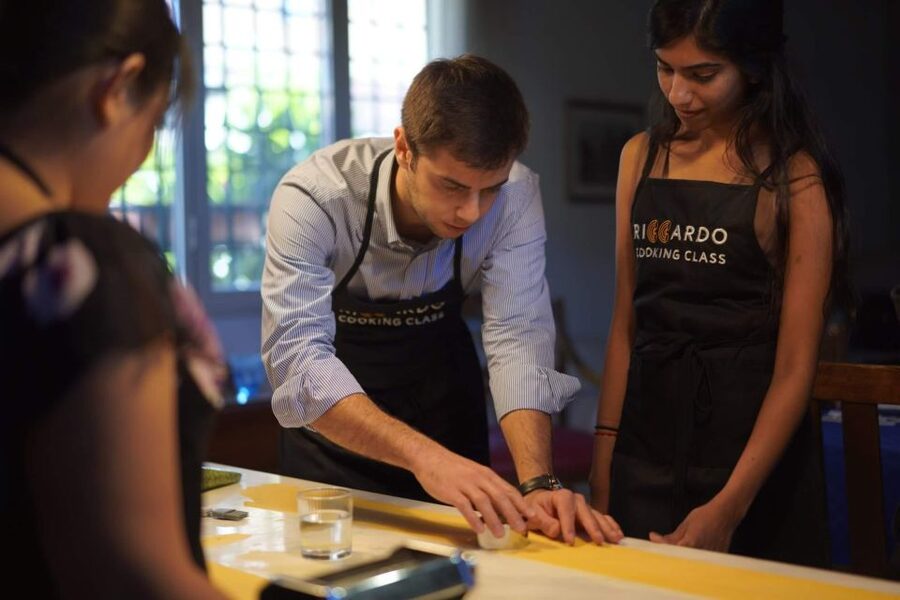
At $97 per person, this is not the cheapest way to eat pasta in Rome. You could order several plates of pasta for less. That comparison misses the point, though. The price includes three hours of instruction, ingredients, an apron to use, wine, and a three-course meal.
I consider the cost fair for someone who wants an activity rather than another restaurant meal. You get food during the class, direct instruction, several pasta-making techniques, and recipes you can repeat at home. The value improves if you are keen to cook, enjoy meeting people, or want a break from museums and monuments.
The price is less compelling if you only want to taste Roman food. A market visit or restaurant meal would be simpler and probably cheaper. This class asks for active participation, table work, and attention to instructions. You should book it for the process, not just the plate at the end.
The ability to reserve now and pay later gives you some flexibility, and cancellation is free up to 24 hours before the class. Those terms are useful when your Rome schedule is still changing.
Who will enjoy this class most?
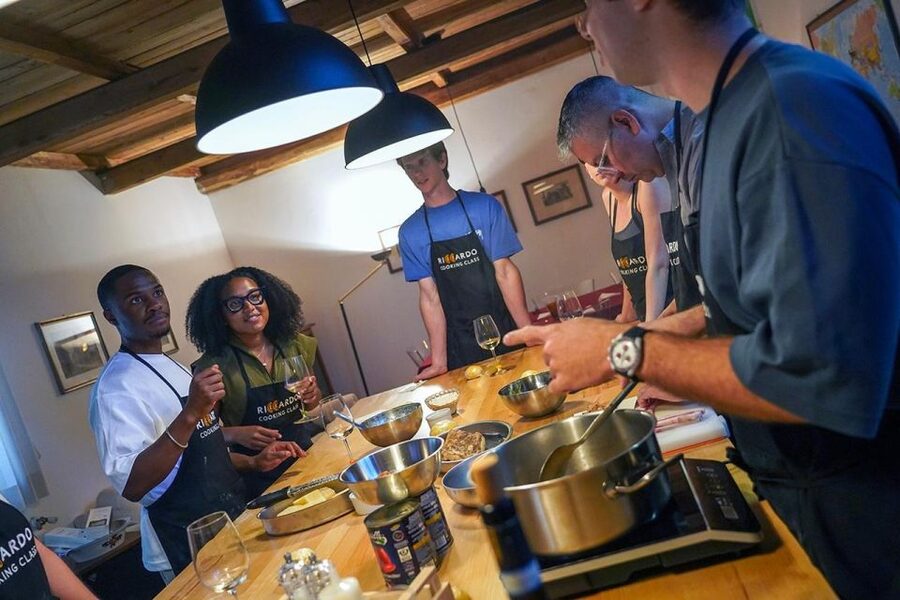
I would choose this for couples, families, solo visitors, and small groups of friends who like food and want to do more than take photographs of it. It also suits people who have tried pasta-making before but want to learn Roman sauce techniques and additional shapes.
You do not need to be an experienced cook. The chefs demonstrate each stage and provide corrections, and the class is built around participation at a manageable pace. Still, you should be comfortable working with flour, shaping dough, and spending much of the session at a cooking table.
Vegetarians can be accommodated with notice. Anyone with allergies or serious dietary restrictions should contact the provider before booking rather than relying on a last-minute adjustment. A private class is the better choice for complex needs or a custom menu.
The activity is listed as wheelchair accessible, but the exact arrangement can vary because the venue may be the Cooking Lab or a family home. If access details are important to you, confirm the specific location before arrival.
Practical advice before you book
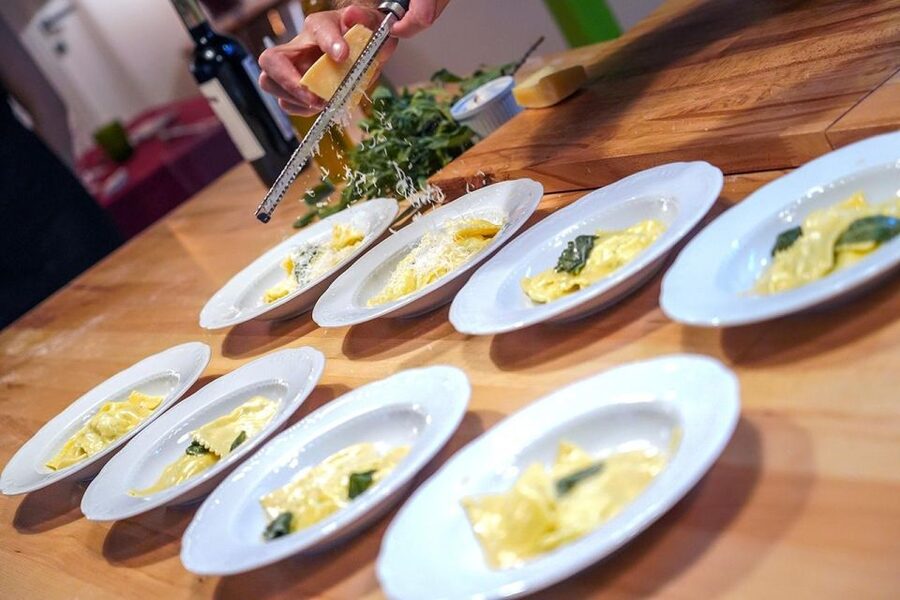
Schedule this near the start of your stay so you can use the chefs’ dining suggestions during the rest of your visit. Wear something comfortable for a food-focused session, and do not plan a large meal immediately afterward.
Tell the team about allergies, intolerances, vegetarian needs, or ingredients you cannot eat. If you want gnocchi, tiramisu, risotto, gluten-free pasta, dairy-free dishes, or vegan recipes, ask about a private class rather than assuming the shared menu can change.
Expect a menu that can vary by session. You may make three pastas and three sauces, or a different combination of long and stuffed pasta. The central promise is the technique, not one fixed dish list.
The experience has earned a five-star rating from 79 reviews, and the recurring strengths are clear: fun chefs, patient teaching, generous food, useful methods, and a friendly group atmosphere. The language issue is the main caution worth keeping in mind.
Should you book the Rome pasta class?
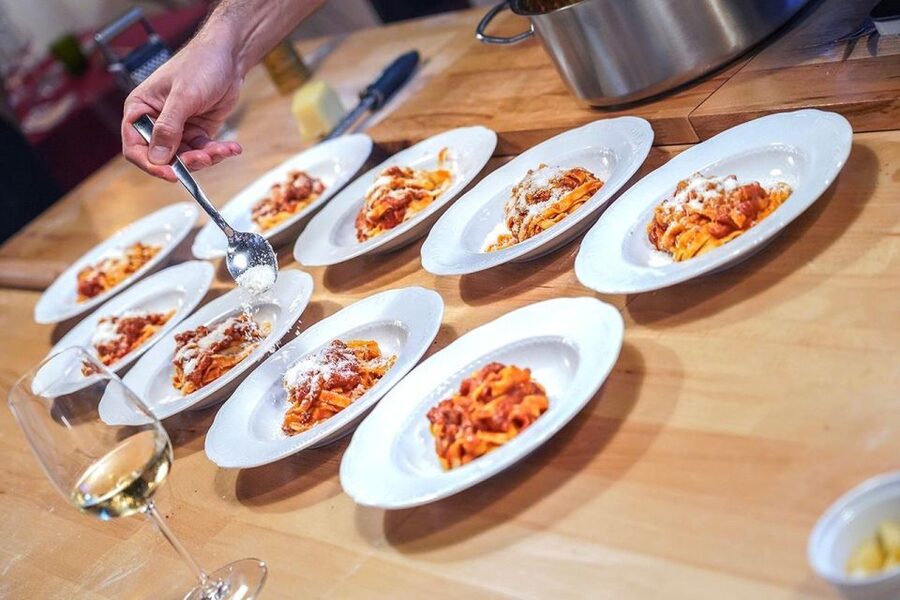
Book it if you want to learn fresh pasta in a social setting and eat a full meal made with your own hands. The mix of ravioli, long pasta, Roman sauces, wine, and practical advice makes it more useful than a short demonstration.
Skip it if you prefer a quiet meal, dislike group activities, or need a highly specific menu that is not confirmed in advance. For everyone else, $97 buys a substantial three-hour experience, not just a plate of pasta. I would place it early in a Rome itinerary, tell the chefs about food needs well ahead of time, and come ready to work, eat, and take a few new kitchen habits home.
FAQ
How long does the pasta-making class last?
The class lasts three hours.
How much does the experience cost?
The listed price is $97 per person.
Where is the meeting point?
The Cooking Lab is at Circonvallazione Gianicolense 418, 00152 Rome, on a street near a cafe. Depending on the arrangement, the class may also take place at Riccardo’s grandmother’s house.
What languages are offered?
Instruction is offered in English and Italian.
How many people can join the class?
The class is limited to 10 participants.
What types of pasta might I make?
Possible pastas include ravioli, fettuccine, tortellini, cappelletti, spaghetti alla chitarra, and other fresh pasta shapes. The exact combination can vary.
Are sauces included in the lesson?
Yes. The class covers traditional Italian sauces, including carbonara and cacio e pepe. Other sauces, such as arrabbiata, may also be included.
Is food included?
Yes. A three-course meal made during the class is included.
Is wine included?
Yes. Selected wine is included, and some sessions include prosecco during the class.
Can the class accommodate dietary restrictions?
You should report allergies, intolerances, dietary restrictions, or ingredients you cannot eat in advance. Vegetarian options are available, while private classes may offer special menus such as gluten-free, dairy-free, or vegan dishes.
Are aprons provided?
Yes. Aprons are provided for use during the class. You may keep one for an additional cost.
Is the class wheelchair accessible?
The activity is listed as wheelchair accessible. Since the venue can vary, confirm the specific location if you need detailed access information.
Can I cancel the booking?
You can cancel up to 24 hours in advance for a full refund.
Can I reserve now and pay later?
Yes. The booking option allows you to reserve your place and pay later.
More cooking classes in Rome
- 3 in 1 Cooking Class near Navona: Fettuccine, Ravioli & Tiramisu
★ 5.0 · 7,376 reviews - Rome: 3-in-1 Fettuccine, Ravioli, and Tiramisu Cooking Class
★ 4.9 · 2,704 reviews - Rome: Traditional Pasta with Cocktails Cooking Class
★ 5.0 · 2,374 reviews - Become a Masterchef in Rome: Pasta, Ravioli and Tiramisù Class
★ 5.0 · 2,156 reviews
Newest Rome tours we have reviewed
- Private TikTok Video Making in Rome★ 5.0 · 7 reviews
- Assisi, Orvieto and Civita di Bagnoregio Full Day Tour from Rome★ 4.5 · 45 reviews
- Assisi & Saint Francis Path Tour from Rome★ 5.0 · 45 reviews
- Assisi and Cascia Private Day Tour from Rome with Lunch★ 5.0 · 10 reviews
- Art Class in the center of Rome!★ 4.0 · 4 reviews
- Art & Craft: Beer Tour with Street Art in Rome★ 4.5 · 6 reviews
- Arrival in Rome: Airport Transfer & Exclusive City Introduction★ 5.0 · 3 reviews
- From Rome: Private Day-Tour of Tuscany★ 5.0 · 16 reviews