
Reviewed · ROME
Rome: Guided City Center Evening Sightseeing Walking Tour
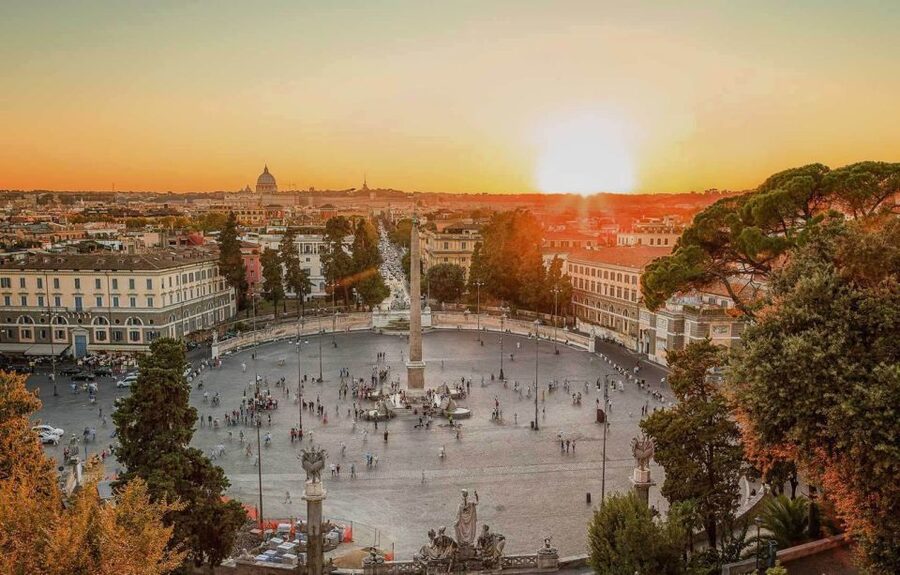
Rome is at its most magical when the heat softens and the stone turns gold. This three-hour evening walk links Piazza del Popolo, the Spanish Steps, Trevi Fountain, the Pantheon, Piazza Navona, and Campo de’ Fiori, with a sunset stop at Pincio Terrace along the way.
I like the tour’s efficient route and its timing. You see major sights without spending the evening inside a museum, and the cooler air makes Rome’s long pavement easier to handle. I also like the chance to hear the city’s stories from guides such as Andrada, Carolina, Marzia, and Ava, who have been praised for clear explanations, humor, and practical restaurant tips.
The main drawback is simple: this is a constant walking tour, not a gentle stroll with long breaks. You’ll climb to Pincio Terrace, cross uneven streets, and remain on your feet for most of the three hours. It is not suitable for wheelchair users, and comfortable shoes are essential.
Key points to know before you book
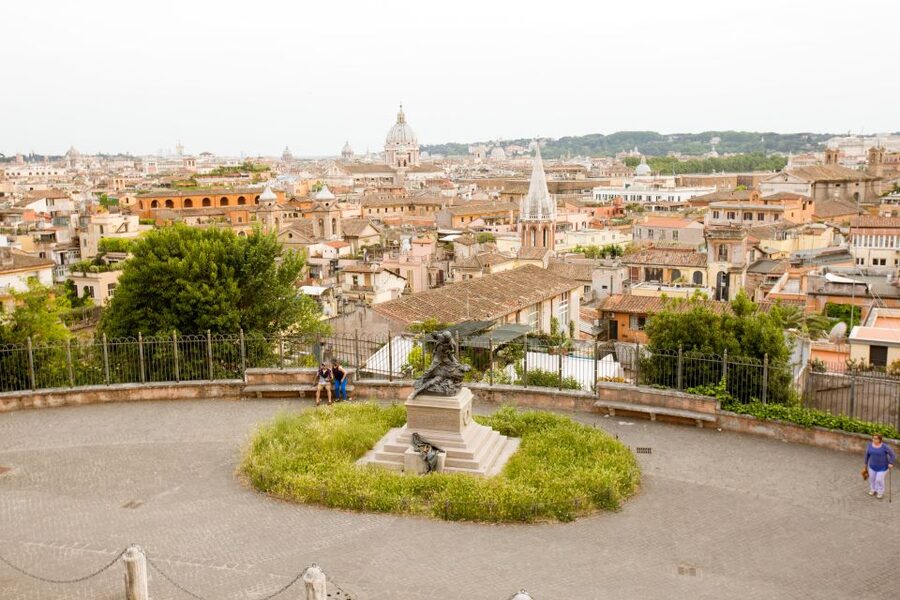
- Sunset from Pincio Terrace: Begin with a broad view over Rome’s rooftops from above Piazza del Popolo.
- Classic center in one route: Cover the Spanish Steps, Trevi Fountain, Pantheon, Piazza Navona, and Campo de’ Fiori.
- A strong first-night choice: The route helps you get your bearings and decide where to return later.
- English-speaking guides: The guide is live, with headsets used when needed. Past guides have included Andrada, Carolina, Marzia, Ava, and Ghil.
- Three hours on foot: Expect a fast enough pace to cover a lot of ground, with little or no time to sit.
- Good evening value: At $46 per person, the price is reasonable if you want history, orientation, and several major sights in one outing.
Why this evening route works so well in Rome
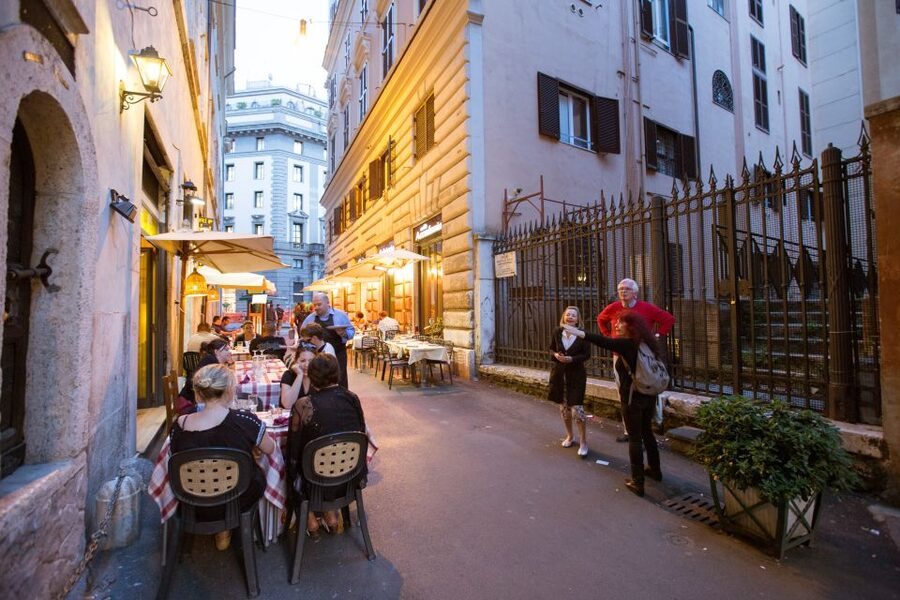
Rome can feel scattered at first. A fountain appears around one corner, a church opens onto another square, and an ancient monument sits beside an ordinary café. This tour gives you a useful framework for the city center in one evening.
The route begins at Piazza del Popolo and ends at Campo de’ Fiori. In between, you move through some of Rome’s most famous public spaces. That matters because these sights are not isolated attractions. They are part of the city’s streets, piazzas, churches, fountains, and everyday life.
I think the best use of this tour is on your first evening, especially if you arrive in Rome in the afternoon. Several people have found it helpful after a 2 p.m. arrival, when there is time to see something but not enough energy or daylight for a major museum visit. You can get an initial sense of the center, mark places you want to revisit, and finish near food and evening activity.
The tour has an average rating of 4.4 from 953 bookings, which suggests a consistently good experience but not a flawless one. The strongest pattern is the quality of the guides. Names such as Andrada, Carolina, Marzia, and Ava appear in especially warm feedback, with praise for their history, art, architecture, humor, and ability to answer questions.
More evening tours in Rome:
- Rome: City Highlights Open-Top Bus Night Tour
★ 4.1 · 2,038 reviews - Rome: Paranormal Night Walking Tour & Secret Backstreets
★ 4.9 · 1,921 reviews - Vespa Sidecar Tour By Night with Pickup
★ 5.0 · 1,803 reviews
Starting at Piazza del Popolo and climbing to Pincio Terrace
Meet your guide in Piazza del Popolo, in front of Santa Maria del Popolo Church, beside the Leonardo da Vinci Museum. Look for the Rome Your Way sign. The meeting point is central, but one booking described it as slightly confusing, so give yourself extra time and check the church location before setting out.
Piazza del Popolo is an excellent place to begin. It has monumental gates, fountains, churches, and an obelisk, giving you a quick lesson in Rome’s habit of layering different eras in one view. The square feels grand without needing an admission ticket.
The first climb is up toward Pincio Terrace. This is one of the tour’s most rewarding moments, but also one of its physical tests. The route includes a steep section, so anyone with knee problems or limited mobility should think carefully before booking.
From the terrace, you look across Rome’s rooftops toward the city center. The sunset timing changes with the season, and the exact light depends on the starting hour, but the idea is consistent: begin above the city, then walk down into its historic core as evening arrives.
I like this opening because it gives you scale. Before you start examining individual fountains and buildings, you see how much of Rome is packed into the center. It also creates a calm beginning before the busier streets around the Spanish Steps and Trevi Fountain.
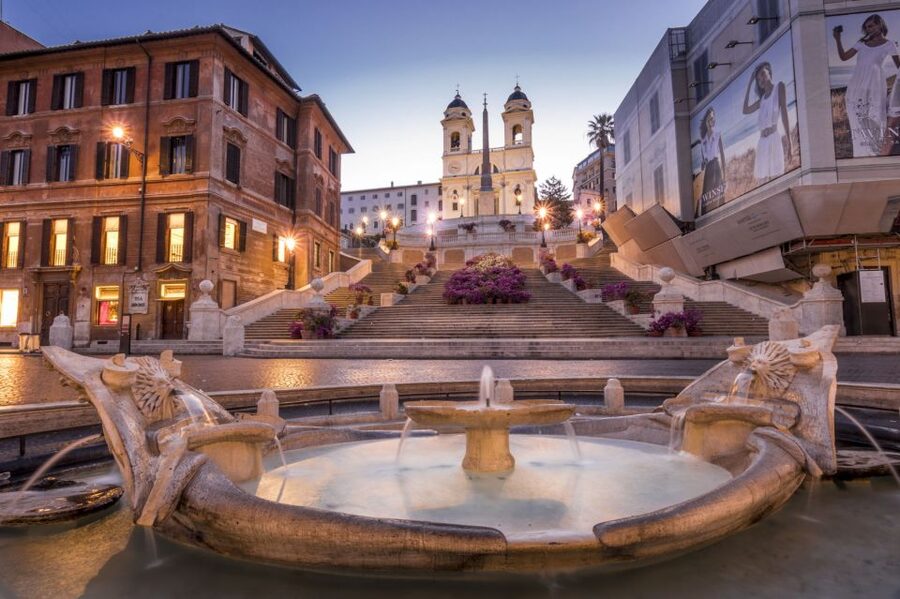
The Spanish Steps and Bernini’s Barcaccia Fountain
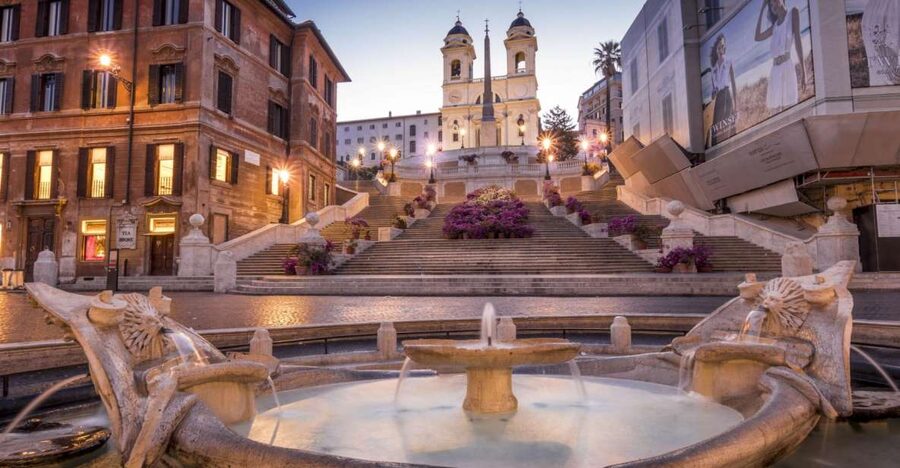
From Pincio, the route continues toward Piazza di Spagna and the Spanish Steps. The broad staircase connects the lower square with the church of Trinità dei Monti above. At the base, Bernini’s Barcaccia Fountain sits low in the center, shaped like a partly sunken boat.
This is a place where your guide adds real value. Without context, the Spanish Steps can seem like a famous staircase surrounded by luxury shops. With an explanation of the design, the fountain, the church, and the way Romans use the square, the scene becomes easier to read.
You should not expect a long stop for sitting or people watching. The group keeps moving, and the route is designed to cover several major sights. If you want quiet photographs or time on the steps, plan to return on your own another day.
The evening setting helps. Rome’s daylight glare has faded, and the pale stone takes on a softer tone. In warmer months, this timing is also far more comfortable than walking the same route in the middle of the afternoon.
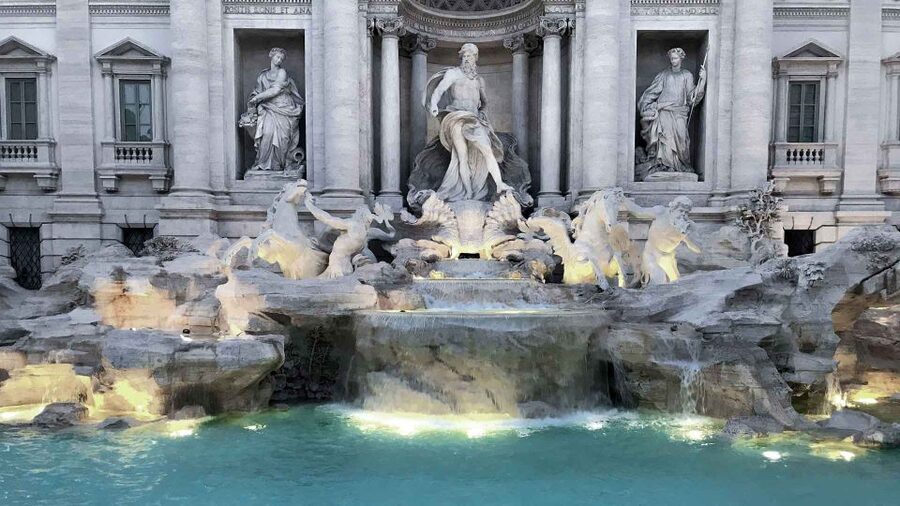
Tossing a coin at the Trevi Fountain
The Trevi Fountain is one of Rome’s grandest Baroque spectacles. Water pours around the central figure of Oceanus, framed by columns, carved figures, and a theatrical stone backdrop. The fountain is much larger than photographs suggest, and the enclosed square makes the first view feel dramatic.
Your guide explains the familiar coin tradition: toss a coin over your left shoulder and you are meant to return to Rome. It is a small ritual, but it gives the stop a personal touch. Bring a coin if you want to take part, though the tour information does not promise a specific amount or provide coins.
This is also one of the busiest points on the route. You may need to stay close to the group and listen carefully. A headset can be used when needed, which helps when the surrounding noise rises.
The advantage of seeing Trevi in the evening is atmosphere and temperature. The disadvantage is that the fountain remains extremely popular, so an evening visit does not mean an empty square. Your guide helps you focus on the architecture rather than simply trying to find a clear place at the edge.
More walking tours in Rome:
- Rome: Trastevere & Campo de Fiori Street Food Walking Tour
★ 4.9 · 2,768 reviews - Rome by Night Walking Tour – Legends & Criminal Stories
★ 4.5 · 1,003 reviews - Best of Rome Walking Tour including Trevi Fountain
★ 4.5 · 923 reviews - Rome: Under the Moonlight Evening Walking Tour
★ 4.8 · 852 reviews
Piazza della Rotonda and the ancient Pantheon
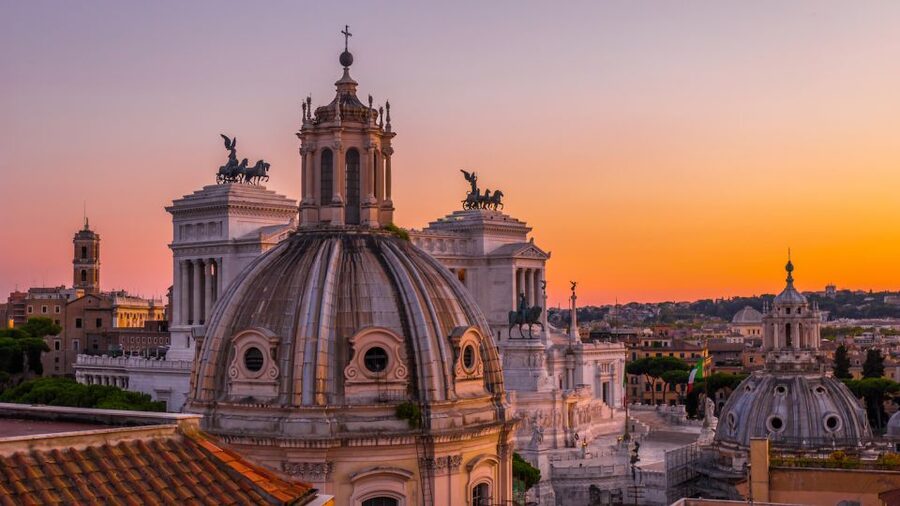
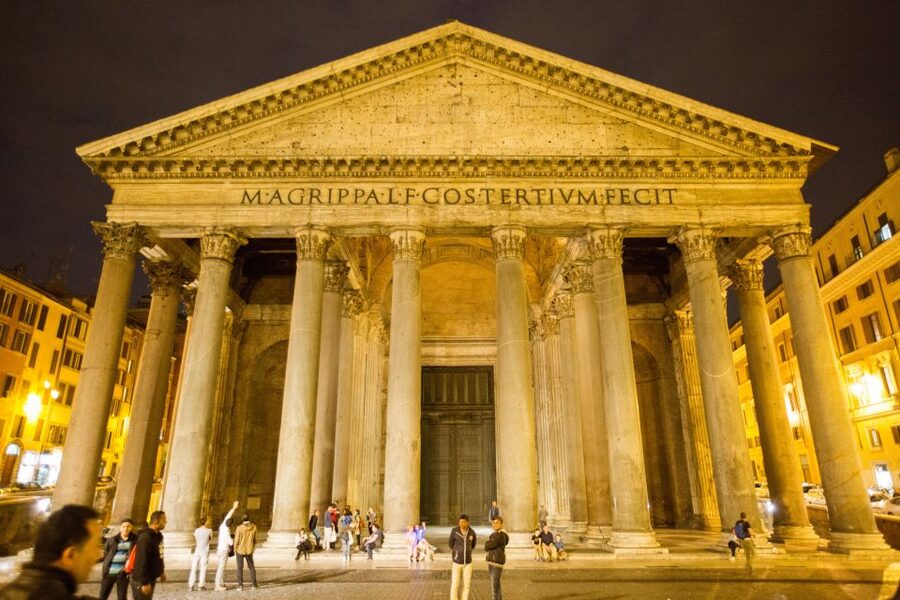
Next comes Piazza della Rotonda, home to the exterior of the Pantheon. The building began in 27 B.C. and was later rebuilt, then converted in the seventh century into a church dedicated to Mary and the martyrs. Its massive portico and tall columns still make it one of the most striking sights in central Rome.
This tour views the Pantheon from outside. That distinction matters. You get the setting, the façade, and the historical explanation, but entry is not part of the experience described here. If you want to see the famous interior and dome, you will need to arrange a separate visit.
The guide may also point out the building’s connection with Renaissance artist Raffaello, who is buried inside. Details like this make the stop more than a quick photograph. You begin to see the Pantheon as both an ancient Roman structure and a later Christian site with links to Italy’s artistic past.
Piazza della Rotonda is a good place to notice how Rome works at street level. The ancient building faces a lived-in square, with restaurants, pedestrians, and daily city movement around it. The tour does not isolate history from modern Rome. It shows you both at once.
Bernini, Borromini, and the drama of Piazza Navona
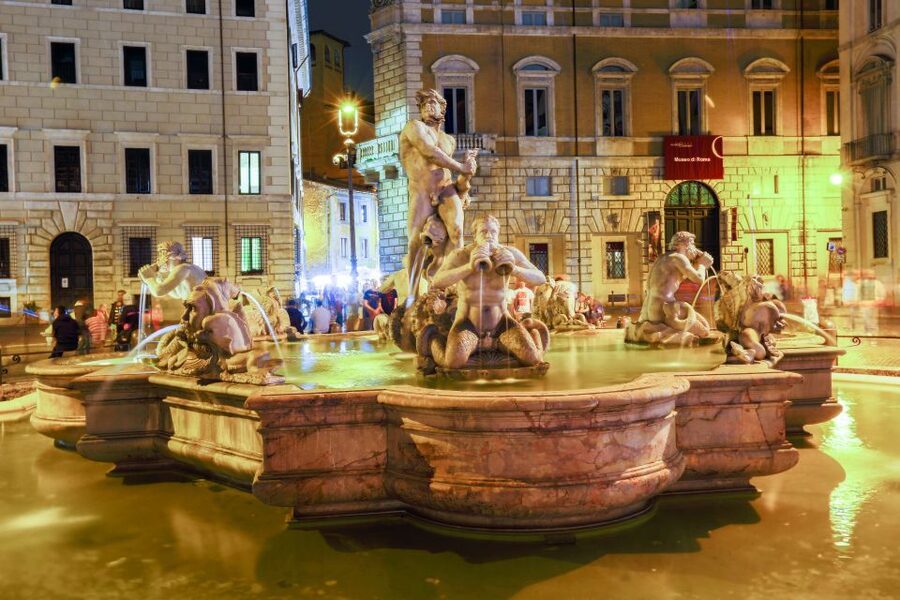
Piazza Navona is the visual centerpiece of the walk. Its long oval shape follows the outline of an ancient stadium, and its fountains and surrounding buildings create one of Rome’s most memorable urban rooms.
At the center is Bernini’s Four Rivers Fountain. The sculpture represents the Nile, Ganges, Danube, and Rio de la Plata, arranged around a tall obelisk. Your guide can help you separate the real story from the legends and explain why the fountain mattered in Baroque Rome.
The square also includes Sant’Agnese in Agone, associated with Borromini, along with Palazzo Pamphili, the Neptune Fountain at the north end, and the Moor Fountain at the south end. This is a useful stop for anyone interested in the rivalry and contrasting styles of Bernini and Borromini.
You get more from Piazza Navona if you resist the urge to rush straight to the Four Rivers Fountain and leave. Look along the full length of the square. Notice how the fountains, church, palace, and open space work together.
The tour’s pace can make this difficult. It aims to show many important sights in three hours, so you may not have time for a detailed artistic study of each sculpture. Still, the guide’s explanation gives you enough background to return later with a better eye.
Finishing at Campo de’ Fiori
The walk ends at Campo de’ Fiori, a natural place to continue your evening. The square has a darker past than its cafés and nightlife suggest. It was once used for races and executions, and the statue of Giordano Bruno in the center recalls one of those grim chapters.
Today, Campo de’ Fiori functions as a morning marketplace and an evening meeting place. Ending here is practical because you are not left beside a closed monument or far from restaurants. You can stop for dinner, order a drink, or simply keep walking through the center.
This final stop also gives the tour a useful change of mood. You begin with a sunset view, move through imperial and Baroque Rome, then finish in a square that feels social and current. The route does not end with a lecture. It ends where you can make your own evening plans.
Some guides have offered restaurant suggestions during the walk. That can be useful, but remember that the tour does not include dinner or a food tasting. If a restaurant sounds appealing, ask for the name and location before the group separates.
The guide can make or break the three hours
The route is fixed, but the tone depends heavily on the guide. The most praised guides have included Andrada, Carolina, Marzia, Ava, Ghil, Juliano, Elida, and Rosa. Their strengths have included clear historical explanations, a good sense of humor, friendly answers, and enthusiasm for Roman art and architecture.
Marzia was described as an archaeologist who also gave practical advice for later tours and local restaurants. Andrada received repeated praise for explaining complex history in an easy way and for keeping track of a wandering group. Carolina was singled out for her passion and friendly manner.
You cannot guarantee a particular guide when booking, so treat these names as examples of the level of guiding that has been delivered, not a promise. The tour is in English, and headsets are available when needed.
A strong guide is especially useful here because the route moves quickly. You are not just looking at famous places. You are crossing periods of Roman history, from ancient construction to Christian Rome, Renaissance art, Baroque design, and modern city life.
Walking demands, timing, and value at $46
At $46 per person, this is not the cheapest way to see Rome’s center. You can walk to every stop without paying an admission fee. The value comes from the live explanation, the sunset viewpoint, the planned route, and the time saved figuring out how the sights connect.
For a first visit, I think the price is fair if you want structure. Three hours with a good guide can prevent you from simply passing major monuments and wondering what you are seeing. It also gives you a shortlist of places to revisit.
The physical side is more important than the price. You will walk for nearly the entire tour, climb to Pincio Terrace, and cross city streets and piazzas. One particularly useful warning is that there may be no proper break, so do not book this immediately after a full day of sightseeing unless your legs are ready.
Wear supportive shoes and bring water. The tour is more comfortable in the evening, especially in summer, but Rome’s stone streets do not become smooth after sunset. The tour is not suitable for wheelchair users.
Children aged five and under go free. The route can work for older children who enjoy stories and can manage three hours of walking, but the supplied information does not specify a minimum age beyond the free admission policy.
You do not get hotel pickup or drop-off. Plan your route to Piazza del Popolo before the start, and remember that the endpoint is Campo de’ Fiori, not the starting square.
Who should book this Rome walking tour?
I would choose this tour if you want a broad first look at central Rome rather than a deep visit to one monument. It suits first-time visitors, couples looking for an atmospheric evening, and anyone arriving late in the day who wants a useful introduction without committing to a museum.
It is also good for short stays. If you have only a day or two, this route covers a large share of the city center’s headline sights. The sunset view makes it feel more special than a basic orientation walk.
I would hesitate if you dislike group walking, need frequent rests, use a wheelchair, or want interior visits to the Pantheon and other monuments. I would also avoid booking it as your only Rome experience. It is an overview, not a substitute for spending time inside the Pantheon, visiting major museums, or exploring neighborhoods at your own pace.
Free cancellation is available up to 24 hours before the start, and you can reserve now and pay later. Those terms make it easier to fit the tour around changing arrival plans.
Should you book it?
Book this tour if you want to get your bearings fast, see Rome’s best-known center sights in one evening, and learn why the fountains, churches, and piazzas matter. The sunset from Pincio Terrace and the final stop at Campo de’ Fiori give the route a clear beginning and end.
Skip it if you want a slow photographic walk or detailed access to interiors. For most first-time visitors who can handle three hours on foot, $46 is a sensible price for a well-planned introduction, especially on your first night in Rome.
FAQ
How long is the Rome evening walking tour?
The guided walking tour lasts three hours.
What sights are included?
The route includes Piazza del Popolo, Pincio Terrace, the Spanish Steps, Bernini’s Barcaccia Fountain, Trevi Fountain, Piazza della Rotonda, the exterior of the Pantheon, Piazza Navona, Bernini’s Four Rivers Fountain, and Campo de’ Fiori.
Where does the tour meet?
Meet in Piazza del Popolo, in front of Santa Maria del Popolo Church, next to the Leonardo da Vinci Museum.
How do I find the guide?
Look for a guide holding a Rome Your Way sign.
Where does the tour finish?
The walk ends at Campo de’ Fiori.
Is the tour conducted in English?
Yes. The activity includes a live English-speaking guide.
Are headsets provided?
Headsets are used when needed.
Are children allowed to join for free?
Children aged five years and younger go free.
Is the tour suitable for wheelchair users?
No. The activity is listed as unsuitable for wheelchair users.
Is hotel pickup included?
No. Hotel pickup and drop-off are not included.
Can I cancel the booking?
You can cancel up to 24 hours in advance for a full refund. You can also reserve now and pay later.
Newest Rome tours we have reviewed
- Private TikTok Video Making in Rome★ 5.0 · 7 reviews
- Assisi, Orvieto and Civita di Bagnoregio Full Day Tour from Rome★ 4.5 · 45 reviews
- Assisi & Saint Francis Path Tour from Rome★ 5.0 · 45 reviews
- Assisi and Cascia Private Day Tour from Rome with Lunch★ 5.0 · 10 reviews
- Art Class in the center of Rome!★ 4.0 · 4 reviews
- Art & Craft: Beer Tour with Street Art in Rome★ 4.5 · 6 reviews
- Arrival in Rome: Airport Transfer & Exclusive City Introduction★ 5.0 · 3 reviews
- From Rome: Private Day-Tour of Tuscany★ 5.0 · 16 reviews