
Reviewed · ROME CITY HIGHLIGHTS TOURS
Rome in a day: walking through the Eternal City
Rome packs several thousand years into a city center you can cross on foot. This four-hour walking tour links Michelangelo’s Moses, the Colosseum, the Roman Forum, the Pantheon, Caravaggio, Piazza Navona, and Campo de’ Fiori in one steady route. It is a brisk way to get your bearings without spending the whole day in a museum.
I like two things right away: Luisa’s lively storytelling and the small group, limited to 10 people. Her English has been praised as clear and natural, and she adds gossip, legends, and odd episodes to the standard dates and names. The route also gives you a useful sweep from Ancient Rome to the Renaissance and Baroque eras.
The main catch is the pace. You cover a lot of ground, and Colosseum and Roman Forum admission is not included, so this is not a substitute for a full archaeological-site visit. People with mobility impairments should also choose another outing, and comfortable shoes are essential.
Key points to know before you book
- Michelangelo’s Moses begins the morning: Meet outside San Pietro in Vincoli and start with one of Rome’s most important sculptures.
- A long list of major sights: The route includes the Colosseum, Imperial Forums, Capitoline Hill, Pantheon, Sant’Ignazio, Piazza Navona, and Campo de’ Fiori.
- Stories matter as much as dates: Expect legends, scandals, gossip, and funny episodes alongside the art and history.
- Small groups keep the guide close: The group is limited to 10 participants, useful on busy city streets.
- Admission is extra: Tickets for the Colosseum and Roman Forum are not included in the $94 price.
- The finish is central: The tour ends at Campo de’ Fiori, a handy place to continue exploring Rome on your own.
A fast but useful introduction to Rome
At $94 per person, this is not Rome’s cheapest walking tour. The value comes from the amount of ground covered and the guide’s role in connecting places that can otherwise feel like separate stops. In four hours, you move from an ancient sculpture to imperial ruins, Renaissance planning, Baroque churches, famous fountains, and one of the city’s best-known squares.
I would treat it as an orientation walk rather than a series of complete site visits. You get context for many major places, but you do not have time to study every ruin, enter every building, or linger over every work of art. That distinction matters, especially if the Colosseum and Forum are high on your list.
Luisa is the guide most clearly identified with this experience. The strongest praise focuses on her command of the subject, excellent English, warm manner, and ability to keep conversation pleasant between stops. Italian is also available. Her approach appears especially suited to you if dates alone make your eyes glaze over. She brings in personal stories, strange events, and darker legends that help the city feel less like a textbook.
The walk is limited to 10 people. That is a good size for a city tour because you can usually stay close to the guide without the rigid feel of a private tour. It also makes questions easier than they would be in a large group. Still, central Rome is full of traffic, uneven paving, and crowds, so this remains a physical walking experience.
More city highlights tours in Rome:
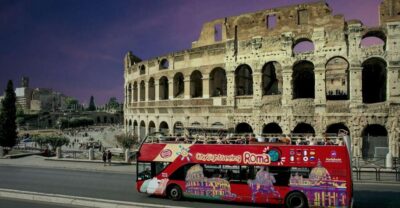
- Rome: Big Bus Hop-on, Hop-off Open-Top Sightseeing Tour
★ 3.5 · 2,580 reviews - Rome in a Day Group Tour with Vatican Museums and Colosseum
★ 4.5 · 2,450 reviews - Rome Highlights by Golf Cart Private Tour
★ 5.0 · 2,379 reviews
San Pietro in Vincoli and Michelangelo’s Moses
The meeting point is Piazza di San Pietro in Vincoli, in front of the church. Arrive ready to begin outside the Basilica of San Pietro in Vincoli, also called Saint Peter in Chains.
The church is best known here for Michelangelo’s Moses, a powerful marble sculpture made for the tomb of Pope Julius II. Starting with this work gives the tour an immediate art focus. You are not simply walking toward the Colosseum. You begin with a close look at a major Renaissance sculpture and then move into the ancient world.
A church visit is included. That is important because the opening stop is not just a landmark passed on the street. The setting lets the guide explain the sculpture and its place in Roman art before the route shifts to ruins and public spaces.
Check your clothing before setting out. Sleeveless shirts are not allowed, and church visits in Rome often require respectful dress. The tour information specifically lists this restriction, so it is worth planning around it rather than hoping for leniency at the door.
The Colosseum in a 20-minute stop
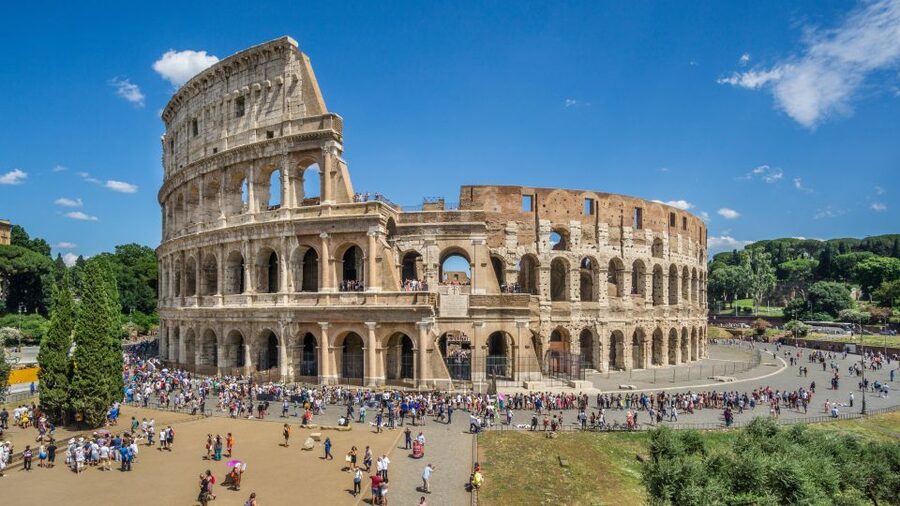
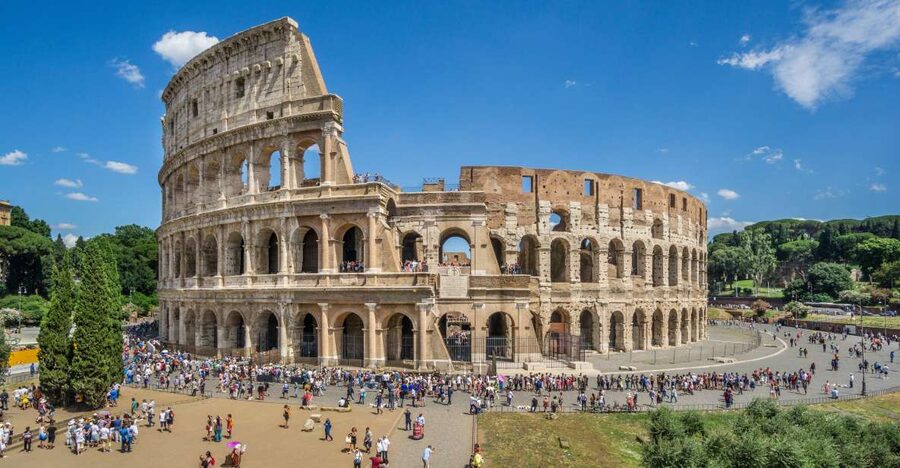
From San Pietro in Vincoli, the group walks to the Colosseum. The listed visit lasts about 20 minutes, which tells you how to think about this portion: it is a guided introduction, not a full exploration of the amphitheater.
The Colosseum is the grandest ancient structure on this route and perhaps the sight most people picture when they think of Rome. A short stop can still help you understand its scale, purpose, and place in the city’s story. You will have a guide to frame what you are seeing instead of simply taking photographs and moving on.
Do not assume that this tour includes entry. Tickets for the Colosseum and Roman Forum are specifically excluded. The description calls the stop a visit, but the ticket note means you should confirm the exact arrangements before booking if entering the arena is essential to you. At the very least, budget separately for admission if you want a longer interior visit.
That limitation is not necessarily a flaw. Many visitors already have Colosseum tickets or prefer to book a dedicated archaeological tour. This walk can then work well as a broader city introduction. If you want one guide to spend an hour or more inside the Colosseum, this is not the right format.
Via dei Fori Imperiali and the Roman Forum
The route continues along Via dei Fori Imperiali, the broad avenue beside Rome’s archaeological center. The guided stop is listed at about 20 minutes.
Here, the experience shifts from one monumental building to a wider view of ancient Rome. You can look across the archaeological area and begin to understand how the Forum, imperial buildings, and roads fit together. A guide is useful at this point because scattered columns and foundations do not explain themselves.
The short time also keeps the tour moving. You will not get a full Forum archaeology lesson, and you may want to return later with an admission ticket if ancient Rome is your main interest. But for a first look, the route gives you a physical sense of how close the major ancient sites are to one another.
I like this part because it prevents the tour from becoming a checklist of famous facades. You are walking through the space between monuments, hearing how the center of Roman power changed over time. That broad connection is one of the better reasons to book a citywide walk instead of visiting each place in isolation.
More walking tours in Rome:
- Rome: Trastevere & Campo de Fiori Street Food Walking Tour
★ 4.9 · 2,768 reviews - Rome: Paranormal Night Walking Tour & Secret Backstreets
★ 4.9 · 1,921 reviews - Rome by Night Walking Tour – Legends & Criminal Stories
★ 4.5 · 1,003 reviews - Rome: Guided City Center Evening Sightseeing Walking Tour
★ 4.4 · 953 reviews
Capitoline Hill and Rome’s civic center
Next comes Capitoline Hill, with another guided stop of about 20 minutes. This hill is central to Rome’s civic and artistic identity, and it provides a natural bridge between the ancient city and later Rome.
The guide can help you read the hill as more than a viewpoint or a grand staircase. Its importance reaches back to Ancient Rome, while its later design reflects the city’s Renaissance ambitions. This is where the tour’s promise to move from antiquity into the Renaissance becomes clearest.
Because the route covers several periods in a single morning or afternoon, you will hear connections rather than complete lectures on each era. That is useful if you are new to Rome. It is less useful if you already know the city well and want specialist-level detail about Capitoline architecture.
The walk also includes slopes, steps, and uneven streets. The experience is not suitable for people with mobility impairments, and that warning should be taken seriously. Even without a formal hike, central Rome can be tiring when several historic districts are linked on foot.
The Pantheon and its enormous dome
The Pantheon receives a listed visit of about 15 minutes. Its dome is described as the largest marble dome ever built, and the building gives you one of the clearest examples of ancient Roman engineering still present in the city.
A short stop inside can be memorable because the Pantheon’s scale is easy to feel even when the explanation is brief. Look up, notice the dome, and listen for the guide’s account of how this building fits into Rome’s long architectural story.
The Pantheon is also a good test of the tour’s overall style. You will see a major place, hear the essential context, and continue before the visit turns into a full architectural study. I would not book this tour expecting long periods of quiet observation at each stop. Its strength is the sequence.
The walk from the ancient sites to the Pantheon also shows how Rome’s layers sit beside one another. You are not transported between attractions by bus. You move through the city streets, which makes the changes in scale and style easier to notice.
Sant’Ignazio and Rome’s Baroque art
The itinerary identifies the Church of Sant’Ignazio di Loyola as the next guided stop, with about 20 minutes there. The wider tour description also refers to the Church of Sant’Luigi dei Francesi and its Caravaggio paintings, so the exact church sequence deserves a quick confirmation when you book.
That detail matters to art lovers. Caravaggio’s trilogy in Sant’Luigi is one of the strongest art stops named in the tour description. His work is presented alongside stories about his scandalous life, which fits the tour’s promise to pair art with gossip and unusual events.
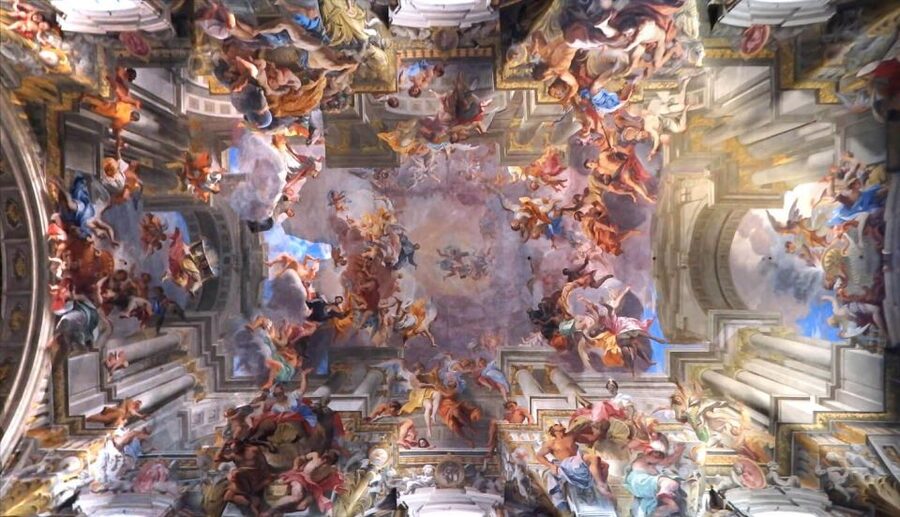
Sant’Ignazio offers a different kind of Roman church experience. Its interior is part of the city’s Baroque tradition, and a guide can help you notice how illusion, decoration, and religious drama shape the space. The tour does not give a long visit, but 20 minutes is enough for a focused introduction.
I like the inclusion of a church stop because it breaks up the outdoor ruins. Rome is not only about ancient stone. Its churches hold some of the city’s finest art, and they are often easy to rush through without knowing what deserves attention. A guide points your eyes in the right direction.
Remember the clothing rule here as well. Sleeveless shirts are not allowed, and the experience includes a church visit.
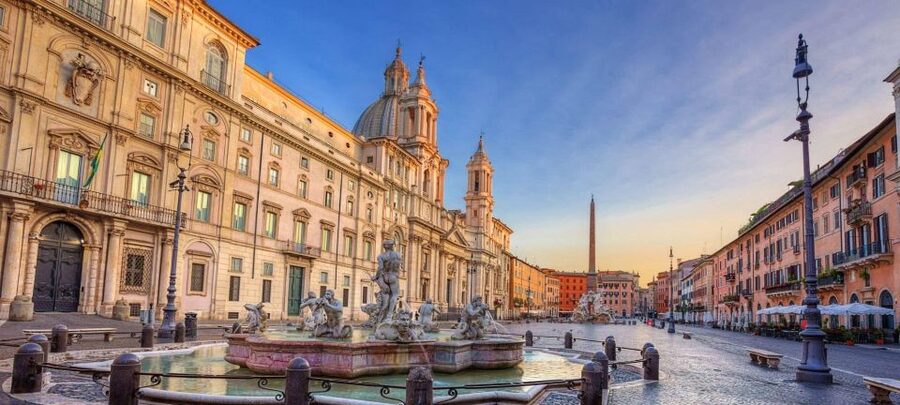
Piazza Navona, Rome’s grand public room
The route then reaches Piazza Navona for about 20 minutes. This is one of Rome’s best-known squares and a fitting place to see the city’s Baroque public face.
Piazza Navona is broad, theatrical, and designed for looking around rather than simply passing through. The tour gives you time to take in the square and hear the stories that make it more than a pretty open space. The guide’s use of legends and funny incidents should work especially well here, where Rome’s public life has long mixed art, politics, religion, and spectacle.
Twenty minutes is enough to appreciate the shape of the piazza, but not enough for a leisurely meal or a long café stop. Think of it as a guided introduction. You can return later if you want to examine the fountains, churches, or surrounding streets at a slower pace.
This is also a pleasant point in the route because the experience has moved well beyond Ancient Rome. By now, you have seen how the city developed from imperial center to Renaissance and Baroque capital. The sequence gives the tour a clear sense of progression.
Campo de’ Fiori and the darker final stories
The walk ends at Campo de’ Fiori. The closing topic includes a couple of dark legends, giving the tour a more atmospheric finish than a simple final photograph.
Campo de’ Fiori is a useful ending because it is a recognizable central square and a natural place to continue your day. The tour itself does not include a meal or a separate activity there, so plan your next move before you arrive if you want lunch, a drink, or more sightseeing.
Ending here also leaves you with Rome’s less polished side. The tour begins with a celebrated Michelangelo sculpture and moves through imperial monuments and famous churches. Finishing with darker stories reminds you that Rome’s past includes conflict, scandal, and uncomfortable episodes as well as grand art.
That balance is one of the experience’s appealing features. You are not promised a dry sequence of dates. You get the major names and places, but also the odd details that make them easier to remember.
What $94 buys you
The $94 price makes sense if you want a compact, guided introduction and value interpretation more than entry tickets. You are paying for four hours, a live English- or Italian-speaking guide, a small group of no more than 10 people, and a route that connects many major sights.
It is less attractive if you plan to enter the Colosseum and Roman Forum as the main purpose of your day. Those tickets cost extra, and the scheduled time at the ancient sites is short. In that case, compare this walk with a dedicated Colosseum and Forum experience, then decide if you still want the broader city route.
For first-time visitors, the price can be reasonable because Rome’s center is easy to misread. A guide gives you structure, points out what matters, and helps connect the ruins to the churches and squares that follow. Luisa’s ability to explain clearly in English is a particular advantage if you want a conversational tour rather than a memorized speech.
The small group also adds value. Ten people is still a group, but it is small enough for the guide to remain present and for you to ask questions. The tour has received a top overall rating from seven reviews, with especially strong praise for Luisa’s passion, English, friendly manner, and entertaining explanations.
Who should book this walk
I would recommend it to a first-time Rome visitor who wants to see the city’s major central sights in one outing. It is also a good fit if you enjoy art, legends, and personal stories as much as formal history.
You should be comfortable walking for four hours and handling uneven city surfaces. Wear comfortable shoes, avoid sleeveless shirts, and bring only what you want to carry. The tour is not suitable for people with mobility impairments.
I would not choose it as your only Colosseum experience if you want extensive time inside the amphitheater and Roman Forum. I would also hesitate if you prefer slow photography, long museum visits, or plenty of time at cafés. The route is broad and efficient, not leisurely.
Free cancellation is available up to 24 hours before the activity for a full refund, and you can reserve now and pay later. Those terms help if your Rome schedule is still shifting, but the bigger decision is the format: a lively overview or a detailed single-site visit.
Should you book Rome in a day?
Book this tour if you want one well-connected walk through Rome’s main eras, with a guide who adds art, gossip, legends, and darker stories to the usual landmarks. The route is especially useful early in a Rome stay, when you want a map in your head before exploring on your own.
Skip it if you need a full Colosseum and Forum visit, have mobility limits, or dislike a brisk schedule. For everyone else, the combination of a 10-person group, central route, church art, and Luisa’s highly praised storytelling makes this a practical way to meet Rome in four hours.
FAQ
How long does the Rome walking tour last?
The tour lasts four hours.
Where does the tour begin?
It begins in Piazza di San Pietro in Vincoli, in front of the Church of San Pietro in Vincoli.
Where does the tour end?
The tour ends at Campo de’ Fiori.
Which languages are available?
The live tour guide is available in English and Italian.
Is the Colosseum entrance ticket included?
No. Entrance and tickets for the Colosseum and Roman Forum are not included.
What should I wear?
Wear comfortable shoes. Sleeveless shirts are not allowed because the tour includes a church visit.
Is the tour suitable for people with mobility impairments?
No. The experience is listed as unsuitable for people with mobility impairments.
Can I cancel the booking?
Yes. You can cancel up to 24 hours in advance for a full refund. You can also reserve now and pay later.
Newest Rome tours we have reviewed
- Private TikTok Video Making in Rome★ 5.0 · 7 reviews
- Assisi, Orvieto and Civita di Bagnoregio Full Day Tour from Rome★ 4.5 · 45 reviews
- Assisi & Saint Francis Path Tour from Rome★ 5.0 · 45 reviews
- Assisi and Cascia Private Day Tour from Rome with Lunch★ 5.0 · 10 reviews
- Art Class in the center of Rome!★ 4.0 · 4 reviews
- Art & Craft: Beer Tour with Street Art in Rome★ 4.5 · 6 reviews
- From Rome: Private Day-Tour of Tuscany★ 5.0 · 16 reviews
- Arrival in Rome: Airport Transfer & Exclusive City Introduction★ 5.0 · 3 reviews
Rome City Highlights Tours, compared.
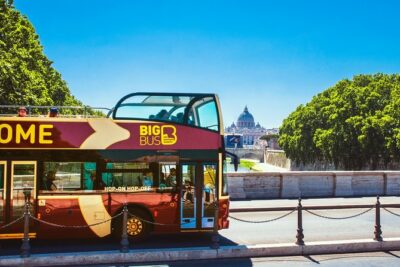
Big Bus Hop-on, Hop-off Open-Top Sightseeing Tour
Read our review →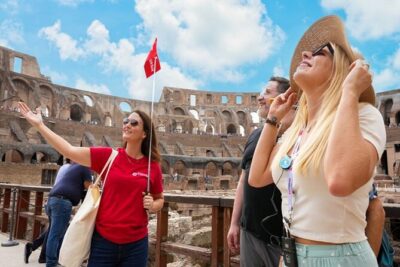
Rome in a Day Group Tour with Vatican Museums and Colosseum
Read our review →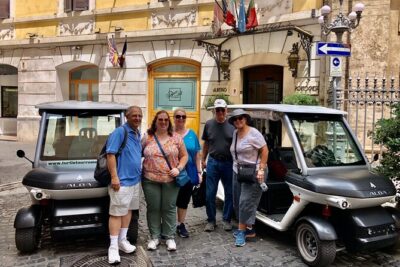
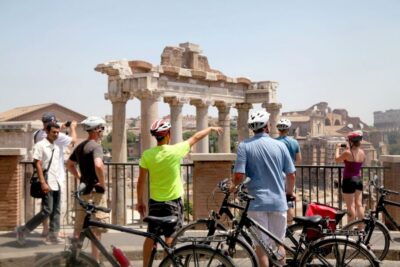
Top Highlights & Hidden Gems Tour by Cannondale E-Bike
Read our review →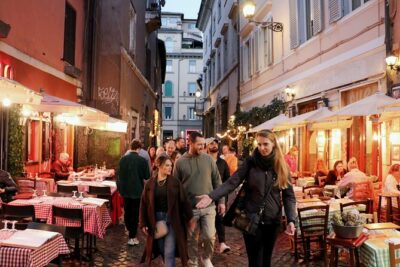
Rome Food Tour: Hidden Gems of Trastevere with Dinner & Wine
Read our review →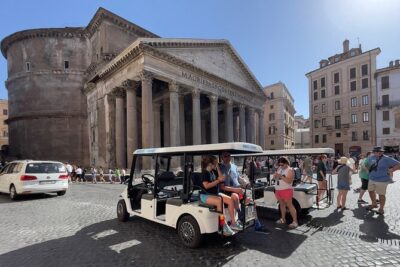
Rome Highlights City Tour by Golf Cart with Gelato
Read our review →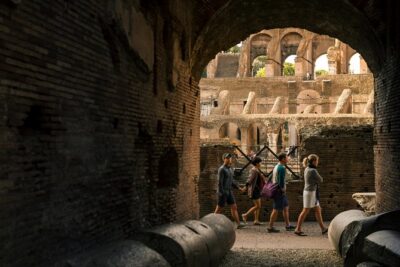
Rome in a Day Tour with Vatican, Colosseum and Historic Center
Read our review →Browse the lists this tour appears in