
Reviewed · ROME E-BIKE TOURS
Rome: Top Highlights & Hidden Gems Tour by Cannondale E-Bike
Rome makes far more sense when you can connect its scattered monuments in one moving sweep. This 14-kilometre e-bike route links the Colosseum, Trevi Fountain, Pantheon, Villa Borghese, and the Jewish Ghetto without asking you to trudge between them. I like the Cannondale bikes, which take the sting out of Rome’s hills, and I like the carefully chosen back streets that keep the ride calmer than a route along the main roads.
The guides are another strong point. Oscar, Chris, Meghan, Fabio, Bita, and others have earned praise for clear storytelling and careful group management. The catch is simple: Rome traffic and crowds are real, so even a leisure-level tour requires attention, balance, and comfort on a bicycle.
Key points to know before you book
- A big Rome overview in four hours: You cover a long list of famous sights without entering the monuments.
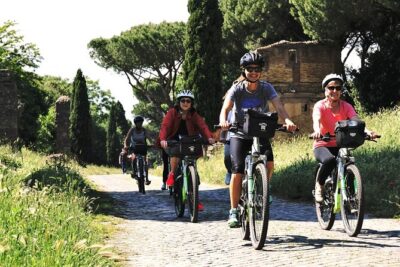
- Cannondale e-bikes with anti-puncture tires: Electric assistance helps on Rome’s hills and keeps the ride manageable.
- Back streets are part of the appeal: The route favors smaller lanes where possible, though traffic and crowds still appear.
- Pincio Terrace adds a worthwhile view: Villa Borghese gives you a broad look across central Rome.
- Small groups help with safety: The maximum is 10 participants, with a minimum of four.
- Families can join with the right setup: Child seats are available for ages 1 to 4, tag-alongs for ages 5 to 8, and appropriately sized e-bikes for children 9 and older.
Why an e-bike is a smart way to see central Rome
Rome’s sights are close on a map but not always close on foot. The Colosseum, Spanish Steps, Pantheon, Piazza Navona, and the Jewish Ghetto sit in different parts of the center, with hills, cobblestones, crowds, and busy crossings between them.
An e-bike changes the rhythm. You still pedal, but the motor helps you keep pace and deal with inclines. Several riders specifically praised the bikes as easy to use, powerful, and comfortable, including older participants and families. One useful detail from the equipment briefing is that you should avoid the left brake, a small point that can help you settle in quickly.
The tour covers about 8.5 miles, or 14 kilometres, in four hours. That is enough ground to build a good first picture of Rome, but not enough time for long visits inside each monument. Think of this as a moving introduction, not a substitute for an inside tour of the Colosseum, Pantheon, or Roman Forum.
More city highlights tours in Rome:
- Rome: Big Bus Hop-on, Hop-off Open-Top Sightseeing Tour
★ 3.5 · 2,580 reviews - Rome in a Day Group Tour with Vatican Museums and Colosseum
★ 4.5 · 2,450 reviews - Rome Highlights by Golf Cart Private Tour
★ 5.0 · 2,379 reviews
Starting near the Colosseum on Via Labicana
You meet at Via Labicana 49, a short walk from the Colosseum. The shop is a useful starting point because you are close to one of Rome’s biggest sights, but you do not begin by plunging straight into the thickest traffic.
The staff fit you to an appropriately sized bike and provide a helmet, which is mandatory. You also receive a handlebar bag and a biodegradable bottle of water. The bikes have anti-puncture tires, and the equipment is described as well maintained. Guides have also been praised for being patient while riders adjust seats and get used to the controls.
A short orientation matters here. If you have not used an e-bike before, ask questions before leaving the shop. You need to be comfortable stopping, starting, following hand signals, and keeping your place in the line. The guide sets the pace, but you remain responsible for handling your bike.
Colosseum and Roman Forum: Rome’s grand opening act
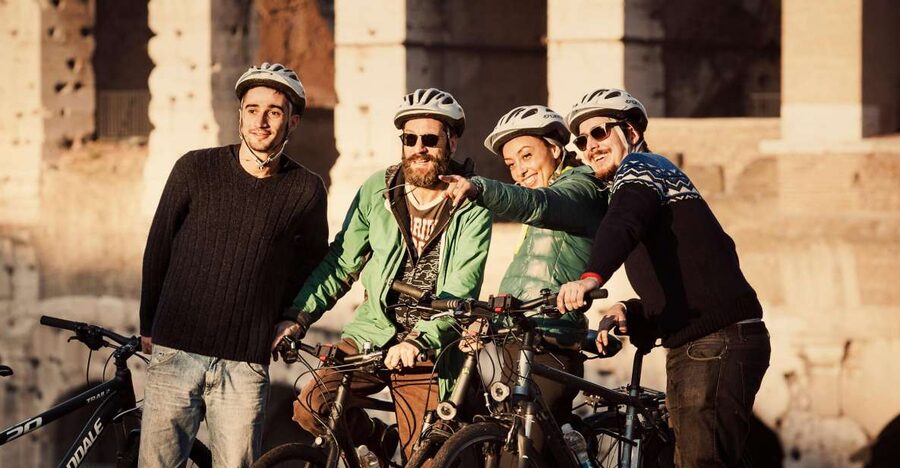
The Colosseum is an obvious first highlight, and seeing it from a bicycle gives you a quick sense of its scale before you return on foot for a longer visit. The tour is for outside sightseeing, so do not expect an arena entry or time inside the archaeological area.
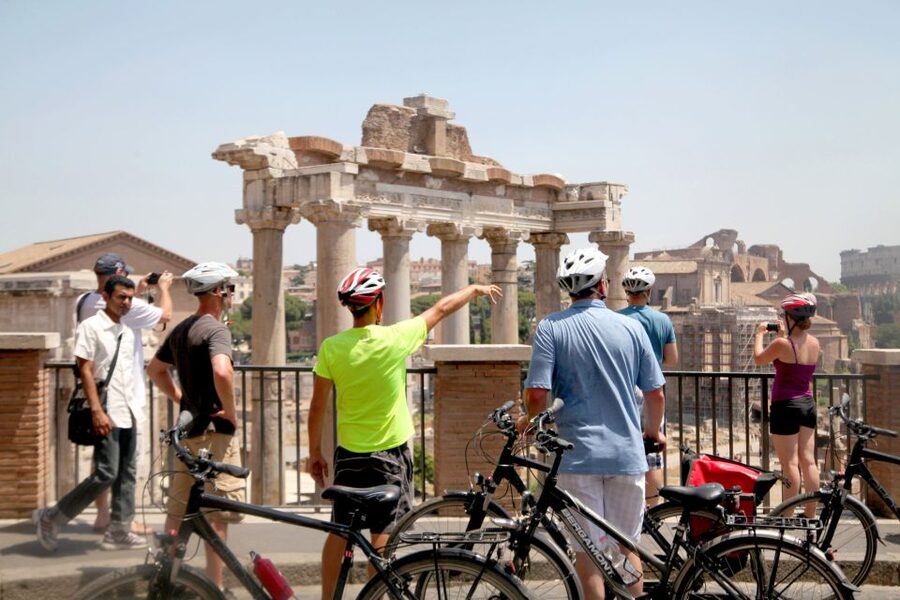
The nearby Roman Forum and Imperial Fora add the layers that make this part of Rome so powerful. Your guide can place the surviving arches, columns, and fragments into the wider story of ancient public life. The route also includes a panoramic view of the Roman Forum later in the ride, giving you a different angle and a chance to pause for photographs.
This is one place where the bike tour earns its keep. You can see the major ancient sites early in your visit, then decide which ones deserve a separate booking. If you want detailed archaeology or a slow look at every ruin, plan a dedicated visit on another day.
Piazza Venezia and the Vittoriano monument
The route continues toward Piazza Venezia and the Vittoriano, the enormous white monument that dominates the center of Rome. Its scale can feel almost startling after the warm-colored ancient ruins nearby.
A guide is useful here because the monument, traffic patterns, and surrounding streets can be confusing when you are moving through on your own. You get a quick look rather than a long architectural study, but the stop helps connect ancient Rome with the city’s later political and civic identity.
Expect the pace to change around major squares. There may be pedestrians, cars, scooters, and other bikes. Listen closely to the guide and do not ride ahead for a better photograph.
More e-bike tours in Rome:
- Rome EBike Tour: Appian Way, Catacombs & Roman Aqueducts
★ 5.0 · 1,766 reviews - Rome: Appian Way, Catacombs, & Roman Aqueducts E-bike Tour
★ 4.9 · 1,421 reviews - Rome City Small Group Bike Tour with quality Cannondale EBike
★ 5.0 · 1,380 reviews - Rome by Night – Ebike Small Group Tour – Food and Wine (Option)
★ 5.0 · 1,275 reviews
Trevi Fountain and the Spanish Steps
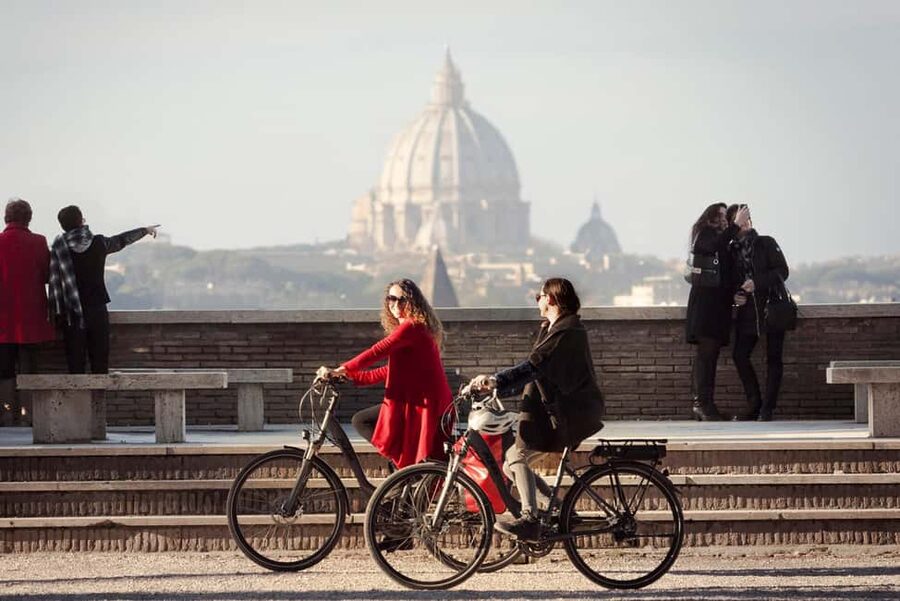
Trevi Fountain is one of Rome’s most famous stops, and it is also one of the most crowded. The bike gives you a practical way to reach it, but you should expect to get off and walk the bike, or leave it in the designated care of the group, depending on the guide’s instructions and conditions at the time.
You will have a chance to see the fountain and take pictures, but this is not a quiet, lingering visit. The same applies to the Spanish Steps. Their grand sweep and central location make them essential Rome stops, yet crowds often make a long pause awkward.
The value here is coverage. In one afternoon, you can mark these places off your first-look list and return later at a better time if you want a calmer experience. The tour also saves your legs for that second visit.
Piazza del Popolo and the Pincio view
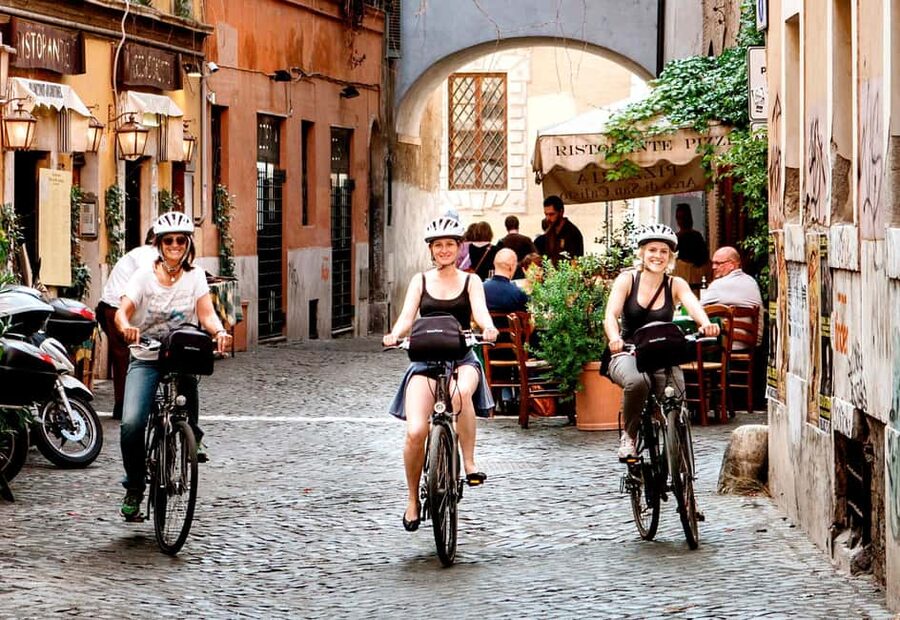
Piazza del Popolo opens the route into a broader urban space. From here, the ride heads toward Villa Borghese, one of the most welcome changes of mood on the itinerary.
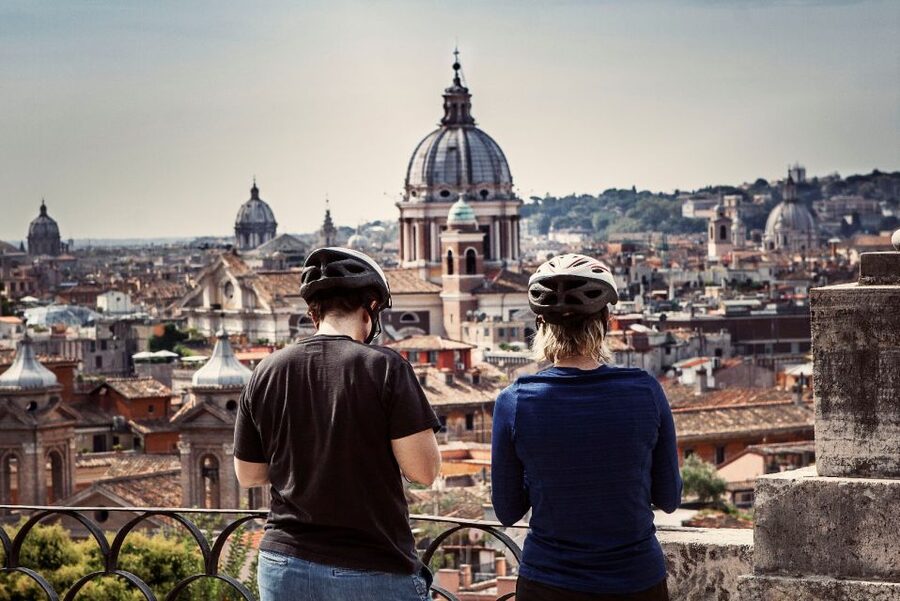
The Pincio Terrace is a highlight because it gives you a scenic view over Rome. This is the sort of place that is easy to miss if you stick only to the main monuments. The view helps you understand the city’s domes, rooftops, and broad spread in one glance.
Several riders valued this park and viewpoint precisely because they would not have found it alone. I would give this stop proper attention, even if that means taking a few extra minutes for photographs. The tour is brisk, but this is one of the places where the route feels more personal and less like a checklist.
Villa Borghese brings space and breathing room
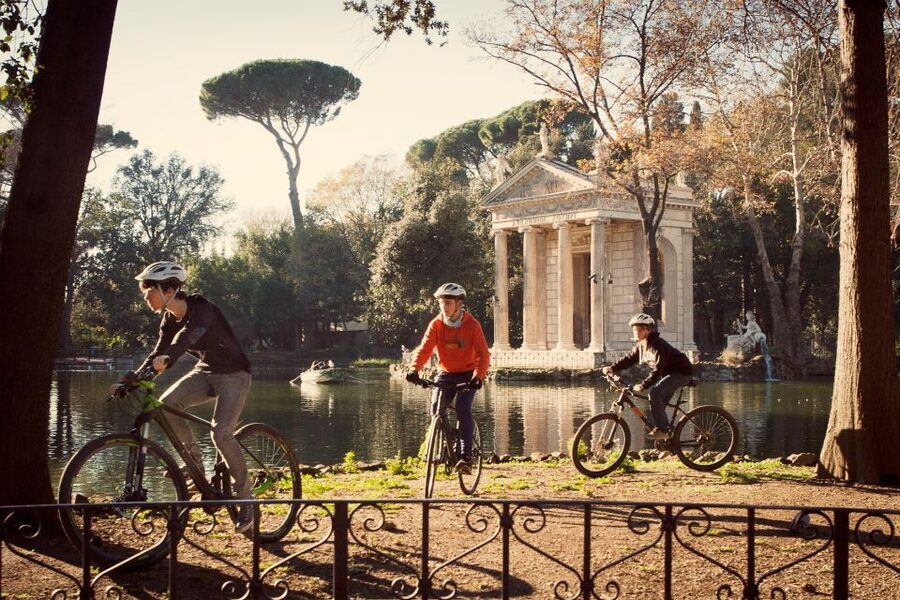
Villa Borghese provides a break from central streets. You ride through or alongside the park and see a quieter side of Rome, with the Pincio area supplying the main scenic payoff.
Do not confuse this part of the tour with a visit to the Borghese Gallery. The gallery is not listed as a stop, and the tour does not include museum admission. You are seeing the park and its setting, not making a formal art visit.
This portion suits anyone who wants variety. After monuments, fountains, and packed squares, a park route makes the four-hour ride feel less intense. In hot weather, guides have been praised for choosing shade when possible and keeping the group comfortable.
Piazza Navona and the Pantheon
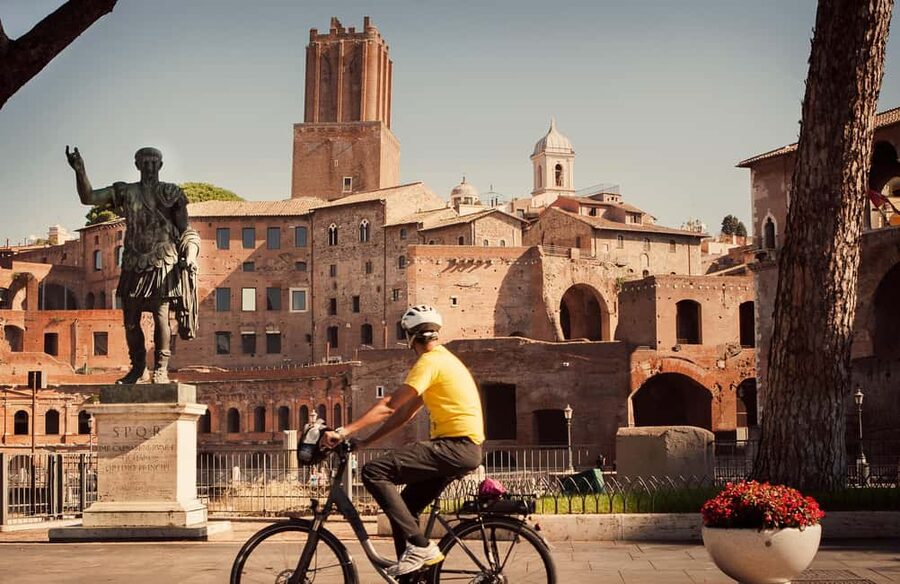
Piazza Navona is built over the former Stadium of Domitian, a fact that gives the square more depth than its lively fountains and café terraces suggest. The long oval shape is easy to understand when your guide explains the earlier structure beneath it.
The Pantheon follows as one of the tour’s most satisfying architectural stops. Its ancient concrete dome and later religious use make it a compact lesson in how Rome keeps reusing its past. Again, this is exterior sightseeing rather than an included interior visit.
The ride between these places is part of the experience. Rather than taking a direct, dull road, the guide uses smaller lanes where possible. You see bits of ordinary Roman streets along with the headline monuments. That balance is one of the best reasons to choose a bike tour over a bus.
The Jewish Ghetto and Theatre of Marcellus
The Jewish Ghetto adds another historical layer to the route. Its narrow streets and compact squares feel different from the grand spaces around the Pantheon and Piazza Venezia.
The Portico di Ottavia is included in this section, along with the Theatre of Marcellus. The theatre is especially useful for showing how Rome’s ancient structures have been absorbed into the later city. You are not simply looking at isolated ruins. You are seeing old stone beside streets where modern Roman life continues.
This part is a good reminder that Rome’s character is not limited to its most famous monuments. The smaller lanes and less obvious corners are often where a guide’s local sense of direction matters most.
Imperial Fora and the return to Via Labicana
The final part brings you back toward the Imperial Fora and a panoramic view of the Roman Forum before returning to Via Labicana 49.
By this point, you will have crossed a large portion of central Rome and seen a useful mix of ancient remains, grand civic buildings, fountains, parks, churches, and residential lanes. The route does not simply repeat the opening view of the Colosseum. It gives you several angles on the city’s past and present.
The end point near the Colosseum is convenient for continuing your day. You can return to the ancient area, head toward nearby restaurants, or use what you have learned to plan your next visit.
What the guide adds to the ride
A strong guide is essential on a city bike tour. The guide must do more than name monuments. They must choose safe streets, watch the group, judge when to stop, and tell stories while keeping the ride moving.
The guides on this experience have been praised for different strengths. Oscar is described as funny, engaging, and an excellent storyteller. Chris has been singled out for knowing the city well and keeping riders safe. Meghan has been praised for patience, clear explanations, and making sure the group stayed together. Fabio’s enthusiasm for Rome’s history was also a highlight for one group.
Names and personalities can change by departure, so you cannot book a particular guide unless the operator confirms it. Still, the pattern is clear: the guide is a major part of the value. You are not just renting a bike. You are paying for route planning, local context, and someone watching the road while you take in the city.
The tour is offered in English, Italian, Spanish, French, German, and Dutch. The group is limited to 10 people, which is a useful size for city riding. It gives the guide a better chance to keep everyone together than a large coach-style group.
Safety, comfort, and the limits of a leisure ride
The official difficulty is leisure, though it becomes intermediate when a child seat or tag-along is attached. That description is fair for riders who already feel comfortable on a bicycle, but you should not read leisure as completely effortless.
You still ride through a busy capital. One rider described the traffic and crowds as a little crazy, while also feeling safe because the guide managed the group carefully. That is the right expectation. The route favors smaller streets and lanes, but no central Rome ride can remove cars, scooters, pedestrians, uneven surfaces, or sudden congestion.
Wear comfortable clothing and closed shoes. The helmet is required, and the water bottle is useful, especially on warm afternoons. A 4 p.m. departure can be a smart choice in summer, when the heat is less punishing. Guides have also shown care by stopping in shaded places when possible.
For families, children under one year are not permitted. Ages 1 to 4 can ride in a child seat with a maximum load of 49 pounds, or 22 kilograms. Children 5 to 8 use a tag-along extension, and children 9 and older can ride an appropriately sized e-bike. The bike equipment has a total weight limit of 300 pounds, or 136 kilograms.
Is $85 a fair price?
At $85 per person, this is not the cheapest way to see Rome, but it offers solid value if you want a broad orientation in limited time. The price includes the Cannondale e-bike, helmet, water, handlebar bag, and guide. You are also paying for a route that connects many major sights without making you plan every turn.
The value is strongest on a first visit. In four hours, you can identify the places you want to revisit and get a basic sense of how central Rome fits together. It is also useful if walking tours leave you tired or if your schedule gives you only one open afternoon.
The value is weaker if you want long stops, museum interiors, or detailed archaeological instruction at each site. You will see many places, but you will not study each one at length. I would pair this ride with separate visits to the Colosseum, Roman Forum, Pantheon, or any museum that catches your interest.
Free cancellation is available up to 24 hours before departure, and you can reserve without paying immediately. A minimum of four participants applies. If that number is not reached, you are offered an alternative or a full refund. Public celebrations or city events can also force changes to the route.
Who should book this Rome e-bike tour?
I would choose this tour for first-time visitors, active couples, families with children who can ride or use the supplied attachments, and anyone who wants a fast but meaningful introduction to central Rome.
It is especially good for you if:
- You want to see major sights before choosing which ones to revisit.
- You are comfortable riding in an urban setting.
- You like history explained through stories rather than only reading signs.
- You want hills handled with electric assistance.
- You prefer a small group to a large bus.
- You value local route knowledge and safety support.
I would think twice if you dislike bicycles, feel nervous around traffic, or want to spend an hour at each monument. A walking tour or private sightseeing plan may suit you better in that case.
Should you book it?
Book this tour if you want to cover a lot of Rome without exhausting yourself and you accept that the city ride will include traffic, crowds, and a brisk pace. The combination of good Cannondale bikes, small groups, quieter connecting streets, and strong guides gives you more than a simple rental.
For the best use of your time, take it near the beginning of your stay. Note the places you want to revisit, then return on foot for longer visits. If you choose a warm-season departure, an afternoon start can make the ride more comfortable. For most first-time visitors who can ride confidently, $85 buys a useful map of Rome in motion.
FAQ
Where does the tour start and finish?
It starts and finishes at the tour shop at Via Labicana 49, a few minutes’ walk from the Colosseum.
How long is the tour?
The tour lasts four hours.
How far do you ride?
The route covers about 14 kilometres, or 8.5 miles.
What sights are included?
The route includes the Colosseum, Roman Forum, Imperial Fora, Piazza Venezia, the Vittoriano monument, Trevi Fountain, Spanish Steps, Piazza del Popolo, Villa Borghese, the Pincio view, Piazza Navona, the Pantheon, the Jewish Ghetto, Portico di Ottavia, and the Theatre of Marcellus.
Is the tour suitable for beginners?
The stated difficulty is leisure. You should still be comfortable riding a bicycle and following safety instructions in city traffic.
Is a helmet required?
Yes. Wearing a helmet is mandatory.
What equipment is included?
You receive a Cannondale e-bike with anti-puncture tires, a helmet, a handlebar bag, and a biodegradable bottle of water.
Can children join?
Children under one year are not allowed. Children ages 1 to 4 can use a child seat, ages 5 to 8 can use a tag-along extension, and children aged 9 and above can ride an appropriately sized e-bike.
Which languages are available?
The tour is offered in English, Italian, Spanish, French, German, and Dutch.
How many people are in the group?
The group is limited to 10 participants, and a minimum of four participants applies.
Newest Rome tours we have reviewed
- Private TikTok Video Making in Rome★ 5.0 · 7 reviews
- Assisi, Orvieto and Civita di Bagnoregio Full Day Tour from Rome★ 4.5 · 45 reviews
- Assisi & Saint Francis Path Tour from Rome★ 5.0 · 45 reviews
- Assisi and Cascia Private Day Tour from Rome with Lunch★ 5.0 · 10 reviews
- Art Class in the center of Rome!★ 4.0 · 4 reviews
- Art & Craft: Beer Tour with Street Art in Rome★ 4.5 · 6 reviews
- Arrival in Rome: Airport Transfer & Exclusive City Introduction★ 5.0 · 3 reviews
- From Rome: Private Day-Tour of Tuscany★ 5.0 · 16 reviews
Rome E-Bike Tours, compared.
Rome EBike Tour: Appian Way, Catacombs & Roman Aqueducts
Read our review →
Appian Way, Catacombs, & Roman Aqueducts E-bike Tour
Read our review →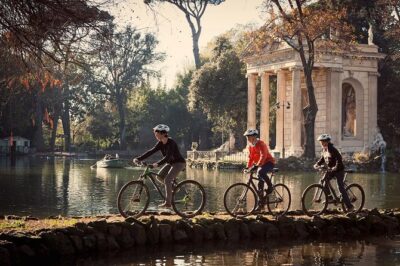
Rome City Small Group Bike Tour with quality Cannondale EBike
Read our review →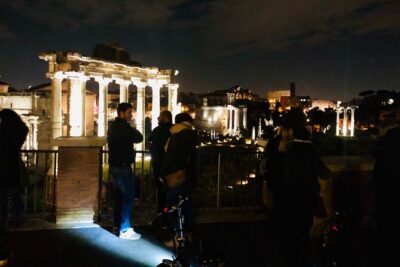
Rome by Night – Ebike Small Group Tour – Food and Wine (Option)
Read our review →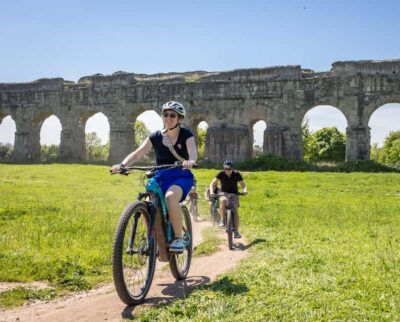
Appian Way E-bike Tour with Catacombs, Aqueducts & Food
Read our review →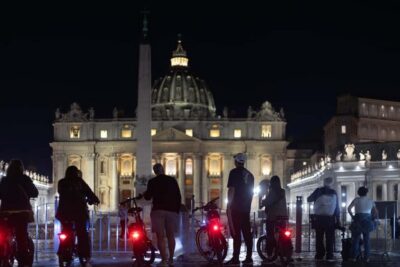
Appian Way, Catacombs and Aqueducts Park Tour with Top E-Bike
Read our review →
Appian Way E-Bike Tour Catacombs, Aqueducts & Picnic
Read our review →Browse the lists this tour appears in