
Reviewed · ROME
Ancient Art Workshop: Fresco
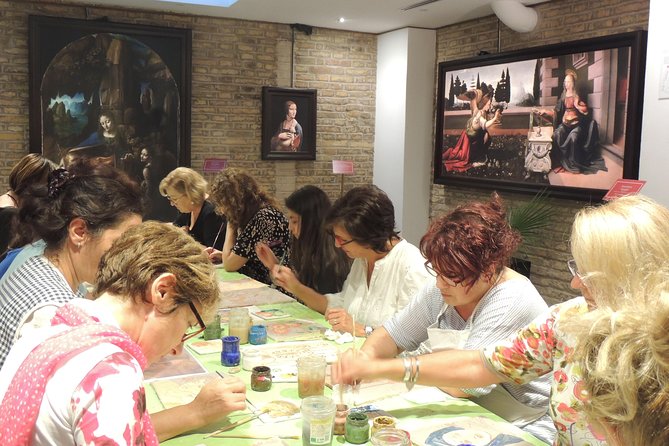
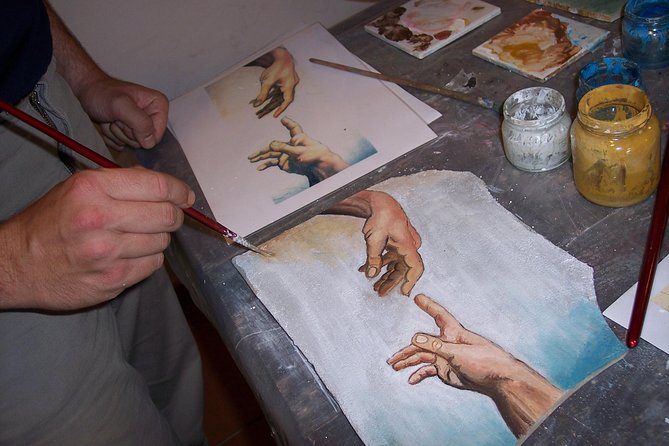
The best part of this Rome workshop is that you do not just look at ancient art. You make it. With help from Italian artists such as Cecilia and Nina, you can copy a detail from Michelangelo’s Sistine Chapel or create a Roman floor design using natural pigments and colored marble.
I like two things right away: you take your finished piece home immediately, and the two-hour class works for families, older adults, and people who think they cannot draw. The artists explain the process in plain language, offer patient help, and add stories from their work as restorers. The main caution is that one last-minute cancellation has been reported, so keep your booking confirmation and contact details handy before building your whole day around the class.
Key points to know before booking
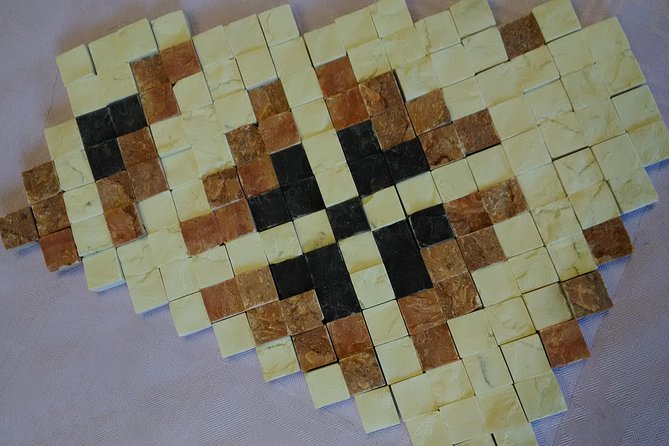
- Choose fresco or mosaic: Paint a plaster fresco inspired by Michelangelo, or arrange colored marble tiles into a Roman floor design.
- Use traditional materials: The class uses natural pigments, plaster, and marble tiles rather than simple craft-store substitutes.
- Work privately: The booking is for your own group, with up to two people included in the listed price of $246.90.
- Suitable for children: Children as young as eight have taken part, and the activity is designed for mixed ages and skill levels.
- Plan for about two hours: The lesson includes an introduction, practical instruction, time to make your piece, and immediate collection of your artwork.
- Confirm the meeting details: The information gives a Rome meeting address on Via del Commercio and also describes the studio as being on the Appian Way, so check the final directions carefully.
Why making Roman art beats another museum visit
Rome can fill your day with paintings, ruins, churches, and crowded squares. That is wonderful, but your eyes eventually need a rest. This workshop gives you a quiet change of pace while helping you understand how the art you see around the city was made.
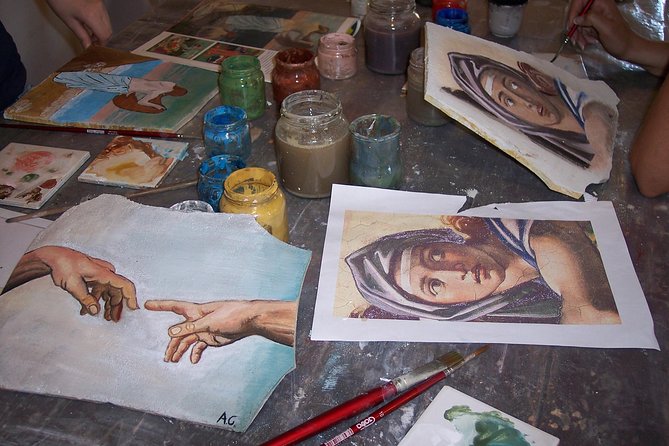
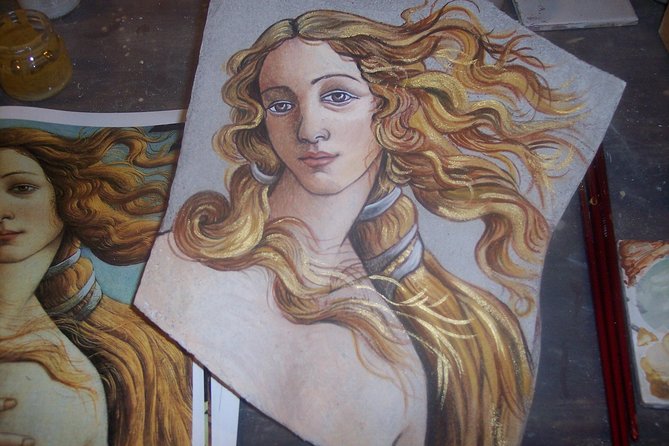
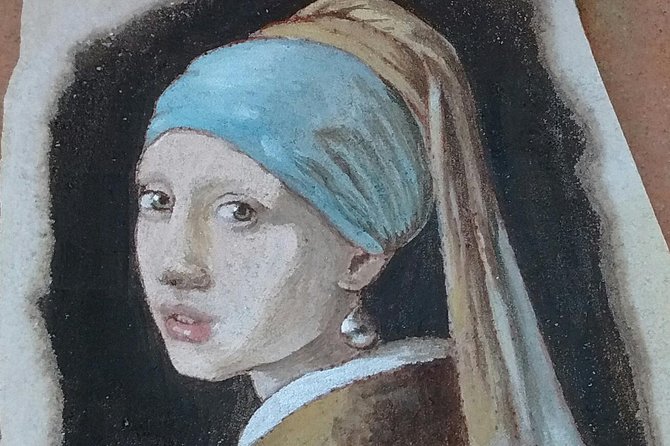
A fresco is not simply paint on a wall. You work with pigment that bonds to wet plaster, creating a durable, water-resistant surface as it dries. The instructor explains the basic process, then guides you through transferring marks and applying color. That hands-on step helps you notice details in Renaissance and ancient paintings that can be easy to miss from behind a museum barrier.
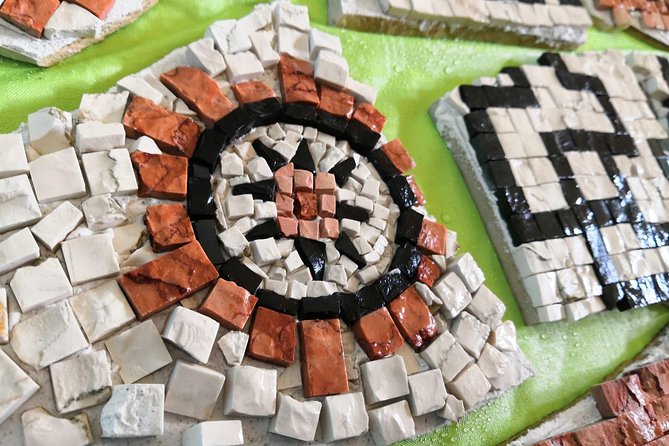
The mosaic option offers a different kind of work. You arrange small pieces of colored marble into a design inspired by Roman floors. The materials carry their own weight and texture. A tile is not just a colored square on a screen. It is stone, cut and placed to build a pattern that can last for centuries.
I especially like the connection with the Sistine Chapel. You can visit the Vatican first, then come here and try a small version of the method used by Michelangelo. Your piece will not rival the ceiling, of course, but that is not the point. You gain a better sense of the patience, planning, and control required by the original artist.
More cooking classes in Rome:
- 3 in 1 Cooking Class near Navona: Fettuccine, Ravioli & Tiramisu
★ 5.0 · 7,376 reviews - Rome: Pasta & Tiramisu Class with Fine Wine by the Vatican
★ 4.9 · 4,852 reviews - Rome: Pasta Making Class with Wine, Limoncello, and Dessert
★ 4.9 · 3,177 reviews
Your two-hour lesson, from introduction to finished piece
The itinerary lists Rome as the sole stop, and the activity takes place at the studio rather than moving between monuments. That makes the schedule simple. You arrive at the meeting point, choose or receive a project, learn the technique, complete your work, and leave with it.
The opening part of the lesson focuses on history and materials. You learn how fresco paint bonds with plaster and how natural minerals create pigment. Instructors have experience as artists and restorers, so the explanation can connect the classroom exercise with real conservation work.
You then receive practical guidance. The process includes transferring marks onto the surface, selecting colors, and applying paint with care. Nina has been praised for answering questions and showing how the method used by past masters works. Cecilia is described as patient, upbeat, and attentive, with strong English and a willingness to help you learn a little Italian along the way.
The final part is your studio time. You work on your own project, but you are not left to guess what comes next. The instructor can help with color blending, placement, and technique. That support matters if you are not used to drawing or painting. It also keeps the class enjoyable for children, who may need shorter explanations and more direct help.
At the end, you take the artwork with you. There is no waiting for shipping or returning to collect it. Your souvenir is personal, and it comes with a memory of making it rather than simply buying it.
Fresco or mosaic: choosing the right project
The fresco is the natural choice if your Rome plans include the Vatican, Renaissance churches, or Pompeii. You work with plaster and pigment, and the method gives you a practical link to the wall paintings you have seen in Italy.
The subject can include a detail from the Sistine Chapel. This does not mean you reproduce a huge section of the ceiling in two hours. You select a manageable design and receive help with the process. The result is an individual piece, not a factory-made souvenir.
A mosaic may suit you better if you like patterns, texture, and careful placement. Colored marble tiles give the project a solid, tactile quality. One parent and eight-year-old child chose mosaic and enjoyed working together, which suggests that the option can be a good match for younger children who prefer arranging pieces to painting fine lines.
You may want to decide before arriving, especially if your schedule is tight. The description allows you to choose between the two styles, but it does not give a fixed list of designs or explain how much time each option takes. If you have a strong preference, ask when confirming the appointment.
The instructors make the difference
Art workshops live or die by the teacher. Here, the strongest feature is the personal instruction. Cecilia has been described as attentive and patient, including with people who arrived convinced they were not artistic. She has also worked as a restoration specialist, which adds useful context to the practical lesson.
Nina has also led the class. She is described as friendly, well informed, and willing to answer detailed questions about the process. The teaching is not limited to handing you a brush and wishing you luck. You receive an explanation of how the marks transfer, how pigments work, and how to blend colors.
The activity can be offered in Italian, English, French, German, and Spanish. The published feature lists English, so English is the safest choice to expect when booking through the main sales page. If you prefer another language, confirm it in advance.
The instructors also seem comfortable with mixed-age groups. A family with children aged 10 and 17 found that both experienced and less experienced artists could follow the steps. An adult daughter and her 63-year-old mother also completed the class together. That range is useful in Rome, where a family itinerary often needs one activity that works for everyone.
Same city, a completely different half-day:
- Vatican Museums & Sistine Chapel Tour with Optional Basilica
★ 4.3 · 67,413 reviews - Vatican Museums, Sistine Chapel & St Peter’s Basilica Guided Tour
★ 4.5 · 39,149 reviews - Rome: Colosseum, Palatine Hill and Roman Forum Guided Tour
★ 4.8 · 32,814 reviews - Rome: Guided Tour of Colosseum, Roman Forum & Palatine Hill
★ 4.7 · 27,897 reviews
Location and timing in Rome
The workshop is described as being on the Appian Way and easily reachable by Metro A. The meeting information gives Bsocial, Via del Commercio 12 G, 00154 Roma RM, Italy. Since those details do not appear identical, confirm the exact address and route before setting out.
The activity is offered Monday through Friday, from 10 a.m. to 6 p.m., during the stated operating period from January 5, 2025, through July 1, 2027. The booking page lists the experience as approximately two hours, so leave room for arrival and departure rather than scheduling a major sight immediately afterward.
A midday class can be a smart choice in summer. You get out of the heat and away from long stretches of pavement, then return to sightseeing with a small work of art in hand. The studio setting has also been described as peaceful, with at least one lesson taking place in a garden studio.
Transportation, food, and drinks are not included. You need to arrange your own way to the studio and plan a snack or meal separately. The activity is near public transportation, and service animals are allowed. Most people can take part, but the supplied information does not give detailed access notes for wheelchairs or specific mobility needs, so ask before booking if that matters for your group.
What the $246.90 group price really means
The listed cost is $246.90 per group of up to two people. That is not a cheap drop-in craft lesson, but it becomes easier to assess when you consider what is included: a private session, an instructor, all colors and brushes, plaster or marble tiles, and a finished piece to take home.
For two people, the cost is about $123.45 each. You are paying for direct help rather than a large class where the teacher has to divide attention among many tables. The private format can be especially useful if one person is a beginner, one is a child, or both of you want different projects.
For a family of four, the pricing needs closer attention because the listed group limit is two. The description says the price covers up to two people, so ask the provider how additional participants are priced before assuming the same rate applies to your full family.
The value is strongest if you care about the process, not just the souvenir. A shop-bought mosaic costs less, but it does not teach you how Roman techniques work. A standard museum visit may cost less as well, but it will not give you a physical reminder made by your own hands.
Who will enjoy this most
This is a strong pick for families. Children can take part, the activity lasts about two hours, and the work is concrete and visual. An eight-year-old has completed the class successfully, while teenagers can take the subject more seriously and ask deeper questions about Michelangelo, restoration, and materials.
It also suits couples, parent-child pairs, and friends who want something quieter than another crowded attraction. The private setup means you can work at your own pace within the lesson rather than feeling self-conscious in front of strangers.
You do not need formal art training. In fact, the class may be most useful if you are unsure of your ability. The instructors break the process into steps and offer help with blending and placement. You should still expect to do the work yourself. This is a guided workshop, not a demonstration where someone creates the entire piece for you.
The activity is less suitable if you want a fast, highly structured attraction with a fixed script and no creative decisions. You will choose a subject, apply materials, and spend time concentrating. That is the appeal, but it may not suit a group that wants constant movement.
Practical booking advice
The experience is booked, on average, 31 days ahead. That does not guarantee it will sell out on your dates, but it is a useful signal. If this is important to your Rome schedule, reserve before arrival rather than waiting until the last morning.
Confirmation normally arrives when you book. If you book within one day of the experience, confirmation may come later and depends on availability. A past cancellation happened about one hour before the scheduled class because of a family emergency, and the reservation was refunded. That situation appears unusual, but it is worth keeping in mind if this is the only activity planned for your day.
The provider has responded quickly through WhatsApp when contact through the booking platform was difficult. I would save the provider’s contact information, confirm the appointment time, and ask for the exact meeting address. This is especially important because the location is described both in relation to the Appian Way and by the Via del Commercio address.
Free cancellation is available until 24 hours before the start time for a full refund. Changes or cancellations inside that window are not accepted for a refund. Cutoff times use local Rome time, so check the clock carefully if you are changing plans from another country.
Is this Rome workshop worth booking?
I would book this if you want a personal Roman souvenir, enjoy learning by doing, or need a relaxed break between major sights. The teaching, traditional materials, private format, and choice between fresco and mosaic give the activity more substance than a basic painting class.
It is particularly good after the Vatican or before visiting ancient sites, when you can connect what you made with the frescoes and mosaics you see elsewhere in Italy. The main things to confirm are the exact studio address, the language you want, and the cost for more than two people.
Skip it if your Rome schedule has no spare two-hour window, or if $246.90 for two people feels too high for a hands-on souvenir. For everyone else, this offers something museums cannot: you leave with a small piece of Roman art that you made yourself.
FAQ
How long does the Ancient Art Workshop last?
The workshop lasts approximately two hours.
What can I make during the class?
You can choose a fresco inspired by a detail from Michelangelo’s Sistine Chapel or create a mosaic based on a Roman floor design.
Can I take my artwork home?
Yes. You can take your finished fresco or mosaic away immediately at the end of the lesson.
Are materials included?
Yes. The price includes the materials needed for the workshop, such as colors, brushes, plaster, and colored marble tiles.
How many people does the listed price cover?
The listed price of $246.90 covers a private group of up to two people.
Is the workshop suitable for children?
Yes. The activity is suitable for adults and children, and most people can participate. Children as young as eight have taken part.
What languages can the activity be offered in?
The activity can be carried out in Italian, English, French, German, and Spanish. English is the language listed with the main booking details, so confirm your preferred language in advance.
Where does the workshop meet?
The meeting information gives Bsocial at Via del Commercio 12 G, 00154 Roma RM, Italy. The studio is also described as being on the Appian Way, so confirm the exact address before traveling there.
Can I cancel for a full refund?
Yes. You can cancel at least 24 hours before the start time for a full refund. Cancellations and changes made less than 24 hours before the activity are not accepted for a refund.
Newest Rome tours we have reviewed
- Private TikTok Video Making in Rome★ 5.0 · 7 reviews
- Assisi, Orvieto and Civita di Bagnoregio Full Day Tour from Rome★ 4.5 · 45 reviews
- Assisi & Saint Francis Path Tour from Rome★ 5.0 · 45 reviews
- Assisi and Cascia Private Day Tour from Rome with Lunch★ 5.0 · 10 reviews
- Art Class in the center of Rome!★ 4.0 · 4 reviews
- Art & Craft: Beer Tour with Street Art in Rome★ 4.5 · 6 reviews
- Arrival in Rome: Airport Transfer & Exclusive City Introduction★ 5.0 · 3 reviews
- From Rome: Private Day-Tour of Tuscany★ 5.0 · 16 reviews