
Reviewed · APPIAN WAY AND AQUEDUCTS TOURS
Appian Way and Aqueducts Electric Bike Tour
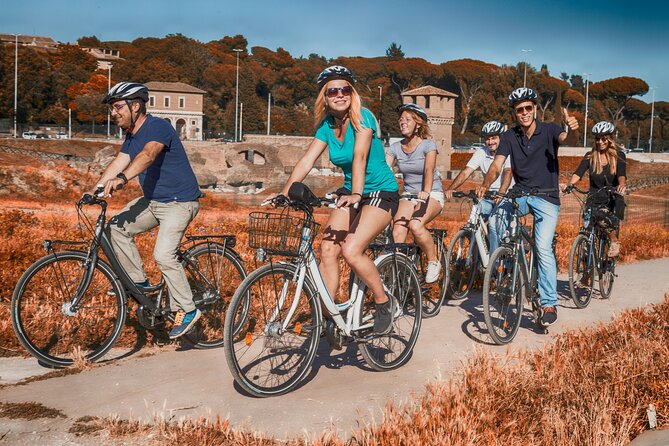
Rome’s ancient Appian Way is best understood at bicycle speed. On this four-hour ride, you leave the crowded center behind and follow old Roman roads toward ruined tombs, catacombs, aqueducts, and open countryside. The route links major sights with quieter corners that are difficult to reach on foot.
I like the way the electric bike takes the strain out of a long route, while still letting you feel the uneven Roman road beneath the wheels. I also like the guides’ human touch. Adriana, Monica, Monika, Filipe, and Milton are specifically praised for clear explanations, careful navigation, and lively storytelling.
The main drawback is the road surface. Parts of the Appian Way are bumpy, rocky, or dusty, and the tour is not a casual ride for someone who rarely cycles. You need to control a bike confidently, manage rough ground, and handle a moderate level of physical effort.
Key points to know before booking
- Ride through Roman history instead of viewing it from behind glass: The route connects the Baths of Caracalla, Aurelian Walls, catacombs, ancient circuses, tombs, and aqueducts.
- Expect real cycling conditions: Some sections are smooth enough, while others include ancient stones, dirt tracks, and rocky surfaces.
- Small groups make a difference: The tour has a maximum of 10 people, allowing the guide to watch the group more closely.
- The electric assist helps, but it does not replace bike skills: You still need to balance, steer, brake, and ride over uneven ground.
- The Aqueduct Park is a major payoff: Huge Roman water channels cross open green space, creating one of the most memorable views outside central Rome.
- Budget for possible admissions: Some stops are free, while admission to the Baths of Caracalla, the Tomb of Caecilia Metella, and the Villa of the Quintilii is not included.
Why the Appian Way works so well by e-bike
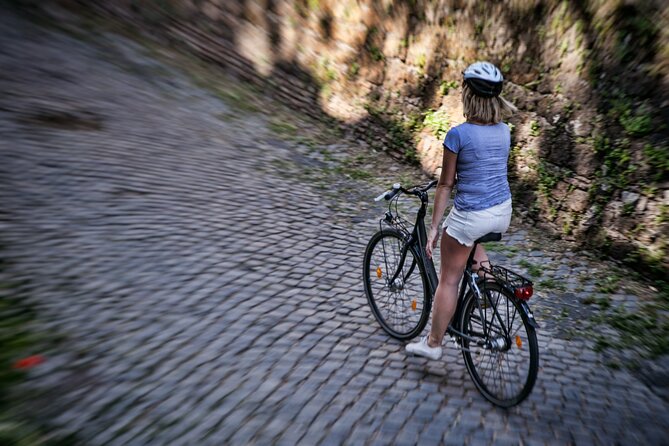
Central Rome is packed with famous monuments, traffic, and pedestrians. The Appian Way offers a different side of the city. You ride past Roman walls, old tombs, fields, trees, and ruined structures spread across a broad area.
Walking this route would take much longer, and using a car would remove much of the pleasure. An e-bike gives you enough range to connect the Appian Way with the aqueducts and Caffarella Park in one outing. You still pedal, but the motor helps on longer stretches and makes the half-day route manageable.
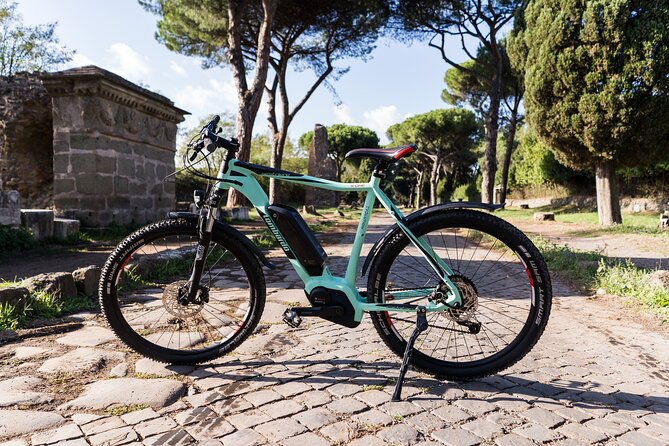
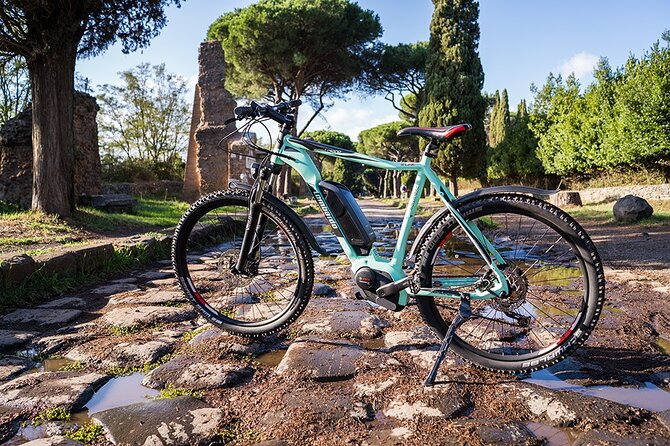
The bikes come in several sizes and include helmets and a mobile phone holder. The equipment is described as well maintained, and first-time e-bike users have found the bikes easy to handle. That said, easy to operate does not mean risk-free. You should already know how to ride a bicycle and feel comfortable steering on loose or uneven ground.
The meeting point is at Via dei Cerchi 59, near the Circus Maximus area. The tour returns to the same place, which simplifies planning. It is offered in English, uses mobile tickets, and has a maximum group size of 10.
More Appian Way and aqueduct tours:
- Rome EBike Tour: Appian Way, Catacombs & Roman Aqueducts
★ 5.0 · 1,766 reviews - Rome: Appian Way, Catacombs, & Roman Aqueducts E-bike Tour
★ 4.9 · 1,421 reviews - Rome:Appian Way E-bike Tour with Catacombs, Aqueducts & Food
★ 4.9 · 1,210 reviews
Starting near Circus Maximus
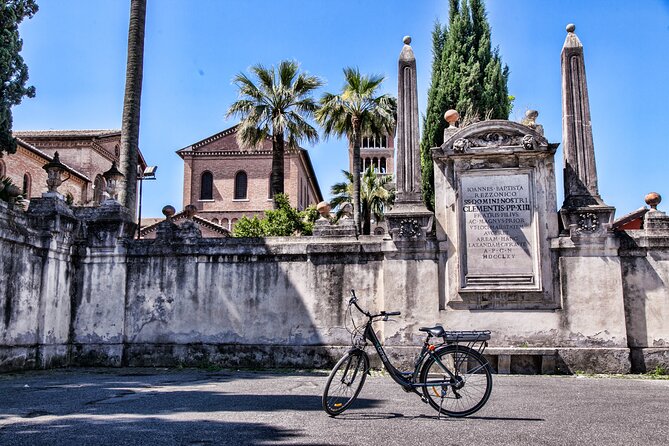
The first stop is Circo Massimo, or Circus Maximus, the enormous chariot-racing stadium between the Aventine and Palatine hills. The visible remains can look modest at first, so the guide’s explanation matters here.
The arena measured about 621 meters long and 118 meters wide. It could hold more than 150,000 spectators, making it one of the largest public venues of the ancient world. A 10-minute stop gives you the scale and purpose of the site before the ride moves toward the Baths of Caracalla.
This is a short introduction rather than a full archaeological visit. You do not get a long period to wander, but the location is a useful starting point because it places you in the middle of Rome’s ancient public life almost immediately.
The Baths of Caracalla and the Aurelian Walls
The Baths of Caracalla are among the route’s most impressive ruins. Built mainly between AD 212 and 217 under Septimius Severus and Caracalla, the baths served Rome until the 530s. They were the city’s second-largest public bathing complex after the Baths of Diocletian.
You spend about 20 minutes here. The scale of the brick walls and surviving structures gives you a clear sense of how much engineering and labor went into Roman public buildings. This was not simply a place to wash. Roman baths were social, recreational, and civic centers.
Admission is not included, so check the current ticket arrangements if you want to enter beyond the planned viewing area. The short stop works well for seeing the exterior and hearing the guide’s explanation, but visitors who want a detailed archaeological visit may need separate time on another day.
Next comes Porta San Sebastiano, the largest and one of the best-preserved gates through the Aurelian Walls. The walls were built to protect Rome, and this gate marked an important passage toward the Appian Way.
A 20-minute stop gives you time to see the stonework and understand how the road once connected Rome with the wider Roman world. The gate is free to view, and it marks a clear change in atmosphere. From here, the ride begins to feel less like a city sightseeing circuit and more like a journey beyond Rome’s center.
Catacombs and the Circus of Maxentius
The Catacombs of Saint Callixtus are located along the Appian Way in a quieter, almost pedestrian area. The site brings a more solemn mood to the ride. These underground burial grounds are part of the Appian Way’s long connection with funerary monuments and early Christian history.
The scheduled stop lasts about 30 minutes. The information provided for this tour lists admission as free, though the route may focus on the exterior and surroundings rather than a full underground visit. If entering the catacombs is especially important to you, confirm what is included when booking.
The Circus of Maxentius follows with another reminder that the Appian Way was not just a road lined with tombs. The complex was built by Emperor Maxentius between AD 306 and 312 and included a circus for chariot racing.
The remains are free to view, and the 20-minute stop is enough to grasp the layout. Compared with Circus Maximus, this site feels more remote and easier to imagine as part of the countryside. The contrast between the two arenas helps explain how Roman entertainment operated at different scales.
More e-bike tours in Rome:
- Rome: Top Highlights & Hidden Gems Tour by Cannondale E-Bike
★ 4.9 · 1,760 reviews - Rome City Small Group Bike Tour with quality Cannondale EBike
★ 5.0 · 1,380 reviews - Rome by Night – Ebike Small Group Tour – Food and Wine (Option)
★ 5.0 · 1,275 reviews - Rome: E-Bike Night Tour with Food and Wine Tasting
★ 4.9 · 1,131 reviews
Tombs, villas, and the old Appian road
The Tomb of Caecilia Metella is one of the best-preserved monuments along the Via Appia. Built in the first century BC for Caecilia Metella, daughter of Quintus Caecilius Metellus Creticus, it has the solid, fortress-like shape that makes Roman tombs along this road so memorable.
The tour allows about 20 minutes here. Admission is not included, so you should treat this as another point where the price of the tour does not cover every archaeological entrance. Even from outside, the monument helps you see how wealthy Roman families used the road as a display of status and remembrance.
The Villa of the Quintilii and Santa Maria Nova offer another 30-minute stop. The villa once belonged to the wealthy brothers Sextus Quintilius Valerius Maximus and Sextus Quintilius Condianus, who were consuls in AD 151.
The complex lies beyond the fifth milestone of the ancient Appian Way. Its location shows how elite Romans could retreat from the city while remaining connected to it. Admission is not included here either. You should not expect a complete visit to every ruin on the route in just four hours, but the stop gives you a strong sense of the size and reach of Roman private estates.
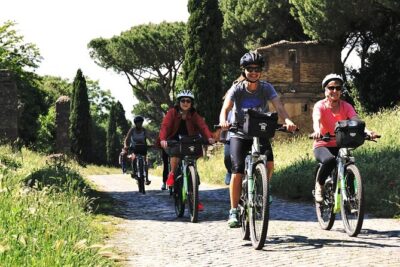
This is also where the ride’s physical side becomes more important. The Appian Way is not a perfectly paved cycle path. Ancient stones can make the ride bouncy, and some stretches are rough enough to demand concentration. Keep both hands ready, slow down when needed, and do not let the electric motor tempt you into riding too quickly.
Aqueduct Park and the Roman countryside
Parco degli Acquedotti is likely the visual high point of the tour. The park takes its name from the aqueducts that cross it, including the Aqua Felix and parts of the Aqua Claudia. Remains of Villa delle Vignacce and a short stretch of the original Roman Via Latina are also found in the area.
You spend about 40 minutes here, the longest scheduled stop. That makes sense. The aqueducts need space and time to appreciate. Their arches cross open ground rather than standing among dense modern buildings, so you get a clearer idea of how Roman infrastructure shaped the countryside.
This section also gives you a break from tight city streets. The route can include green areas, country dirt trails, and views of goats or sheep. The combination of massive engineering and rural calm is what makes the ride different from a standard Rome sightseeing tour.
The open setting does not mean the path is effortless. Heat can be a factor, especially during warmer months. Bring water, use the drink stops wisely, and expect to spend part of the ride exposed to the sun. The electric assist helps with distance, but it does not remove the effects of weather or rough ground.
Caffarella Park and the story of Egeria
Parco della Caffarella is part of the Appian Way Regional Park and lies between the Via Latina and the Appian Way. It is a large open area within Rome, giving you another quiet stretch after the archaeological sites.
The park helps tie the monuments together. Instead of seeing isolated ruins, you begin to understand the Appian Way as a broad historic corridor, with roads, farms, water systems, burial places, and villas sharing the same area.
The final stop is the Ninfeo di Egeria, a spring or nymphaeum connected with Egeria, the legendary nymph and adviser to Numa Pompilius, Rome’s second king. According to the old story, she guided him on laws and religious rituals.
You spend about 20 minutes here. The story is a fitting ending because it shifts the tour from stone and engineering to myth and memory. Egeria’s name later became a term for a female adviser or counselor, so the guide can connect this local Roman legend with a word still used today.
What the guides add to the ride
The guide can make or break a route like this. You are moving through many sites in four hours, and without context, some ruins can appear as scattered walls and stones.
Adriana is praised for combining strong historical knowledge with close attention to riders. Monica is noted for clear English, organization, and helping a family feel safe on busy streets. Monika, Filipe, and Milton are also specifically mentioned for their history explanations, friendliness, and care with the group.
You should expect the guide to navigate the city streets and the more difficult paths. That matters because the transition from Rome’s traffic to the Appian Way requires attention. The best part of the tour is not just reaching each stop. It is having someone explain why these sites belong together.
The group limit of 10 is helpful. A smaller group allows the guide to keep an eye on riders and makes it easier to hear explanations. It also reduces the chance that the ride feels like a large convoy.
Price, timing, and what you receive
At $90.02 per person, the tour is not the cheapest way to see one Roman monument. The value comes from the amount covered in four hours: central Rome, the Appian Way, several Roman sites, the catacombs area, Caffarella Park, and the aqueducts.
The fee includes the e-bike, helmet, and phone holder. Food and drinks are not included, and tips are separate. Several archaeological admissions are also not included, so the final cost can rise if you choose to enter the Baths of Caracalla, Tomb of Caecilia Metella, or Villa of the Quintilii.
I consider the price reasonable for someone who wants a guided route and does not want to arrange bike rental, navigation, and site planning separately. It is less appealing if you only want a short, gentle ride or prefer to spend several hours inside one archaeological complex.
The tour is often booked well ahead, with an average booking lead time of about 68 days. That suggests you should reserve early if your Rome dates are fixed. Free cancellation is available up to 24 hours before the start time. Changes or cancellations inside that window are not refunded.
Who should book this tour?
This ride suits you if you want to see more than the Colosseum, Roman Forum, and Trevi Fountain. It is especially good for families with older children, active couples, and visitors who enjoy history but would rather experience it outdoors than spend another half-day in a museum.
It is not recommended for children under 12, people who cannot ride a bike, or anyone uncomfortable with rough terrain. The tour requires moderate physical fitness. You should be ready for four hours of cycling, including uneven stone and dirt paths.
A first e-bike ride is possible, since the bikes are described as easy to use, but you still need basic cycling confidence. If you are worried about the surface, tell yourself that the rough sections are part of the character of the ancient road, then ride slowly and let the guide set the pace.
Should you book the Appian Way e-bike tour?
Book it if you want a half-day change from central Rome and like the idea of moving through history under your own power. The strongest parts are the Appian Way, Aqueduct Park, the care shown by guides such as Adriana and Monica, and the chance to see Roman ruins in open countryside.
Skip it if you need a smooth cycle path, dislike physical activity, or want lengthy interior visits at each archaeological site. The road can be rocky, and some admission fees are separate.
For the right rider, this is one of the most efficient ways to connect Rome’s ancient roads, water systems, tombs, villas, and legends in a single outing. The 4.9 rating from 20 reviews and 100 percent recommendation fit the experience’s main strengths: excellent guides, good bikes, strong historical content, and a welcome escape from the city center.
FAQ
How long is the Appian Way and Aqueducts Electric Bike Tour?
The tour lasts approximately four hours and ends back at the meeting point.
Where does the tour begin?
The meeting point is Via dei Cerchi 59, 00186 Rome, Italy.
Where does the tour end?
The activity ends back at the meeting point on Via dei Cerchi.
What language is the tour offered in?
The tour is offered in English.
What equipment is included?
The tour includes a quality electric bike, a helmet, and a mobile phone holder. Several bike sizes are available.
Is food or drink included?
No. Food and drink are not included in the tour price.
Are archaeological admission fees included?
Admission is not included at the Baths of Caracalla, the Tomb of Caecilia Metella, and the Villa of the Quintilii. The listed stops at Circus Maximus, Porta San Sebastiano, the Catacombs of Saint Callixtus, the Circus of Maxentius, Aqueduct Park, Caffarella Park, and the Ninfeo di Egeria have no admission charge listed.
Is the tour suitable for children?
The tour is not recommended for children under 12 years old.
Do I need to be physically fit and know how to ride a bike?
You should have a moderate level of physical fitness and know how to ride a bicycle. The route includes rough, rocky, and uneven sections, so basic bike control is important.
Can I cancel for a full refund?
You can cancel up to 24 hours before the experience start time for a full refund. Cancellations or changes made less than 24 hours in advance are not refunded or accepted.
Newest Rome tours we have reviewed
- Private TikTok Video Making in Rome★ 5.0 · 7 reviews
- Assisi & Saint Francis Path Tour from Rome★ 5.0 · 45 reviews
- Assisi, Orvieto and Civita di Bagnoregio Full Day Tour from Rome★ 4.5 · 45 reviews
- Assisi and Cascia Private Day Tour from Rome with Lunch★ 5.0 · 10 reviews
- Art Class in the center of Rome!★ 4.0 · 4 reviews
- Art & Craft: Beer Tour with Street Art in Rome★ 4.5 · 6 reviews
- Arrival in Rome: Airport Transfer & Exclusive City Introduction★ 5.0 · 3 reviews
- From Rome: Private Day-Tour of Tuscany★ 5.0 · 16 reviews
Appian Way and Aqueducts Tours, compared.
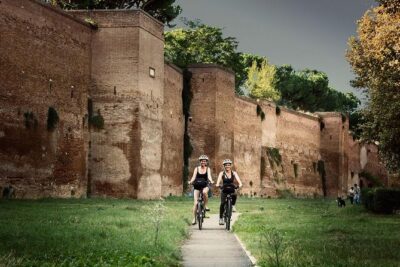
Rome EBike Tour: Appian Way, Catacombs & Roman Aqueducts
Read our review →
Appian Way, Catacombs, & Roman Aqueducts E-bike Tour
Read our review →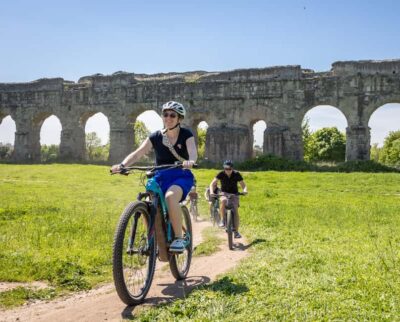
Appian Way E-bike Tour with Catacombs, Aqueducts & Food
Read our review →
Rome Underground: Catacombs Tour, Aqueducts and Appian Way
Read our review →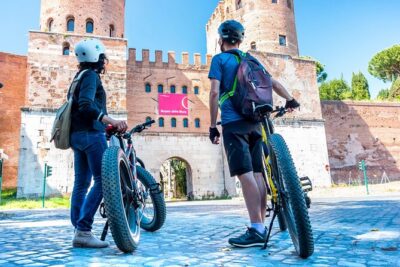
Appian Way Aqueducts Bike Tour (Catacombs & Lunch Option)
Read our review →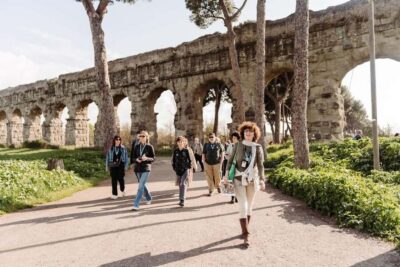
Appian Way, Catacombs and Aqueducts Park Tour with Top E-Bike
Read our review →
Appian Way E-Bike Tour Catacombs, Aqueducts & Picnic
Read our review →Browse the lists this tour appears in