
Reviewed · ROME CATACOMBS TOURS
Catacombs and Roman Countryside Half-Day Walking Tour
Rome’s ancient catacombs and aqueducts tell two very different stories: one is hidden underground, the other stretches boldly across open fields. This half-day outing links both with a walk along the Appian Way, a visit to San Callisto Catacombs, and a stop at the great Roman aqueducts.
I like the chance to escape central Rome without arranging local transport, and I like the mix of quiet countryside, early Christian history, and Roman engineering. The guides, including Marcello, Mariah, and Tatia, are often praised for making the past understandable and entertaining. The main drawback is that traffic, group arrangements, or poor headset sound can make the coach portion longer and less informative than planned.
At a glance
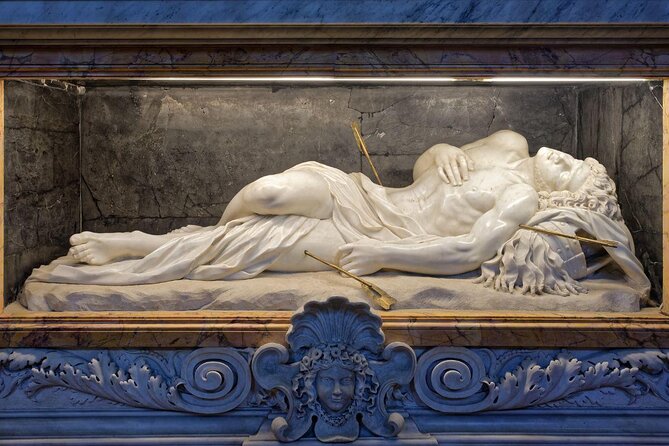
- San Callisto Catacombs: Enter one of Rome’s largest early Christian burial complexes, including the Crypt of the Popes and the Crypt of Saint Cecilia.
- Ancient Appian Way: Walk along a road begun in 312 BC, once Rome’s main route toward southern Italy and the East.
- Cecilia Metella’s tomb: See the massive first-century BC mausoleum from outside on a hill beside the Appian Way.
- Roman aqueducts: Get close to the towering remains and hear why this part of the countryside was chosen for them.
- Easy central meeting point: Begin and end near Via Cavour and Rome’s public transport network.
- Useful half-day format: The advertised duration is about three hours, though traffic can sometimes extend the outing.
Why leave Rome’s center for the Appian Way?
Rome’s center gives you monuments at every turn, but it can also feel crowded and tightly packed. This tour takes you south toward the Appian Way, where ancient ruins sit among open ground and the city noise fades.
The road, known to Romans as the Queen of Roads, began in 312 BC. It linked Rome with Brindisi in southern Italy, giving the Roman Republic a strong route for trade, military movement, and communication with Greece and the East.
I like this change of pace. You are not just looking at another temple or marble facade. You are walking on one of the oldest major roads in Europe, then moving through countryside that still holds large pieces of Roman infrastructure.
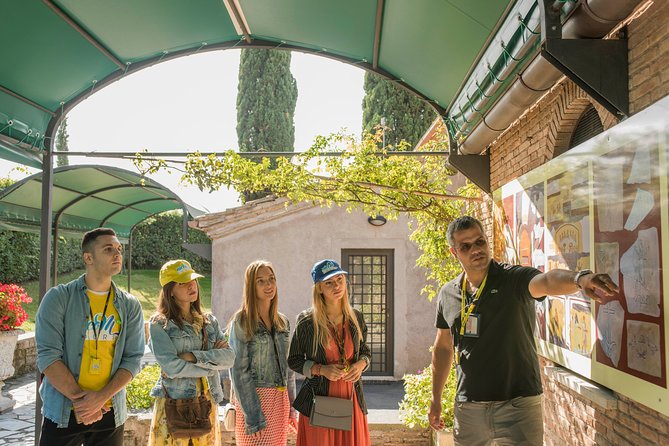
The outing is guided, which matters here. The archaeological area is broad, and it is easy to wander past an important ruin without knowing what you are seeing. Your guide connects the stops and explains why the road, tombs, aqueducts, and burial tunnels belong to one larger story.
More catacombs tours in Rome:
- Rome: Crypts and Catacombs Underground Tour with Transfers
★ 4.6 · 5,341 reviews - The Original Roman Crypts and Catacombs Tour with Transfers
★ 4.5 · 4,896 reviews - Rome: Catacombs of St. Callixtus Entry Ticket & Guided Tour
★ 4.6 · 3,037 reviews
San Callisto Catacombs and the underground visit
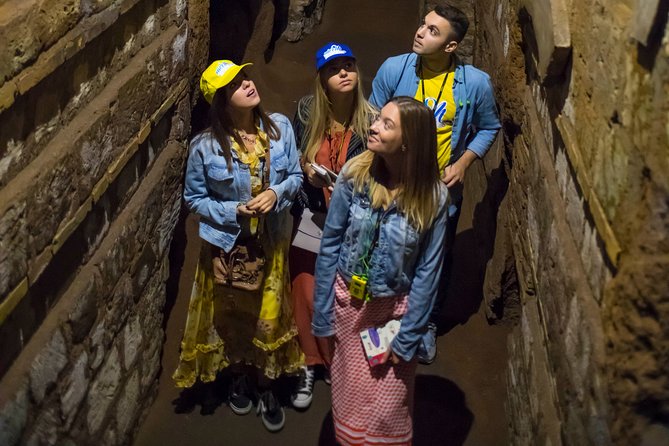
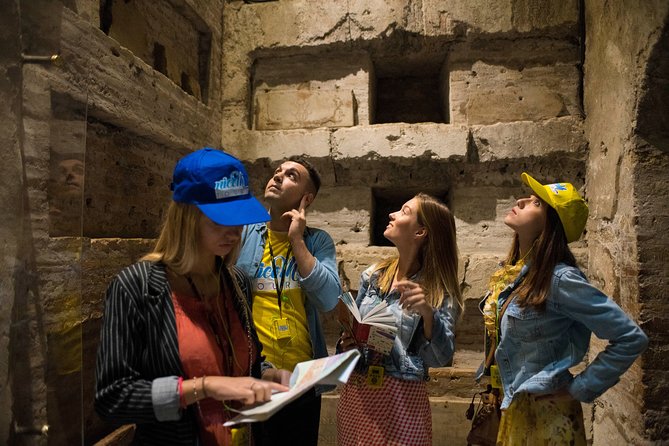
The first major stop is the Catacombs of San Callisto, described as one of Italy’s largest and most important Christian burial sites. The complex was used as an underground cemetery for roughly 500,000 Christians, along with dozens of martyrs and popes.
You spend about an hour here, with admission included. The visit includes the Crypt of Saint Cecilia and the Crypt of the Popes, two areas that give the catacombs their particular importance.
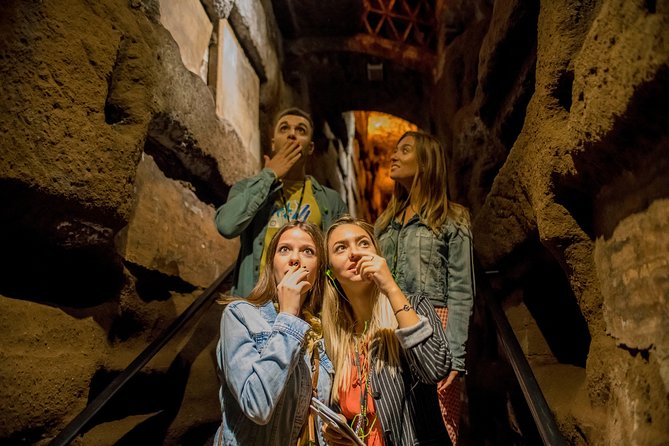
Do not arrive expecting rows of bones. The catacombs are primarily a network of passageways, burial chambers, inscriptions, and religious symbols. The value is in seeing how early Christian communities organized burial and worship underground, often during periods when open Christian monuments were not yet common.
The tunnels are narrow in places and below ground, so this part may not suit anyone uncomfortable in enclosed spaces. One useful detail from the experience is that a guide helped reassure a visitor with claustrophobia, but you should still consider your own comfort before booking.
A dress code is strictly enforced. Your shoulders and knees must be covered, for both men and women. This is not a minor suggestion: you can be refused entry if your clothing does not meet the requirement.
The catacombs can also be noisy when several groups arrive at once. Headsets may be available if needed, but audio quality has not always been perfect, especially when groups are split between vehicles. Stay close to the guide and ask for clarification if you lose part of the explanation.
Circus of Maxentius and Cecilia Metella
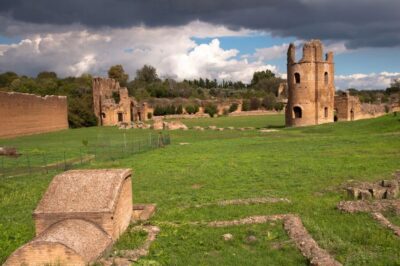
After the catacombs, the vehicle continues through the Roman countryside toward the remains of the Circus of Maxentius. This is not Rome’s famous Circus Maximus. It is a separate, better-preserved complex in the Caffarella Park area.
The stop helps show how much ancient Rome lies outside the usual center. You may see the remains from the route or pause nearby as the guide explains the site. The setting is part of the appeal: archaeological remains appear among open fields rather than between modern buildings.
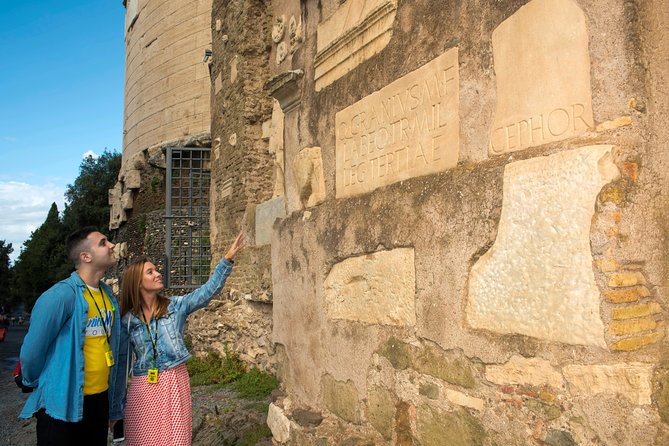
The tour then makes an external visit to the Mausoleum of Cecilia Metella. This monumental tomb was built in the first century BC for a Roman noblewoman and sits on a hill beside the Appian Way.
You have about 30 minutes here. That is enough time for photos and a look at the tomb from outside, but not an extended archaeological visit. If you want to enter every monument along the Appian Way, this tour will feel limited. If you want a guided introduction without spending a full day outside the city, the short stop works well.
The mausoleum is also a good reminder that the Appian Way was more than a transport route. Wealthy Romans placed imposing tombs along major roads, where their families and status would remain visible to people entering and leaving the city.
Walking the ancient Appian Way
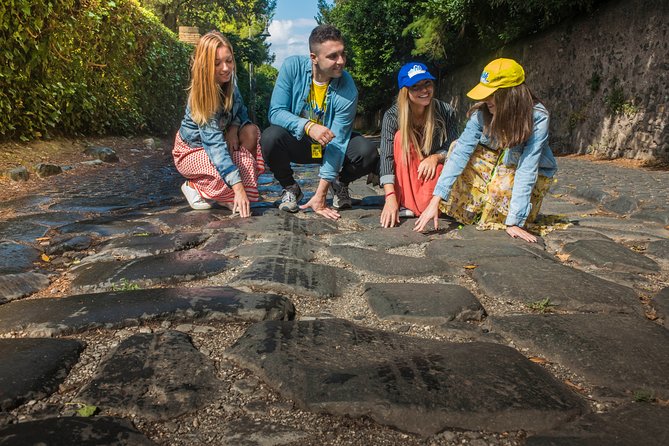
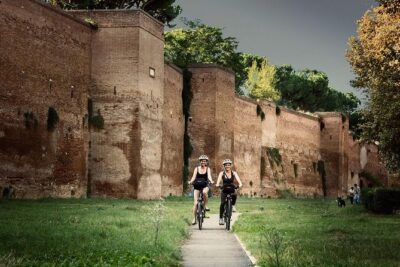
The walking portion covers about 30 minutes, though some descriptions of the experience suggest that the total time on foot can feel longer depending on the day’s pace and traffic. Wear practical shoes. The road is ancient, and the route may not feel like a smooth city sidewalk.
This is the part I would most value on a clear day. The road gives you a direct physical link with Roman engineering. Instead of viewing the past through a museum case, you walk along the route itself and see the countryside that shaped it.
Your guide can explain how the road connected Rome to Brindisi and why it mattered for access to the eastern Mediterranean. The walk is not a strenuous hike, but the tour does require a moderate level of fitness. Sun exposure is possible, and one account describes spending several hours outside in bright conditions.
The area can also be lovely after rain, with open spaces and seasonal flowers. The experience is not built around constant dramatic sights. Its pleasure comes from slowing down and noticing how the ruins relate to the road.
More half-day trips in Rome:
- Hadrian’s Villa and Villa d’Este Half-Day Trip from Rome
★ 3.5 · 808 reviews - Rome Golf Cart Tour : Half-Day Private or Small Group Sightseeing
★ 5.0 · 528 reviews - From Rome: Ostia Antica Guided Half-Day Trip by Train
★ 4.8 · 486 reviews - Rome: Half-Day Tour by Vespa with Driver
★ 4.9 · 116 reviews
The aqueducts: Rome’s engineering in open country
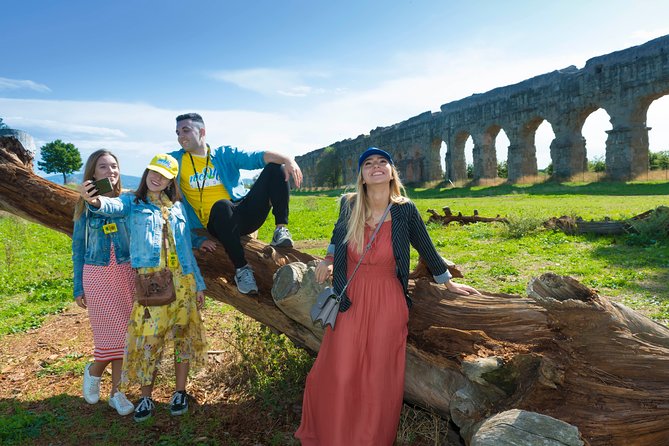
The final major sight is a Roman aqueduct, where you can walk close to the remains and take photos. These arches are among the most impressive parts of the outing because their scale is easy to appreciate from the ground.
The guide explains why this area was selected for the aqueducts. The countryside south of Rome offered room for long water channels and the gradual slope needed to move water toward the city. The arches were not decoration. They carried water over uneven ground with careful engineering.
You may find this stop less emotionally charged than the catacombs or less famous than the Appian Way. It is still valuable, especially if you have never seen a Roman aqueduct outside a textbook or city museum.
Allow time for photographs, but listen for the practical details. The aqueducts make more sense when you understand what they carried, how they reached Rome, and why their location mattered. This is one of those sights that becomes more interesting once the guide gives it a clear purpose.
Guides, group size, and the ride
The maximum group size is 25 people. That is small enough for a guide to address the group directly, though the actual vehicle arrangement can affect how personal the experience feels.
Several guides receive strong praise for their delivery. Marcello is described as informative, relaxed, and funny. Mariah is noted for speaking several languages and for helping with practical Rome suggestions after the tour. Tatia is praised for her background in history, patience, and careful explanations. Francesca, Cathia, Anna, and Mario are also mentioned positively for their warmth and command of the subject.
The guide makes a real difference here because the ruins do not explain themselves. A good guide turns an old road into a story about military power, trade, burial customs, and water supply.
Transport is by bus or van, and transfers are included. The tour starts and ends at Via Cavour 224, an easy-to-reach central location near public transport. Hotel pickup and drop-off are not included, so plan your own route to the meeting point.
Traffic is the main timing risk. The stated duration is about three hours, but a busy road can add 30 to 60 minutes. Give yourself extra time afterward, especially if you have a train, timed museum entry, or dinner reservation.
There have also been occasions when a group was split between two vans. In that situation, the guide may ride in one vehicle while some passengers hear the commentary through headsets in the other. Audio can be difficult to follow if the connection is poor. Ask where the guide will be seated before departure if hearing every explanation matters to you.
What the $78.44 price gets you
At $78.44 per person, this is not the cheapest way to see ruins outside central Rome. The price includes the professional guide, bus transfer, and admission to the Catacombs of San Callisto. Headsets are available upon request.
The value comes from combining several sites that are spread across the Appian Way area. Organizing the same outing alone would mean working out transport to the catacombs, finding the correct parts of the archaeological park, and judging how much time to allow between stops.
You are also paying for interpretation. The catacombs especially benefit from an organized visit because the passageways and burial areas can be hard to understand without context.
The price is less attractive if you mainly want a long walk on the Appian Way or a quiet look at the aqueducts. Much of the experience is spent in the vehicle, and each outdoor stop is fairly short. Independent visitors who already understand Rome’s archaeology may prefer more time at fewer sites.
Who will enjoy this outing?
I would choose this tour if you have already seen the Colosseum, Roman Forum, and Pantheon and want a different side of Rome. It is also a good choice for anyone interested in early Christianity, Roman roads, or ancient water systems.
Families can find it manageable because the coach breaks up the walking. One family with a toddler received especially warm help from the guide and driver. Still, the underground catacombs, required clothing, and moderate walking make this less carefree than a simple sightseeing bus ride.
Teenagers may enjoy the mix of tunnels, tombs, roads, and enormous arches. The experience has enough variety to avoid feeling like one long lecture, especially with a lively guide.
You should think twice if you dislike enclosed spaces, need a fully predictable schedule, or want to spend most of the morning inside major monuments. This is an open-air archaeology trip with one underground visit, not a standard Rome highlights tour.
Practical tips before you go
Wear clothing that covers your shoulders and knees from the start. This saves time and avoids the serious risk of being refused entry at the catacombs.
Bring water and protect yourself from the sun. Food and drinks are not included, and the outdoor portions can feel exposed.
Use comfortable shoes with a firm sole. The Appian Way and archaeological areas are not designed like polished urban streets.
Arrive at Via Cavour 224 before the 9:45 am start. The meeting point is central, but one account found the precise bus-side position unclear, so check the location carefully and look for the correct side near the metro and bus stop.
There is no luggage storage. Bring only what you can carry comfortably during the walking and underground portions.
Free cancellation is available if you cancel at least 24 hours before the local start time. Changes or cancellations inside that window are not accepted for a refund. The tour also requires a minimum number of participants, so an operator cancellation may lead to another date, another experience, or a full refund.
Should you book the Catacombs and Roman Countryside tour?
Book it if you want an efficient introduction to the Appian Way, San Callisto Catacombs, and Roman aqueducts without arranging countryside transport yourself. The strongest reasons are the variety, the included admission, and the guides who bring structure and humor to sites that can otherwise feel scattered.
Skip it if your priority is a slow, detailed visit to one archaeological area or if you cannot tolerate enclosed underground spaces. Also keep your schedule flexible, since traffic and vehicle arrangements can affect the timing.
For most first-time visitors with an extra morning in Rome, this is a worthwhile change from the city center. Go prepared for some time on the road, dress correctly for the catacombs, and treat the aqueducts and Appian Way as an open-air history walk rather than a rapid checklist of monuments.
FAQ
How long does the tour last?
The tour lasts approximately three hours, although traffic can sometimes make the outing 30 to 60 minutes longer.
Where does the tour begin?
It begins at Via Cavour, 224, 00184 Rome, Italy.
What time does the tour start?
The scheduled start time is 9:45 am.
Where does the tour end?
The tour ends back at the meeting point on Via Cavour.
Is transportation included?
Yes. Bus or van transfers between central Rome and the countryside are included.
Is catacomb admission included?
Yes. Admission to the Catacombs of San Callisto is included.
What clothing is required for the catacombs?
Both shoulders and knees must be covered for men and women. The requirement is strictly enforced.
Is hotel pickup included?
No. Hotel pickup and drop-off are not included.
Is food or drink included?
No. Food and drinks are not included unless specifically stated.
How many people can join the tour?
The maximum group size is 25 people.
Are headsets available?
Yes. Headsets are available upon request if required.
Is the tour suitable for people with limited fitness?
The tour requires a moderate level of physical fitness. It includes walking along the Appian Way and outdoor archaeological areas, as well as an underground catacomb visit.
More walking tours in Rome
- Rome: Trastevere & Campo de Fiori Street Food Walking Tour
★ 4.9 · 2,768 reviews - Rome: Paranormal Night Walking Tour & Secret Backstreets
★ 4.9 · 1,921 reviews - Rome by Night Walking Tour – Legends & Criminal Stories
★ 4.5 · 1,003 reviews - Rome: Guided City Center Evening Sightseeing Walking Tour
★ 4.4 · 953 reviews
Newest Rome tours we have reviewed
- Private TikTok Video Making in Rome★ 5.0 · 7 reviews
- Assisi, Orvieto and Civita di Bagnoregio Full Day Tour from Rome★ 4.5 · 45 reviews
- Assisi & Saint Francis Path Tour from Rome★ 5.0 · 45 reviews
- Assisi and Cascia Private Day Tour from Rome with Lunch★ 5.0 · 10 reviews
- Art Class in the center of Rome!★ 4.0 · 4 reviews
- Art & Craft: Beer Tour with Street Art in Rome★ 4.5 · 6 reviews
- Arrival in Rome: Airport Transfer & Exclusive City Introduction★ 5.0 · 3 reviews
- From Rome: Private Day-Tour of Tuscany★ 5.0 · 16 reviews
Rome Catacombs Tours, compared.
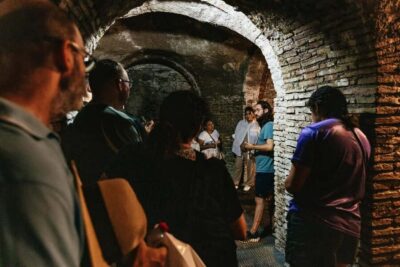
Crypts and Catacombs Underground Tour with Transfers
Read our review →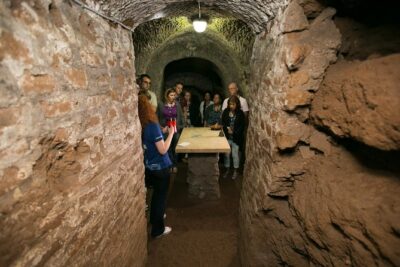
The Original Roman Crypts and Catacombs Tour with Transfers
Read our review →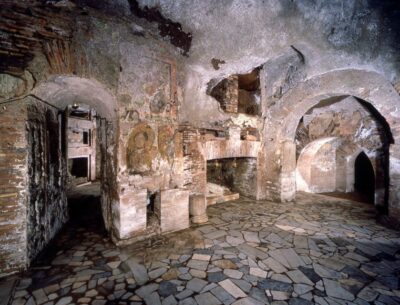
Catacombs of St. Callixtus Entry Ticket & Guided Tour
Read our review →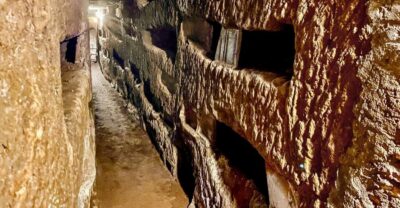
Rome EBike Tour: Appian Way, Catacombs & Roman Aqueducts
Read our review →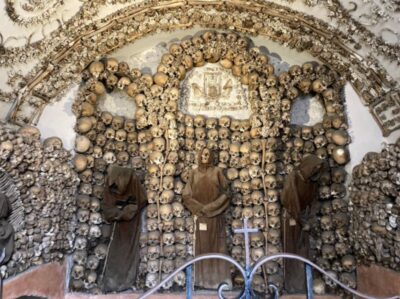
Catacombs and Capuchin Crypt Guided Tour with Transfer
Read our review →
Appian Way, Catacombs, & Roman Aqueducts E-bike Tour
Read our review →Browse the lists this tour appears in