
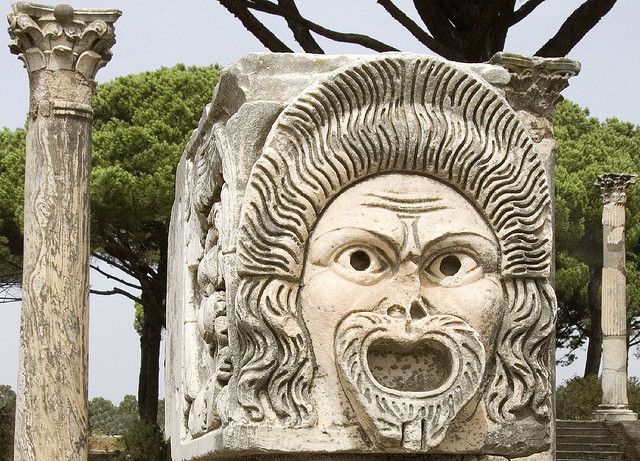
Reviewed · OSTIA ANTICA TOURS
From Rome: Ostia Antica Guided Half-Day Trip by Train
Ostia Antica gives you something Rome itself rarely can: quiet Roman ruins you can walk through at street level. This former harbor town once served the capital’s trade and military needs, and its preserved shops, apartments, baths, mosaics, and theaters make daily Roman life easier to picture than at many grander monuments.
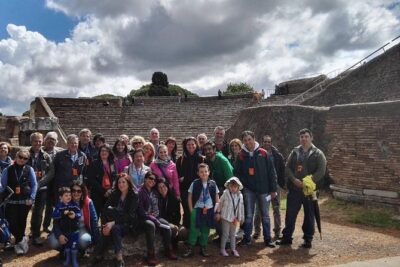
I like the simple train ride from Piramide and the small group of no more than 12 people. I also like the guides’ strong use of stories and humor. Rob, Alberto, Cat, Caterina, and Laura are repeatedly praised for making the ruins understandable, keeping a good pace, and helping visitors imagine the people who lived and worked here.
The main drawback is practical: the site is large, exposed, and uneven underfoot. Four hours gives you a useful guided visit, but not a complete look at every corner. The tour is not suitable for wheelchair users, and baby strollers are not allowed.
Key points to know before you go
- A short train ride leaves Rome behind: Meet at Cafe Piramide, then travel about 15 minutes to Ostia Antica.
- The ruins explain ordinary Roman life: See taverns, warehouses, baths, public toilets, theaters, and streets rather than only imperial monuments.
- The Baths of Neptune are a major highlight: The mosaic shows Neptune riding a four-horse chariot across the sea.
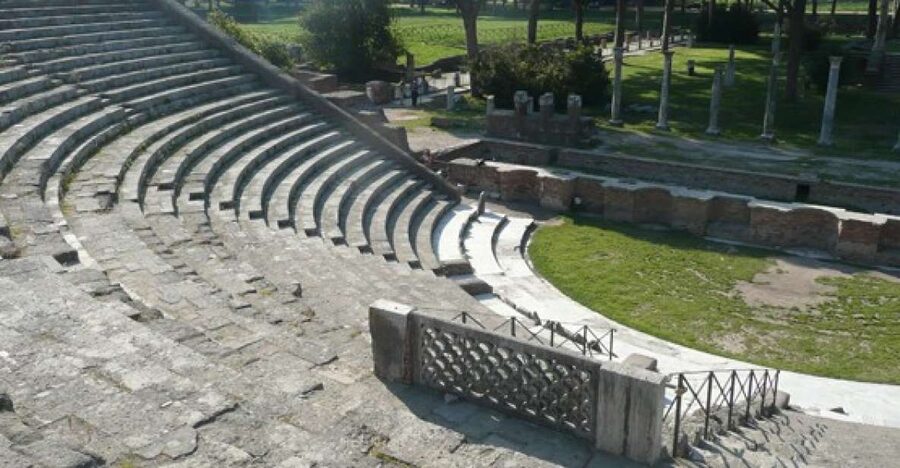
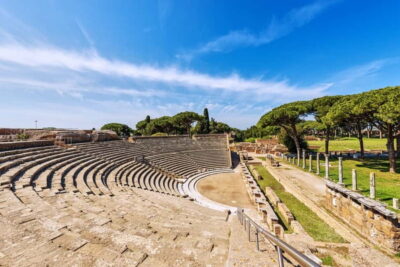
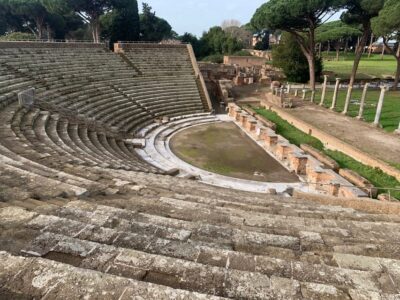
- The amphitheater still feels personal: Take a seat where about 3,500 spectators watched performances after its construction in 12 BC.
- You can extend the outing: Stay for the museum, continue through the site, visit modern Ostia, or head to the beach.
- The guide matters here: The broad site can feel confusing without someone to explain what each building once did.
Why Ostia Antica is one of Rome’s best half-day escapes
Rome is filled with famous ancient monuments, but many of them show power from above: emperors, triumphal arches, temples, and giant arenas. Ostia Antica shows the working city underneath that grand story.
Founded in the fourth century BC, Ostia grew into Rome’s harbor town. Goods moved through here, soldiers passed through, and ordinary people lived in apartment blocks, worked in shops, visited public baths, and used communal facilities. The town was once home to more than 100,000 people.
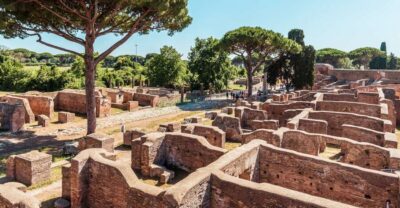
That scale matters when you arrive. You are not looking at one isolated ruin. You are walking along streets laid out for a functioning town, with commercial spaces, public buildings, religious sites, and homes spread across a broad archaeological park.
I find this kind of site more rewarding than a quick photo stop. You can see how Romans moved through their day. A tavern suggests where people ate and drank. A warehouse points to the port economy. A bath complex shows how social life and hygiene were tied together. The public toilets offer a reminder that ancient history was made by regular people with very ordinary needs.
Ostia is also a good choice if you have already seen the Colosseum and Roman Forum. It adds the missing working side of Rome. The setting is quieter than the city center, and the open site gives you room to look closely instead of being carried along by a dense crowd.
More Ostia Antica tours:
- Ancient Ostia Antica Semi-Private Day Trip from Rome by Train with Guide
★ 4.5 · 579 reviews - Horse Sanctuary & Trail Ride in Ostia Antica
★ 4.5 · 276 reviews - Ostia Antica Semi Private Tour from Rome
★ 5.0 · 238 reviews
Meeting at Piramide and taking the train
The meeting point is Cafe Piramide at Piazzale Ostiense, 9. When you face the Piramide Metro stop on Line B, the cafe is on your right, near the train tracks and station exit. White umbrellas outside help identify it, and the guide carries a City Wonders sign.
Give yourself enough time to find the cafe. One useful detail is that the umbrellas across the street can pull your attention in the wrong direction. Look for the cafe close to the station exit, not simply any cafe with outdoor seating.
The guide provides the return train ticket and accompanies the group on the outward journey. The ride to Ostia Antica takes about 15 minutes, making this an unusually easy archaeological excursion from central Rome. You do not need a long coach ride or a full day away from the city.
That short journey is one of the tour’s best practical features. It also gives the guide a chance to explain the plan and keep the group together. Several guides, including Rob and Laura, have been praised for explaining the transport clearly and making sure everyone boards safely.
At the Ostia Antica station, the archaeological site is less than a five-minute walk away. At the end, the guided service finishes back at Piramide at about 1:00 PM for those returning with the group. If you stay at Ostia, your return train ticket is still provided, but you make the journey back without the guide.
Walking the Decumanus Maximus
The main walk begins along the Decumanus Maximus, Ostia’s principal street. This is the moment when the site starts to feel like a town rather than a collection of broken walls.
Roman statues line parts of the route, and the street leads you past the remains of commercial buildings, taverns, warehouses, thermal baths, and theaters. The standing walls are especially useful because they help you judge the height and density of the old buildings. Some sections preserve wall decoration and artwork, giving you more than the usual foundation-level ruins.
This is also where a guide earns the admission price. Without context, a low wall can look like any other low wall. A good guide explains its former use, points out surviving architectural details, and connects the building to Roman work, trade, food, entertainment, or public life.
The strongest guides have different styles, but the praised pattern is clear. Rob uses humor and occasional acting to make scenes easier to picture. Alberto is described as clear, friendly, and good at explaining both architecture and culture. Cat, Caterina, and Laura are noted for selecting important places, keeping the group moving, and making room for questions.
The pace is active but not meant to be a race. You will walk outdoors for much of the three-hour site visit, often on uneven surfaces. Wear comfortable shoes, bring water, and expect the sun to matter in warm weather. A small snack break and toilet stop are included.
The Baths of Neptune and the amphitheater
The Baths of Neptune are among the clearest visual highlights. Their central mosaic shows Neptune riding a four-horse chariot across the sea. The image is unusually easy to read, even if you are not an art specialist, and it gives the building a strong sense of place.
The baths were not only places to wash. In Roman towns, public bathing was part of social life. The guide helps you connect the mosaic and surviving rooms to the broader role of the baths, so you are not simply admiring a decorative floor without knowing why the building mattered.
The amphitheater gives the visit another change of mood. Built in 12 BC, it once held about 3,500 spectators. You can sit in the stands and look toward the performance space, which makes the building’s size and purpose immediate.
It is not the Colosseum, and that is part of the appeal. The smaller scale lets you picture a local audience rather than an enormous imperial spectacle. I like the chance to occupy the same basic viewing position as the ancient crowd. It turns history from a date and a wall into a physical arrangement of people, performers, and public attention.
More day trips from Rome:
- From Rome: Pompeii, Amalfi Coast, and Sorrento Day Trip
★ 4.6 · 7,031 reviews - From Rome: Pompeii, Amalfi Coast and Positano Day Trip
★ 4.6 · 6,620 reviews - Pompeii, Amalfi Coast and Positano Day Trip from Rome
★ 4.5 · 6,250 reviews - Pompeii and Mount Vesuvius Day Trip from Rome with Pizza Lunch
★ 4.5 · 6,151 reviews
The communal Forica and everyday Roman life
The communal Forica is one of the most memorable stops because it is so direct. The room has a marble bench with 20 evenly spaced openings along four walls. There is no grand symbolism to decode. It is a public washroom, and its plain design shows how much of city life depended on shared facilities.
This stop also keeps the tour grounded. Ancient Rome is often presented through emperors and battles, but Ostia makes space for work, hygiene, eating, trading, and social habits. The Forica can prompt a laugh, but it also offers a useful correction to the polished marble image of Roman civilization.
The guide’s storytelling is important here. A fact about the number of openings is easy to forget. A well-told explanation of how a communal facility fit into daily town life is much more likely to stay with you.
That focus on regular people is the tour’s central strength. You are not only being shown what remains. You are being asked to picture the people who used it: port workers, merchants, soldiers, families, bathers, shopkeepers, and theatergoers.
Three hours inside a very large archaeological park
The guided section lasts about three hours. That is enough time to cover the main sights and get a strong understanding of Ostia, but the park is large enough that you should not expect every building to receive equal attention.
The guide selects the key areas and keeps the group moving. This is useful because wandering without a plan can leave you spending too long in one corner and missing major features. The small group makes it easier to hear explanations and ask questions, especially near mosaics and narrower streets.
At the same time, you should expect a lot of walking. Shade is not constant. In hot weather, a good guide may seek out shaded places for explanations, as Alberto did for one group, but you should still bring water and cover your head if needed.
The tour ends inside or near the archaeological site rather than immediately at the station. That is a real advantage. You can continue at your own pace, visit the museum if it is open, or stop for a snack before deciding what to do next.
One seasonal point matters: the museum may close early in winter, around 1:30 PM. If it is important to you, ask the guide where to go first and check the current opening time. The guided walk covers the main outdoor sights, but extra time is valuable for anyone who wants a slower look at the site.
Staying on for the museum, modern Ostia, or the beach
You have three sensible choices after the guided portion.
You can remain inside Ostia Antica and explore more of the archaeological park. This is the best option if you want additional buildings, more photographs, or a slower second look at places the guide covered quickly.
You can visit the museum, subject to its opening hours. The museum adds another layer to the outdoor ruins, especially if you want to see objects and art in a more protected setting. In winter, plan this carefully because early closing has been noted.
You can continue to the modern town of Ostia or go to the beach. The activity information specifically suggests bringing a towel, beachwear, and sports shoes, so the beach option is not an afterthought. The guided tour itself ends around lunchtime, leaving room for a change of pace by the sea.
If you prefer a straightforward half-day, simply return with the guide by train. The ride back is supplied, but it is unescorted, so listen carefully to the return instructions. The guide can explain how to get back to Piramide and where to board.
In case public transport is disrupted by a strike or another unforeseen problem, a minibus is provided at no added cost. That gives the outing a useful backup, though normal travel still depends on the local transport network.
Is $58 a fair price?
At $58 per person, the price is reasonable if you want structure and interpretation. It includes the return train ticket, the Ostia Antica admission ticket, and an English-speaking guide. You are paying more than you would for transport and entry alone, but this is a site where explanation adds real value.
Ostia is broad and its remains are not always self-explanatory. The guide turns separate walls, mosaics, and rooms into a working town. That saves you research time and helps you see the difference between a bath complex, a warehouse, a theater, a shop, and a public facility.
The small group also matters. A maximum of 12 people is a good middle ground: more personal than a large coach group, but less costly than a private tour. Guides have been praised for keeping everyone together, answering questions, and maintaining a steady pace.
The value drops if you want complete independence from the start. You will follow the guide for roughly three hours, and the focus is on the main sights rather than every path. If you already know Ostia well, a self-guided visit may suit you better. For a first visit, the included interpretation is the main reason to pay.
Free cancellation up to 24 hours before departure and the option to reserve now and pay later make the booking less rigid. Those policies are useful for a Rome schedule that may change.
Who should book this Ostia Antica tour?
I would choose this for anyone interested in Roman daily life, archaeology, architecture, or a quieter break from central Rome. It also suits families with older children and teenagers who respond better to stories, public buildings, and visible remains than to long stretches of abstract history.
It is a strong alternative to Pompeii if you are staying in Rome and do not want to spend a full day reaching the Bay of Naples. The sites are not identical, but Ostia offers a similarly broad ancient town experience with far less travel time.
You should be comfortable walking outdoors for several hours. Comfortable shoes are essential, and the site may be difficult if you have limited mobility. Wheelchair users cannot join this activity, and baby strollers are not allowed.
The tour is offered in English. If you value a lively guide, the named guides most often praised for their delivery include Rob, Alberto, Cat, Caterina, Laura, and Angellina. Guide assignments can vary, so you should not book on the assumption that one specific person will lead your group.
Should you book it?
Book this tour if you want to see how Rome functioned beyond its emperors and headline monuments. The short train ride, included admission, small group, and strong storytelling make Ostia Antica an efficient and worthwhile half-day choice.
Skip it if uneven ground, open-air walking, or a three-hour archaeological visit will be tiring for you. Also skip it if your only goal is a beach day, since the ruins are the main event.
For most first-time visitors with an interest in ancient Rome, I would make room for it. Go early, wear good shoes, carry water, and stay afterward if you can. The extra time lets you visit the museum, explore more ruins, or add the beach without turning the morning into a rushed checklist.
FAQ
How long does the Ostia Antica tour take?
The activity lasts about four hours. The guided visit at Ostia Antica takes around three hours, with train travel from Rome and back included.
Where is the meeting point?
Meet at Cafe Piramide at Piazzale Ostiense, 9. It is on the right when facing the Piramide Metro stop on Line B, near the train tracks and station exit. Look for white umbrellas and a City Wonders sign.
Is the train ticket included?
Yes. The return train ticket from Rome to Ostia Antica is included. If you stay at Ostia after the guided visit, your return ticket is provided, but the journey back to Rome is unescorted.
Is the tour conducted in English?
Yes. The live guide speaks English.
Can I visit the beach after the tour?
Yes. You can stay in modern Ostia or go to a nearby beach after the guided visit. Bring beachwear and a towel if you plan to do this.
Is Ostia Antica suitable for wheelchair users?
No. The activity is not suitable for wheelchair users. Baby strollers are also not allowed.
What should I bring?
Wear comfortable shoes and bring water, a towel, beachwear, and sports shoes if you may continue to the beach. There is a toilet break and time for a snack or drink at a snack bar.
More half-day trips in Rome
- Hadrian’s Villa and Villa d’Este Half-Day Trip from Rome
★ 3.5 · 808 reviews - Rome Golf Cart Tour : Half-Day Private or Small Group Sightseeing
★ 5.0 · 528 reviews - Catacombs and Roman Countryside Half-Day Walking Tour
★ 4.5 · 411 reviews - Rome: Half-Day Tour by Vespa with Driver
★ 4.9 · 116 reviews
Newest Rome tours we have reviewed
- Private TikTok Video Making in Rome★ 5.0 · 7 reviews
- Assisi, Orvieto and Civita di Bagnoregio Full Day Tour from Rome★ 4.5 · 45 reviews
- Assisi & Saint Francis Path Tour from Rome★ 5.0 · 45 reviews
- Assisi and Cascia Private Day Tour from Rome with Lunch★ 5.0 · 10 reviews
- Art Class in the center of Rome!★ 4.0 · 4 reviews
- Art & Craft: Beer Tour with Street Art in Rome★ 4.5 · 6 reviews
- Arrival in Rome: Airport Transfer & Exclusive City Introduction★ 5.0 · 3 reviews
- From Rome: Private Day-Tour of Tuscany★ 5.0 · 16 reviews
Ostia Antica Tours, compared.
Ancient Ostia Antica Semi-Private Day Trip from Rome by Train with Guide
Read our review →
Ostia Antica Archaeological Park Ticket & Audio App
Read our review →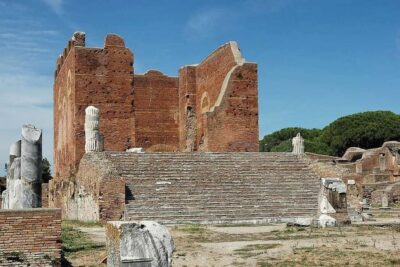
Browse the lists this tour appears in