
Reviewed · OSTIA ANTICA TOURS
Rome: Ostia Antica Tour From Rome
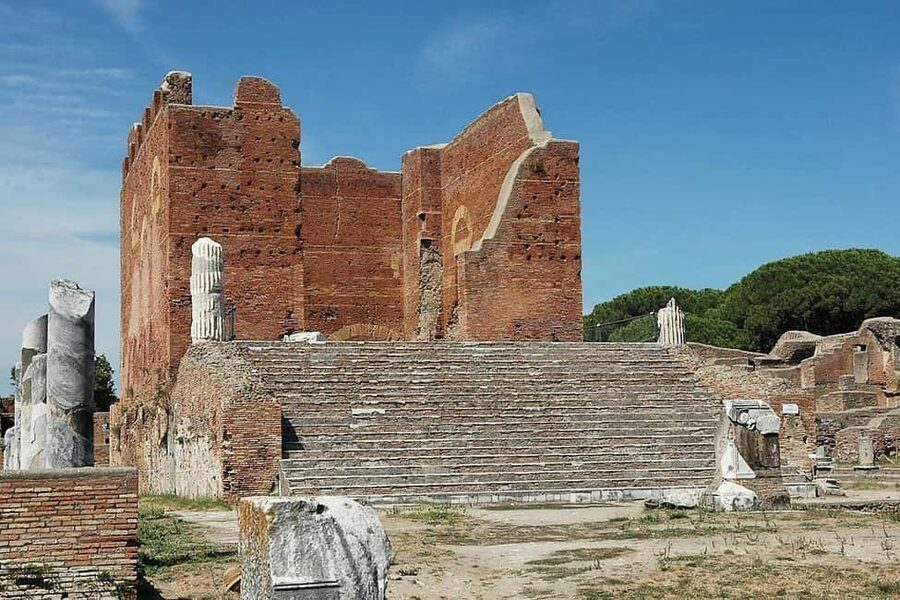
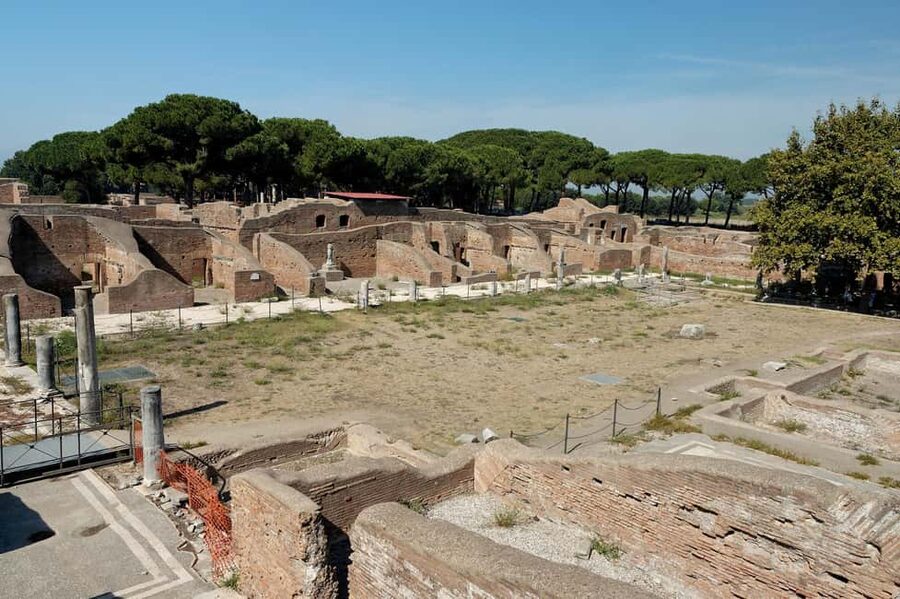
Ostia Antica gives you something Rome’s center often cannot: ancient ruins without the heavy crowds. This former port town feels like a Roman neighborhood left open to the sky, with shops, apartments, baths, temples, mosaics, and a theater spread along old streets.
I like the simple train ride, which avoids Rome’s morning traffic, and I like the small groups of 12 or fewer. Guides such as Sonia, Rebecca, Camille, and Andy are praised for making the site understandable and lively. The main drawback is value: at $77, you still pay about €3 for the train and buy your own food, and four hours only covers part of this large site.
Key points to know before you book
- The train takes about 25 minutes each way, making Ostia an easy half-day trip from central Rome.
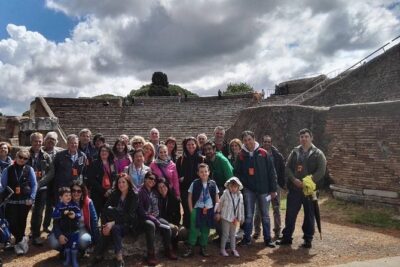
- The tour uses groups of 12 or fewer, with a live English-speaking guide.
- The site feels more open and relaxed than central Rome’s major monuments, though it requires plenty of walking.
- The guided visit lasts three hours, split by a 20-minute break.
- Ostia’s mosaics, baths, theater, shops, and firehouse show ordinary Roman life as well as grand public buildings.
- You can stay after the tour, return with your guide, or ask how to reach the beach.
Why Ostia Antica makes a smart Rome day trip
Rome’s Colosseum and Forum show power on a grand scale. Ostia Antica shows how Roman society worked from street level. Here, you are not looking only at monumental arches. You are following the streets of a working port where merchants traded goods, residents lived above shops, bathers met friends, and public services kept the town running.
That difference gives Ostia its appeal. The site is large, but the ruins are arranged in a way that lets you picture daily life. A marketplace may lead to a row of shops. A broad road may open toward a theater or public baths. Mosaic floors reveal the businesses that once operated in the town.
The setting also feels calmer than Rome’s center. The tour gets you out of traffic by train, then into a broad archaeological area where your group can walk at a more natural pace. One guide has been praised for finding quieter paths and the most attractive parts of the site, while another was careful to pause in the shade during very hot weather.
You should still set realistic expectations. Ostia is not a quick photo stop. You will walk for much of the four hours, often over uneven ancient surfaces, and the ruins are exposed to the weather. The site is not suitable for wheelchair users, according to the activity information.
More Ostia Antica tours:
- Ancient Ostia Antica Semi-Private Day Trip from Rome by Train with Guide
★ 4.5 · 579 reviews - From Rome: Ostia Antica Guided Half-Day Trip by Train
★ 4.8 · 486 reviews - Horse Sanctuary & Trail Ride in Ostia Antica
★ 4.5 · 276 reviews
Meeting at Piramide and taking the 25-minute train
You meet at Piazzale Ostiense, 9, outside the Piramide Metro station near Cafe Piramide. Look for the guide under the BAR T sign and an E&D Tours sign. This is a practical meeting point, but allow enough time to find the exact spot, especially if you are coming through a busy station area.
The train ride to Ostia Antica takes about 25 minutes. It is not a sightseeing train, but it is a far better choice than sitting in Rome’s morning traffic. Your guide helps the group with the journey, including the separate train tickets, which cost €3 and are not included in the tour price.
That extra cost is small, but you should know about it before booking. At $77 per person, the tour is priced as a guided archaeological visit rather than a cheap transport option. The admission ticket is included, the group is capped at 12, and the guide handles the route and historical explanation. If you want only to reach the ruins and wander alone, you can spend less by arranging the trip yourself. If you want the site to make sense, the guide adds real value.
Walking into a Roman port town
Ostia began as Rome’s port at the mouth of the Tiber. The town supported trade and supplied the capital with goods from across the Roman world. You can see that commercial role in the layout: streets, shops, warehouses, public buildings, and meeting places are all part of the experience.
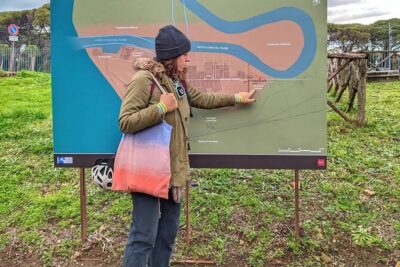
The first guided section lasts about 90 minutes. Your guide introduces the town and helps you read details that can be easy to miss when you walk alone. Rather than looking at a wall as just another old wall, you learn how buildings fit into the wider town.
The tour focuses on the places that best explain Roman life:
- Marketplaces and shops connected Ostia to long-distance commerce.
- Residential buildings show how people lived in a dense urban setting.
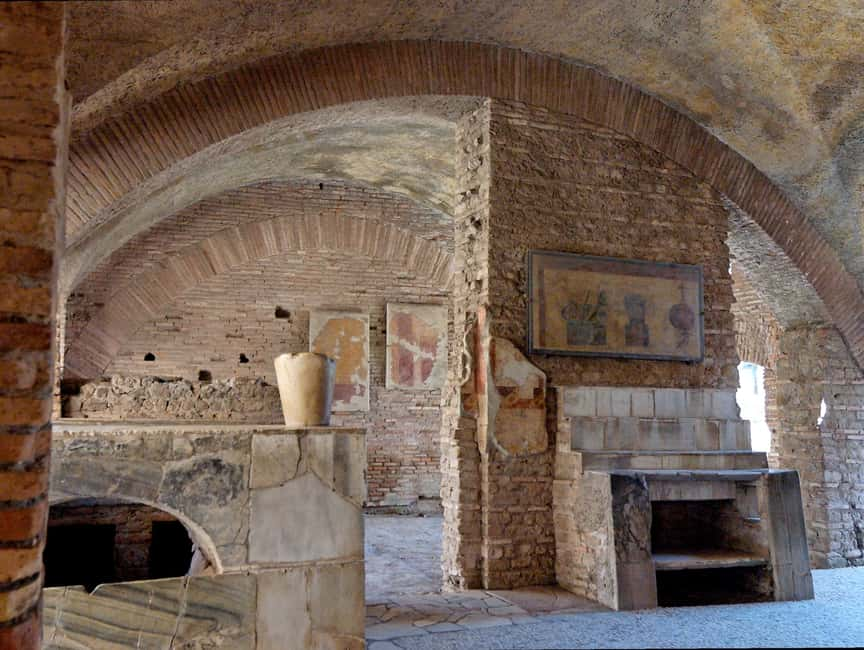
- Bathhouses reveal how public bathing served as both hygiene and social life.
- Temples point to the religious side of the community.
- Mosaics help identify businesses and activities linked to trade.
The mosaics are among the most memorable features. These floors were created roughly 2,000 years ago for a town built around global commerce. Their patterns and images offer clues about the people who used each building. Your guide can connect the artwork to the purpose of the space, which is much more useful than simply taking photographs of attractive pavement.
Decumanus Maximus, shops, and the old theater
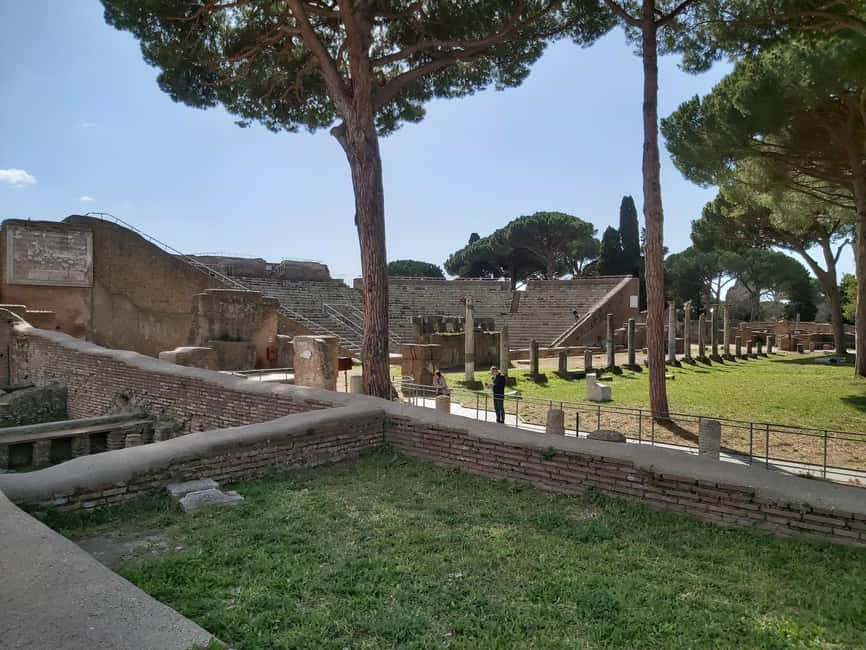
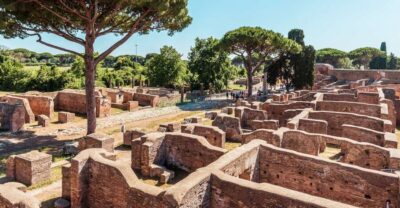
The Decumanus Maximus is Ostia’s main boulevard. Walking along it gives you the clearest sense of the town as a place where people moved, worked, shopped, and met. Ancient tavernas and shops lined the route, so the street feels less like a collection of isolated ruins and more like a Roman town plan.
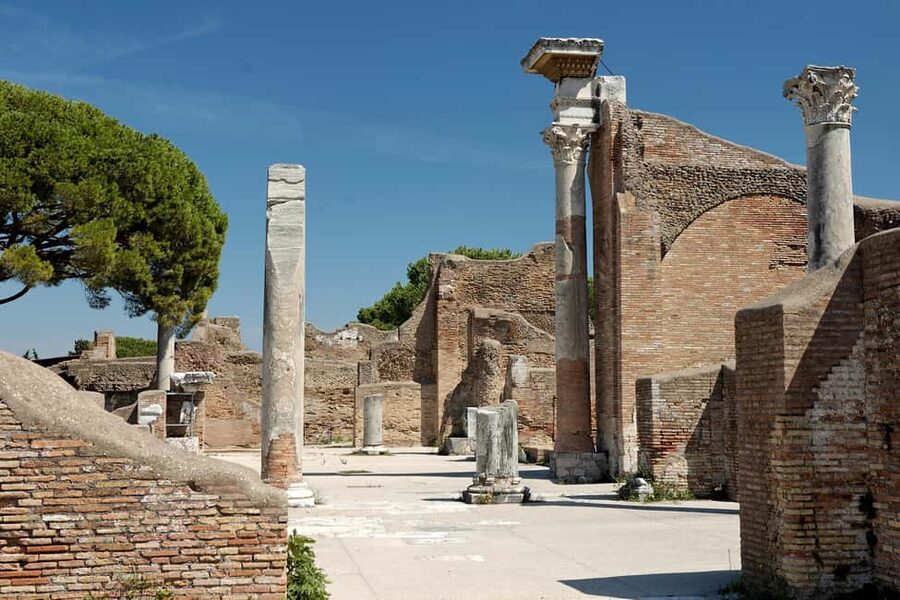
This is where a good guide matters most. The remains can look low and fragmentary at first glance. With explanation, you begin to notice entrances, street patterns, shop fronts, paving, and the relationship between public and private buildings.
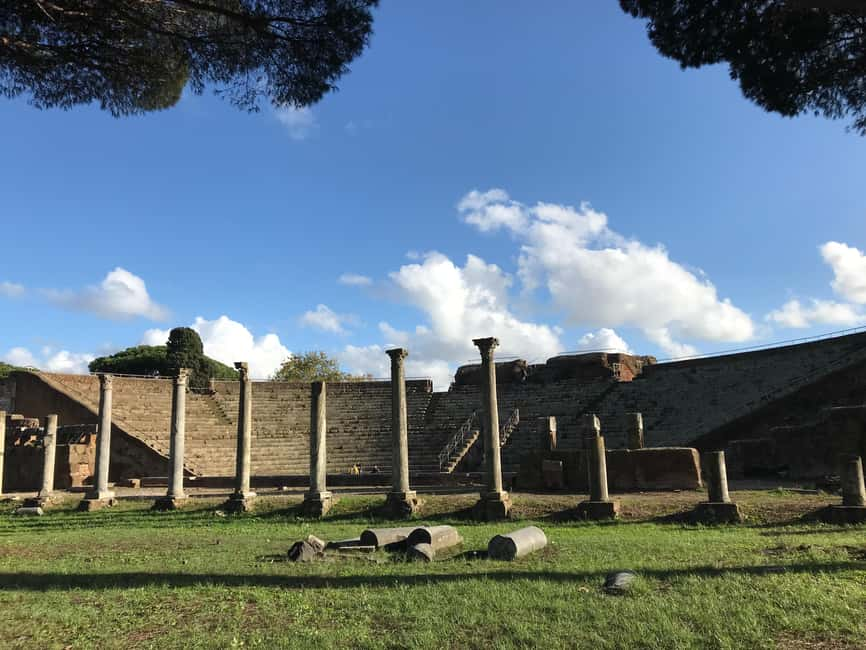
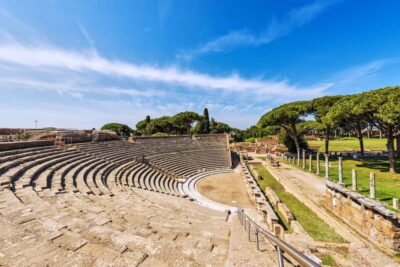
The ancient theater is another highlight. It once hosted entertainment for local crowds, including performances associated with actors and gladiators. The theater gives the site a strong sense of scale, since you can see how public entertainment fitted into the daily life of the port.
Guides receive especially strong praise for their ability to tell stories and answer questions. Sonia is described as warm, clear, and deeply informed about Roman archaeology. Rebecca is noted for explaining construction methods, roads, baths, and the way Roman infrastructure connected the empire. Camille has an archaeology background and is especially good at turning the site into a story for families.
Those individual strengths matter because Ostia has no single headline monument to carry the visit. The experience depends on how well the guide links one building to the next.
Same city, a completely different half-day:
- Vatican Museums & Sistine Chapel Tour with Optional Basilica
★ 4.3 · 67,413 reviews - Vatican Museums, Sistine Chapel & St Peter’s Basilica Guided Tour
★ 4.5 · 39,149 reviews - Rome: Colosseum, Palatine Hill and Roman Forum Guided Tour
★ 4.8 · 32,814 reviews - Rome: Guided Tour of Colosseum, Roman Forum & Palatine Hill
★ 4.7 · 27,897 reviews
The ancient firehouse and Roman infrastructure
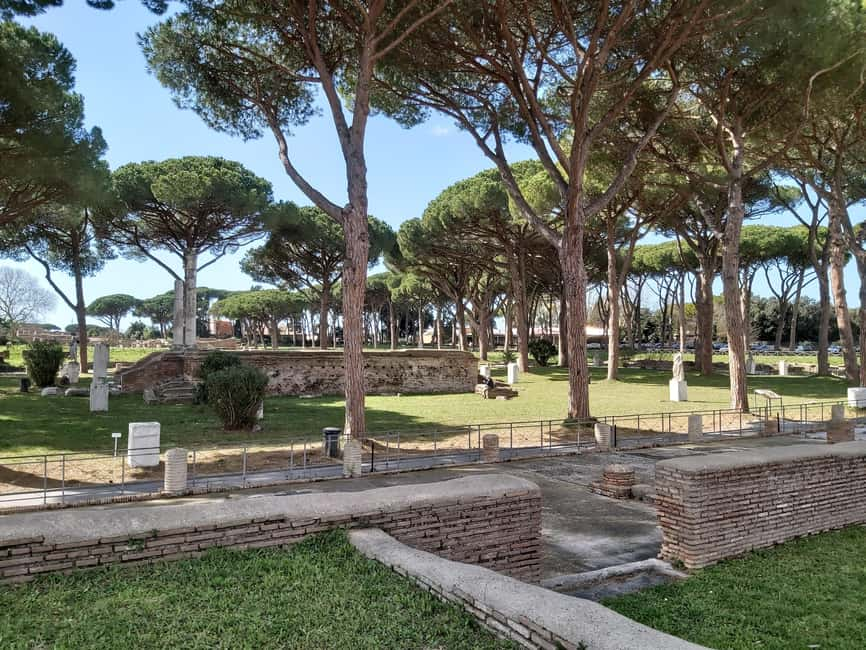
One of the more unusual stops is the first recorded firehouse in the Western world. It is an excellent reminder that Ostia was not just a place of temples and grand public buildings. It needed practical systems to protect residents, organize commerce, and keep a busy port functioning.
This kind of detail is one reason I prefer Ostia to a tour focused only on famous monuments. You learn about the ordinary machinery of a Roman town: roads, public services, trade, water, bathing, and fire protection. Guides also explain construction techniques and how Roman roads helped move goods, people, information, and culture across the empire.
The site can be especially rewarding if you have already seen the Colosseum or Roman Forum. Those central monuments show Rome at its political and symbolic peak. Ostia fills in the everyday picture. It helps you understand the society behind the monuments.
A 20-minute break in the middle
After the first 90-minute guided section, you get a break of about 20 minutes. This is useful because the ruins are spread out and much of the walk is outdoors. You can rest, refill your water bottle at the fountains, and buy food at your own expense.
There is a cafe and gift shop in the park. The cafe crema has been singled out as a pleasant treat in warm weather, but do not assume lunch is included. It is not. Bring money for a snack or plan on a short stop rather than a full meal.
The break also gives you a chance to judge your energy for the second half. On hot days, the sun can make four hours feel longer. Wear comfortable shoes, carry water, and dress for the forecast. The tour runs in all weather, so rain protection and sun protection are both sensible.
Forum and the largest bathhouse
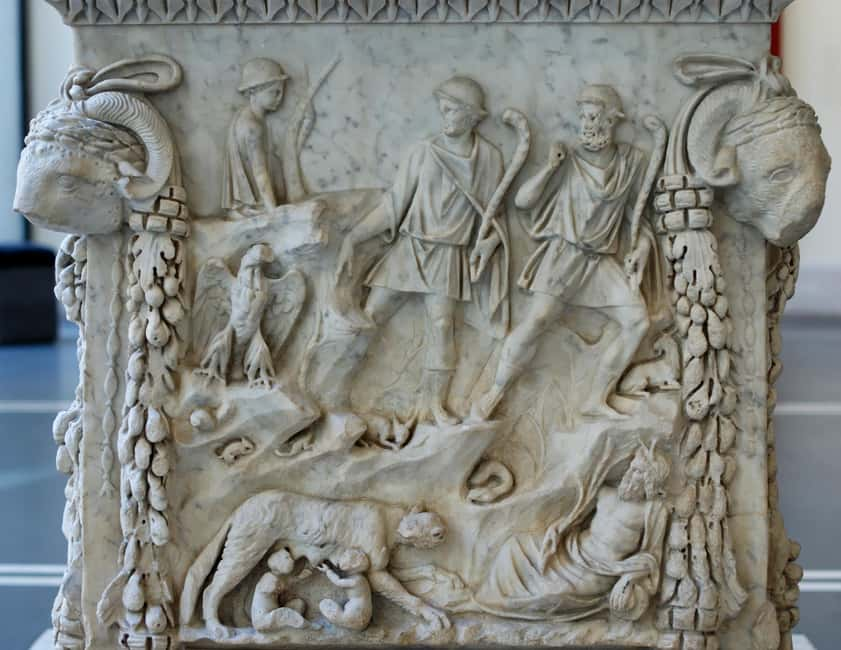
The final 90-minute guided section continues through more of the town and finishes near the Forum and Ostia Antica’s largest bathhouse. These are strong closing stops because they bring together the public, social, and political sides of the settlement.
The Forum helps you understand Ostia as an organized civic center rather than only a commercial port. The large bathhouse shows how much space and effort Romans devoted to public bathing. Guides explain that baths were not simply places to wash. They were central to social life and daily routines.
The tour also covers details that help you imagine the technology of Roman buildings. One guide explains features such as glass windows, a surprisingly advanced detail for many people seeing Roman domestic and public buildings for the first time. Another focuses on how bathhouses worked and why virtually everyone used them.
You should expect a lot of information, but the best guides keep it connected to visible remains. Sonia has been praised for using relatable stories, while guides such as Andy bring obvious enthusiasm to Roman history and lead groups through smaller paths to less obvious sights. The tone is friendly rather than academic, though the amount of history may be demanding for young children.
The tour is still workable for families. A guide has kept nine-year-old twins engaged and happy, and guides have adjusted the pace for people who walk or climb more slowly. That said, you should mention mobility concerns before booking. The tour is not suitable for wheelchair users.
How much of Ostia will you see?
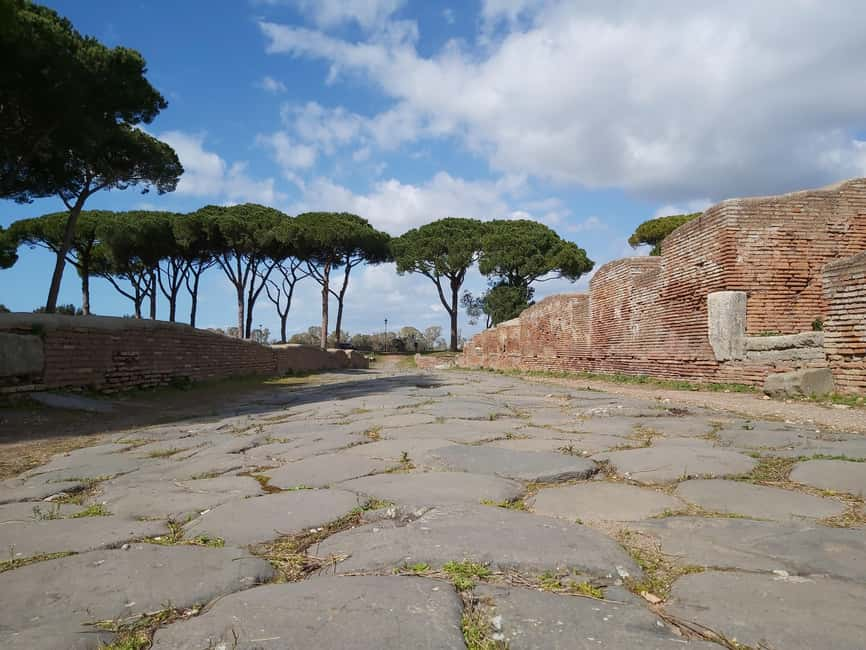
Four hours is enough for a strong introduction, not a complete visit. The formal tour includes three hours of guiding, a break, and the train journeys. Ostia Antica is extensive, and you will not see every building or corner with the group.
This is both a limit and an advantage. The guide selects the sections that best explain the town, so you do not waste time wandering without context. But if you enjoy archaeology and want to inspect every street, the tour may feel short.
You can stay on site after the guided portion and explore alone. One person remained for another two and a half hours, which gives you an idea of how much more there is to see. You can also ask the guide how to reach the beach, then spend the rest of the day there. If you prefer an easy finish, return to Rome with the guide.
I would choose the stay-behind option if you have a strong interest in ancient sites and enough energy for more walking. The beach option makes the trip more flexible in warm weather, while returning with the guide is simplest if you have evening plans.
Is the $77 price fair?
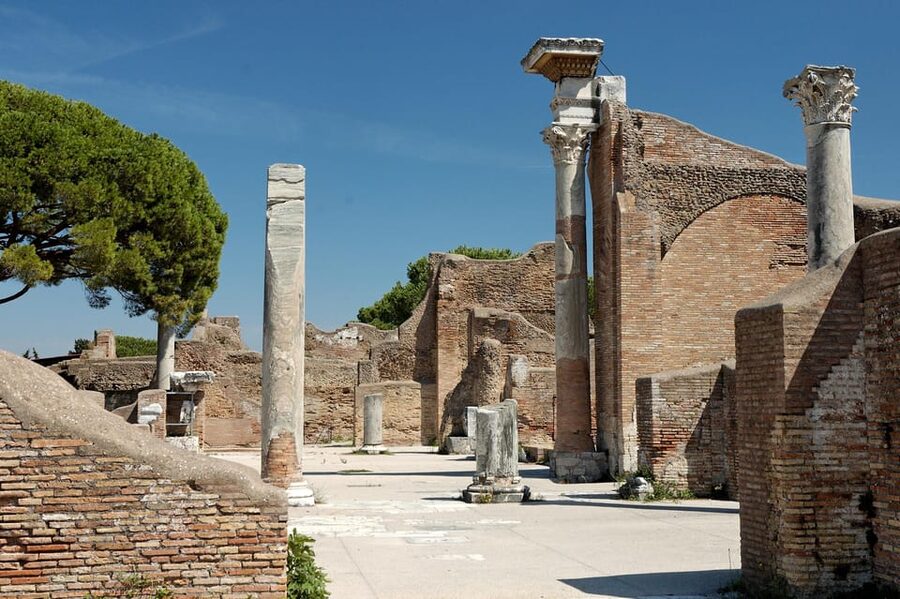
The $77 price is fair for a small-group guided visit, but it is not a bargain tour. Included admission and a group limit of 12 are important. A skilled guide can save you from spending hours trying to decode scattered walls and half-visible rooms.
The separate €3 train cost and self-funded food do make the total price slightly higher than the headline figure suggests. One person felt the trip was somewhat expensive for that reason. If you are comparing it with a self-guided visit, remember that you would still need to arrange transport, buy admission, and prepare your own route.
The strongest value comes from the guides. Sonia, Rebecca, Camille, Andy, Ali, and others receive praise for clear explanations, humor, archaeology expertise, and personal attention. Since guide assignments can change, you should not book on the assumption that one particular person will lead your group. You can, however, expect an English-speaking local guide and a small group.
Who should book this Ostia Antica tour?
I would recommend it to anyone who wants more than Rome’s famous center. It is a particularly good choice if you enjoy Roman society, architecture, mosaics, infrastructure, and ordinary urban life.
It also suits families with older children, couples wanting a quieter half-day outside Rome, and repeat visitors who have already seen the Colosseum and Forum. The train ride is simple, and the beach option adds useful flexibility.
I would hesitate if you dislike outdoor walking, have mobility limitations, need a full meal included, or want to inspect every part of the archaeological park. In those cases, the pace and uneven terrain may frustrate you.
For most people interested in ancient Rome, I would book it. Ostia gives you a broader and more human picture of the Roman world, and a strong guide turns a field of ruins into a town you can understand. Just wear good shoes, bring water, budget for the train and lunch, and decide in advance if you want to return to Rome or stay longer.
FAQ
Where does the Ostia Antica tour meet?
Meet at Piazzale Ostiense, 9, outside Piramide Metro station near Cafe Piramide. The guide waits under the BAR T sign and holds an E&D Tours sign.
How long does the tour last?
The full activity lasts four hours. This includes two 25-minute train rides, two 90-minute guided sections, and a 20-minute break.
Are train tickets included?
No. The train tickets cost €3 and are paid separately. Admission to Ostia Antica is included.
Is the tour offered in English?
Yes. The tour has a live English-speaking guide.
Can I stay at Ostia Antica after the guided tour?
Yes. You can remain at the site and explore further on your own, or ask the guide how to reach the beach. You can also return to Rome with the guide.
Is the tour suitable for wheelchair users?
No. The activity is not suitable for wheelchair users. You should also expect outdoor walking and uneven ancient surfaces, so comfortable shoes are important.
Newest Rome tours we have reviewed
- Private TikTok Video Making in Rome★ 5.0 · 7 reviews
- Assisi & Saint Francis Path Tour from Rome★ 5.0 · 45 reviews
- Assisi, Orvieto and Civita di Bagnoregio Full Day Tour from Rome★ 4.5 · 45 reviews
- Assisi and Cascia Private Day Tour from Rome with Lunch★ 5.0 · 10 reviews
- Art Class in the center of Rome!★ 4.0 · 4 reviews
- Art & Craft: Beer Tour with Street Art in Rome★ 4.5 · 6 reviews
- Arrival in Rome: Airport Transfer & Exclusive City Introduction★ 5.0 · 3 reviews
- From Rome: Private Day-Tour of Tuscany★ 5.0 · 16 reviews
Ostia Antica Tours, compared.
Ancient Ostia Antica Semi-Private Day Trip from Rome by Train with Guide
Read our review →
Ostia Antica Archaeological Park Ticket & Audio App
Read our review →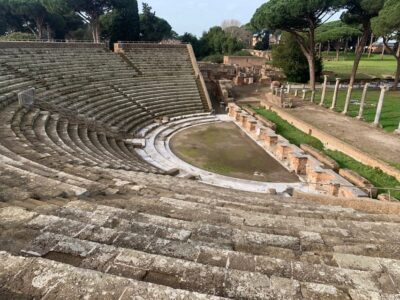
Browse the lists this tour appears in