
Reviewed · OSTIA ANTICA TOURS
Private Tour – Ancient Ostia
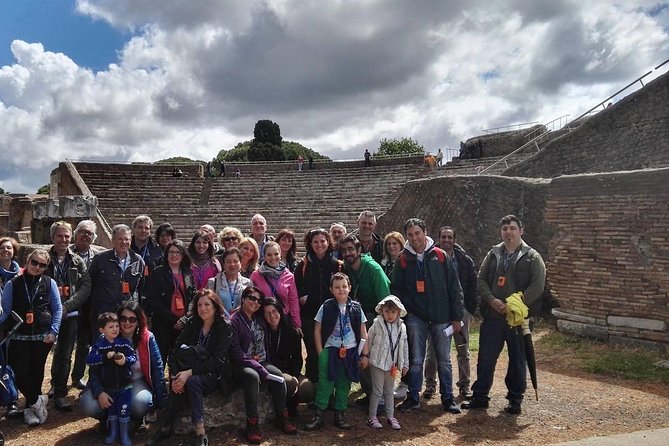
Ancient Ostia gives you something central Rome rarely can: a whole Roman city spread before you, not just one grand monument. In three hours, your private guide leads you through baths, houses, villas, shops, religious sites, a theater, and the museum, helping the broken walls make sense as a working port town.
I like the private format, which lets you set the pace and ask questions without keeping up with a large group. I also like the chance to see Roman daily life, from plumbing and apartment buildings to bakeries, bars, traders, and commercial streets. The main drawback is physical: the site requires a moderate level of fitness and is not recommended for people with walking disabilities.
Key points to know
- A full ancient city, not a single monument: Explore streets, baths, villas, shops, temples, a theater, and a museum.
- Three hours at 3:30 pm: The tour fits neatly into an afternoon away from central Rome.
- Private English-speaking guide: The pace and subjects can be adapted to your interests.
- Admission is included: You do not need to buy a separate archaeological-site ticket.
- Meet and finish at Ostia Antica: Private transport and hotel pickup are not included.
- Strong guide-led interpretation: Vincenzo and Roberto are noted for bringing the city’s commercial and domestic life into focus.
Why Ostia Antica feels different from Rome’s famous ruins
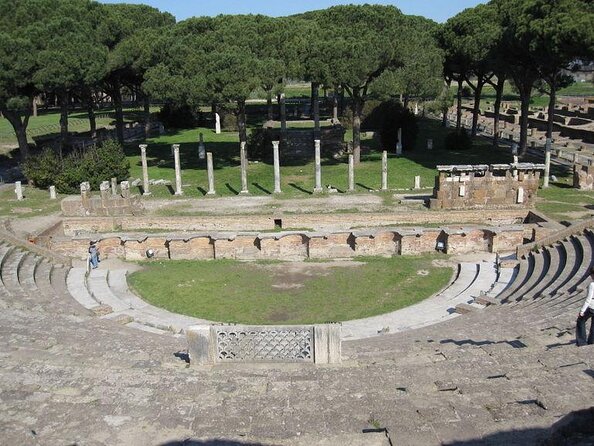
Rome’s major ancient sights often give you fragments: a column here, an arch there, a temple beside a modern street. Ostia Antica offers a broader picture. You walk through the remains of the old Roman harbor city and see how streets, public buildings, homes, shops, baths, and religious places fitted together.
That wider view is the real reason to make the trip. You are not only looking at impressive ruins. You are trying to understand how people lived, worked, prayed, bathed, traded, and moved through the city.
A guide matters here. Without help, it can be hard to tell a bath complex from a large house, or to understand why a mosaic floor matters. The walls may be impressive, but the story is often hidden in the details. A private guide can point out plumbing, multistory buildings, city planning, commercial areas, and the small clues that make the site readable.
The experience also gives you a quieter change from the center of Rome. The tour summary compares Ostia to Pompeii without the same level of crowd pressure. That comparison should not make you expect an identical site, but it does explain the appeal: you get a large Roman settlement with plenty of space to look, listen, and picture daily life.
More Ostia Antica tours:
- Ancient Ostia Antica Semi-Private Day Trip from Rome by Train with Guide
★ 4.5 · 579 reviews - From Rome: Ostia Antica Guided Half-Day Trip by Train
★ 4.8 · 486 reviews - Horse Sanctuary & Trail Ride in Ostia Antica
★ 4.5 · 276 reviews
What you see during the three-hour route
The entire visit takes place at Parco Archeologico di Ostia Antica. The route includes the archaeological remains and the museum, with admission included in the tour price.
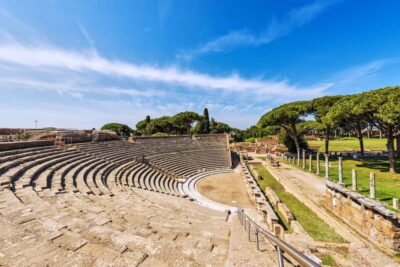
The tour covers several kinds of places rather than focusing on one famous building. You can expect to see thermal baths, houses and villas, religious sites, the theater, and parts of the old commercial and civic city. This range is useful because each stop answers a different question about Roman life.
Thermal baths and Roman infrastructure
The baths are one of the clearest ways to understand the city as a functioning community. A bath complex was not simply a place to wash. It was part of public life, and the remains help show how Roman cities handled leisure, social contact, heating, water, and construction.
Your guide can give the ruins a practical frame. Instead of seeing stone rooms as disconnected foundations, you can follow how the complex worked and why the engineering mattered. Plumbing is one of the details singled out in the tour’s feedback, and it is exactly the sort of subject that benefits from explanation.
Homes, villas, and multistory buildings
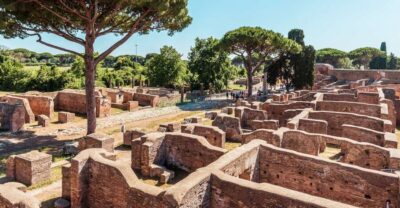
Ostia is especially useful for seeing housing at different levels of society. The remains include houses and villas, along with evidence of multistory construction. These structures help shift your attention away from emperors and monuments and toward ordinary urban life.
I like this part of the visit because it makes the site feel less like a collection of ruins and more like a neighborhood. Your guide may use images and stories to help you imagine the buildings in use. Roberto, one of the named guides, is specifically praised for explaining the city through its shopkeepers, soldiers, bakers, and restaurant workers.
The remains do not present a polished modern reconstruction, so you will need to use your imagination. That is where a private guide earns much of the tour price. You can stop when a detail catches your interest and ask how the building may have functioned.
More private tours in Rome:
- Rome by Golf Cart Private Tour: Beyond the Landmarks
★ 5.0 · 4,361 reviews - Early Morning Vatican, Sistine, St. Peter’s Semi or Private Tour
★ 5.0 · 3,779 reviews - Rome on a Golf Cart Semi-Private Tour Max 6 with Private Option
★ 5.0 · 2,502 reviews - Rome Private Arrival Transfer: Fiumicino Airport to Hotel in Rome
★ 4.5 · 2,492 reviews
Shops, trade, and the port city economy
Ostia was Rome’s old harbor city, so trade is central to understanding the site. The commercial sections show that this was not merely a residential settlement. It supported traders, retailers, food workers, soldiers, and other people whose jobs kept an ancient port moving.
This is one of the most rewarding parts of the tour for visitors who want more than a list of emperors and dates. You can look at the city through the work people did. Where were goods sold? How were businesses arranged? What did a busy Roman street need?
The tour material points to bars and restaurants, bakeries, shopkeepers, and traders. These details give you a better sense of the social rhythm of the place. The old city becomes easier to picture when you think about people buying food, meeting friends, moving supplies, or earning a living.
Religious places and the theater
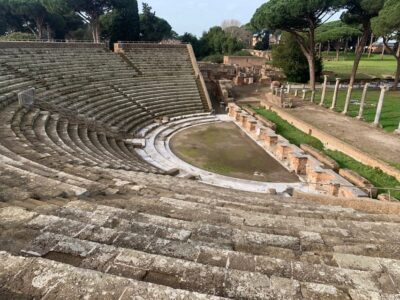
The route also includes religious buildings and the theater. These stops broaden the picture again, showing that Ostia was shaped by worship and public entertainment as well as business and housing.
A theater can be impressive on its own, but a guide can explain its place in the city. The same is true of religious sites. Their remains may not be immediately clear to an untrained eye, and the tour is designed to provide that explanation as you walk.
Since the visit lasts about three hours, you should expect an overview rather than an exhaustive study of every structure. The private format helps, but time still matters. If you have a particular interest in theater, religion, architecture, or commerce, tell your guide early so the route can give that subject the attention it deserves.
The museum and its sculptures
The archaeological visit ends with the museum, which has a small collection of ancient sculptures and sarcophagi. The collection is not described as large, but its importance lies in the objects’ connection to the city.
Museums can be useful after walking through ruins because they give you a closer look at the people and objects behind the buildings. Sculptures and sarcophagi add a human dimension to the stone streets outside. They can also help you notice details that would be easy to miss in the open-air site.
The tour ends inside the archaeological area, in front of Café degli Scavi. That makes the café a practical place to pause after the museum. Coffee and tea are not included, but you can buy them there at the end of the tour.
What a private guide changes
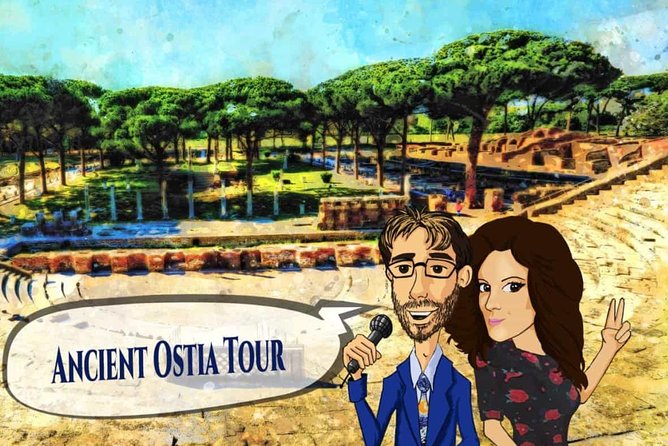
A private tour is not automatically better than a group tour, but Ostia is a place where personal attention has a clear use. The site is large, and its meaning is not always obvious. You can ask about a mosaic, stop at a building, or request more detail about Roman city planning without waiting for a whole group.
The tour is offered in English. Named guides connected with the experience include Vincenzo and Roberto. Vincenzo is described as warm, friendly, and especially good at using stories and imagination to make the ancient city feel present. Roberto is praised for arriving on time and using pictures and stories to explain commercial, political, and domestic life.
You should not assume you will receive one particular guide unless your booking confirms it. Still, those examples show the kind of guiding the experience aims to provide: not just dates and labels, but a sense of how the city operated.
The private setting also suits different interests. If you care most about mosaics, you can ask for more time with them. If you are fascinated by Roman plumbing, apartments, trade, or religious life, your guide can shape the explanation around those subjects. That flexibility is harder to get in a fixed group route.
Mosaics, plumbing, and the details that reward attention
The mosaics are among the site’s strongest visual features. Some are described as very well preserved and large, making them easier to appreciate than small fragments tucked behind museum glass.
Look at the mosaics as more than decoration. Their position, design, and condition can tell you something about the building and the people who used it. A guide can explain what you are seeing and connect it to the larger room or neighborhood.
The plumbing is another detail worth watching for. Roman infrastructure is often treated as a technical curiosity, but it also tells you about urban organization. Water, drainage, baths, and housing all depend on planning. When you see those systems alongside shops and apartments, the city begins to look like a carefully managed community.
The ancient street plan is equally helpful. You can trace how public buildings, private spaces, religious places, and shops related to one another. This is where the site offers something that a single Roman monument cannot: a sense of urban scale.
Timing the 3:30 pm start
The tour begins at 3:30 pm and lasts about three hours. That timing makes it a useful afternoon outing, especially if you want a break from the center of Rome after spending the morning among major sights.
You meet at Ostia Antica, at Viale dei Romagnoli, 717, 00119 Roma RM. The tour does not include private transportation, hotel pickup, or drop-off, so you need to arrange your own way to the meeting point. The area is near public transportation, but the supplied details do not specify a particular train, metro, or bus route.
The start time also affects how you plan your day. Do not treat this as a quick one-hour stop. Allow enough time to reach Ostia Antica before 3:30 pm, and remember that you will be walking for most of the visit.
At the end, you remain inside the archaeological site, in front of Café degli Scavi. This is convenient for a drink after the tour, but you should not expect the guide to return you to Rome. Your return journey is your responsibility.
Is $156.19 per person a fair price?
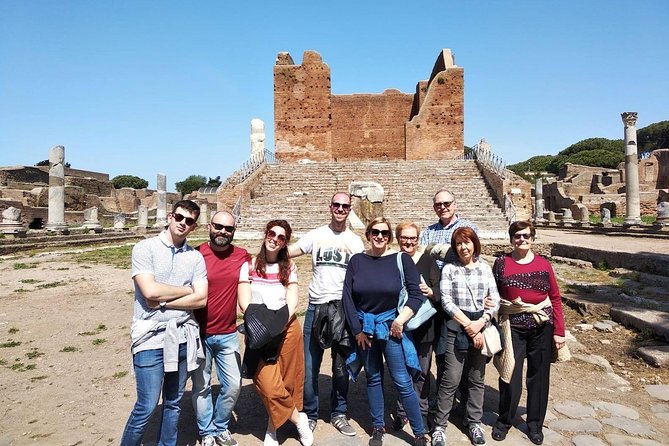
At $156.19 per person, this is not a budget entrance ticket. You are paying for a private English-language guide, local guidance, and admission, with only your own group taking part. The value depends heavily on how much you want explanation and flexibility.
For a first visit to Ostia Antica, the price can make sense. The site covers a lot of ground, and the most important benefit is not simply getting through the gate. It is understanding what the ruins were used for and how the city worked. If the guide successfully connects the mosaics, baths, homes, shops, theater, and museum, you get far more than an unstructured walk.
The value improves if your group has shared interests. A couple or family can ask questions at its own pace, and a small private group can avoid spending time on subjects that do not matter to them. Group discounts are available, though the amount is not specified, so check the final booking price for your party.
The price is harder to justify if you already know Ostia well, prefer to explore alone, or are mainly looking for a low-cost archaeological visit. Admission is included, but transport, drinks, and hotel transfers are not.
Walking, comfort, and who should choose it
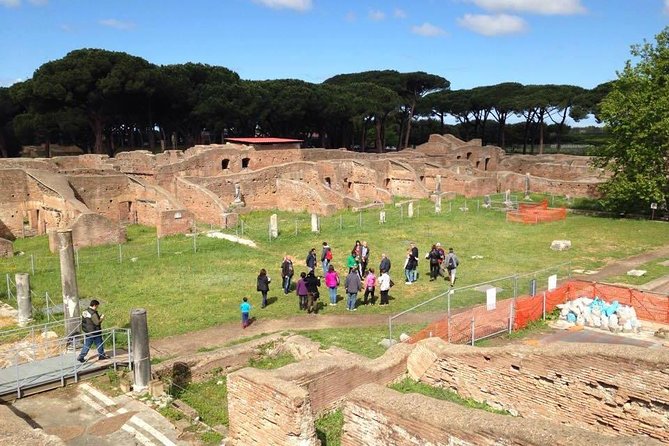
This is a walking tour through an archaeological site. The stated guidance calls for moderate physical fitness and says it is not recommended for people with walking disabilities. You should be comfortable spending about three hours moving through ancient ruins.
The surface conditions, shade, seating, and exact walking distance are not specified, so plan conservatively. Wear comfortable shoes and bring what you normally need for an outdoor archaeological visit, but do not assume that every comfort or facility will be available along the route.
I would recommend this experience to:
- First-time visitors who want ancient Roman life explained clearly
- People interested in architecture, mosaics, trade, baths, and city planning
- Families or couples who prefer a private pace
- Visitors looking for a substantial afternoon away from central Rome
- Anyone who finds unlabelled ruins frustrating
I would be more cautious if you have limited mobility, dislike extended walking, or want a fully transported excursion. The lack of private transport and hotel pickup is important. You must get to Ostia Antica and make your own way back afterward.
Booking, cancellation, and practical details
Confirmation is provided at the time of booking. The tour is private, and only your group participates. It is offered in English, with a professional, local, private guide included.
You can cancel for a full refund up to 24 hours before the experience start time. Cancellations or changes made less than 24 hours in advance are not accepted for a refund. The cutoff follows local time.
Because the experience is booked an average of 105 days ahead, planning early is sensible if your Rome dates are fixed. That is especially true if you want a private afternoon visit and have limited flexibility.
Should you book Private Tour: Ancient Ostia?
Book it if you want an informed, personal look at Roman life beyond the center’s headline sights. The strongest reasons are the complete city setting, the well-preserved mosaics, the evidence of plumbing and multistory housing, and the chance to focus on your own interests.
Skip it if you want a cheap, self-guided outing or need private transportation. Also think twice if three hours of walking through ruins would be difficult.
For most visitors who can manage the walking and reach the meeting point independently, this is a worthwhile use of an afternoon. Ostia Antica gives you the Roman city as a workplace, neighborhood, port, and public gathering place. A good private guide helps those scattered stones become a place where people once lived and worked.
FAQ
How long does the Ancient Ostia tour last?
The tour lasts approximately three hours.
What time does the tour begin?
The tour starts at 3:30 pm.
Where does the tour meet?
You meet at Ostia Antica, Viale dei Romagnoli, 717, 00119 Roma RM, Italy.
Where does the tour end?
The tour ends inside the archaeological site, in front of Café degli Scavi at the same Ostia Antica address.
Is admission to Ostia Antica included?
Yes. Admission tickets are included in the tour.
Is transportation included?
No. Private transportation, hotel pickup, and drop-off are not included.
Is the tour private?
Yes. Only your group participates in this private activity.
What language is the tour offered in?
The tour is offered in English.
What places are included in the visit?
The visit includes thermal baths, houses and villas, religious sites, the theater, and the museum with its collection of ancient sculptures and sarcophagi.
Is the tour suitable for people with walking disabilities?
The tour is not recommended for travelers with walking disabilities. A moderate level of physical fitness is required.
Can I get a refund if I cancel?
Yes, if you cancel at least 24 hours before the local start time. Cancellations or changes made less than 24 hours before the start are not accepted for a refund.
Newest Rome tours we have reviewed
- Private TikTok Video Making in Rome★ 5.0 · 7 reviews
- Assisi, Orvieto and Civita di Bagnoregio Full Day Tour from Rome★ 4.5 · 45 reviews
- Assisi & Saint Francis Path Tour from Rome★ 5.0 · 45 reviews
- Assisi and Cascia Private Day Tour from Rome with Lunch★ 5.0 · 10 reviews
- Art Class in the center of Rome!★ 4.0 · 4 reviews
- Art & Craft: Beer Tour with Street Art in Rome★ 4.5 · 6 reviews
- Arrival in Rome: Airport Transfer & Exclusive City Introduction★ 5.0 · 3 reviews
- From Rome: Private Day-Tour of Tuscany★ 5.0 · 16 reviews
Ostia Antica Tours, compared.
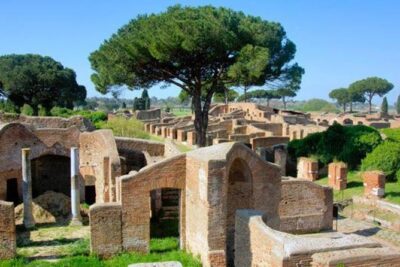
Ancient Ostia Antica Semi-Private Day Trip from Rome by Train with Guide
Read our review →
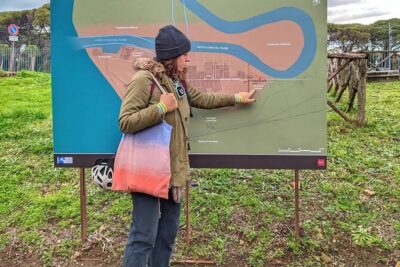
Ostia Antica Archaeological Park Ticket & Audio App
Read our review →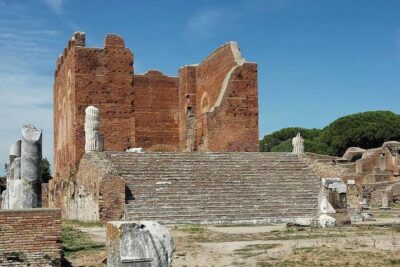
Browse the lists this tour appears in