
Reviewed · ROME CITY HIGHLIGHTS TOURS
Alternative Walking Tour of Rome’s City Center & Hidden Gems
Rome’s best stories are often hiding in plain sight. This 2.5-hour walk links Trajan’s Column, Trevi Fountain, the Pantheon, and Piazza Navona with lesser-known churches and off-limits spots, while guides such as Simone, Jacopo, Iris, and Jacob explain the families, popes, artists, and scandals behind the stones.
I like the story-first approach, which turns fountains and churches into scenes of ambition, propaganda, crime, and betrayal. I also like the route’s mix of famous sights and quiet corners, plus the chance to enter places you might miss on your own. The main catch is the pay-what-you-want model: the booking price is low, but you should plan to tip about €10 to $50.
Key points to know before you book
- Trajan’s Column begins the story: You start beside one of ancient Rome’s most striking monuments, with the imperial past immediately in view.
- The route covers major sights without stopping at the Colosseum: Expect Piazza Venezia, Trevi Fountain, Sant’Ignazio, the Pantheon, and Piazza Navona.
- Family power is a central theme: The walk explains how dynasties, popes, and wealthy Roman families shaped art, streets, churches, and politics.
- The humor is not polished for everyone: Dark jokes and politically incorrect material are part of the guide’s style.
- The guides are the real variable: Simone, Jacopo, Iris, Jacob, and others are praised for energy, clear English, wit, and strong storytelling.
- The low advertised price is not the final cost: Your tip is the guide’s main payment, so budget for it from the start.
Rome’s power story starts at Trajan’s Column
Meet on the steps of Chiesa del Santissimo Nome di Maria al Foro Traiano, beside Trajan’s Column and the remains of Trajan’s Forum. The guide carries a sign with the tour name, making this a fairly easy meeting point to find.
This is a smart place to begin. The column is not just a photo backdrop. Its carved spiral tells the story of Emperor Trajan’s military campaigns, and the surrounding ruins introduce Rome as a city built through conquest, display, and political messaging.
From the opening minutes, expect the guide to connect ancient power with later Roman families and church leaders. The aim is not to recite dates. It is to show you how Rome kept reusing old stones, old symbols, and old ideas of authority.
You spend about 15 minutes here, including explanation, sightseeing, and photographs. That is enough time to understand the setting, but not enough for a full archaeological visit. If you want a long look at Trajan’s Forum, plan separate time before or after the walk.
More city highlights tours in Rome:
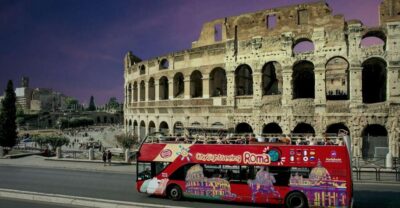
- Rome: Big Bus Hop-on, Hop-off Open-Top Sightseeing Tour
★ 3.5 · 2,580 reviews - Rome in a Day Group Tour with Vatican Museums and Colosseum
★ 4.5 · 2,450 reviews - Rome Highlights by Golf Cart Private Tour
★ 5.0 · 2,379 reviews
Piazza Venezia and the families behind the city
The next brief stop is Piazza Venezia. The five-minute visit is more of a visual pause than a full tour of every building, but the square gives the guide room to explain how Rome’s central spaces changed with political ambitions.
One theme comes up again and again: Rome was shaped not only by emperors and popes, but also by powerful families. The Colonna, Barberini, Borghese, and other dynasties used churches, palaces, fountains, and public spaces to display status and influence.
That family focus is one of the tour’s most useful features. Instead of treating Rome as a string of unrelated monuments, you begin to see connections between money, patronage, religion, and public art.
Guides do not all tell the story in exactly the same way. Jacopo is often praised for his focus on Roman family dynasties, while Simone is noted for explaining the city’s political and religious development. That variation can be a strength, though the exact emphasis may depend on who leads your group.
The secret stop and the monastery visit
The itinerary includes a short secret stop, followed by about 25 minutes at a monastery. The exact name of the secret stop is not provided, which is part of the point: you are being taken to a place that is not presented as one of Rome’s standard postcard stops.
The monastery visit appears to be one of the more unusual parts of the walk. The tour includes lesser-known religious spaces and access described as off-limits or not normally open to the public. One participant described a guide persuading a priest to allow the group to see something normally unavailable.
That detail should be treated as a possibility, not a guarantee. Access to religious buildings can change, and the exact stop may depend on the day, the guide, or permission on site. Still, this is where the tour moves beyond a standard city-center route.
The church stops also help explain why Rome has so many churches. They are not simply places for worship. They record family rivalries, artistic competition, political messages, and changing ideas about faith and public life.
Trevi Fountain beyond the coin toss
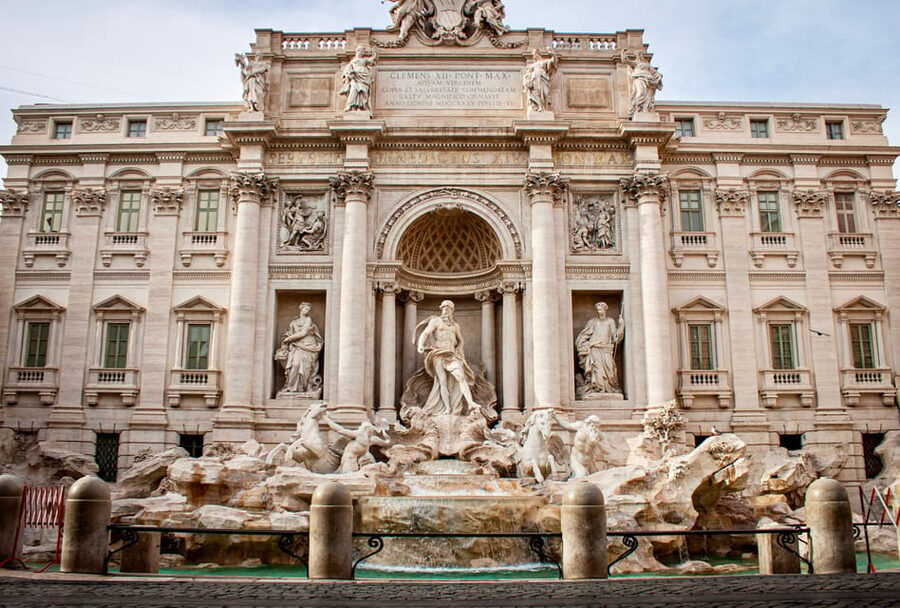
Trevi Fountain gets about 15 minutes, including a break, photographs, guided commentary, and free time. This is one of the busiest stops, so the short visit is sensible. You get time to look, listen, and take pictures without pretending the whole square will be quiet.
The guide’s job here is to move past the usual coin-toss ritual. Fountains in Rome often served as public signs of authority. They brought water into the city, but they also advertised which pope, family, or institution had the power to build and fund them.
Expect stories about the people behind the monument, not just its shape and decoration. The tour’s advertised themes include corruption, betrayal, scandal, and political maneuvering, so the commentary is likely to be more colorful than a standard art-history talk.
I would not book this walk if you want a long, calm photography session at Trevi Fountain. I would book it if you want enough context to understand why the fountain became such a powerful public symbol.
More walking tours in Rome:
- Rome: Trastevere & Campo de Fiori Street Food Walking Tour
★ 4.9 · 2,768 reviews - Rome: Paranormal Night Walking Tour & Secret Backstreets
★ 4.9 · 1,921 reviews - Rome by Night Walking Tour – Legends & Criminal Stories
★ 4.5 · 1,003 reviews - Rome: Guided City Center Evening Sightseeing Walking Tour
★ 4.4 · 953 reviews
Sant’Ignazio and Rome’s painted illusion
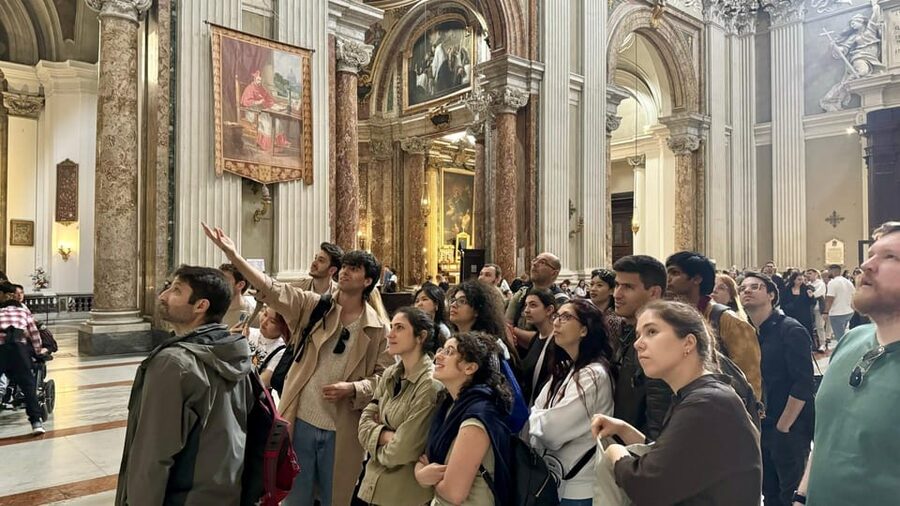
The Church of Sant’Ignazio di Loyola receives about 10 minutes. This is a compact stop, but it may be one of the visual highlights.
The church is especially known for its ceiling painting and its remarkable use of perspective. The design creates the impression of architectural space above you, even though the effect depends on a carefully planned illusion.
The guide can connect the church’s art to the larger story of religion, education, and public persuasion. Rome’s churches were places where competing religious orders and wealthy patrons showed what they could achieve.
This is also a good example of why a guided walk helps. You can enter, look upward, and admire the ceiling on your own. A guide gives you the reason to look closely, points out the visual trick, and places the work within Rome’s political and religious setting.
The time here is brief, so do not expect a full art lecture. You may want to return later if the church captures your interest.
The Pantheon in a five-minute stop
The Pantheon is listed as a five-minute visit, with photographs, sightseeing, and a short explanation. That is enough to orient you, but it is not a substitute for a dedicated Pantheon visit.
The building’s appeal lies in its layers. It began as an ancient Roman temple and later became a Christian church, making it a clear example of how Rome reused its past rather than simply preserving it behind glass.
A good guide will help you notice the scale, the dome, the entrance, and the way ancient Roman engineering still shapes the building’s character. You will also hear how the site fits into the wider story of emperors, Christianity, art, and later civic identity.
The practical point is simple: the walk shows you why the Pantheon matters, but the stop is short. If you want to linger inside, study the dome, or visit the tombs, return independently when you have more time.
Piazza Navona and the finish in Baroque Rome
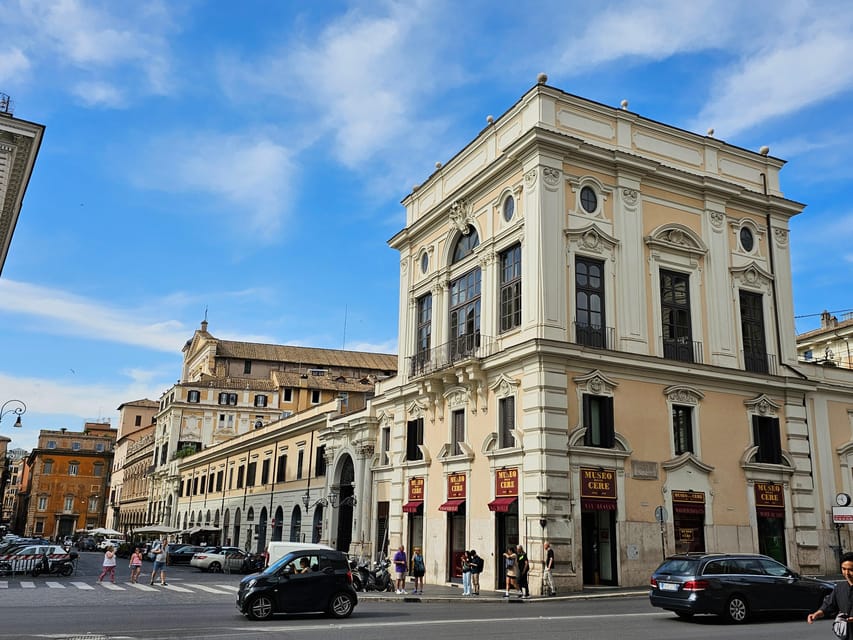
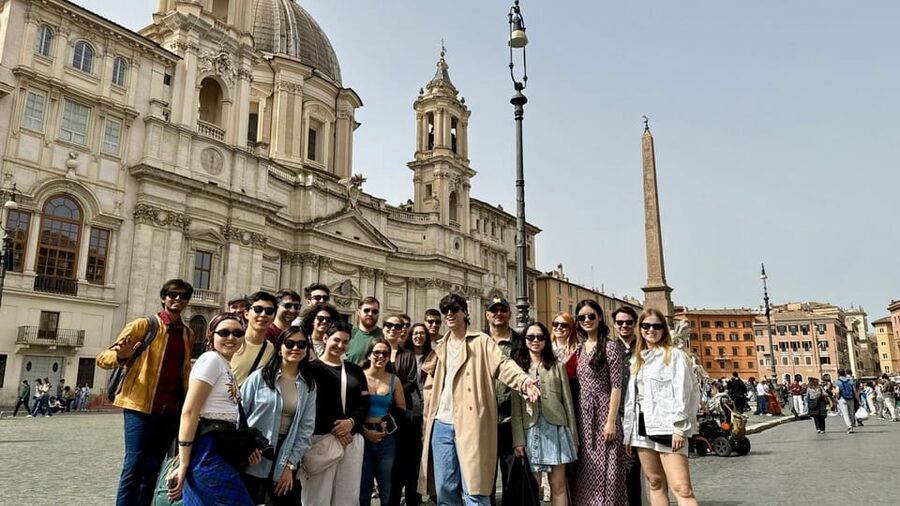
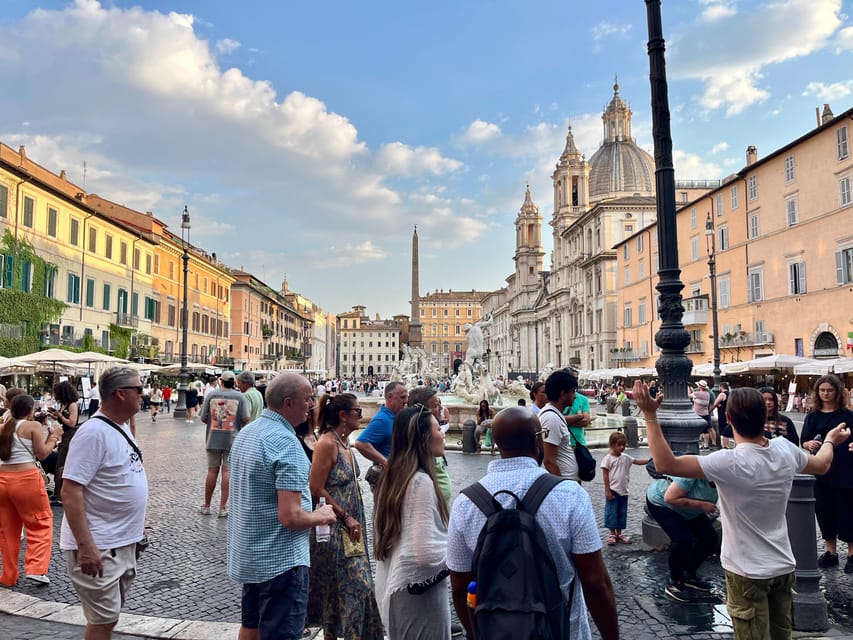
The walk ends at Piazza Navona after about 15 minutes of sightseeing and explanation. This is a satisfying finish because the square brings together several themes from the route: ancient foundations, papal power, grand public art, family competition, and Roman daily life.
Piazza Navona follows the shape of an ancient stadium, but its later identity is Baroque. Its fountains and churches show how Rome’s rulers transformed older spaces into stages for power and display.
The guide can also explain the rivalry between major artists and patrons associated with the square. That kind of personal drama fits the tour’s tone well. You are not only looking at stone and marble. You are hearing about ambition, money, ego, and the desire to control how the city looked.
Finishing here is practical. Piazza Navona is a useful base for continuing on foot, finding food, or returning to a sight you passed earlier. Several participants also received recommendations for additional places to visit, which can be especially useful if this is your first day in Rome.
The guides make the biggest difference
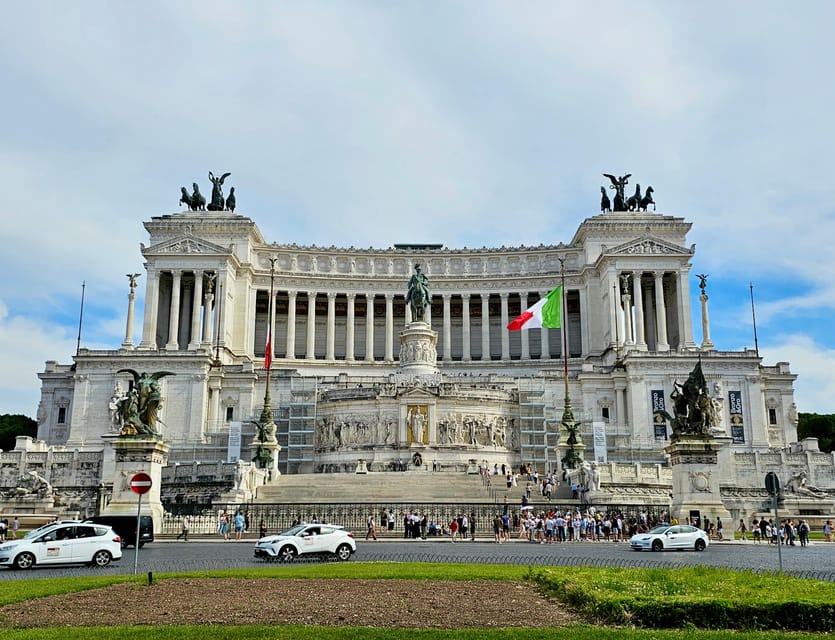
The strongest part of this tour is the guide. Names that appear repeatedly in the experience are Simone, Jacopo, Iris, Jacob, and Simon, with other guides also leading in English or Spanish.
Simone is praised for energy, humor, and his ability to explain Roman political and religious history in a clear way. One particularly unusual strength is his ability to read Latin and Ancient Greek, which can add another layer when the group stops near old inscriptions.
Jacopo is often described as charismatic, funny, and especially strong on Roman families and ancient Rome. Iris is praised for animation, warmth, and a lively delivery. Jacob is noted for clear English, a comfortable pace, and attention to the group.
You should expect a guide who welcomes questions rather than simply delivering a fixed speech. Several accounts describe guides branching into other subjects, recommending places to visit later, and adjusting their pace to the group.
The format can also feel personal. One person had a private tour with no other participants, while another described a small, intimate group. Group size can vary, so do not assume you will always have a private experience.
Some participants also appreciated a face-to-face format without headphones. That can make it easier to ask questions and follow the guide’s expressions, though the exact setup may vary.
Who will enjoy the dark humor?
This is not a quiet, neutral history lesson. The description openly promises dark humor and politically incorrect jokes, along with stories of crime, murder, corruption, war, and betrayal.
That tone will appeal to you if you like history with personality. It can make difficult names and complicated power struggles easier to remember. It also helps show that Rome was shaped by flawed people, not just noble emperors and perfect saints.
If you prefer strictly formal commentary, this may feel too cheeky. The style also depends on the individual guide. The repeated praise for humor suggests that the lively delivery is a major part of the experience, but you should be comfortable with jokes that may push past polite museum language.
What the $3.77 price really means
The advertised price of $3.77 per person is the reservation price, not the full expected payment. This is a tip-based tour, so the guides work mainly for what you give them at the end.
The suggested range is usually €10 to $50. That is a wide spread, but it reflects the pay-what-you-want structure. I would treat €10 as a minimum planning figure for a satisfactory basic experience and consider more if the guide gives you a private tour, handles questions well, or provides exceptional access and context.
The model can offer good value, especially for a first orientation to central Rome. You see several major sights, receive historical context, and may enter places you would not find alone. The tradeoff is that the final price is less predictable than a fixed-fee tour.
Bring a payment method you can use at the end. One participant specifically noted that tipping was possible by cash or card, but it is wise to confirm the available option with your guide.
Timing, walking, and practical expectations
The tour lasts 2.5 hours and moves through central Rome on foot. Wear comfortable shoes, carry water, and expect uneven pavement and busy streets, even though the route itself is not described as strenuous.
The stop lengths are short at several major monuments. That is useful if you want an overview, but less useful if you want extended time inside the Pantheon, Sant’Ignazio, or Trevi Fountain area.
The tour is offered in English and Spanish. The meeting point is outside Chiesa del Santissimo Nome di Maria al Foro Traiano, beside Trajan’s Column, and the finish is Piazza Navona.
The included services list a local guide, walking tour, city highlights, lesser-known places, and admission to papal private gardens. Since the named route does not identify the gardens as a separate stop, ask the guide how and when that admission is used if it matters to your booking.
Free cancellation is available up to 24 hours before the start, and you can reserve without paying immediately. Those terms are useful if your Rome plans are still shifting.
Should you book this Rome walking tour?
Book it if you want a lively introduction to central Rome, especially one built around family power, church art, scandals, and political stories. It suits first-time visitors who want context before exploring alone, as well as repeat visitors who have already seen the standard monuments.
I would be particularly happy choosing it for a first morning in Rome. The route gives you a map of the city’s big themes, and the recommendations at the end can help shape the rest of your stay.
Skip it if your priority is long interior visits, quiet photography, or a fixed-price tour with no expected tip. Also think twice if dark humor and politically incorrect jokes are not your style.
For most people who enjoy walking and storytelling, the mix is strong: major Roman sights, lesser-known stops, memorable guides, and a useful explanation of how power shaped the city.
FAQ
How long does the walking tour last?
The tour lasts 2.5 hours.
Where does the tour start?
It starts on the steps of Chiesa del Santissimo Nome di Maria al Foro Traiano, beside Trajan’s Column and Trajan’s Forum.
Where does the tour finish?
The tour finishes in Piazza Navona.
Which sights are included?
The route includes Trajan’s Column, Piazza Venezia, a secret stop, a monastery, Trevi Fountain, the Church of Sant’Ignazio di Loyola, the Pantheon, and Piazza Navona.
Is the tour available in English?
Yes. The tour is offered in English and Spanish.
Is the tour free?
It is advertised at $3.77 per person, but it uses a tip-based model. You give the guide what you think the tour was worth at the end, with a usual tip of about €10 to $50.
What kind of stories does the guide tell?
The tour covers Roman history, powerful families, churches, art, fountains, myths, local traditions, scandals, corruption, crime, murder, war, and betrayal. Dark humor and politically incorrect jokes are also part of the format.
Can I cancel the booking?
Yes. You can cancel up to 24 hours in advance for a full refund, and you can reserve now while paying later.
Newest Rome tours we have reviewed
- Private TikTok Video Making in Rome★ 5.0 · 7 reviews
- Assisi, Orvieto and Civita di Bagnoregio Full Day Tour from Rome★ 4.5 · 45 reviews
- Assisi & Saint Francis Path Tour from Rome★ 5.0 · 45 reviews
- Assisi and Cascia Private Day Tour from Rome with Lunch★ 5.0 · 10 reviews
- Art Class in the center of Rome!★ 4.0 · 4 reviews
- Art & Craft: Beer Tour with Street Art in Rome★ 4.5 · 6 reviews
- Arrival in Rome: Airport Transfer & Exclusive City Introduction★ 5.0 · 3 reviews
- From Rome: Private Day-Tour of Tuscany★ 5.0 · 16 reviews
Rome City Highlights Tours, compared.
Big Bus Hop-on, Hop-off Open-Top Sightseeing Tour
Read our review →
Rome in a Day Group Tour with Vatican Museums and Colosseum
Read our review →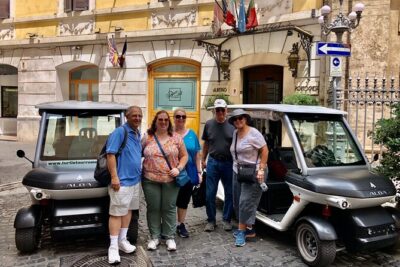
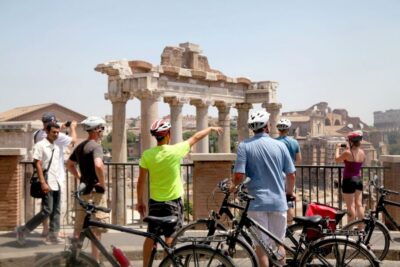
Top Highlights & Hidden Gems Tour by Cannondale E-Bike
Read our review →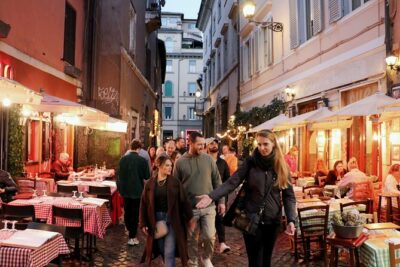
Rome Food Tour: Hidden Gems of Trastevere with Dinner & Wine
Read our review →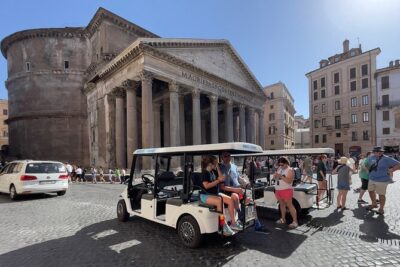
Rome Highlights City Tour by Golf Cart with Gelato
Read our review →
Rome in a Day Tour with Vatican, Colosseum and Historic Center
Read our review →Browse the lists this tour appears in