
Reviewed · JEWISH GHETTO TOURS
Jewish Ghetto Walking Tour with gelato
Rome’s Jewish Ghetto is one of the few places in Rome where ancient ruins, Jewish tradition, Renaissance fountains, and World War II stories meet within a short walk. This tour makes that layered past easier to follow, from the Theater of Marcellus and Portico d’Ottavia to the Great Synagogue and Tiber Island.
I like the small-scale feel of a walking tour through streets you might otherwise pass without understanding. I also like the homemade kosher gelato stop, which adds a local food detail rather than another grand monument. The main drawback is that three hours on Roman paving stones can be tiring, and the meeting-point information needs careful checking before you go.
Key points to know before booking
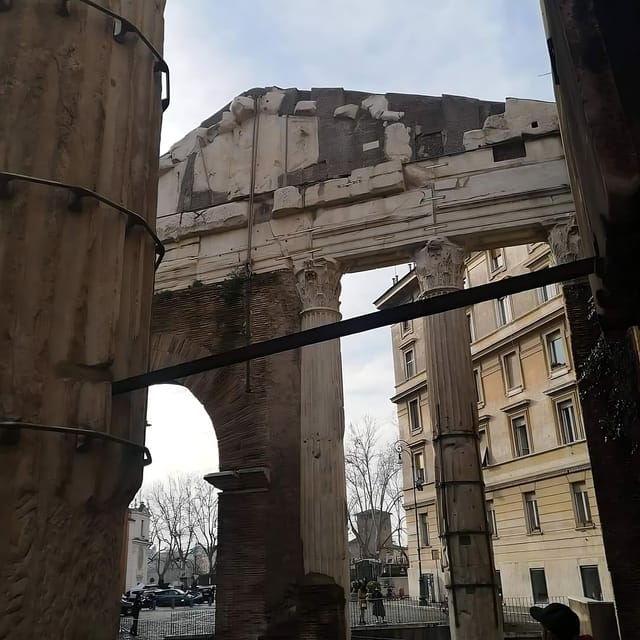
- Ancient Rome remains in daily use: See the Theater of Marcellus and Portico d’Ottavia as part of a living neighborhood, not just an archaeological site.
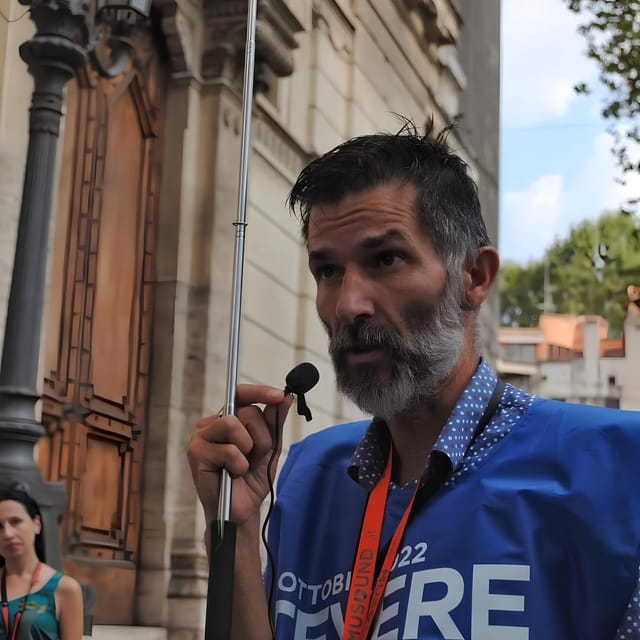
- The guide adds local perspective: The English-speaking guide combines historical information with personal stories about growing up in Rome.
- Gelato is part of the tour: Homemade kosher gelato is included at a local gelateria.
- The route reaches Tiber Island: Cross Rome’s oldest functioning bridge and hear stories tied to both Asclepius and World War II.
- The walk ends near Piazza Venezia: The tour finishes at a central location, useful for continuing your sightseeing.
- Plan for sun and uneven streets: Comfortable shoes, water, sunscreen, a hat, and a head covering for sacred places are all sensible.
Why Rome’s Jewish Ghetto deserves three hours
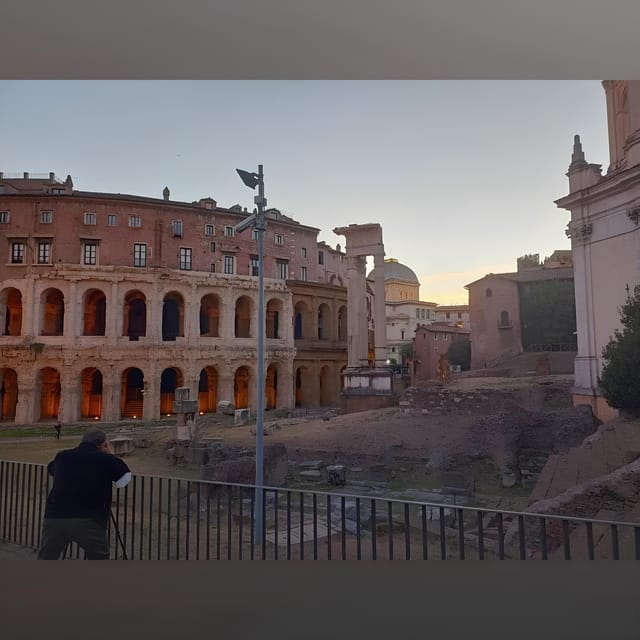
Rome’s Jewish Ghetto is not a walled museum district frozen in time. It is a working part of the city, where ancient stone, religious buildings, restaurants, shops, and ordinary streets occupy the same small area.
That is what makes a guided walk useful. Without context, the Theater of Marcellus may look like another ruin, the Portico d’Ottavia may seem like a cluster of old columns, and the Great Synagogue may be just another grand building on the route. A guide connects these places to the long story of Rome’s Jewish community.
You will hear about more than 2,000 years of change. The tour also addresses the painful parts of that story, including the restrictions placed on Jewish residents and the community’s survival through difficult periods. The tone is not simply a parade of ancient sights. It is a look at resilience, memory, religion, and daily life.
For me, the best reason to book this experience is the scale. You are not trying to cover all of Rome. You are spending three hours understanding one compact neighborhood and its links to the ancient city, the Tiber, and modern Rome.
More Jewish Ghetto tours:
- Rome: Trastevere or Jewish Quarter Street Food Tour
★ 4.8 · 3,839 reviews - Jewish Ghetto and Trastevere Tour Rome
★ 4.5 · 1,729 reviews - Jewish Ghetto and Synagogues with Jewish Roman Guide 3 Hours
★ 5.0 · 907 reviews
Starting near the center of Rome
The supplied meeting information places the group in front of a church, while the route details also refer to Trajan’s Column and Piazza San Bartolomeo all’Isola. Because several location details appear in the booking information, I would check the exact meeting point and starting time before leaving your hotel.
The stated starting point for the route is Piazza San Bartolomeo all’Isola, 22, in front of the church. The tour finishes at Piazza Venezia. If your confirmation gives a different meeting place, follow the confirmation and allow extra time to find the guide.
This is a walking tour, so you do not need to arrange local transportation between stops. That is convenient, but it also means you should arrive ready to walk. Wear shoes that can handle uneven Roman streets, and bring water. A hat and sunscreen matter during the warmer months because much of the route is outdoors.
The tour is offered in English with a live guide. One especially appealing feature is the local voice. A guide identified in the booking information as a local Roman brought personal memories of growing up in the city into the historical explanation. That kind of detail can make the neighborhood feel less like a textbook subject and more like a place with continuing life.
Theater of Marcellus and the ancient city around it
The Theater of Marcellus is one of the first major sights on the route. It gives you a clear sense of how Rome reuses its past. Rather than being isolated from modern life, the ancient structure forms part of the city you are walking through today.
The tour uses the theater to set up the neighborhood’s long timeline. You begin with Roman architecture and then move toward the Jewish Ghetto, where different periods of the city overlap. This is a strong opening because it shows that Jewish Rome cannot be understood apart from Rome itself.
You should not expect an interior visit or a formal archaeological tour. Entrance fees are not included, and the experience is built around walking and outdoor explanation. That keeps the price lower than a tour with several paid site entries, but it also means the value rests mainly on the guide’s storytelling and route.
If you like seeing how old buildings function within modern streets, this part should appeal to you. If you want extended time inside ancient monuments, you may find the stop brief.
Portico d’Ottavia and the Jewish Ghetto
The Portico d’Ottavia is another key stop. Its ancient columns and surviving structures make the area feel like a place where history has not been cleared away and separated from daily life.
The guide explains how the portico connects to the Jewish neighborhood and its past. The setting is important because the ghetto grew around ancient Roman remains rather than in a separate historic zone. You are seeing layers of the city in the same few streets.
The tour also points out the last remaining section of the wall that confined the Jewish community in this area for centuries. That detail gives physical form to a difficult chapter. A wall can sound abstract when described in a book. Seeing the surviving piece helps you understand how restrictions shaped movement and daily life.
This is one of the stops where the guide’s balance matters. The tour covers the community’s painful past, but it also focuses on endurance and continuity. You are not being asked to treat the neighborhood as a relic. You are learning how a community persisted through pressure and change.
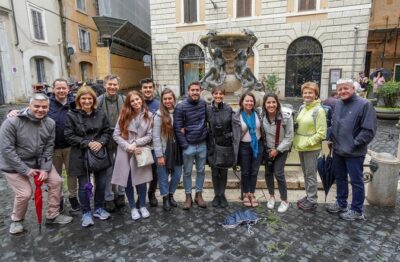
The route includes about an hour around the Turtle Fountain and Portico d’Ottavia area. That is a good amount of time for explanation and walking, though the exact pace will depend on the group and guide.
More gelato and tiramisu classes in Rome:
- 3 in 1 Cooking Class near Navona: Fettuccine, Ravioli & Tiramisu
★ 5.0 · 7,376 reviews - Rome: Pasta & Tiramisu Class with Fine Wine by the Vatican
★ 4.9 · 4,852 reviews - Rome: 3-in-1 Fettuccine, Ravioli, and Tiramisu Cooking Class
★ 4.9 · 2,704 reviews - Learn to Make Pasta & Tiramisu with Wine and Limoncello Included
★ 5.0 · 2,345 reviews
Homemade kosher gelato in the middle of the walk
The gelato stop is a small feature, but it gives the tour a welcome change of pace. You visit a local gelateria and receive homemade kosher gelato as part of the experience.
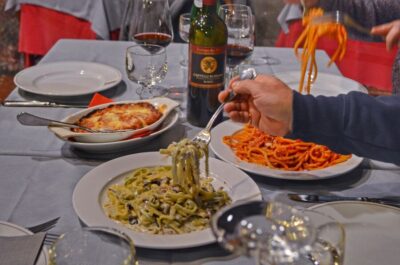
The kosher element is especially relevant here because food, faith, and community are closely connected in the Jewish Ghetto. This is not presented as a full meal, so do not book the tour expecting lunch. Think of it as a sweet break and a chance to notice how food traditions remain part of the neighborhood’s identity.
A useful tip from the guide is to look for raw gelato when you want the real flavors. The point is to pay attention to quality and freshness rather than choosing only by appearance. That advice adds a practical food note to the history lesson.
Because the gelato is included, the $46 price is easier to assess. You are paying for three hours with a professional guide, the walking route, and the treat. The value is strongest if you want interpretation and local context. It is less compelling if you prefer to wander independently and stop for gelato on your own.
Piazza Mattei and the Turtle Fountain
After the gelateria, the tour continues to Piazza Mattei and the Fontana delle Tartarughe, or Turtle Fountain. This is one of Rome’s more charming public fountains, and it provides a pleasant visual break from the heavier historical subjects.
The fountain is a good example of how the neighborhood’s mood can change within a few steps. You move from ancient ruins and the memory of confinement to a Renaissance-era square with a carefully designed fountain. The guide helps place the fountain within the route rather than treating it as an unrelated photo stop.
You will have time to look closely and hear the story of the square. The itinerary assigns about an hour to the Turtle Fountain portion of the tour, though that time also includes walking and nearby sights. Do not expect to sit for a long break unless the guide chooses to pause.
This is a useful stop for photographers, but flash photography is not allowed in certain areas, and sacred places have their own rules. Follow the guide’s instructions instead of assuming photography is permitted everywhere.
The Great Synagogue and a community’s resilience
The Great Synagogue is one of the most important stops for understanding the Jewish Ghetto today. The tour uses it to discuss the community’s difficult past and its continued presence in Rome.
You should bring a head covering or kippah for visits to sacred places. This is a practical requirement, not just a suggestion about clothing. A hat may work, but a proper head covering is the safest choice if you expect to enter or visit a religious site.
The guide explains the story of Rome’s Jews in a way that links the neighborhood’s buildings to real human experience. You hear about restrictions, hardship, and resilience rather than only dates and architectural terms.
The booking information does not include entrance to the Great Synagogue or any other paid site. That means you should expect to see and discuss the building from the tour route rather than assume an interior visit. If entering the synagogue is important to you, ask before booking so you know exactly what is included.
Crossing into Tiber Island
The route then crosses the oldest functioning bridge in Rome as it reaches Tiber Island. This is a memorable change of setting. You leave the tightly packed streets of the Ghetto and move onto an island in the Tiber, with the river shaping the view and the pace of the walk.
Tiber Island adds two distinct stories. One concerns Asclepius, the ancient Greek god associated with healing, whose temple site is now occupied by a church. The other concerns the hospital on the island and its role in saving people during World War II.
These stories show how the island has carried different meanings across time. It was linked to ancient religious practice, later Christian tradition, medical care, and wartime courage. The tour does not treat the island as a simple final photo stop. It uses the place to connect Roman antiquity with more recent events.
The bridge crossing may be easy for many people, but the full route still requires steady walking. Rome’s streets can be uneven, and the tour lasts three hours. The information describes the activity as wheelchair accessible in one section, but another section says it is not suitable for wheelchair users or people with mobility impairments. I would contact Vitus directly for a clear answer about the current route before booking if accessibility is important.
Timing, price, and what you actually receive
The tour lasts three hours and costs $46 per person. For that price, you receive a professional English-speaking guide, the guided walk through the Jewish Ghetto, and homemade kosher gelato.
The value depends on how you like to sightsee. If you enjoy asking questions, hearing local stories, and understanding why a place matters, $46 is a fair price for a focused introduction. The tour covers several important sites without requiring separate transportation, and the finish at Piazza Venezia puts you near one of central Rome’s main areas.
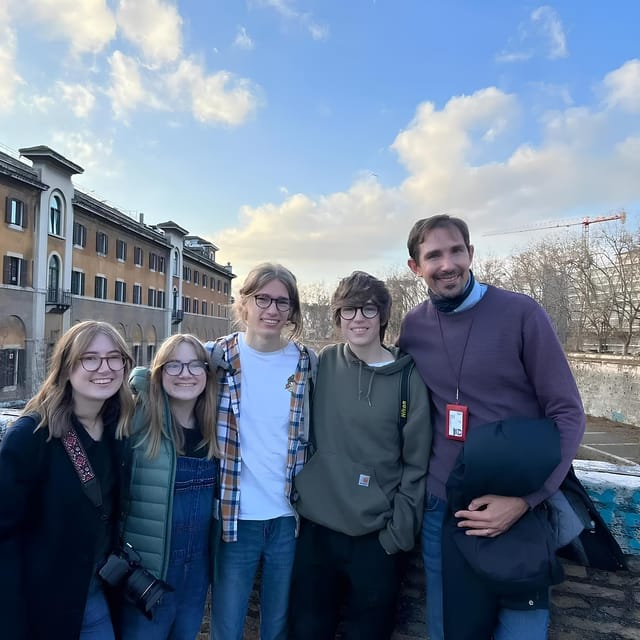
The price does not include hotel pickup, drop-off, or entrance fees. There is no promise of a private tour, though group size can vary. On one December booking, only one party was scheduled, creating a private-style experience. You should not count on that, but it shows that the actual feel can be more personal during quieter periods.
The strongest value is the guide’s interpretation. If you already know the Ghetto well, or if you are happy reading signs and walking alone, you may prefer to spend $46 on food or another paid attraction. If this is your first visit to the area, the guide can help you notice details you might otherwise miss.
Free cancellation is available up to 24 hours before the start, and you can reserve now and pay later. Those terms are useful if your Rome schedule is still changing, but they should not replace checking the meeting location and route details.
Who should book this walking tour?
I would recommend this tour to you if you want a compact introduction to Rome’s Jewish Ghetto, especially if you like history that connects buildings to people and events.
It suits:
- First-time visitors who want to see a less familiar side of central Rome
- People interested in Jewish history and the endurance of Rome’s Jewish community
- Sightseers who enjoy ancient ruins mixed with active neighborhoods
- Couples and small groups looking for a guided walk with a simple food stop
- Visitors who want an English-speaking local guide rather than a self-guided route
It may not suit you if you have difficulty walking for three hours, dislike outdoor sightseeing in strong sun, or want long interior visits at major monuments. It also may not be the best choice if your main goal is a full meal, extensive museum time, or a private tour guaranteed in advance.
Bring comfortable shoes, water, sunscreen, and a hat. Carry a head covering or kippah for sacred places, and respect restrictions on food, drinks, and flash photography.
Should you book the Jewish Ghetto walking tour?
Book it if you want Rome explained through a small neighborhood rather than reduced to a checklist of famous monuments. The mix of the Theater of Marcellus, Portico d’Ottavia, Turtle Fountain, Great Synagogue, Tiber Island, and kosher gelato gives the walk a clear sense of place.
The most important question is your walking ability and your interest in guided history. If both are a good match, this is a thoughtful three-hour introduction with a local touch. Confirm the meeting point and accessibility details first, then let the route show you how ancient Rome and Jewish Rome remain closely linked.
FAQ
How long does the Jewish Ghetto walking tour last?
The tour lasts three hours.
What language is the tour offered in?
The tour is conducted in English by a live guide.
What is included in the price?
The price includes a professional guide, the walking tour of Rome’s Jewish Ghetto, and homemade kosher gelato.
Is hotel pickup included?
No. Hotel pickup and drop-off are not included.
Does the tour include entrance fees?
No. Entrance fees to sites are not included.
Where does the tour finish?
The tour finishes at Piazza Venezia.
What should I bring?
Bring comfortable walking shoes, water, sunscreen, and a hat. You should also bring a head covering or kippah for sacred places. Flash photography is not allowed in certain areas.
More walking tours in Rome
- Rome: Trastevere & Campo de Fiori Street Food Walking Tour
★ 4.9 · 2,768 reviews - Rome: Paranormal Night Walking Tour & Secret Backstreets
★ 4.9 · 1,921 reviews - Rome by Night Walking Tour – Legends & Criminal Stories
★ 4.5 · 1,003 reviews - Rome: Guided City Center Evening Sightseeing Walking Tour
★ 4.4 · 953 reviews
Newest Rome tours we have reviewed
- Private TikTok Video Making in Rome★ 5.0 · 7 reviews
- Assisi, Orvieto and Civita di Bagnoregio Full Day Tour from Rome★ 4.5 · 45 reviews
- Assisi & Saint Francis Path Tour from Rome★ 5.0 · 45 reviews
- Assisi and Cascia Private Day Tour from Rome with Lunch★ 5.0 · 10 reviews
- Art Class in the center of Rome!★ 4.0 · 4 reviews
- Art & Craft: Beer Tour with Street Art in Rome★ 4.5 · 6 reviews
- Arrival in Rome: Airport Transfer & Exclusive City Introduction★ 5.0 · 3 reviews
- From Rome: Private Day-Tour of Tuscany★ 5.0 · 16 reviews
Jewish Ghetto Tours, compared.

Trastevere or Jewish Quarter Street Food Tour
Read our review →
Jewish Ghetto and Synagogues with Jewish Roman Guide 3 Hours
Read our review →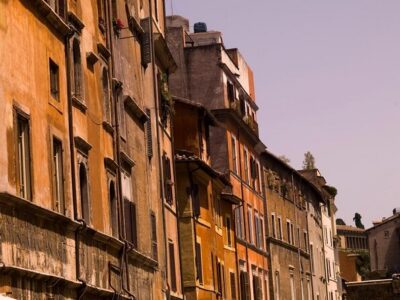
Jewish Ghetto & Piazza Navona: Food, Wine & Sightseeing Rome Tour
Read our review →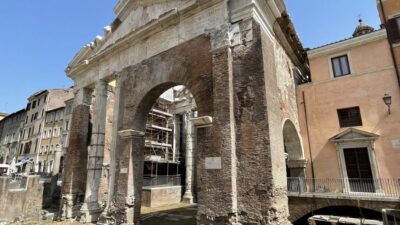
Jewish Ghetto & Campo de Fiori by Night Food Wine Tour
Read our review →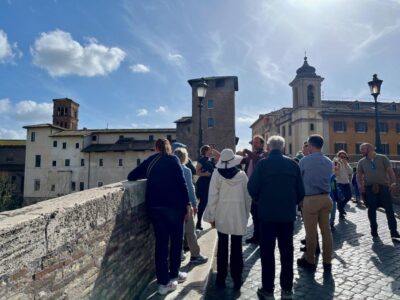

Browse the lists this tour appears in