
Reviewed · TRASTEVERE TOURS
Mosaic-Making Workshop in Rome’s Trastevere
A few hours in Nadia’s Trastevere studio can turn a Rome souvenir into something you made yourself. You choose a design, cut small tiles, fit the pieces together, and leave with a mosaic that carries more meaning than another shop-bought trinket. The hands-on work is the point, not a quick demonstration.
I like the small group of up to eight, which gives Nadia time to help at each workstation. I also like the change of pace: after churches, ruins, and crowded streets, you sit down in an artist’s studio and work with your hands. The main consideration is patience. Cutting tiles to fit tight angles takes time, and the finished mosaic needs up to six hours to set before it is ready to carry away.
Key points
- Three hours in Trastevere: The workshop takes place near Rome’s Botanical Garden, in a working mosaic studio.
- Make a real souvenir: You create your own piece and take it home in a box after it sets.
- Personal help throughout: Nadia demonstrates the process and assists you as you work.
- Small class size: No more than eight participants share the studio.
- A good family activity: Children can join, but each child must have at least one adult with them.
- Plan for careful work: Cutting and fitting small tiles is rewarding, but it is not a rushed craft project.
A Quiet Creative Break in Trastevere
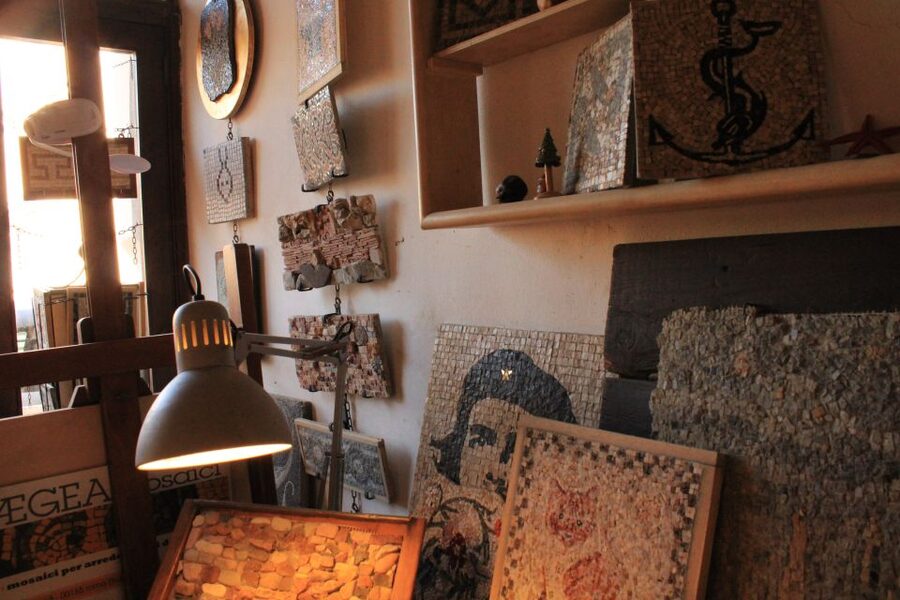
Trastevere is a natural setting for an art workshop. Its narrow streets and old buildings make a pleasant change from Rome’s major sights, and the studio is conveniently located near the Botanical Garden. You are not being taken from monument to monument here. You are being given a workstation, a set of tools, and time to make something.
That difference matters. Rome can fill a day with standing, walking, and absorbing information. This class gives you a slower three-hour block. You listen, watch, try the technique, and adjust your work as you go. I would place it after several busy sightseeing days, when you want an activity that still feels distinctly Italian but does not require another long explanation of ancient history.
The studio has the feel of a working artist’s space rather than a large commercial classroom. You sit at your own place and work with the materials in front of you. That setup makes the activity feel personal, while the eight-person limit keeps it from becoming impersonal or crowded.
More Trastevere tours:
- Winner 2025 Rome Twilight Trastevere Food Tour by Eating Europe
★ 5.0 · 5,157 reviews - Rome: Trastevere or Jewish Quarter Street Food Tour
★ 4.8 · 3,839 reviews - Rome: Trastevere Food tour with Free-Flowing Fine Wine
★ 5.0 · 2,853 reviews
Meeting Nadia and Choosing Your Design
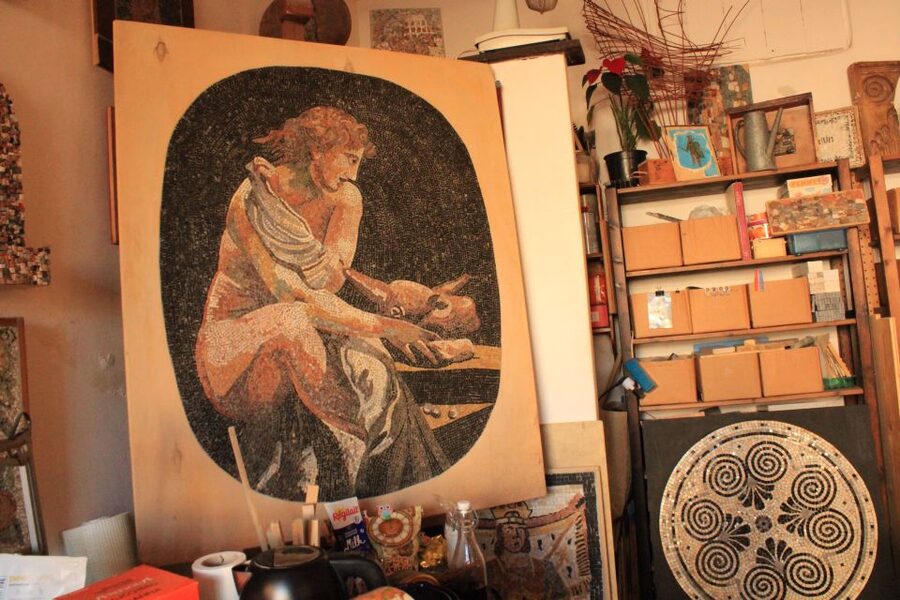
The class begins with an introduction to the tools, materials, and basic methods of mosaic-making. Nadia, the mosaic artist leading the workshop, shows you how the process works and stays available as you begin your own piece.
You have freedom to choose your preferred design, although the available selection may not be enormous. That is worth knowing if you arrive expecting a large catalog of patterns. The benefit of a more focused choice is that the class can keep moving and Nadia can guide everyone through a manageable project within three hours.
The language arrangement is workable but not polished. Instruction is offered in English and Italian, yet Nadia is not fluent in English. Her demonstrations do much of the teaching, and the process is visual enough that you can follow the basic steps by watching. Still, if you want a long, detailed lecture in English about mosaic theory, this is not that kind of class.
I see the language gap as a small consideration rather than a serious obstacle. You are learning by doing. Nadia can show you how to handle each step, correct a mistake, and help you understand what needs to happen next. A little patience and a willingness to watch closely will serve you well.
Cutting Tiles Takes More Skill Than It Looks
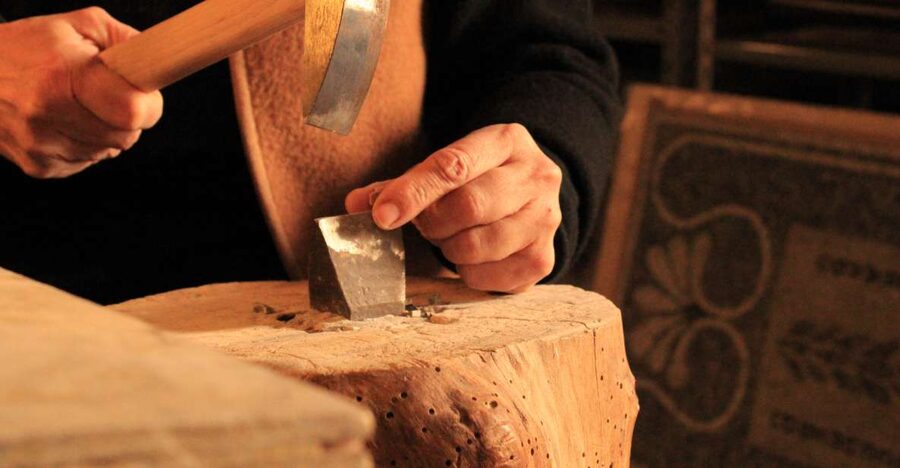
The first surprise for many beginners is how much care goes into cutting the tiles. At a glance, a mosaic may look like a simple arrangement of colorful pieces. In practice, every small shape needs to fit the design, and angled areas can be particularly fiddly.
You use the provided tools to cut pieces and shape them for your pattern. This is the part where the three-hour duration makes sense. You are not simply sticking ready-made squares onto a board. You are learning how small changes in size and angle affect the whole image.
I would not book this class if you want a quick craft that is finished in half an hour. The work can feel slow, especially when you are trying to fit a tile into a small corner. But that slower pace is also where the satisfaction comes from. You begin to see why the mosaics in Rome’s churches and basilicas require such careful craftsmanship.
The instructor’s support is important here. You do not need previous art experience, and you are not expected to know how to cut the perfect piece on your first attempt. Nadia can demonstrate the technique again and help you decide how to handle a difficult section.
From Outline to Finished Mosaic
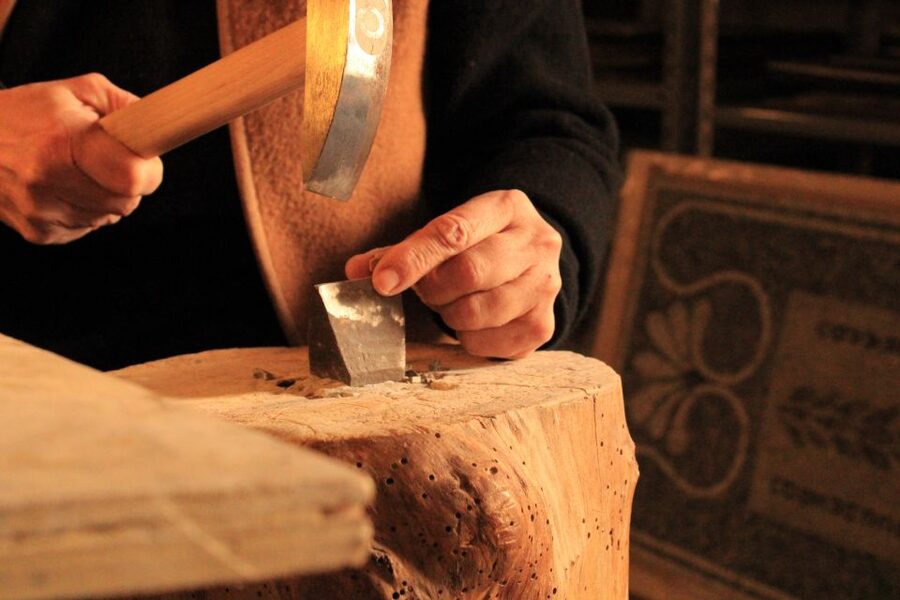
After choosing a design, you begin to trace or transfer it and plan how the tiles will sit within the pattern. You then cut the pieces, place them, and secure them with the appropriate materials. The process is broken into clear stages, so you can concentrate on one small task at a time.
The structure makes the workshop accessible to beginners. A nine-year-old participant was able to trace a design, cut tiles, glue them in place, and learn about the later cementing and cleaning stages with adult support. That does not mean every child will find the work easy, but it shows that the activity can suit families with children who enjoy careful, practical projects.
Adults can enjoy the class for the same reason. You are not being judged on artistic skill. The goal is to make a personal piece while learning how the craft works. The final result may not look like a professional Roman mosaic, but it will be yours, and you will understand the effort behind it.
The studio atmosphere also helps. The workshop is described as casual, with time to explore the materials between short demonstrations. You may work quietly, listen to music, and have espresso in the studio. Those small touches make the class feel less like a formal lesson and more like time spent in an artist’s workspace.
More cooking classes in Rome:
- 3 in 1 Cooking Class near Navona: Fettuccine, Ravioli & Tiramisu
★ 5.0 · 7,376 reviews - Rome: Pasta & Tiramisu Class with Fine Wine by the Vatican
★ 4.9 · 4,852 reviews - Rome: Pasta Making Class with Wine, Limoncello, and Dessert
★ 4.9 · 3,177 reviews - Rome: 3-in-1 Fettuccine, Ravioli, and Tiramisu Cooking Class
★ 4.9 · 2,704 reviews
A Small Group Makes the Instruction Better
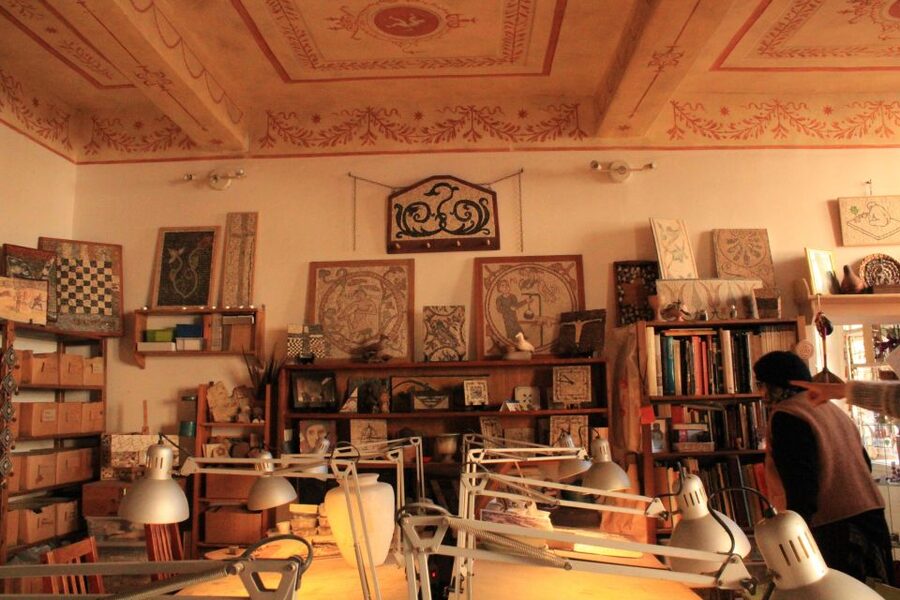
The class accepts no more than eight people. That limit is one of the strongest practical features of the experience. Mosaic-making requires individual help, since each person may be working with a different design or struggling with a different cut.
In a large class, you could spend too much time waiting for assistance. Here, Nadia can walk around the room, check your progress, and step in when a piece does not fit. The instructor’s patience is especially useful for beginners and children.
The small format also works well for couples and families. A husband and wife can make separate pieces while sharing the same quiet activity. A family can work side by side, with an adult helping a child handle the tools and follow the instructions.
You should still expect some independent work. Nadia provides guidance, but she does not do the project for you. If you want constant entertainment or a guide speaking throughout every minute, this may feel too quiet. If you like learning by trying, it is a good match.
Taking Home a Handmade Piece
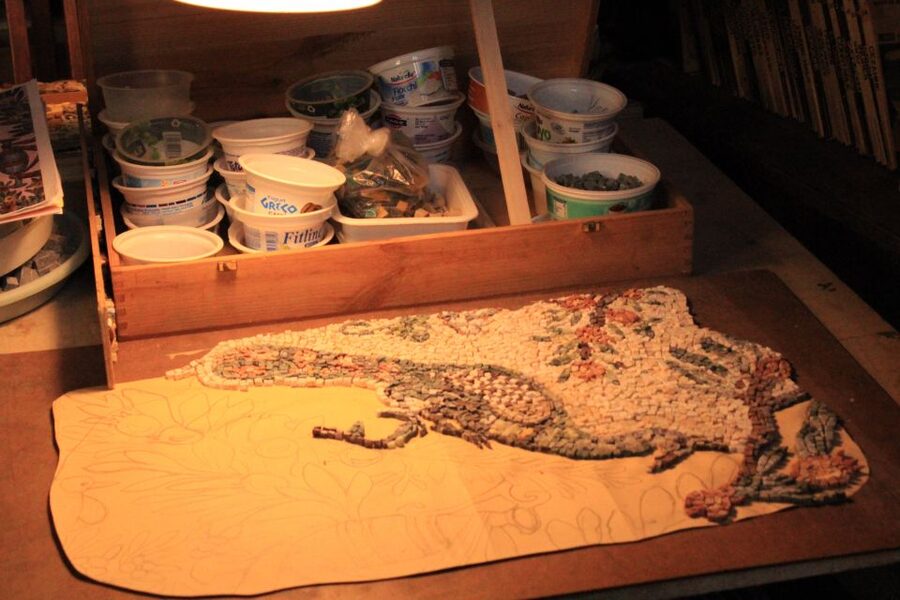
The finished mosaic is placed in a box so it can set properly. The setting process can take up to six hours, so you should not expect to walk out with a fully hardened piece ready for immediate handling.
This timing affects how you plan your day. You will need to carry the boxed mosaic carefully after class and allow it to finish setting. The details of how you transport it afterward are not specified, so I would treat it as a fragile item and avoid packing it under heavy luggage.
The reward is a souvenir with a personal story. You remember the design you chose, the tile that took several attempts to cut, and the moment the pieces finally came together. That makes it more meaningful than a standard souvenir from a street stall or museum shop.
It is also a useful reminder that a mosaic is not just a collection of colored fragments. The cementing, cleaning, and finishing stages help you understand how the small pieces become a durable image. You may leave with a new appreciation for the mosaics you see elsewhere in Rome, especially in places such as St. Peter’s Basilica.
Is the $147.27 Price Worth It?
At $147.27 per person, this is not a low-cost craft activity. The value depends on what you want from your time in Rome. You are paying for three hours of instruction, use of a fully equipped studio, materials, individual help, and a finished handmade item to take home.
The price makes more sense if you compare it with the cost of several ordinary sightseeing activities plus a souvenir. Here, the souvenir is included in the experience, and the process is the main attraction. You also get the benefit of a small class, rather than a large group moving through a standard demonstration.
Still, the price may feel high if you mainly want a keepsake and are not interested in making it yourself. You could buy a decorative item for less money. This workshop earns its cost through the time, instruction, tools, and personal effort involved.
I think it is best value for someone who enjoys creative activities, wants a break from sightseeing, or places a high value on a personal memento. It is less compelling for a visitor with a tight budget or an itinerary packed with major Roman sights.
Who Will Enjoy This Workshop Most?
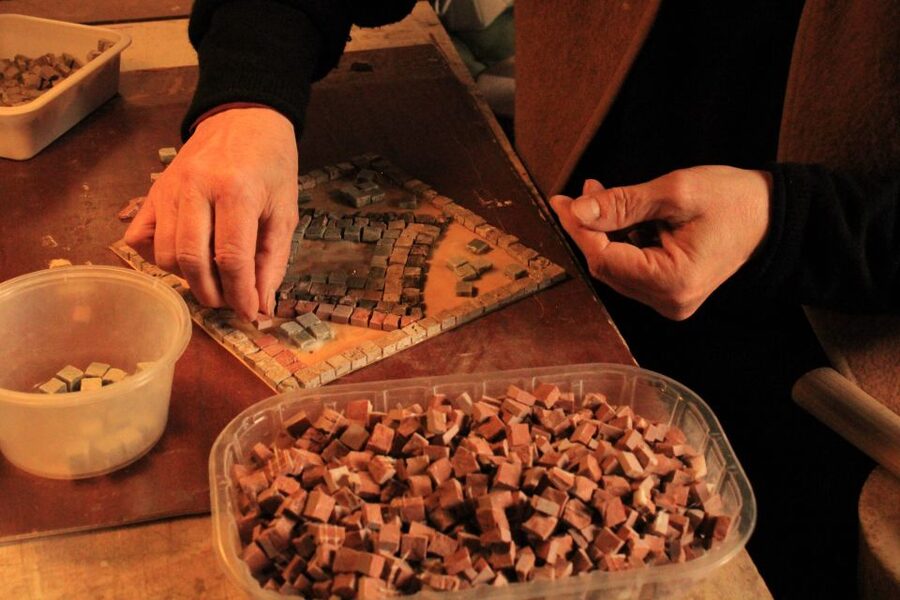
This is a strong choice for couples looking for a shared activity that is different from another guided tour. It also suits families with children who can sit, listen, and work carefully. Every child must have at least one adult with them, so this is not a drop-off program.
It works well for solo participants, too. The small group and individual workstation give you something to focus on, while Nadia remains available to help. You do not need to arrive with drawing or craft experience.
The class may appeal most to people who enjoy process over speed. You will spend time cutting, fitting, and adjusting small pieces. If that sounds satisfying, you will likely appreciate the workshop. If you dislike repetitive handwork or have little patience for detail, the same features may become frustrating.
The workshop is also a good fit for honeymooners and special trips. A handmade mosaic can mark the occasion in a way a generic souvenir cannot. Just remember that the piece needs time to set, so leave room in your plans to carry it safely.
Planning the Three Hours in Trastevere
The activity lasts three hours, and starting times depend on availability. Since the workshop is near the Botanical Garden, you can pair it with time in the surrounding Trastevere area, though no transportation or hotel pickup is included.
Plan to arrive ready to stay in one place and concentrate. The class is not a quick stop between several monuments. Once you begin working, you will want enough time to finish the design rather than rush away halfway through.
The studio is wheelchair accessible, which makes the activity available to a wider range of participants. English and Italian are used, but the instructor’s spoken English is limited. Visual demonstrations and direct help are central to the teaching, so you should be comfortable with a hands-on class that may rely on showing as much as explaining.
Cancellation is free up to 24 hours before the activity for a full refund, and you can reserve now and pay later. Those terms are useful if your Rome schedule is still changing, but the most important planning issue is still the three-hour block and the setting time afterward.
My Verdict: Book It for the Making, Not Just the Souvenir
I would book this workshop if I wanted a personal, creative break from Rome’s usual sightseeing. The strongest reasons are the small group, the patient one-to-one help, the authentic studio setting, and the chance to take home something you made yourself.
I would think twice if I wanted a fast activity, a polished English lecture, or a cheap souvenir. The tile cutting can be tedious, design choices may be limited, and the language gap means demonstrations carry much of the instruction.
For families, couples, and curious first-time makers, the balance is very good. You leave with more than a small object. You leave knowing why mosaic work demands such care, and you have a tangible reminder of your own afternoon in Trastevere.
FAQ
Where does the mosaic workshop take place?
It takes place in a mosaic studio in Rome’s Trastevere neighborhood, near the Botanical Garden.
How long does the workshop last?
The workshop lasts three hours. Starting times depend on availability.
How much does the workshop cost?
The listed price is $147.27 per person.
What languages are used during the class?
Instruction is offered in English and Italian.
Is the instructor fluent in English?
The mosaic artist is not fluent in English, but she can communicate with participants and demonstrate each step of the process.
How many people can join the workshop?
The group is limited to eight participants.
Do I make my own mosaic?
Yes. You choose a design, work with the tools and materials, and create your own mosaic during the class.
Can I take the mosaic home?
Yes. Your finished mosaic is placed in a box so it can set properly, then you take it home with you.
How long does the mosaic take to set?
The setting process can take up to six hours.
Can children participate?
Yes. Children can join, but each child must always be accompanied by at least one adult.
Newest Rome tours we have reviewed
- Private TikTok Video Making in Rome★ 5.0 · 7 reviews
- Assisi, Orvieto and Civita di Bagnoregio Full Day Tour from Rome★ 4.5 · 45 reviews
- Assisi & Saint Francis Path Tour from Rome★ 5.0 · 45 reviews
- Assisi and Cascia Private Day Tour from Rome with Lunch★ 5.0 · 10 reviews
- Art Class in the center of Rome!★ 4.0 · 4 reviews
- Art & Craft: Beer Tour with Street Art in Rome★ 4.5 · 6 reviews
- Arrival in Rome: Airport Transfer & Exclusive City Introduction★ 5.0 · 3 reviews
- From Rome: Private Day-Tour of Tuscany★ 5.0 · 16 reviews
Trastevere Tours, compared.

Winner 2025 Rome Twilight Trastevere Food Tour by Eating Europe
Read our review →
Trastevere or Jewish Quarter Street Food Tour
Read our review →
Trastevere Food tour with Free-Flowing Fine Wine
Read our review →
Trastevere & Campo de Fiori Street Food Walking Tour
Read our review →
Award Winning Trastevere Group Food Tour with Wine
Read our review →

Rome Food Tour: Hidden Gems of Trastevere with Dinner & Wine
Read our review →Browse the lists this tour appears in