
Reviewed · ROME PALAZZO TOURS
Palazzo Barberini: 2-Hour Private Tour
Palazzo Barberini packs centuries of Italian art into two focused hours, with Raphael’s La Fornarina, Caravaggio’s dramatic paintings, and Pietro da Cortona’s ceiling as the main prizes. I like the private format, since your guide can shape the pace and explain how religious and political changes altered Italian art. I also like the clear progression from medieval work to Baroque drama.
The catch is the $135.94 per person price, which is a serious outlay for a two-hour museum visit. The tour is also not suitable for wheelchair users or people with mobility impairments, and the listed end point needs checking because the highlights mention Piazza Navona while the meeting details say the activity ends back at the museum.
Key points at a glance
- Raphael’s La Fornarina: See one of the museum’s best-known paintings and hear the stories attached to Raphael and his model.
- Caravaggio’s dark drama: Learn about the artist known as the Cursed Painter and the troubled life behind his forceful style.
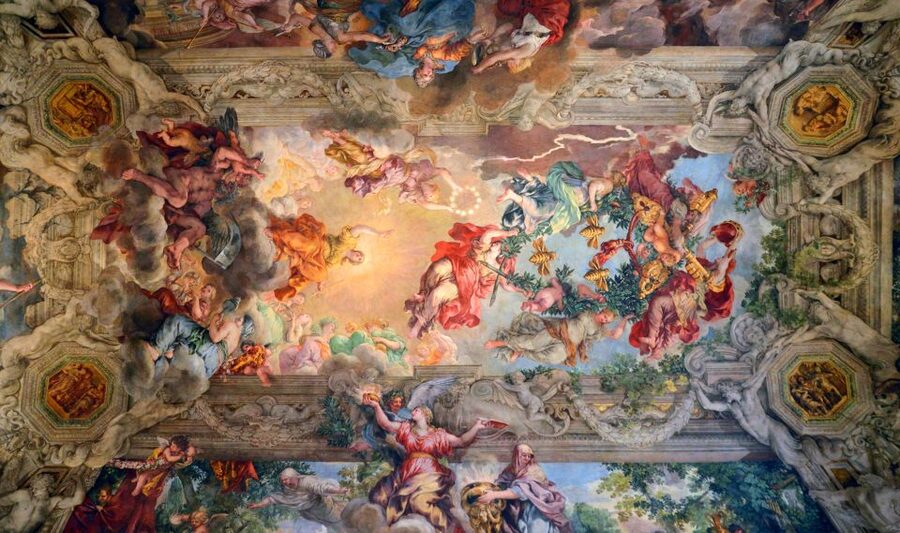
- Pietro da Cortona’s ceiling: Look up for a grand Baroque illusion that shows how architecture and painting joined forces.
- A private two-hour visit: Travel with your own group and an English- or Italian-speaking guide rather than a large public crowd.
- A broad art-history route: Move from the Middle Ages through the Renaissance and into the Baroque, with Titian, El Greco, and Guido Reni included.
- A practical Rome finish: The tour information refers to Piazza Navona as the closing point, but also says the activity ends at the starting museum, so confirm the exact route before booking.
From medieval devotion to Baroque spectacle
The appeal here is not simply a list of famous names. The tour is built around change: how Italian painting moved from the religious focus and formal style of the Middle Ages toward the humanism of the Renaissance, then into the emotional force and theatrical scale of the Baroque.
That structure gives you a useful way to look at the collection. Instead of seeing one painting after another as isolated objects, you can ask what each period wanted art to do. Did it teach a religious lesson? Display a patron’s power? Show the beauty of the human body? Stir the viewer’s emotions?
A private guide can make those links clear in a short time. With only two hours, you will not see every work in the museum at length. That is not a flaw in itself. It means the visit is best for someone who wants a guided introduction to major works, not a slow day spent studying every gallery.
I would arrive ready to listen, then return to the paintings that catch your eye. The guided route gives you a frame for the collection, while your own second look lets you decide which works stay with you.
More palazzo tours in Rome:
- Rome: Opera Concert at Palazzo Poli – Fontana di Trevi
★ 4.7 · 1,026 reviews - The Great Opera Arias Concert at Palazzo Poli – Trevi Fountain
★ 5.0 · 533 reviews - Rome: Palazzo Barberini Galleria Corsini Ticket & Audioguide
★ 3.9 · 322 reviews
Palazzo Barberini and the setting for the collection
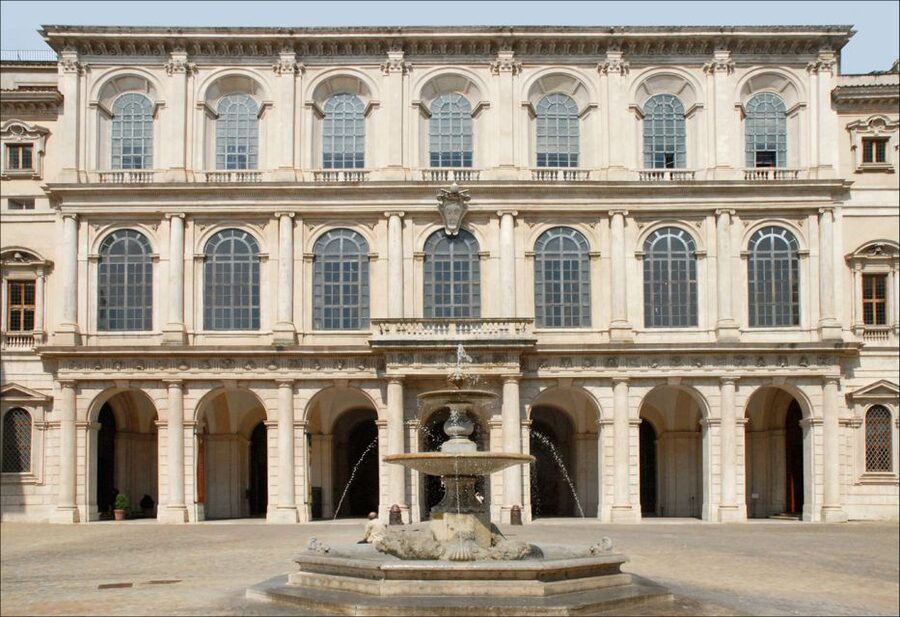
The experience takes place at Palazzo Barberini in Lazio, Rome’s grand art museum devoted to works from the Middle Ages through the Baroque period. The building itself provides the right setting for this subject. You are not studying Baroque painting in a plain modern room, but in a historic palace associated with the power and display of Rome’s ruling families.
The museum visit begins in the courtyard near the entrance. Your guide waits there with a sign bearing the tour name, and entry tickets are distributed at the start. Arrive at least 15 minutes early. That extra time matters in Rome, where finding the correct entrance can take longer than expected, especially if you are moving between sightseeing stops.
Large bags and luggage are not allowed. Keep your belongings light, and bring identification for children, since a passport or ID card may be required. Hotel pickup and drop-off are not included, so you need to arrange your own way to and from the museum.
The tour runs rain or shine. Because most of the experience takes place indoors, weather should not affect the art portion, but it can make the journey to the meeting point less pleasant. Allow extra time if rain is expected.
Raphael’s La Fornarina
Raphael’s La Fornarina is the first major reason many people choose this visit. The painting shows a woman seated against a dark background, with her direct gaze and careful details drawing you in. The work is often linked to the artist’s personal life, which gives your guide an opening to discuss the stories, assumptions, and myths that have grown around Raphael.
Look closely at the details rather than treating the painting as a famous name to check off. The sitter’s pose, jewelry, and the small inscription on her arm all add to the painting’s sense of identity and mystery. Your guide can place the work within Raphael’s career and explain why it matters in the development of Renaissance portraiture.
This is also where the private format helps. If your group wants more detail about Raphael, you can spend a little longer here. If you are more interested in technique than biography, you can steer the discussion in that direction. A standard group visit may need to move on, but a private tour gives you more room to ask.
Do not expect the guide to turn every story into certainty. Renaissance art comes with many old claims and romantic legends. The useful approach is to enjoy the human story while keeping an eye on what the painting itself actually shows.
Caravaggio and the power of a troubled life
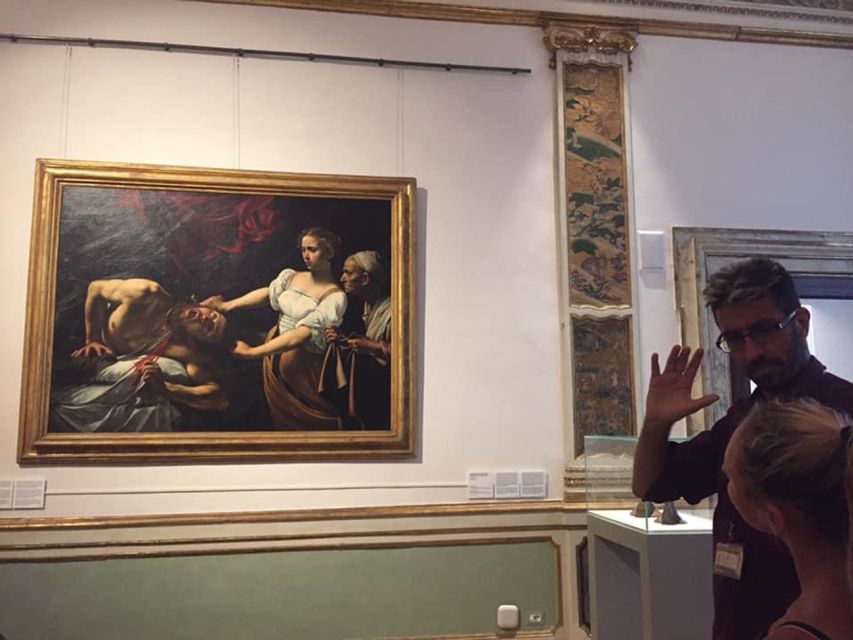
Caravaggio brings a sharp change in mood. His paintings are known for intense light, deep shadows, and figures that feel physically close to you. The tour presents him as the Cursed Painter, a phrase tied to his violent reputation, legal troubles, and unsettled life.
That label can make a good story, but the art deserves more attention than the biography. Ask your guide how Caravaggio’s lighting changes the way you read a scene. His figures often seem to emerge from darkness, making a religious subject feel immediate and human rather than distant.
This is one of the tour’s strongest teaching moments because Caravaggio shows how style and subject can work together. Dramatic light is not just decoration. It directs your eye, isolates faces and hands, and creates a sense of tension.
The personal story still has value. Knowing that Caravaggio lived outside the calm world suggested by grand museum rooms helps explain the rough energy in his work. Just remember that the tour is about Italian art, not a full biography. You will hear the key story, then return to the paintings and their effect.
More two-hour experiences in Rome:
- Vatican Museums & Sistine Chapel Express 2-Hour Guided Tour
★ 4.5 · 1,037 reviews - Rome: 2-Hour Gladiator School
★ 4.7 · 630 reviews - Cooking Class 2 Hour Spanish Steps – Fettucine and Tiramisù
★ 5.0 · 298 reviews - Rome: 2-Hour Golf Cart Sightseeing Tour at Night
★ 5.0 · 124 reviews
Titian, El Greco, and Guido Reni
The visit also includes works by Titian, El Greco, and Guido Reni. These artists help widen the picture beyond the two headline names.
Titian gives you a chance to consider the importance of color and surface in Venetian painting. His work can feel different from the strong shadows of Caravaggio, and that contrast helps you see that Italian art did not develop along one single path.
El Greco brings another change in mood and form. His elongated figures and unusual visual language can look startling beside more measured Renaissance works. A guide can help you understand why his art feels so different instead of leaving you to assume it is simply strange or exaggerated.
Guido Reni offers another view of idealized beauty and religious feeling. Together, these artists keep the tour from becoming a two-name greatest-hits visit. You get a wider sense of the choices artists made in color, composition, facial expression, and the treatment of the human body.
Because the tour lasts two hours, the amount of time spent with each painter may vary. If one of these artists matters to you, say so at the beginning. The guide can then place extra attention where it will be most useful.
Looking up at Pietro da Cortona’s ceiling
Pietro da Cortona’s ceiling is one of the visual rewards of the visit. The work is a major example of Baroque style, built to create a sense of movement, height, and illusion. It asks you to look up and accept a painted world that seems to open beyond the ceiling itself.
This is a good point to think about the difference between Renaissance balance and Baroque energy. Baroque art often wants to persuade you through emotion and spectacle. The ceiling does not sit quietly in the background. It takes over the room and turns architecture into part of the picture.
Give your neck a break, then look again. Large ceiling paintings are easy to glance at and miss. I find it more useful to notice how the painted figures, clouds, and architecture direct the eye. Even without memorizing every figure, you can see how the design creates movement across a huge surface.
For many people, this will be the most memorable part of Palazzo Barberini because it changes the scale of the visit. A portrait such as La Fornarina rewards close attention. Cortona’s ceiling works from across the room and makes the whole space feel theatrical.
Ending with Piazza Navona and the Baroque idea
The tour highlights Piazza Navona as the symbol of Baroque Rome. That makes sense as a final idea, since the square brings together architecture, sculpture, fountains, and urban spectacle in one public setting.
A walk toward Piazza Navona would extend the museum lesson into the streets. You could connect the paintings’ drama with the city’s grand public spaces, where Baroque Rome used art to guide attention and display power. It is a useful way to end a lesson on the period.
There is an important practical point here. The activity details say the tour ends back at the museum meeting point, while the highlights describe Piazza Navona as the end of the stroll. These descriptions do not fully match. Confirm the exact endpoint with Rome Guides before booking, especially if you have a dinner reservation, timed entry, or transport connection afterward.
Do not assume hotel return is included. It is not. The guide’s job is the private art visit, and you handle your own route to and from the activity.
What the private format is worth
The price is $135.94 per person. That is a high cost for a two-hour experience, especially if you are traveling alone or as a pair. The value depends on how much you want interpretation rather than simple museum entry.
You are paying for entry tickets, a private guide, and a private group. That can be worthwhile if you want to ask questions, adjust the pace, or focus on Raphael, Caravaggio, or Baroque art without being tied to a large group’s interests.
For a family, an art student, or a small group with shared interests, the cost can make more sense. The guide can explain difficult ideas in plain terms and keep the visit moving. If your party already knows Italian art well, or if you prefer wandering alone, the price may feel less attractive.
The rating attached to this experience is 4.9 from nine reviews, a strong result, though the sample is small. I would treat that as encouraging rather than conclusive. The real strengths are clear from the format: a focused route, a private setting, and famous works presented with historical context.
The two-hour length is also a benefit. Rome can exhaust you with long museum visits, and this tour gives you a firm stopping point. You can follow it with lunch, another attraction, or your own return to a painting you want to study.
Who should book this museum tour?
I would recommend it to you if you want a guided introduction to Italian art and prefer a private conversation over a large group. It suits first-time visitors who want the major ideas explained without spending an entire day in a museum.
It is also a good fit for people who already know they want to see La Fornarina or learn more about Caravaggio. Those works provide clear anchors, while Titian, El Greco, Guido Reni, and Cortona broaden the lesson.
Families should consider the two-hour length and private format, especially if children need a flexible pace. Bring identification for children, and avoid arriving with bulky bags.
I would think twice if you have mobility limitations. The experience is specifically listed as unsuitable for people with mobility impairments and wheelchair users. The museum route, courtyard meeting point, and possible walk connected with Piazza Navona may be difficult.
I would also skip it if you want a relaxed, unstructured museum day. This is a guided art-history visit with a planned focus. You gain context and efficiency, but you give up some freedom to linger wherever you like.
Practical details before you reserve
Plan to arrive 15 minutes before the scheduled start. The guide waits in the museum courtyard near the entrance with a sign for the tour, and tickets are handed out at the beginning.
The tour lasts two hours, but starting times vary. Check availability for the date you want. English and Italian are the available tour languages.
There is no hotel pickup or drop-off. Large bags and luggage are not allowed, so pack lightly. The tour operates in all weather conditions.
You can cancel up to 24 hours before the activity for a full refund. A reserve-now-and-pay-later option is also available, which can help if your Rome schedule is still changing.
The activity ends at the stated meeting point according to the practical details, although Piazza Navona is also described as the tour’s final destination. Ask Rome Guides to clarify this before you commit to a timed plan afterward.
Should you book Palazzo Barberini: 2-Hour Private Tour?
Book it if you want a compact, private lesson in Italian art built around Raphael, Caravaggio, and Baroque Rome. The ceiling by Pietro da Cortona and La Fornarina give the visit two strong visual anchors, while Titian, El Greco, and Guido Reni add useful range.
At $135.94 per person, it is not a budget museum stop. You are paying for personal guidance and a carefully chosen art-history route, not just admission. For a small group that values questions and context, that can be fair value.
Before booking, confirm the ending point and consider the mobility limits. If both details work for you, this is a smart way to turn Palazzo Barberini from a collection of paintings into a clear story about how Rome’s art changed over time.
FAQ
Where does the tour start?
The tour starts in the courtyard in front of the Palazzo Barberini museum entrance. Your guide waits there with a sign showing the tour name.
How early should I arrive?
Arrive 15 minutes before the activity begins. Entry tickets are distributed at the start.
How long does the tour last?
The tour lasts two hours. Starting times depend on availability.
What languages are available?
The live guide can conduct the tour in English or Italian.
Is this a private tour?
Yes. The tour is for a private group.
Which artists and works are included?
The experience includes Raphael’s La Fornarina, works by Caravaggio, Titian, El Greco, and Guido Reni, plus Pietro da Cortona’s Baroque ceiling.
Is hotel transportation included?
No. Hotel pickup and drop-off are not included.
Can I bring luggage or a large bag?
No. Luggage and large bags are not allowed.
Is the tour suitable for wheelchair users?
No. The activity is listed as unsuitable for wheelchair users and people with mobility impairments.
Newest Rome tours we have reviewed
- Private TikTok Video Making in Rome★ 5.0 · 7 reviews
- Assisi, Orvieto and Civita di Bagnoregio Full Day Tour from Rome★ 4.5 · 45 reviews
- Assisi & Saint Francis Path Tour from Rome★ 5.0 · 45 reviews
- Assisi and Cascia Private Day Tour from Rome with Lunch★ 5.0 · 10 reviews
- Art Class in the center of Rome!★ 4.0 · 4 reviews
- Art & Craft: Beer Tour with Street Art in Rome★ 4.5 · 6 reviews
- Arrival in Rome: Airport Transfer & Exclusive City Introduction★ 5.0 · 3 reviews
- From Rome: Private Day-Tour of Tuscany★ 5.0 · 16 reviews
Rome Palazzo Tours, compared.

Opera Concert at Palazzo Poli – Fontana di Trevi
Read our review →
The Great Opera Arias Concert at Palazzo Poli – Trevi Fountain
Read our review →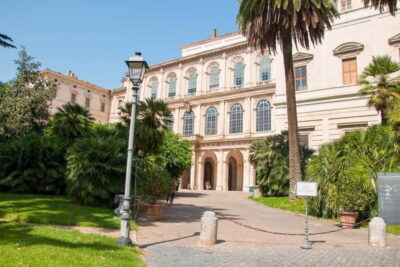
Palazzo Barberini Galleria Corsini Ticket & Audioguide
Read our review →
Vittoriano with Rooftop & Palazzo Venezia Hosted Entry
Read our review →
Palazzo Barberini (Caravaggio Exhibition Is Not Included)
Read our review →Browse the lists this tour appears in