

Reviewed · ROME HOP-ON HOP-OFF BUS TOURS
Rome:Hop-On Hop-Off Panoramic Open Bus Ticket 3 Circuits x 1
Rome’s hop-on hop-off bus is most useful as a first-day orientation tool. From the upper deck, you can connect the Colosseum, Circus Maximus, Piazza Venezia, Vatican City, Villa Borghese, and several less central areas without wrestling with Rome’s traffic on foot. I especially like the 16-language audio guide and the chance to use the ticket for transport as well as sightseeing.
I also like the three-route coverage, which reaches beyond the usual ancient-center loop, and the live bus tracking, which helps reduce guesswork at stops. The main drawback is that the bus stops near the sights rather than taking you inside them, and the audio equipment can be hard to hear when the bus is noisy.
Key points to know before you book
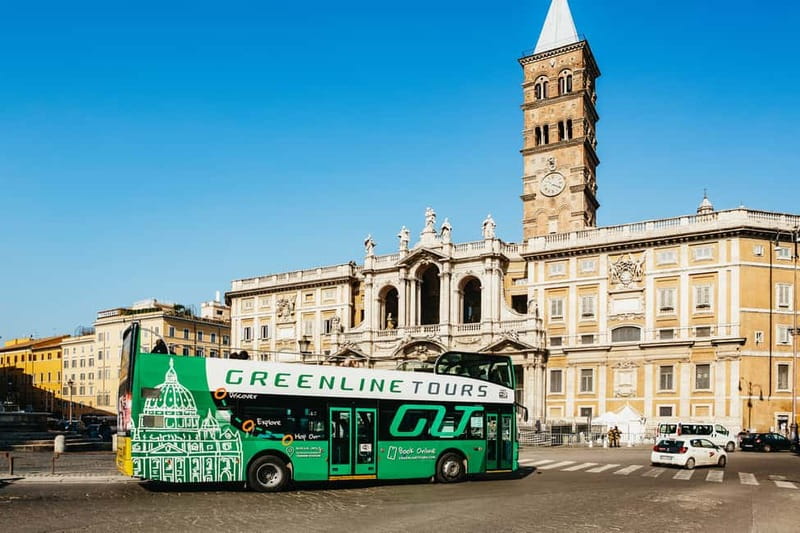
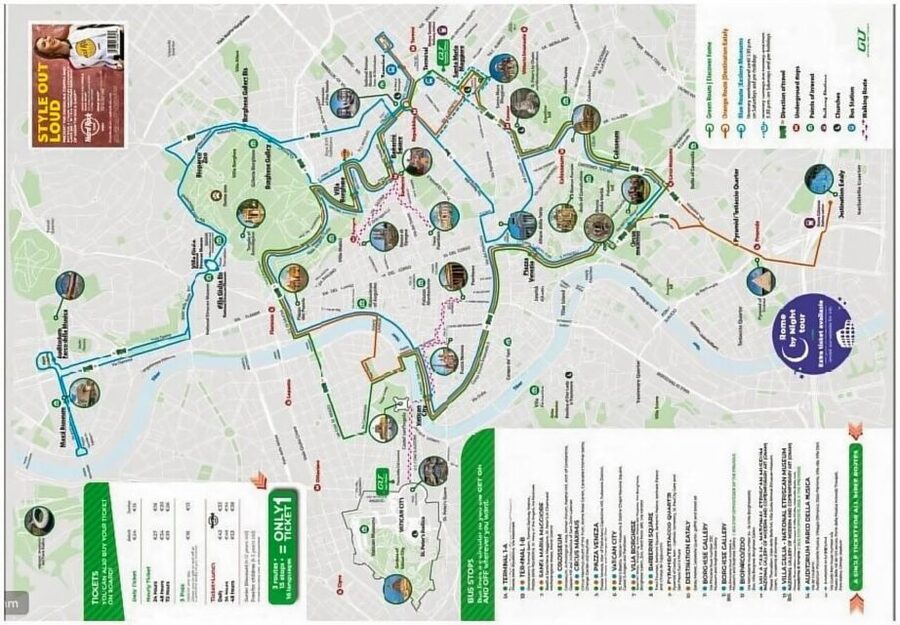
- Three routes cover more than the classic center: The Green Route focuses on major sights, while the Orange and Blue routes reach food, museum, and residential districts.
- Use it for orientation first: A full circuit helps you understand how Rome’s major areas fit together before you spend hours walking.
- Buses run about every 20 minutes: Actual waits can be shorter, but traffic and crowded stops can affect the timing.
- The ticket lasts from 9 hours to 72 hours: Choose a single day, 24-hour, 48-hour, or 72-hour period after your first boarding.
- The commentary comes in 16 languages: Earphones are supplied, though sound quality is not always perfect.
- It costs about $20 per person: That is strong value if you ride several times or use it to reach areas beyond the historic center.
Why this bus works well on a first day in Rome
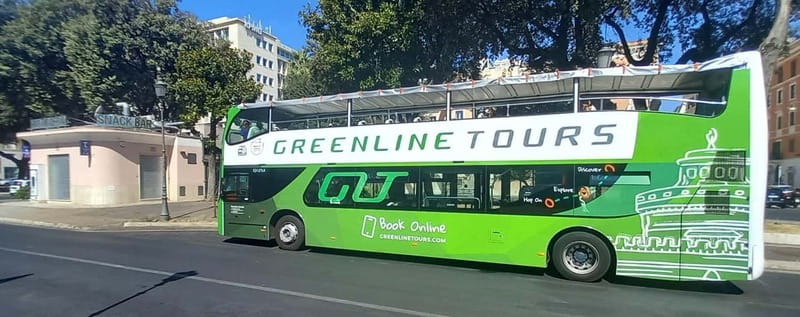
Rome can feel confusing at first. The sights are not arranged in one neat row, and the city’s famous landmarks are mixed into ordinary streets, traffic, cafés, churches, and busy squares. A bus circuit gives you a practical map in your head before you begin choosing which places deserve your limited time.
I would use the bus early in the trip, especially after a flight or on a day when you want to sit down between walks. One route carries you past the major imperial sights. Other routes extend toward Testaccio, Garbatella, Eataly, the National Etruscan Museum, and MAXXI. You will not get a full visit to any of those places from the bus, but you can spot areas you may want to return to.
The open upper deck is the best place for views and photographs when the weather behaves. Bring sunglasses and a sun hat, and wear comfortable shoes for the stops where you get off. On a rainy or very hot day, the ride is still useful, but the open-top format becomes less pleasant.
More hop-on hop-off bus tours in Rome:
- Rome: City Sightseeing Hop-on Hop-off Bus with Audioguide
★ 4.0 · 16,045 reviews - City Sightseeing Rome Hop-On Hop-Off Bus Tour
★ 3.5 · 5,446 reviews - Rome: Hop-on Hop-off Sightseeing Bus Tour with Audioguide
★ 4.0 · 4,329 reviews
Three routes, three different ways to see Rome
The Green Route is the essential sightseeing circuit. It begins at Piazza dei Cinquecento, beside Via Cavour and close to Termini Station, then runs toward Santa Maria Maggiore, the Colosseum, Circus Maximus, Piazza Venezia, Vatican City, Villa Borghese, and Piazza Barberini.
The Orange Route is aimed at Italian food and neighborhood flavor. Its route includes the Testaccio and Garbatella area and Eataly, the large Italian food market. This is a good choice when you want a break from ancient monuments and a look at a side of Rome built around markets, restaurants, and local districts.
The Blue Route reaches several cultural stops outside the usual center. It includes the Borghese Gallery, Bioparco, Villa Giulia, the Auditorium Parco della Musica, and MAXXI. These stops make the pass more than a basic Colosseum and Vatican shuttle, but they also require planning. You will need to check opening times and admission separately if you want to go inside.
Unlimited rides matter here. You can ride one complete circuit to get your bearings, get off for a short walk, then board again later. A 24-hour or 48-hour ticket is most useful if you plan to combine sightseeing with transport. A single ride makes less financial sense, since much of the value comes from using the bus repeatedly.
Starting at Piazza dei Cinquecento and Via Cavour
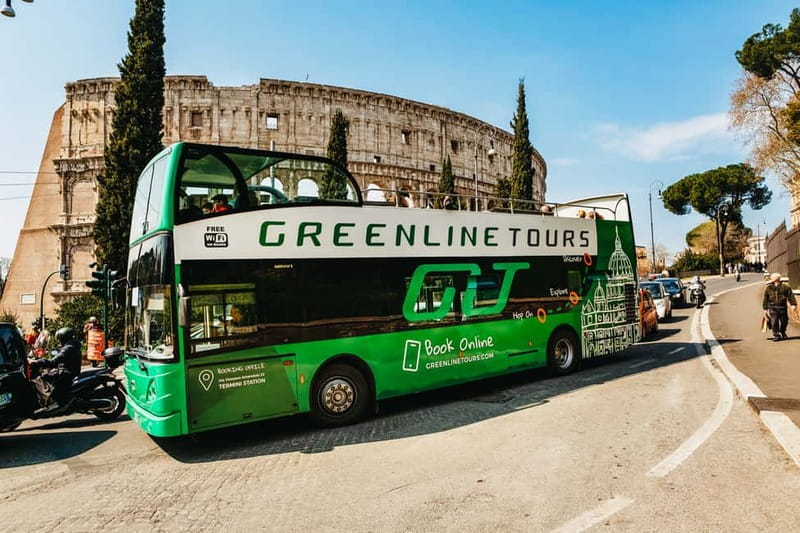
The main departure point is Piazza dei Cinquecento, at the corner of Via Cavour, identified as Terminal 1/A. This is a practical place to begin because it is near Rome’s main train station, Termini, and connects naturally with arrivals by train or airport transfer.
Present the original booking on the day of the activity. A screenshot is not accepted. The bus returns to this same general meeting point, so the start and finish are easy to understand even if you spend the day getting off at different stops.
The buses run approximately every 20 minutes. That sounds frequent, and it is usually workable, but Rome traffic can change the rhythm. Live tracking is included, so check the bus position rather than guessing from the printed timetable. Some people report waits of less than 10 minutes, but you should not build a tightly timed museum reservation around the next bus.
The ancient center: Santa Maria Maggiore to Piazza Venezia
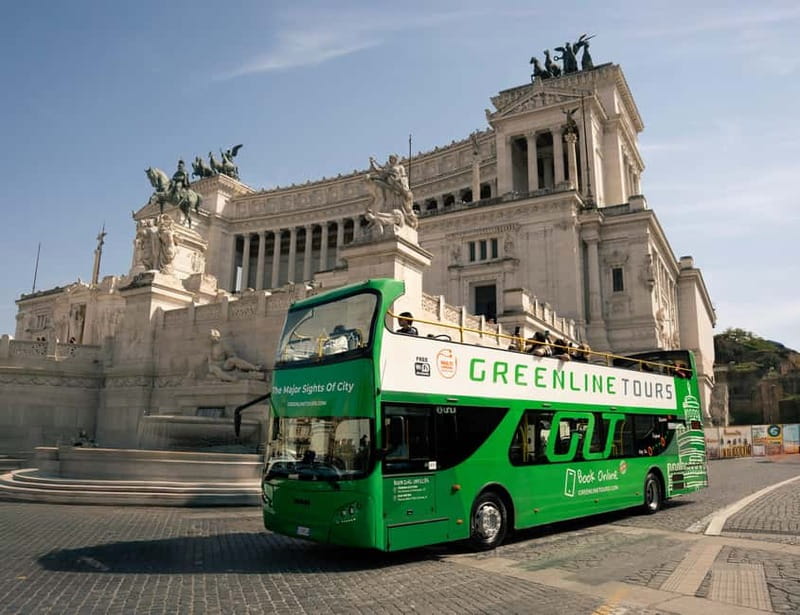
Santa Maria Maggiore is a useful first landmark. This grand basilica sits on the Esquiline Hill and gives you a chance to see one of Rome’s major churches outside the better-known Vatican circuit. The bus passes by the basilica rather than providing an admission visit, so get off only if you want to explore on foot.
The Colosseum is the headline stop. You can leave the bus near Via di San Gregorio, close to the Palatine entrance, and walk toward the amphitheater, Roman Forum, and Palatine Hill. The location is helpful, but the ticket does not include entry, timed reservations, or guided access. If you plan to visit inside, arrange that separately and allow enough time for security and the full archaeological area.
Circus Maximus is nearby and offers a different view of ancient Rome. This broad former chariot-racing ground is less visually complete than the Colosseum, but its scale is easy to understand from the street and surrounding viewpoints. The stop is also handy if you want to walk between the Aventine area and the ancient center.
Piazza Venezia brings you into Rome’s monumental heart. From here, you are close to the massive Vittoriano monument, the Capitoline Hill, the Roman Forum, and Via del Corso. The bus stop is on Via del Teatro Marcello, in front of civic numbers 32 to 34. Traffic here can be heavy, so the bus is convenient for reaching the area, but not always quick.
More tickets and entry passes in Rome:
- Vatican Museums & Sistine Chapel Skip-the-Line Entry Ticket
★ 4.4 · 13,838 reviews - Vatican Museums & Sistine Chapel Skip-the-Ticket-Line Tour
★ 4.3 · 10,486 reviews - Rome: St. Peter’s Basilica & Dome Entry Ticket & Audio Tour
★ 4.2 · 7,537 reviews - Vatican: Vatican Museums Sistine Chapel Skip-the-Line Ticket
★ 4.2 · 6,682 reviews
Vatican City, the Spanish Steps, and Trevi Fountain
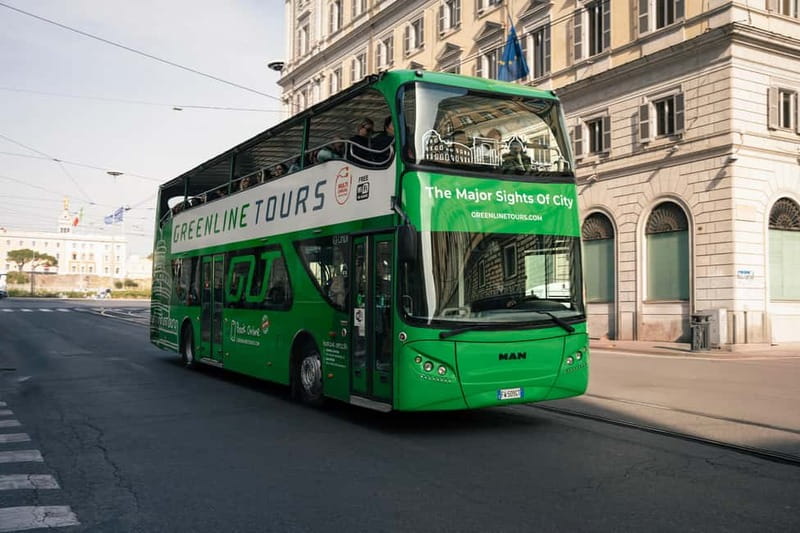
The Vatican stop is on Lungotevere Tor di Nona 7. It places you near St. Peter’s Square and St. Peter’s Basilica, though you still need to walk from the stop and arrange any entrance tickets yourself. The bus lets you see the dome and the monumental setting before you commit to the long lines and security checks that can come with a visit.
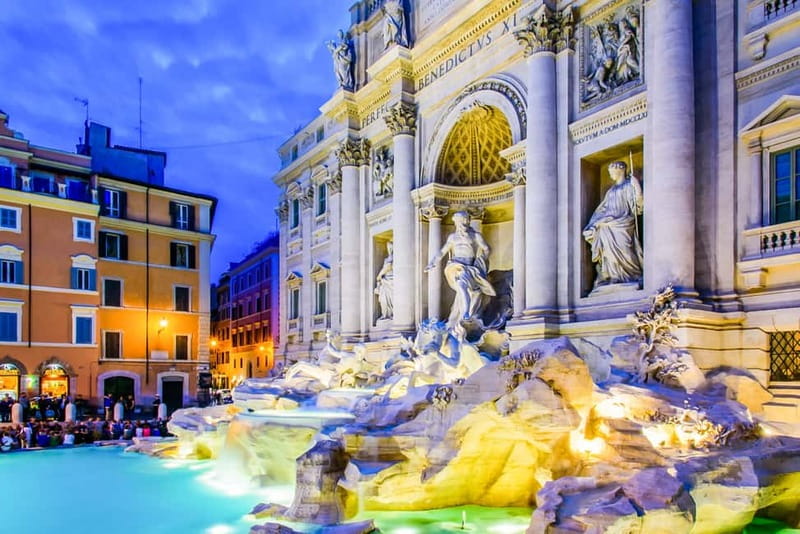
The Spanish Steps and Trevi Fountain are among the sights you can reach from the central route, though they are not listed as dedicated stops in the itinerary. Piazza Barberini is the practical nearby stop for this part of town. From there, you can walk toward the Spanish Steps, Via del Corso, and Trevi Fountain.
This is one of the ticket’s useful limits to understand. You are buying a sightseeing and transport pass, not door-to-door service to every famous monument. Rome’s historic center is best explored on foot after you get off. Use the bus to cross larger gaps, then walk the smaller streets, piazzas, boutiques, and cafés yourself.
Via del Corso is especially handy for combining several sights. You can walk along the main shopping street, turn toward Trevi Fountain, continue to the Spanish Steps, and return to a bus stop near Barberini. The audio guide can provide basic context on the way, but it cannot replace time on the ground.
Villa Borghese and Rome’s museum district
Villa Borghese is more than a park stop. The area includes the Borghese Gallery, Bioparco zoo, Villa Giulia, and the National Gallery of Modern and Contemporary Art. This gives the routes a stronger cultural range than a standard ancient-center tour.
The Borghese Gallery stop is on Via Pinciana. The gallery is known for its sculpture and painting collection, but admission is separate and normally requires planning. Do not assume you can hop off and walk straight in. If the gallery is a priority, secure its entry first, then use the bus to fit it into the day.
Bioparco, on Via Mercadante, is Rome’s zoo. It may suit families, especially if children need a change from churches and ruins. The stop is not essential for a short adult city break, but the route gives you an easy way to reach it without a long walk from the ancient center.
The stops at Villa Giulia and Piazza Thorvaldsen open up Rome’s Etruscan and modern art side. Villa Giulia houses the National Etruscan Museum, while the nearby cultural district also includes the National Gallery of Modern and Contemporary Art. The audio commentary helps you notice these places, but check museum hours and entrance fees before getting off.
Testaccio, Eataly, and Rome beyond the postcards
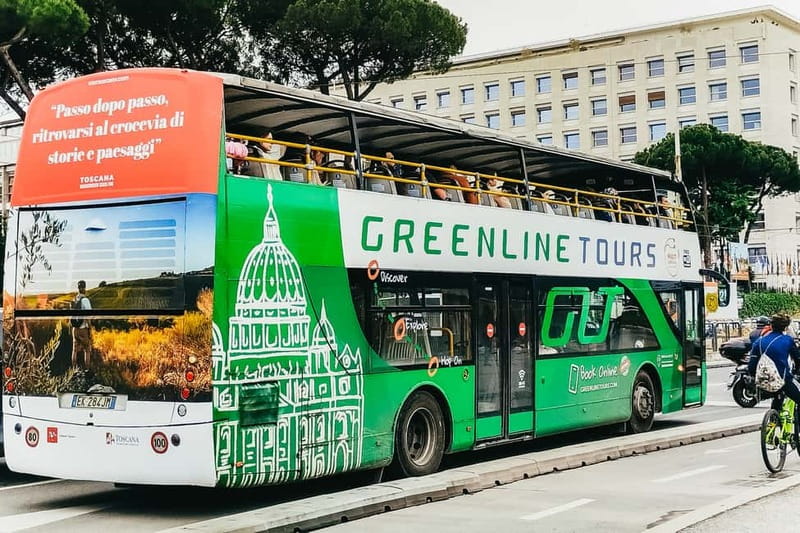
The Testaccio and Pyramid area gives you a more everyday side of Rome. The stop is near the Pyramid of Cestius, the non-Catholic cemetery, the old city gate, and the route toward Saint Paul Outside the Walls. These are not always the first places people name when planning Rome, which is exactly why this route can be useful.
The Pyramid of Cestius is a striking ancient tomb built in the shape of an Egyptian pyramid. The nearby non-Catholic cemetery adds a quieter, more reflective stop to the day. If you get off here, allow time to walk, since the bus only brings you to the district.
Eataly is a large Italian food market in the Ostiense and Garbatella area. The stop can work well around lunch, but food and drinks are not included in the ticket. You are paying for access to the bus, not a tasting tour, so set aside your own meal budget.
Garbatella and the surrounding streets offer a change from the polished center. The route makes it possible to see Rome’s food culture and residential character without arranging a separate excursion. This is one of the strongest reasons to choose the three-route ticket rather than a short central loop.
Auditorium, MAXXI, and the Blue Route
The Blue Route reaches the Auditorium Parco della Musica on Via de Coubertin and MAXXI on Via Guido Reni. These stops appeal to you if modern architecture, concerts, or contemporary art matter as much as ancient ruins.
MAXXI is Rome’s modern art museum, while the Auditorium is a major cultural complex. Neither stop is essential for a first overview of the city, but both make the pass useful for repeat visitors or for anyone who wants more than the standard postcard circuit.
The Blue Route also connects with Villa Giulia and the Borghese area. This makes it possible to plan a museum-focused day, though you should check the separate admission details and opening times. The bus reduces the distance between districts, but it does not remove the need to plan your visits.
Audio guide, Wi-Fi, and the ride itself
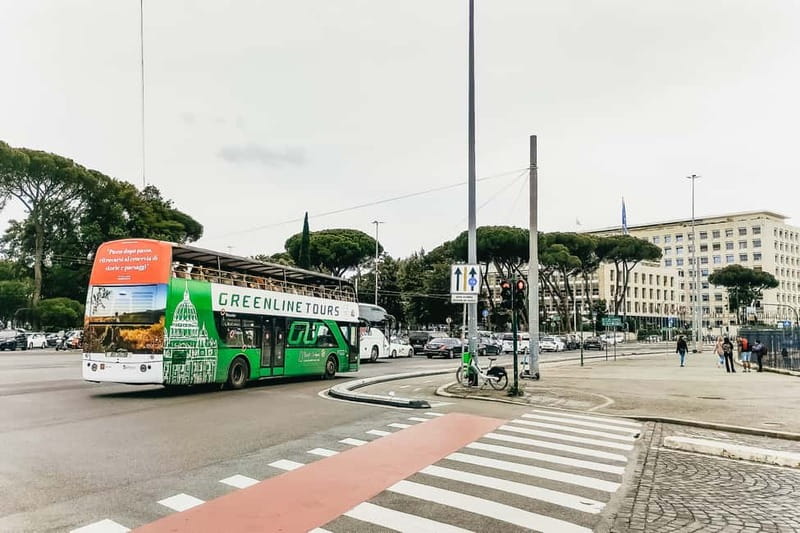
The onboard audio guide is available in Italian, English, French, German, Dutch, Spanish, Arabic, Chinese, Japanese, Russian, Portuguese, Hindi, Korean, Greek, Hebrew, and Polish. That range is a real benefit if you prefer not to follow a live guide in a language you do not speak comfortably.
The commentary gives you background as the bus passes the sights. It is best treated as a helpful introduction, not a full history lesson. Several audio ports may not work perfectly, and the sound can become difficult to hear when other passengers are talking. The supplied earphones are single-use, so bringing your own compatible headphones may be worth considering, though the information specifically includes the provided set.
Free Wi-Fi and live bus tracking are included. The Wi-Fi is useful for checking maps and museum information, while live tracking helps you judge when to return to a stop. An assistant is onboard, which adds a practical point of contact if you are unsure where to leave the bus.
The ride is not designed for luggage, large bags, pets, alcohol, or drinks. Assistance dogs are allowed, but the activity is not suitable for wheelchair users. These limits matter if you are traveling directly from a hotel checkout or airport connection.
Is $20 good value?
At about $20 per person, the pass is inexpensive for Rome if you use it several times. A complete circuit gives you a broad look at the city, but the real value comes when you use the bus to connect distant areas, such as the Vatican, Villa Borghese, Testaccio, and MAXXI.
A 9-hour or single-day ticket works for a first look. A 24-hour ticket gives you more freedom to stop at several places. The 48-hour and 72-hour options make more sense if you want to combine major sights with museums and neighborhood stops over several days.
The pass will not save you from Rome’s traffic, and it does not replace walking. Think of it as a moving viewpoint and a practical link between districts. If you use it only once, the value is modest. If you ride in the morning, get off for a museum, board again after lunch, and use it to return after a long walk, the price is easier to justify.
Who should book this Rome bus pass?
I would recommend it for first-time visitors, families, older visitors, people arriving after an overnight flight, and anyone who wants a quick city overview before choosing where to spend more time. It also suits repeat visitors who want to reach Testaccio, Garbatella, Villa Giulia, or MAXXI without arranging several separate journeys.
I would skip it if you prefer to walk everywhere, already know Rome well, or plan to spend most of the day inside two booked attractions. The bus only passes the sights, and the audio is useful but not always crisp.
Book it if you want a low-cost way to see Rome’s major monuments, get your bearings, and reach districts outside the historic core. Start with a full circuit, then use the unlimited rides selectively. That approach gives you the best value and leaves room for the real pleasure of Rome, getting off and wandering.
FAQ
Where does the Rome hop-on hop-off bus start?
The main starting point is Piazza dei Cinquecento, at the corner of Via Cavour, Terminal 1/A. The activity ends back at this meeting point.
How long is the ticket valid?
You can choose a ticket valid for 9 hours, one day, 24 hours, 48 hours, or 72 hours, depending on the option available when you book. The time begins when you first validate the ticket.
How often do the buses run?
Buses run approximately every 20 minutes. Live bus tracking is included, but traffic can affect the actual wait.
Which sights can I see from the bus?
The routes pass near Santa Maria Maggiore, the Colosseum, Circus Maximus, Piazza Venezia, Vatican City, Villa Borghese, Piazza Barberini, Testaccio, Eataly, the Borghese Gallery, Bioparco, Villa Giulia, the Auditorium Parco della Musica, and MAXXI.
Is entrance to the Colosseum or Vatican included?
No. The bus ticket covers the routes and audio commentary, but entrance tickets to attractions are not included.
Is an audio guide available in English?
Yes. Audio commentary is available in English and 15 other languages. Earphones are provided onboard.
Can I bring luggage or a pet?
Large bags, luggage, pets, alcohol, and drinks are not allowed on the vehicle. Assistance dogs are allowed. The activity is not suitable for wheelchair users.
Newest Rome tours we have reviewed
- Private TikTok Video Making in Rome★ 5.0 · 7 reviews
- Assisi, Orvieto and Civita di Bagnoregio Full Day Tour from Rome★ 4.5 · 45 reviews
- Assisi & Saint Francis Path Tour from Rome★ 5.0 · 45 reviews
- Assisi and Cascia Private Day Tour from Rome with Lunch★ 5.0 · 10 reviews
- Art Class in the center of Rome!★ 4.0 · 4 reviews
- Art & Craft: Beer Tour with Street Art in Rome★ 4.5 · 6 reviews
- Arrival in Rome: Airport Transfer & Exclusive City Introduction★ 5.0 · 3 reviews
- From Rome: Private Day-Tour of Tuscany★ 5.0 · 16 reviews
Rome Hop-On Hop-Off Bus Tours, compared.
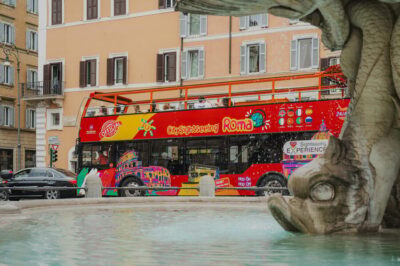
City Sightseeing Hop-on Hop-off Bus with Audioguide
Read our review →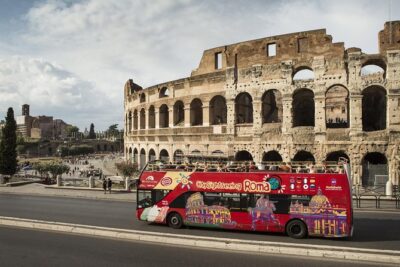
City Sightseeing Rome Hop-On Hop-Off Bus Tour
Read our review →
Hop-on Hop-off Sightseeing Bus Tour with Audioguide
Read our review →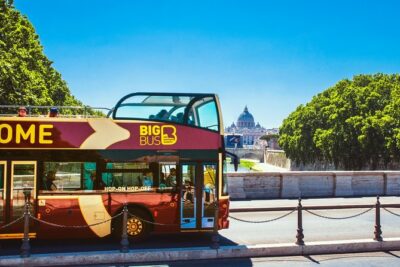
Big Bus Hop-on, Hop-off Open-Top Sightseeing Tour
Read our review →

Hop-On Hop-Off Bus and Optional Cruise Port Transfer
Read our review →Browse the lists this tour appears in