
Reviewed · ROME CITY HIGHLIGHTS TOURS
Ravenna: Private City Top Sights and Monuments Walking Tour
Ravenna packs an astonishing amount of early Christian art into a walkable old center. The shining prize is the Basilica of San Vitale, where Byzantine mosaics of emperors, empresses, saints, and biblical scenes still glow after roughly 1,500 years. You also visit the nearby Mausoleum of Galla Placidia, the Neonian Baptistery, and Sant’Apollinare Nuovo.
I like the private format, since your guide can focus on your questions instead of following a fixed group pace. I also like that admission is included at all four main monuments. The drawback is price: at $168.79 per person, this is a serious splurge for a three-hour walk, though the personal attention and included tickets make the cost easier to justify.
Key points to know before booking
- Four major monuments included: San Vitale, Galla Placidia, the Neonian Baptistery, and Sant’Apollinare Nuovo are covered by the admission price.
- A private guide for three hours: Your group gets the guide’s full attention in English, French, Italian, Spanish, or German.
- Ravenna’s greatest mosaic sites: The tour focuses on the city’s early Christian and Byzantine art, not just its streets and squares.
- A convenient central meeting point: Meet beneath the clock tower in Piazza del Popolo, then return there at the end.
- Useful historical setting: Ravenna’s Roman, Ostrogothic, and Byzantine past gives the monuments a clear political and religious context.
- A guide named Samantha receives strong praise: She is noted for explaining different artistic periods and adding background rather than simply pointing out decorations.
Why Ravenna deserves a focused three-hour walk
Ravenna is easy to underestimate. Today, it is an inland city in Emilia-Romagna, connected to the Adriatic by the Candiano Canal. But in late antiquity it was a major capital, first for the Western Roman Empire in the fifth century, then for the Ostrogoths, and later for the Byzantine Empire.
That sequence matters when you enter the churches. Ravenna’s mosaics are not random decoration. They reflect changes in power, religion, style, and imperial ambition. Roman traditions meet eastern Christian art, while rulers use glittering walls to show authority and faith.
The city has eight UNESCO World Heritage Sites, and this tour gives you access to four of its most important monuments. You will not see every major site in Ravenna in three hours, but you will get a strong introduction to the places most visitors come to see.
I especially like the way the tour combines grand buildings with the old center’s ordinary streets. Ravenna is not only about looking up at gold mosaics. You also get Piazza del Popolo, the Dante area, and a sense of how the monuments fit into the city around them.
More city highlights tours in Rome:
- Rome: Big Bus Hop-on, Hop-off Open-Top Sightseeing Tour
★ 3.5 · 2,580 reviews - Rome in a Day Group Tour with Vatican Museums and Colosseum
★ 4.5 · 2,450 reviews - Rome Highlights by Golf Cart Private Tour
★ 5.0 · 2,379 reviews
Meeting under the clock tower in Piazza del Popolo
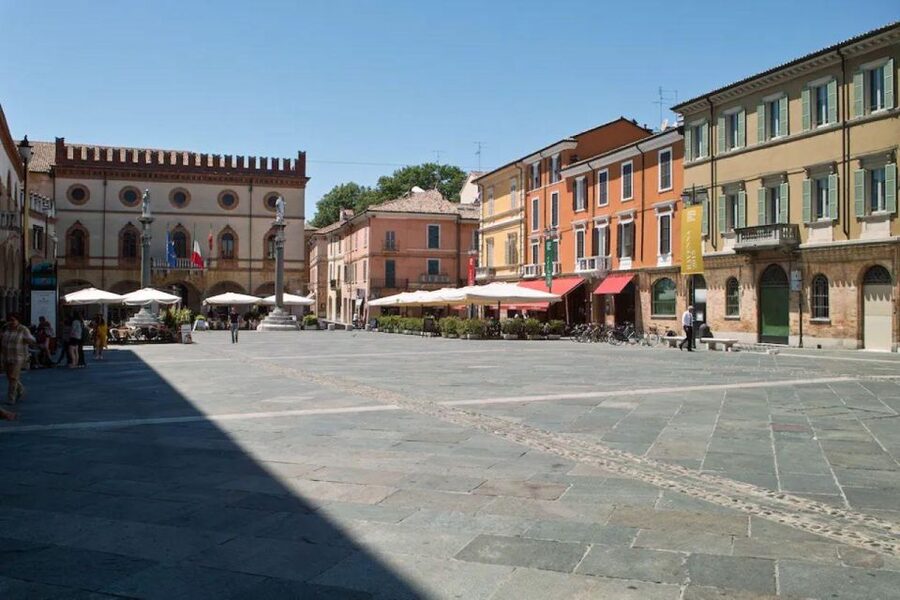
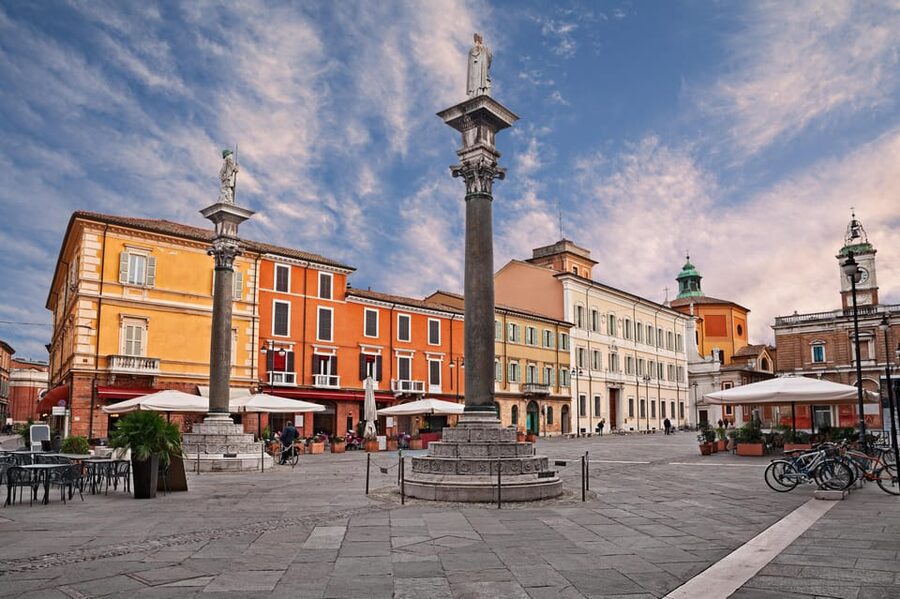
The tour begins at Fontanella Piazza del Popolo, with the guide waiting under the clock tower. This is a sensible starting point because the square gives you an immediate feel for Ravenna’s civic center before the tour turns toward its early Christian monuments.
Piazza del Popolo is picturesque rather than overwhelming. That is part of its appeal. It gives you a pleasant place to get your bearings, and the tour ends here as well, so you do not need to find a new pickup point after the walk.
Transportation to the meeting point is not included. You need to make your own way to Piazza del Popolo, and the activity finishes at the same location. Starting times vary, so check availability before building the tour into your day.
The private setup is especially useful here. You can ask the guide to connect the square’s later civic role with Ravenna’s earlier imperial story, or simply get help understanding which sites deserve more of your limited time.
Basilica of San Vitale: Ravenna’s great mosaic show
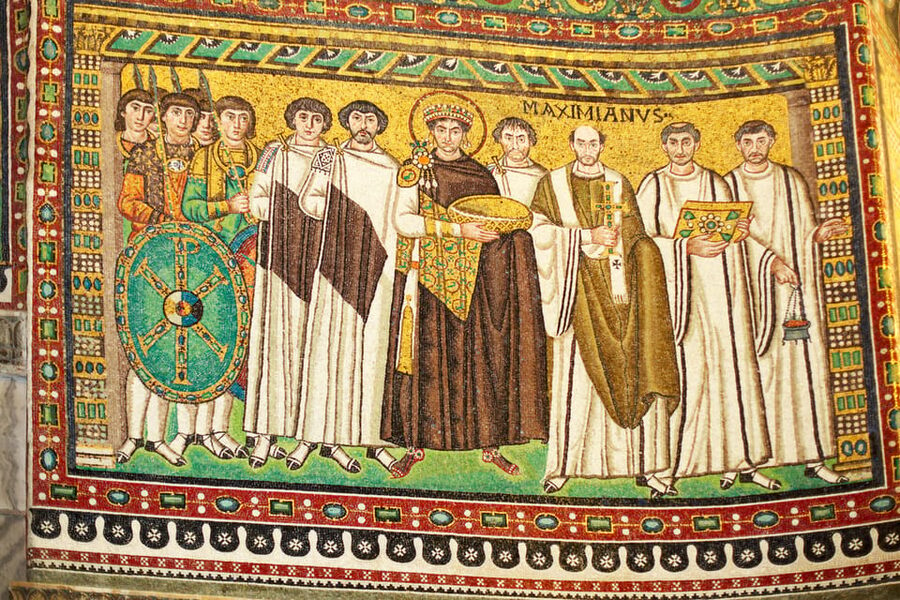
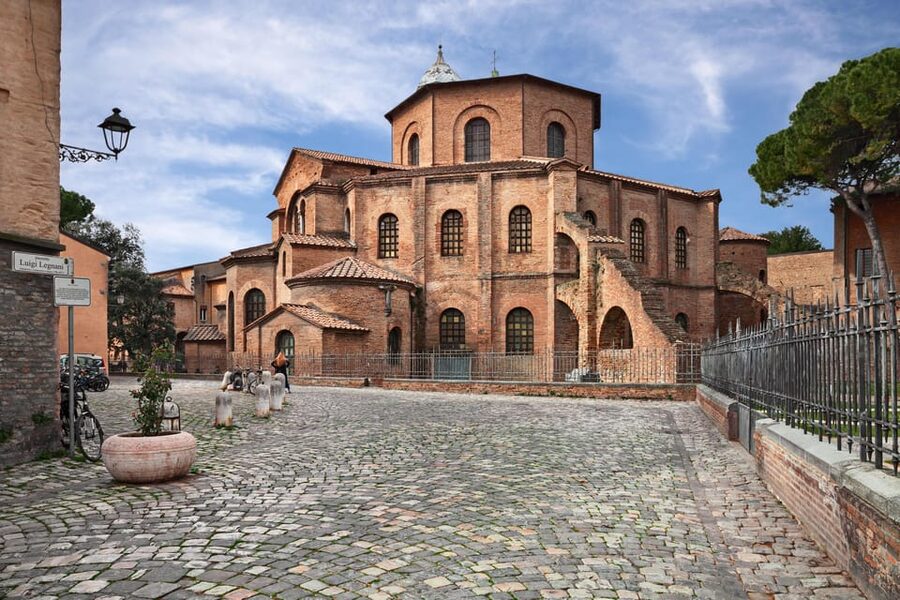
San Vitale is the main event. The basilica’s interior is famous for early Christian and Byzantine mosaics, and the effect depends on seeing the decoration in person. Gold surfaces catch the light, figures appear formal and still, and the building feels very different from the plain streets outside.
The best-known images include Emperor Justinian and Empress Theodora, surrounded by attendants. These scenes are more than portraits. They show imperial power, religious devotion, and the connection between the emperor and the church.
Your guide can help you read details that are easy to miss. The clothing, gestures, halos, objects, and placement of each figure all carry meaning. Without explanation, you might simply see a beautiful wall of gold. With a good guide, you can begin to understand how the image works as both art and political statement.
This is where Samantha’s praised guiding approach would be valuable. She is noted for explaining art from different periods and adding background, which suits San Vitale particularly well. The basilica rewards questions, so use the private format to ask about the figures, the style, and the difference between Roman and Byzantine traditions.
The main consideration is time. San Vitale can easily absorb a long visit, especially if you like religious art or ancient architecture. Since the entire tour lasts three hours and includes three more monuments, you will need to keep moving.
Mausoleum of Galla Placidia: small building, powerful atmosphere
The Mausoleum of Galla Placidia is much smaller than San Vitale, but do not mistake its size for lesser importance. Its interior is covered with some of Ravenna’s most memorable early Christian mosaics.
The contrast is part of the experience. San Vitale feels grand and ceremonial. The mausoleum feels enclosed and intimate. Its dark blue ceiling, starry decoration, and glowing images create a quieter mood than the large basilica nearby.
The building is associated with Galla Placidia, a powerful imperial woman of the fifth century. The tour’s historical background helps you place her within the changing Roman world that made Ravenna so important.
This stop is a good example of why a guide adds value. A quick look may reveal stars, crosses, and saints, but the guide can explain how the images are arranged and why the room feels so carefully controlled. You can also ask how the mausoleum’s style differs from the later Byzantine work at San Vitale.
If you prefer huge buildings and broad views, this may be a quicker stop for you. If you enjoy atmosphere and fine details, it may become a favorite. Either way, pay attention to your guide’s explanation before moving on, because the small scale makes this monument easy to rush through.
More walking tours in Rome:
- Rome: Trastevere & Campo de Fiori Street Food Walking Tour
★ 4.9 · 2,768 reviews - Rome: Paranormal Night Walking Tour & Secret Backstreets
★ 4.9 · 1,921 reviews - Rome by Night Walking Tour – Legends & Criminal Stories
★ 4.5 · 1,003 reviews - Rome: Guided City Center Evening Sightseeing Walking Tour
★ 4.4 · 953 reviews
The Neonian Baptistery and its remarkable dome
The Baptistery of Neon, also called the Neonian Baptistery, takes you into another important part of Ravenna’s religious story. Baptisteries were built for Christian initiation, and this one is known for its early Christian decoration.
The central dome is the key feature. Its mosaic shows the baptism of Christ, with the scene arranged around the circular space above you. The design makes practical use of the building’s shape, turning the ceiling into a powerful image for people gathered below.
A guide can point out how the figures are arranged and explain how the monument functioned. That context helps you see the baptistery as more than a pretty room. It was a working religious space tied to one of the most important ceremonies in Christian life.
This stop also shows that Ravenna’s art is not all the same. You will see different periods and different visual choices across the monuments. The tour is strongest when your guide compares those differences instead of treating each building as an isolated photo stop.
Sant’Apollinare Nuovo and its long procession of figures
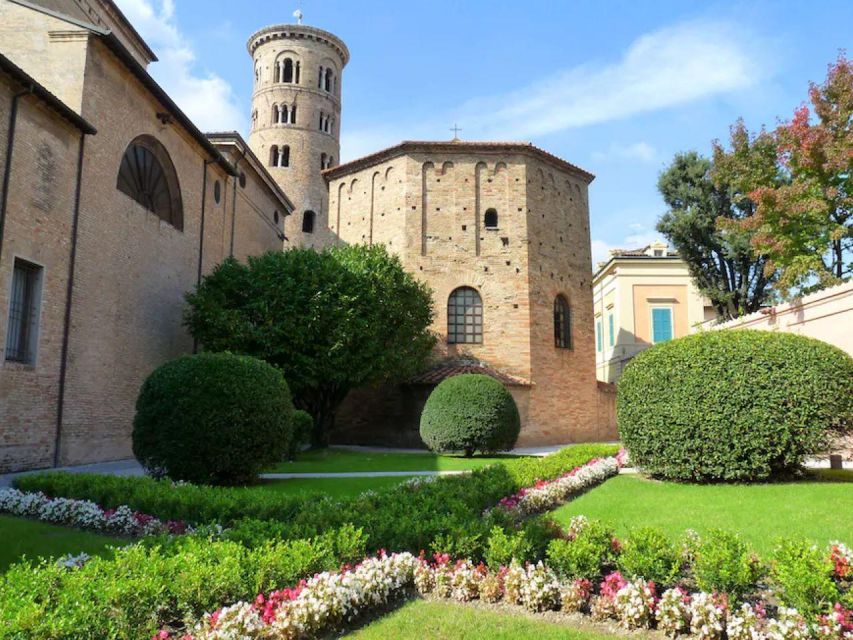
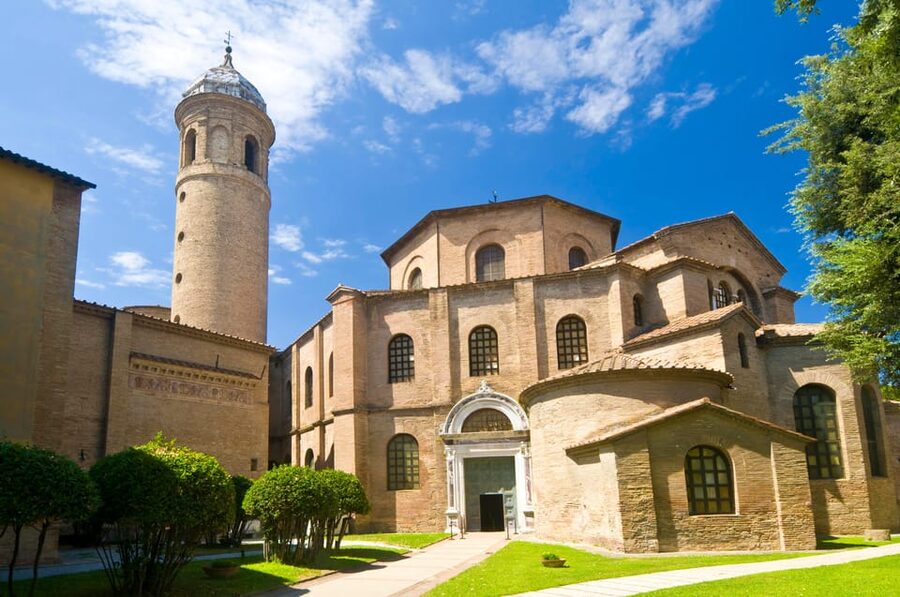
The Basilica of Sant’Apollinare Nuovo gives you another large interior filled with mosaics. Its walls feature long processions of figures, including saints and other religious images, set against glittering backgrounds.
The scale here is different again. Instead of concentrating on one small room or a few famous imperial figures, you get a broad sequence that stretches along the nave. Look for the repeated figures, their gestures, clothing, and the way the procession guides your eye through the church.
This basilica also reflects Ravenna’s changing history. The building began under Ostrogothic rule and was later adapted after the Byzantine reconquest. That makes it a useful place to see how politics could affect religious art and public buildings.
You may find this stop less instantly dramatic than San Vitale, simply because the decoration is spread across a larger interior. Give yourself time to look beyond the first few figures. The guide’s explanation can help you understand why the scenes were arranged as they were and how the building’s past shaped its decoration.
Admission to Sant’Apollinare Nuovo is included, along with the other three main monuments. That matters because entrance fees can add up quickly in Ravenna, especially if you plan to visit several UNESCO-listed sites independently.
Piazza del Popolo, Dante, and the Area of Silence
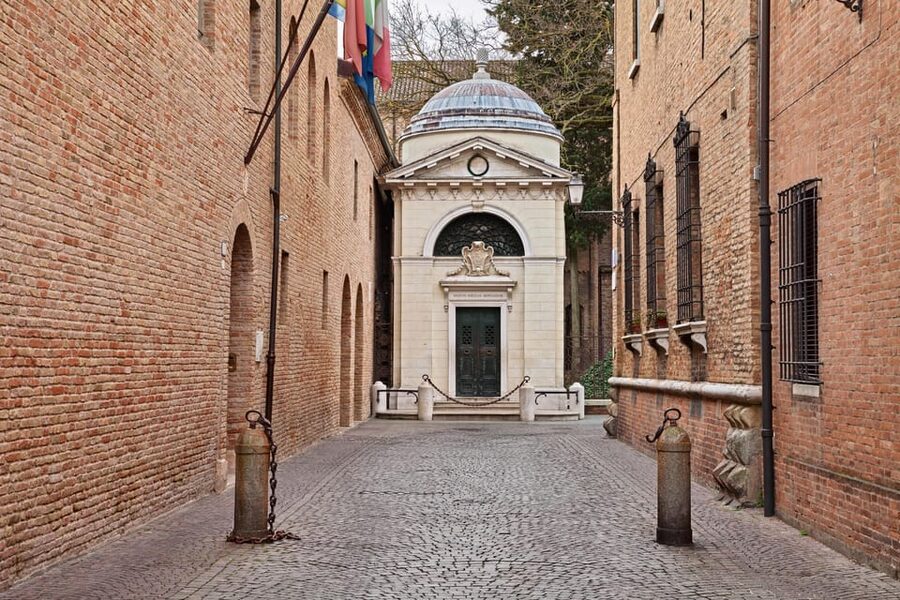
The tour is not only a sequence of churches. You also stroll through the old town and visit the Dante area, known as the Area of Silence.
Dante died in Ravenna on September 13, 1321, after spending his final years in exile from Florence. His connection gives the city another layer of cultural importance. The Dante area is quieter and more reflective than the large squares, and it offers a pause after the intense visual experience of the mosaics.
You do not need to be a Dante specialist to appreciate this stop. The basic story is enough to understand why Ravenna remembers him so carefully. The guide can connect the poet’s exile and death with the city’s long role as a refuge for important figures.
The return to Piazza del Popolo provides a neat finish. You can continue exploring Ravenna afterward, return to your hotel, or use the guide’s suggestions to decide which monument deserves a second look.
What the private format is really worth
At $168.79 per person, this is not a bargain walking tour. The price makes the most sense if you are traveling with a small private group and want personal attention, a fluent guide in your preferred language, and admission to four major sites bundled together.
The guide’s time is the main advantage. You can ask for more detail at San Vitale, move faster through a stop that interests you less, or ask for help comparing the different artistic periods. A larger group may offer a lower price, but it usually cannot adjust as easily to your interests.
The included tickets also improve the value. You receive entrance to San Vitale, the Mausoleum of Galla Placidia, the Neonian Baptistery, and Sant’Apollinare Nuovo. Other museums and venues are not included, so do not assume the tour ticket covers every attraction in Ravenna.
The three-hour length is another point to weigh. It is long enough for a strong first look, but short enough to fit into a busy day. You will not have unlimited time in each church, and the schedule may feel brisk if you want to study every mosaic carefully.
The listed rating is 4.8 from nine ratings, and Samantha receives especially warm praise for her friendly manner, clear explanations of different art periods, and useful background. One assessment also described the tour as expensive but worth the price. That is a fair way to view it: you are paying for a focused introduction, not a low-cost overview.
Who will get the most from this tour
I would choose this tour if you are visiting Ravenna for the first time and want the major mosaic sites explained in a logical order. It is also a good fit if ancient art can feel hard to read without context.
A private tour suits families, couples, and small groups with different interests. Someone can ask about architecture while another person asks about imperial politics or religious symbolism. A guide who speaks your preferred language can make a big difference in buildings where small details matter.
This is less suitable if you prefer to explore slowly on your own. Three hours is a fixed block, and the guide-led structure means you will not have unlimited time at every monument. You may want a separate return visit to the site you like best.
Wear comfortable shoes for the old-town walk, and bring a rain layer. The tour operates in rainy weather, although exceptionally heavy rain can lead to cancellation and a full refund. Since transportation is not included, plan your route to Piazza del Popolo in advance.
Should you book the Ravenna private walking tour?
Book it if you want Ravenna’s major mosaics explained by one guide, with the four principal admissions already covered. The private format is the real reason to pay the higher price, especially if you value questions, historical context, and a pace shaped around your group.
Skip it if your main goal is the lowest possible cost or a long, unhurried study of each building. In that case, you may prefer independent visits and more time at the monuments.
For most first visits, I think the tour offers a strong three-hour introduction. San Vitale provides the grand spectacle, Galla Placidia the intimate atmosphere, the Neonian Baptistery the early Christian setting, and Sant’Apollinare Nuovo the broad procession of figures. Add Piazza del Popolo and Dante’s quiet corner, and you get a useful picture of Ravenna beyond its famous gold walls.
FAQ
How long does the Ravenna private walking tour last?
The tour lasts three hours.
Where does the tour begin?
The tour begins at Piazza del Popolo in Ravenna. Meet your guide under the clock tower.
Where does the tour end?
The tour ends back at the meeting point in Piazza del Popolo.
Which monuments are included?
Admission is included for the Basilica of San Vitale, the Mausoleum of Galla Placidia, the Neonian Baptistery, and the Basilica of Sant’Apollinare Nuovo.
Is transportation included?
No. Transportation to the meeting point is not included.
Is the tour private?
Yes. It is a private-group tour with a guide dedicated to your group.
Which languages are available?
The live guide service is available in English, French, Italian, Spanish, and German.
Does the tour operate in rainy weather?
Yes. The tour operates when it is raining. Exceptionally heavy rain may lead to cancellation and a full refund.
Can you cancel for a full refund?
Yes. You can cancel up to 24 hours in advance for a full refund.
Newest Rome tours we have reviewed
- Private TikTok Video Making in Rome★ 5.0 · 7 reviews
- Assisi, Orvieto and Civita di Bagnoregio Full Day Tour from Rome★ 4.5 · 45 reviews
- Assisi & Saint Francis Path Tour from Rome★ 5.0 · 45 reviews
- Assisi and Cascia Private Day Tour from Rome with Lunch★ 5.0 · 10 reviews
- Art Class in the center of Rome!★ 4.0 · 4 reviews
- Art & Craft: Beer Tour with Street Art in Rome★ 4.5 · 6 reviews
- Arrival in Rome: Airport Transfer & Exclusive City Introduction★ 5.0 · 3 reviews
- From Rome: Private Day-Tour of Tuscany★ 5.0 · 16 reviews
Rome City Highlights Tours, compared.
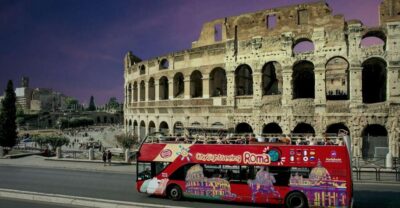
Big Bus Hop-on, Hop-off Open-Top Sightseeing Tour
Read our review →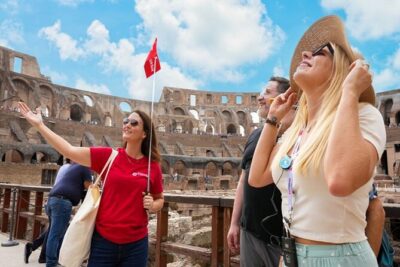
Rome in a Day Group Tour with Vatican Museums and Colosseum
Read our review →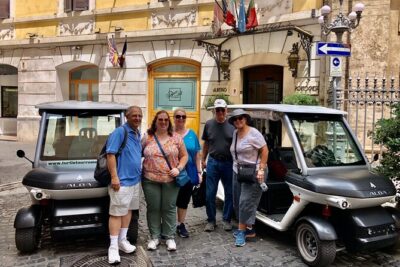
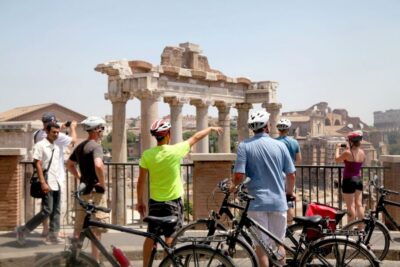
Top Highlights & Hidden Gems Tour by Cannondale E-Bike
Read our review →
Rome Food Tour: Hidden Gems of Trastevere with Dinner & Wine
Read our review →
Rome Highlights City Tour by Golf Cart with Gelato
Read our review →
Rome in a Day Tour with Vatican, Colosseum and Historic Center
Read our review →Browse the lists this tour appears in