

Reviewed · UNDERGROUND ROME TOURS
Rome: Trevi Fountain and Underground Guided Tour
The most surprising part of this Trevi Fountain tour comes after the photos. You leave the crowded piazza and descend nine meters to Vicus Caprarius, where a working Roman aqueduct and the remains of an imperial Domus reveal how many layers of Rome sit below today’s streets.
I like the clear 40-minute format and the way the tour links the fountain above with the ancient water system below. I also like the headsets, which let you hear guides such as Mario, Francesca, Vito, and Anestis without losing the thread in a noisy square.
The main thing to understand is that the underground site is not the inside of the Trevi Fountain itself. You will see an archaeological excavation near the fountain, not a secret passage beneath the basin. At $41 per person, that distinction matters.
Key points to know before you book

- Nine meters below modern Rome: Walk through the Vicus Caprarius excavation and see ancient layers beneath the present-day streets.
- A working Roman aqueduct: The 2,000-year-old water channel still supplies the Trevi Fountain above.
- Two short parts: Expect about 20 minutes at the fountain and 20 minutes underground.
- Excellent fountain views, not basin access: The guide uses a public piazza viewing point. Entering the restricted basin area costs an extra €2.
- Strong guide-led storytelling: Mario and Francesca are among the guides praised for humor, patience, and clear explanations.
- Best for curious first-time visitors: This adds context to a famous photo stop, but it may feel expensive if you only want a quick look at the fountain.
Meeting at the church beside Trevi Fountain
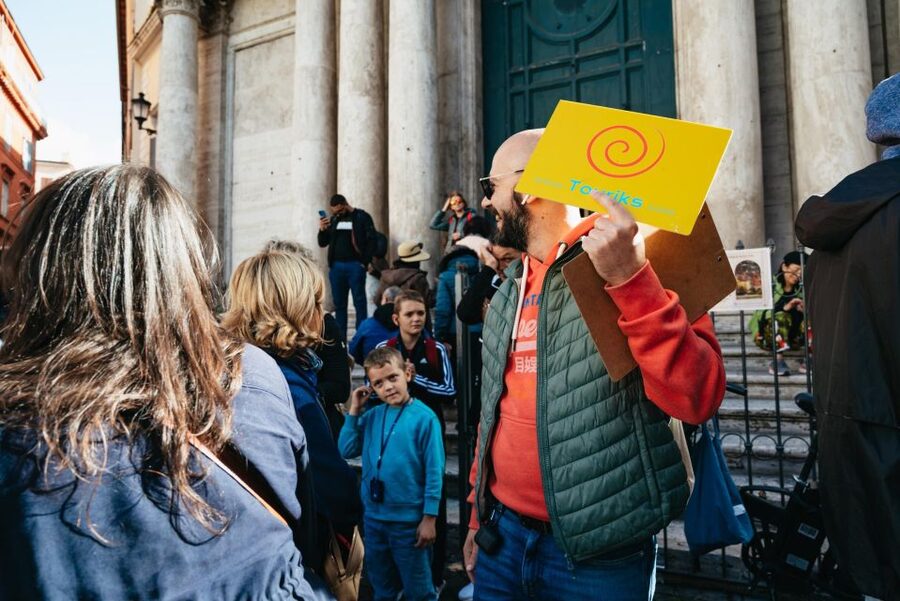
The tour begins at Via del Lavatore, 49, in front of the Santi Vincenzo e Anastasio a Fontana di Trevi Church. The church is on the left corner of Piazza di Trevi. Look for a yellow label marked TOURIKS.
Give yourself extra time to find the meeting point. Trevi Fountain is one of Rome’s busiest public spaces, and the church entrance can be hard to spot when people fill the square. The tour company has contacted late arrivals to help them find the guide, but you should not count on being able to join after the group has moved on.
The yellow sign matters. Several tour companies gather around Trevi Fountain, so do not simply look for someone holding a generic sign or assume the first group you see is yours. Headphones are listed as something to bring, while headsets are provided so you can follow the guide during the walk.
The setup is simple. There is no hotel pickup, no food stop, and no long transfer. You meet at the fountain, walk through the area with your guide, enter Vicus Caprarius, and return to the same starting point.
More Trevi Fountain walks:
- Rome: Opera Concert at Palazzo Poli – Fontana di Trevi
★ 4.7 · 1,026 reviews - Best of Rome Walking Tour including Trevi Fountain
★ 4.5 · 923 reviews - Catacombs Tour with Transfer – Optional Capuchin Crypt or Trevi
★ 4.5 · 694 reviews
Twenty minutes with Rome’s most famous fountain
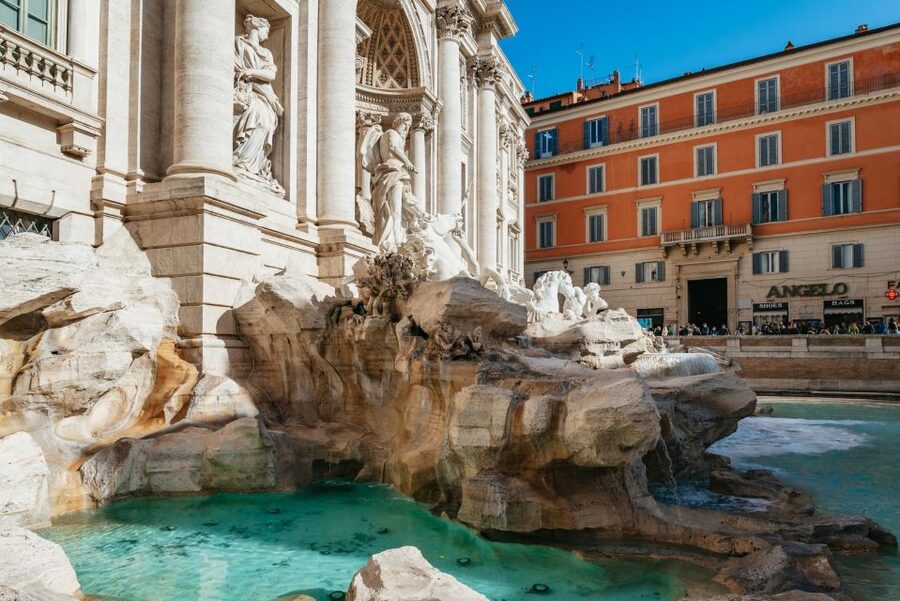
The first part focuses on the Trevi Fountain itself. Your guide explains its origins, the ideas behind its design, and the mythological figures carved into the stone. The fountain is more than a handsome backdrop for a coin toss. Its dramatic figures, rough stone surfaces, and rushing water were designed to suggest movement and power.
This is where a guide adds real value. Without context, you may see a large Baroque fountain, take a photograph, and move on. With a good explanation, the horses, figures, water, and theatrical composition become easier to read. The tour is especially useful if you want a short orientation to the fountain rather than a general walk through central Rome.
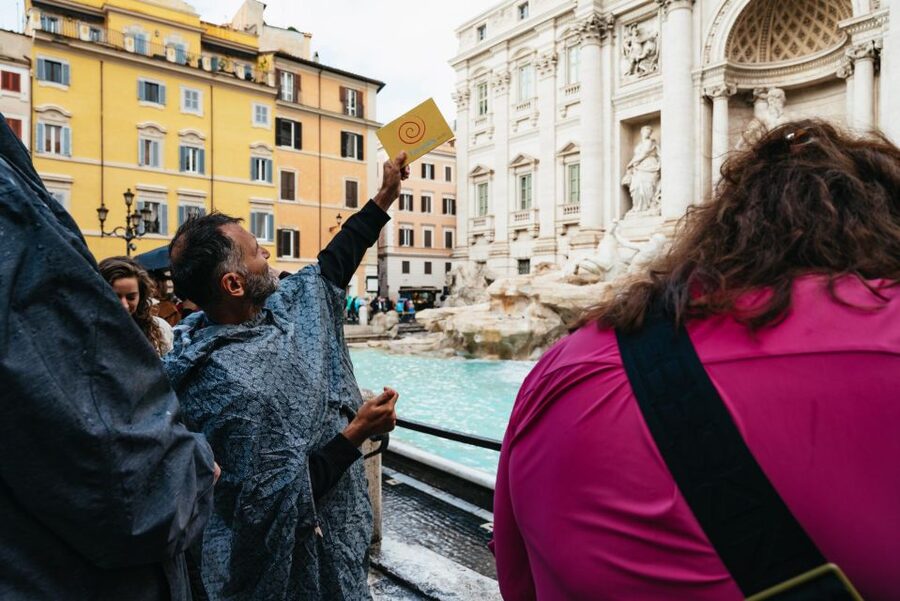
The guide leads you to a good viewing position in the public piazza. That is important because the restricted basin area is not included. Access to that section costs an additional €2, and the tour does not promise entry there.
Do not expect a quiet, private viewing. Trevi Fountain is crowded, and the guide cannot control the movement of people around the piazza. One practical tip is to return for your own close-up photos later if the square is too packed during the explanation. One person on a summer tour also found that the crowd made it difficult to reach the basin after the tour ended.
The fountain segment lasts about 20 minutes. That is enough time for a focused explanation, but not enough for a long art lecture or relaxed photography session. I see this as a strength if you want to keep moving, but a limitation if the fountain is the main reason you booked.
Nine meters down at Vicus Caprarius
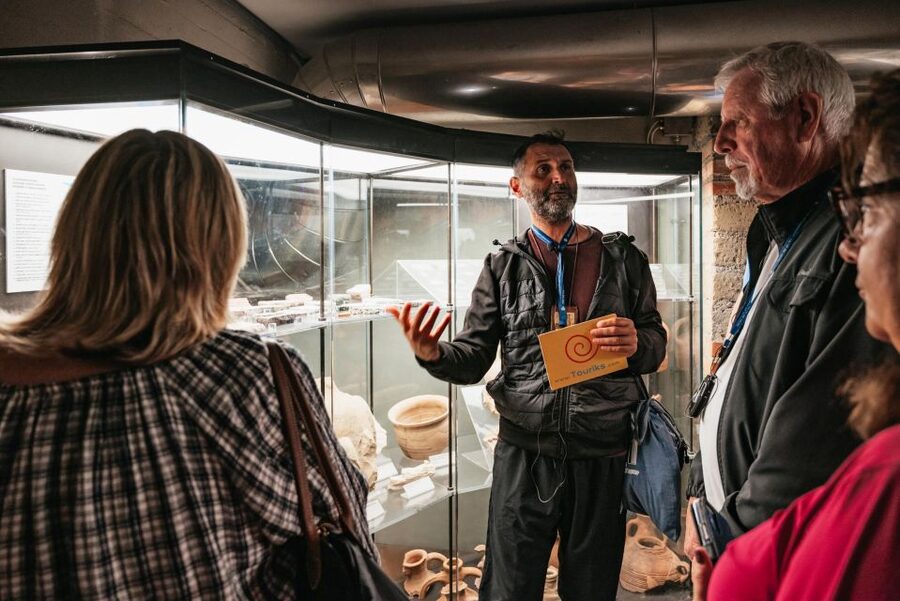
The second half takes place at Vicus Caprarius, an archaeological site below the streets near Trevi Fountain. You descend about nine meters and walk among ruins that show how Rome has been rebuilt over itself for centuries.
This is the part that gives the tour its purpose. Modern Rome is not simply built on top of ancient Rome in a symbolic sense. The excavation lets you see the physical layers, with old walls and remains below the level of today’s streets. The site includes the remains of an imperial Domus, or large Roman house, along with the ancient water system.
The underground visit is not directly below the Trevi Fountain basin. It is a separate archaeological site in the same area. The connection is the water system and the wider history of the neighborhood. If you book expecting to walk under the fountain itself, you may feel misled. If you want to see what lies below the streets around it, the visit makes much more sense.
The passages and ruins also offer a break from the heat and noise outside. That can be welcome in summer, although you should still wear practical shoes and be ready for stairs. The tour is not suitable for wheelchair users, and the nine-meter descent is an important part of the physical experience.
The Roman aqueduct still carries water

The most memorable feature underground is the fully functioning aqueduct. The channel is about 2,000 years old and still supplies water to the Trevi Fountain above.
That link gives the tour a satisfying structure. You begin by looking at the fountain as a work of art. Then you go below ground and see part of the infrastructure that makes the fountain possible. Roman water engineering can feel abstract when you only hear about it in a museum or textbook. Here, you stand beside the remains and see the connection between ancient construction and a living modern landmark.
The aqueduct is likely to interest anyone drawn to Roman engineering, not just art and architecture. An engineer on the tour described this as a bucket-list sight, especially because the visit showed how the water system changed from a private or domestic setting to a municipal role over time.
Keep your expectations measured. This is a short guided visit, not a long study of Roman aqueduct construction. You will see the aqueduct within a broader excavation that also includes house remains and layers of later building. The guide’s explanation is what turns the stonework into a story.
More underground Rome tours:
- Colosseum: Underground and Ancient Rome Tour
★ 4.7 · 12,691 reviews - Rome: Crypts and Catacombs Underground Tour with Transfers
★ 4.6 · 5,341 reviews - Expert Guided Tour of Colosseum Arena OR Underground, and Forum
★ 4.5 · 5,041 reviews - Rome: Colosseum Underground Small Group Guided Tour
★ 4.7 · 4,844 reviews
The imperial Domus and Rome’s stacked history

The remains of the imperial Domus show another side of the site. Instead of seeing Rome only through grand monuments, you get a look at domestic and urban space beneath the modern city.
The real value here is scale. Above ground, Trevi Fountain dominates the piazza. Below ground, the archaeological site makes the city feel older, smaller, and more complicated. Walls were built, altered, covered, and reused. The ground level changed as Rome developed, leaving what the tour describes as millenary stratification beneath the streets.
A guide is useful because exposed ruins do not always explain themselves. Some walls look like rough stone until someone points out their age, purpose, or relationship to the surrounding remains. Guides have been praised for explaining the site in simple terms, answering questions, and adjusting their pace for families.
Parents with young children may find the short length helpful. The tour keeps moving, and the underground setting gives children something tangible to look at. It is still a history visit, so children who need constant activity may lose interest, but the mythological fountain figures and ancient water channel provide good talking points.
How the guides shape the experience

The quality of the guide matters more here than it does on a simple photo stop. The site is compact, and the tour depends on clear storytelling rather than a large number of exhibits.
Mario has been singled out for a humorous style, dry jokes, and strong explanations. Francesca has also guided the visit, bringing warmth and enthusiasm to the history. Other named guides include Vito and Anestis. Guide assignments can change, so you should not book on the assumption that one particular person will lead your group.
The strongest guide style for this tour is not a long academic lecture. It is short, well-timed explanation that tells you what to look at and why it matters. Several guides have been praised for answering questions, slowing down when needed, and explaining complex history in a memorable way.
Headsets help. Trevi Fountain is noisy, and the public square is full of movement. Once underground, the setting may be quieter, but the devices still make it easier to hear without standing shoulder to shoulder with the guide.
The tour is offered in English, French, Spanish, Portuguese, German, and Italian. A private group option is also available. If you choose a private visit, the main benefit should be the chance to ask more questions and set the pace, not a different archaeological site.
Is $41 a fair price for 40 minutes?
At $41 per person, this is not a bargain basement attraction. The included cost covers the guide, entrance to the underground excavations, and headsets. The separate €2 charge applies only to the restricted basin area at the fountain.
The price makes more sense if you value interpretation. You are paying for a short, guided link between the fountain, the aqueduct, and the excavation. The underground entrance is included, and you would not necessarily discover the site while wandering around Trevi Fountain on your own.
The value is less convincing if you mainly want to see the fountain. The public piazza is free, and the tour does not include the restricted basin area. One practical alternative noted by a participant was an inexpensive audio tour available at the archaeological site, which may suit independent visitors who are comfortable finding their own way and listening without a live guide.
I would book this tour for the explanation, not the amount of ground covered. Forty minutes is enough for a useful introduction, but it is still a small program. Some visitors felt the cost was high for the short duration, even while finding the tour worthwhile.
Think of it as a focused add-on to a day in central Rome. It works well before or after visiting nearby sights, since the meeting point is right beside Trevi Fountain. You can then spend more time in the neighborhood, return for photographs, or get a drink and continue walking.
Timing, comfort, and practical limits
The published duration is 40 minutes, with roughly 20 minutes at the fountain and 20 minutes at Vicus Caprarius. That makes this one of the easier activities to fit into a busy Rome schedule.
You will be walking and descending underground, so wear shoes that feel secure. Bring a reusable water bottle, especially in warm weather. The underground section provides relief from the heat, but the outdoor portion takes place in a crowded public square.
The tour can be canceled because of weather conditions. If that happens, you are offered another date or a full refund. You can also cancel up to 24 hours ahead for a full refund, and the reserve-now, pay-later option keeps you from paying at the time of booking.
The experience is not suitable for wheelchair users. The underground descent and site layout make that a firm consideration, not a minor inconvenience.
Who should book the Trevi Fountain underground tour?

I would recommend it to first-time Rome visitors who want more than a photograph and prefer a short, guided history lesson. It is also a good fit for anyone interested in Roman water engineering, underground archaeology, or the way modern streets sit above ancient structures.
Families may like the compact format and the chance to ask questions. The guide can explain the material at different levels, and the mythological figures at the fountain give younger children an easy way into the story.
I would be more cautious if your main goal is direct access to the fountain basin. That costs extra and is not part of the guided visit. I would also think twice if you dislike stairs, have limited mobility, or expect a lengthy archaeological tour with many rooms and exhibits.
The tour earns its place by changing how you look at Trevi Fountain. Afterward, the water is not just decoration. It connects the Baroque monument above with an ancient system below, and that is a useful piece of Rome to carry with you.
Should you book it?
Book this tour if you want a short, guide-led connection between art, engineering, and archaeology. The underground aqueduct and imperial Domus are the main reasons to go, while the fountain explanation gives the visit a logical starting point.
Skip it if you only want fountain photos or if $41 feels high for 40 minutes. In that case, see the fountain from the public piazza, consider the separate €2 basin access, and visit the excavation independently if that option suits you. For curious visitors who enjoy clear stories and physical traces of ancient Rome, this is a worthwhile small-scale tour, provided you understand exactly what lies underground.
FAQ
How long does the Trevi Fountain and Underground Guided Tour last?
The tour lasts 40 minutes. The planned visit includes about 20 minutes at Trevi Fountain and 20 minutes at Vicus Caprarius.
Is the underground site directly beneath Trevi Fountain?
No. The excavation at Vicus Caprarius is near Trevi Fountain, but it is not directly beneath the fountain basin itself. The connection is the ancient aqueduct, which still supplies water to the fountain.
Does the tour include access to the Trevi Fountain basin?
No. The tour includes a good viewing point at public piazza level. Access to the restricted basin area costs an additional €2.
What is included in the tour price?
The price includes a live guide, entrance to the underground excavations, and headsets to hear the guide. Food, drinks, hotel pickup, and hotel drop-off are not included.
Where is the meeting point?
Meet at Via del Lavatore, 49, in front of the Santi Vincenzo e Anastasio a Fontana di Trevi Church. The church is on the left corner of Piazza di Trevi. Look for a yellow TOURIKS label.
Which languages are available?
The tour is offered in English, French, Spanish, Portuguese, German, and Italian. A private group option is also available.
Is the tour suitable for wheelchair users?
No. The experience is not suitable for wheelchair users because it includes access to the underground archaeological site.
Newest Rome tours we have reviewed
- Private TikTok Video Making in Rome★ 5.0 · 7 reviews
- Assisi, Orvieto and Civita di Bagnoregio Full Day Tour from Rome★ 4.5 · 45 reviews
- Assisi & Saint Francis Path Tour from Rome★ 5.0 · 45 reviews
- Assisi and Cascia Private Day Tour from Rome with Lunch★ 5.0 · 10 reviews
- Art Class in the center of Rome!★ 4.0 · 4 reviews
- Art & Craft: Beer Tour with Street Art in Rome★ 4.5 · 6 reviews
- Arrival in Rome: Airport Transfer & Exclusive City Introduction★ 5.0 · 3 reviews
- From Rome: Private Day-Tour of Tuscany★ 5.0 · 16 reviews
Underground Rome Tours, compared.
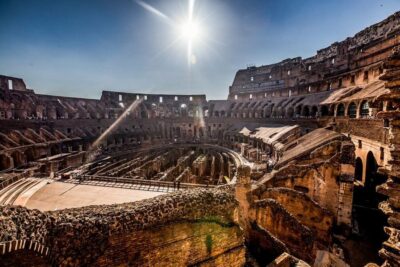
Colosseum: Underground and Ancient Rome Tour
Read our review →
Crypts and Catacombs Underground Tour with Transfers
Read our review →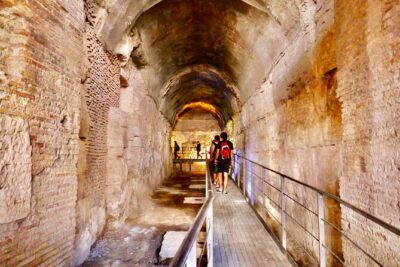
Expert Guided Tour of Colosseum Arena OR Underground, and Forum
Read our review →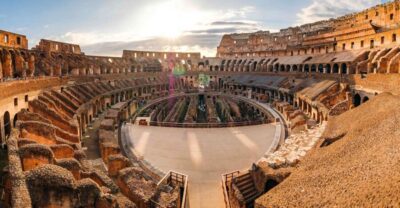
Colosseum Underground Small Group Guided Tour
Read our review →
St. Peter’s Basilica, Dome Climb, and Underground Tour
Read our review →
Colosseum Underground & Ancient Rome Guided Tour
Read our review →
Ancient Rome: Colosseum Underground Group Tour
Read our review →Browse the lists this tour appears in