
Reviewed · ROME CHURCHES AND BASILICAS TOURS
Rome: 2.5-Hour San Clemente & Underground Private Tour
Rome’s past is stacked, not neatly arranged. This private 2.5-hour walking tour links Michelangelo’s Moses, an ancient gladiator school, and the underground levels of San Clemente in one compact route near the Colosseum. I like the way it moves from Renaissance art to imperial Rome and then farther underground into the city’s earliest Christian and pagan layers.
I also like the small-group format and the clear meeting point at San Pietro in Vincoli. You begin in front of the church, walk through the neighborhood, and return to that same point at the end. The main consideration is guide quality: explanations may feel less focused if your guide wanders into unrelated subjects, so this tour is best for people who value a personal format but are comfortable asking questions and steering the conversation.
Key points to know before booking
- Three eras in 2.5 hours: See Renaissance sculpture, Roman ruins, and underground ancient structures in one short route.
- Michelangelo’s Moses: San Pietro in Vincoli houses the famous statue and the chains traditionally associated with St. Peter.
- San Clemente underground: Explore a three-level complex that connects Republican Rome, early Christianity, and the medieval church.
- Ludus Magnus: View the remains of the Colosseum’s gladiator training school and learn how it connected to the arena.
- Private English tour: A professional art historian guide leads your group without a larger public crowd.
- Church dress rules matter: Your knees and shoulders must be covered, or you can be refused entry.
A Roman history lesson beneath ordinary streets
I like this tour because it gives you a useful way to understand Rome. Instead of treating each monument as an isolated stop, it shows how one city kept building over itself. You begin with a Renaissance masterpiece, pass an imperial training ground, and finish in a basilica where the floor drops through several periods of Roman history.
The tour lasts 2.5 hours, so you should not expect a slow, exhaustive look at every church detail or archaeological feature. You are getting a focused introduction to three important places, with walking between them. That makes it a good choice if you want a strong historical framework without spending an entire day underground.
The group is private, and the tour is in English. An art historian guide leads the visit, and headsets are provided for groups of more than eight people. Since no individual guide name is supplied, your experience will depend partly on the person assigned to your booking. A friendly and well-organized guide can make the links between the sites easy to follow. A less focused guide may require you to ask for clarification.
More churches and basilicas in Rome:
- Vatican Museums, Sistine Chapel & 4 Papal Basilicas Full Day Tour
★ 4.5 · 1,068 reviews - Vatican: Pope Francis Tomb and Papal Basilicas Tour
★ 4.7 · 340 reviews - Rome: Santa Maria Maggiore Upper Areas Skip-the-Line Ticket
★ 3.8 · 223 reviews
San Pietro in Vincoli and Michelangelo’s Moses
The meeting point is in front of Basilica San Pietro in Vincoli, in a small piazza off Via Cavour. Arrive at least 15 minutes early. The church is easy to overlook if you rush along the main street, which is part of its charm. You turn into a quieter square and find a church with an important relic and one of Michelangelo’s best-known sculptures.
Inside, you will see the two sets of chains traditionally identified as the restraints used on St. Peter during his imprisonment in Jerusalem and Rome. The relic is important to the church, but Michelangelo’s Moses is likely to command most of your attention.
Moses was intended for the tomb of Pope Julius II. The original project called for a huge monument with 47 statues, but Michelangelo never completed the plan because other commissions took priority. The finished sculpture is therefore part of a larger story about ambition, compromise, and Renaissance patronage.
I find this stop especially useful for anyone who has seen Michelangelo’s work in the Vatican or Florence and wants another example outside the usual route. The church gives you a chance to consider the sculpture at close range, while the guide can explain how the unfinished tomb project shaped the final result.
Do not expect this to be a full Michelangelo-focused tour. The church visit is one part of a wider itinerary, and the tour soon shifts from Renaissance art to ancient Rome. That change is the point, but you should know it in advance.
Dress properly before you arrive. Both men and women must cover their knees and shoulders to enter the churches. This rule is strictly enforced. Smart casual clothing is required, and comfortable shoes are a good idea for the walking portion.
Ludus Magnus beside the Colosseum
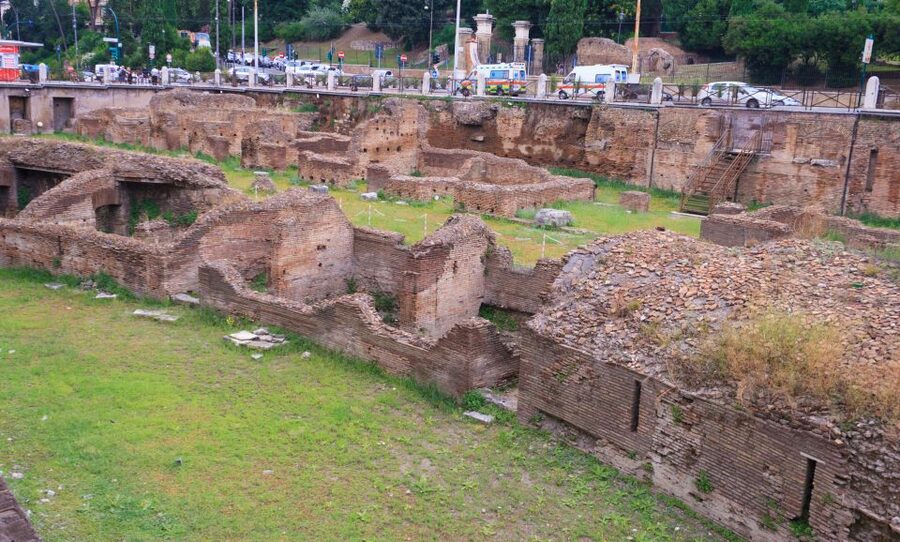
From San Pietro in Vincoli, the route continues toward the Colosseum area and the remains of Ludus Magnus. This was an ancient gladiator training school on the northeast side of the Colosseum. The arena and training complex were linked by underground tunnels.
The ruins help explain what happened before a gladiator entered the Colosseum. Public spectacles did not begin at the arena gate. Fighters needed places to train, prepare, and wait, and Ludus Magnus formed part of that working system.
You will see the remains from outside as part of the walking route. The stop is more about understanding the site and its relationship to the Colosseum than entering a fully restored building. That distinction matters. If you want a long archaeological visit inside an ancient complex, this is not that kind of experience. If you want a clear explanation of how gladiatorial events were organized, it is a worthwhile pause.
I like the way this stop breaks up the church visits. After the quiet interior of San Pietro in Vincoli, you move into the open air and look at Roman remains in their modern setting. The guide can connect the visible ruins to the tunnels and the nearby arena, giving you a better sense of the Colosseum as part of a larger complex.
The tour does not include transportation between the stops. You walk through the surrounding neighborhood, so plan for a moderate amount of movement. This is not a difficult hike, but it is not a sit-down sightseeing experience either.
Basilica San Clemente and its three levels
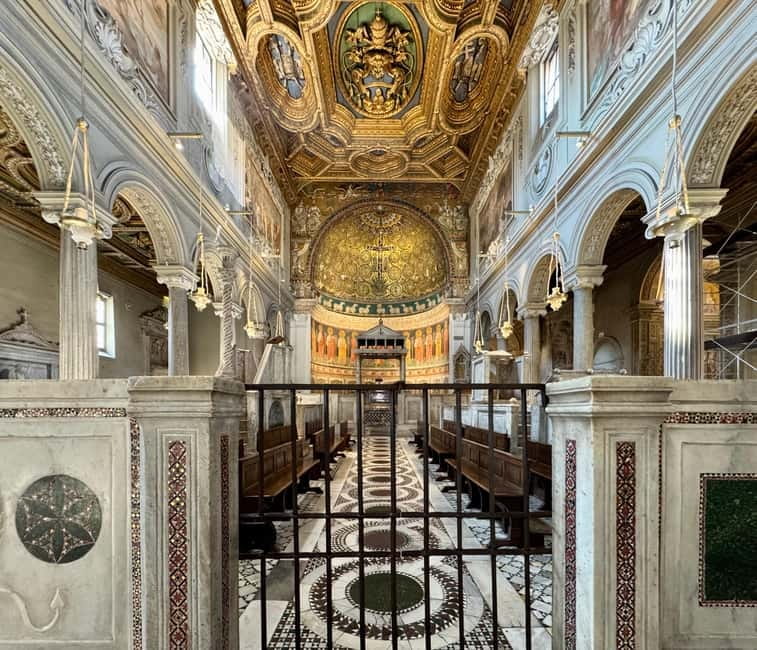
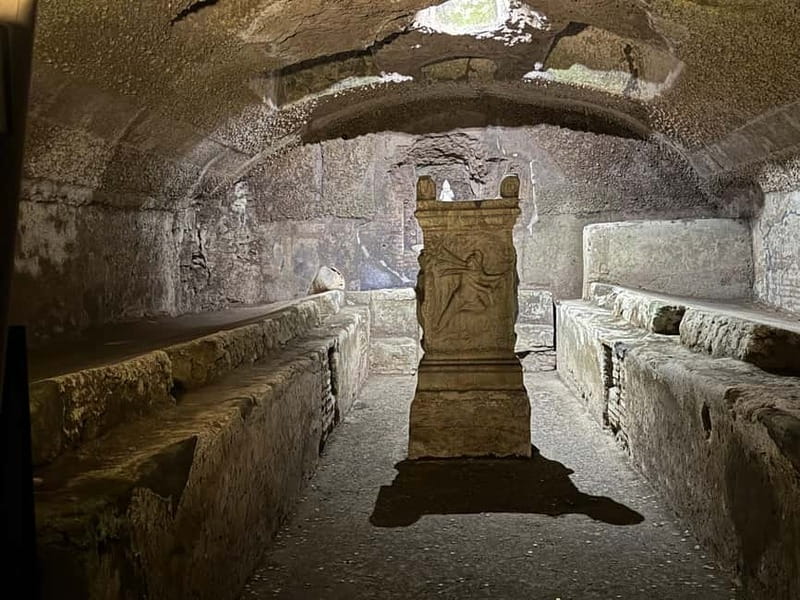
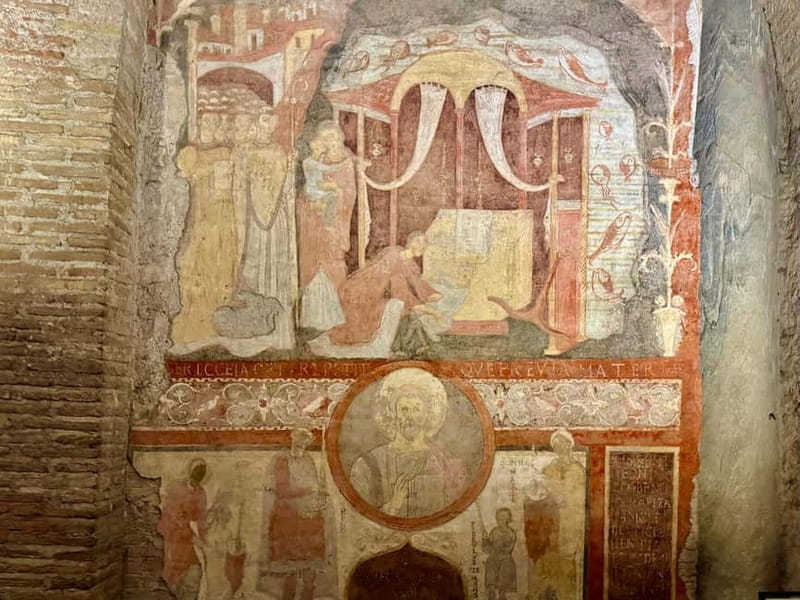
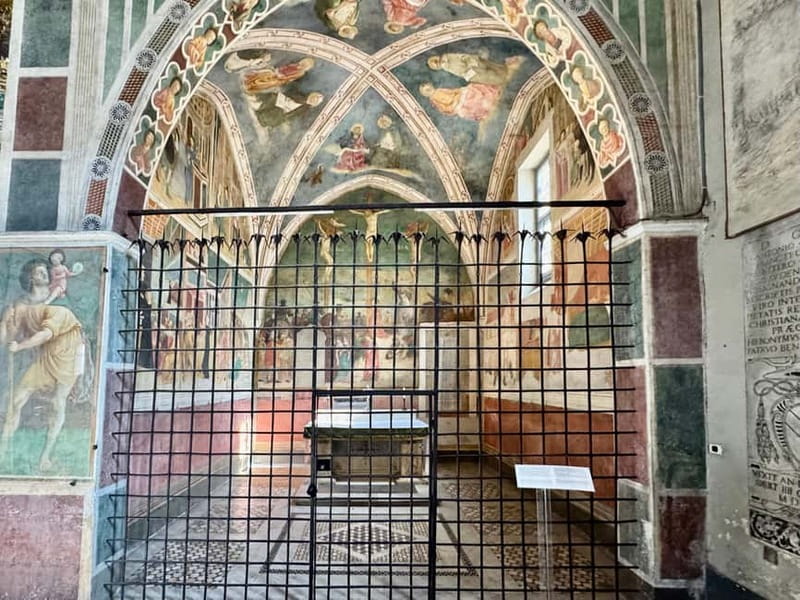
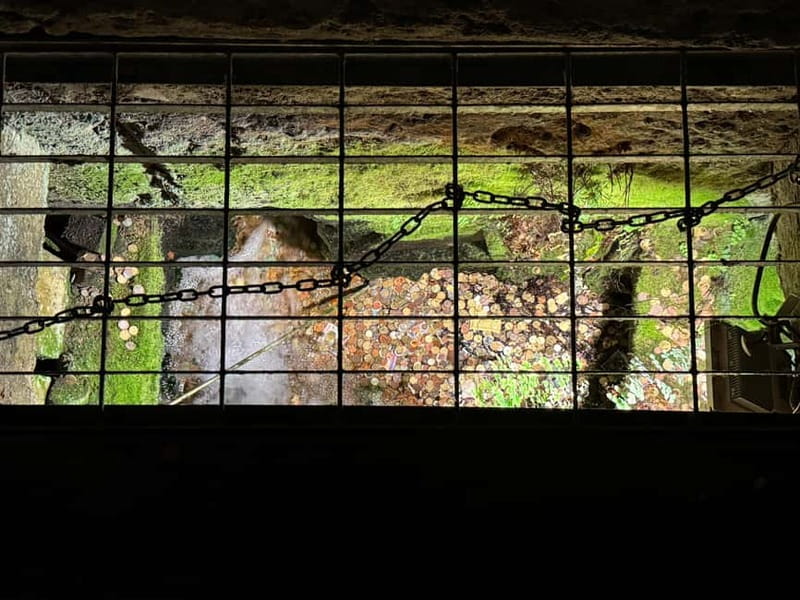
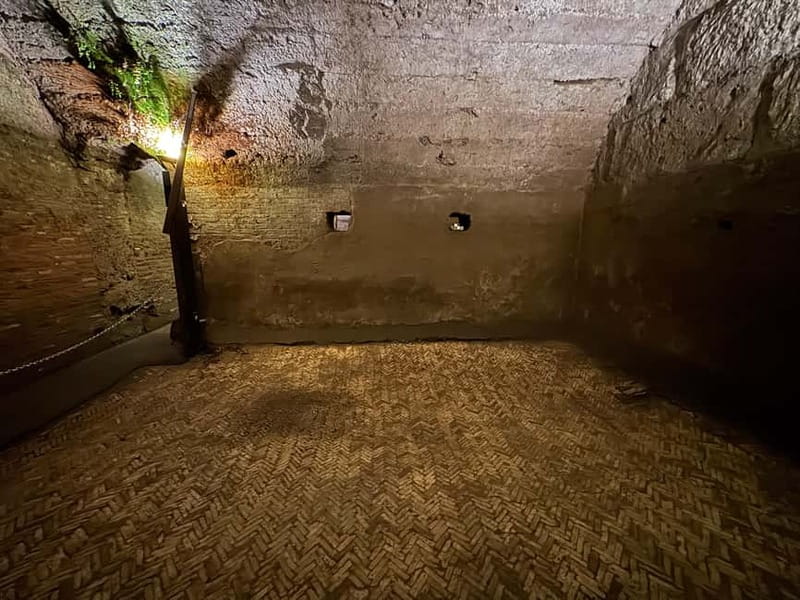
The final major stop is Basilica San Clemente al Laterano, near Via San Giovanni in Laterano. This church is the best reason to choose the tour if you are interested in how Rome changed over time. The present medieval basilica dates from about 1100, but the story beneath it goes back much farther.
San Clemente is built in three main levels:
- The present church is the 12th-century basilica.
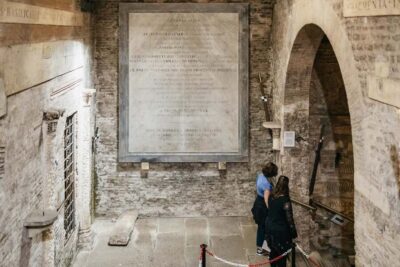
- Beneath it is a 4th-century Christian church dedicated to Pope St. Clement, described as the third pope after St. Peter.
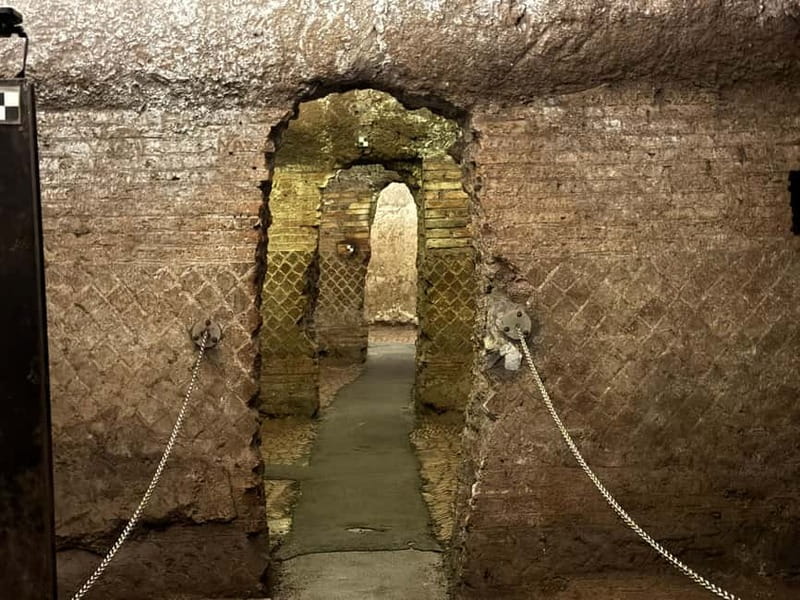
- Lower remains suggest a Republican-era villa and other earlier structures.
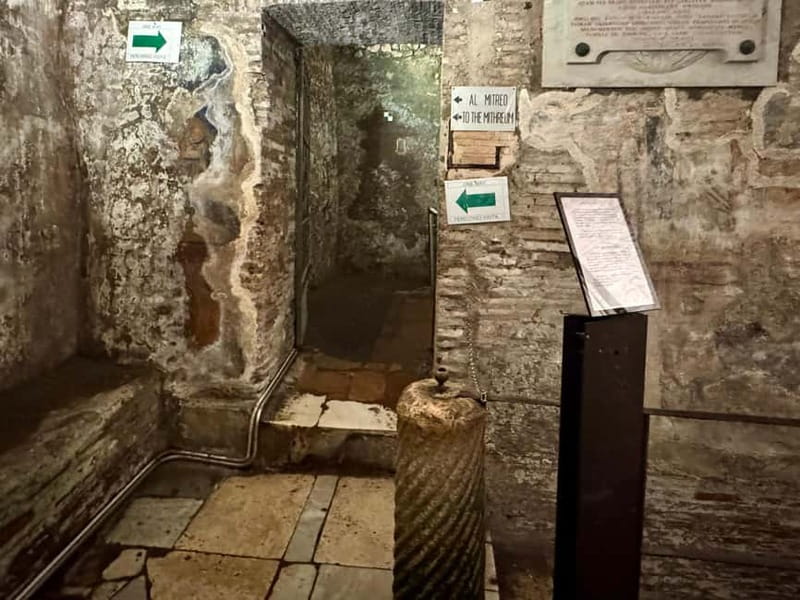
The underground visit turns a standard church stop into a lesson in Roman archaeology. You are not simply looking at a medieval building. You are seeing how one structure was altered, reused, and built over as Rome’s religious and political life changed.
I love this kind of site because it corrects the common picture of Rome as a collection of separate ruins. Here, the layers occupy the same footprint. The present basilica sits above an earlier Christian place of worship, which in turn rests on older Roman foundations. A good guide can make that sequence easy to picture.
The underground spaces may feel close and uneven, so sturdy shoes are sensible. Large bags and luggage are not allowed, and the activity is not wheelchair accessible. Anyone who dislikes confined or below-ground spaces should keep that in mind before booking.
The tour description identifies San Clemente as the last stop and says the activity ends back at the meeting point. The practical sequence is therefore a walking loop or out-and-back route in the Colosseum area, rather than a transfer to your hotel or another part of Rome.
More underground Rome tours:
- Colosseum: Underground and Ancient Rome Tour
★ 4.7 · 12,691 reviews - Rome: Crypts and Catacombs Underground Tour with Transfers
★ 4.6 · 5,341 reviews - Expert Guided Tour of Colosseum Arena OR Underground, and Forum
★ 4.5 · 5,041 reviews - Rome: Colosseum Underground Small Group Guided Tour
★ 4.7 · 4,844 reviews
What the private format adds
A private group gives you more control than a large scheduled tour. You can ask about Michelangelo, St. Peter, gladiators, Christian Rome, or the building layers at San Clemente without waiting for a large crowd to move along. If you are traveling with family or friends, the guide can keep the pace suited to your group.
The format also puts more responsibility on you. With a fixed 2.5-hour schedule, you should ask questions early if you want more detail at a particular stop. If you prefer a tightly structured presentation, say so at the start. Guide style can vary, and one possible weakness is that an unclear explanation or an unrelated digression could make the route feel less organized.
The strongest feedback about the experience points to easy meeting arrangements, a friendly manner, clear information, and an attentive guide. Those qualities matter here because the tour covers several periods quickly. The weaker feedback raises concern about explanations drifting toward conspiracy theories and comments that may feel inappropriate or uncomfortable. I would treat that as a reason to expect some variability, not as a reason to dismiss the whole idea. A private tour lets you redirect the conversation if needed.
Is $195.98 per person a fair price?
At $195.98 per person, this is not a budget walking tour. Since a minimum of two people is required, the smallest booking costs $391.96 before any other personal spending. The price includes entrance fees and a professional art historian guide, but not food, drinks, hotel pickup, or transportation to and from the attractions.
The value depends on how much you want personal attention. You are paying for a private English-language guide, a focused route, and access to the underground section of San Clemente rather than joining a large public group. For two people who want to ask many questions, that can be reasonable. For a solo visitor, the minimum booking makes it unsuitable unless another person joins the reservation.
The tour also saves you from planning the sequence yourself. You see San Pietro in Vincoli, Ludus Magnus, and San Clemente in one outing, with the historical connections explained along the way. If you already know these sites well, the price may feel high for the short duration. If you are new to Rome and want a private introduction to the city’s religious, imperial, and artistic layers, the package has a clearer purpose.
The ticket-line benefit adds practical value, though the available information does not specify which entrance arrangements apply at every stop. I would still book for the guide and the connected route, not simply for line avoidance.
Timing, clothing, and practical details
Check the available departure times when booking. The tour lasts 2.5 hours, but the actual feel depends on your pace and the time spent at each church and archaeological stop.
Wear comfortable walking shoes. The route involves a moderate amount of walking, and you may encounter uneven surfaces around ancient remains. Dress for the weather because the tour operates in all conditions, and remember the church requirement: knees and shoulders must be covered for everyone.
Bring a passport or identity card. Do not bring pets, large bags, or luggage. Walking frames are not allowed, and the activity is not suitable for wheelchair users.
You meet in front of Basilica San Pietro in Vincoli, where the guide will hold a sign with your name. The tour ends back at the meeting point. There is no hotel pickup or drop-off, so arrange your own route to and from the church.
Cancellation is flexible up to 24 hours before departure for a full refund. You can also reserve and pay later, which helps if your Rome schedule is still changing.
Who should book this Rome underground tour?
I would choose this tour if you want three things: a private guide, a short schedule, and a clear connection between Roman eras. It suits first-time visitors who want more than the Colosseum alone, as well as returning visitors who have not yet seen San Clemente or San Pietro in Vincoli.
It is especially good for people interested in art and architecture. Michelangelo’s Moses gives you a Renaissance focus, while San Clemente provides the archaeological depth. Ludus Magnus adds a practical look at the machinery behind Roman entertainment.
I would hesitate if you want a long, relaxed church tour, a wheelchair-accessible route, or a completely predictable lecture. The underground visit and moderate walking also make this less suitable for anyone who cannot manage uneven routes or enclosed spaces.
Should you book it?
Book this tour if you want an efficient, private introduction to Rome’s layered past and you value a guide who can connect sculpture, religion, gladiatorial training, and underground archaeology. The best parts are the close look at Moses, the unusual setting of Ludus Magnus, and San Clemente’s three-level story.
Skip it if the price is too high for a 2.5-hour walk or if you need guaranteed consistency in presentation. If you do book, arrive early, dress for church entry, wear good shoes, and tell the guide at the beginning that you want a focused historical explanation. Those small steps should help you get the most from a route that packs a surprising amount of Rome into one morning or afternoon.
FAQ
How long does the tour last?
The tour lasts 2.5 hours.
What language is the tour conducted in?
The live tour is conducted in English.
Is this a private tour?
Yes. It is offered as a private group experience.
Where does the tour begin?
The meeting point is in Piazza San Pietro in Vincoli, in front of Basilica San Pietro in Vincoli.
Where does the tour end?
The activity ends back at the meeting point.
How early should I arrive?
Arrive 15 minutes before the scheduled departure time. The guide will have a sign with your name.
What is included in the price?
Entrance fees and a professional art historian guide are included. Headsets are provided for groups of more than eight people.
Are food, drinks, and transportation included?
No. Food, drinks, hotel pickup, hotel drop-off, and transportation to or from the attractions are not included.
What should I wear to enter the churches?
Your knees and shoulders must be covered. This rule applies to both men and women and is strictly enforced.
Is the tour wheelchair accessible?
No. The activity is not wheelchair accessible and is not suitable for wheelchair users.
Newest Rome tours we have reviewed
- Private TikTok Video Making in Rome★ 5.0 · 7 reviews
- Assisi, Orvieto and Civita di Bagnoregio Full Day Tour from Rome★ 4.5 · 45 reviews
- Assisi & Saint Francis Path Tour from Rome★ 5.0 · 45 reviews
- Assisi and Cascia Private Day Tour from Rome with Lunch★ 5.0 · 10 reviews
- Art Class in the center of Rome!★ 4.0 · 4 reviews
- Art & Craft: Beer Tour with Street Art in Rome★ 4.5 · 6 reviews
- Arrival in Rome: Airport Transfer & Exclusive City Introduction★ 5.0 · 3 reviews
- From Rome: Private Day-Tour of Tuscany★ 5.0 · 16 reviews
Rome Churches and Basilicas Tours, compared.
Vatican Museums, Sistine Chapel & 4 Papal Basilicas Full Day Tour
Read our review →
Santa Maria Maggiore Upper Areas Skip-the-Line Ticket
Read our review →
San Clemente Underground and Basilica Guided Tour
Read our review →
Santa Maria Maggiore and Panoramic Dome Guided Tour
Read our review →
Basilica of St John Lateran & Holy Steps 1-Hour Tour
Read our review →
Basilica of St. Mary Major Priority Entrance Ticket
Read our review →Browse the lists this tour appears in