
Reviewed · ROME CHURCHES AND BASILICAS TOURS
Rome: Basilica of St John Lateran & Holy Steps 1-Hour Tour
The most striking part of this tour is the chance to visit the Holy Steps, traditionally identified as the stairs Jesus climbed before Pontius Pilate. You then cross the street to St John Lateran, the cathedral of Rome and the highest-ranking church in the Catholic world. I like the tight focus and the small group size, which leave room for questions. I also like the link between relics, art, church history, and Catholic practice.
The main drawback is the clock. One hour is short for two major religious sites, especially if you want to climb the Holy Steps on your knees. That practice takes about 45 minutes and is not included in the guided hour, so you need extra time if it matters to you.
Key points to know before booking
- The Holy Steps are viewed from the adjacent staircase during the tour: You can see the Scala Sancta, but the kneeling climb is left for later.
- St John Lateran is Rome’s cathedral: It outranks St Peter’s Basilica in its formal role as the seat of the Bishop of Rome.
- The tour is built around Catholic meaning: Guides explain relics, symbols, tradition, and church history rather than only pointing out architecture.
- Groups are limited to five people: That makes it easier to ask questions and hear the guide inside the churches.
- Guide quality is a major part of the value: Wen, Tom, Cormac, and other guides have been praised for clear explanations, warmth, and strong knowledge of theology and history.
- Dress modestly: Shorts and short skirts are not allowed.
Why these two churches matter
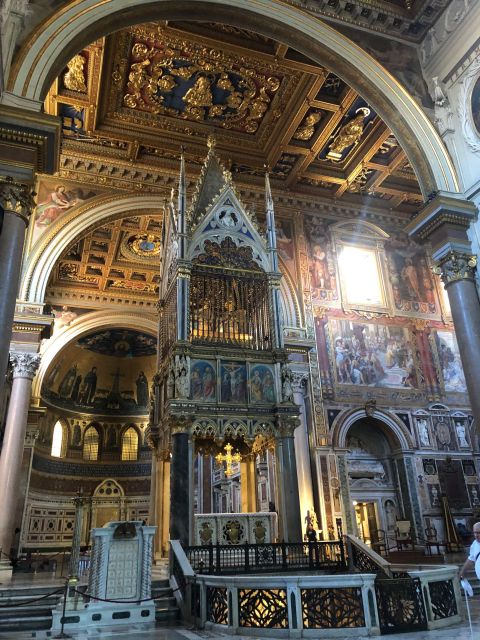
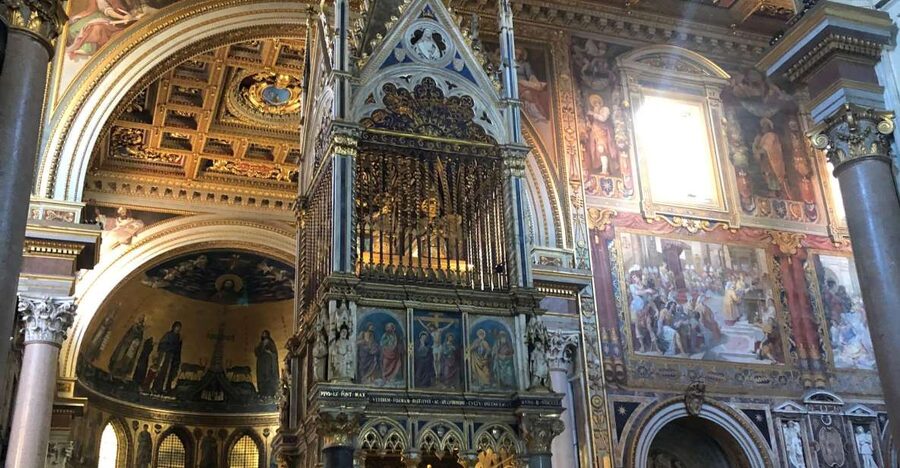
Many visitors head straight for St Peter’s Basilica, but St John Lateran has a different claim to importance. It is the Cathedral of Rome, the church of the Bishop of Rome, who is the pope. Its formal title, the Arch-Basilica of the Most Holy Savior and of Saints John the Baptist and John the Evangelist, reflects its status.
The site is also tied to the legalization of Christianity in the Roman Empire. Its story includes imperial support, papal residence, damage, rebuilding, and changes in artistic style. You do not need to be an expert in church history to appreciate it, but the building makes more sense when someone explains why it matters.
I like that this experience does not treat the basilica as just another large church. The guide connects the mosaics and statues to Catholic beliefs, then places the building in the story of Rome. That approach is especially useful if you want more than a quick look at marble, gold, and paintings.
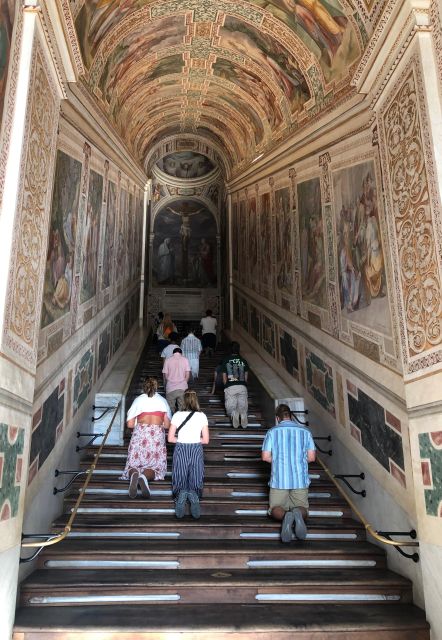
The Scala Sancta gives the hour a more intimate beginning. Instead of opening with a grand nave, you begin at a place of pilgrimage. The mood is quieter and more personal, with pilgrims approaching the steps as an act of prayer and remembrance.
More churches and basilicas in Rome:
- Vatican Museums, Sistine Chapel & 4 Papal Basilicas Full Day Tour
★ 4.5 · 1,068 reviews - Vatican: Pope Francis Tomb and Papal Basilicas Tour
★ 4.7 · 340 reviews - Rome: Santa Maria Maggiore Upper Areas Skip-the-Line Ticket
★ 3.8 · 223 reviews
Starting at the Pontifical Sanctuary of the Holy Stairs
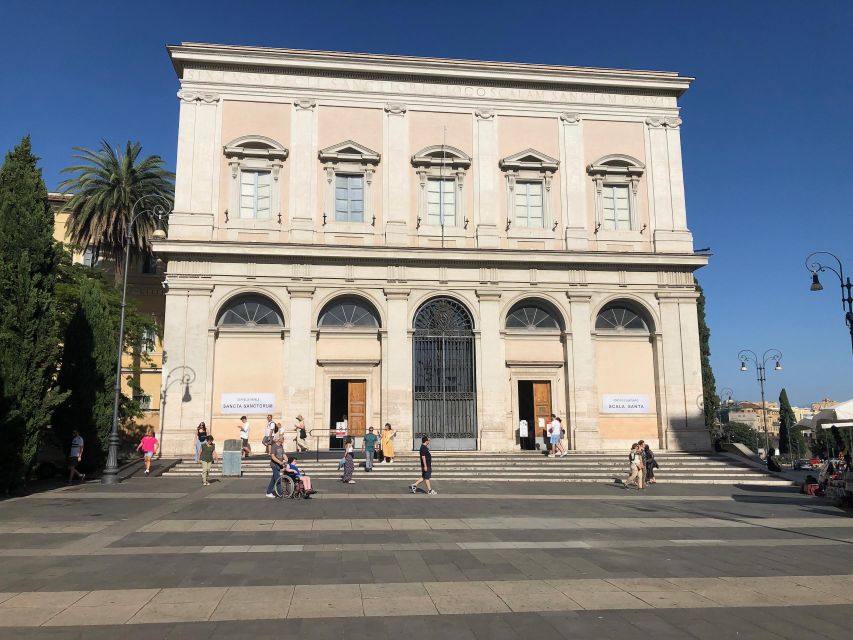
You meet the guide at the bottom of the stairs, to the left of the entrance to the Pontifical Sanctuary of the Holy Stairs. This is the Church of the Scala Sancta, directly across from St John Lateran.
The meeting point is precise, but do not arrive without checking the entrance carefully. Downloading WhatsApp is recommended so the guide can contact you if there is a problem finding one another. Transport to the meeting point is not included, so you need to arrange your own taxi or public transport.
The tour begins with roughly 20 minutes at the Scala Sancta. That is enough time for an explanation of the site, a look at the Holy Steps, and a visit to the nearby chapel area. It is not enough time for a long personal prayer stop, so keep your expectations realistic.
According to Catholic tradition, St Helena brought the original steps from the Praetorium in Jerusalem to Rome in the fourth century. The tradition identifies them as the stairs Jesus climbed before his trial and condemnation by Pontius Pilate. The religious importance comes from that connection, not from the staircase as an architectural object.
The steps are covered with wood to protect them. During the tour, you climb the ordinary stairs beside them rather than making the penitential ascent on your knees. This lets you reach the upper area without using most of your visit for physical exertion.
Seeing the chapel known as the Holy of Holies
At the top, the tour looks toward the Sancta Sanctorum, or Holy of Holies. This small chapel was once reserved for the pope, which gives it a very different character from the open basilica across the street.
You may glimpse the acheiropoieta, an image of Christ traditionally believed to be not made by human hands. Catholic tradition says the image was begun by St Luke the Evangelist and completed by angels. The chapel is also associated with wood from the table of the Last Supper.
These are sacred traditions, and the guide presents them in that religious context. If you are interested in how relics and devotional objects shape Catholic worship, this part of the tour is likely to be the most meaningful. If you prefer art history without religious interpretation, the emphasis may feel more devotional than you expect.
The Holy Steps are also connected with the possibility of a Plenary Indulgence, subject to the usual conditions of the Catholic Church. The tour does not promise or arrange this for you. If you want to make the climb on your knees, plan to do it after the guided visit and allow about 45 minutes.
That time requirement is important. The Scala Sancta is not simply a photo stop, and the central act of pilgrimage takes longer than the advertised tour itself. You may also want the nearby booklet of prayers, which one participant specifically recommended at a cost of about $2. The tour does not include that booklet.
Crossing to St John Lateran
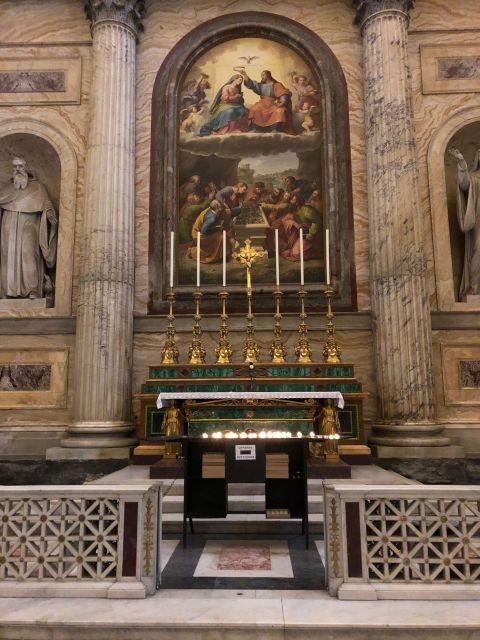
After the Holy Steps, you make the short walk across the road to the Basilica of St John Lateran. The movement between the two sites is simple, but it changes the mood completely.
The Scala Sancta is focused on one object and one devotional tradition. St John Lateran opens into a much larger architectural setting, with a grand facade, broad interior spaces, mosaics, statues, and layers of church history. The remaining 40 minutes are spent here.
The guide’s role matters most at this point. Without context, a large basilica can become a blur of chapels, saints, columns, and decorative details. A strong guide helps you understand what to look at and why it matters.
Past guides have included Wen, Tom, Cormac, and others. Wen has been praised for explaining theology, symbolism, and the history of individual works at a clear pace. Tom has been described as lively and thorough, with a talent for explaining small details that are easy to miss. Cormac was especially praised for making the hour pass quickly and leaving participants wishing for more time.
Those names are useful when comparing dates, but guide assignment may vary. You should book this experience for its subject and format rather than assuming a specific person will lead every departure.
More one-hour experiences in Rome:
- Rome: 1-Hour Fast Colosseum Tour
★ 4.4 · 384 reviews - Flying dress – one hour Video/Photoshoot
★ 4.5 · 15 reviews - Rome: 1 Hour Pasta Making Class
★ 4.8 · 5 reviews
The relics of Saints Peter and Paul
One of the tour’s main religious highlights is the opportunity to venerate relics associated with Saints Peter and Paul, described in the experience as the Pillars of the Church. Their presence gives the basilica a strong connection to the earliest Christian community in Rome.
The wording here matters. You are visiting a place of veneration, not a museum display designed only for observation. Your guide can explain how these relics fit into Catholic tradition and why Peter and Paul hold such a central place in the church.
That religious setting may be deeply moving if you are Catholic or interested in Christian pilgrimage. It can also be useful for anyone trying to understand how Rome’s churches function as living places of worship rather than preserved monuments.
Several guides have been praised for answering questions beyond the two buildings themselves. You may be able to ask about other Roman churches, relics, Catholic doctrine, or the connection between biblical events and Roman history. The small group makes that kind of conversation more realistic than on a large walking tour.
Looking closely at art and symbolism
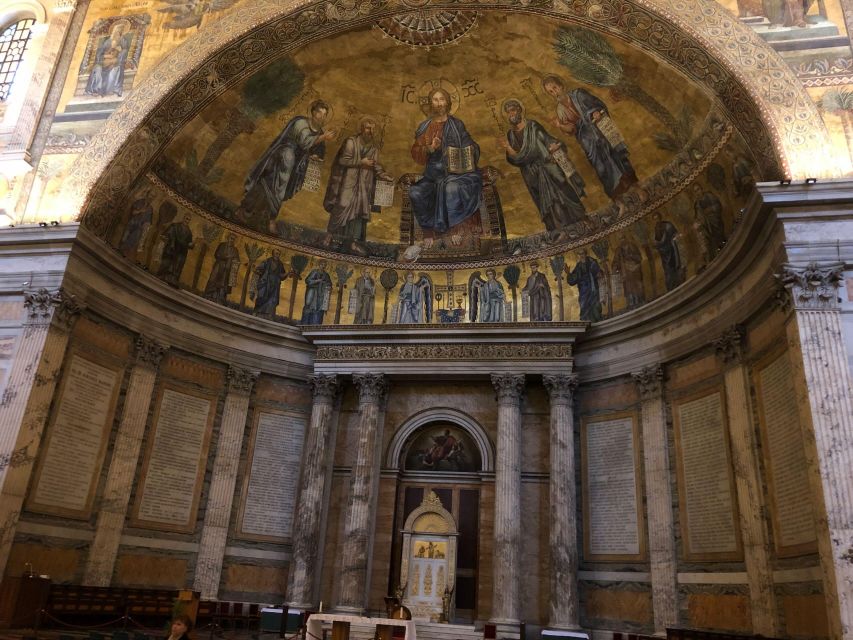
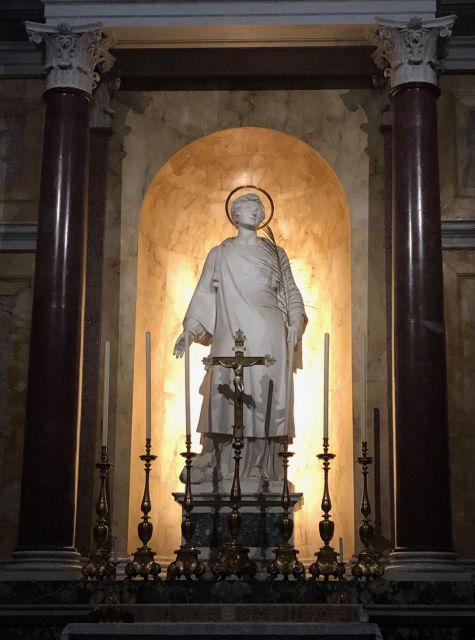
St John Lateran is not just important because of its title. It is also an architectural and artistic showpiece. The basilica contains mosaics and works of art filled with Christian symbolism, and the guide explains how those visual details communicate ideas about saints, scripture, authority, and salvation.
I like this part of the experience because it gives you a way to read the church. You are not simply told that something is old or beautiful. You learn what the image is doing and how it fits into the larger religious program of the building.
That approach was a repeated strength of the guides. They have been praised for explaining paintings, statues, structures, and symbols in a way that remained clear rather than dry. One guide was described as connecting broad historical events with small artistic details, which is exactly what you need in a church this large.
The basilica has also experienced its share of change and difficulty. Its story is closely tied to the rise of Christianity in the Roman Empire, and its appearance reflects centuries of rebuilding and artistic decisions. You can expect the guide to cover these changes rather than presenting the church as if it were created all at once.
The Holy Door and Jubilee significance
St John Lateran is home to one of the four Holy Doors in Rome. These doors open during Jubilee Years, when pilgrims come to Rome for special acts of prayer and devotion.
The door adds another layer to the visit. You are seeing a church connected not only with Rome’s papal history, but also with one of the city’s major pilgrimage customs. The supplied information notes that the door was due to open in 2025, so conditions around a Jubilee year may affect what you see and how busy the area feels.
If your visit connects with a Jubilee period, allow extra patience around religious sites. This one-hour tour remains short, and a crowded entrance or devotional service could limit the amount of time available for questions.
Is $65 good value for one hour?
At $65 per person, this is not a cheap way to spend an hour. You are paying for a short, specialist visit rather than a full-day Rome tour.
The value depends on what you want. If you already know the Catholic history of Rome and are happy to read signs on your own, the price may feel high. You can visit the churches without paying for this guided experience, and the Holy Steps themselves are free to climb.
I think the price makes more sense if you want interpretation. A good guide can explain why St John Lateran outranks more famous churches, how the relics fit into Catholic devotion, what the Holy Steps represent, and how the basilica’s art carries religious meaning. That is difficult to get from a quick self-guided visit.
The maximum group size of five is another part of the value. It gives you a better chance to hear clearly and ask questions. The activity information also mentions radio headsets for groups of seven or more, although the stated small-group limit is five, so that equipment may not be relevant to the usual departure.
All taxes and fees are included. Transport, guide gratuity, and the prayer booklet are not. Clerics may join free of charge.
Practical details that can affect your visit
Dress for a religious site. Shorts and short skirts are not allowed, so choose clothing that covers your knees. You should also be prepared for a walking visit with stairs, especially if you want to see the upper chapel area.
The tour is wheelchair accessible, which is useful for visitors who need step-free access. The guided experience does not include the kneeling climb of the Holy Steps, and that practice would not suit every body even if you have plenty of time.
The tour is offered in English and Chinese. The guide is live, not an audio recording, so you can ask questions during the visit.
The end point is St John Lateran. From there, you are near public transport, taxis, and the ancient Aurelian walls that mark the edge of Rome’s historic center. Transport back to your hotel is not included, but the location makes it practical to continue elsewhere.
You can cancel up to 24 hours in advance for a full refund, and the reserve-now, pay-later option keeps your plans flexible. Those policies are useful in Rome, where church schedules and sightseeing plans can change quickly.
Who will enjoy this tour most?
I would choose this for a Catholic visitor, a Christian pilgrim, or anyone who wants to understand the religious meaning behind Rome’s major churches. It also suits first-time visitors who want a focused introduction to Catholic history without committing to a half-day program.
The tour works well for solo visitors and couples because the group is small and the guide can respond to individual questions. It is also a good choice for a short Roman stay when you want a meaningful visit that fits between larger attractions.
I would hesitate to book it if you want a leisurely church visit with lots of quiet time. The schedule moves quickly, and the one-hour format leaves little room to linger. You should also add extra time if you plan to climb the Holy Steps on your knees, pray at length, or study the basilica’s art on your own.
Should you book the St John Lateran and Holy Steps tour?
Book it if you want expert religious and historical explanation in a very small group. The strongest part of the experience is not the admission to the buildings. It is the guide’s ability to connect the Holy Steps, relics, biblical tradition, papal history, art, and Catholic practice.
Skip it if you prefer independent sightseeing or need a slow, unstructured visit. At $65, the tour earns its price only when you use the guide by asking questions and listening for the meaning behind what you see.
For the best experience, arrive ready to discuss the sites, dress modestly, and reserve another 45 minutes if the kneeling climb matters to you. For a compact introduction to two of Rome’s most important Catholic places, this is a thoughtful and unusually focused choice.
FAQ
How long does the tour last?
The guided tour lasts one hour. About 20 minutes are spent at the Scala Sancta and about 40 minutes at the Basilica of St John Lateran.
Does the tour include climbing the Holy Steps on my knees?
No. The kneeling climb takes about 45 minutes and is not part of the guided hour. You can arrange to do it independently after the tour, free of charge.
Where does the tour begin?
You meet the Catholic guide at the bottom of the stairs to the left of the entrance to the Pontifical Sanctuary of the Holy Stairs, also known as the Scala Sancta.
Where does the tour finish?
The tour finishes at the Basilica of St John Lateran.
What languages are available?
Live guided tours are available in English and Chinese.
Is the tour wheelchair accessible?
Yes, the activity is listed as wheelchair accessible.
What clothing is not allowed?
Shorts and short skirts are not allowed. Dress modestly for both religious sites.
Newest Rome tours we have reviewed
- Private TikTok Video Making in Rome★ 5.0 · 7 reviews
- Assisi, Orvieto and Civita di Bagnoregio Full Day Tour from Rome★ 4.5 · 45 reviews
- Assisi & Saint Francis Path Tour from Rome★ 5.0 · 45 reviews
- Assisi and Cascia Private Day Tour from Rome with Lunch★ 5.0 · 10 reviews
- Art Class in the center of Rome!★ 4.0 · 4 reviews
- Art & Craft: Beer Tour with Street Art in Rome★ 4.5 · 6 reviews
- Arrival in Rome: Airport Transfer & Exclusive City Introduction★ 5.0 · 3 reviews
- From Rome: Private Day-Tour of Tuscany★ 5.0 · 16 reviews
Rome Churches and Basilicas Tours, compared.
Vatican Museums, Sistine Chapel & 4 Papal Basilicas Full Day Tour
Read our review →
Santa Maria Maggiore Upper Areas Skip-the-Line Ticket
Read our review →
San Clemente Underground and Basilica Guided Tour
Read our review →
Santa Maria Maggiore and Panoramic Dome Guided Tour
Read our review →
Basilica of St. Mary Major Priority Entrance Ticket
Read our review →
Jubilee Year Papal Basilicas Tour by Private Car
Read our review →Browse the lists this tour appears in