
Reviewed · APPIAN WAY AND AQUEDUCTS TOURS
Rome: Appian Way and Roman Countryside Electric Bike Tour
The best thing about this tour is the change of pace. In one morning, you leave Rome’s busy center behind and ride the Appian Way, a Roman road built in the 4th century BC, then pass mausoleums, catacombs, aqueducts, and open countryside. It is Rome as an ancient transport route, not just Rome as a museum.
I like the easy reach of the electric bike and the chance to see the Aqueducts Park and Caffarella Park in one outing. Guides such as Emiliano and Libero have earned praise for warmth, humor, and clear local insight. The main caution is mechanical: one rider reported a battery failure, and another could not enter the catacombs despite expecting a visit.
Key points before you book
- The Appian Way is the star: Ride on much of the original paving of Rome’s oldest major road.
- You cover a lot of ground: The full ride can reach about 20 miles, though electric assistance makes it manageable.
- Ancient sites meet working countryside: The route includes ruins, tombs, aqueducts, Caffarella Park, and a working farm.
- Guides make the difference: Emiliano and Libero are praised for friendly, attentive guiding in several languages.
- Catacomb access is not guaranteed: You may pass Saint Callixtus and Saint Sebastian without going inside.
- Bike condition matters: Ask about battery checks before setting off, especially if you are not used to long rides.
Why the Appian Way feels different from central Rome
Rome’s famous sights crowd together around the Colosseum, Pantheon, and Vatican. The Appian Way gives you a different view of the city. Here, Rome stretches outward through old stone roads, fields, trees, archaeological remains, and long aqueduct lines.
The road was built in the 4th century BC as a military route. Roman armies used it to move supplies, while wealthy families placed tombs and mausoleums along its edges. That combination tells you something useful about Roman society: roads were tools of power, but they also became public displays of family status and religious belief.
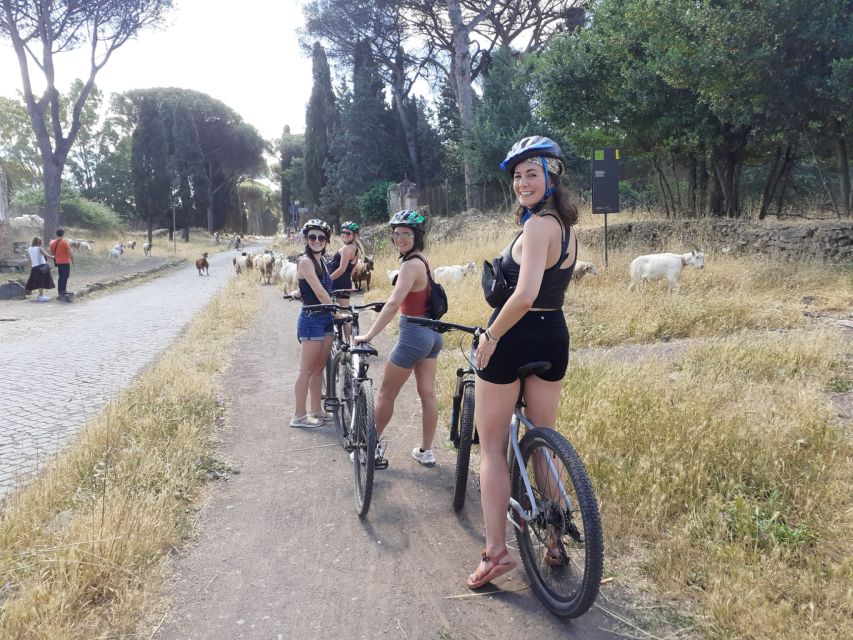
The ancient name, Regina Viarum, means Queen of Roads. You still ride across much of the original paving, so the road is not just something you look at from a coach window. You feel its uneven surface under the tires. That is atmospheric, but it also means you should expect some jolting and choose comfortable clothing.
The ride begins and ends at Via di San Calisto 9. You need to arrive 15 minutes before departure. Hotel pickup is not included, so plan your route to the meeting point before tour day.
More Appian Way and aqueduct tours:
- Rome EBike Tour: Appian Way, Catacombs & Roman Aqueducts
★ 5.0 · 1,766 reviews - Rome: Appian Way, Catacombs, & Roman Aqueducts E-bike Tour
★ 4.9 · 1,421 reviews - Rome:Appian Way E-bike Tour with Catacombs, Aqueducts & Food
★ 4.9 · 1,210 reviews
Electric bikes make a long Roman ride possible
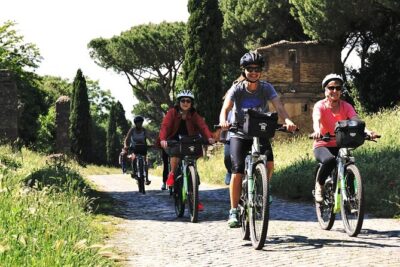
The route is a serious outing rather than a short city spin. One rider estimated about 20 miles of riding. That distance sounds daunting if you picture an ordinary bicycle, but electric assistance changes the calculation, especially across uneven roads and gentle rises.
The bikes and helmets are included. You do not need to bring your own equipment, although you should wear practical riding clothes and closed, comfortable shoes. A previous rider specifically recommended athletic clothing and riding shorts. Shorts and tank tops are acceptable because the tour does not enter a place with a stated dress requirement.
You still need to know how to ride a bicycle. The tour is not suitable for people who cannot ride, and the electric motor does not remove the need to steer, brake, and stay comfortable on a moving bike for four hours.
The one practical weakness is bike maintenance. A battery reportedly stopped working partway through one ride, and another rider also had a battery problem. The guide helped by giving up his own bike, which solved the immediate issue, but the experience points to a sensible question at check-in: ask whether the battery has been tested and what happens if assistance fails.
Along the ancient road: tombs, statues, and Roman power
Once you reach the Appian Way, the route turns into a moving history lesson. You pass ancient Roman ruins, statues, pagan mausoleums, and tombs built by families who wanted their names remembered beside a major road.
Your guide explains how the road connected military, political, and religious power. That context matters. Without it, the remains can look like scattered stones beside a country lane. With it, you begin to see the road as a planned corridor, lined with messages about authority, wealth, and memory.
The route is also a good match for people who prefer a story with their archaeology. A guide can point out the main monuments and explain what you are seeing while you ride, rather than leaving you to decode every ruin alone. Emiliano has been praised for combining Roman history with humor and personal attention. Libero, also identified as Liberio in one account, is described as a Rome native who guided in French and took care to keep the pace comfortable.
Do not expect every stop to become a long, formal museum visit. The tour is built around movement. You stop to look, listen, and take photos, then continue along the road.
Catacombs of Saint Callixtus and Saint Sebastian
The Christian catacombs are among the most intriguing names attached to this experience. Saint Callixtus and Saint Sebastian lie along the Appian Way and show how the road served religious purposes as well as military and family needs.
The important booking point is that the route may take you past the catacombs rather than inside them. One rider expected an underground visit and was disappointed to find that the group only passed the entrances. The available information does not promise admission, a guided underground tour, or time inside either site.
If seeing the catacombs from within is a top priority, treat this e-bike outing as an exterior-focused tour and arrange a separate catacomb visit. If you are satisfied with seeing where these important sites are located and hearing about their place in Roman history, the stop still adds useful context.
Bring a passport or identification card, with a copy accepted. That requirement is worth noting because it may apply to the activity even if you are only cycling past certain sites.
More e-bike tours in Rome:
- Rome: Top Highlights & Hidden Gems Tour by Cannondale E-Bike
★ 4.9 · 1,760 reviews - Rome City Small Group Bike Tour with quality Cannondale EBike
★ 5.0 · 1,380 reviews - Rome by Night – Ebike Small Group Tour – Food and Wine (Option)
★ 5.0 · 1,275 reviews - Rome: E-Bike Night Tour with Food and Wine Tasting
★ 4.9 · 1,131 reviews
Aqueducts Park: Rome’s water system in open country
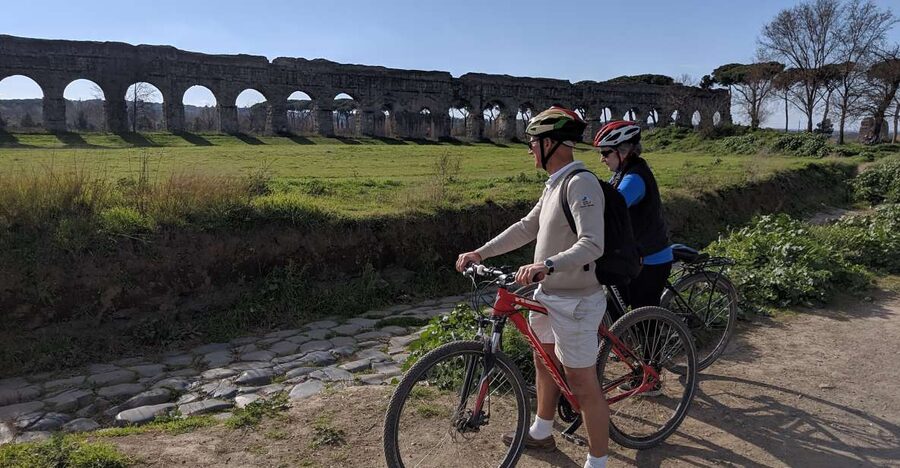
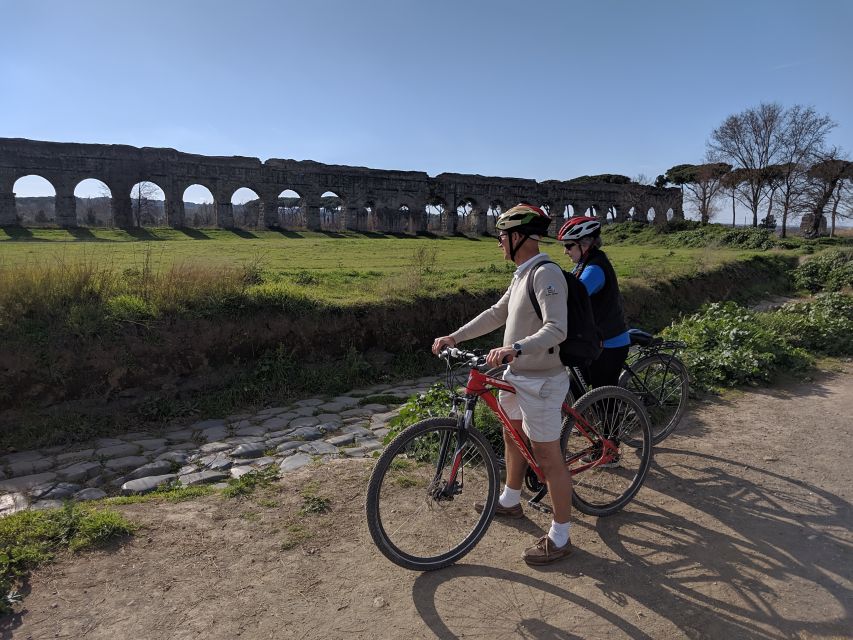
The tour then reaches Aqueducts Park, a particularly memorable part of the route. The park preserves two Roman aqueducts that remain in excellent condition. Their long arches create a bold contrast with the open Roman countryside.
Aqueducts are easy to understand when you see them at this scale. They were not decorative walls. They carried water over distance and helped support Roman urban life. The park lets you see that system without the tight streets and crowds of central Rome.
I like this section because it adds a different kind of Roman monument. The Appian Way shows transport and military planning. The aqueducts show engineering and public infrastructure. Together, they make the morning feel broader than a simple bike ride to a single ruin.
Your guide’s role is useful here. A line of arches can look impressive in a photo, but the explanation gives the structure purpose. You also have the benefit of reaching a place that is awkward to cover on foot from central Rome.
Caffarella Park and the working side of Rome
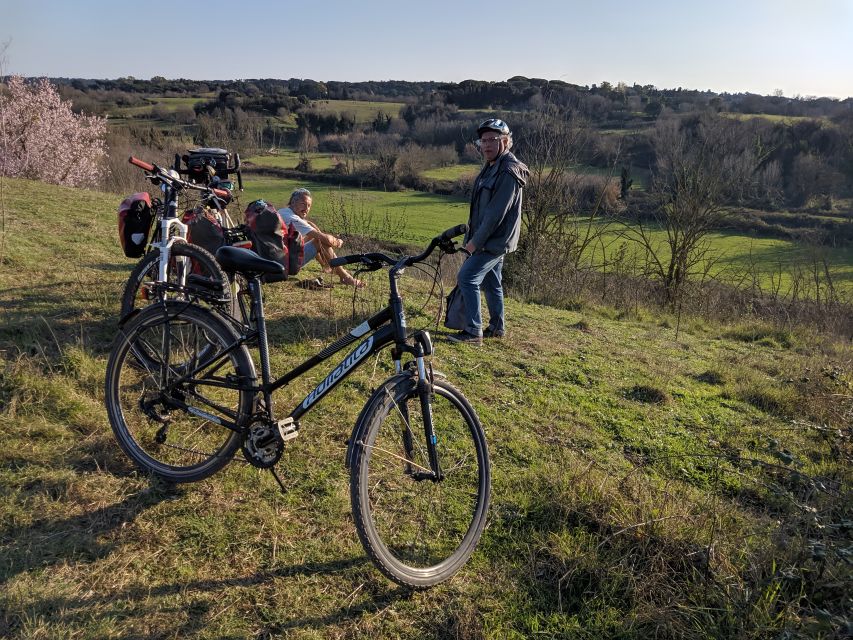
The return route passes through Caffarella Park, which contains archaeological sites, a working farm, and important ecological value. This section gives the ride a softer finish after the stonework of the Appian Way and aqueducts.
The park helps you understand that the outskirts of Rome are not empty space between attractions. Ancient remains, farmland, and natural areas share the same setting. You get a sense of how close rural scenery can be to the capital without leaving Lazio.
The route also inspired 19th-century writers and artists such as Byron, Goethe, and Stendhal. You do not need to be a literary pilgrim to appreciate the connection. The same quiet fields and old ruins that attracted those visitors still provide a sharp contrast with central Rome.
Because the tour returns to Via di San Calisto 9, you do not need to arrange a separate return transfer. Food and drinks are not included, so handle breakfast or snacks before departure and carry what you need for a four-hour ride.
The guide can shape the whole morning
A good guide matters more on this tour than on a simple scenic bike rental. You are covering ancient sites that may not explain themselves, and the value comes from linking them together.
The most praised guides are Emiliano and Libero. Emiliano is described as warm, funny, attentive to safety, and willing to stop for questions and photos. Libero is praised for his friendly manner and for explaining many points in French. The available languages are English, French, Italian, and Spanish.
A guide also controls the pace. One rider praised the care given to everyone in the group, while another wished for more explanation at the sights. That difference is useful: the experience may depend on the guide assigned to your departure and on the size and rhythm of the group.
If you want a formal lecture at every monument, this may feel light in places. If you want a friendly local guide who can connect the ruins to Rome’s wider story while keeping you moving, it is a better fit.
What the $88 price gets you
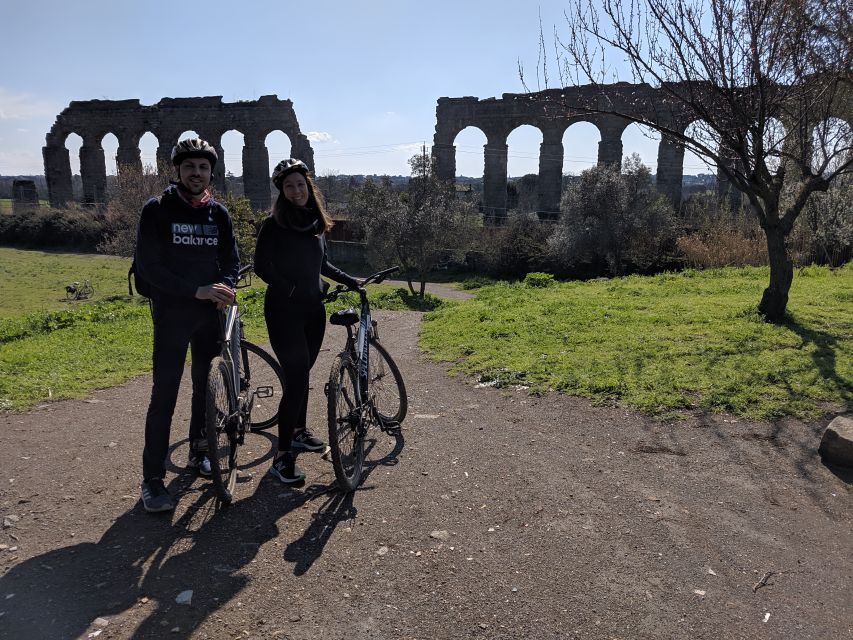
At $88 per person, this is not the cheapest way to see Rome’s outskirts. You are paying for a four-hour guided experience, an electric bike, a helmet, route planning, and access to a stretch of Rome that is difficult to cover efficiently by walking.
The value improves if you want several different settings in one morning: the ancient road, Roman tombs, Christian sites, aqueducts, and Caffarella Park. A rental bike alone would not give you the same historical explanation or a ready-made route.
The value is weaker if your main goal is entering the catacombs. Since underground access is not assured, you should not pay the price expecting a catacomb tour. It is also less appealing if you dislike long rides, rough paving, or the possibility of a bike problem.
The overall rating is 4.7 from 12 reviews, with especially strong praise for the guides and the unusual route. One three-star experience raised two clear concerns: a battery failure and a feeling that the price was too high. Those are fair concerns, so I would view this as a specialized Rome outing, not an automatic bargain.
Who should choose this four-hour ride
I would recommend it to you if you have already seen some central Rome and want a change from indoor museums and packed streets. It is also a good choice for anyone who likes Roman engineering, old roads, archaeology, and wide open views.
You should be comfortable on a bicycle and ready for a long ride. The electric motor helps, but it does not turn the activity into passive sightseeing. Families and couples who want an active morning may enjoy it, provided everyone can ride for several hours.
This is less suitable for you if you need guaranteed indoor visits, have limited cycling ability, or want a slow walking tour with long stops. The tour covers ground, and the Appian Way’s original paving may feel rough.
Book with realistic expectations. You are buying a guided ride through Rome’s archaeological outskirts, not a guaranteed catacomb admission or a polished coach excursion.
Small details that make the ride easier
Arrive 15 minutes early at Via di San Calisto 9. Since hotel pickup is not included, leave enough time to reach the meeting point without rushing.
Wear athletic clothes, comfortable shoes, and clothing suitable for four hours outdoors. A helmet is provided. Bring identification, since a passport or ID card is required, with a copy accepted.
Ask about the bike and battery before departure. If you have concerns about distance, tell the guide early. The electric assistance should make the ride easier, but you still need to be ready for roughly 20 miles according to one detailed account.
The tour offers free cancellation up to 24 hours before departure and a reserve-now, pay-later option. Starting times vary, so check availability when you book.
Should you book the Appian Way e-bike tour?
Book it if you want to see Rome away from the usual center and like the idea of combining ancient roads, tombs, aqueducts, countryside, and a working park in one active morning. The route is unusual, the electric bikes make the distance practical, and guides such as Emiliano and Libero can add the personal touch that brings scattered ruins together.
Skip it if your main goal is a guaranteed catacomb visit, if you cannot ride, or if a possible battery problem would spoil your day. At $88, it makes the most sense when you value the full route and the guide’s local explanation. For an active visitor who wants a broader picture of ancient Rome, it is a strong choice.
FAQ
How long is the Appian Way e-bike tour?
The tour lasts four hours, including the ride along the Appian Way, stops near archaeological sites, Aqueducts Park, and the return through Caffarella Park.
Where does the tour start and finish?
The tour starts and ends at Via di San Calisto 9.
How early should I arrive?
You should arrive 15 minutes before the activity begins.
Are electric bikes and helmets included?
Yes. E-bikes and helmets are included in the price.
How much does the tour cost?
The listed price is $88 per person.
Which languages are available?
The live guide may conduct the tour in English, French, Italian, or Spanish.
Do I need to know how to ride a bicycle?
Yes. The activity is not suitable for people who cannot ride a bike.
Does the tour enter the catacombs?
Entry is not guaranteed. The route includes the catacombs of Saint Callixtus and Saint Sebastian, but you may only pass by them without entering.
Is hotel pickup included?
No. Hotel pickup and drop-off are not included.
What should I bring?
Bring a passport or identification card. A copy is accepted. Comfortable riding clothes and shoes are also sensible for the four-hour ride.
Are food and drinks included?
No. Food and drinks are not included.
Can I cancel the booking?
Yes. You can cancel up to 24 hours in advance for a full refund. A reserve-now, pay-later option is also available.
Newest Rome tours we have reviewed
- Private TikTok Video Making in Rome★ 5.0 · 7 reviews
- Assisi, Orvieto and Civita di Bagnoregio Full Day Tour from Rome★ 4.5 · 45 reviews
- Assisi & Saint Francis Path Tour from Rome★ 5.0 · 45 reviews
- Assisi and Cascia Private Day Tour from Rome with Lunch★ 5.0 · 10 reviews
- Art Class in the center of Rome!★ 4.0 · 4 reviews
- Art & Craft: Beer Tour with Street Art in Rome★ 4.5 · 6 reviews
- Arrival in Rome: Airport Transfer & Exclusive City Introduction★ 5.0 · 3 reviews
- From Rome: Private Day-Tour of Tuscany★ 5.0 · 16 reviews
Appian Way and Aqueducts Tours, compared.
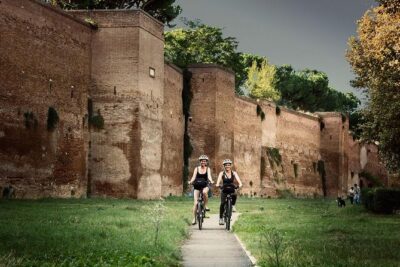
Rome EBike Tour: Appian Way, Catacombs & Roman Aqueducts
Read our review →
Appian Way, Catacombs, & Roman Aqueducts E-bike Tour
Read our review →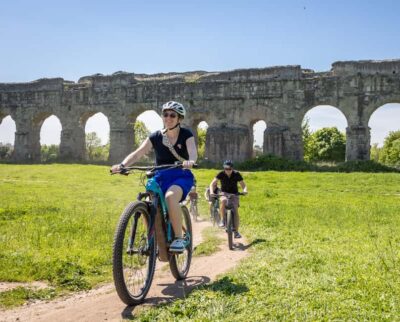
Appian Way E-bike Tour with Catacombs, Aqueducts & Food
Read our review →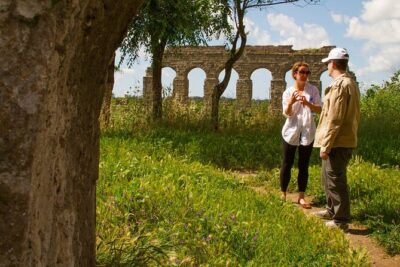
Rome Underground: Catacombs Tour, Aqueducts and Appian Way
Read our review →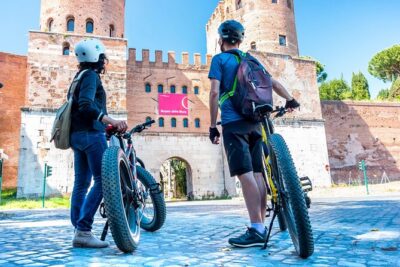
Appian Way Aqueducts Bike Tour (Catacombs & Lunch Option)
Read our review →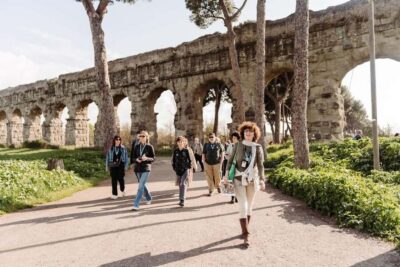
Appian Way, Catacombs and Aqueducts Park Tour with Top E-Bike
Read our review →
Appian Way E-Bike Tour Catacombs, Aqueducts & Picnic
Read our review →Browse the lists this tour appears in