
Reviewed · APPIAN WAY AND AQUEDUCTS TOURS
Rome: Appian Way, Aqueducts, and Catacombs Tour
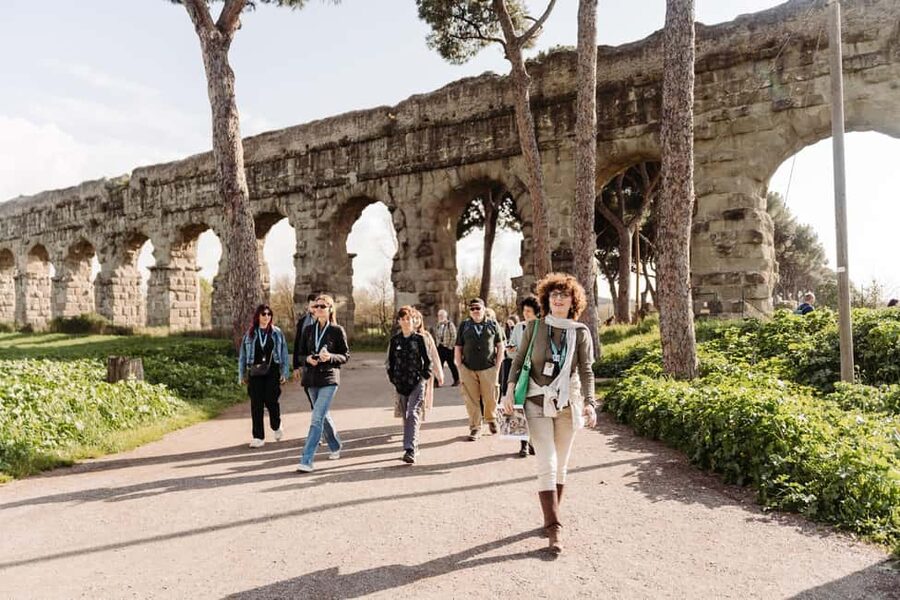
Rome’s most memorable ancient sights are not all in the city center. This 195-minute outing takes you along the Appian Way, beneath the great Roman aqueducts, and underground into the catacombs after the day’s main crowd has thinned.
I like the easy transport between far-flung sites, and I like the range of the experience: roads, tombs, engineering, countryside, and early Christian burial places in one afternoon or evening. The main drawback is that the Appian Way can feel more active and less isolated than expected, with bumpy roads and some traffic nearby.
- Closing-time catacombs: Visit San Sebastiano or Domitilla when the underground rooms are quieter.
- Ancient road underfoot: Walk a section of the Appian Way, one of Rome’s earliest major roads.
- Cecilia Metella’s tomb: See the imposing round mausoleum and hear about the family behind it.
- Aqueducts in open country: Spend about 45 minutes beneath the remains at Parco degli Acquedotti.
- Comfortable transfers: A private, air-conditioned vehicle saves you from arranging several connections.
- Strong guiding: Federico, Antonella, Silvia, Paris, and others have earned praise for lively, clear storytelling.
Why this tour gets beyond central Rome
Rome’s center can fill your day with famous churches, museums, fountains, and queues. This excursion gives you a different version of the city, one where ancient roads run through open space and huge stone arches stretch across the horizon.
I especially like the contrast between the stops. The Appian Way is a physical reminder of Roman expansion. The aqueducts show the empire’s command of water and construction. The catacombs shift the focus to death, burial, and the early Christian world.
The experience costs $64 per person. That is fair value if you want transport, an English-speaking guide, and catacomb admission bundled together. On your own, reaching these sites takes more planning, and public transport does not create the same smooth link between them.
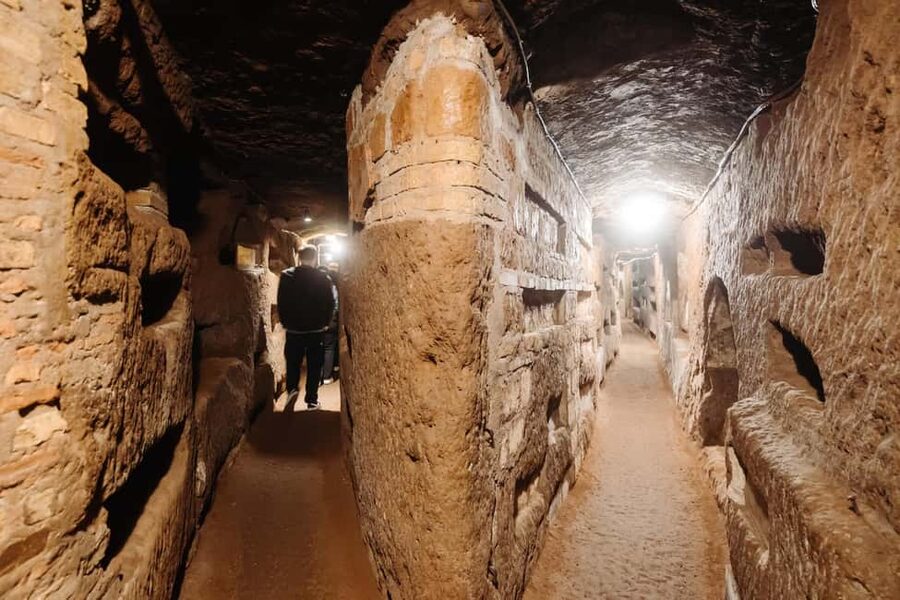
You should not book this as a relaxed sightseeing bus ride. You will walk at a moderate pace, spend time outdoors, and deal with uneven or bumpy surfaces. The catacomb corridors are tight, and photography is not allowed underground. If you have mobility limitations, use a wheelchair or stroller, or feel uneasy in confined places, choose another Rome outing.
Meeting at Piramide and leaving the city center
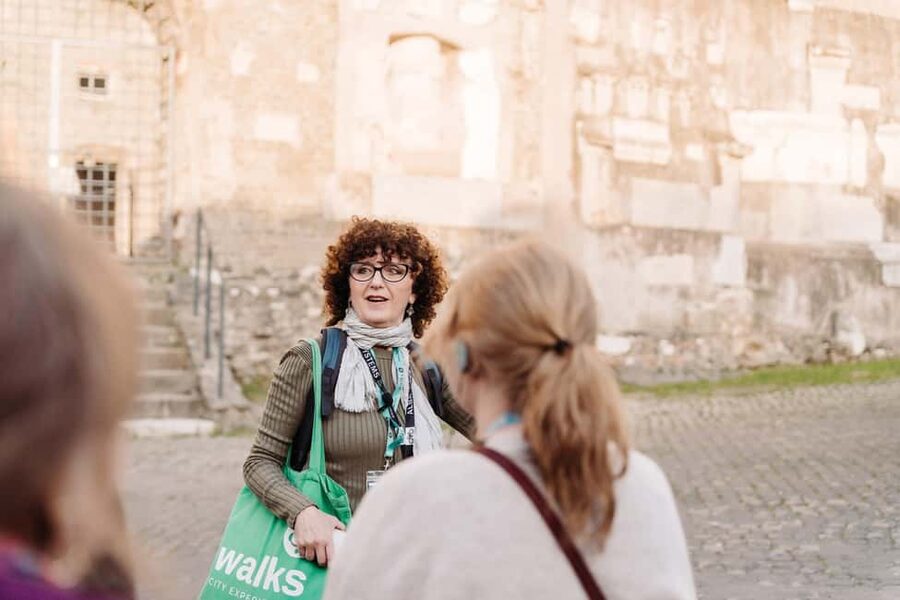
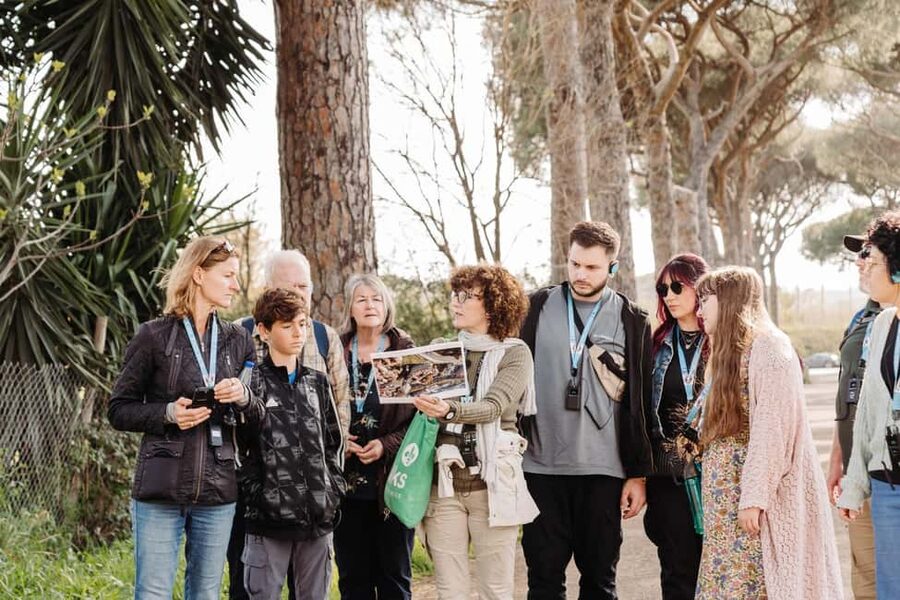
The tour begins in front of Piramide Metro station, across from Piazzale Ostiense. Arrive 15 minutes early and look for the guide holding a green Walks sign.
This meeting point matters. If you use a taxi, enter Piramide Metro station as the destination rather than relying on a general Piazzale Ostiense address. One person arrived about ten minutes away after copying the address into a taxi app, so give yourself extra time and check the location carefully.
Piramide is a useful starting point because it places you near the old southern edge of Rome. From here, the air-conditioned vehicle carries you between sites rather than asking you to piece together several buses and walks. The ride back to Piramide takes about 20 minutes at the end.
The road can be rough in places, especially on the way toward the Appian Way. That is part of the setting, but it is worth knowing if you are prone to motion sickness or expect a polished coach ride.
More Appian Way and aqueduct tours:
- Rome EBike Tour: Appian Way, Catacombs & Roman Aqueducts
★ 5.0 · 1,766 reviews - Rome: Appian Way, Catacombs, & Roman Aqueducts E-bike Tour
★ 4.9 · 1,421 reviews - Rome:Appian Way E-bike Tour with Catacombs, Aqueducts & Food
★ 4.9 · 1,210 reviews
Walking the Appian Way for 25 minutes
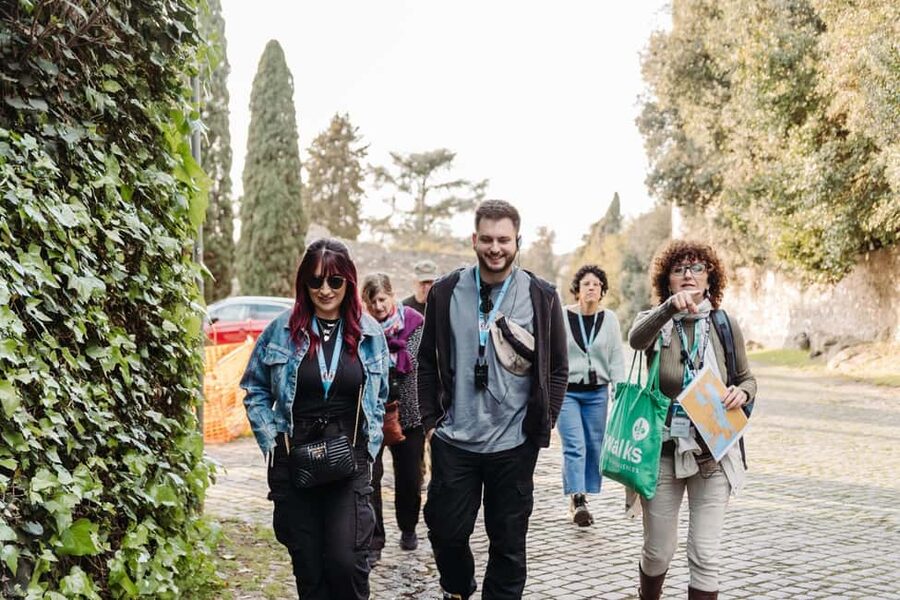
The Appian Way, or Via Appia Antica, was one of Rome’s earliest major roads. Roman armies, merchants, officials, and ordinary travelers used routes like this to connect the capital with the wider empire.
You get about 25 minutes for a guided walk, sightseeing, and photographs. The old paving stones make the experience more tangible than simply viewing ruins behind a fence. Look down as you walk. The uneven surface is part of the lesson, showing how demanding ancient travel could be.
This section is not a long hike. It is a short, focused visit that introduces the road and its role in Rome’s growth. Your guide can point out tombs and surviving remains along the route, while explaining how burial monuments lined roads outside the city.
Set your expectations correctly. The Appian Way is not always a silent country lane. One outing found the road surprisingly active, and the surface can be bumpy. You may also encounter modern traffic or other activity nearby. Still, the chance to walk on an ancient Roman road, rather than merely look at one, gives this stop real value.
In summer, the open setting offers little shade. Wear a hat, carry water, and use sunscreen. Guides such as Antonella have been praised for finding shade during very hot weather, but the day’s heat remains your responsibility.
Cecilia Metella’s round mausoleum
The next stop lasts about 25 minutes and centers on the Mausoleum of Cecilia Metella. This large circular tomb dates to the first century BCE and gives the Appian Way one of its most recognizable monuments.
The tomb is more than a photo stop. It opens a useful conversation about status, family, and Roman memory. A powerful family could place a grand monument beside a major road, ensuring that its name and wealth were seen by people entering or leaving Rome.
Your guide will explain who Cecilia Metella was and how the monument survived through the centuries. The structure’s simple round form is easy to appreciate from the outside, especially after the smaller fragments and worn paving stones of the road.
The time here is brief. You will not get a long, unhurried archaeological visit, so listen closely and ask questions while the guide has the group together. Federico and Antonella have received particularly strong praise for explaining Roman history in a lively way and responding to individual interests.
The Aqueducts Park and Rome’s water system
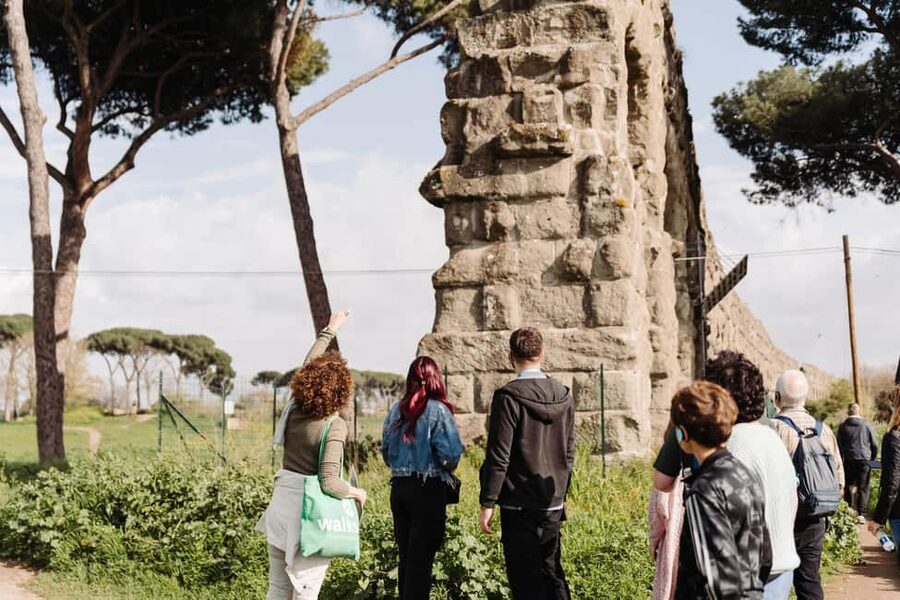
For many people, Parco degli Acquedotti becomes the highlight. You spend about 45 minutes in the open air beneath the remains of Rome’s towering aqueducts, with more room to look around than at many central monuments.
The aqueducts once carried fresh water toward the city. Their scale gives you a clear sense of Roman engineering. A few surviving arches can seem impressive in a museum photograph, but standing beneath them makes the system’s size easier to grasp.
This is also the tour’s most spacious stop. Instead of concentrating on one tomb or a narrow underground route, you have a park-like setting and broad views of the ancient structures. Several people have especially enjoyed this part, and I understand why. It offers a welcome change after crowded days around the Colosseum or Vatican.
You have around 45 minutes for guiding, photographs, and sightseeing. That is enough for a useful introduction, but not enough for a long independent wander. One visitor wished for more time at the aqueducts, so keep your camera ready and make your questions count.
The park can be hot in warm months. Much of the visit takes place outside, and one summer outing faced temperatures of 36 degrees Celsius. The air-conditioned vehicle helps between stops, but it does not replace water, sun protection, and practical clothing.
More catacombs tours in Rome:
- Rome: Crypts and Catacombs Underground Tour with Transfers
★ 4.6 · 5,341 reviews - The Original Roman Crypts and Catacombs Tour with Transfers
★ 4.5 · 4,896 reviews - Rome: Catacombs of St. Callixtus Entry Ticket & Guided Tour
★ 4.6 · 3,037 reviews - Rome: Guided Roman Catacombs Tour with Transfers
★ 4.6 · 1,830 reviews
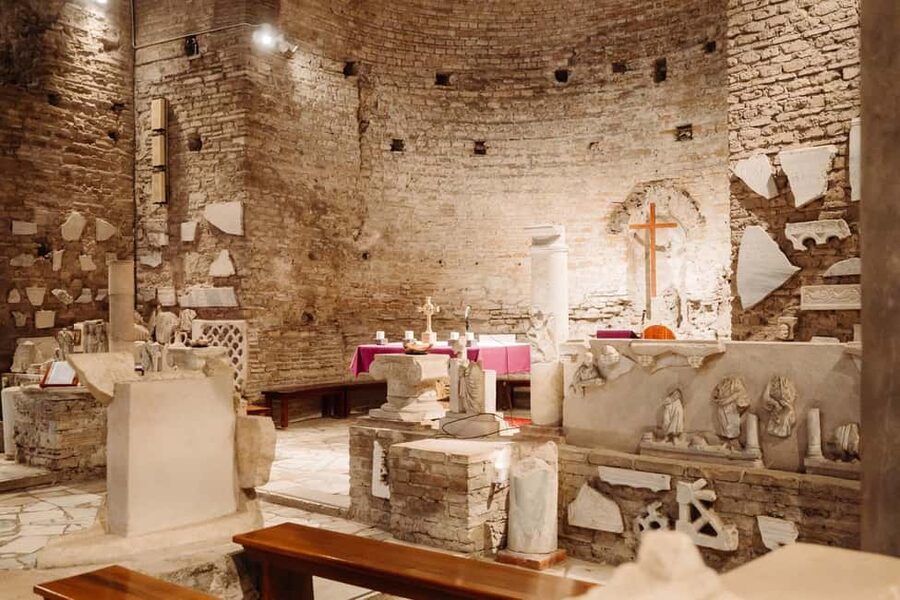
Entering San Sebastiano or Domitilla
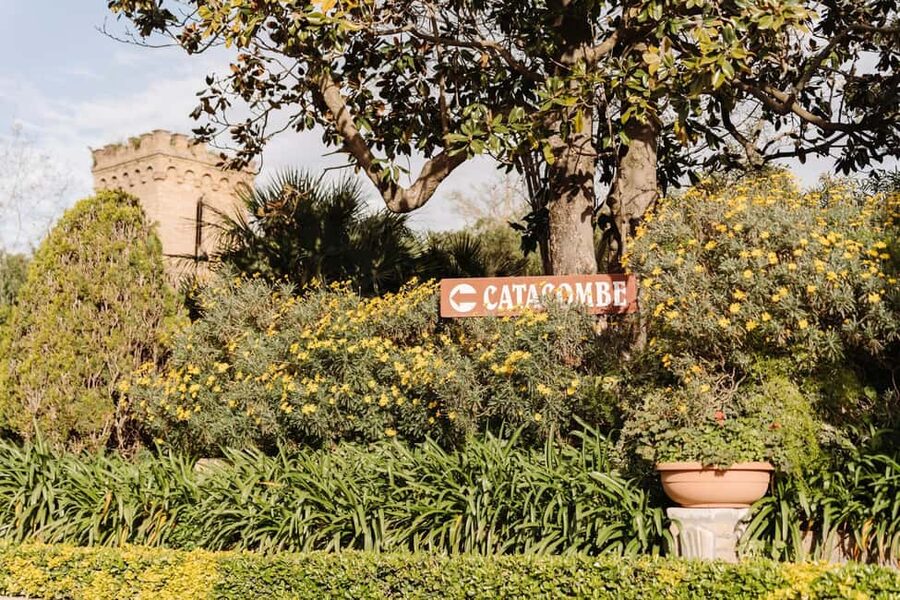
The final major stop lasts about 80 minutes and takes you underground into either the Catacombs of Saint Sebastian or the Catacombs of Domitilla. The exact site depends on the day.
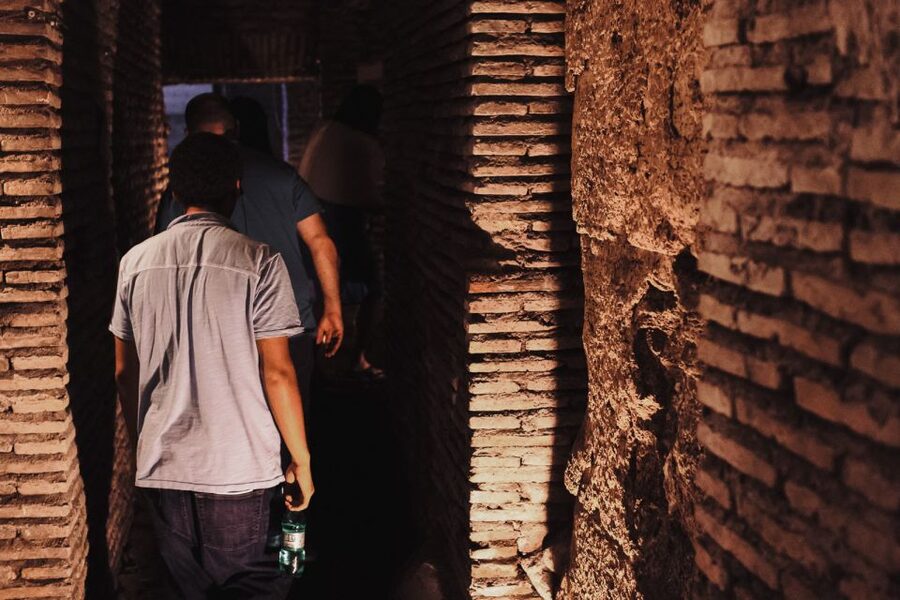
The timing is the special feature. You enter as the last visitors of the day, which usually means a quieter atmosphere and fewer interruptions. This is not a theatrical haunted attraction. It is a religious and archaeological site, with tunnels, burial places, and early Christian material that your catacomb guide explains as you walk.
The underground route gives the tour a completely different mood. After the open road and wide aqueduct park, you move into narrow corridors and enclosed spaces. You may see ancient burial areas and traces of decoration, including frescoes, depending on the route used that day.
Do not expect the Paris Catacombs. Rome’s catacombs are not presented as walls of stacked bones. One visitor arrived expecting that and found the reality different. The value here is the burial system, the early Christian context, and the chance to understand how people used these underground spaces.
Photography is forbidden inside. That can feel disappointing if you want a visual record, especially since the gift shop may be closed when you leave. Bring your attention instead of your camera, and consider buying a book only if the shop happens to be open.
A separate specialist guide may lead the catacomb portion. This arrangement works well because the guide underground can focus on the religious and burial details specific to the site, while your main guide handles the wider Roman story. The change of voice also helps you reset your attention after the outdoor stops.
You must cover your shoulders and knees, regardless of gender. Long trousers and a long-sleeved shirt are the simplest choice. If you are visiting Rome in hot weather and prefer short clothing, carry a scarf or another covering for this part of the tour.
How much walking and riding should you expect?
The listed duration is 195 minutes, or just over three hours. The schedule includes approximately:
- 25 minutes at the Appian Way
- 25 minutes at Cecilia Metella’s mausoleum
- 45 minutes at the Aqueducts Park
- 80 minutes at the catacombs
- About 20 minutes on the return ride
The timing does not mean you are walking continuously for three hours. The vehicle links the sites, which is one of the tour’s strongest practical features. Several people appreciated not having to walk the entire distance between the Appian Way, aqueducts, and catacombs.
You still need to walk at a moderate pace. Expect ancient paving, uneven ground, outdoor paths, stairs or narrow passages at the catacombs, and limited space underground. This is not suitable for wheelchairs, strollers, or people with mobility impairments.
The exact group size depends on the booking. Private and small-group options are available. One group of 18 still found the van comfortable and the experience reasonably personal, but a smaller group will naturally make it easier to ask questions and hear every explanation.
The guides make the difference
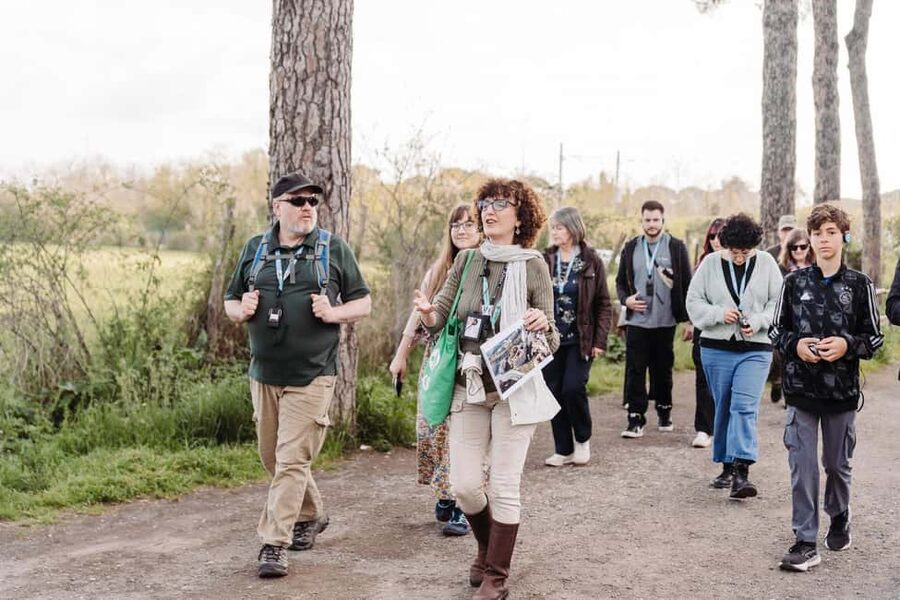
The sites are strong, but the guide determines how much you take away. The best guides connect the stones to human choices: why Romans built roads, how families displayed status, why water mattered, and how early Christians handled burial.
Federico has been praised for his humor, clear explanations, and ability to make early Roman history understandable. Antonella has been described as warm, playful, and attentive, with a good eye for keeping people comfortable in extreme heat. Silvia, Paris, Chiara, and others have also been singled out for friendly, energetic guiding.
You may have a guide different from those names. The useful point is to expect a live English guide rather than an audio recording or a simple transfer service. Ask questions as you go. The itinerary covers several subjects quickly, and a good question can turn a general explanation into something that matches your interests.
The catacombs also have their own specialist guide. That second explanation adds depth to the final stop instead of treating the underground visit as an afterthought.
Who will get the most from the $64 price?
At $64, this is a good buy if you want to see several outlying Roman sites in one efficient half-day. You are paying for admission to the catacombs, private air-conditioned transport, and guiding across a wide area. The value improves if you are short on time or do not want to manage Rome’s less direct transport connections.
It is less useful if you mainly want long photography sessions or quiet independent exploration. The Appian Way and aqueducts receive guided visits of limited length, and the catacomb rules prevent indoor photography.
I would also compare the tour with your energy level. After several intense days in central Rome, this can feel like a welcome change of pace. You get fresh air, open space, and a vehicle between stops. In high summer, though, the outdoor sections can be tiring, while in cooler weather the combination of road, park, and underground rooms should feel more comfortable.
Free cancellation is available up to 24 hours before the start, and you can reserve now and pay later. Hotel pickup and drop-off are not included, so plan your route to and from Piramide.
Should you book this Appian Way tour?
Book it if you want Roman history beyond the Colosseum, enjoy guided context, and like the idea of combining an ancient road, a grand tomb, aqueducts, and catacombs in one outing. It is especially good for first-time visitors who want help reaching sites outside the center, and for repeat visitors who have already spent enough time among Rome’s busiest monuments.
Skip it if you dislike enclosed spaces, need step-free access, want to take photographs everywhere, or expect the Appian Way to be completely rural and empty. For everyone else, the $64 price buys a well-planned look at a quieter side of Rome, with comfortable transfers and enough variety to keep the three hours moving.
FAQ
Where does the tour meet?
It meets in front of Piramide Metro station, across from Piazzale Ostiense. Arrive 15 minutes early and look for a guide holding a green Walks sign.
How long does the tour last?
The tour lasts 195 minutes, or about three hours and 15 minutes.
Which catacombs will I visit?
You will visit either the Catacombs of San Sebastiano or the Catacombs of Domitilla, depending on the day.
Can I take photographs inside the catacombs?
No. Photography inside the catacombs is not allowed, and cameras are listed among the items not permitted.
What should I wear?
Wear long pants and a long-sleeved shirt. Your shoulders and knees must be covered because the catacombs are religious sites. You can bring a scarf or another covering if needed.
Is the tour suitable for wheelchairs, strollers, or people with claustrophobia?
No. The tour is not suitable for wheelchair users, strollers, people with mobility impairments, or people with claustrophobia. You should also be able to walk at a moderate pace without difficulty.
Newest Rome tours we have reviewed
- Private TikTok Video Making in Rome★ 5.0 · 7 reviews
- Assisi, Orvieto and Civita di Bagnoregio Full Day Tour from Rome★ 4.5 · 45 reviews
- Assisi & Saint Francis Path Tour from Rome★ 5.0 · 45 reviews
- Assisi and Cascia Private Day Tour from Rome with Lunch★ 5.0 · 10 reviews
- Art Class in the center of Rome!★ 4.0 · 4 reviews
- Art & Craft: Beer Tour with Street Art in Rome★ 4.5 · 6 reviews
- Arrival in Rome: Airport Transfer & Exclusive City Introduction★ 5.0 · 3 reviews
- From Rome: Private Day-Tour of Tuscany★ 5.0 · 16 reviews
Appian Way and Aqueducts Tours, compared.
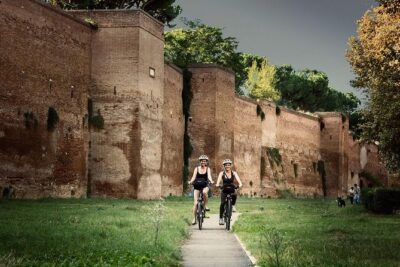
Rome EBike Tour: Appian Way, Catacombs & Roman Aqueducts
Read our review →
Appian Way, Catacombs, & Roman Aqueducts E-bike Tour
Read our review →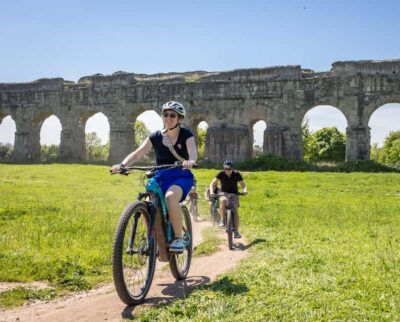
Appian Way E-bike Tour with Catacombs, Aqueducts & Food
Read our review →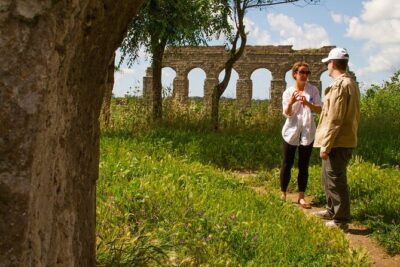
Rome Underground: Catacombs Tour, Aqueducts and Appian Way
Read our review →
Appian Way Aqueducts Bike Tour (Catacombs & Lunch Option)
Read our review →
Appian Way, Catacombs and Aqueducts Park Tour with Top E-Bike
Read our review →
Appian Way E-Bike Tour Catacombs, Aqueducts & Picnic
Read our review →
Appian Way Aqueducts Bike Tour (UPG Catacombs & Lunch)
Read our review →Browse the lists this tour appears in