
Reviewed · APPIAN WAY AND AQUEDUCTS TOURS
Appian Way Aqueducts Bike Tour with Catacombs & Lunch
The best part of this Rome tour is that it gets you far beyond the city center, where ancient roads, tombs, parks, aqueducts, and Roman ruins spread across open countryside. You cover roughly 23 kilometers by electric bike, so the distance feels manageable even when the road turns rough.
I like the small groups of up to 12 and the way guides such as Lorenzo, Iman, Marco, Matt, Paulo, and Flavio are described as attentive, funny, and careful with safety. I also like the included catacomb visit, since an official guide leads you underground while your bike guide looks after the bicycles and belongings.
The main drawback is the surface. About a kilometer of the Appian Way has large, uneven cobbles that can rattle your bones and leave you saddle-sore. You need to know how to ride a bike well, and hot Roman weather can make five hours in the saddle feel much longer.
Key things to know before you book
- The route covers about 23 kilometers: The e-bike takes the strain out of hills, but this remains a serious half-day ride.
- The Catacombs of San Callixtus are included: Expect an approximately 45 to 50-minute underground visit with an official catacomb guide.
- Lunch depends on departure time: Morning tours include lunch and water. Afternoon tours replace lunch with cold cuts and drinks as an aperitif.
- The roughest riding is on the ancient Appian Way: You can walk the most uneven section if needed, but you must be comfortable handling a bicycle.
- The group is capped at 12 people: That gives the guide a fair chance to manage traffic, answer questions, and help slower riders.
- The tour returns to its starting point: You begin and end at Roma STARBIKE on Via dei Santi Quattro.
Why an e-bike is the right way to see ancient Rome
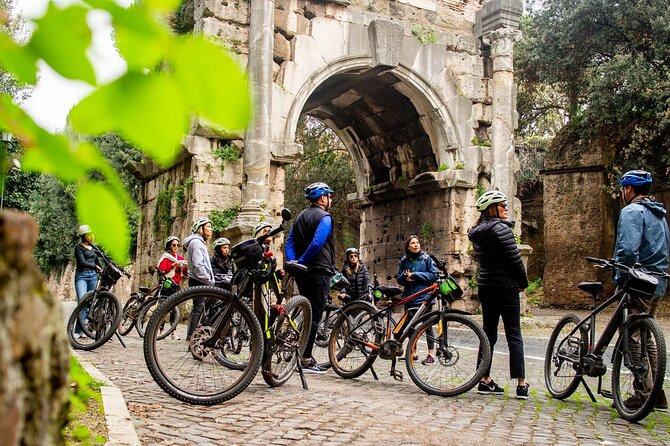
Rome’s famous sights are packed into the center, but the city’s oldest roads and aqueducts sit well beyond the usual walking circuit. Reaching them on foot would take too long, and a bus cannot give you the same feel for the countryside.
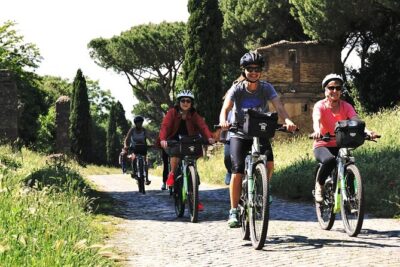
An e-bike solves much of that problem. You still pedal, but the motor helps on inclines and makes the long route practical. First-time e-bike users have found the controls easy after a short explanation and test ride before departure. That brief practice matters, especially if you have not ridden for years.
This is not a gentle cycle around a flat park. You will ride over cobblestones, along paths, and on some roads. The guide explains what is coming and keeps the group together, but you remain responsible for controlling the bicycle. The operator sets a maximum weight of 120 kilograms, or 265 pounds.
The bikes come with helmets, a mobile phone holder, a handlebar holder, and handlebar bags for small belongings. A child seat is available for a child up to 25 kilograms. Children aged 6 to 10 can join only if they are under 143 centimeters tall, or about 4 feet 8 inches, because they use a trailer bike rather than a separate e-bike.
More Appian Way and aqueduct tours:
- Rome EBike Tour: Appian Way, Catacombs & Roman Aqueducts
★ 5.0 · 1,766 reviews - Rome: Appian Way, Catacombs, & Roman Aqueducts E-bike Tour
★ 4.9 · 1,421 reviews - Rome:Appian Way E-bike Tour with Catacombs, Aqueducts & Food
★ 4.9 · 1,210 reviews
From Porta San Sebastiano to the Appian Way
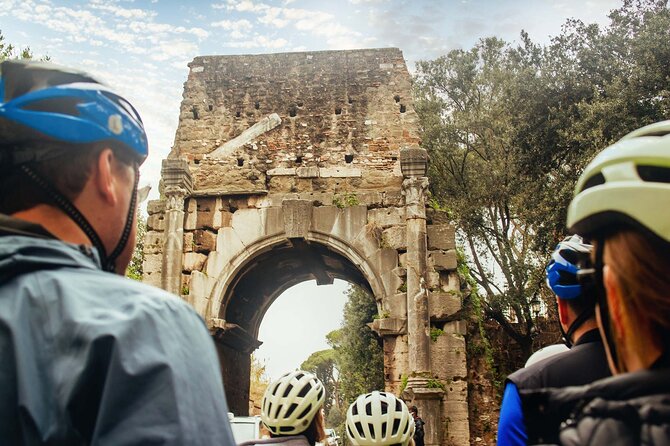
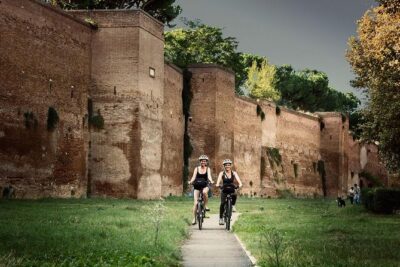
The ride begins at Porta San Sebastiano, one of the major gates in Rome’s Aurelian Walls. Built around AD 275, the gate marks the start of the ancient Via Appia Antica, one of the roads that once connected Rome with southern Italy.
Take a moment here to look at the medieval graffiti. Pilgrims passed through this gateway for centuries, leaving marks that add a human touch to the heavy stonework. The stop lasts about 15 minutes, so it is a quick introduction rather than a full architectural lecture.
The Appian Way soon becomes the star of the outing. Its surviving paving stones are impressive, but they are not smooth. A stretch of roughly one kilometer has especially large, uneven cobbles. The guide warns you before reaching it and helps the group through at a controlled pace.
You can walk the bike over the worst section if riding becomes uncomfortable. That is not a failure. It is a sensible way to protect your wrists, back, and confidence. Bring practical clothing, and do not expect the ride to feel like a polished cycle path.
The Catacombs of San Callixtus
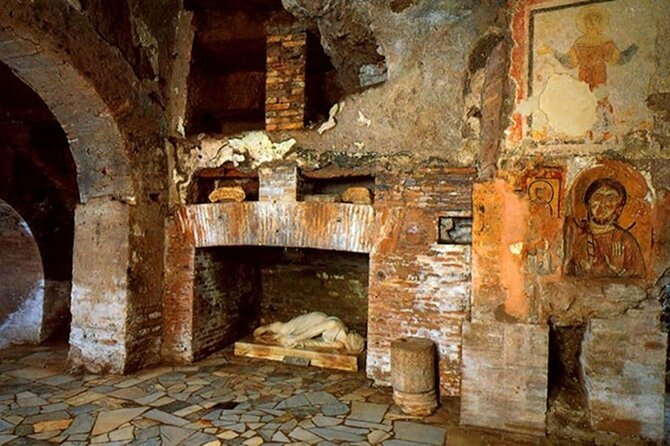
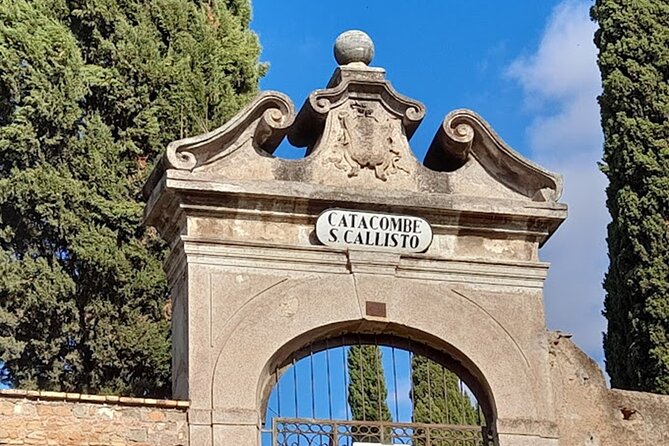
The Catacombs of San Callixtus provide the tour’s most structured historical visit. This is the official funerary complex of the Church of Rome, with underground corridors extending for about 20 kilometers.
The site dates back to the second century BC and takes its name from the deacon Callixtus I. More than 50 martyrs and 16 popes were buried here, along with hundreds of thousands of Christians. You do not explore the entire underground network. The guided visit lasts about 45 to 50 minutes.
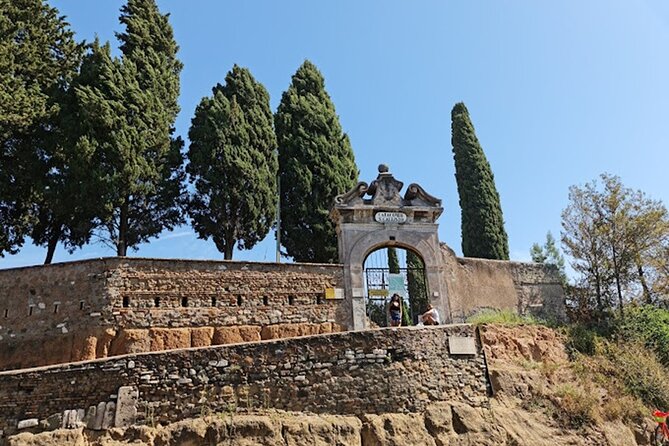
Your cycling guide arranges the catacomb entrance, then an official site guide leads the underground tour. During this time, the cycling guide remains with the bicycles and can watch over belongings stored in the bike bags. That division of duties makes the stop easier than trying to manage tickets and directions on your own.
The catacombs are not a casual stroll. You are underground in narrow corridors, so anyone uncomfortable in enclosed spaces should think carefully before booking. The reward is a direct look at early Christian burial practices, rather than another view of Rome’s grand monuments above ground.
Caffarella Park and the Nymphaeum of Egeria
After the catacombs, the route enters Parco della Caffarella, part of the Appia Antica Regional Park. This is one of Rome’s largest green spaces, with paths, groves, open fields, and remains of ancient buildings.
I like this section because it changes the pace. Rome can feel crowded and noisy, but here the route gives you room to breathe. The park also helps explain how close ancient Rome was to farmland and open country. You are not simply moving between isolated ruins. You are seeing the setting that once surrounded them.
The stop at the Nymphaeum of Egeria adds a Roman legend to the archaeology. According to the story, the nymph Egeria loved Numa Pompilius, Rome’s second king. When she learned of his death, she wept so heavily that her tears became a spring.
You spend about 20 minutes here. The site is modest compared with the Colosseum or Baths of Caracalla, but the story makes it memorable. It is also the kind of place that is easy to miss without a guide who knows where to stop.
More catacombs tours in Rome:
- Rome: Crypts and Catacombs Underground Tour with Transfers
★ 4.6 · 5,341 reviews - The Original Roman Crypts and Catacombs Tour with Transfers
★ 4.5 · 4,896 reviews - Rome: Catacombs of St. Callixtus Entry Ticket & Guided Tour
★ 4.6 · 3,037 reviews - Rome: Guided Roman Catacombs Tour with Transfers
★ 4.6 · 1,830 reviews
Cecilia Metella and the medieval Appian Way
The Mausoleum of Cecilia Metella is one of the best-preserved tombs along the Appian Way. This pagan monument dates to the first century BC and was later incorporated into the Castrum Caetani, a medieval fortified complex.
You can also see the remains of the Caetani family’s medieval house and the perimeter walls of the Church of San Nicola. The mix of Roman burial architecture and medieval fortification shows how later generations reused the old road and its monuments.
The stop lasts about 20 minutes and is mainly for viewing and explanation. The experience is less about entering a single major building and more about reading the layers around you: Roman tomb, medieval stronghold, wealthy family residence, and church remains all in one place.
Lunch beside the aqueducts
The five-hour version includes a meal stop in the Park of the Aqueducts. Morning departures include lunch and water. Afternoon departures offer an aperitif instead, with cold cuts and drinks.
The food is the least consistent part of the experience. Some riders have found the sandwiches, biscuits, pastries, and drink perfectly pleasant, while others found the sandwiches plain and underwhelming. The meal is best treated as a useful break in the middle of a long ride, not as a major food experience.
Dietary needs are checked at the beginning of the tour, which is helpful. Still, if lunch matters greatly to you, ask what is planned for your departure time and bring a small extra snack if needed. Five hours of cycling can create a serious appetite.
The setting does much of the work. Eating near the aqueducts gives you a memorable pause among some of Rome’s largest surviving engineering works. It is a far more atmospheric lunch break than stopping beside a busy central street.
The Park of the Aqueducts and Roman engineering
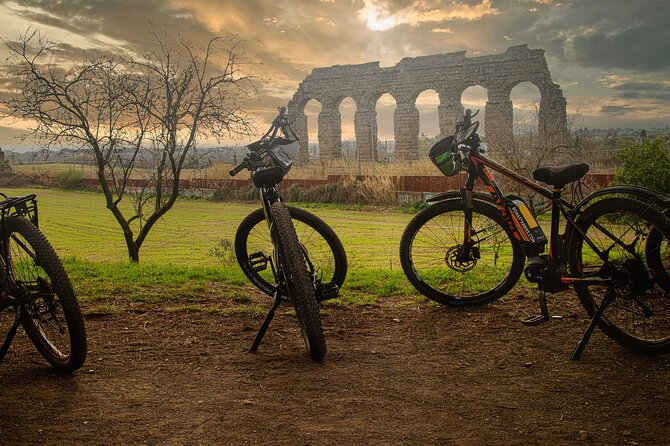
After the break, the route continues through Parco degli Acquedotti. The park was once crossed by the Via Latina, one of Rome’s oldest roads, and it formed part of the city’s water network.
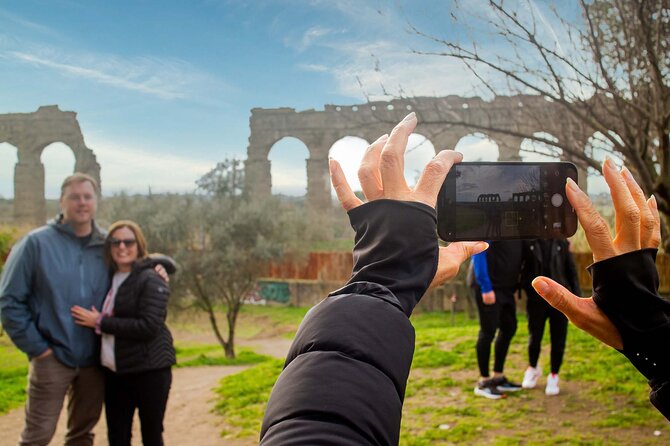
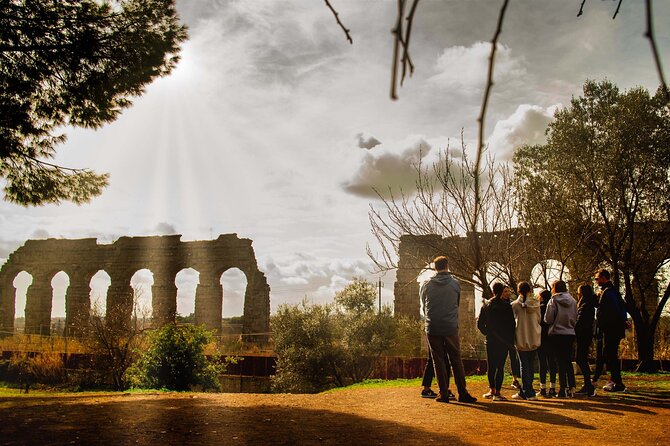
This is where the scale of Roman engineering becomes clear. The aqueduct remains stretch across open ground, with some sections remarkably well preserved. A few channels are even still in operation. You see how the Romans carried water over long distances, using carefully planned gradients rather than modern pumps.
The open setting lets you appreciate the height and length of the structures. In the city center, a fragment of an aqueduct can seem like a stray ruin. Here, the remains make more sense as part of a working system.
The route gives you time for photographs, but this is still a guided ride, not a long independent stop at every monument. Listen for the guide’s explanations while riding, then use the planned pauses for pictures and questions.
Villa dei Quintili, Caracalla, and Maxentius
At the fifth mile of the Appian Way, the remains of Villa dei Quintili recall the wealth of Rome’s second-century elite. The villa belonged to brothers Sesto Quintilio Condiano and Massimo Valerio, who served as consuls. Emperor Commodus had them killed and took the villa for imperial use.
The stop is short, about 20 minutes, but the scale of the ruins helps you picture the site as a grand country residence rather than a small roadside ruin. You will not get the same amount of time as on a dedicated archaeological visit, so treat this as an introduction.
The route then passes the Baths of Caracalla, built by the emperor of the same name. For about a century, these were the largest public baths in the Roman world. Much of the structure survives, giving you a sense of the enormous vaulted spaces and the systems needed to heat and supply the complex.
The baths were fed by water from the Aqua Marcia through the Antoninian aqueduct. Small remains can also be seen near Porta San Sebastiano, tying this stop back to the start of the ride.
The final major stop is the Circus of Maxentius, the best-preserved Roman circus still visible today. Its central barrier, called the spina, once carried an obelisk. That obelisk was moved during the Renaissance and now sits in Piazza Navona’s Fountain of the Four Rivers.
At the circus, the ruins are easier to understand because the basic shape survives. You can imagine chariot races, spectators, and the long central course without needing much reconstruction.
Guides, group size, and safety
A strong guide matters on this route. The best moments come not only from the ruins but from knowing where to look and understanding how each site connects to Roman roads, water, burial, and imperial power.
Guides named Lorenzo, Iman, Marco, Matt, Paulo, and Flavio have been praised for clear instructions, humor, patience, and careful handling of mixed-ability groups. Iman is specifically noted for giving a test ride, explaining the most difficult cobbled section, guiding the group through road traffic, and checking on anyone who fell behind.
The group maximum is 12 people. That is small enough for the guide to explain upcoming road conditions, manage turns, and make sure nobody disappears around a bend. It also helps if someone needs to slow down or walk a bicycle over the roughest stones.
You still need moderate physical fitness. E-bikes reduce the effort, but they do not remove the need to pedal, balance, sit in the saddle, and ride for several hours. In hot weather, drink water and expect the exposure to make the outing feel harder.
Price, timing, and practical value
At $107.41 per person, this is not a cheap bike rental. It is a guided half-day excursion with a high-quality e-bike, helmet, phone and handlebar holders, catacomb admission, a specialist underground visit, and food or an aperitif.
The value depends on how much of Rome’s outer archaeological zone you want to see. If you only want the historic center, this tour may feel expensive and physically demanding. If you want the Appian Way, catacombs, aqueducts, parks, villas, and circuses in one outing, the price is easier to justify because transport between these scattered sites is built in.
The tour is offered in English and returns to the starting point at Roma STARBIKE, Via dei Santi Quattro, 58. It is near public transportation. Confirmation arrives when you book, and free cancellation is available up to 24 hours before the start time. Changes or cancellations inside that window are not accepted for a refund.
Who should book this Rome e-bike tour?
I would choose this experience if you have already seen the main center and want a different side of Rome. It suits active adults, older teens, families with the stated child requirements, and anyone interested in archaeology more than shopping or grand interiors.
It is also a good choice for people who have not ridden an e-bike before, provided they can ride a bicycle confidently. The test ride and motor assistance help, but the cobbles remain real.
I would skip it if you dislike cycling, have trouble with uneven surfaces, are uncomfortable underground, or are visiting during extreme heat without wanting a long outdoor activity. The lunch is convenient rather than a reason to book.
Should you book it?
Book it if the idea of riding between ancient ruins sounds better than joining another bus tour. The combination of the Catacombs of San Callixtus, the Appian Way, Caffarella Park, and the aqueducts gives you a side of Rome that is difficult to see efficiently on your own.
Go in prepared for bumps, heat, saddle soreness, and a basic meal. With that expectation, the e-bike, small group, attentive guides, and unusual route make this one of the more memorable ways to spend five hours outside central Rome.
FAQ
How long does the Appian Way Aqueducts Bike Tour last?
The tour lasts approximately five hours and returns to the original meeting point.
Where does the tour begin?
It begins at Roma STARBIKE, Rome eBike Tours & Experiences, Via dei Santi Quattro, 58, 00184 Rome.
Where does the tour end?
The activity ends back at the meeting point.
Is the catacomb visit included?
Yes. Admission to the Catacombs of San Callixtus and a guided catacomb visit are included.
Is lunch included?
Morning departures include lunch and water. Afternoon departures replace lunch with an aperitif consisting of cold cuts and drinks.
Do I need to be experienced at cycling?
Yes. You must know how to ride a bike well and have a moderate level of physical fitness. The e-bike helps with hills, but you will ride for about 23 kilometers, including uneven cobblestones.
Are children allowed on the tour?
Children aged 6 to 10 may join only if they are under 143 centimeters tall. They use a trailer bike rather than a separate e-bike. A child seat is available for children up to 25 kilograms.
How many people can join the tour?
The maximum group size is 12 people.
What happens if I need to cancel?
You can cancel up to 24 hours before the start time for a full refund. Cancellations or changes made less than 24 hours before the start time are not accepted for a refund.
More lunch experiences in Rome
- Pompeii and Mount Vesuvius Day Trip from Rome with Pizza Lunch
★ 4.5 · 6,151 reviews - Rome: Tuscany & Montepulciano Day Trip with Lunch & Wine Tasting
★ 4.5 · 5,232 reviews - From Rome: Pompeii Day Trip with Optional Vesuvius and Lunch
★ 4.6 · 5,067 reviews - Rome to Pompeii Guided Tour with Wine & Lunch by High Speed Train
★ 5.0 · 1,379 reviews
More e-bike tours in Rome
- Rome: Top Highlights & Hidden Gems Tour by Cannondale E-Bike
★ 4.9 · 1,760 reviews - Rome City Small Group Bike Tour with quality Cannondale EBike
★ 5.0 · 1,380 reviews - Rome by Night – Ebike Small Group Tour – Food and Wine (Option)
★ 5.0 · 1,275 reviews - Rome: E-Bike Night Tour with Food and Wine Tasting
★ 4.9 · 1,131 reviews
Newest Rome tours we have reviewed
- Private TikTok Video Making in Rome★ 5.0 · 7 reviews
- Assisi, Orvieto and Civita di Bagnoregio Full Day Tour from Rome★ 4.5 · 45 reviews
- Assisi & Saint Francis Path Tour from Rome★ 5.0 · 45 reviews
- Assisi and Cascia Private Day Tour from Rome with Lunch★ 5.0 · 10 reviews
- Art Class in the center of Rome!★ 4.0 · 4 reviews
- Art & Craft: Beer Tour with Street Art in Rome★ 4.5 · 6 reviews
- Arrival in Rome: Airport Transfer & Exclusive City Introduction★ 5.0 · 3 reviews
- From Rome: Private Day-Tour of Tuscany★ 5.0 · 16 reviews
Appian Way and Aqueducts Tours, compared.
Rome EBike Tour: Appian Way, Catacombs & Roman Aqueducts
Read our review →
Appian Way, Catacombs, & Roman Aqueducts E-bike Tour
Read our review →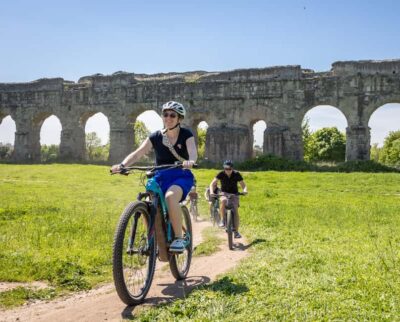
Appian Way E-bike Tour with Catacombs, Aqueducts & Food
Read our review →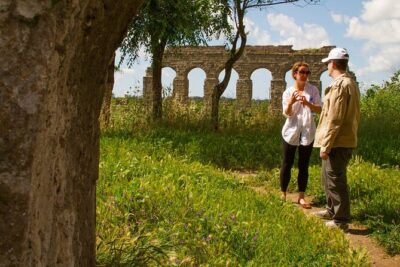
Rome Underground: Catacombs Tour, Aqueducts and Appian Way
Read our review →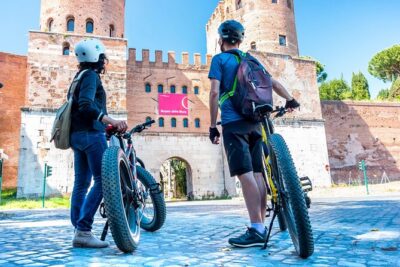
Appian Way Aqueducts Bike Tour (Catacombs & Lunch Option)
Read our review →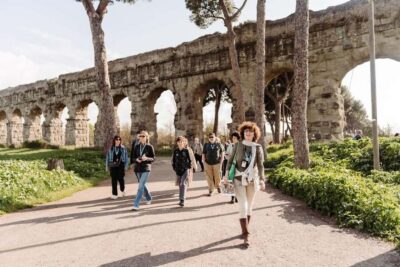
Appian Way, Catacombs and Aqueducts Park Tour with Top E-Bike
Read our review →
Appian Way E-Bike Tour Catacombs, Aqueducts & Picnic
Read our review →Browse the lists this tour appears in