
Reviewed · ROME CHURCHES AND BASILICAS TOURS
Explore Christian Rome and the Underground of San Clemente
San Clemente is the star here: beneath its quiet medieval church lie older places of worship, including a first-century Mithraic altar and the remains of earlier Christian buildings. This tour connects those underground rooms with some of Rome’s most important churches, giving you a clear look at how the city changed across centuries.
I like the small-group format and the way the route links four very different sites rather than treating each church as an isolated stop. I also like the guides’ strong history focus. Roberto is praised for his calm, informed storytelling, while one archaeologist guide brought extra depth to San Clemente. The main drawback is pace: three hours is efficient, but the stops at Santi Quattro Coronati and St. Peter in Chains are brief.
Key points to know
- San Clemente’s three levels: Explore layers dating from the first to the twelfth century, including a first-century Mithraic altar.
- A serious history lesson: The route explains Christian Rome, Constantine, the Lateran popes, and the city’s changing religious role.
- Four important churches: Visit St. John Lateran, San Clemente, Santi Quattro Coronati, and St. Peter in Chains.
- Michelangelo’s Moses: End at the statue created for Pope Julius II’s tomb.
- Live multilingual guide: Tours are offered in English, Spanish, or French, with guides such as Roberto and Mohamed receiving especially warm praise.
- Dress matters: Shorts, miniskirts, and uncovered shoulders are not allowed inside the basilicas.
Why San Clemente makes this tour worth your morning
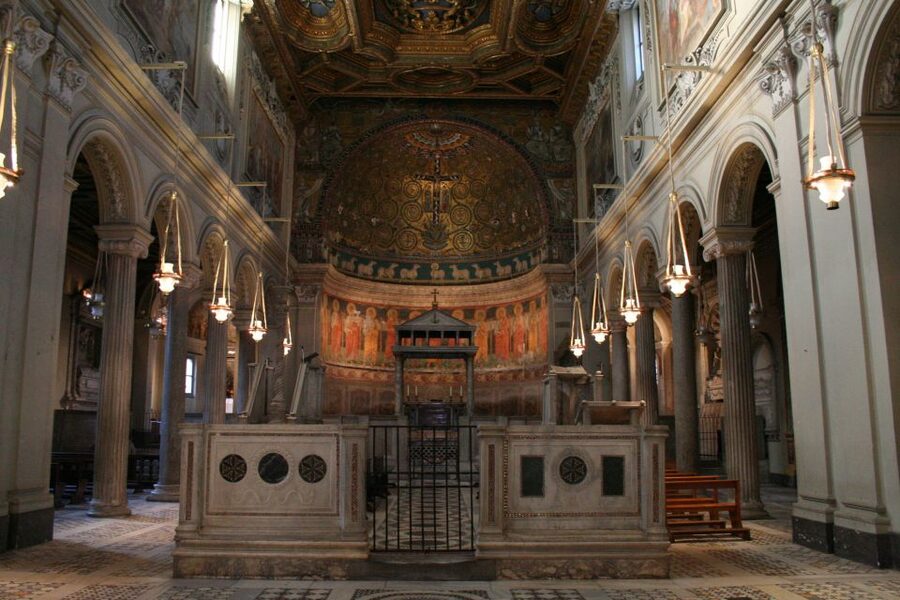
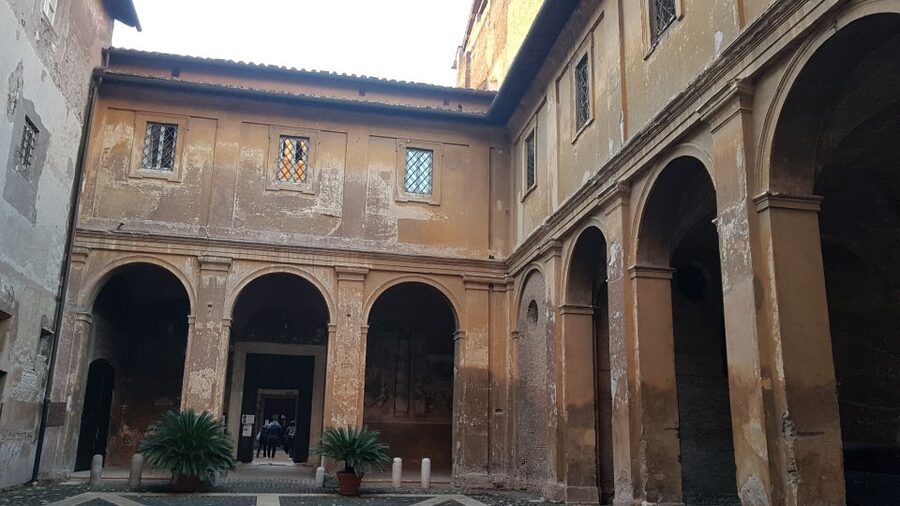
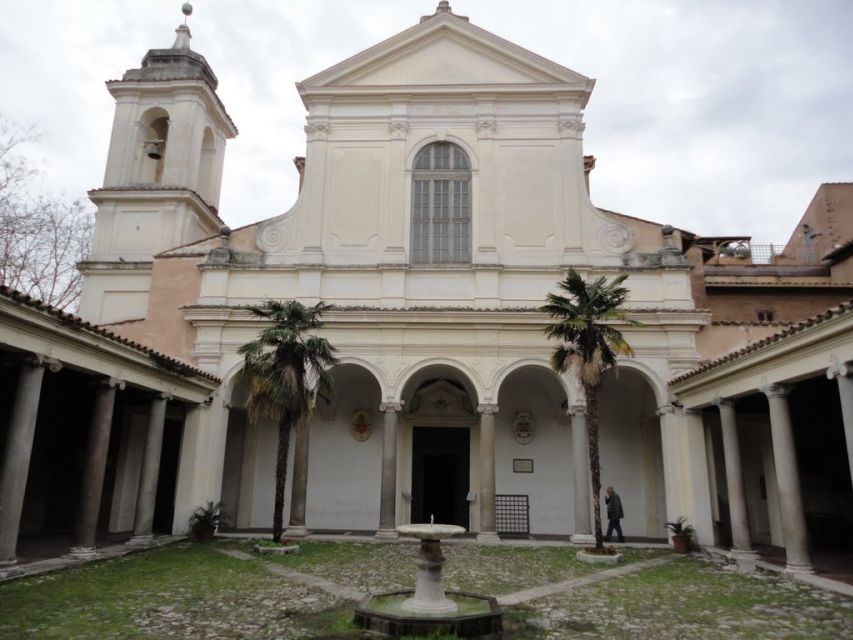
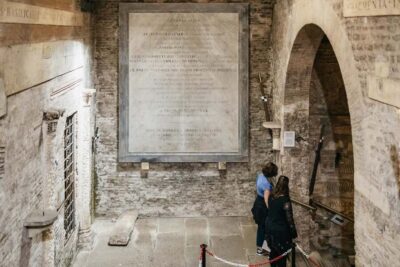
Rome is full of churches, but few let you walk downward through time as clearly as San Clemente. The present church dates from the twelfth century. Below it sits an earlier fourth-century basilica, and beneath that are Roman-era structures, including a Mithraic place of worship.
That physical descent is the heart of the tour. You are not just hearing that Rome was built in layers. You are walking through those layers. The contrast between the light-filled upper basilica and the darker underground rooms helps explain how older Roman spaces were reused and reshaped by later Christian communities.
The underground visit lasts about an hour and a half, making it the longest stop by far. That is sensible. San Clemente needs time because the site is more than a quick photo opportunity. Your guide can explain the relationship between the different buildings, the development of Christian worship, and the survival of earlier religious traditions beneath the later church.
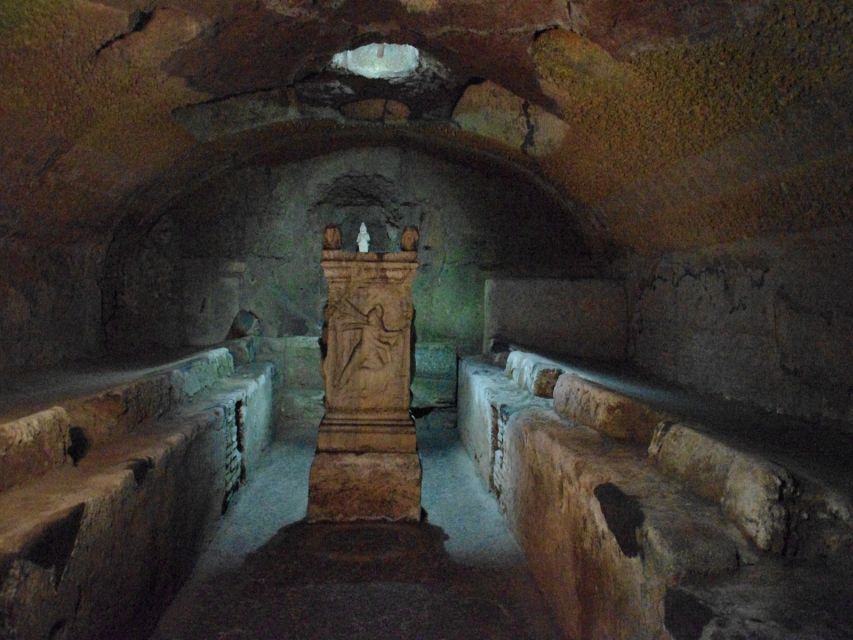
The first-century altar of Mithras is an especially useful detail. Mithraism was one of the religious traditions present in the Roman world before Christianity became dominant. Seeing its altar below a Christian basilica gives you a more complete picture of Roman religious life than a tour that only visits grand churches above ground.
You should expect stairs and uneven surfaces in the underground areas. This tour is not suitable for wheelchair users or people with mobility impairments, and comfortable shoes are important. Large bags and luggage are not allowed.
More churches and basilicas in Rome:
- Vatican Museums, Sistine Chapel & 4 Papal Basilicas Full Day Tour
★ 4.5 · 1,068 reviews - Vatican: Pope Francis Tomb and Papal Basilicas Tour
★ 4.7 · 340 reviews - Rome: Santa Maria Maggiore Upper Areas Skip-the-Line Ticket
★ 3.8 · 223 reviews
Starting at St. John Lateran, the Church of Rome
The tour begins near Laterano Caffè in the Lateran area. This part of Rome is tied to the Lateran family, whose former property became associated with the papacy before the popes moved to Avignon and later returned to Rome in the Vatican area.
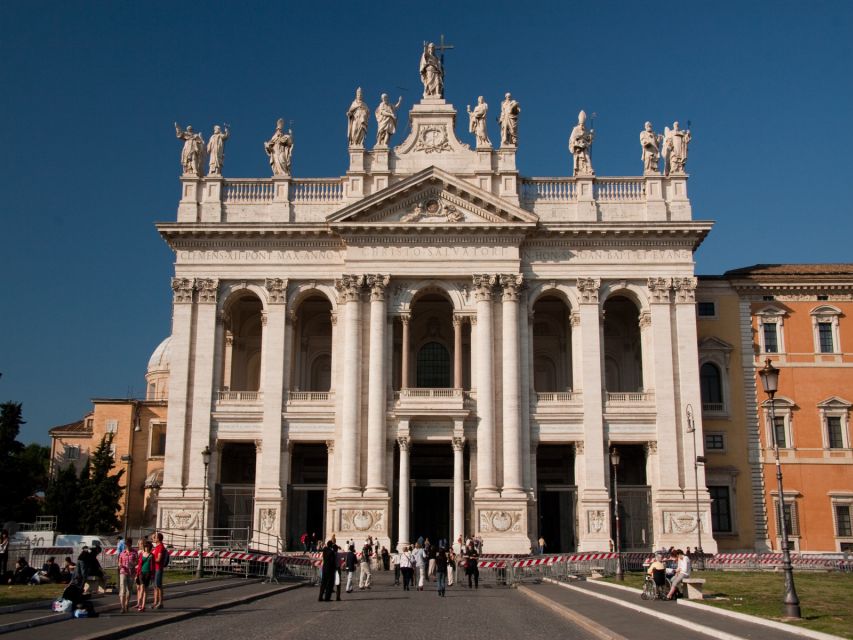
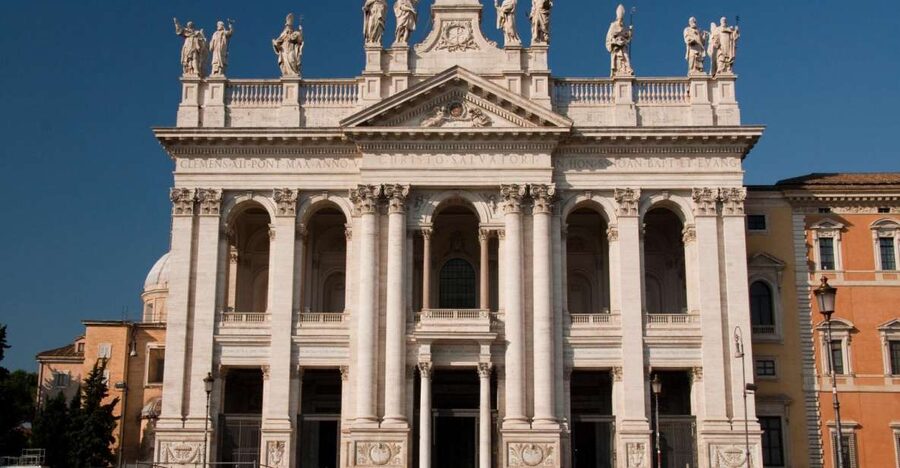
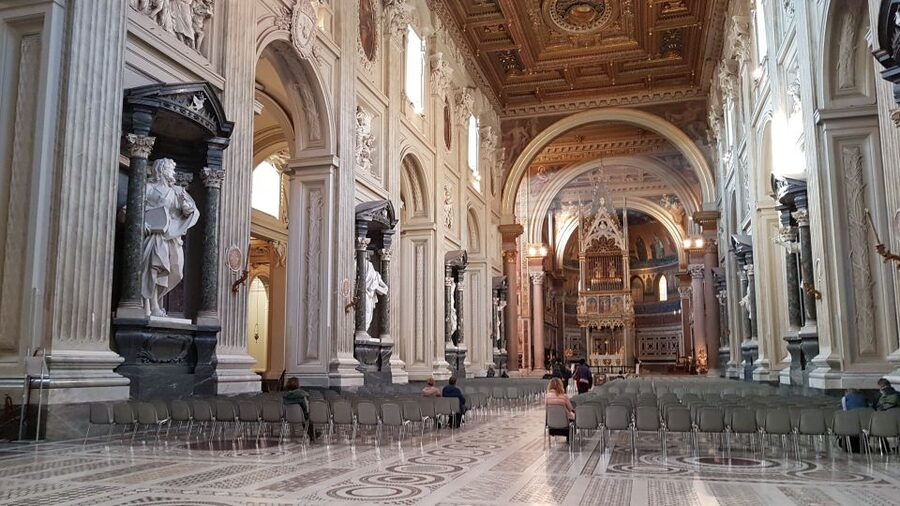
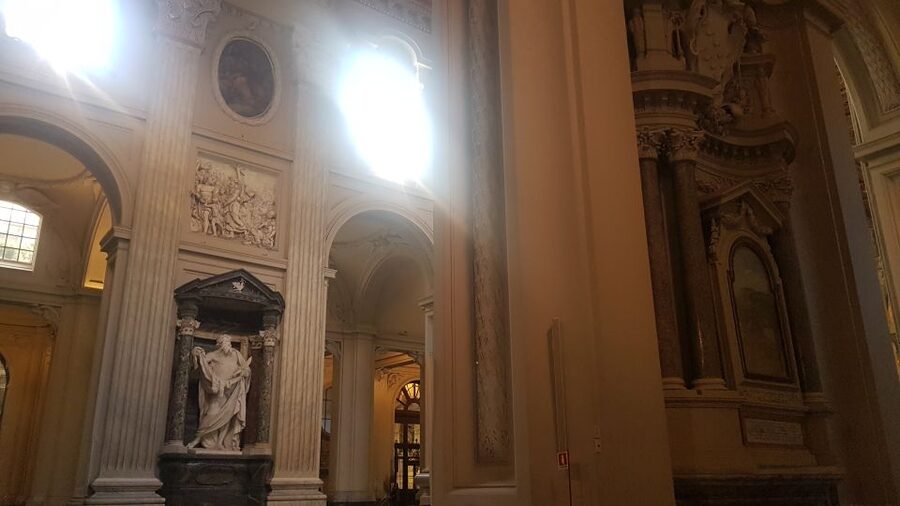
The first church visit is the Basilica of St. John Lateran, the oldest of Rome’s four papal basilicas. It is also the cathedral of Rome, meaning it is the seat of the Bishop of Rome. That distinction matters. St. Peter’s Basilica may be the city’s most famous church, but St. John Lateran is considered the mother church of Rome.
You have about 30 minutes here for a guided visit, walking, and photos. That is enough for an introduction to the basilica and its role, though not enough for a slow study of every chapel and artwork. The guide helps put the building into the larger story of the Lateran district and the papacy.
This stop works best as a foundation. Before you descend into San Clemente, you see the official, monumental face of Christian Rome. Then the tour moves toward spaces that are older, smaller, and more archaeologically layered.
Walking into San Clemente’s underground world
San Clemente is the tour’s main event. The basilica is unusual because it occupies three levels, built from the first century through the twelfth century. Each level reflects a different period of Rome’s religious and urban life.
The upper church gives you the familiar basilica setting, but the lower levels are what make this visit unusual. You move through the earlier Christian church and then into Roman structures below. The experience is intimate compared with Rome’s largest basilicas, and the underground setting changes the mood completely.
Your guide’s ability matters most here. One guide praised in the tour feedback is an archaeologist, and that background suits San Clemente especially well. The site can feel confusing if you do not understand which building you are seeing and how the levels relate to one another. A strong guide turns a series of dark rooms and old walls into a readable story.
You may also appreciate the way San Clemente shows religious change without reducing it to a simple replacement of one faith by another. The Mithraic altar, the earlier Roman remains, and the later Christian basilica all occupy the same vertical space. That is a powerful lesson in how Rome reused its past.
The included entrance ticket adds real value here. San Clemente is the only paid archaeological entry specifically included in the tour, so you do not have to arrange that part separately. The skip-the-ticket-line benefit can also save time, though the tour still depends on the site’s opening conditions and scheduled entry.
Santi Quattro Coronati and the story of Constantine
From San Clemente, the route continues to the Church of the Four Crowned Saints, or Santi Quattro Coronati. The church is dedicated to four anonymous saints and martyrs. Its name and story are less familiar to most visitors, which makes it a good counterpoint to the better-known basilicas.
The visit here is listed at about 15 minutes. That is brief, so expect a focused stop rather than an extended exploration. The guide uses the church to discuss the story of Emperor Constantine and the wider Christian development of Rome.
The building is also known for frescoes discovered in 2002. They include scenes connected with the Zodiac, the Four Seasons, the Liberal Arts, and King Solomon. Those subjects show that the church’s visual program reaches beyond a narrow set of religious images.
This is one place where the tour’s schedule can feel tight. If you want long periods for quiet viewing or photography, 15 minutes will not be enough. Still, the stop works well when the guide explains why the site matters and points out the frescoes’ themes before you move on.
More underground Rome tours:
- Colosseum: Underground and Ancient Rome Tour
★ 4.7 · 12,691 reviews - Rome: Crypts and Catacombs Underground Tour with Transfers
★ 4.6 · 5,341 reviews - Expert Guided Tour of Colosseum Arena OR Underground, and Forum
★ 4.5 · 5,041 reviews - Rome: Colosseum Underground Small Group Guided Tour
★ 4.7 · 4,844 reviews
The Scala Santa and the Holy Stairs
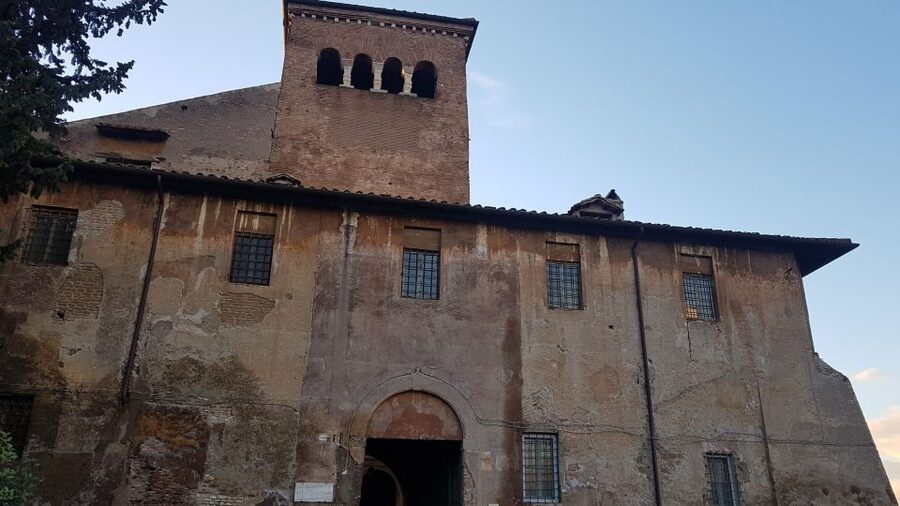
The tour also takes you to the Sanctuary near St. John Lateran, where you can admire the Scala Santa, or Holy Stairs. These stairs are an important Christian pilgrimage site and one of the less ordinary sights in the Lateran area.
The Holy Stairs are part of the tour’s wider focus on Christian treasures that are easy to miss if you only follow Rome’s standard sightseeing route. The visit gives you a chance to see how devotion, tradition, and the physical spaces of the city connect.
The provided timing does not assign a separate duration to the Scala Santa, so you should not expect a long independent visit. Think of it as part of the guided walk through the Lateran district rather than a full tour of the sanctuary.
Dress carefully for this stop and every church on the route. Shorts, miniskirts, and uncovered shoulders are not permitted inside the basilicas. A light scarf or cover-up is useful if your clothing leaves your shoulders bare.
Ending with Michelangelo’s Moses at St. Peter in Chains
The final church is the Basilica of San Pietro in Vincoli, or St. Peter in Chains. It is named for the chains traditionally associated with St. Peter. According to Christian tradition, Constantine’s mother, Helena, brought one chain to Rome, where it joined another chain connected with St. Peter.
The basilica is best known for Michelangelo’s Moses, created for the tomb of Pope Julius II. The statue is the main artistic payoff at the end of the route. You get about 15 minutes here, enough for a guided explanation and a close look at the sculpture, but not much time for a broad survey of the church.
I like ending here because the tour shifts from underground archaeology to a single major work of Renaissance sculpture. After the layered spaces of San Clemente and the devotional focus of the Lateran area, Moses gives you a strong visual finish.
The short visit also means you should keep your expectations realistic. This is not a Michelangelo-focused art tour, and you will not have a long period to study every detail. The guide’s explanation helps you understand why the statue matters, then the tour ends at the basilica.
How the three-hour schedule feels
The route is listed as three hours, with about 30 minutes at St. John Lateran, 90 minutes at San Clemente, and 15 minutes each at Santi Quattro Coronati and St. Peter in Chains. Walking time and the Scala Santa visit fit between those scheduled stops.
This is a concentrated half-day outing. You will cover a lot, but the tour does not leave much room for wandering, café breaks, or long photo sessions. That makes it a good choice if you want structure and context, especially early in a Rome visit.
The walking is also part of the experience. You move through the Lateran neighborhood rather than being carried from one monument to another by vehicle. Wear comfortable shoes, bring sunglasses, and carry a camera if you want to record details. Rain does not cancel the tour, so a weather check before leaving is sensible.
The activity is described as a small-group tour, though the exact group size is not specified. A smaller group should make it easier to hear the guide in churches and ask questions, but you should not assume a private tour.
Guide quality and the value of interpretation
The guide is central to the value of this experience. Churches such as St. John Lateran and St. Peter in Chains can be visited independently, but the story connecting them is harder to build on your own. San Clemente is even more dependent on clear explanation.
Roberto is praised for extensive subject knowledge and a direct, engaged style. Mohamed is also singled out for his passion for history, culture, and storytelling. One archaeologist guide brought a useful professional perspective to the underground levels.
That feedback points to the tour’s strongest feature: interpretation rather than access alone. You are paying for a three-hour guided walk, the San Clemente entry ticket, and a route that connects Christian history, Roman archaeology, pilgrimage traditions, and Renaissance art.
The tour is offered in English, Spanish, and French. When booking, choose the language in which you can best follow detailed historical explanations. The topics are not difficult, but the sites contain many names, dates, and religious traditions.
Is the $167.66 price fair?
At $167.66 per person, this is not a budget walking tour. The value depends on how much you want from a guide and how much you would otherwise arrange yourself.
The price includes three hours with a professional guide, entry to San Clemente, the St. John Lateran visit, and the guided visit to Michelangelo’s Moses. It also bundles four churches and the Scala Santa area into one route, saving you the work of planning the order and researching the connections.
If you mainly want to see Moses and take a quick look at St. John Lateran, the price may feel high. You can visit famous churches on your own, and the final two stops are short. If you want to understand the underground site at San Clemente and prefer a guide who can explain Christian Rome in context, the cost is easier to justify.
Free cancellation is available up to 24 hours in advance according to the booking terms, while another note refers to a 72-hour cancellation condition. Because those details do not match perfectly, check the exact policy shown for your selected date before paying. Reserve-now, pay-later booking is available.
Who should book this Christian Rome walk?
I would recommend this tour to you if you have already seen the Colosseum and main piazzas, or if you want a different side of Rome from the start. It suits visitors who enjoy archaeology, church art, religious history, and guided storytelling more than quick landmark collecting.
It is also a good fit for anyone who might overlook San Clemente. The underground levels are the reason to choose this particular route, and the guide adds context that makes the site much easier to understand.
You should think twice if you have limited mobility, dislike stairs, need a slow pace, or prefer long independent visits. The route is not suitable for wheelchair users or people with mobility impairments. It also operates rain or shine, and large bags are not permitted.
Final decision: book it for San Clemente and the story
Book this tour if you want Christian Rome explained as a connected story, from the Lateran cathedral and Holy Stairs to San Clemente’s Roman layers and Michelangelo’s Moses. The strongest part is the 90-minute San Clemente visit, especially when led by a guide with archaeological training or the strong storytelling style associated with Roberto and Mohamed.
Skip it if your priority is a relaxed art tour or a long visit inside each church. The schedule is compact, the final stops are short, and the price is high for a route you could partly recreate yourself. For the right visitor, though, this is a focused way to see Rome’s less obvious Christian sites without treating them as a string of unrelated buildings.
FAQ
How long does the Christian Rome tour last?
The tour lasts three hours.
Where does the tour begin?
It begins at Laterano Caffè in the Lateran area. The guide waits in front of the coffee bar.
Where does the tour end?
The tour ends at the Basilica of San Pietro in Vincoli, also called St. Peter in Chains.
Which churches are visited?
The route includes St. John Lateran, San Clemente, Santi Quattro Coronati, and St. Peter in Chains.
Is the entrance to San Clemente included?
Yes. The San Clemente entrance ticket is included.
Does the tour visit Michelangelo’s Moses?
Yes. The tour ends at St. Peter in Chains, where you can see Michelangelo’s Moses.
What languages are available?
The live guide is available in English, Spanish, and French.
What should I wear?
You should wear appropriate clothing for basilicas. Shorts, miniskirts, and uncovered shoulders are not allowed.
Is the tour suitable for wheelchair users?
No. The activity is not suitable for wheelchair users or people with mobility impairments.
Can I bring luggage or a large bag?
No. Luggage and large bags are not allowed.
What happens if it rains?
The tour operates rain or shine. Comfortable shoes, sunglasses, and a camera are recommended.
Newest Rome tours we have reviewed
- Private TikTok Video Making in Rome★ 5.0 · 7 reviews
- Assisi, Orvieto and Civita di Bagnoregio Full Day Tour from Rome★ 4.5 · 45 reviews
- Assisi & Saint Francis Path Tour from Rome★ 5.0 · 45 reviews
- Assisi and Cascia Private Day Tour from Rome with Lunch★ 5.0 · 10 reviews
- Art Class in the center of Rome!★ 4.0 · 4 reviews
- Art & Craft: Beer Tour with Street Art in Rome★ 4.5 · 6 reviews
- Arrival in Rome: Airport Transfer & Exclusive City Introduction★ 5.0 · 3 reviews
- From Rome: Private Day-Tour of Tuscany★ 5.0 · 16 reviews
Rome Churches and Basilicas Tours, compared.
Vatican Museums, Sistine Chapel & 4 Papal Basilicas Full Day Tour
Read our review →
Santa Maria Maggiore Upper Areas Skip-the-Line Ticket
Read our review →
San Clemente Underground and Basilica Guided Tour
Read our review →
Santa Maria Maggiore and Panoramic Dome Guided Tour
Read our review →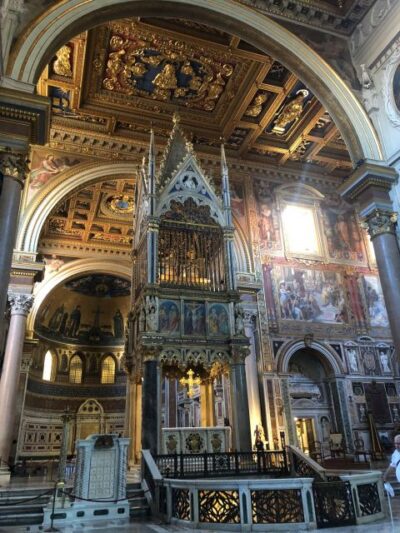
Basilica of St John Lateran & Holy Steps 1-Hour Tour
Read our review →
Basilica of St. Mary Major Priority Entrance Ticket
Read our review →Browse the lists this tour appears in