
Reviewed · ROME CITY HIGHLIGHTS TOURS
Hidden Gems of Rome Walking Tour
Rome’s grand sights get most of the attention, but this walk follows the city’s stranger stories: witches and heretics, secret papal romances, ancient alleyways, and an assassination attempt linked to underground Rome. It starts at Campo de’ Fiori and finishes near the river in Trastevere, giving you a lively change of pace from the Colosseum and Vatican.
I like the route’s variety. You move from modern streets to Roman ruins, the Jewish Ghetto, Tiber Island, and the church of Santa Cecilia. I also like the guide-led storytelling, which adds humor and human drama to places you might otherwise pass without a second look.
The main drawback is the pace and walking demand. This is not a good fit for anyone with back problems, mobility impairments, or a wheelchair, and the English-only format will not suit every visitor.
Key points to know before booking
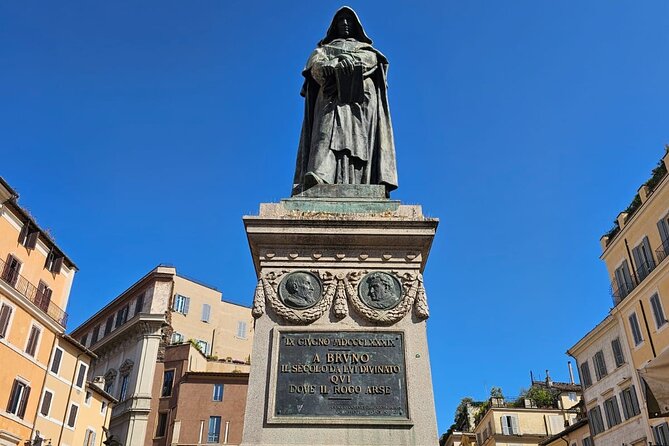
- Campo de’ Fiori sets the tone: Begin beneath the statue in the center of the piazza, a place tied to Rome’s grim public past.
- Ancient Rome appears in unexpected places: See the Theatre of Pompey, Theatre of Marcellus, and old streets tucked into the modern city.
- The stories are macabre and personal: Expect tales of executions, papal love affairs, rebels, saints, and political violence.
- The route crosses several Roman districts: Walk through the Jewish Ghetto, across Tiber Island, and into Trastevere.
- Santa Cecilia is the final major visit: Allow 20 minutes for the church and guided visit at the end.
- The price is modest for a guided city walk: At $34 per person, the tour offers a useful mix of guiding, storytelling, and included entrance fees.
Why this Rome walk feels different
Rome can become a parade of famous names. Colosseum, Pantheon, Trevi Fountain, Vatican. All are worth seeing, but the city’s character often appears in smaller places: a narrow passage, a half-buried ruin, or a square with a story that does not fit neatly into a guidebook caption.
This tour is built around those moments. The focus is not on collecting major monuments. It is on following a professional Irish storyteller and licensed guide through central Rome while the guide explains the city’s more unsettling and surprising episodes.
You will hear about the execution site for witches and heretics, the private lives of popes, and ancient dwellings beneath the present-day streets. The tone is described as eerie, funny, and sometimes warm. That mix matters. Rome’s past is not only a list of dates and emperors. It is also full of scandals, fears, grudges, faith, and plain human foolishness.
The route lasts 2.5 hours. That is long enough to connect several districts without using transport, but short enough to fit into a busy Rome schedule. I would place it early in your stay if you want local orientation, or later if you already know the headline sights and want something less familiar.
More city highlights tours in Rome:
- Rome: Big Bus Hop-on, Hop-off Open-Top Sightseeing Tour
★ 3.5 · 2,580 reviews - Rome in a Day Group Tour with Vatican Museums and Colosseum
★ 4.5 · 2,450 reviews - Rome Highlights by Golf Cart Private Tour
★ 5.0 · 2,379 reviews
Starting beneath the statue at Campo de’ Fiori
Meet your guide in the middle of Campo de’ Fiori, directly under the statue. This is a clear central meeting point, but the piazza can be active, so arrive with enough time to locate the statue and group.
Campo de’ Fiori is a strong opening because it immediately introduces the tour’s darker side. The square is known for its public history, and the tour connects it with executions involving witches and heretics. That subject gives the walk a serious edge from the start.
The stop lasts about 15 minutes. Expect the guide to establish the setting, explain the square’s connection to Rome’s legal and religious past, and set up the kind of stories that follow.
I like beginning here because the subject is not separated from daily life. You are standing in a functioning Roman piazza, not in a distant museum. Market life and ordinary city movement continue around a place associated with punishment and public spectacle. That contrast is part of Rome’s appeal.
Piazza del Biscione and the Theatre of Pompey
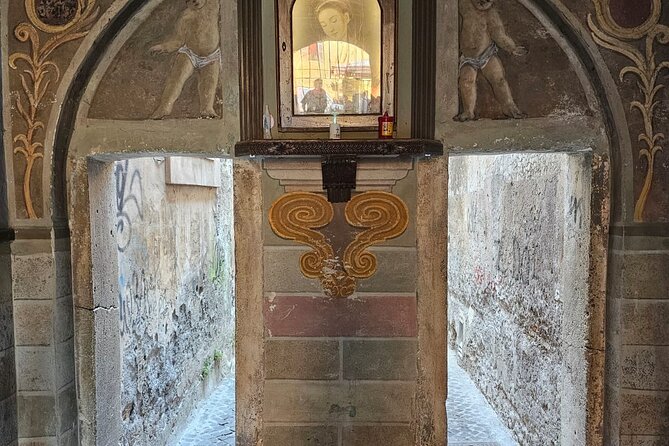
After Campo de’ Fiori, the group walks about five minutes to Piazza del Biscione. The guided stop is short, about five minutes, but it helps show how much of ancient Rome survives beneath ordinary buildings and streets.
From there, another five-minute walk leads to the Theatre of Pompey. The stop also lasts about five minutes. The name points to a major Roman setting, yet what you see today is not a vast open ruin like the Colosseum. The value here is learning to read fragments and traces within the modern city.
This section suits you if you enjoy reconstruction. The guide helps connect what is visible now with the larger Roman world that once occupied the area. You may find the stop less satisfying if you want long periods inside a major archaeological site, since the itinerary allows only a few minutes at each location.
That short timing is a pattern throughout the walk. The tour keeps moving, so the experience feels like a chain of stories rather than a series of long monument visits.
Piazza Benedetto Cairoli and Rome’s difficult characters
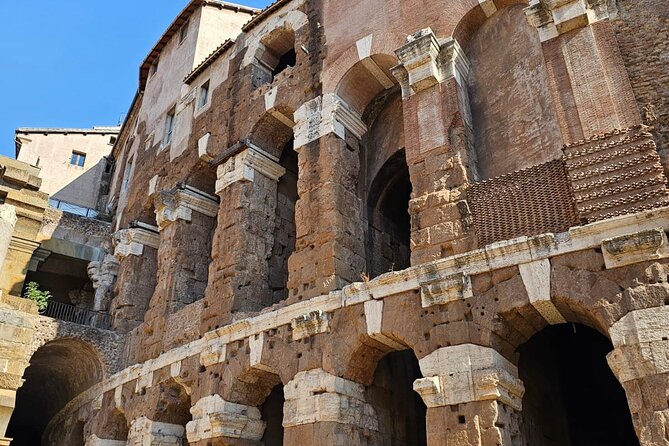
A five-minute walk brings you to Piazza Benedetto Cairoli for a longer 15-minute guided stop. This gives the guide more space to develop the human side of Rome’s past.
The tour’s themes include emperors, artists, rebels, and saints. You can expect this part of the route to connect the city’s physical spaces with the people who challenged authority, shaped public life, or became part of Rome’s legends.
I appreciate this kind of storytelling because it gives you something to watch for as you walk. A square is no longer just a place to cross. It becomes a setting for conflict, belief, ambition, and scandal.
The guide’s style matters here. The strongest praise for this experience centers on the energy and humor of the presentation. One review specifically names Joey and describes a guide who kept both an adult and a 14-year-old engaged. That is useful if you are booking for a family with teenagers. The subject matter includes executions and controversial figures, so parents should decide if that tone suits their children.
More walking tours in Rome:
- Rome: Trastevere & Campo de Fiori Street Food Walking Tour
★ 4.9 · 2,768 reviews - Rome: Paranormal Night Walking Tour & Secret Backstreets
★ 4.9 · 1,921 reviews - Rome by Night Walking Tour – Legends & Criminal Stories
★ 4.5 · 1,003 reviews - Rome: Guided City Center Evening Sightseeing Walking Tour
★ 4.4 · 953 reviews
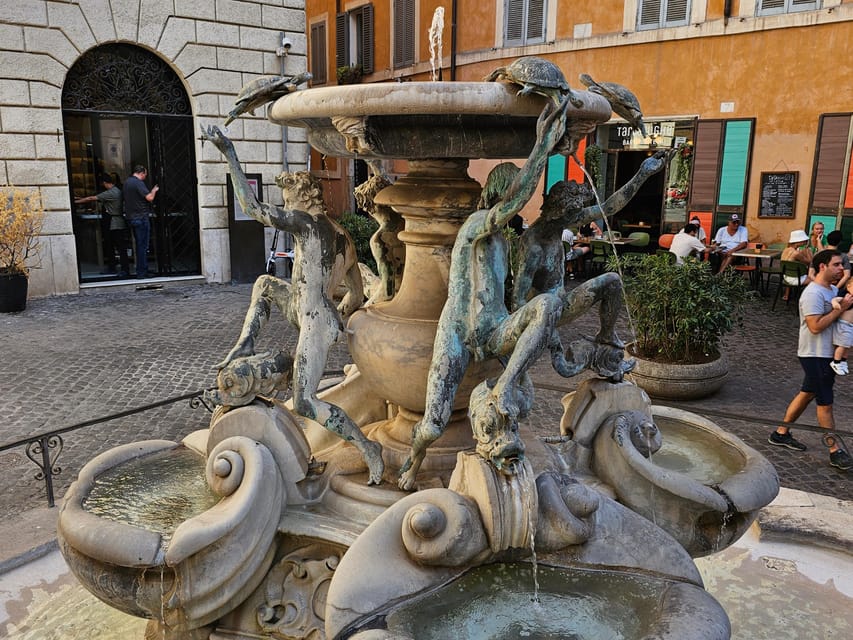
Piazza Mattei and the Jewish Ghetto
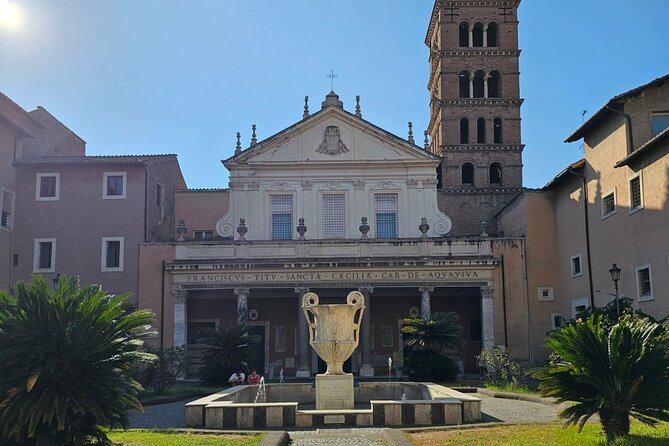
The next short walk leads to Piazza Mattei, where the guided stop lasts around 10 minutes. The square gives the tour another chance to show how Rome’s visual beauty can sit beside complicated stories.
From here, you continue into the Jewish Ghetto. The stop itself is listed at about five minutes, so this is an introduction rather than a full historical tour of the district. Still, its place in the route matters. Rome’s story includes ancient pagan life, Christian power, political struggle, and the long experience of the Jewish community.
You should not book this walk expecting a detailed study of every period in the Ghetto. Instead, you get one part of a wider sequence, presented through the guide’s chosen stories. That broad sweep is useful for first-time visitors who want to see how the city’s districts connect.
The walking time remains manageable here, with roughly five minutes between stops. Keep your attention on the guide and on the changing streets, since the route’s details are easy to miss if you treat the walk as simple passage from one piazza to the next.
Portico d’Ottavia and the Theatre of Marcellus
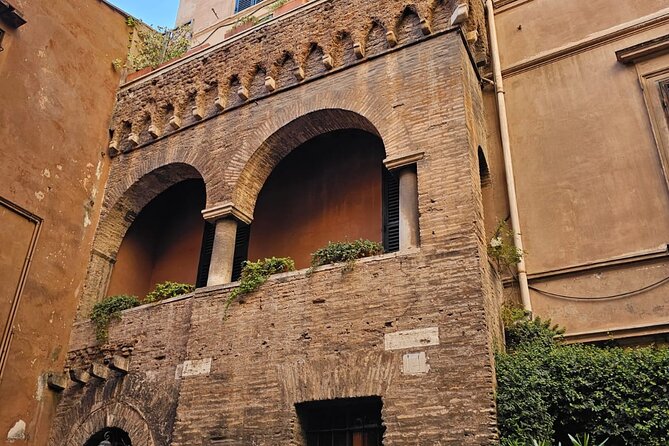
The walk continues to the Portico d’Ottavia, followed by the Theatre of Marcellus. Each guided stop is about five minutes.
These two places help you see Rome’s layers in quick succession. The Portico d’Ottavia belongs to the city’s ancient Roman fabric, while the Theatre of Marcellus offers another reminder that Roman structures have been reused, surrounded, and absorbed by later Rome.
I like this part for its visual logic. You are not simply visiting an ancient site and then leaving it behind. You are seeing how ruins remain part of the working city. The guide’s job is to make those connections clear, especially when the remains are less obvious than the Colosseum.
Again, the time is brief. If you want a detailed archaeological explanation or extensive photography, you may feel rushed. If you prefer a steady route with many story points, the short stops keep the afternoon moving.
Tiber Island and the assassination story
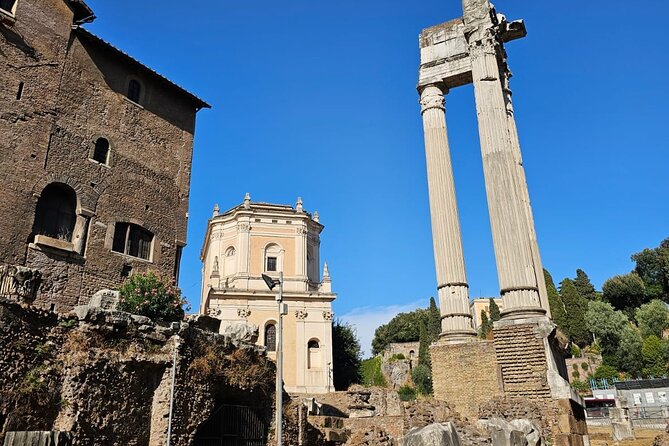
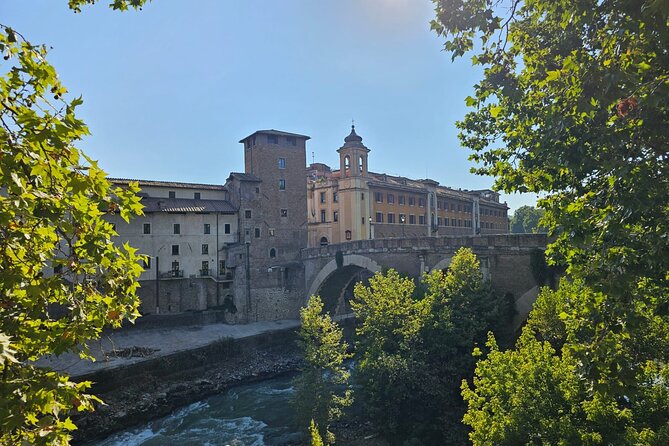
After another five-minute walk, you reach Tiber Island for a 10-minute guided stop. The island is a natural turning point in the route, taking you from the Jewish Ghetto and ancient monuments toward Trastevere.
The tour also promises a look at ancient underground dwellings and the site of an assassination attempt. These details give the walk its strongest sense of mystery. You are not only hearing about public monuments. You are being directed toward places connected with secrecy, danger, and political violence.
The experience is likely to appeal most to you if you enjoy history presented through specific incidents. A broad lecture about Rome can blur together. A story about an attempt on someone’s life, linked to a real place, tends to stay with you.
The route does not describe a separate extended underground visit, so do not assume you will spend a long period below street level. The attraction is the story and the connection between the visible city and the layers beneath it.
Santa Cecilia and the finish in Trastevere
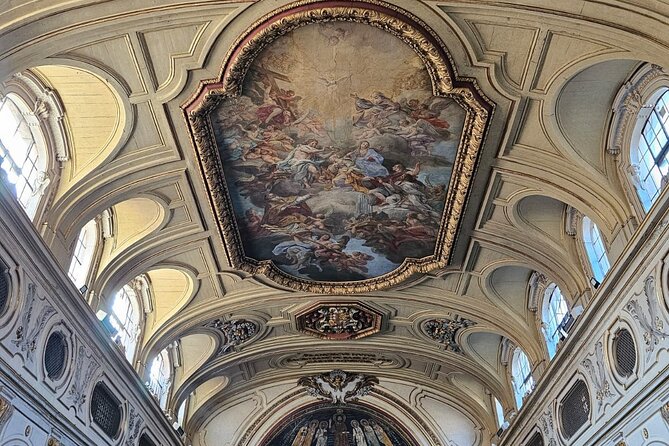
The final walk takes about five minutes and ends at the Basilica di Santa Cecilia in Trastevere. The guided visit lasts about 20 minutes, making it the longest single stop on the route.
This ending gives the tour a calmer close after its tales of executions, scandals, and assassination attempts. Santa Cecilia is also a practical endpoint. You finish in Trastevere, an area known for restaurants and evening life, with the river nearby and options for continuing your night.
The final church visit is included in the tour’s entrance fees. You should allow the full 20 minutes for the guide’s explanation rather than treating the basilica as a quick photo stop.
I like the route ending here because it leaves you with choices. You can stay in Trastevere for dinner, continue toward a sunset view, or simply use the district as your next base for the evening. The finish is not back at Campo de’ Fiori, so plan your onward route from Trastevere rather than returning to the starting point.
The guide and the storytelling style
This is an English-language tour with a live professional guide. The guide is both a licensed Rome guide and an Irish storyteller, which suggests a presentation built around voice, timing, and memorable anecdotes rather than a dry list of facts.
The strongest feature is the delivery. The best comments praise the guide for explaining material with gusto, keeping the group engaged, and adding useful Rome tips. One especially practical point concerns street awareness. Rome’s traffic patterns can feel chaotic, so listen when the guide gives advice about crossing and moving through the city.
The tone is not purely academic. You will hear about love affairs involving popes, controversial figures, rebels, saints, and macabre episodes. That makes the tour entertaining, but it also means the subject matter can be lively and sometimes dark.
Joey is named in one of the available comments, but guide assignments can vary. If Joey leads your group, expect the energetic style associated with this experience. In any case, the format depends heavily on the individual guide’s ability to tell a clear story in a busy urban setting.
Is $34 a fair price?
At $34 per person, this is a reasonable price for a 2.5-hour guided walk, particularly because entrance fees to the attractions visited are included. You are paying for more than movement between landmarks. You are paying for interpretation, local context, and a planned route through several central districts.
The value is strongest if you enjoy stories and do not need long visits at each monument. In that case, the walk gives you a useful introduction to places you might overlook on your own.
The value is weaker if your main aim is to enter major Roman sites and spend time examining them in detail. The Theatre of Pompey, Portico d’Ottavia, Theatre of Marcellus, and other stops receive short visits. This is a storytelling walk, not a full archaeological tour.
Free cancellation up to 24 hours before the start gives you some planning flexibility. You can also reserve now and pay later, which helps if your Rome schedule is still changing.
Who should book this walk?
I would recommend it to first-time Rome visitors who want a different angle on the historic center, repeat visitors who have already seen the major sights, and families with older children or teenagers who respond well to dramatic storytelling.
It also suits you if you like walking through ordinary streets and learning why a place matters. The route has enough variety to hold your attention, moving from Campo de’ Fiori to ancient theatres, the Jewish Ghetto, Tiber Island, and Trastevere.
I would hesitate if you need a slow pace, accessible routes, or a wheelchair-friendly experience. The activity is specifically not suitable for people with back problems, mobility impairments, or wheelchair users. It is also English-only.
Wear comfortable shoes and bring water. The route lasts 2.5 hours, and even though the individual walks between stops are generally about five minutes, you remain on foot for the full experience.
Should you book the Hidden Gems of Rome Walking Tour?
Book it if you want Rome’s stranger, less polished stories and enjoy a guide who can hold your attention with humor and drama. The best parts are the route’s variety, the ancient remains woven into modern streets, and the finish at Santa Cecilia in Trastevere.
Skip it if you want long monument visits, a quiet academic lecture, or a fully accessible route. At $34, it offers good value for an energetic English-language walk, especially when you want to see Rome through its scandals, legends, and overlooked corners rather than only its famous postcards.
FAQ
Where does the tour start?
It starts in the middle of Campo de’ Fiori, directly under the statue.
Where does the tour finish?
The route finishes at the Basilica di Santa Cecilia in Trastevere.
How long does the walking tour last?
The tour lasts 2.5 hours.
What language is the tour conducted in?
The live tour is conducted in English.
How much does the tour cost?
The listed price is $34 per person.
Are entrance fees included?
Yes. Entrance fees to the attractions visited are included.
What should I bring?
Bring comfortable shoes and water.
Is the tour suitable for wheelchair users?
No. The activity is not suitable for wheelchair users.
Is the tour suitable for people with mobility impairments?
No. It is listed as unsuitable for people with mobility impairments.
Can I cancel for a full refund?
Yes. You can cancel up to 24 hours in advance for a full refund.
Newest Rome tours we have reviewed
- Private TikTok Video Making in Rome★ 5.0 · 7 reviews
- Assisi, Orvieto and Civita di Bagnoregio Full Day Tour from Rome★ 4.5 · 45 reviews
- Assisi & Saint Francis Path Tour from Rome★ 5.0 · 45 reviews
- Assisi and Cascia Private Day Tour from Rome with Lunch★ 5.0 · 10 reviews
- Art Class in the center of Rome!★ 4.0 · 4 reviews
- Art & Craft: Beer Tour with Street Art in Rome★ 4.5 · 6 reviews
- Arrival in Rome: Airport Transfer & Exclusive City Introduction★ 5.0 · 3 reviews
- From Rome: Private Day-Tour of Tuscany★ 5.0 · 16 reviews
Rome City Highlights Tours, compared.

Big Bus Hop-on, Hop-off Open-Top Sightseeing Tour
Read our review →
Rome in a Day Group Tour with Vatican Museums and Colosseum
Read our review →
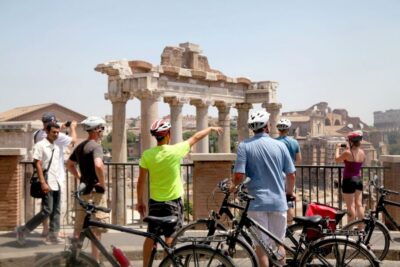
Top Highlights & Hidden Gems Tour by Cannondale E-Bike
Read our review →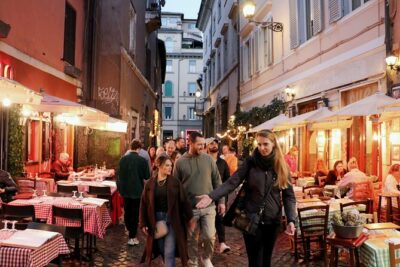
Rome Food Tour: Hidden Gems of Trastevere with Dinner & Wine
Read our review →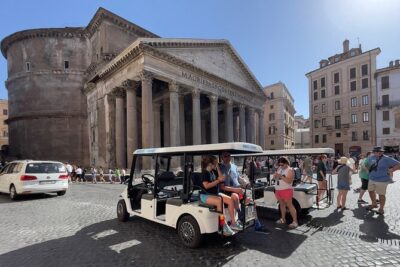
Rome Highlights City Tour by Golf Cart with Gelato
Read our review →
Rome in a Day Tour with Vatican, Colosseum and Historic Center
Read our review →Browse the lists this tour appears in