
Reviewed · ROME PALAZZO TOURS
National Museum of Palazzo Massimo: 2-Hour Private Tour
Palazzo Massimo brings ancient Rome down to human scale. Instead of seeing only grand ruins, you examine Roman calendars, household frescoes, portraits, statues, and tombs, then connect them to daily life, religion, politics, and death.
I like the private format because your guide can keep the pace focused, and I like the choice of major works: the bruised Boxer at Rest, the garden paintings from the Villa of Livia, and the dramatic Sarcophagus of Portonaccio. The main drawback is time. Two hours goes quickly in a museum this substantial, especially if you want to linger over every gallery.
- Boxer at Rest: See an ancient athlete shown tired, battered, and intensely human.
- Villa of Livia frescoes: Study painted garden scenes that reveal how Roman homes were decorated.
- Ancient calendars: Examine objects from Praeneste and Anzio that show how Romans organized time.
- Roman and Greek gods: Compare marble figures and the religious ideas behind them.
- Sarcophagus of Portonaccio: Read a battle scene carved into a grand Roman coffin.
- Private English or Italian guide: Get a focused visit rather than a general museum walk.
Why Palazzo Massimo deserves two focused hours
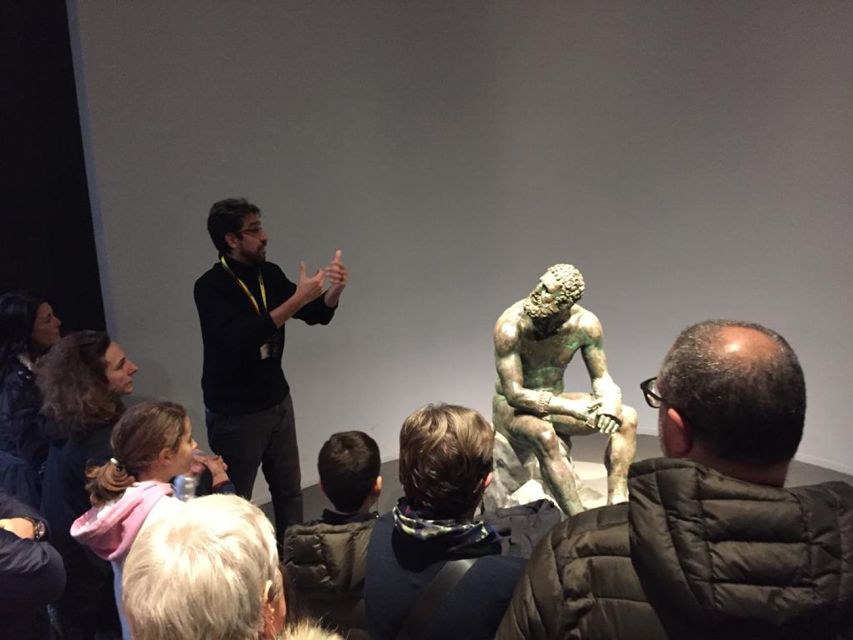
Rome has museums filled with ancient objects, but Palazzo Massimo is especially useful when you want to understand how those objects fit into ordinary Roman life. The collection reaches beyond famous emperors and monumental architecture. It shows how Romans measured time, decorated their homes, honored the dead, and imagined gods and heroes.
That range gives the visit a clear rhythm. You move from practical objects to idealized statues, from peaceful domestic paintings to scenes of war and burial. A good guide helps you connect those pieces instead of treating each one as an isolated display.
The private setup matters here. You are not trying to keep up with a large crowd or wait for a general explanation to finish. You can ask why a calendar mattered, what a statue says about Roman ideals, or how a funerary image reflects social status.
The tour lasts two hours, so I would treat it as a concentrated introduction rather than a complete survey of the museum. You should leave with a stronger framework for Roman society, but you will not see every object in equal detail.
Meeting your guide and setting the pace
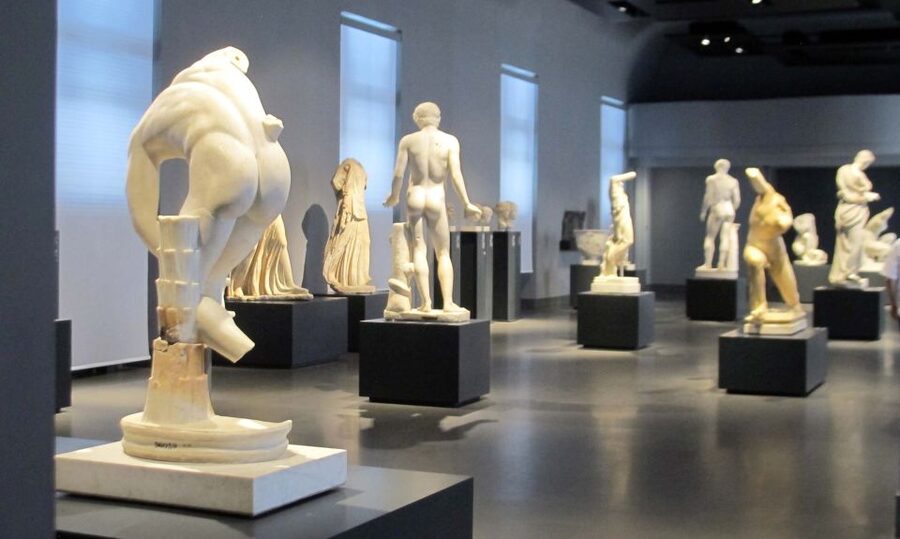
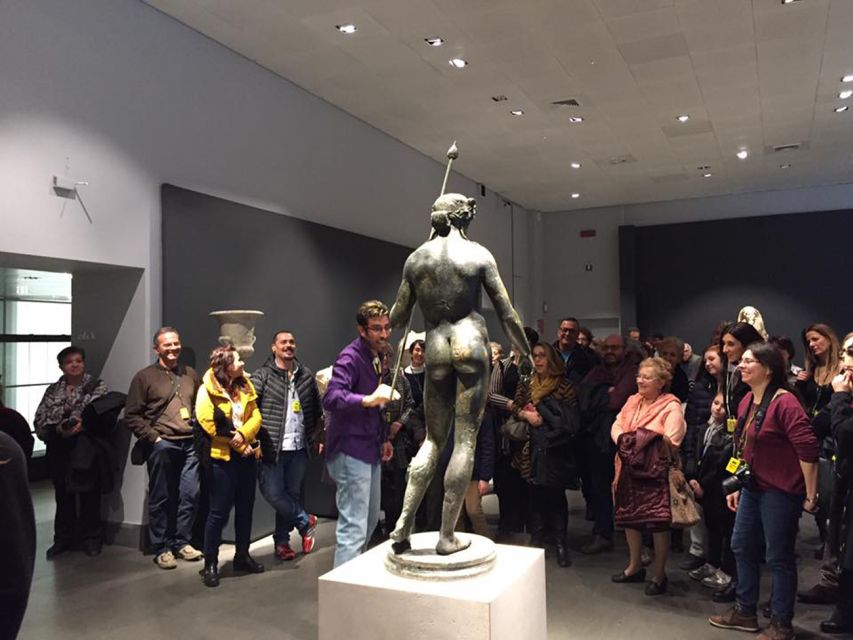
You meet in front of the museum entrance, where the guide waits with a sign showing the tour name. Arrive 15 minutes early. Tickets are distributed at the start, so arriving on time keeps the small window from becoming rushed.
The tour is offered in English or Italian. Vincenzo is one guide associated with the experience, and his approach is described as lively, clear, and animated. That style suits a museum like this, since many of the objects need explanation before their meaning becomes clear.
Because this is a private group, you can use the opening minutes to tell the guide what interests you most. If you care about Roman religion, ask for more attention to the gods and funerary customs. If art is your priority, ask to spend longer with the statues and frescoes.
The guide waits for you at the museum rather than collecting you from your hotel. Hotel pickup and drop-off are not included, so you need to make your own way to the entrance. Large bags and luggage are not allowed, which is worth remembering if you are visiting between hotel stays or train connections.
More palazzo tours in Rome:
- Rome: Opera Concert at Palazzo Poli – Fontana di Trevi
★ 4.7 · 1,026 reviews - The Great Opera Arias Concert at Palazzo Poli – Trevi Fountain
★ 5.0 · 533 reviews - Rome: Palazzo Barberini Galleria Corsini Ticket & Audioguide
★ 3.9 · 322 reviews
Ancient calendars from Praeneste and Anzio
The calendar displays offer a practical starting point for Roman society. Calendars were not just decorative objects. They helped organize religious observances, public duties, and the yearly pattern of civic life.
Seeing calendars connected with Praeneste and Anzio gives the subject a local Roman setting. You are not simply hearing that Romans measured time. You are looking at surviving evidence of how communities recorded and presented the year.
This is the sort of object that can pass unnoticed if you visit alone. A guide can point out why a calendar belonged in the public and religious world of Rome, and how timekeeping affected institutions and traditions.
I would pay close attention here even if your main interest is sculpture. The calendars make the rest of the museum easier to read. They remind you that Roman culture was organized through dates, festivals, duties, and beliefs, not just military victories and marble portraits.
The Boxer at Rest and the human side of ancient sculpture
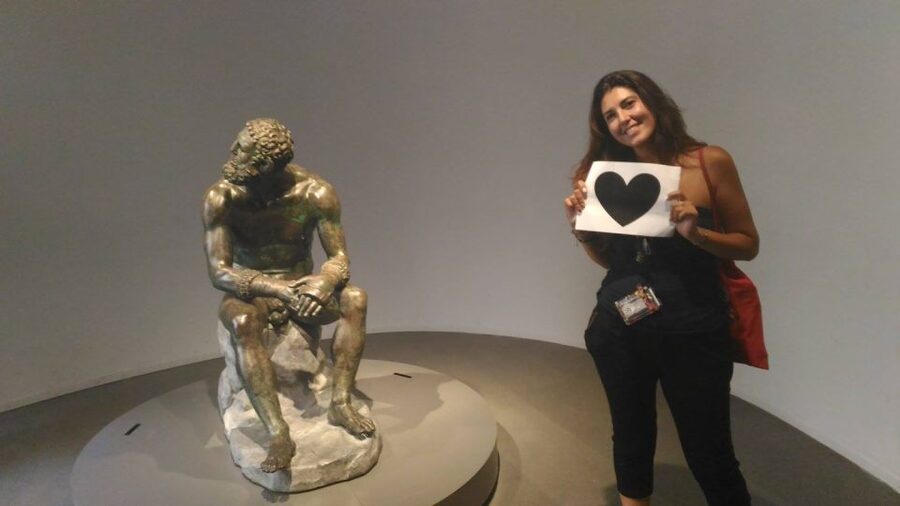
The Boxer at Rest is one of the tour’s strongest stops. The statue does not show a polished hero in an effortless pose. It presents an athlete after exertion, with the physical strain of boxing written into his body and expression.
That choice makes the work unusually direct. You can look at ancient sculpture as an ideal portrait of strength, but here the subject appears worn and alert. The work asks you to think about effort, injury, pride, and survival.
This is also where a good guide earns the private-tour price. The statue rewards close looking, but the meaning is easier to grasp when someone draws your eye to the details and explains how Romans and Greeks presented heroes, athletes, and public figures.
The tour description calls it one of the most beautiful statues of ancient Rome, but its appeal is not only beauty. It has drama without needing a battle scene. If you have seen many calm, idealized marble figures, the Boxer gives the visit a sharper human edge.
Villa of Livia frescoes and Roman home life
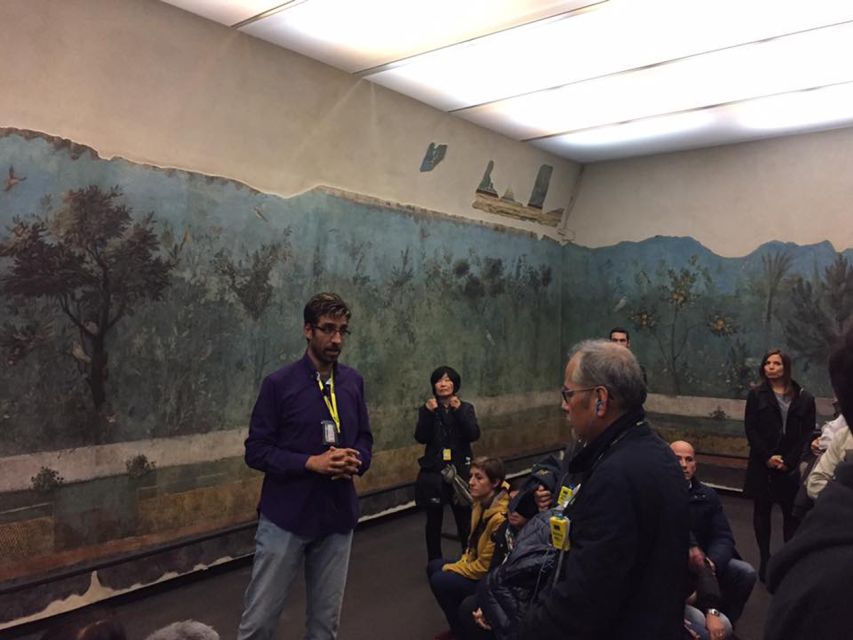
The frescoes from the Villa of Livia shift the mood from public display to domestic decoration. They show how an elite Roman house could use painted walls to create a sense of nature and abundance indoors.
The garden imagery matters because Roman houses were designed to communicate status and taste. A fresco was not simply a picture placed on a wall. It helped shape the atmosphere of a room and told visitors something about the people who lived there.
You can expect the guide to explain how these paintings fit into Roman household life. The value of the stop is not only in the skill of the artists. It is in seeing how the Romans wanted their homes to feel.
I like this part because it counters the usual image of Rome as a city of forums, temples, and military monuments. The frescoes show a quieter side of the culture. They also help you imagine that ancient life took place inside decorated rooms, not only in the ruins you visit outdoors.
More two-hour experiences in Rome:
- Vatican Museums & Sistine Chapel Express 2-Hour Guided Tour
★ 4.5 · 1,037 reviews - Rome: 2-Hour Gladiator School
★ 4.7 · 630 reviews - Cooking Class 2 Hour Spanish Steps – Fettucine and Tiramisù
★ 5.0 · 298 reviews - Rome: 2-Hour Golf Cart Sightseeing Tour at Night
★ 5.0 · 124 reviews
Marble gods and the language of belief
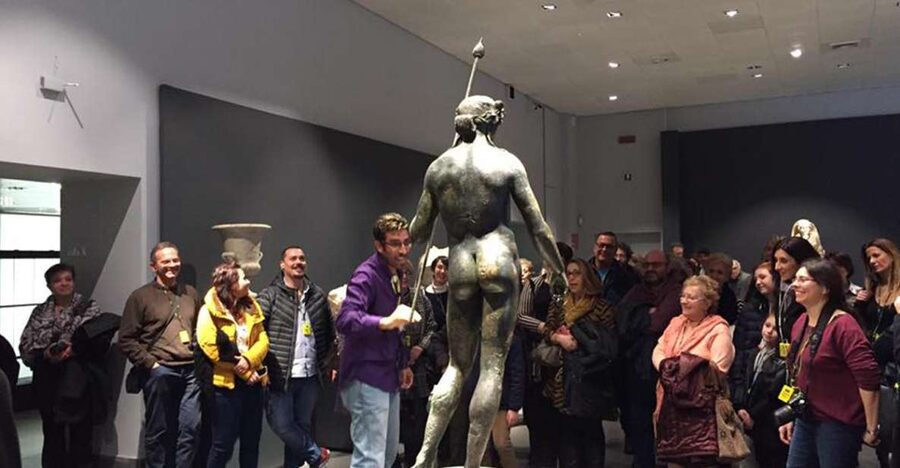
The galleries of Roman and Greek gods give the tour a chance to explain religious imagery. Roman religion was visible in statues, household practice, civic institutions, and ceremonies, so the figures you see are part of a wider system of belief.
You will encounter marble representations of gods and divine figures rather than a single story told from beginning to end. That makes the guide’s role useful. A clear explanation can help you sort out how Greek and Roman traditions overlap and how the Romans represented the beings they honored.
Look closely at posture, clothing, objects, and expression. Even when the tour does not provide every technical detail, these features can show how a figure was meant to be recognized and what qualities it represented.
This section should suit anyone who enjoys mythology, but you do not need prior knowledge to appreciate it. The guide explains the religious side of Roman civilization in relation to the museum’s objects, rather than leaving you with a parade of names.
The Sarcophagus of Portonaccio and Roman views of death
The Sarcophagus of Portonaccio is the tour’s most forceful funerary work. Its carved surface includes a battle scene, filling the coffin with movement, conflict, and military energy.
A sarcophagus tells you more than how Romans buried their dead. It also shows how a family wanted a person remembered. A battle image could connect the deceased with courage, command, service, and the public identity of a Roman elite.
The crowded scene rewards time and guidance. There is a lot to take in, and the meaning can be hard to grasp from a quick glance. Your guide can direct your attention to the figures and explain why such imagery mattered on a tomb.
This stop also gives the tour a useful emotional balance. The Villa of Livia frescoes show private comfort, while the Boxer shows physical strain. The Sarcophagus of Portonaccio brings in death, memory, and social status. Together, the works make Roman culture feel less like a list of dates and more like a set of lived concerns.
What makes the private format worth $130.28
At $130.28 per person, this is not a budget museum visit. The price includes entry tickets, a professional guide, and a private group, but not transportation to or from the museum.
The value depends on how much you want from the collection. If you are content to read labels and browse at your own pace, a private tour may cost more than you need. If you want the objects explained in relation to Roman customs and institutions, the focused attention can make the museum much more rewarding.
The guide is especially useful for first-time visitors to ancient art. The collection includes calendars, statues, frescoes, mosaics, and funerary sculpture. Without a plan, you may spend too long on attractive pieces and miss why less familiar objects matter.
I would also consider the price in relation to group size. A private tour lets you ask questions and shape the pace. That is more valuable for couples, families with a shared interest, or small groups who want a common introduction before visiting other Roman sites.
The short duration keeps the commitment manageable. Two hours is long enough for a serious overview without turning the museum into an exhausting half-day. Still, do not book it expecting to study every room in detail.
Who will get the most from this visit
This tour fits you best if you want context, not just a list of famous objects. It is a strong choice for anyone curious about Roman daily life, household art, religion, portraits, and burial customs.
It should also work well for couples or families who prefer a private guide to a large group. Children must have a passport or ID card, and the private format may make it easier to ask questions or adjust the level of explanation.
Art lovers will appreciate the range from the Boxer at Rest to the Villa of Livia frescoes. History-minded visitors will find useful links between calendars, public institutions, religious practice, and military imagery.
You may want a different plan if your only goal is speed. Two hours is enough for selected highlights, but not enough to linger over every gallery. The no-large-bag rule also means you should arrive with only what the museum permits.
Timing, cancellation, and practical details
The tour runs for two hours, with starting times available when you check the date. Arrive 15 minutes before the scheduled start at the museum entrance.
You can cancel up to 24 hours in advance for a full refund. The reserve-now, pay-later option lets you hold a place without paying immediately, which helps if your Rome plans are still changing.
The tour runs rain or shine, though most of the experience takes place inside the museum. Bring a passport or ID card for children. Leave luggage and large bags elsewhere, since they are not allowed.
The activity ends back at the meeting point. There is no hotel pickup or drop-off, so plan your route to and from Palazzo Massimo separately.
Should you book the Palazzo Massimo private tour?
Book it if you want a clear, guided introduction to Roman art and society, especially if calendars, home decoration, gods, athletes, and funerary traditions interest you. The Boxer at Rest, Villa of Livia frescoes, and Sarcophagus of Portonaccio give the two hours a strong core.
I would also choose it if you value conversation and a flexible pace. A guide such as Vincenzo can make difficult subjects easier to follow through lively explanations rather than a simple walk past display cases.
Skip it if you prefer independent museum browsing or need to keep costs low. At $130.28 per person, the tour asks you to pay for focused interpretation as much as for entry. For the right visitor, that is the point: you leave with a better sense of how Romans lived, believed, decorated their homes, and remembered their dead.
FAQ
Where does the tour start?
It starts in front of the entrance of the National Museum of Palazzo Massimo.
How early should I arrive?
Arrive 15 minutes before the activity begins.
How long does the tour last?
The private tour lasts two hours.
Is the tour private?
Yes. It is offered for a private group.
What languages are available?
The live guide can conduct the tour in English or Italian.
Are entry tickets included?
Yes. Entry tickets are included in the tour price.
Is hotel pickup included?
No. Hotel pickup and drop-off are not included.
What works are included in the visit?
The experience includes the ancient calendars from Praeneste and Anzio, the Boxer at Rest, the frescoes of the Villa of Livia, marble statues of Roman and Greek gods, and the Sarcophagus of Portonaccio.
Can I bring luggage or a large bag?
No. Luggage and large bags are not allowed.
Can I cancel for a refund?
Yes. You can cancel up to 24 hours in advance for a full refund.
More museums and galleries in Rome
- Vatican Museums & Sistine Chapel Tour with Optional Basilica
★ 4.3 · 67,413 reviews - Vatican Museums, Sistine Chapel & St Peter’s Basilica Guided Tour
★ 4.5 · 39,149 reviews - Rome: Vatican Museums, Sistine Chapel & Basilica Tour
★ 4.3 · 13,872 reviews - Vatican Museums & Sistine Chapel Skip-the-Line Entry Ticket
★ 4.4 · 13,838 reviews
Newest Rome tours we have reviewed
- Private TikTok Video Making in Rome★ 5.0 · 7 reviews
- Assisi, Orvieto and Civita di Bagnoregio Full Day Tour from Rome★ 4.5 · 45 reviews
- Assisi & Saint Francis Path Tour from Rome★ 5.0 · 45 reviews
- Assisi and Cascia Private Day Tour from Rome with Lunch★ 5.0 · 10 reviews
- Art Class in the center of Rome!★ 4.0 · 4 reviews
- Art & Craft: Beer Tour with Street Art in Rome★ 4.5 · 6 reviews
- Arrival in Rome: Airport Transfer & Exclusive City Introduction★ 5.0 · 3 reviews
- From Rome: Private Day-Tour of Tuscany★ 5.0 · 16 reviews
Rome Palazzo Tours, compared.

Opera Concert at Palazzo Poli – Fontana di Trevi
Read our review →
The Great Opera Arias Concert at Palazzo Poli – Trevi Fountain
Read our review →
Palazzo Barberini Galleria Corsini Ticket & Audioguide
Read our review →
Vittoriano with Rooftop & Palazzo Venezia Hosted Entry
Read our review →
Palazzo Barberini (Caravaggio Exhibition Is Not Included)
Read our review →Browse the lists this tour appears in