
Reviewed · ROME CHURCHES AND BASILICAS TOURS
Private Jubilee Tour: 3 Papal Basilicas with Santa Maria Maggiore
Rome’s four papal basilicas are among the city’s most meaningful churches, and this tour takes you to three of them in about three hours. During Jubilee 2025, that means crossing three Holy Doors, including those at St. Mary Major, St. John Lateran, and St. Paul Outside the Walls. It is a compact pilgrimage with plenty of art, ritual, and imperial history.
I like the private vehicle and guide combination. You do not lose time figuring out Rome’s transport between far-flung churches, and your guide can adjust the pace to your group. I also like the special access to the Papal Loggia at Santa Maria Maggiore, a detail that gives the final stop something beyond the usual nave visit.
The main drawback is the tight schedule. Each basilica receives about 45 minutes, and religious ceremonies can limit access to some areas. The tour also does not include St. Peter’s Basilica, so you will need a separate plan for the Vatican.
Key points to know before booking
- Three Holy Doors in one morning or afternoon: The route covers St. Mary Major, St. John Lateran, and St. Paul Outside the Walls during Jubilee 2025.
- A private guide changes the experience: Guides named Barbara, Massimo, Chiara, Ribal, and Giulia have led this tour, with special praise for clear explanations and adapting to the group.
- St. Paul’s tomb is part of the visit: You enter the basilica built over the burial place of Paul of Tarsus.
- Santa Maria includes Papal Loggia access: This is a special ticketed area not included in an ordinary church visit.
- Private transport saves time: You start at St. John Lateran and finish near Piazza Venezia after being driven back toward central Rome.
- Dress properly: Shoulders and knees must be covered, and ceremonies may restrict entry to certain sections.
Why these three basilicas make a strong Rome pilgrimage
This is not a standard checklist of Rome’s best-known churches. It focuses on the three papal basilicas outside St. Peter’s, each with a different role and character.
St. John Lateran is the cathedral of Rome and the seat of the Bishop of Rome, the Pope. St. Paul Outside the Walls is tied directly to the tomb of Saint Paul and has a long, solemn basilica interior. Santa Maria Maggiore brings together early Christian mosaics, Marian devotion, Baroque art, and the relic of the Holy Manger.
I find that contrast useful. You are not seeing three similar churches one after another. You move from the official cathedral of Rome, to a basilica built around an apostle’s tomb, to one of the city’s great churches dedicated to Mary.
The private format matters here. A good guide can explain why a bronze door came from the Roman Senate, why portraits of the popes line St. Paul’s nave, and why a church ceiling is linked to gold from the Spanish monarchy. With a large group, those details can blur together. In a private setting, you can ask about the points that matter most to you.
More churches and basilicas in Rome:
- Vatican Museums, Sistine Chapel & 4 Papal Basilicas Full Day Tour
★ 4.5 · 1,068 reviews - Vatican: Pope Francis Tomb and Papal Basilicas Tour
★ 4.7 · 340 reviews - Rome: Santa Maria Maggiore Upper Areas Skip-the-Line Ticket
★ 3.8 · 223 reviews
Starting at St. John Lateran, Rome’s cathedral
The tour begins at Piazza San Giovanni in Laterano, in front of the Basilica of St. John Lateran. This is a useful starting point because the church carries an authority that is easy to miss if you think only of St. Peter’s.
St. John Lateran was the first legal Christian church in the Roman world. It is also the cathedral of Rome, which gives it a formal importance different from that of St. Peter’s Basilica. The title Head and Mother of all Churches reflects that status.
Inside, Borromini’s 17th-century redesign gives the basilica a grand but orderly feel. Large statues of the apostles line the nave, and golden mosaics decorate the apse. You have about 45 minutes here, enough time for a guide to explain the main works without turning the visit into a rushed glance around the room.
Look for the great bronze entrance doors. They originally belonged to the Roman Senate, a striking reminder that Rome’s Christian story was built into the fabric of the ancient city. Outside, the enormous Egyptian obelisk is the largest and oldest of its kind in the world.
Across the square is the Holy Stairs, associated with Saint Helena, the mother of Emperor Constantine. Tradition holds that Christ climbed these steps. Today, pilgrims may climb them on their knees, with the wood-covered staircase protecting the original steps.
The Holy Stairs are not listed as part of the included basilica admission, so treat them as an important nearby sight rather than a guaranteed part of the guided program. If this devotional practice matters to you, ask your guide about the time available.
St. Paul Outside the Walls and the apostle’s tomb
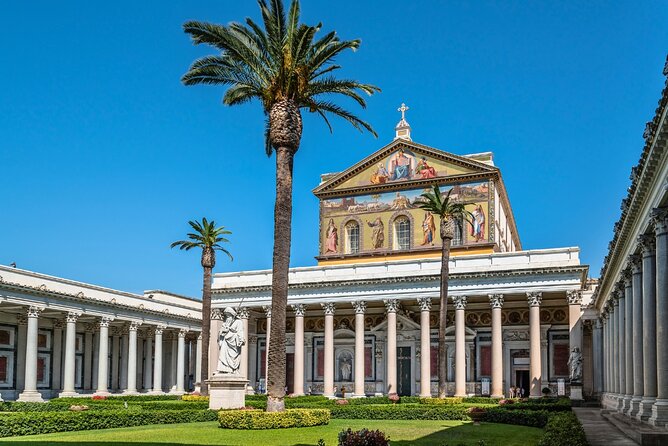
The next stop is Basilica Papale San Paolo Fuori le Mura, or St. Paul Outside the Walls. It lies outside the ancient city boundary, which explains the name and also explains why private transport is helpful.
The basilica was built over the tomb of Paul of Tarsus, who was martyred in the area. A major fire destroyed about 90 percent of the building in the 19th century. The reconstruction followed the original dimensions, using donated marble and funds from Egypt, Russia, and Greece.
That rebuilding story gives the church a different feel from St. John Lateran. You are looking at a place with ancient origins, but also at a vast 19th-century restoration shaped by international support. Your guide can help you separate what survived from what was rebuilt.
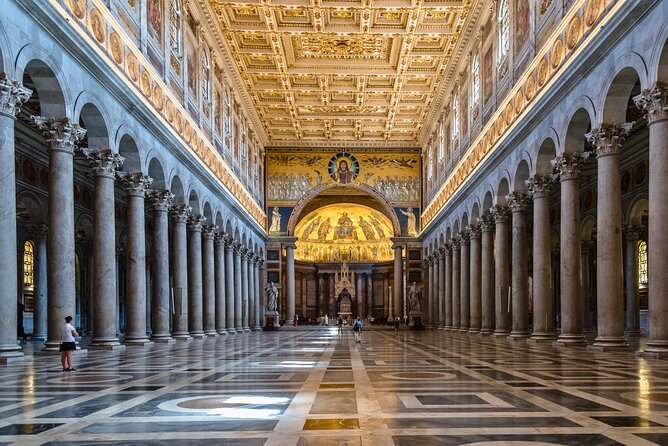
The nave is lined with 80 columns. Above it, portraits of every pope since Saint Peter create a long visual record of the papacy. It is the sort of detail that is easy to miss if you simply walk in, take a photograph, and leave.
At the center is the baldachin of porphyry stone, covering the altar and the grave of Saint Paul below. A large marble Easter candle from the 13th century survived the fire and remains in the basilica. High above, a solid gold mosaic of Christ crowns the church.
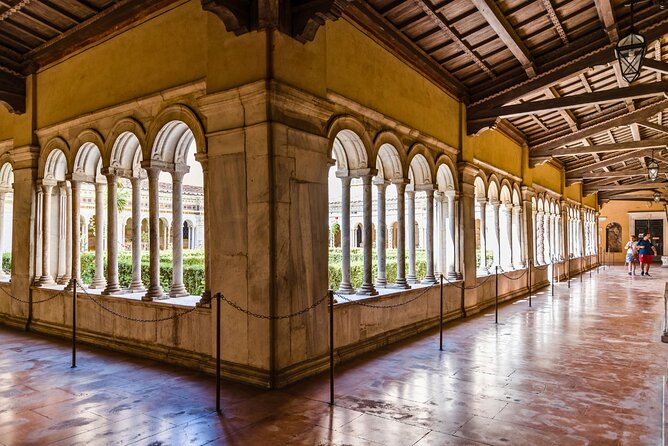
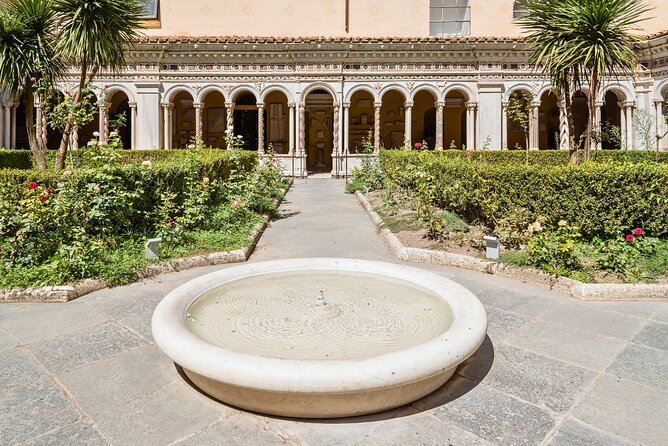
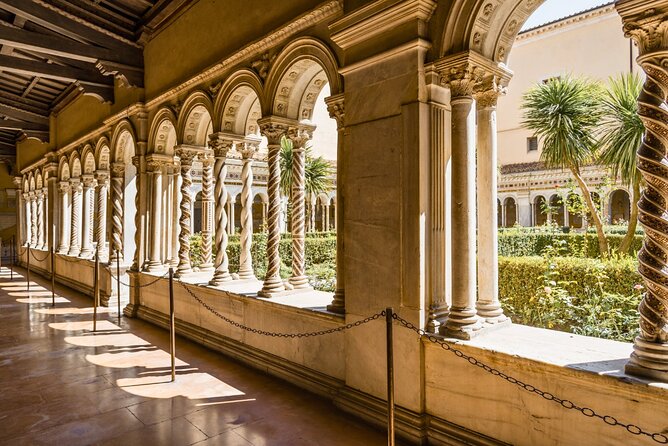
The peaceful cloister offers a quieter pause before or after the main interior. You also have access to the tomb of Saint Paul as part of the visit. For anyone coming to Rome for religious reasons, this is likely the emotional center of the tour.
A Vatican post office, souvenir shop, and café are outside the basilica. The tour description allows 45 minutes here, so do not count on a long coffee break. If you want time for the café or shop, confirm the schedule with your guide.
Santa Maria Maggiore and the Papal Loggia
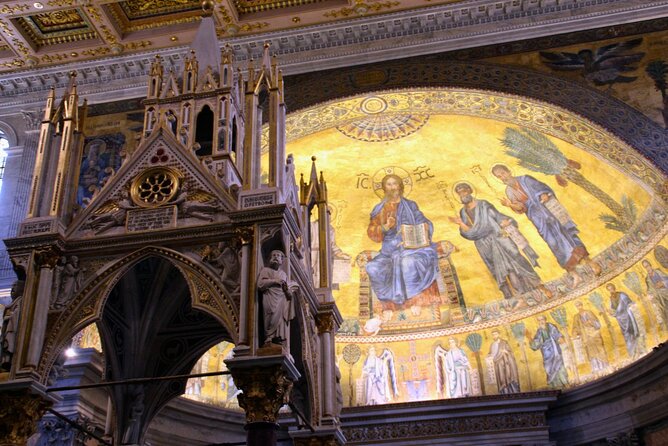
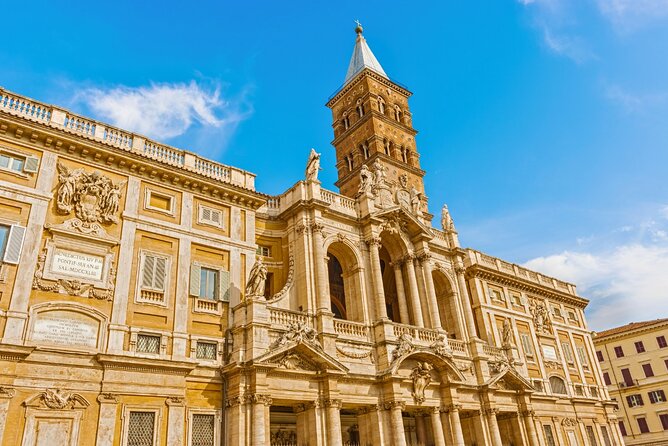
Santa Maria Maggiore is the final basilica, and it brings a different mood to the route. Built in the 5th century, it is famous for its 13th-century golden Byzantine mosaics and its unusually tall bell tower, the highest in Rome.
The church also contains the tombs of Paulina Borghese, Napoleon’s sister, and Gian Lorenzo Bernini, one of the great figures of Baroque Rome. That combination of early Christian decoration, aristocratic burial, and Baroque art gives the basilica a layered visual story.
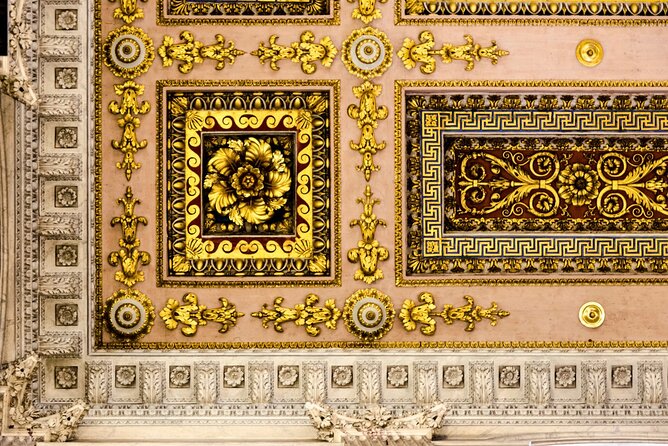
Below the main altar is a porphyry casket containing a relic of the Holy Manger. The ceiling is associated with gold donated by Ferdinand and Isabella of Spain. These details are best understood with a guide because they connect the church’s decoration to devotion, royal patronage, and Rome’s long religious tradition.
This stop includes special ticketed access to the Papal Loggia, one of the tour’s most useful extras. You should not assume that every area will be open if a religious ceremony is taking place, but the planned loggia access gives the visit a feature beyond the standard church interior.
You meet your guide at Santa Maria Maggiore according to the tour information, while the overall route also lists St. John Lateran as the starting point. Since the description presents St. John Lateran first and Santa Maria as the final basilica, confirm the exact meeting instructions before the day of your tour.
More Jubilee Year tours in Rome:
- Highlights of Rome Bike Tour (Including Jubilee Sights)
★ 5.0 · 239 reviews - Private Sacred Relics Jubilee Bike Tour
★ 5.0 · 58 reviews - Rome: Jubilee Year Papal Basilicas Tour by Private Car
★ 4.8 · 57 reviews - Rome+Jubilee Audioguide – TravelMate app for your smartphone
★ 4.2 · 38 reviews
The Jubilee Holy Doors and the spiritual side
The Jubilee focus is the reason to choose this experience now rather than a general church tour. During Jubilee 2025, you can pass through the Holy Doors at all three basilicas on the route.
These doors are not simply decorative entrances. For pilgrims, passing through them is a devotional act tied to the Jubilee. A guide can explain the meaning and help you approach the churches with more context than you would have on your own.
The private setting also makes the experience feel more personal. Guides named Barbara, Massimo, Chiara, Ribal, and Giulia have been associated with warm, clear explanations. The strongest praise has focused on guides who made the visit feel like a true pilgrimage while still keeping the history and art understandable.
That said, guide assignments can vary. The names above are useful examples of the standard you may encounter, not a promise that one specific person will lead your tour. If a particular guide or religious focus matters to you, ask LivTours when booking.
Three hours, private transport, and the real value
The price is $392.22 per person. That is a serious cost for a three-hour experience, especially if you are traveling alone or as a couple. The value improves for a family or small group because the tour is private and group discounts may be available.
You are paying for more than church entry. The package includes private transportation, an expert private guide, admission to the three basilicas, Santa Maria’s special loggia access, and entry to the tomb of Saint Paul. You also save the time and effort of connecting three churches across Rome.
I would not book this tour simply to get inside three buildings. You can visit many Roman churches independently. I would book it if you want the Jubilee doors explained, need efficient transport, or care about the meaning behind the basilicas and their art.
The three-hour length is both a benefit and a limit. It fits well into a busy Rome itinerary, but it leaves little room for lingering, shopping, a long café stop, or extended prayer. If you want a slow spiritual retreat, this is too compressed. If you want a focused introduction, the pace makes sense.
The tour ends near Piazza Venezia, with a drive back to the city center. That makes it easy to continue sightseeing afterward, although the precise end point may depend on the traffic and the route taken.
Dress, access, and practical cautions
Church dress rules are strict. Everyone must have shoulders and knees covered, so avoid tank tops and short dresses. This is not the place to rely on a scarf alone if the rest of your clothing does not meet the requirement.
Most people can take part, and the meeting points are near public transportation. Still, this is a church-focused route with several large interiors and historic religious sites. If you have mobility concerns, ask the provider about the specific access arrangements before booking.
Religious ceremonies can restrict access to certain sections. That is normal for active churches, but it means no tour can guarantee every room or area on every departure. The private format helps your guide adjust the explanation, but it cannot override a service in progress.
St. Peter’s Basilica is not included. This is the most important planning detail. If St. Peter’s is on your Rome list, schedule it separately and allow enough time for its own security and visit requirements.
Free cancellation is available if you cancel at least 24 hours before the start time. Changes or cancellations made inside that period are not refunded, based on the stated policy.
Who should book this private basilica tour?
I would recommend it most strongly to:
- Pilgrims visiting Rome during Jubilee 2025
- First-time visitors who want context, not just entry
- Families or small groups that benefit from private transport
- Art and church-history fans who want a guide’s explanations
- Visitors with limited time who want three major basilicas in one outing
I would be more cautious if you are traveling on a tight budget, prefer independent visits, or want a slow pace. The price is high for three hours, and the schedule leaves little room for detours.
Should you book it?
Book this tour if the Jubilee Holy Doors are central to your Rome plans and you want a guide to connect the ritual, architecture, art, and history. The most compelling parts are St. Paul’s tomb, the three-basilica route, and the special Papal Loggia access at Santa Maria Maggiore.
Skip it if your main goal is St. Peter’s Basilica, since that church is not included, or if you would rather spend several hours in one church. For a private pilgrimage with efficient transport and strong guide involvement, though, this is a focused and meaningful choice.
FAQ
How long does the private Jubilee basilica tour last?
The tour lasts approximately three hours.
Which basilicas are included?
The tour includes St. John Lateran, St. Paul Outside the Walls, and Santa Maria Maggiore.
Are the three Holy Doors included?
During Jubilee 2025, the tour is designed to include access to three Holy Doors, one at each basilica on the route.
Is St. Peter’s Basilica part of the tour?
No. St. Peter’s Basilica is not included and must be planned separately.
Is transportation included?
Yes. Private transportation between the basilicas is included, and you are driven back toward the city center at the end.
Where does the tour start?
The listed starting point is Piazza San Giovanni in Laterano, Rome.
Where does the tour end?
The tour ends at Piazza Venezia, with transportation back toward central Rome.
What should I wear to enter the churches?
You must cover your shoulders and knees. Tank tops and short dresses are not permitted for entry.
What happens if a religious ceremony is taking place?
Access to certain parts of the churches may be limited during religious ceremonies.
Newest Rome tours we have reviewed
- Private TikTok Video Making in Rome★ 5.0 · 7 reviews
- Assisi, Orvieto and Civita di Bagnoregio Full Day Tour from Rome★ 4.5 · 45 reviews
- Assisi & Saint Francis Path Tour from Rome★ 5.0 · 45 reviews
- Assisi and Cascia Private Day Tour from Rome with Lunch★ 5.0 · 10 reviews
- Art Class in the center of Rome!★ 4.0 · 4 reviews
- Art & Craft: Beer Tour with Street Art in Rome★ 4.5 · 6 reviews
- Arrival in Rome: Airport Transfer & Exclusive City Introduction★ 5.0 · 3 reviews
- From Rome: Private Day-Tour of Tuscany★ 5.0 · 16 reviews
Rome Churches and Basilicas Tours, compared.
Vatican Museums, Sistine Chapel & 4 Papal Basilicas Full Day Tour
Read our review →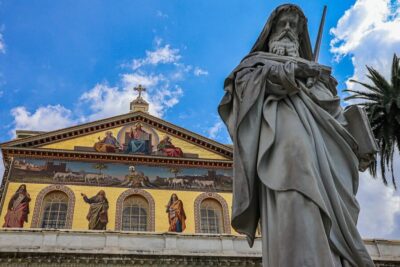
Santa Maria Maggiore Upper Areas Skip-the-Line Ticket
Read our review →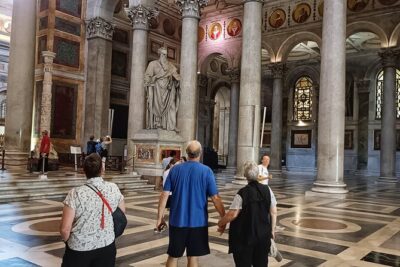
San Clemente Underground and Basilica Guided Tour
Read our review →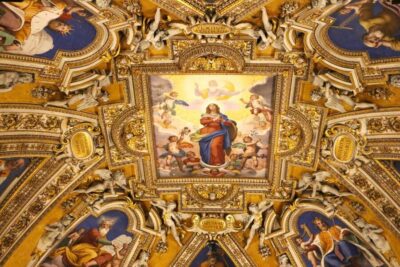
Santa Maria Maggiore and Panoramic Dome Guided Tour
Read our review →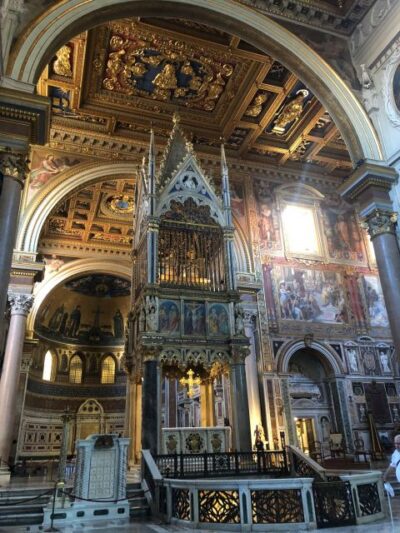
Basilica of St John Lateran & Holy Steps 1-Hour Tour
Read our review →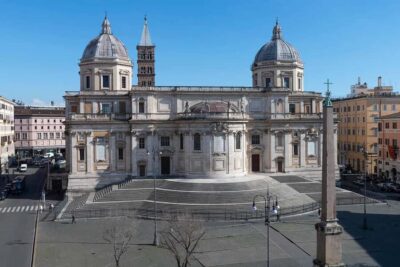
Basilica of St. Mary Major Priority Entrance Ticket
Read our review →Browse the lists this tour appears in