
Reviewed · CARAVAGGIO AND BAROQUE ART TOURS
Renaissance Scarlet Ladies Tour: Caravaggio’s and Borgia’s Women
Rome’s Renaissance story changes when you put women at the center. This three-hour walk follows courtesans, artists’ models, and powerful mothers through churches and streets that many sightseeing plans skip. Massimo, the guide, uses humor, dates, and vivid detail to connect women such as Anna Bianchini, Vannozza Cattanei, and Giulia Farnese to the Rome you see today.
I like the unusual subject and the way the tour joins art, sex, family power, and money instead of treating them as separate subjects. I also like the small group limit of 18, which gives you a fair chance to ask questions and hear the stories in crowded central Rome.
The main consideration is pace. You walk between seven stops for about three hours, and the experience is built around storytelling rather than a long list of major monuments. If this is your first time in Rome and you want the Colosseum or Vatican Museums, choose those first.
Key points to know before booking
- Lady Lucrezia begins the story: A massive statue outside Basilica San Marco introduces you to a famous Roman courtesan.
- Caravaggio’s women take center stage: Learn about Anna Bianchini and see Caravaggio’s work in Sant’Agostino.
- You enter historic churches: Santa Maria sopra Minerva and Sant’Agostino add real artworks and quiet interiors to the walk.
- The Borgia story arrives at Campo de’ Fiori: Vannozza Cattanei, mother of Cesare and Lucrezia Borgia, gets one of the tour’s strongest chapters.
- The walk ends near Piazza Navona: Piazza Farnese is a useful finish, with buses, taxis, Campo de’ Fiori, and central Rome close by.
- The price is moderate for a three-hour small-group tour: The $47.07 fee includes the guide, but not a snack stop along the way.
Why this Rome walking tour feels different
Many Rome tours follow emperors, popes, and famous painters. This one asks a sharper question: who helped shape the city while official accounts left them in the margins?
The answer includes courtesans who ran businesses, women who modeled for painters, mothers who helped build political alliances, and figures whose names survived because of the men around them. You will hear about the economic reality behind their lives, not just the scandalous parts. That gives the walk more substance than a string of colorful anecdotes.
The route also helps you see Rome in a practical way. Instead of moving from one famous ticketed sight to another, you enter churches, look at palace courtyards, and walk along streets lined with old buildings. The tour gives you a different way to read the city after your standard visits to the Pantheon, Trevi Fountain, or Colosseum.
Massimo leads the experience in English. His approach, based on the tour’s format and the comments about his guiding style, combines clear dates with humor and strong narrative pacing. He is especially good for visitors who want historical context without sitting through a formal lecture.
More Caravaggio and baroque art tours:
- Rome: Terrazza Borromini Open-Air Opera with Aperitif
★ 4.7 · 212 reviews - Borghese Gallery Max 6 People Tour: Baroque & Renaissance in Rome
★ 5.0 · 185 reviews - Guided Walking Tour of Rome: Top Sights & Baroque Treasures
★ 5.0 · 155 reviews
Starting with Lady Lucrezia at Basilica San Marco
Meet at 2:30 pm outside the Basilica of St. Mark the Evangelist at Campidoglio, near Palazzo Venezia. The first stop takes only about 20 minutes, but it sets the tone for the afternoon.
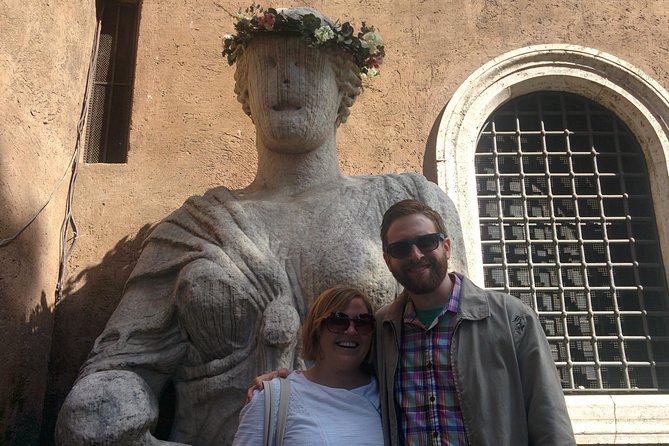
A large statue known as Lady Lucrezia introduces the story. In 1477, the statue received its association with a famous courtesan, and Massimo uses this public monument to explain who Lucrezia was and why her story mattered in Renaissance Rome.
This is a clever opening. You are not starting with an art museum label or a grand political speech. You begin with a woman remembered through a statue and a nickname. The contrast between the imposing monument and the personal story makes the city feel less polished and more human.
The basilica itself is not presented as a long sightseeing stop. Instead, it works as a meeting point and a setting for the first chapter. That matters if you want a tour with a clear narrative rather than a full architectural survey of every church.
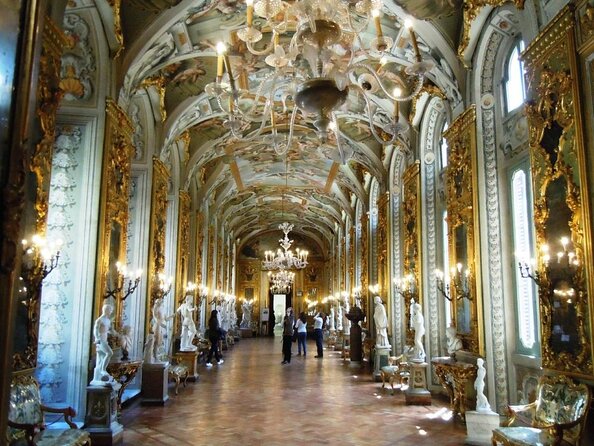
Anna Bianchini and Caravaggio at Villa Doria Pamphilj
The next stop takes you to the courtyard of Villa Doria Pamphilj, where the tour turns to Anna Bianchini. She is presented as Caravaggio’s first model and the woman who modeled for him most often.
Caravaggio’s paintings can seem familiar until you know something about the people behind the faces. This part of the tour gives you a way to think about the artist’s working life and the women who appeared in his paintings. You learn about Anna not simply as an image, but as a person connected to the city and to the painter’s career.
The courtyard setting adds a useful visual link. You are standing in an old Roman property while hearing how women moved through the city’s social and artistic world. The stop lasts around 20 minutes, so expect a focused story rather than an extended art lecture.
If you already know Caravaggio’s major paintings, you will likely appreciate this section most. If you know little about him, it still gives you a strong reason to look more closely at his work during the rest of your time in Rome.
Santa Maria sopra Minerva and the successful courtesan
At Chiesa di Santa Maria sopra Minerva, you enter one of the tour’s main church stops. The church contains important artworks, and the interior gives the story a quieter setting after the outdoor opening chapters.
Here Massimo tells the story of a highly successful courtesan who lived in Europe in the early 16th century. The point is not just that she was famous. Her success opens a discussion about education, money, status, and the limited routes available to women who wanted independence or influence.
This is one of the tour’s strongest ideas: a courtesan’s life was not only a tale of romance or scandal. It could also involve business, social networks, and the ability to move among powerful people. You get a better sense of the economic rules that shaped women’s choices.
Allow about 25 minutes here. Since you enter a working church, keep your voice and clothing appropriate for the setting. The church is a major part of the experience, but this is not marketed as a full guide to every object inside. The women’s stories remain the main event.
Same city, a completely different half-day:
- Vatican Museums & Sistine Chapel Tour with Optional Basilica
★ 4.3 · 67,413 reviews - Vatican Museums, Sistine Chapel & St Peter’s Basilica Guided Tour
★ 4.5 · 39,149 reviews - Rome: Colosseum, Palatine Hill and Roman Forum Guided Tour
★ 4.8 · 32,814 reviews - Rome: Guided Tour of Colosseum, Roman Forum & Palatine Hill
★ 4.7 · 27,897 reviews
Caravaggio’s Virgin Mary in Sant’Agostino
Basilica Sant’Agostino adds another church interior and one of the clearest art connections on the route. You see Caravaggio’s original Virgin Mary and the Pilgrims canvas.
The painting gives you a chance to connect the discussion of Anna Bianchini and Caravaggio’s models with a specific work. Rather than hearing about the painter in the abstract, you can look at an actual canvas while considering how ordinary people and women entered religious art.
The church is also tied to several stories about women, so the stop broadens the focus beyond one painter. It shows how religious spaces could preserve complicated accounts of women’s lives, reputations, and roles.
Plan on about 20 minutes. The stop suits people who want art woven into a walking tour instead of a dedicated museum visit. You may want more time if you are a serious Caravaggio fan, but the schedule keeps the group moving.
Via dei Coronari and the homes of courtesans
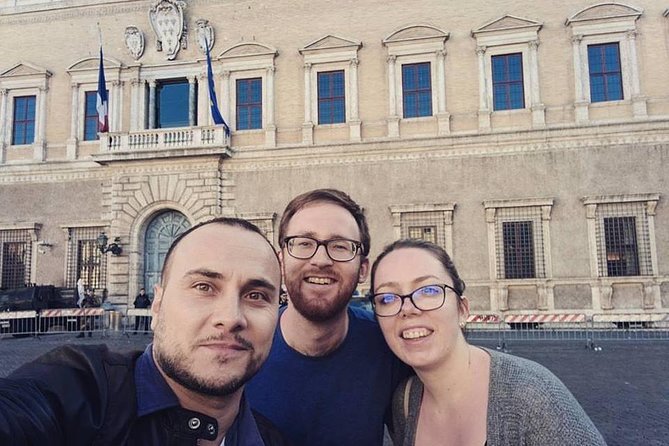
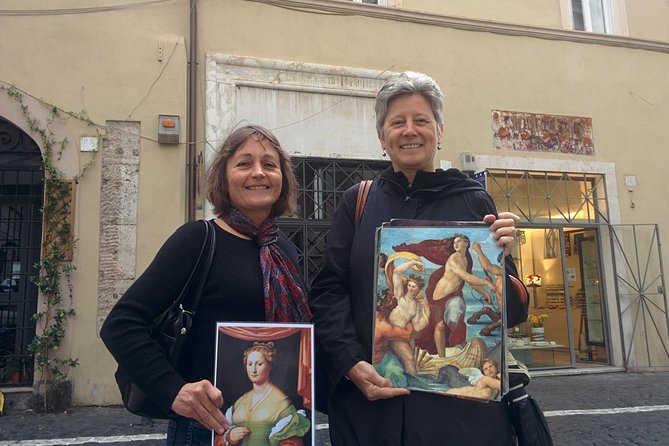
Via dei Coronari is a short stop, about 10 minutes, but it may be one of the most useful for understanding daily life. You walk among original 15th and 16th-century buildings that were once owned by courtesans.
This is where the stories gain physical scale. A name and a date can feel distant. An old street, a doorway, and the pattern of nearby buildings can help you picture where these women lived and worked.
Do not expect a long interior visit here. The value comes from looking closely at the street itself and imagining the social world that occupied it. Massimo uses the surviving buildings to bring the women’s routines out of the realm of legend.
The brief stop also gives your legs a break from standing inside churches. You will be walking a fair amount overall, but the route is spread through central Rome rather than built around one long trek.
Vannozza Cattanei at Campo de’ Fiori
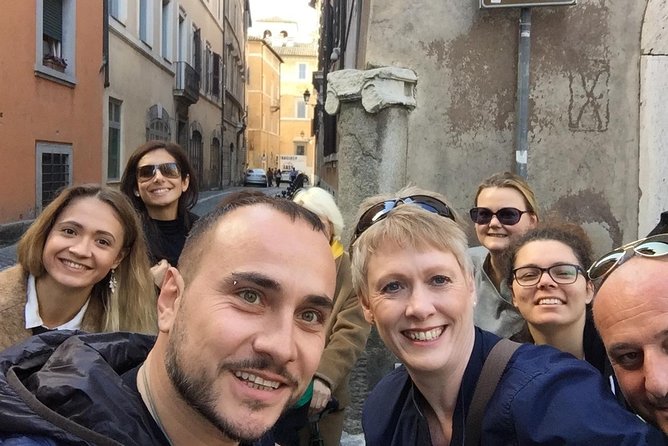
At Campo de’ Fiori, the tour turns to Vannozza Cattanei, mother of Cesare and Lucrezia Borgia. If the Borgia family already interests you, this is likely to be a highlight.
Vannozza’s story shifts attention away from the usual Borgia headlines. Instead of focusing only on Cesare’s ambition or Lucrezia’s reputation, the tour gives you the perspective of the woman who raised them and occupied an important place within their family story.
Campo de’ Fiori is a useful setting because it feels connected to everyday Rome rather than sealed away in a palace. The square has long been part of the city’s public life, and the location gives the story an open, direct quality.
This chapter takes about 20 minutes. It is also a good point to pause for a snack. A snack bar stop is possible halfway through the walk, but you pay for anything you buy. Bring money or a card if you want something to eat or drink, since refreshments are not part of the tour price.
Giulia Farnese and the final stop at Piazza Farnese
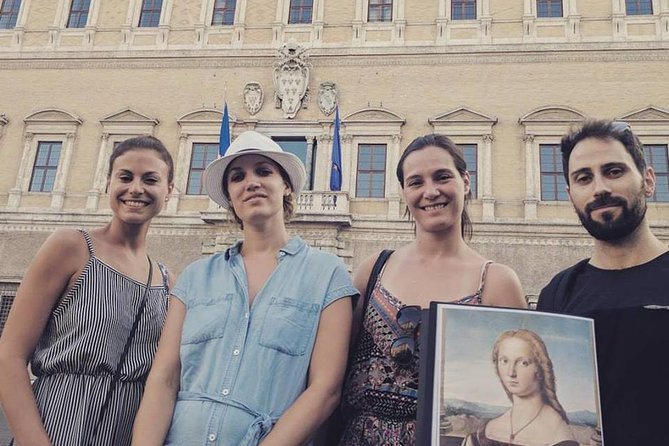
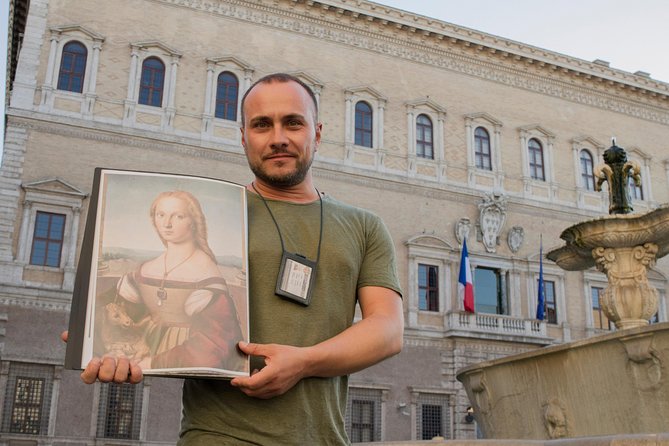
The final stop is Piazza Farnese, beside Palazzo Farnese, the grand building designed by Michelangelo that now houses the French Embassy. Here you hear the story of Giulia Farnese.
The closing chapter is described as sad and moving, which gives the walk an emotional finish rather than ending with a simple list of facts. Giulia’s story also fits the tour’s larger theme: women could hold beauty, family connections, and social power, yet their lives were often recorded through the men who surrounded them.
Piazza Farnese is an excellent place to finish. It is central, close to Campo de’ Fiori and within easy reach of Piazza Navona. You will find a taxi stand and several bus stops nearby, so you can continue sightseeing or return to your accommodation without solving a complicated transport problem.
The ending location also makes this tour easy to pair with an evening in central Rome. You could continue toward Piazza Navona, eat near Campo de’ Fiori, or simply use the square as a clear reference point for your next stop.
What the $47.07 price includes
At $47.07 per person, this is a reasonable price for a three-hour guided walk with a group capped at 18 people. The fee covers the guided tour and the storytelling at the churches, palace courtyard, and historic streets.
You are paying mainly for structure and interpretation. Rome is full of places you can walk past without understanding, and Massimo connects them into one subject-led route. That is useful if you have already seen the major sights and want something more focused.
The price does not include snacks. There may be a stop at a snack bar halfway through, but anything you purchase is extra. The tour also lists free admission at the stops, so you are not facing a series of additional entrance fees during the walk.
For value, I would choose this tour if you care about Renaissance art, women’s social history, Caravaggio, or the Borgias. If you mainly want grand interiors and famous monuments, a conventional Rome highlights tour may give you more for the same afternoon.
Timing, group size, and practical comfort
The tour starts at 2:30 pm and lasts approximately three hours. Afternoon timing works well if you want a slower morning or need to fit another sight into your day, though Rome’s heat can make any walking tour tiring during the warmer months.
The group can include up to 18 people. That is not a private tour, but it is small enough to keep the guide’s voice within reach and leave room for questions. Bring comfortable shoes, since you walk between seven stops and spend time standing in churches and outdoor spaces.
A mobile ticket is accepted, and the tour is offered in English. Most people can participate, and service animals are allowed. The route is near public transportation at both ends, which makes it practical for a day built around central Rome.
You receive confirmation when booking. Free cancellation is available if you cancel at least 24 hours before the start time. If the minimum number of participants is not reached and the tour is canceled, you are offered another date or experience, or a full refund.
Who should book the Scarlet Ladies Tour?
I would recommend it to repeat visitors, art lovers, readers of Renaissance history, and anyone tired of hearing Rome explained only through powerful men. It is also a good choice if you like walking tours with a strong theme and a guide who tells stories rather than reciting dates.
The tour works particularly well for solo visitors and companions who enjoy art or history. The small group gives you a social setting without the scale of a major city tour, and the three-hour length is long enough to develop the stories without taking an entire day.
I would think twice if you need step-free access at every point, since the supplied details confirm that most people can participate but do not give a full accessibility breakdown. I would also skip it if you want a fast tour of Rome’s headline attractions or prefer to spend most of your time inside museums.
Should you book this Rome women’s history walk?
Book it if you want Rome to make more sense after the standard sightseeing is done. The route gives you courtesans, Caravaggio, the Borgias, old houses, churches, and a final story in Piazza Farnese, all tied together by women whose roles were often overlooked.
The best reason to go is the focus. You are not simply passing famous buildings. You are learning how women shaped the social and artistic life around them, with Massimo guiding the afternoon through clear dates, humor, and memorable personal stories.
At $47.07, it offers solid value for a three-hour small-group experience. Just wear good shoes, plan your snack money, and choose it for the stories rather than for a checklist of Rome’s biggest sights.
FAQ
How long is the Renaissance Scarlet Ladies Tour?
The tour lasts approximately three hours.
What time does the tour begin?
It begins at 2:30 pm.
Where does the tour start?
The meeting point is Basilica of St. Mark the Evangelist at Campidoglio, near Palazzo Venezia, at Piazza di S. Marco 48 in Rome.
Where does the tour end?
The tour ends at Piazza Farnese 44, near Campo de’ Fiori and Piazza Navona.
Is the tour offered in English?
Yes. The tour is offered in English.
How many people can join the tour?
The maximum group size is 18 people.
Are snacks included?
No. The tour may stop at a snack bar, but you pay for any food or drink yourself.
Newest Rome tours we have reviewed
- Private TikTok Video Making in Rome★ 5.0 · 7 reviews
- Assisi, Orvieto and Civita di Bagnoregio Full Day Tour from Rome★ 4.5 · 45 reviews
- Assisi & Saint Francis Path Tour from Rome★ 5.0 · 45 reviews
- Assisi and Cascia Private Day Tour from Rome with Lunch★ 5.0 · 10 reviews
- Art Class in the center of Rome!★ 4.0 · 4 reviews
- Art & Craft: Beer Tour with Street Art in Rome★ 4.5 · 6 reviews
- Arrival in Rome: Airport Transfer & Exclusive City Introduction★ 5.0 · 3 reviews
- From Rome: Private Day-Tour of Tuscany★ 5.0 · 16 reviews
Caravaggio and Baroque Art Tours, compared.
Terrazza Borromini Open-Air Opera with Aperitif
Read our review →
Borghese Gallery Max 6 People Tour: Baroque & Renaissance in Rome
Read our review →
Guided Walking Tour of Rome: Top Sights & Baroque Treasures
Read our review →
Rome’s Baroque Art Walking Tour: Who Killed Caravaggio?
Read our review →
Palazzo Barberini (Caravaggio Exhibition Is Not Included)
Read our review →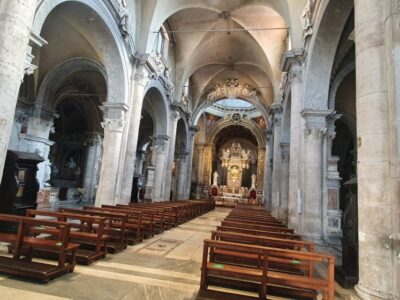
Browse the lists this tour appears in