
Reviewed · ROME CHURCHES AND BASILICAS TOURS
Rome: Basilica of St Mary Major Catholic Pilgrim Tour
St Mary Major holds some of Rome’s most important Catholic treasures, including wood from the crib of Jesus and the icon Salus Populi Romani, traditionally linked to St Luke. I especially like the focus on the symbolic mosaics and the chance to study the basilica as a place of faith, not just as a pretty church.
I also like the small group, capped at 10, and the guide-led discussion. Tom is noted for turning the visit into a conversation, while Wen has been praised for clear, professional explanations. The main consideration is time: one hour goes quickly, and visitors who want a broad art-history tour may find the Catholic focus narrow.
Key points to know before booking
- The Holy Door is one of Rome’s four Jubilee Doors, making the basilica especially important to Catholic pilgrims.
- The crib relic offers a direct connection to the Nativity story, with wood traditionally associated with the manger of Jesus.
- Salus Populi Romani is a major Marian icon, held by Catholic tradition to have been painted by St Luke the Evangelist.
- The mosaics reward close attention, since their biblical scenes carry layers of teaching and symbolism.
- The group is limited to 10 people, with radio headsets supplied for groups of seven or more.
- The meeting point is the fountain in Piazza Santa Maria Maggiore, not the side of the basilica on Via Cavour.
Why St Mary Major deserves a dedicated visit
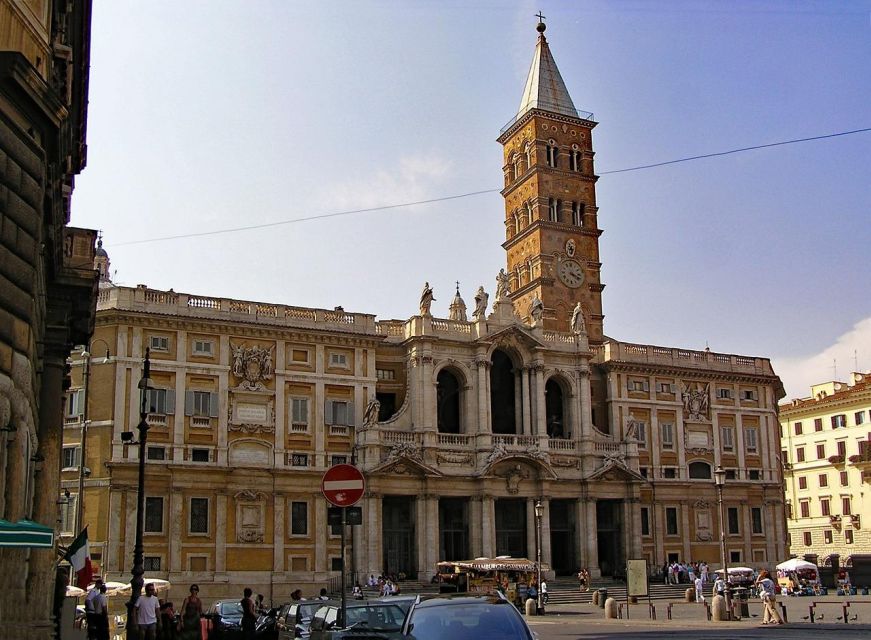
Rome has no shortage of churches, but St Mary Major, or Santa Maria Maggiore, belongs to a special set. It is one of the four Major Papal Basilicas, along with St Peter’s, St John Lateran, and St Paul Outside the Walls. It is also one of Rome’s four basilicas with a Holy Door for Jubilee Years.
That status matters if you are making a Catholic pilgrimage. This is not simply a stop for grand ceilings and polished marble. The basilica has a formal role in the life of the Church, and the tour explains that role while pointing out the objects pilgrims come to venerate.
St Mary Major also competes with Santa Maria in Trastevere for the title of Rome’s oldest church dedicated to Our Lady. The point is less about winning an argument over dates and more about understanding how long Marian devotion has shaped Rome. A guide can connect the building’s names, artwork, relics, and rituals in a way that is hard to manage with a quick self-guided visit.
The tour is designed for people who want the Catholic meaning explained clearly. If you are interested mainly in architecture without religious context, you will still see a striking basilica, but much of the guide’s attention will go toward doctrine, pilgrimage, relics, and biblical teaching.
More churches and basilicas in Rome:
- Vatican Museums, Sistine Chapel & 4 Papal Basilicas Full Day Tour
★ 4.5 · 1,068 reviews - Vatican: Pope Francis Tomb and Papal Basilicas Tour
★ 4.7 · 340 reviews - Rome: Santa Maria Maggiore Upper Areas Skip-the-Line Ticket
★ 3.8 · 223 reviews
Meeting at the fountain in Piazza Santa Maria Maggiore
Your meeting point is the fountain in front of the main entrance. This detail is worth taking seriously because the basilica’s front faces Piazza Santa Maria Maggiore, not Via Cavour. Rome’s streets can make a simple rendezvous feel like a small treasure hunt, so arrive with the correct map pin ready.
The meeting place gives you a useful first look at the building before you enter. The guide discusses the Holy Door from outside, and you can take in the basilica’s position in the piazza before the interior details begin.
WhatsApp is requested so the guide can contact you in real time if there is a problem finding the group. Transport is not included, so you arrange your own way to the piazza and your own transport afterward. That is easy enough to manage, but leave a little extra time for Rome’s traffic, crowds, or a wrong turn.
The activity includes an express security check, which helps keep this short tour moving. Security procedures can still take time, and the basilica remains an active place of worship, so the schedule may feel more like a guided religious visit than a museum appointment.
The Holy Door and the meaning of a Jubilee pilgrimage
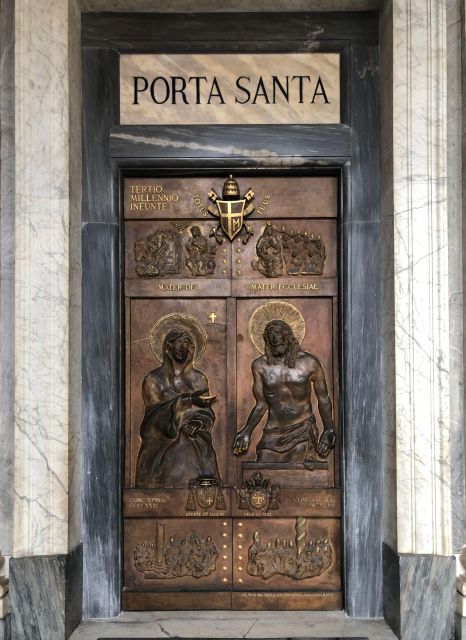
Before entering, you look closely at one of the four Holy Doors. These doors open during Holy Jubilee Years, when pilgrims may visit designated basilicas and seek a Plenary Indulgence under the required conditions of the Catholic Church.
The guide’s role here is useful. A Holy Door can look like an architectural feature if you do not know its purpose. The explanation gives it a place within the wider pilgrimage tradition and helps you see why the four Major Basilicas matter to Catholic visitors.
The door is also a good opening subject because it sets the tone for the rest of the hour. You are not only touring a historic building. You are learning how the basilica functions as a destination for prayer, veneration, and pilgrimage.
The precise experience of the door depends on the Jubilee period and the basilica’s arrangements. The supplied details say the doors open during Jubilee Years, not that this tour guarantees access through an open door at every date. If that ritual is the main reason for your visit, check the current schedule before booking.
The crib relic and the Nativity connection
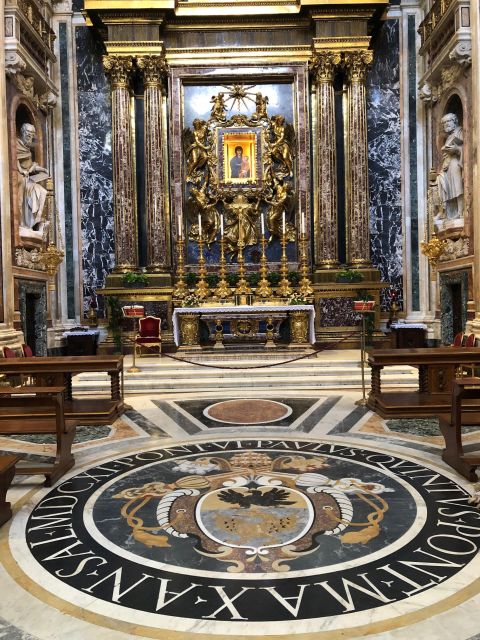
Inside, the tour points out wood traditionally associated with the crib of the baby Jesus. For Catholic pilgrims, this is one of the most moving objects in the basilica because it connects the Roman church with the Nativity story in a physical way.
The relic is part of a wider tradition of bringing objects from holy places in the East to Rome so pilgrims could venerate them. That context helps explain why Rome became such an important pilgrimage center. The city did not only preserve grand churches. It also gathered objects that linked worshippers to the life of Christ and the early Church.
You should expect this part of the visit to be devotional rather than archaeological. The tour presents the relic through Catholic belief and pilgrimage practice. It does not promise a scientific examination of the wood or a lengthy treatment of its provenance.
That distinction is helpful when deciding if the tour suits you. If you want to understand why the relic matters to believers, this is central. If you want an art-only route through the basilica, the explanation may feel more detailed than you need.
Same city, a completely different half-day:
- Vatican Museums & Sistine Chapel Tour with Optional Basilica
★ 4.3 · 67,413 reviews - Vatican Museums, Sistine Chapel & St Peter’s Basilica Guided Tour
★ 4.5 · 39,149 reviews - Rome: Colosseum, Palatine Hill and Roman Forum Guided Tour
★ 4.8 · 32,814 reviews - Rome: Guided Tour of Colosseum, Roman Forum & Palatine Hill
★ 4.7 · 27,897 reviews
Salus Populi Romani and Marian devotion
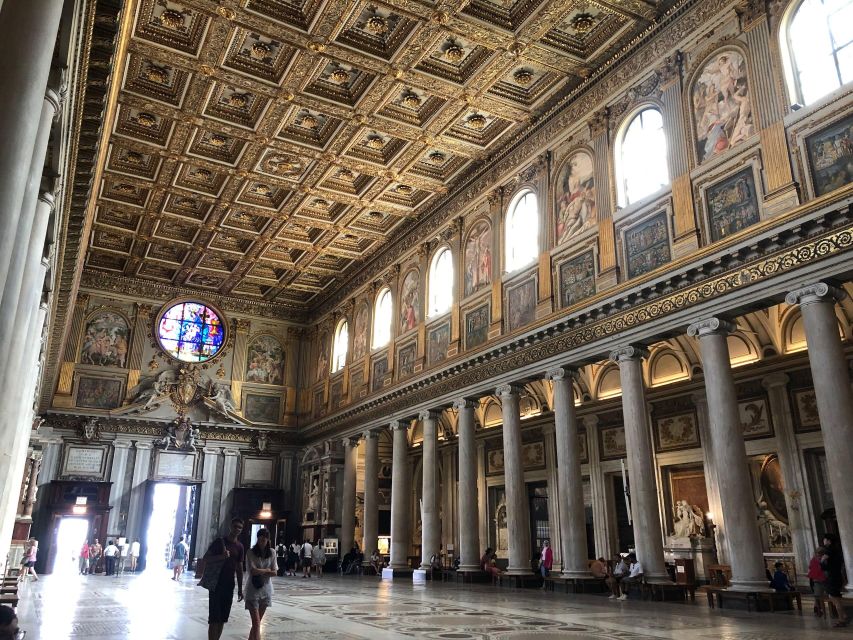
Another major focus is the icon Salus Populi Romani, traditionally believed to have been painted by St Luke the Evangelist. The title is commonly understood as a prayer for the protection or salvation of the Roman people, and the image has a major place in Catholic devotion.
The tour gives you a chance to view the icon in its setting and understand why it draws pilgrims. Its importance comes from more than appearance. The traditional connection with St Luke, the association with Mary, and the role of the image in Roman prayer all give it a meaning that a passing glance cannot convey.
This is one of the tour’s strongest reasons to book for a Catholic visitor. You are not simply ticking off another famous image. You are learning how a particular icon became part of the spiritual identity of Rome.
The listing does not promise a private prayer period or guaranteed access to every area connected with the icon. Expect a guided look and explanation within the basilica’s normal visitor arrangements.
Mosaics that teach through pictures
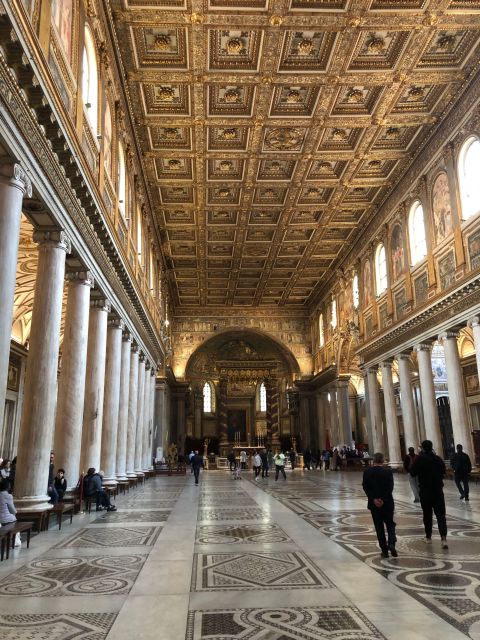
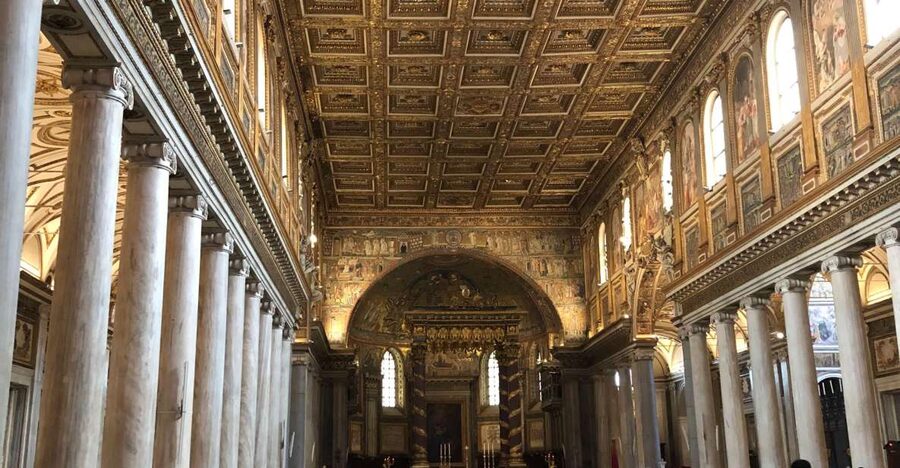
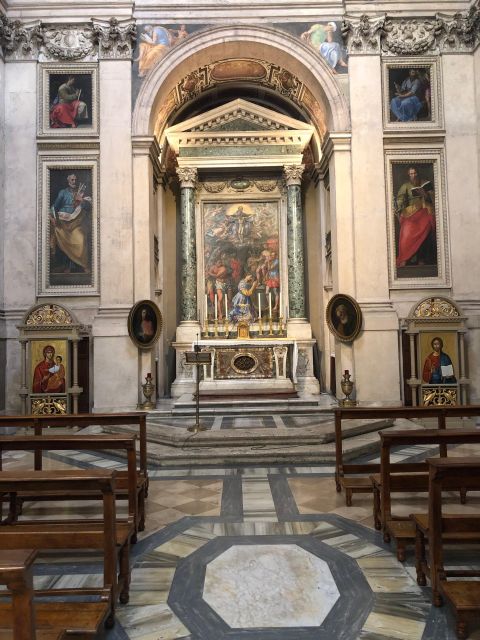
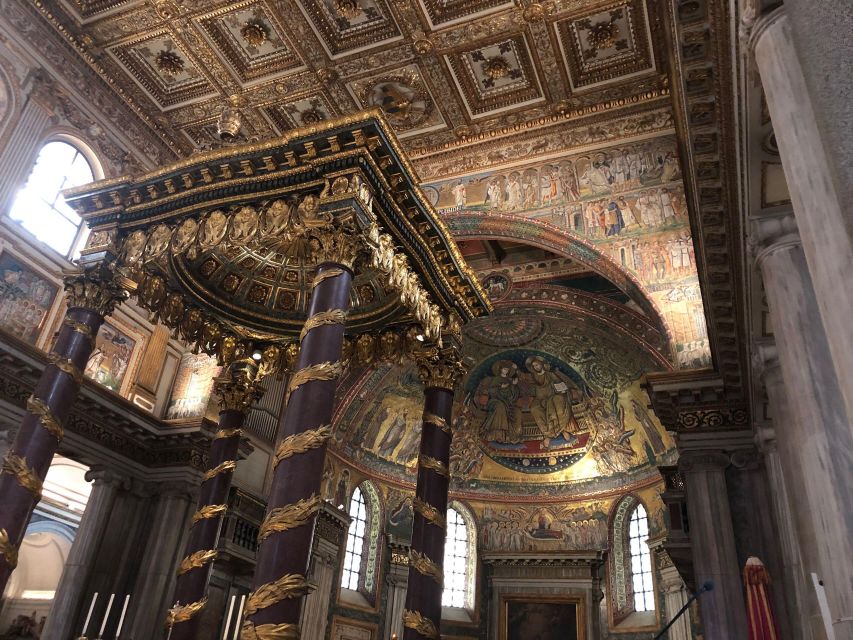
The mosaics behind the altar are a highlight for anyone who likes to read buildings as visual lessons. Their scenes carry biblical symbolism and connect the Old and New Testaments. The guide explains the images as catechesis, meaning the artwork teaches Catholic belief through pictures.
This is where a short guided visit can add real value. On your own, you might admire the glittering surfaces, colors, and formal scenes, then move on. With the right explanation, you can look for links between biblical events and the Church’s teaching.
The tour stresses details that ordinary sightseeing guides may pass over. That is important because St Mary Major can overwhelm you with scale and decoration. A guide helps direct your eyes to the parts with meaning, rather than leaving you to photograph the ceiling and miss the visual argument unfolding behind the altar.
Tom’s approach, based on the feedback available, is conversational. He answers questions and encourages a dialogue instead of delivering only a fixed speech. That suits visitors who like to ask why a scene appears in a certain place or how a symbol connects to Catholic belief.
Pope St Pius V and the basilica’s layers of memory
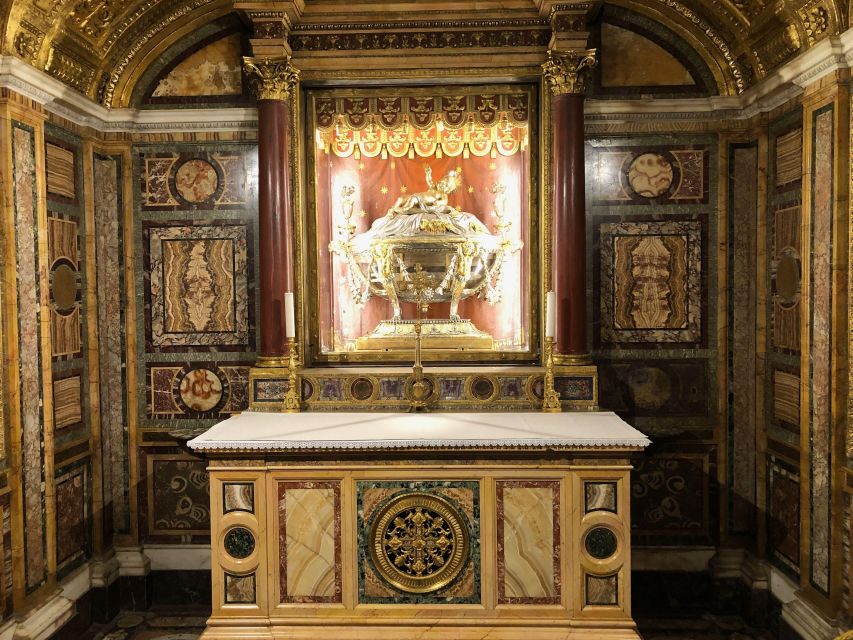
The tour also includes the glass sarcophagus of Pope St Pius V. It adds another layer to the basilica’s identity, bringing the story forward from biblical relics and Marian devotion to the memory of a pope honored within the church.
This variety keeps the hour from becoming a single-subject visit. You move from the Holy Door to the Nativity relic, then to Marian devotion, mosaics, and papal history. The common thread is the basilica’s role as a living Catholic place, not just a container for art.
The guide can help you understand how these objects work together. The crib relic points toward Christ’s birth. Salus Populi Romani centers devotion to Mary. The mosaics teach through scripture, and the papal sarcophagus links the church to later Catholic history.
The drawback is that one hour leaves little room for lingering. You may want to spend extra time afterward looking again at the mosaics or praying near the icon. The tour concludes on the steps in front of the main entrance, so plan to return inside on your own only if the basilica’s rules and opening arrangements allow it.
How the one-hour format works
The stated duration is about one hour, though the full visit may run between 60 and 90 minutes. That makes it easy to fit into a Rome itinerary, especially if you are visiting the area around Termini, but it is not a full morning pilgrimage.
The route begins and ends at St Mary Major. You do not transfer to another basilica during this booking. People continuing on to the larger Via Crucis Pilgrim Tour leave with the guide for additional sites, including the Relics of Christ’s Passion and St John Lateran. If you book only this experience, your basilica visit ends at the main entrance steps.
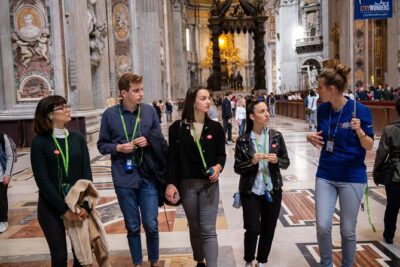
A small group of no more than 10 is a useful middle ground. You get more room for questions than on a large coach tour, without the cost of a fully private guide. For groups of seven or more, radio headsets are provided, which should make it easier to follow in a large interior.
English and Chinese tours are available. The guide is described as a devout Catholic, so you should expect a faith-centered presentation rather than a neutral lecture. A homily is available on request, another sign that the experience can serve a devotional purpose for those who want it.
Is $65 a fair price?
At $65 per person, this is not the cheapest way to enter a Roman church. St Mary Major itself does not require this price simply to look inside. You are paying for a small-group guide, an express security check, interpretation of the Catholic symbolism, and attention to relics and pilgrimage practices.
I see the value most clearly if you would otherwise miss the meaning of the mosaics, Holy Door, crib relic, or Salus Populi Romani. The tour turns a short visit into a focused lesson. It also saves you from piecing together the basilica’s importance from scattered guidebook notes.
The price is harder to justify if you already know the church well, prefer independent visits, or want a broad secular art tour. You may get more from a larger Rome churches tour if your interests include architecture across many sites.
The small group and strong guide feedback improve the value. Tom has been praised for detailed explanations and an easy conversation style, while Wen has been praised for clear, professional delivery. The overall rating is 4.9 from eight reviews, a small sample but a reassuring sign that the guide quality has been consistent.
Dress, language, and practical limits
Shorts and short skirts are not allowed. Dress for a church visit, with shoulders and knees covered to avoid a problem at the entrance. This is not a minor detail: a perfect schedule does not help if your clothing prevents entry.
The tour is offered in English and Chinese. English-speaking visitors who want questions answered should find the small group format useful, especially with a guide who treats the visit as a discussion.
All taxes and fees are included. Guide tips are not included, and transport to or from the basilica is your responsibility. Clerics can join for free by contacting the provider.
Free cancellation is available up to 24 hours before the start time, and you can reserve now and pay later. Those policies help if your Rome schedule is still shifting, but they do not change the main practical issue: the meeting point must be the fountain in Piazza Santa Maria Maggiore.
Who should book this St Mary Major tour?
I would choose this for a Catholic pilgrim, a visitor with a strong interest in Marian devotion, or anyone who wants religious artwork explained from inside the faith that produced it. It is also a good fit if you have only an hour and want a focused visit rather than a general city tour.
Families and first-time Rome visitors may appreciate the clear route and small group, though children who are not interested in churches may find the symbolism-heavy talk slow. Art lovers should enjoy the mosaics, but they should know that the guide gives priority to theology and pilgrimage meaning.
I would skip it if you want a quiet, self-directed prayer visit, since a guided group naturally adds conversation and movement. I would also skip it if the Holy Door is your only goal and you are visiting outside a Jubilee period, since the doors open during Jubilee Years.
Should you book it?
Book this tour if you want to understand why St Mary Major matters, not merely see how it looks. The combination of the Holy Door, crib relic, Salus Populi Romani, papal sarcophagus, and symbolic mosaics gives the hour a clear purpose.
The best reason to book is the guide. Tom’s question-and-answer style and Wen’s clear presentation match the needs of visitors who want careful explanations without a huge group. At $65, the tour makes sense when that context will deepen your visit.
If you prefer independent sightseeing or a wider art-history survey, save the money and explore at your own pace. For a focused Catholic pilgrimage stop with a small group and a strong devotional angle, this is a solid choice.
FAQ
How long does the St Mary Major tour last?
The tour is scheduled for one hour, though the full visit may last between 60 and 90 minutes.
Where does the tour meet?
Meet at the fountain in front of the main entrance to the Basilica of St Mary Major in Piazza Santa Maria Maggiore. The front of the basilica does not face Via Cavour.
What languages are available?
The tour is available in English and Chinese.
What does the tour include?
The price includes the guided visit, all taxes and fees, and radio headsets for groups of seven or more. A homily is available on request.
Is transport included?
No. You arrange your own transport to the meeting point and from the end of the tour.
Are there clothing rules?
Yes. Shorts and short skirts are not allowed.
Can clerics join for free?
Yes. Clerics can contact the provider about a free place.
Can I cancel for a refund?
Yes. You can cancel up to 24 hours in advance for a full refund. You can also reserve now and pay later.
Newest Rome tours we have reviewed
- Private TikTok Video Making in Rome★ 5.0 · 7 reviews
- Assisi, Orvieto and Civita di Bagnoregio Full Day Tour from Rome★ 4.5 · 45 reviews
- Assisi & Saint Francis Path Tour from Rome★ 5.0 · 45 reviews
- Assisi and Cascia Private Day Tour from Rome with Lunch★ 5.0 · 10 reviews
- Art Class in the center of Rome!★ 4.0 · 4 reviews
- Art & Craft: Beer Tour with Street Art in Rome★ 4.5 · 6 reviews
- Arrival in Rome: Airport Transfer & Exclusive City Introduction★ 5.0 · 3 reviews
- From Rome: Private Day-Tour of Tuscany★ 5.0 · 16 reviews
Rome Churches and Basilicas Tours, compared.
Vatican Museums, Sistine Chapel & 4 Papal Basilicas Full Day Tour
Read our review →
Santa Maria Maggiore Upper Areas Skip-the-Line Ticket
Read our review →
San Clemente Underground and Basilica Guided Tour
Read our review →
Santa Maria Maggiore and Panoramic Dome Guided Tour
Read our review →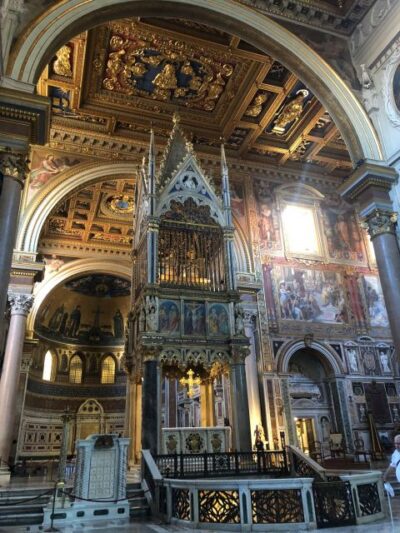
Basilica of St John Lateran & Holy Steps 1-Hour Tour
Read our review →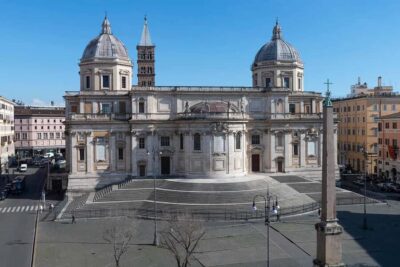
Basilica of St. Mary Major Priority Entrance Ticket
Read our review →Browse the lists this tour appears in