

Reviewed · BORGHESE GALLERY TOURS
Rome: Borghese Gallery Entry Ticket & Optional Guided Tour
The Borghese Gallery packs some of Rome’s finest sculpture and painting into an intimate villa. Bernini’s marble figures, Caravaggio’s stark faces, Titian’s color, and Raphael’s drama are all close at hand, not scattered across a huge museum. The art is the main event, but the setting makes it easier to focus.
I like the escorted fast-track entrance, especially when regular tickets are hard to find. I also like the choice between exploring alone and joining an English guide such as Dimitri, Federico, Irene, or Claudia Rossi. The main drawback is the fixed two-hour visit, which can feel short when nearly every room demands your attention. You’ll also need to leave large bags, luggage, umbrellas, and pets behind.
Key points to know before you book

- Bernini takes center stage: His sculptures are displayed close enough for you to study faces, hands, hair, and folds in the marble.
- The collection rewards an art guide: Guides including Dimitri, Federico, Irene, Matteo, Lisa, and Claudia Rossi have been praised for clear, lively explanations.
- Fast-track entry saves time: You enter through a separate entrance with a coordinator instead of waiting in the main line.
- Two hours goes quickly: You can see the major works, but a slow, room-by-room visit may require a return trip.
- The gardens add a pleasant finish: After the gallery, you can stroll outside and take in the view toward Piazza del Popolo.
- Plan carefully for children and bags: Anyone under 18 needs a reserved ticket, even when the ticket is free.
Why the Borghese Gallery feels different from a large Rome museum
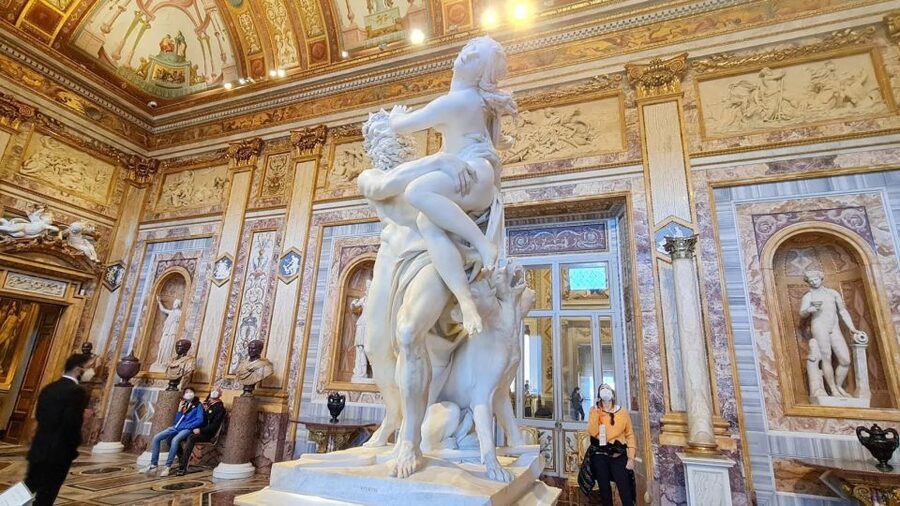
The Borghese Gallery is not a bare hall filled with paintings. It is an art-filled villa where sculpture, ceiling decoration, furniture, and architecture all compete for your attention. That can sound overwhelming, but the small scale works in your favor. You are not walking miles between collections.
The collection brings together major names in Western art. You can see Bernini and Canova in sculpture, Caravaggio and Titian in painting, and Raphael among the Renaissance works. The result is a concentrated lesson in the art Rome prized most, particularly the theatrical Baroque style.
I find this kind of museum easier to appreciate than a giant collection with hundreds of rooms. You can keep a clear sense of place. One room may draw your eye upward to its ceiling while a sculpture below asks you to walk around it. You are constantly comparing the flat surface of a painting with the physical movement of marble.
The gallery is also a good choice if your Rome schedule is tight. A two-hour visit gives you a focused art stop rather than an entire day indoors. It is still a serious museum, so do not treat the ticket as a quick photo opportunity. The main works deserve time.
More Borghese Gallery tours:
- Rome: Borghese Gallery Guided Tour with Skip-the-Line Entry
★ 4.8 · 2,649 reviews - Rome: Borghese Gallery Skip-the-Line Tickets with Audioguide
★ 4.6 · 2,562 reviews - Rome: Borghese Gallery & Gardens Small Group Guided Tour
★ 4.5 · 2,190 reviews
Fast-track entry, meeting the coordinator, and getting inside
The experience begins at a meeting point that can vary according to the option you book. An English-speaking coordinator or greeter escorts you through a separate entrance. That matters because the Borghese Gallery uses timed admission, and a missed or confused entry can disrupt your day.
You should arrive with the booking details ready and allow enough time to find the meeting point. The exact location is not one fixed place for every booking, so check your confirmation carefully. The activity ends back at the meeting point after the gallery visit.
The skip-the-line benefit is most useful during busy periods, or when the gallery’s own ticket supply is already gone. One particularly practical feature is that this option can remain available when buying directly from the official site proves difficult. You are paying for more than admission, though. You are also paying for help with the timed entrance and the convenience of having someone guide you to the correct door.
This is not the same as walking straight into an empty museum. You still need to meet the coordinator on time, and the gallery controls entry. Fast-track means a separate entrance and an escorted arrival, not unlimited flexibility.
The first rooms: let the villa set the pace
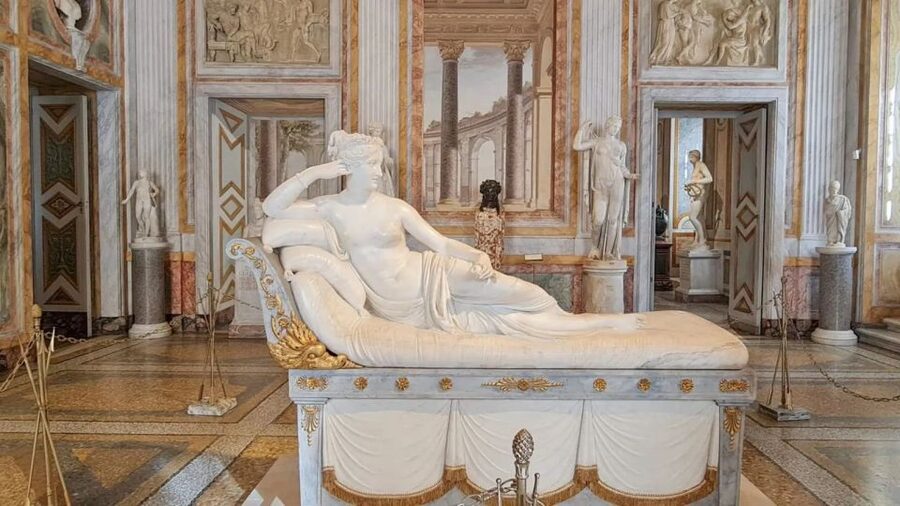
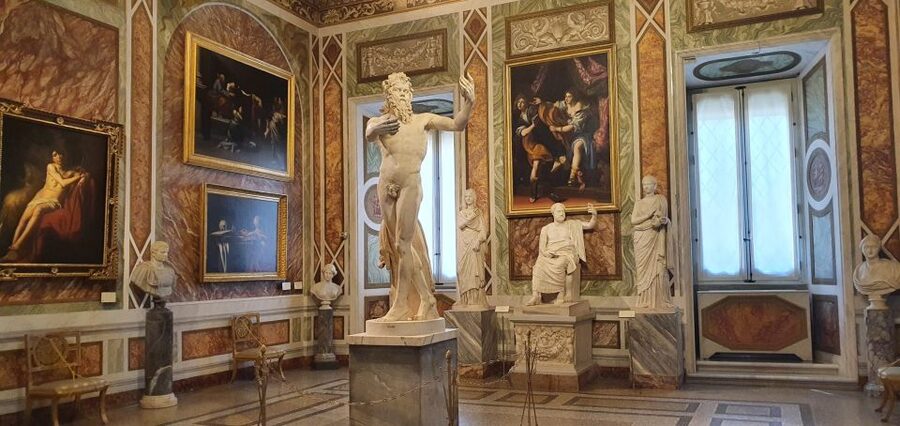
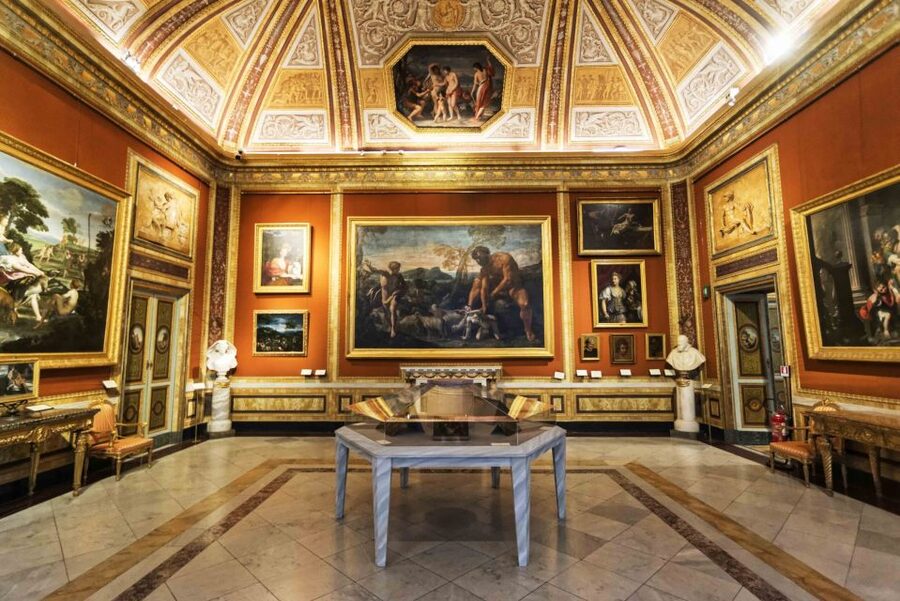
Once inside, give yourself a moment to look around before chasing the famous names. The villa setting is part of the experience. Decorative ceilings and ornate rooms frame the art, and the arrangement makes the collection feel personal rather than institutional.
The first section can be visually busy. If you are visiting on your own, it helps to choose a simple plan: move through the rooms once, note the pieces you want to study, then spend your remaining time on those works. Trying to inspect every painting equally will leave you rushing near the end.
A guide can help you make sense of the room relationships. The tour is not just a march from one famous object to another. Strong guides point out how sculpture relates to the surrounding decoration, and one useful detail highlighted during a visit was that statues connect with figures shown in the ceiling frescoes. That sort of link is easy to miss when you are looking only at eye level.
The guided option is conducted in English. The group may be small, which is helpful in rooms where a large crowd would make it difficult to hear. Group size can vary, but small-group availability gives you a better chance to stay near the guide and ask questions.
Bernini’s marble figures and the power of movement
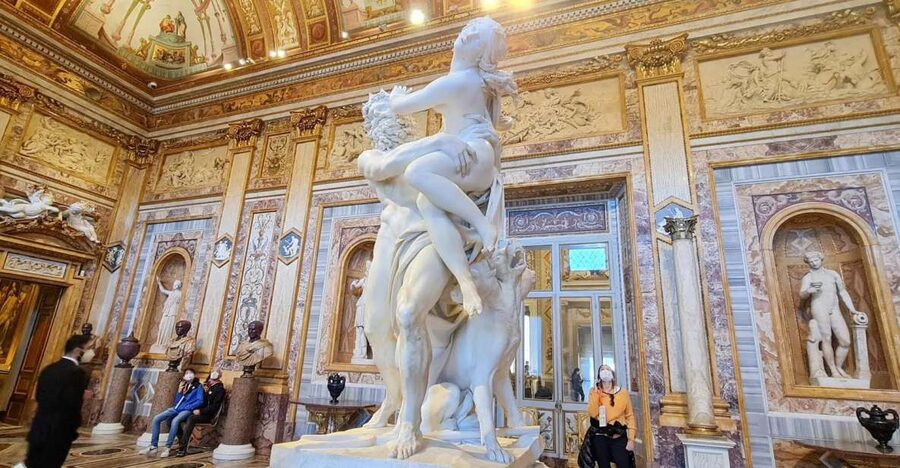
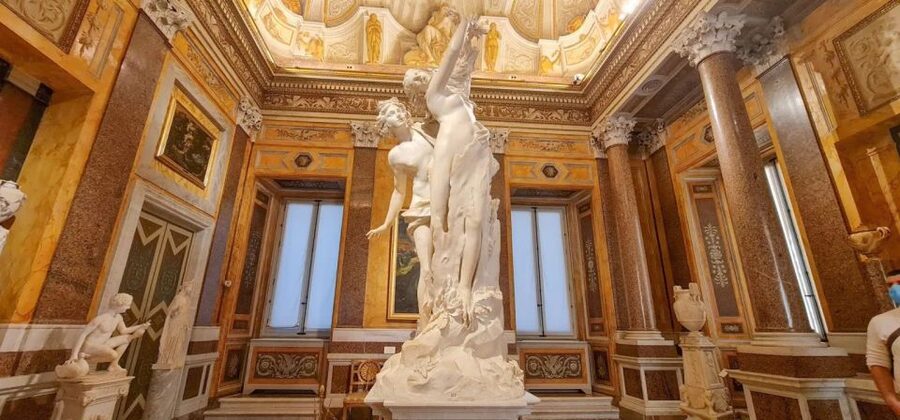
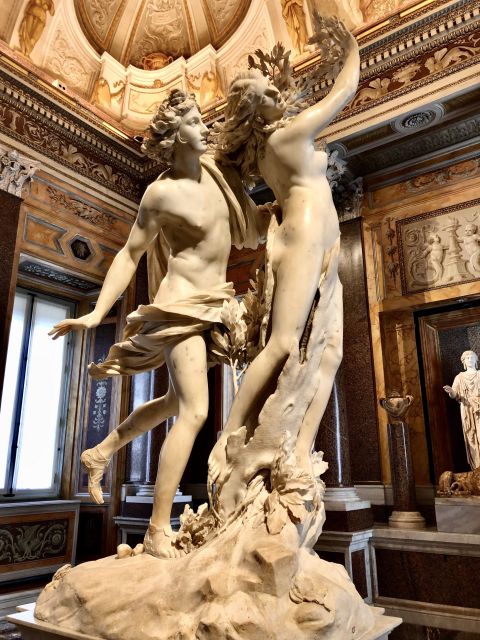
Bernini is one of the best reasons to choose the guided option. His sculptures are not passive objects. They are built around movement, tension, surprise, and changing viewpoints.
As you walk around a Bernini figure, the expression and action can shift. Hair appears to move, fabric seems to ripple, and marble takes on an almost startling softness. A guide can point out how the sculpture is designed for a particular angle, then encourage you to move and test that idea yourself.
This is where the gallery feels especially intimate. You are close enough to examine the surface and the expressions without the works disappearing into a huge hall. You may find yourself looking upward and bending your neck repeatedly, since the sculpture and decoration fill the room from floor to ceiling.
The guides praised most warmly include Dimitri, Federico, Irene, Matteo, Lisa, and Claudia Rossi. The specific guide on your date cannot be guaranteed, but the tour is designed around explanation rather than a bare handoff at the door. Dimitri, in particular, has been described as entertaining and passionate, while Federico has been praised for making the art feel alive. Irene is noted for combining information with humor.
If you already know Bernini, the guide still adds value by explaining restoration, symbolism, and the way the works fit into the villa. If you are new to Baroque art, the commentary can prevent the sculptures from becoming a blur of white marble.
More museums and galleries in Rome:
- Vatican Museums & Sistine Chapel Tour with Optional Basilica
★ 4.3 · 67,413 reviews - Vatican Museums, Sistine Chapel & St Peter’s Basilica Guided Tour
★ 4.5 · 39,149 reviews - Rome: Vatican Museums, Sistine Chapel & Basilica Tour
★ 4.3 · 13,872 reviews - Vatican Museums & Sistine Chapel Skip-the-Line Entry Ticket
★ 4.4 · 13,838 reviews
Caravaggio, Titian, and Raphael in close quarters
The paintings give the visit a different rhythm. Caravaggio’s Saint Jerome Writing is a key work to look for. Its subject is quiet and concentrated, but the painting uses light and shadow to create intense drama. Compared with Bernini’s physical action, Caravaggio makes stillness feel charged.
Titian’s Sacred and Profane Love offers another kind of experience. Look for its color, balance, and layered meaning. You do not need to arrive with a complete background in Renaissance art to enjoy it, but a guide can give you a useful way into the image rather than leaving you to guess at its title and symbols.
Raphael’s Deposition is another important stop. It brings a large, emotional scene into the gallery’s more intimate setting. The work gives you a chance to compare Raphael’s controlled composition with Caravaggio’s harder light and Bernini’s three-dimensional drama.
The collection is not only a checklist of famous names. It shows how artists handled different problems. A painter must suggest movement on a flat surface. A sculptor must create movement in solid material. A guide can make those differences clear in a few minutes, and that is one of the strongest reasons I would consider paying for the guided version.
If you choose the self-guided option, take your time with a few works rather than trying to memorize the whole collection. The gallery is small enough to revisit a room during your allotted visit, and the display can change. One helpful practical point is that photography may be allowed inside under current rules, but you should confirm the gallery’s instructions on the day. Keep your camera and drink bottle out of any bag you hand over.
What the two-hour schedule really means
Two hours is enough for a satisfying first visit, but it is not enough for every detail. The timed format keeps the gallery from becoming unmanageably crowded, yet it also means you should arrive with realistic expectations.
A guided visit usually gives you a clear route through the main works. This is useful if you want context and do not want to spend your short slot reading every label. Guides have been praised for keeping to the scheduled two hours while still explaining the major paintings and sculptures.
The self-guided choice gives you more control. You can linger over a favorite painting, skip a work that does not interest you, or return to a sculpture after seeing it from another side. The tradeoff is that you must create your own route and supply your own background.
I would choose the guide if this is your first serious art museum in Rome, if you want the major works explained, or if you have limited time. I would choose the independent option if you already know the collection, dislike group tours, or prefer to set your own pace.
The guided visit is also a good fit for people who think they are better off without guides. Dimitri’s explanations, for example, have been praised for changing that expectation through humor, clear storytelling, and close attention to the art. That does not mean every guide will suit every person, but the option has real value beyond simple navigation.
The gardens and the view toward Piazza del Popolo
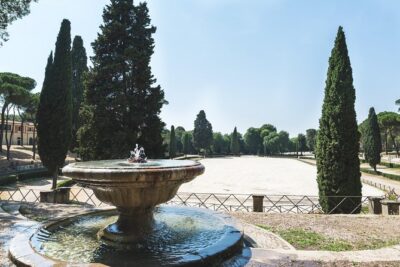
After the indoor visit, take a short stroll through the gardens if time and access allow. The outdoor space gives your eyes a break after two hours of intense detail. You can also take in the view toward Piazza del Popolo, a pleasant way to connect the gallery with the wider city.
Do not treat the gardens as a substitute for the gallery. The outdoor portion is a finishing touch, not the main activity. The important choice is still how you want to spend your indoor time.
The garden walk can be especially welcome if you have spent the visit looking upward at ceilings and sculpture. One person described the visit as leaving a sore neck for all the right reasons, which is a fair warning. Comfortable shoes are recommended, and you should expect to be on your feet.
What to bring and what to leave behind
Wear comfortable shoes. The visit lasts two hours, includes standing and walking, and demands frequent changes of focus as you move between rooms.
Large bags and luggage are not allowed, and umbrellas must also be left outside. Pets are not allowed. Plan around these rules instead of arriving with a suitcase or a large day bag and hoping it will be accepted.
Water can be a practical concern. Drink before entering, and check what the gallery permits. One useful tip is to remove items such as a camera or drink bottle from a bag before handing it over, particularly if current rules allow you to carry those items inside.
The experience is not suitable for people with mobility impairments according to the stated conditions. If you need specific assistance, do not assume the standard entry arrangement will meet your needs. Check before booking.
Children under 18 need a reserved ticket even when admission is free. If you book only adult tickets and arrive with children, entry can be refused. This is one of the most important details for families, so reserve every child in advance.
Is $51 a fair price?
At $51 per person, this is not the cheapest way to see a museum in Rome. The value depends on what you need.
If you can secure a regular ticket easily and prefer to explore alone, the extra cost may be hard to justify. You would be paying for the intermediary arrangement, the separate escorted entrance, and the convenience of having the booking handled through this experience.
If official tickets are sold out, the calculation changes. A reserved place can be worth a great deal when the gallery is one of your priorities and your Rome dates are fixed. The guided version adds further value if you want help understanding Bernini, Caravaggio, Titian, Raphael, and the villa’s decorative program.
I would not book this as a casual add-on unless the Borghese Gallery is already high on your list. I would book it when you care about the art, have limited time, or cannot find a suitable direct ticket. The two-hour length keeps the cost from becoming an all-day commitment, but you should still treat it as one of Rome’s serious cultural stops.
Free cancellation up to 24 hours before the activity and reserve-now, pay-later terms also make it easier to fit into a changing schedule. Those policies do not make the ticket cheap, but they reduce some booking risk.
Who will get the most from this experience?
I would recommend it most strongly to first-time visitors who want an efficient introduction to major Italian art. You get the famous works without committing an entire day, and the optional guide can explain what you are seeing in plain language.
It also suits returning Rome visitors who missed the gallery before. The collection is strong enough to justify a return, especially if you previously rushed through or saw it without context.
Independent art lovers should choose the entry-only option if it is available for their date. It gives you the fast-track arrangement while preserving your freedom. People who normally skip guides should at least consider the guided choice here, since the villa’s sculpture, paintings, ceiling decoration, and restoration details benefit from explanation.
Families need extra planning because every child under 18 needs a reserved ticket. People with mobility impairments should check suitability before booking. Anyone carrying luggage or a large bag should make other arrangements for storage.
Should you book it?
Book this experience if the Borghese Gallery is a priority and you want a reliable timed entry, especially when direct tickets are unavailable. The fast-track arrangement saves hassle, while the optional English guide can turn a beautiful but crowded collection into a clear story.
Choose the guide if you want Bernini, Caravaggio, Titian, and Raphael explained rather than simply pointed out. Choose entry only if you already know your art and prefer complete control.
I would skip it only if $51 feels too high for a two-hour museum visit, or if you want a loose schedule with no fixed meeting point. For the right visitor, the combination of intimate rooms, major works, a practical escorted entrance, and a short garden walk makes this one of Rome’s most focused art experiences.
FAQ
How long does the Borghese Gallery activity last?
The activity lasts two hours. Check availability for the starting times offered on your chosen date.
Is the guided tour included?
The guided tour is included only when you select the guided option. You can also book entry with an escorted skip-the-line entrance and explore independently.
What language is the tour offered in?
The listed host, greeter, and guided service are in English.
Does the ticket include skip-the-line entry?
Yes. The experience includes an escorted entrance through a separate entrance.
Do children under 18 need tickets?
Yes. Children under 18 need a mandatory reservation even when admission is free. If you book adult tickets only and arrive with children, entry will be denied.
Can I bring luggage, a large bag, an umbrella, or a pet?
No. Pets, luggage or large bags, and umbrellas are not allowed.
Can I cancel for a refund?
Yes. You can cancel up to 24 hours in advance for a full refund. Reserve-now, pay-later booking is also available.
Newest Rome tours we have reviewed
- Private TikTok Video Making in Rome★ 5.0 · 7 reviews
- Assisi & Saint Francis Path Tour from Rome★ 5.0 · 45 reviews
- Assisi, Orvieto and Civita di Bagnoregio Full Day Tour from Rome★ 4.5 · 45 reviews
- Assisi and Cascia Private Day Tour from Rome with Lunch★ 5.0 · 10 reviews
- Art Class in the center of Rome!★ 4.0 · 4 reviews
- Art & Craft: Beer Tour with Street Art in Rome★ 4.5 · 6 reviews
- Arrival in Rome: Airport Transfer & Exclusive City Introduction★ 5.0 · 3 reviews
- From Rome: Private Day-Tour of Tuscany★ 5.0 · 16 reviews
Borghese Gallery Tours, compared.
Borghese Gallery Guided Tour with Skip-the-Line Entry
Read our review →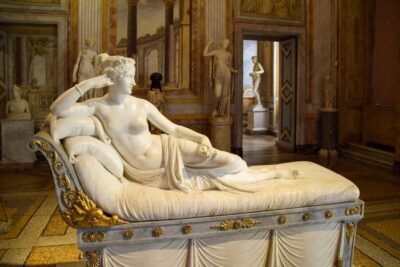
Borghese Gallery Skip-the-Line Tickets with Audioguide
Read our review →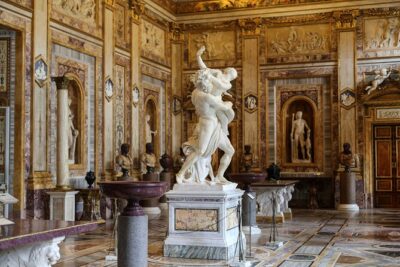
Borghese Gallery & Gardens Small Group Guided Tour
Read our review →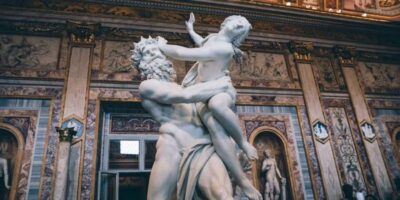
Borghese Gallery, Canova’s Masterpieces Skip-the-Line Guided Tour
Read our review →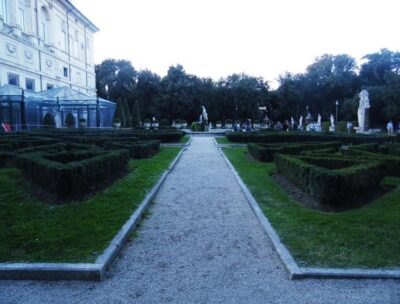
Borghese Gallery Guided Tour with Skip-the-Line Entry
Read our review →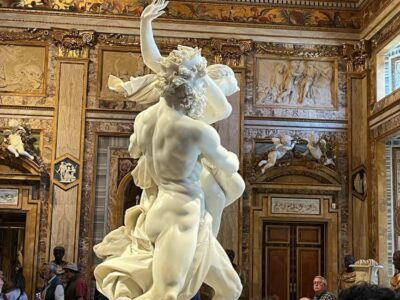
Browse the lists this tour appears in