
Reviewed · ROME FOOD MARKET TOURS
Rome: Campo de Fiori & Ghetto Street Food Sightseeing Tour
Rome’s best food walks do more than feed you. They connect a bite of fried rice or artichoke to the street, square, or ancient ruin around you. This tour takes that approach, linking Campo de’ Fiori and the Jewish Ghetto with some of Rome’s most familiar street foods.
I like the generous range of tastings, from crisp supplì and thin pizza by the slice to carciofi alla giudia and artisanal gelato. I also like that the walk adds wine and beer, plus stories about Julius Caesar, Giordano Bruno, Pompey Theater, and Largo Argentina. The main consideration is the food: vegans and people with lactose intolerance should choose another tour, while vegetarians need to request suitable options ahead of time.
Key points at a glance
- Supplì, pizza, artichoke, and gelato: The menu covers several essential Roman snacks in one sitting.
- A walk through two historic districts: You move from Campo de’ Fiori through Via dei Chiavari and Pompey Theater to the Jewish Ghetto.
- History with your lunch: The guide explains Julius Caesar, Giordano Bruno, the Roman Ghetto, and Largo Argentina.
- Morning market option: Earlier departures include a local market visit with tastings of truffles, olive oil, and balsamic vinegar.
- Strong guide-led experience: Andrea and Marco have both earned praise for clear explanations, humor, and a good grasp of Rome.
- A 2.5-hour introduction: The tour gives you a useful first taste of central Rome without taking up a full day.
Starting with Campo de’ Fiori and Giordano Bruno
You meet at the statue of Giordano Bruno in Piazza Campo de’ Fiori. This is a practical meeting point because the square is easy to identify, and it immediately puts you in one of central Rome’s most atmospheric areas.
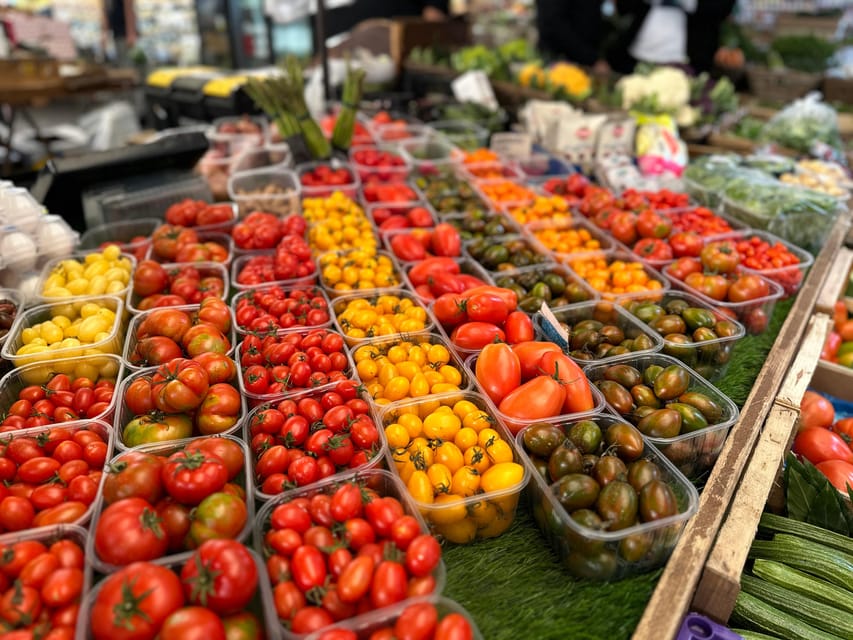
During the day, Campo de’ Fiori hosts an open-air market. The stalls may feature produce and other food products, and morning tours add tastings of truffles, olive oil, and balsamic vinegar. In the evening, the square changes character and becomes a place for eating and socializing. Check your start time carefully, since the market experience belongs especially to the morning version.
The statue of Giordano Bruno gives the guide a natural opening for a story about Rome’s past. Bruno was executed in the square in 1600, and his monument remains one of the most recognizable markers here. I appreciate this kind of introduction because the history is not separated from the meal. You begin with a Roman square, a local food setting, and a story that helps you read the place.
The Campo de’ Fiori tasting lasts about 15 minutes. It is a short first stop, so you should not expect a full market lunch here. Think of it as your first sample and a way to get your appetite working.
More city highlights tours in Rome:
- Rome: Big Bus Hop-on, Hop-off Open-Top Sightseeing Tour
★ 3.5 · 2,580 reviews - Rome in a Day Group Tour with Vatican Museums and Colosseum
★ 4.5 · 2,450 reviews - Rome Highlights by Golf Cart Private Tour
★ 5.0 · 2,379 reviews
Supplì, pizza al taglio, and Roman eating habits
After a short walk, you stop at a local restaurant for wine, street food, and a regional tasting. The route then moves through a bakery and nearby streets, where you get a closer look at the everyday food culture of central Rome.
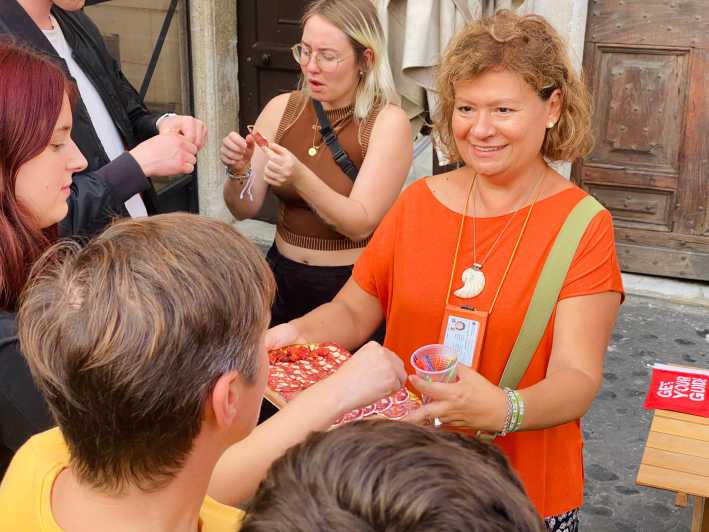
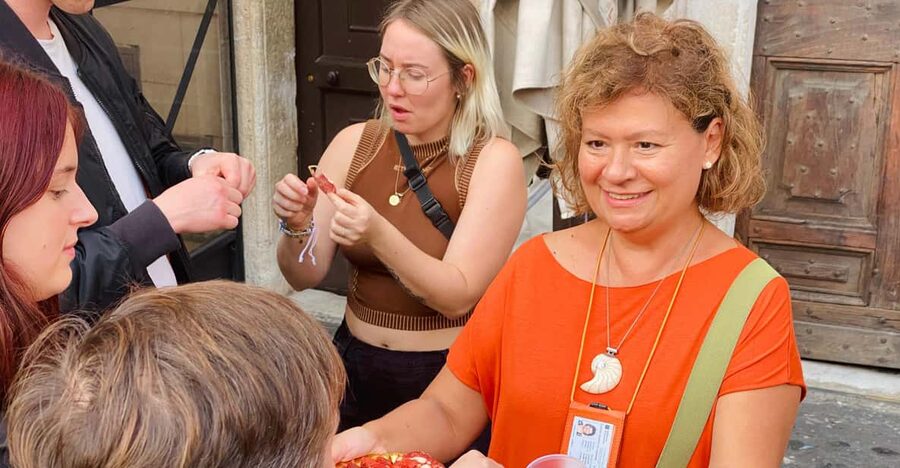
Supplì is one of the essential foods on this tour. It is a deep-fried rice ball, usually valued for its crisp outside and soft center. It is simple, filling food, and it gives you a clear sense of Roman snack culture. You can eat it while walking or standing, which fits the pace of a street-food outing.
Pizza al taglio means pizza sold by the slice, usually cut from a large rectangular tray. The tour describes it as thin and crisp rather than thick and soft. This is not the same experience as sitting down for a round pizza at a pizzeria. You get a quick, practical Roman meal, often chosen by weight or by the size of the piece, though the exact serving method is not specified here.
The bakery stop lasts about 15 minutes. Along with tasting, the guide provides some sightseeing and local context. I like the pairing of food with a bakery visit because it helps you see how much of Italian eating happens in small, informal places rather than only in polished restaurants.
The first restaurant stop lasts about 20 minutes, followed by another local restaurant later in the walk. The servings are described as generous, and the total amount of food can be enough to keep you full for much of the day. That makes the $41 price easier to assess. You are not simply paying for a guided stroll and one token sample. You receive several food stops, drinks, and a substantial introduction to Roman cooking.
Still, do not assume the tour replaces every meal. Additional food and drinks are not included. If you want more wine, a second portion, or something outside the planned tastings, you pay separately.
Via dei Chiavari and the Theatre of Pompey
The route continues on foot through Via dei Chiavari, with scenic views along the way. This section is short, but it helps connect the food stops instead of treating them as isolated locations.
The Theatre of Pompey is one of the most interesting ancient sights on the route. You see it from the streets rather than entering a major archaeological site. The remains are tied to Pompey the Great and to the political world of Julius Caesar, so this is a useful place for the guide to explain how ancient Rome still appears beneath the modern city.
The sightseeing stop at the Theatre of Pompey lasts about five minutes. That matters. You should expect a focused explanation and an exterior view, not a long archaeological visit or a museum tour. If you want to study the ruins in detail, return later with more time.
I like this brief stop because it gives scale to the food walk. A slice of pizza tastes different when you understand that the surrounding lanes follow a city shaped by ancient theaters, Roman politics, medieval streets, and modern restaurants.
Carciofi alla giudia in the Jewish Ghetto
After another short walk, you reach the Jewish Ghetto. This is where the tour takes on a different tone. The neighborhood has a distinct culinary identity, and fried artichoke is one of its best-known specialties.
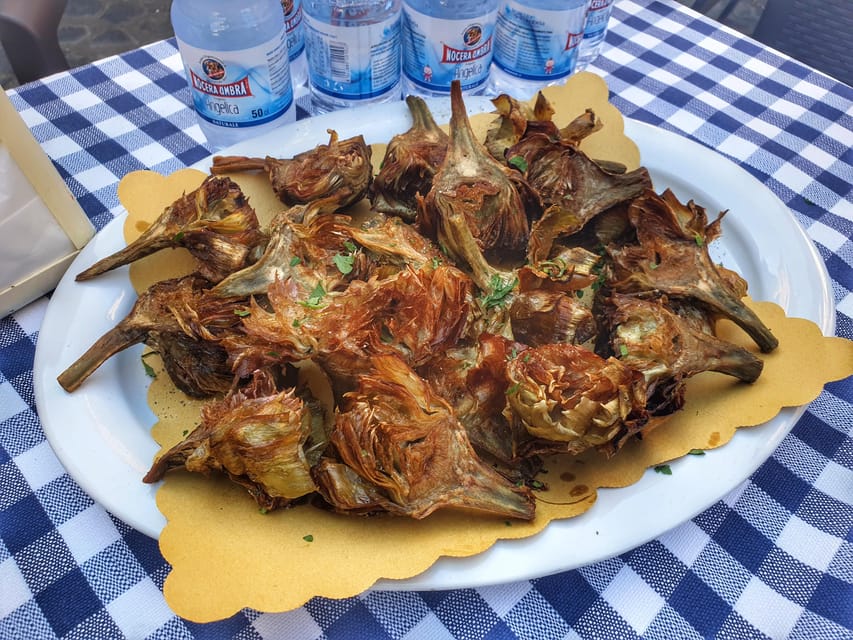
Carciofi alla giudia is an artichoke prepared by deep frying it until the leaves open and become crisp. It is not merely a side dish to check off a list. The preparation is closely linked with the Roman Jewish community, so tasting it here connects food with the area’s cultural story.
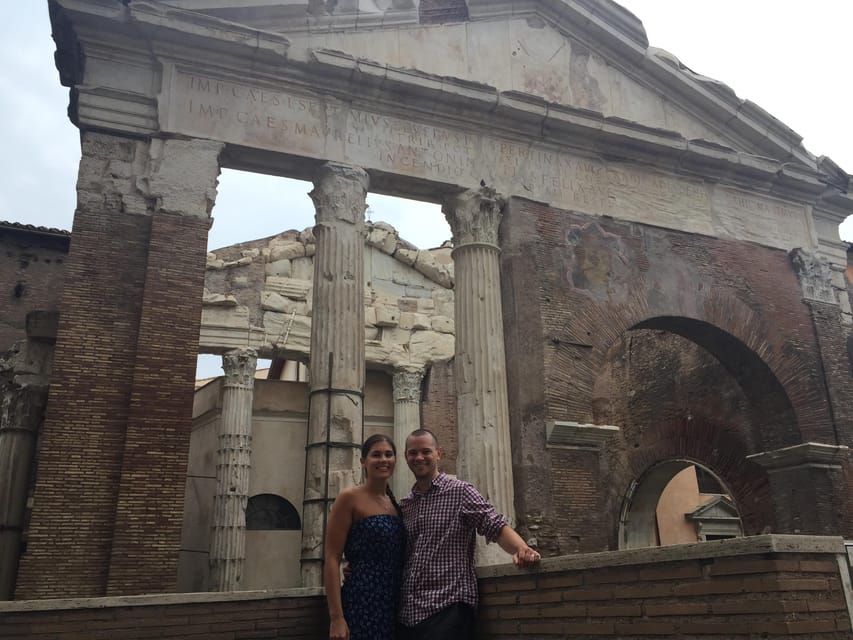
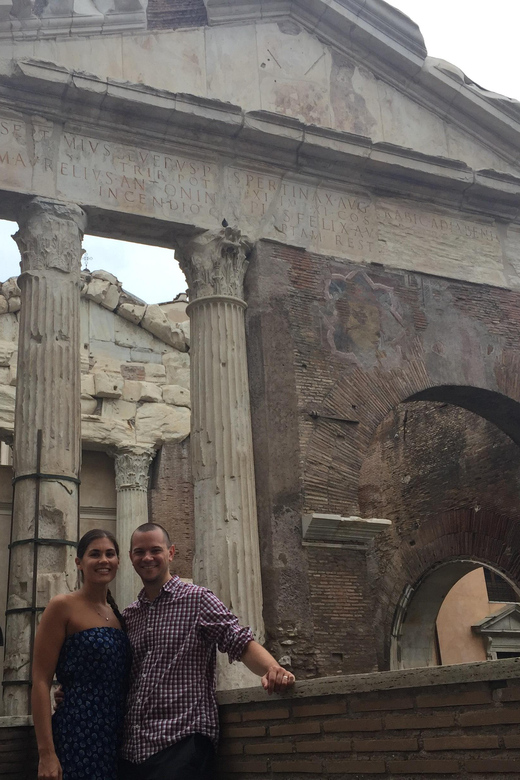
The Jewish Ghetto visit lasts about 15 minutes, followed by a five-minute stop at the Portico d’Ottavia. You also pass the Great Synagogue of Rome. The synagogue is not listed as an interior visit, so expect to see it from outside while the guide explains the area and points out important features.
The term Ghetto has a specific historical meaning in Rome. A good guide can help you understand the neighborhood without reducing it to a food stop. The information provided for this tour promises stories about the Roman Ghetto, and the route gives you a compact way to place those stories in the actual streets.
The food stop in this part of the walk lasts about 15 minutes. The pace is steady, with short walks between tastings. I would wear comfortable shoes and avoid arriving after a heavy meal. You have several samples ahead, and the value depends on being ready to try the full range.
More food market tours in Rome:
- Rome: Trastevere & Campo de Fiori Street Food Walking Tour
★ 4.9 · 2,768 reviews - Rome: Colosseum, Roman Forum & Trajan’s Market Exterior Tour
★ 4.3 · 2,038 reviews - Roman Food Tour with Visit to the Trionfale Food Market
★ 5.0 · 471 reviews - Rome: Food & Wine Tour of Campo de Fiori, Ghetto, Trastevere
★ 4.8 · 413 reviews
Largo Argentina and the final sweet stop
The walk finishes at the Area Sacra di Largo Argentina. This archaeological site is famous for its ancient temples and for its connection with the assassination of Julius Caesar. The route treats it as both a sightseeing stop and the setting for dessert.
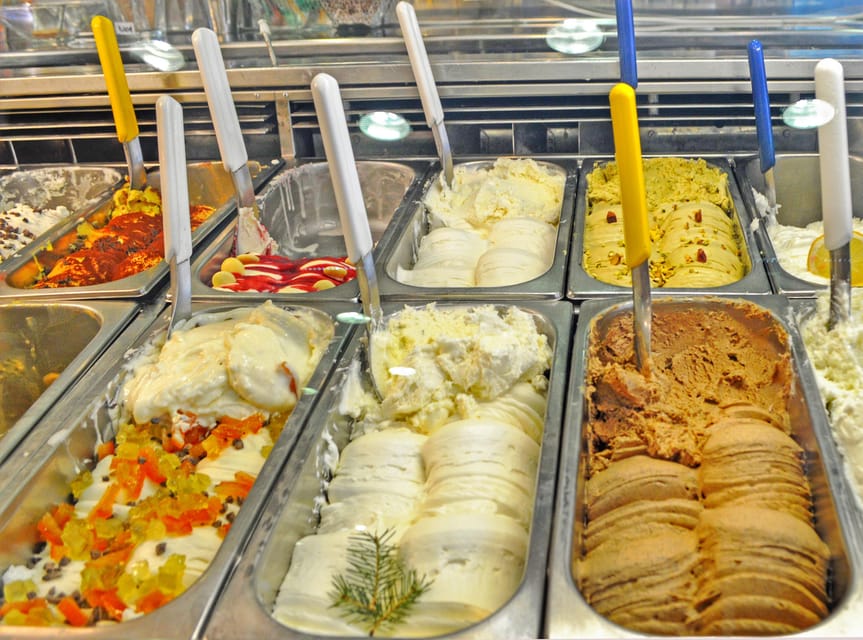
The final tasting is gelato, described as artisanal ice cream. After fried food, cured meat, pizza, and artichoke, a cold, sweet finish makes sense. The dessert stop lasts about 10 minutes, giving you a final pause before the tour ends.
Largo Argentina is also a useful place to finish because it is a major sight in its own right. You end near an archaeological area rather than returning to the starting square, so plan the rest of your day from this location. The experience is not a loop, and the finish is different from the meeting point at Campo de’ Fiori.
What the guides add to the food
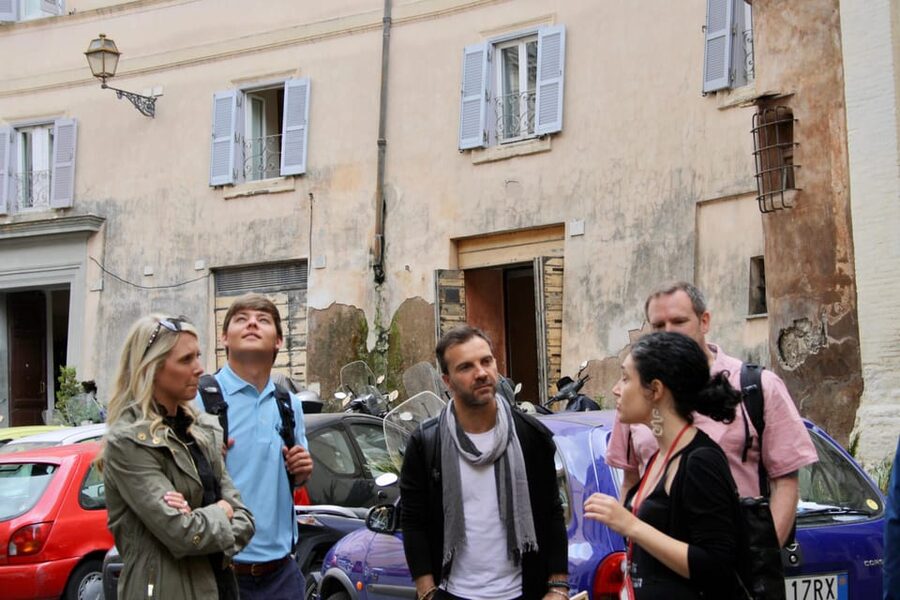
Food tours depend heavily on the person leading them. Here, the guide is not only handing out samples. The tour is built around explanations of Rome, Italy, and the neighborhoods you cross.
Andrea has been praised for explaining Roman and Italian history in a clear, easy-to-follow way while still giving thorough information. Marco has also been praised for his knowledge of Rome, his ability to explain architecture, and his willingness to introduce foods you might not normally order.
Those details matter because the route includes several short stops. A guide who can tell a good story during a five-minute view of Pompey Theater makes the schedule feel purposeful. A guide who can explain why fried artichoke belongs to the Jewish Ghetto makes the tasting more memorable.
The tour is offered in English with a live English-speaking guide. Other languages are not listed. If you value history as much as food, this is a stronger choice than a walk that focuses only on restaurant recommendations.
Is $41 a fair price?
At $41 per person, I see this as a reasonable mid-range food walk in central Rome. You receive 2.5 hours with a professional guide, several food tastings, wine, beer, and a guided route through Campo de’ Fiori, Pompey Theater, the Jewish Ghetto, Portico d’Ottavia, the Great Synagogue area, and Largo Argentina.
The value is strongest if you want a first orientation to Rome’s food and central neighborhoods. You are paying for three things at once:
- A tasting meal with several Roman specialties
- A walking tour led in English
- A compact introduction to important historic areas
It is less useful if you already know Rome’s food scene well or prefer to choose every restaurant yourself. It also may not suit you if you want a formal sit-down meal, a small number of premium tastings, or long visits inside archaeological sites.
The food portions are described as generous, which improves the value. Additional food and drinks cost extra, but you may not need another full meal immediately after the tour.
Who should book this walk?
I would recommend it to first-time visitors who want to learn how Roman food fits into the city. It also suits anyone who likes history presented in short, lively stops rather than in a full museum lecture.
You should book it if you enjoy trying familiar foods in local forms, such as pizza by the slice and fried rice balls, along with dishes you may not have ordered alone. The tour is also useful early in a Rome visit because it introduces several neighborhoods and gives you ideas for where to return.
Families with older children may enjoy the variety, though the supplied information does not specify a minimum age or child pricing. Couples, solo visitors, and small groups who like walking and tasting will find the format easy to follow.
I would skip it if you are vegan or lactose intolerant. Vegans are specifically listed as unsuitable, and lactose intolerance is also a concern. Vegetarians can be accommodated only if you request options in advance, so do not wait until the meeting point.
Morning departures are the best fit if the local market matters to you. They include the market visit and tastings of truffles, olive oil, and balsamic vinegar. Later tours still cover the main food and sightseeing route, but the market element may not be the same.
Practical details before you go
The tour lasts 2.5 hours and is entirely based around walking between nearby stops. You should arrive hungry but not empty-stomached, since the food comes in several portions and the walk continues between tastings.
Meet at the Giordano Bruno statue in Piazza Campo de’ Fiori. The tour ends at Area Sacra di Largo Argentina, so allow a little time to orient yourself after the final gelato.
The schedule includes short walking stretches of two to four minutes, with tasting and sightseeing stops generally lasting from five to 20 minutes. This keeps the experience moving, but it also means you will not have long free periods at each location.
Free cancellation is available up to 24 hours before the start for a full refund. You can also reserve and pay later, which helps if your Rome schedule is still changing.
Should you book it?
Book this tour if you want a filling introduction to Roman food tied to real streets and ancient sites. The best reasons are the wide range of tastings, the Jewish Ghetto stop with carciofi alla giudia, and the clear history-led approach associated with guides such as Andrea and Marco.
Skip it if your diet makes the menu difficult, if you want a market visit but cannot take a morning departure, or if you prefer a slow archaeological tour with interior visits. For most English-speaking visitors who want food, walking, and Roman stories in one manageable outing, the $41 cost offers solid value.
FAQ
Where does the tour start?
The tour starts at the Giordano Bruno statue in Piazza Campo de’ Fiori.
Where does the tour finish?
It finishes at Area Sacra di Largo Argentina.
How long does the tour last?
The tour lasts 2.5 hours.
What language is the tour offered in?
The tour is offered in English with a live English-speaking guide.
What food is included?
The tastings include Roman street food such as supplì, pizza al taglio, cured meat, fried artichoke, and artisanal gelato. Wine and beer samples are also included.
Are vegetarian options available?
Vegetarian options are available if you request them in advance.
Is the tour suitable for vegans?
No. The tour is listed as unsuitable for vegans.
Is the tour suitable for people with lactose intolerance?
No. People with lactose intolerance are listed among those for whom the tour is not suitable.
Does the morning tour include anything different?
Morning tours include a visit to the local market, with tastings of truffles, olive oil, and balsamic vinegar.
Can I cancel the booking?
You can cancel up to 24 hours in advance for a full refund. Reserve now and pay later is also available.
More food tours in Rome
- Winner 2025 Rome Twilight Trastevere Food Tour by Eating Europe
★ 5.0 · 5,157 reviews - Rome Food Tour: Unlimited Tastings with Fine Wine & Barolo
★ 5.0 · 3,365 reviews - Rome: Trastevere Food tour with Free-Flowing Fine Wine
★ 5.0 · 2,853 reviews - Rome: Award Winning Trastevere Group Food Tour with Wine
★ 5.0 · 2,273 reviews
More street food tours in Rome
- Rome: Trastevere or Jewish Quarter Street Food Tour
★ 4.8 · 3,839 reviews - Rome Street Food Tour with Local Guide
★ 5.0 · 2,361 reviews - Trastevere & Campo de’ Fiori Street Food Tour, Eat Like a Local
★ 5.0 · 207 reviews - Hidden Rome: Small Group E-Bike Tour with Street Food Stops
★ 4.9 · 144 reviews
Newest Rome tours we have reviewed
- Private TikTok Video Making in Rome★ 5.0 · 7 reviews
- Assisi, Orvieto and Civita di Bagnoregio Full Day Tour from Rome★ 4.5 · 45 reviews
- Assisi & Saint Francis Path Tour from Rome★ 5.0 · 45 reviews
- Assisi and Cascia Private Day Tour from Rome with Lunch★ 5.0 · 10 reviews
- Art Class in the center of Rome!★ 4.0 · 4 reviews
- Art & Craft: Beer Tour with Street Art in Rome★ 4.5 · 6 reviews
- Arrival in Rome: Airport Transfer & Exclusive City Introduction★ 5.0 · 3 reviews
- From Rome: Private Day-Tour of Tuscany★ 5.0 · 16 reviews
Rome Food Market Tours, compared.
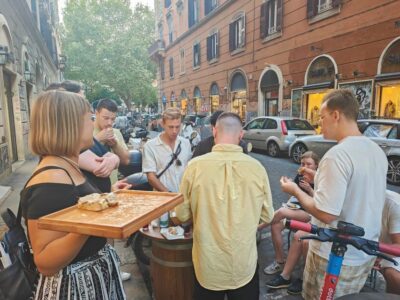
Trastevere & Campo de Fiori Street Food Walking Tour
Read our review →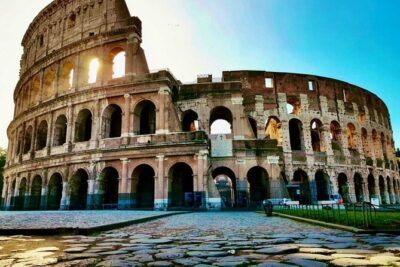
Colosseum, Roman Forum & Trajan’s Market Exterior Tour
Read our review →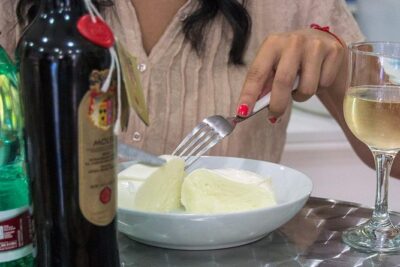
Roman Food Tour with Visit to the Trionfale Food Market
Read our review →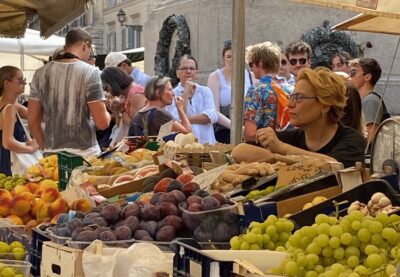
Food & Wine Tour of Campo de Fiori, Ghetto, Trastevere
Read our review →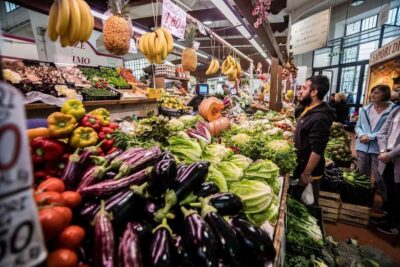
Pasta Cooking Class with Market Visit and Wine
Read our review →
Jewish Ghetto & Campo de Fiori by Night Food Wine Tour
Read our review →
Browse the lists this tour appears in