
Reviewed · JEWISH GHETTO TOURS
Rome: Discovering the Jewish Ghetto guided tour
Rome’s Jewish Ghetto is one of Rome’s most meaningful walks because ancient ruins, Jewish memory, and everyday neighborhood life all meet within a small area. Starting at Teatro Marcello, this two-hour tour leads you through narrow streets, past the Portico d’Ottavia and the Great Synagogue, then across one of the city’s oldest bridges to Tiber Island.
I like the route for two clear reasons: it covers several major sights without wasting time on transfers, and the guide adds the stories that turn old stones into places with human meaning. Lucia is praised by name, while another guide has been singled out for adding extra curiosities beyond the planned route. The main drawback is that the tour moves at a steady walking pace and is not suitable for people with mobility impairments or motion sickness.
Key points to know before booking
- A compact two-hour route: You walk from Teatro Marcello through the Jewish Ghetto and finish at San Bartolomeo all’Isola.
- Several landmark stops: The route includes Piazza Mattei, the Portico d’Ottavia, the Great Synagogue, Ponte Fabricio, and Tiber Island.
- A guide-led history walk: The guide explains Rome’s Jewish community and the meaning of the places along the way.
- Church and synagogue entry is extra: The price covers the guide only, not admission to the Synagogue of Rome or San Bartolomeo.
- English and Italian tours: The guide may lead the group in one language or both, depending on the group.
- A good value for central Rome: At $44.41 per person, the tour is priced for explanation and local context rather than included admissions or transport.
Why Rome’s Jewish Ghetto deserves two focused hours
Rome’s Jewish Ghetto is easy to pass through quickly. You see old brickwork, a grand synagogue, a fountain, and a few inviting restaurants, then move on to the Colosseum or Piazza Navona. That would miss the point.
This district tells a long story about Rome’s Jewish community and its place in the city. The tour gives you a guide who can connect the monuments, streets, religious buildings, and public squares. That is useful in Rome, where many important details are easy to overlook if you are not told what you are seeing.
The walk also has a sensible shape. It begins near Teatro Marcello, continues through the main Ghetto sights, crosses Ponte Fabricio, and finishes on Isola Tiberina. You are not simply circling one monument. The route links the Jewish quarter with the Tiber and the island that has been part of Rome’s story for centuries.
At two hours, this is a manageable addition to a busy day. You get a strong introduction without giving up half a day. You should still expect to walk continuously, so comfortable shoes matter.
More Jewish Ghetto tours:
- Rome: Trastevere or Jewish Quarter Street Food Tour
★ 4.8 · 3,839 reviews - Jewish Ghetto and Trastevere Tour Rome
★ 4.5 · 1,729 reviews - Jewish Ghetto and Synagogues with Jewish Roman Guide 3 Hours
★ 5.0 · 907 reviews
Starting at Teatro Marcello
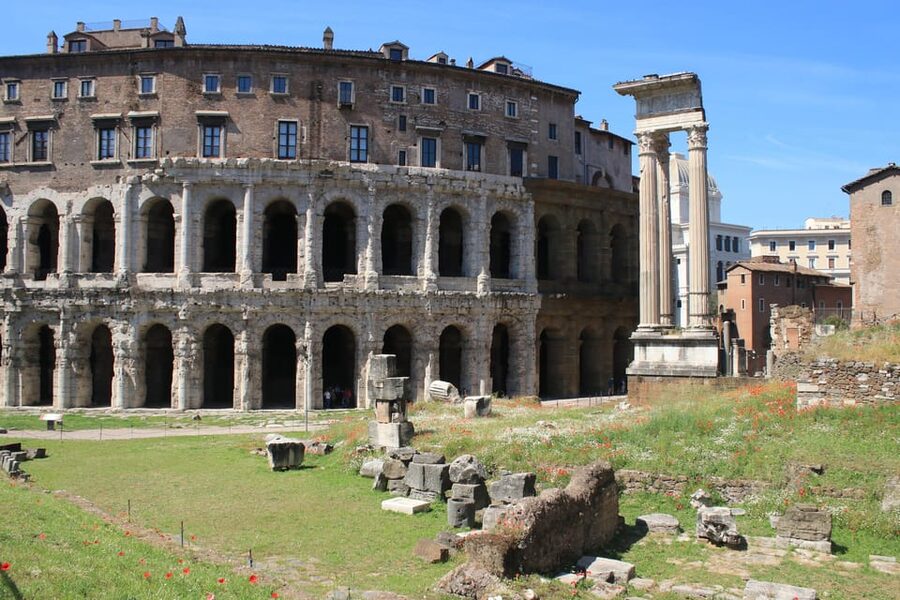
The meeting point is at the intersection with Via del Foro Piscario, directly in front of Teatro Marcello. This is a practical starting place because it puts you beside one of Rome’s major ancient structures before the tour even enters the Jewish Ghetto.
The guide will be waiting at this location. Look for the meeting point rather than assuming the tour begins inside the theater. That small distinction matters in Rome, where nearby monuments and streets can make a meeting place confusing.
Teatro Marcello also gives the guide a useful opening setting. The surrounding area shows how Rome layers different periods on top of one another. From here, the walk heads toward the Jewish Ghetto, shifting from the open space around the ancient theater into narrower streets and smaller squares.
The tour is walking-only. There is no transfer included, so plan to arrive independently and allow a little extra time to find the exact intersection.
Walking through the Jewish Ghetto
The central part of the experience takes place in the Jewish Ghetto, one of Europe’s oldest Jewish communities. You walk along narrow streets, see traditional kosher restaurants, and pass historic religious sites, including the Synagogue of Rome.
This is where the guide’s role matters most. The buildings do not explain themselves. A short walk can carry centuries of religious, social, and political history, but without context, you may notice only attractive façades and ancient walls. A good guide helps you understand how the community shaped Rome and how the neighborhood changed over time.
The tour focuses on the resilience of Rome’s Jewish community and its contribution to the city’s culture. That subject gives the walk a more serious tone than a standard monument tour. You will see familiar Roman beauty, but the stories also ask you to pay attention to memory, faith, survival, and identity.
The group may be led in English, Italian, or both. The guide can be bilingual or monolingual, depending on the participants. If clear, uninterrupted English commentary is important to you, check the language arrangement when booking.
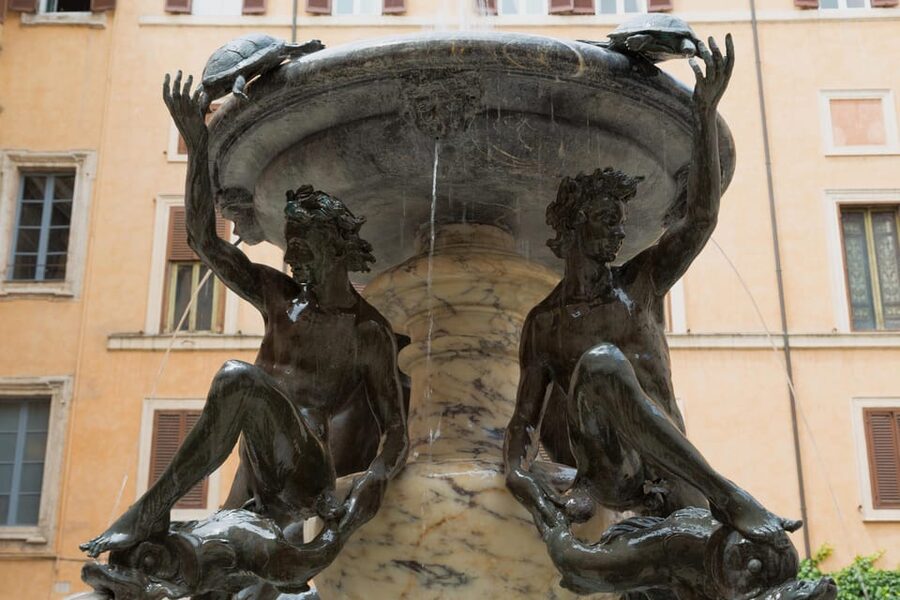
Piazza Mattei and the Fountain of Turtles
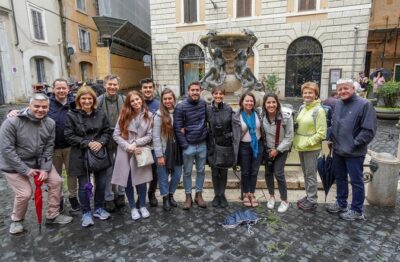
Piazza Mattei is one of the prettiest pauses on the route. Its centerpiece, the Fountain of Turtles, is a small Renaissance-era fountain known for its bronze turtles. The fountain gives the square a gentle, almost theatrical feel, with water and sculpture set against the surrounding buildings.
The stop works well because it offers a change of scale. After hearing about the community and walking through the Ghetto’s tight streets, you arrive at an intimate public square where the details are easy to appreciate. The turtles are not a giant monument, so a guide’s explanation helps you notice what makes the fountain special.
This is also a good place to slow down for a moment. Rome can be tiring when every stop is enormous. Piazza Mattei offers something smaller and more personal. I like that the tour does not focus only on famous grand buildings. It includes a modest square that rewards a closer look.
Bring your camera, but do not expect a long independent break here. The activity is a guided walk, not a free-time tour, so the guide controls the pace and continues the route after the explanation.
More guided tours in Rome:
- Vatican Museums, Sistine Chapel & St Peter’s Basilica Guided Tour
★ 4.5 · 39,149 reviews - Rome: Colosseum, Palatine Hill and Roman Forum Guided Tour
★ 4.8 · 32,814 reviews - Rome: Guided Tour of Colosseum, Roman Forum & Palatine Hill
★ 4.7 · 27,897 reviews - Rome: Colosseum & Forum with Audio Guide App -Optional Arena
★ 4.2 · 24,770 reviews
Under the Portico d’Ottavia
The Portico d’Ottavia is one of the route’s major visual highlights. You walk beneath and around this ancient monument, where surviving stonework makes Rome’s age feel immediate.
The structure is especially useful for understanding how the Ghetto grew around older Roman remains. Here, ancient architecture and the later Jewish quarter occupy the same small part of the city. That overlap is one of the best reasons to take the walk with a guide rather than simply visit the monument alone.
The Portico d’Ottavia is also a strong photography stop, with broad historic walls and recognizable Roman details. Still, do not expect a full archaeological visit with extensive time inside a site. The tour treats the portico as part of a larger neighborhood walk.
From here, the route continues toward Piazza Giudia and the Great Synagogue. The sequence makes sense: the ancient Roman monument leads into the places most closely connected with Jewish life in the district.
The Great Synagogue and Piazza Giudia
The Great Synagogue of Rome is one of the most important sights on the tour. You see the building and hear about the history of Rome’s Jewish community, including its lasting role in the city’s cultural life.
The tour price does not include entrance to the Synagogue of Rome. That point is worth taking seriously. You should not assume that a guided exterior visit automatically gives you access inside. If entering the synagogue is important to you, ask about current admission arrangements and whether a separate ticket or visit is possible.
Even without included admission, the stop has value. The guide places the synagogue within the wider story of the neighborhood, rather than treating it as an isolated building. The nearby Piazza Giudia adds another layer, linking the public space to the long Jewish presence in Rome.
This is likely the most serious part of the walk. You are not simply collecting attractive sights. You are learning about a community that has endured major changes and made a lasting contribution to Rome. The guide’s ability to explain that context will shape how much you get from the experience.
One guide has been praised for knowing Rome’s past well and for pointing out several extra curiosities beyond the planned route. That kind of flexibility can make a short tour feel fuller, especially if the guide responds to questions instead of rushing from one stop to the next.
Crossing Ponte Fabricio to Tiber Island
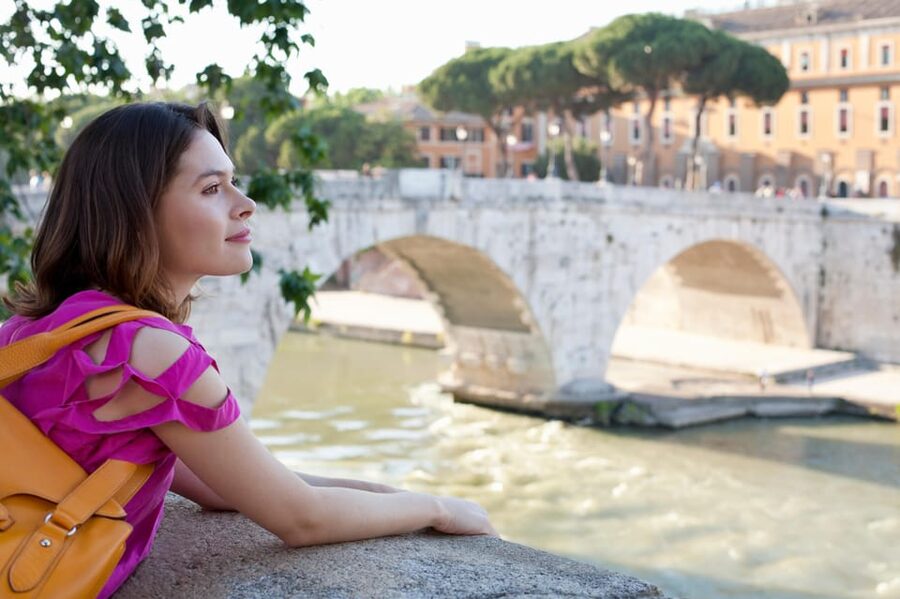
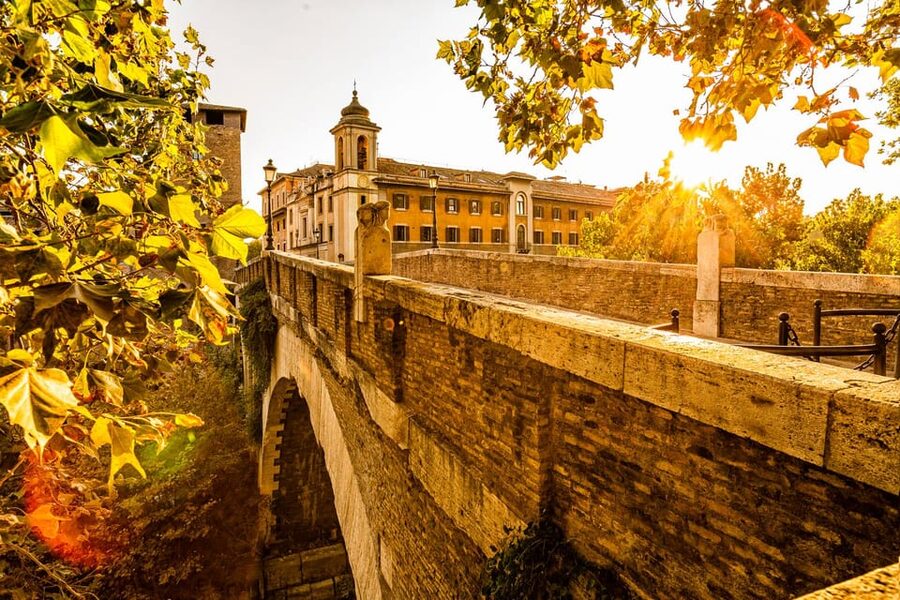
After the Jewish Ghetto, you cross Ponte Fabricio, also called Pons Fabricius. It is one of Rome’s oldest bridges and provides a clear transition from the neighborhood to Isola Tiberina.
The bridge is not just a way to get to the next stop. It gives you a different view of the Tiber and shows how closely the Ghetto is tied to the river. The route changes character here. The streets and monuments of the Jewish quarter give way to the quieter setting of the island.
You should pay attention to footing on the bridge and along the route. The activity is not suitable for people with mobility impairments, and the walking pace may be uncomfortable if you have difficulty on historic surfaces. Motion sickness is also listed as a concern, although this is a walking tour rather than a bus or boat trip.
The crossing keeps the tour from feeling repetitive. Instead of ending after the synagogue, it adds a final Roman setting and gives you a natural sense of movement through the city.
A quiet finish on Isola Tiberina
Isola Tiberina is one of Rome’s oldest and most peaceful islands. Its calmer atmosphere makes it a fitting final chapter after the busier streets of the Ghetto.
The tour takes you to the Church of San Bartolomeo all’Isola, dedicated to St. Bartholomew. The church houses relics connected with various martyrs, adding a religious and reflective note to the end of the walk.
Entrance to the church is not included. As with the synagogue, the guide can explain the site, but you should budget separately if you want to go inside. The activity ends at the Basilica di San Bartolomeo all’Isola Tiberina, although the meeting information also describes the activity as ending back at the meeting point. Confirm the exact end arrangement with the provider if you need to coordinate a later reservation.
I like this ending because it avoids the usual abrupt finish at a crowded landmark. You reach a quieter place with a clear connection to Rome’s religious past. It gives you time to absorb the tour before returning to the city’s busier streets.
What the $44.41 price really covers
At $44.41 per person, this is not a bargain sightseeing stroll, but it can be fair value if you want interpretation rather than a self-guided route. The price includes an expert guide and a two-hour walking experience. It does not include transportation, food, synagogue admission, church admission, or anything else not specifically listed.
That means your decision depends on how you prefer to visit Rome. If you are happy reading about the Portico d’Ottavia and the Great Synagogue on your own, you can see the area without paying for a tour. If you want the connections between the sites explained as you walk, the fee buys a focused introduction.
The tour’s value improves if your schedule is tight. Two hours is enough to cover the main route, and there is no wasted coach time. It also works well early in a Rome visit, when you want local orientation before returning to the neighborhood on your own.
The small number of published ratings gives only limited evidence about consistency. Still, the available feedback is strongly positive, with Lucia praised by name and another guide credited with adding extra stops and curiosities. Treat that as an encouraging sign, not a guarantee that every departure will be identical.
Practical advice for a smoother walk
Wear comfortable shoes. This is the most important preparation, since the tour covers several neighborhoods and bridges on foot.
Arrive at Teatro Marcello with time to spare. The meeting point is outside, at the intersection with Via del Foro Piscario, not at a ticket desk or transport terminal.
Expect the guide to speak Italian, English, or both. The exact format depends on the group. A bilingual tour may take longer for each explanation because information is repeated in two languages.
Do not count on food being provided. You will pass traditional kosher restaurants, but meals are not included. If you need a snack or drink, plan for it separately.
The tour offers free cancellation up to 24 hours before the start, and you can reserve now and pay later. Those terms are helpful if your Rome schedule is still changing.
Who should book this Jewish Ghetto tour?
I would recommend this walk to anyone interested in Rome beyond the Colosseum and Trevi Fountain. It is especially suitable if you want religious, cultural, and neighborhood history presented together rather than as separate sightseeing stops.
It also suits first-time visitors who want a compact introduction to an area they might otherwise rush through. Families with older children may appreciate the short duration, though the walking pace and serious subject matter will not suit every child.
You should think twice if you need extensive sitting time, have mobility limitations, or want guaranteed entry inside the synagogue and church. Those admissions are not included, and the walk itself is the central activity.
Should you book it?
Book this tour if you want a guided explanation of Rome’s Jewish Ghetto, not just a route between monuments. The best parts are the thoughtful sequence from Teatro Marcello to Tiber Island, the combination of famous and lesser-known sights, and the chance to hear the area’s story from an English or Italian local guide.
Skip it if you prefer exploring alone, need an accessible route, or mainly want interior visits. At $44.41, the tour makes the most sense for you if context, efficient sightseeing, and a human guide matter more than included admissions. Reserve it early in your Rome stay, wear good shoes, and leave enough time afterward to revisit the synagogue or island at your own pace.
FAQ
How long does the Rome Jewish Ghetto tour last?
The tour lasts two hours.
Where does the tour begin?
Meet the guide at the intersection with Via del Foro Piscario, directly in front of Teatro Marcello.
Where does the tour finish?
The listed finish is Basilica di San Bartolomeo all’Isola Tiberina. The meeting information also says the activity ends back at the meeting point, so confirm the exact end arrangement when booking.
Which languages are available?
The tour is available in Italian and English. The guide may be bilingual or monolingual depending on the participants and group composition.
Is entrance to the Great Synagogue included?
No. Entrance to the Synagogue of Rome is not included in the tour price.
Is entrance to San Bartolomeo all’Isola included?
No. Entrance to the Church of St. Bartholomew on Tiber Island is not included.
Is food included?
No. Food is not included, although the route passes traditional kosher restaurants.
Is transportation included?
No. The activity does not include transfers. You must make your own way to the Teatro Marcello meeting point.
Is the tour suitable for people with mobility impairments?
No. The activity is listed as unsuitable for people with mobility impairments. Comfortable shoes are recommended for everyone taking the walking tour.
Newest Rome tours we have reviewed
- Private TikTok Video Making in Rome★ 5.0 · 7 reviews
- Assisi, Orvieto and Civita di Bagnoregio Full Day Tour from Rome★ 4.5 · 45 reviews
- Assisi & Saint Francis Path Tour from Rome★ 5.0 · 45 reviews
- Assisi and Cascia Private Day Tour from Rome with Lunch★ 5.0 · 10 reviews
- Art Class in the center of Rome!★ 4.0 · 4 reviews
- Art & Craft: Beer Tour with Street Art in Rome★ 4.5 · 6 reviews
- Arrival in Rome: Airport Transfer & Exclusive City Introduction★ 5.0 · 3 reviews
- From Rome: Private Day-Tour of Tuscany★ 5.0 · 16 reviews
Jewish Ghetto Tours, compared.

Trastevere or Jewish Quarter Street Food Tour
Read our review →
Jewish Ghetto and Synagogues with Jewish Roman Guide 3 Hours
Read our review →
Jewish Ghetto & Piazza Navona: Food, Wine & Sightseeing Rome Tour
Read our review →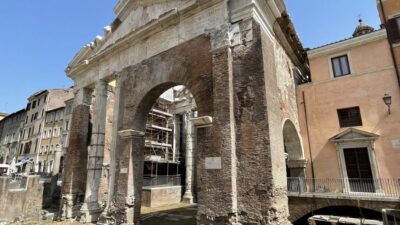

Jewish Ghetto & Campo de Fiori by Night Food Wine Tour
Read our review →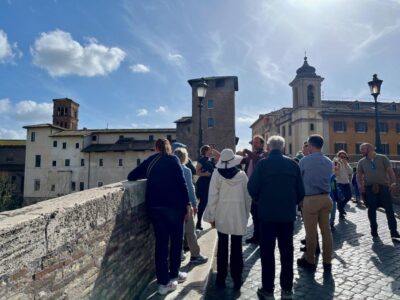

Browse the lists this tour appears in