
Reviewed · UNDERGROUND ROME TOURS
Rome: Hidden depths – Unveiling Underground Treasures Tour
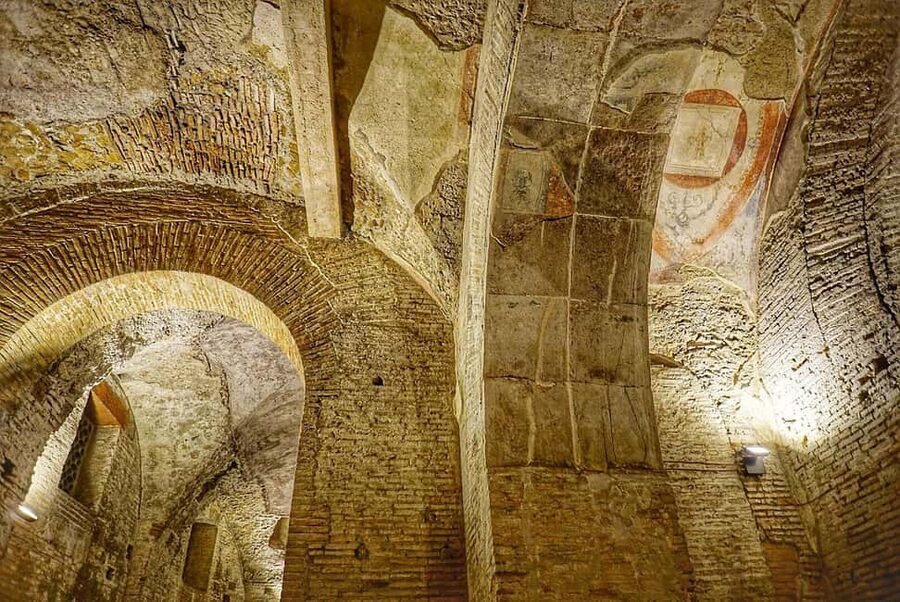
Rome’s most striking stories often sit below street level. This three-hour walk links Michelangelo’s Moses, ancient crypts, a medieval church, and a Mithraic temple beneath San Clemente, showing you how Rome was built layer upon layer.
I like the small group, limited to 10 people, and the way the route connects major sights near the Colosseum with quieter churches you might otherwise miss. I also like the guide-led focus: Alain is praised for explaining the past in a lively, unscripted way and even doing extra research for the tour.
The main drawback is the walking. You’ll cover several streets, a park, uneven surfaces, and stairs, and the underground rooms can be cool. This is not a good choice for wheelchair users or people with serious mobility limits.
Key points at a glance
- Michelangelo’s Moses: See one of Rome’s great sculptures inside San Pietro in Vincoli.
- Three levels of Rome: Visit San Clemente, where medieval, ancient Roman, and Mithraic remains sit below one another.
- Small-group setting: The group is limited to 10, which makes questions and conversation easier.
- A useful Colosseum-area route: Begin beneath the Arch of Constantine and finish near San Clemente.
- A guide named Alain: Alain is noted for his careful explanations, personal research, and natural delivery.
- A moderate walking commitment: Allow for about three hours on foot, with stairs and uneven ground.
Starting beneath the Arch of Constantine
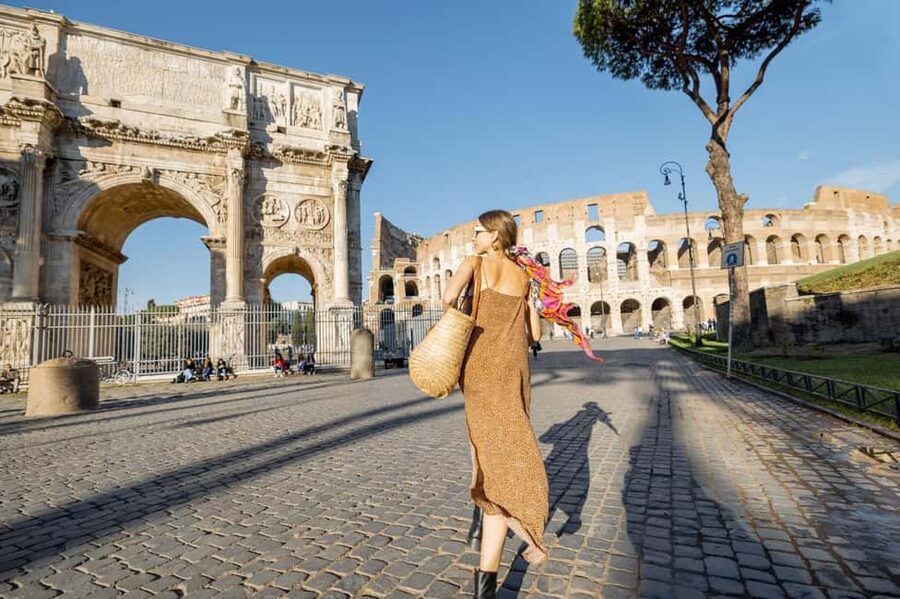
Meet your English-speaking guide directly beneath the Arch of Constantine, next to the Colosseum. This is a practical starting point because the arch gives you an immediate sense of Rome’s imperial scale, while the nearby Colosseum helps place the first stories in context.
Your guide sets the scene here before leading you away from the busiest Roman sights. The tour is not a Colosseum visit, so you should not expect entry into the amphitheater itself. Instead, the Colosseum area acts as your reference point while you move toward churches and archaeological remains that are easier to overlook.
I like this opening because you do not begin in a random side street with no sense of place. You start beside one of Rome’s best-known monuments, then follow a route that gradually shifts from famous imperial Rome to quieter religious sites.
The first walk takes about 15 minutes. Wear proper walking shoes from the start. Rome’s pavements can be demanding, and this outing includes more than simply strolling between polished attractions.
More underground Rome tours:
- Colosseum: Underground and Ancient Rome Tour
★ 4.7 · 12,691 reviews - Rome: Crypts and Catacombs Underground Tour with Transfers
★ 4.6 · 5,341 reviews - Expert Guided Tour of Colosseum Arena OR Underground, and Forum
★ 4.5 · 5,041 reviews
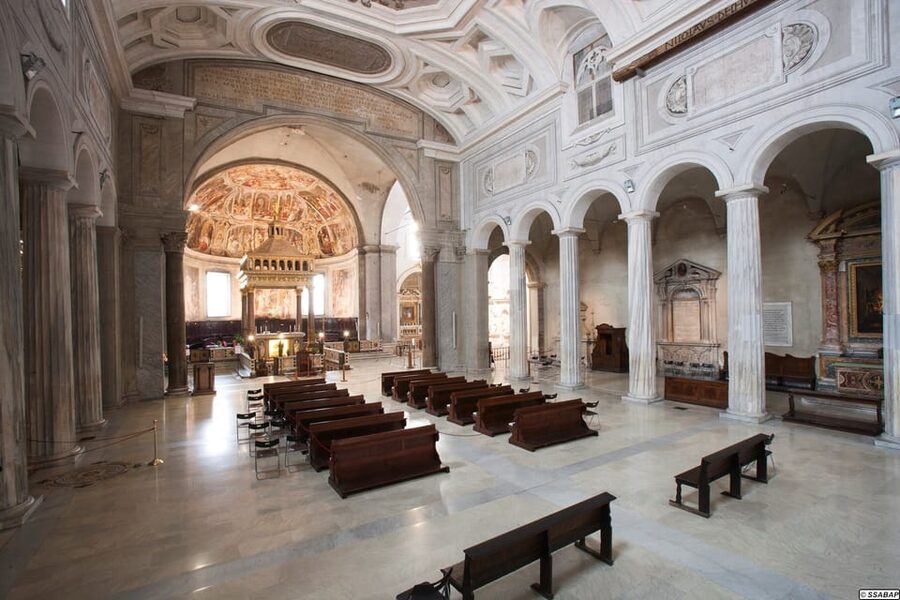
San Pietro in Vincoli and Michelangelo’s Moses
The first major stop is the Church of San Pietro in Vincoli, about 30 minutes from the schedule. The church is best known for Michelangelo’s statue of Moses, a powerful work with an intense expression and carefully carved details.
You will also see the chains traditionally associated with Saint Peter. They give the church its name and add another layer to the visit, since this is both an art stop and a religious site with a long devotional tradition.
The stop works well early in the tour. Michelangelo’s sculpture is a clear focal point, but your guide can also explain why the church matters beyond the statue. That balance is useful if you appreciate art but do not want a tour that treats every church as a quick photo opportunity.
The church visit lasts about 30 minutes. That is enough time for an explanation and personal looking, but not enough for a slow, independent study of every chapel and detail. If Moses is high on your Rome list, pay close attention and use the quiet moments to look closely rather than rushing for a photograph.
The tour includes admission to San Pietro in Vincoli, and skip-the-line access is included as part of the activity. Even so, church access can depend on local conditions, religious observances, or site rules. Follow your guide’s instructions, especially about photography.
San Martino ai Monti and its underground rooms
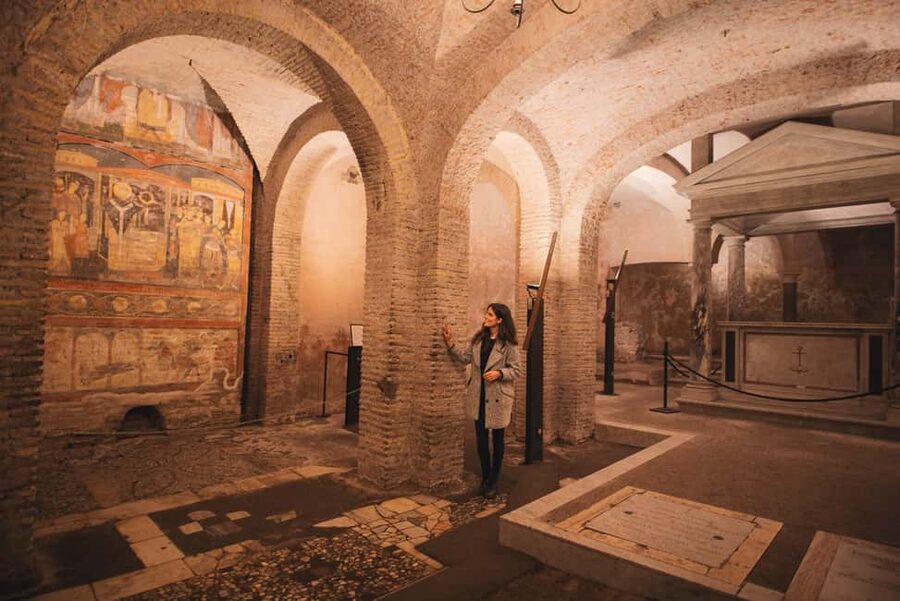
After San Pietro in Vincoli, you walk for about 10 minutes to the Basilica of Santi Silvestro e Martino ai Monti, commonly called San Martino ai Monti. This is one of the places where the tour earns its title. You are not simply visiting another Roman church. You are heading toward a crypt connected with older phases of the city.
The church contains frescoes and an underground crypt dating back to ancient Rome. The exact feel of this stop is different from San Pietro in Vincoli. Michelangelo gives you a concentrated art experience, while San Martino ai Monti asks you to think about how religious buildings changed over time.
I find this pairing especially useful. The first church gives you a famous name and an unmistakable masterpiece. The second gives you a less familiar site where the physical setting, lower rooms, and surviving decoration help explain how Rome’s sacred spaces developed.
You spend around 30 minutes here. That is long enough to hear the main story and inspect the frescoes, but again, this is a guided overview rather than an open-ended archaeological study.
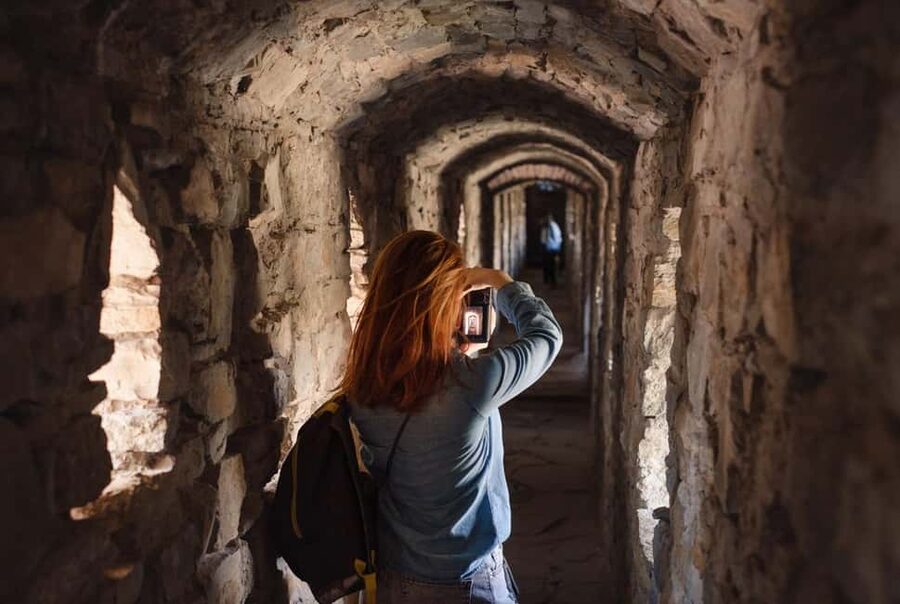
The underground section may feel cooler than the street above. Bring a light jacket, especially if you are sensitive to temperature changes. Stairs and uneven surfaces are part of the experience, so take your time and do not wear smooth-soled fashion shoes.
Crossing Oppian Hill and the Domus Aurea area
The route then heads across Oppian Hill, with a walk of about 10 minutes followed by another 15-minute stretch through the area. This part provides a useful change of pace. You leave the interiors for open air, pass through Parco del Colle Oppio, and walk near the remains of Nero’s Domus Aurea, or Golden House.
You do not enter the Domus Aurea on this tour. Instead, you see its setting and hear how Nero’s enormous palace reflected the power and excess of imperial Rome. The park also gives you a pause between the church visits and the longer final stop at San Clemente.
This outdoor section matters because underground archaeology can blur together when one ancient room follows another. A short walk in the park lets you reset, see the surrounding terrain, and connect the monuments below with the city above.
Sunscreen and water are sensible here. The amount of shade can vary, and the activity information specifically recommends both. The walk is moderate, not a strenuous hike, but you should plan for continuous movement rather than a series of short transfers.
Same city, a completely different half-day:
- Vatican Museums & Sistine Chapel Tour with Optional Basilica
★ 4.3 · 67,413 reviews - Vatican Museums, Sistine Chapel & St Peter’s Basilica Guided Tour
★ 4.5 · 39,149 reviews - Rome: Colosseum, Palatine Hill and Roman Forum Guided Tour
★ 4.8 · 32,814 reviews - Rome: Guided Tour of Colosseum, Roman Forum & Palatine Hill
★ 4.7 · 27,897 reviews
San Clemente, Rome in three levels
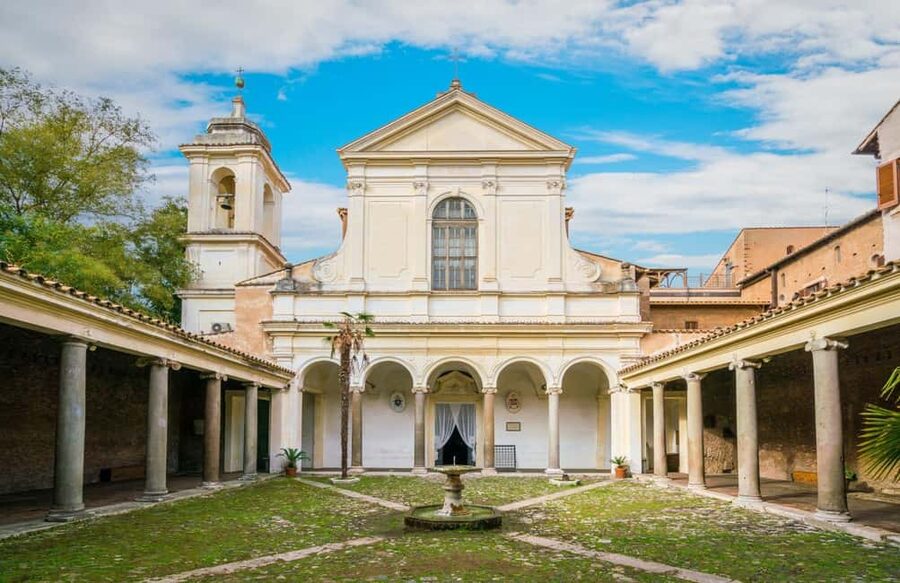
The final visit is the Basilica of San Clemente, with about an hour set aside. This is the most substantial stop and the clearest expression of Rome’s layered past.
At the upper level, you see the medieval basilica and its mosaics. Then the route leads below the present church into older remains. Farther down is a Mithraic temple, a reminder that religious life in ancient Rome included traditions very different from the Christianity that later shaped the site.
The appeal of San Clemente is physical as much as intellectual. You move through the building and descend through time. Medieval art, ancient Roman structures, and the Mithraic space are not separate points on a map. They occupy the same site at different depths.
Your guide’s explanation is important here. Without context, underground walls can look like disconnected stones and dark passages. With a good explanation, the changes in level make sense. Alain is particularly well suited to this kind of visit because the tour’s strongest feedback describes him as attentive, well prepared, and able to speak naturally rather than simply reciting a script.
Photography is restricted in some areas, and flash photography is not allowed. Respect the signs and instructions inside the basilica. Food and drinks are also not allowed in the historical sites, so finish your water before entering or keep it stored as directed.
Why the small group changes the experience
The group limit is 10 people. That is a useful size for churches and underground spaces, where a large crowd can make it difficult to hear or move comfortably.
A small group also makes it easier to ask questions. You can ask about the chains at San Pietro in Vincoli, the church’s older foundations, or the Mithraic temple without trying to catch a guide at the back of a large crowd.
The quality of this tour depends heavily on the guide. The available feedback gives Alain particular credit for being attentive, entertaining, and willing to research details outside the standard presentation. One account spells his name as Alan, but the other references identify him as Alain. If your guide is Alain, expect a personal, conversational approach rather than a speech delivered from a fixed script.
That does not guarantee the same guide at every departure, so I would treat the guide as an important feature but not the only reason to book. The route itself has enough substance to reward anyone interested in Roman art, religion, and archaeology.
Is $112 a fair price?
The cost is $112 per person. That is not a budget walking tour, but the value depends on how you would otherwise arrange these visits.
The price includes an English-speaking guide, admission to San Pietro in Vincoli, San Martino ai Monti, and San Clemente, plus access to the underground crypts and Mithraic temple. You are paying for a connected three-hour explanation, not just admission to three churches.
For me, the strongest value comes from San Clemente and the guide’s interpretation. A self-guided visit can show you the rooms, mosaics, and sculpture, but it may not make the relationship between the different levels clear. The guide helps turn separate places into one story about changing Rome.
The price is less attractive if you mainly want free time for photographs or prefer to read at your own pace. Each stop has a set amount of time, and the group moves according to the schedule. You also pay for a walking route that includes streets and a park, not private transport between sites.
Compared with booking separate visits and trying to organize the route yourself, the package is convenient. The cancellation policy also gives you some flexibility: you can cancel up to 24 hours ahead for a full refund, and you can reserve now while paying later.
Who should book this Rome underground tour?
I would recommend it most strongly to people who already plan to visit the Colosseum area and want more than the standard ancient sights. It suits you if you enjoy art, church architecture, archaeology, and the way one place can reveal several periods at once.
It is also a good choice for first-time visitors who want historical orientation. The route begins near a famous landmark, then moves through less obvious sites without sending you across the whole city.
You should think twice if stairs are difficult, if you use a wheelchair, or if three hours of walking sounds tiring. The tour is specifically not suitable for people with mobility impairments or wheelchair users. Children under six may also find the walking and underground sections hard.
Bring comfortable shoes, water, sunscreen, a camera, and a light jacket. You may not be able to use the camera in every room, but it is still useful for permitted areas and for the outdoor parts of the route.
My call: book it for the layers, not just the famous statue
Book this tour if you want to understand how Rome’s sacred and imperial pasts overlap. Michelangelo’s Moses is the easiest headline, but the real reward is the movement from a famous sculpture to crypts, a park near Nero’s palace, and the three levels of San Clemente.
Skip it if you want a relaxed, seated outing or a tour focused only on the Colosseum. This is a walking experience with stairs, cool underground rooms, and a fairly steady pace.
For the right visitor, $112 buys more than access. It buys a compact route, a small group, and the chance to see parts of Rome that are easy to miss when you stick to the major monuments.
FAQ
How long does the tour last?
The tour lasts three hours.
Where does the tour meet?
Meet directly beneath the Arch of Constantine, next to the Colosseum.
Where does the tour finish?
The scheduled final stop is the Basilica of San Clemente. No separate end point beyond the final site is provided.
What language is the tour in?
The tour is conducted in English by a live English-speaking guide.
What sites are included?
The route includes San Pietro in Vincoli, San Martino ai Monti, Oppian Hill, the area near the Domus Aurea, and the Basilica of San Clemente.
Are entrance tickets included?
Admission to San Pietro in Vincoli, San Martino ai Monti, and San Clemente is included.
Can I see underground areas?
Yes. The tour includes access to underground crypts and the Mithraic temple beneath San Clemente.
Is the tour suitable for wheelchair users?
No. The tour is not suitable for wheelchair users or people with mobility impairments because of stairs and uneven surfaces.
What should I bring?
Bring comfortable walking shoes, water, sunscreen, a camera, and a light jacket for the cooler underground areas.
Can I cancel the booking?
Yes. You can cancel up to 24 hours in advance for a full refund. You can also reserve now and pay later.
Newest Rome tours we have reviewed
- Private TikTok Video Making in Rome★ 5.0 · 7 reviews
- Assisi, Orvieto and Civita di Bagnoregio Full Day Tour from Rome★ 4.5 · 45 reviews
- Assisi & Saint Francis Path Tour from Rome★ 5.0 · 45 reviews
- Assisi and Cascia Private Day Tour from Rome with Lunch★ 5.0 · 10 reviews
- Art Class in the center of Rome!★ 4.0 · 4 reviews
- Art & Craft: Beer Tour with Street Art in Rome★ 4.5 · 6 reviews
- Arrival in Rome: Airport Transfer & Exclusive City Introduction★ 5.0 · 3 reviews
- From Rome: Private Day-Tour of Tuscany★ 5.0 · 16 reviews
Underground Rome Tours, compared.
Colosseum: Underground and Ancient Rome Tour
Read our review →
Crypts and Catacombs Underground Tour with Transfers
Read our review →
Expert Guided Tour of Colosseum Arena OR Underground, and Forum
Read our review →
Colosseum Underground Small Group Guided Tour
Read our review →
St. Peter’s Basilica, Dome Climb, and Underground Tour
Read our review →
Colosseum Underground & Ancient Rome Guided Tour
Read our review →
Browse the lists this tour appears in